
 (800) 949-0401
Auto Repair Shop Loans: The Complete Financing Guide for Business Owners
The auto repair industry is a cornerstone of the American economy, keeping millions of vehicles on the road and ensuring the safe transport of people and goods. As a shop owner, you are not just a skilled technician; you are an entrepreneur navigating a complex and capital-intensive business. From the high cost of diagnostic equipment and specialty tools to the daily expenses of payroll and parts inventory, maintaining healthy cash flow is a constant challenge. Growth opportunities, such as expanding your service bays, hiring more technicians, or investing in electric vehicle (EV) repair technology, often require significant upfront investment that can be difficult to self-fund. This is where strategic financing becomes an indispensable tool for success. Auto repair shop loans are not just a lifeline for covering unexpected expenses; they are a powerful engine for growth, modernization, and competitive advantage. Whether you are looking to purchase a rival shop, upgrade your facility, or simply manage seasonal dips in revenue, the right funding solution can provide the fuel your business needs to accelerate. This comprehensive guide will walk you through every aspect of auto repair shop financing, from the types of loans available to the qualifications lenders look for and how to secure the capital you need to thrive in today's evolving automotive landscape.In This Article
- Why Auto Repair Shops Need Business Financing
- Types of Loans Available for Auto Repair Shops
- Equipment Financing for Auto Repair Shops
- How Auto Repair Shop Loans Work
- What Lenders Look For: Qualification Requirements
- How Crestmont Capital Helps Auto Repair Shops
- Real-World Scenarios: How Auto Repair Shops Use Financing
- Comparing Financing Options for Auto Repair Shops
- Tips for Getting Approved
- Frequently Asked Questions
- How to Get Started
- Conclusion
Why Auto Repair Shops Need Business Financing
Running a successful auto repair shop requires a delicate balance of technical expertise and financial acumen. The industry is characterized by high operational costs and the constant need for technological advancement. While steady customer traffic can generate reliable revenue, large capital expenditures are often necessary to stay competitive and meet evolving vehicle standards. Business financing provides the critical bridge between your current financial state and your future growth objectives. The reasons an auto repair business might seek funding are diverse and essential for both survival and expansion. Here are some of the most common drivers for financing in the automotive service sector:- Equipment Purchase and Upgrades: Modern vehicles are more complex than ever, equipped with advanced driver-assistance systems (ADAS), intricate computer networks, and hybrid or fully electric powertrains. Servicing these vehicles requires sophisticated and expensive equipment. Diagnostic scanners can cost thousands, while wheel alignment systems, vehicle lifts, and EV battery servicing stations represent major investments. Financing allows you to acquire this necessary technology without depleting your working capital.
- Working Capital and Cash Flow Management: Even the most profitable shops can experience cash flow gaps. A large fleet repair job might mean waiting 30, 60, or even 90 days for payment, while your own expenses like payroll, rent, and utility bills are due now. A working capital loan or line of credit can provide the liquidity needed to cover these operational costs and maintain smooth business operations.
- Inventory Management: Stocking a wide range of parts-from common filters and brake pads to more specific components-is crucial for providing fast service. However, tying up too much cash in inventory can be inefficient. Financing can help you purchase parts in bulk to receive better pricing from suppliers or stock up ahead of a busy season without straining your day-to-day budget.
- Expansion and Renovation: When your shop is consistently busy, it might be time to expand. This could mean adding more service bays, building a more comfortable customer waiting area, or even acquiring a second location. These projects require significant capital for construction, real estate, and equipment, making business loans a practical necessity.
- Hiring and Training Technicians: There is a well-documented shortage of skilled automotive technicians. To attract and retain top talent, you need to offer competitive salaries and benefits. Furthermore, ongoing training is essential to keep your team's skills current with new vehicle technologies. Financing can provide the funds to cover recruitment costs and invest in advanced training programs for your staff.
- Marketing and Advertising: To attract new customers and build your brand, you need a consistent marketing strategy. Funds can be used for developing a professional website, running digital ad campaigns, local search engine optimization (SEO), and traditional advertising to ensure a steady flow of vehicles into your bays.
Key Stat: According to a report highlighted by Forbes, the U.S. automotive aftermarket, which includes repair and maintenance services, is projected to grow significantly, reaching nearly $500 billion. This growth underscores the immense opportunity for well-equipped and modern repair shops to capture a larger market share.
Types of Loans Available for Auto Repair Shops
The world of business financing offers a variety of products, each designed for different needs, timelines, and business profiles. Understanding the landscape of available small business loans is the first step toward choosing the right solution for your auto repair shop. The best option for you will depend on what you need the funds for, how quickly you need them, and your business's financial health. Here is an overview of the most common types of auto repair shop loans:- Term Loans: This is the most traditional form of business financing. You borrow a lump sum of money and repay it, plus interest, over a predetermined period (the "term") with regular fixed payments. Term loans are excellent for large, one-time investments like buying an existing shop, financing a major renovation, or purchasing a comprehensive package of new equipment. Terms can range from a few years to a decade or more.
- SBA Loans: Backed by the U.S. Small Business Administration, SBA loans are offered by traditional banks and lenders but come with a government guarantee. This guarantee reduces the lender's risk, often resulting in more favorable terms, lower interest rates, and longer repayment periods for the borrower. The most popular programs are the SBA 7(a) loan, which is highly versatile, and the SBA 504 loan, which is specifically for major fixed assets like real estate and heavy machinery. While the terms are excellent, the application process can be lengthy and documentation-intensive.
- Equipment Financing: As the name suggests, this type of loan is used specifically to purchase business equipment. For an auto repair shop, this is an incredibly valuable tool. The equipment itself serves as collateral for the loan, which often makes these loans easier to qualify for than other types of financing. We will explore this option in greater detail in the next section.
- Business Line of Credit: A business line of credit functions much like a credit card. You are approved for a maximum credit limit and can draw funds as needed, up to that limit. You only pay interest on the amount you have drawn. Once you repay the funds, your available credit is replenished. This provides incredible flexibility for managing cash flow, covering unexpected repairs to your own equipment, or taking advantage of bulk inventory deals without needing to apply for a new loan each time.
- Working Capital Loans: These are typically short-term loans designed to cover everyday operational expenses rather than large asset purchases. If you need to make payroll during a slow month, launch a marketing campaign, or bridge the gap while waiting for a large invoice to be paid, a working capital loan can provide the necessary cash infusion quickly.
- Merchant Cash Advance (MCA): An MCA is not a loan in the traditional sense. Instead, a financing company provides you with a lump sum of cash in exchange for a percentage of your future credit and debit card sales. Repayment is automatic, taken directly from your daily sales. While MCAs offer very fast funding and are accessible to businesses with poor credit, they typically come with higher costs than traditional loans. They are best suited for short-term, urgent cash needs.
Equipment Financing for Auto Repair Shops
For a business where the quality and capability of your tools directly impact your revenue, equipment financing is one of the most powerful and accessible forms of capital. The auto repair industry is driven by technology, and falling behind on equipment means you could be turning away profitable work on newer vehicles. Equipment financing is a specialized loan product designed to make these essential purchases manageable. The core principle is simple: it is a loan taken out for the specific purpose of buying a piece of equipment. The purchased equipment-whether it is a new Hunter alignment rack or a state-of-the-art diagnostic tablet-serves as the collateral for the loan. This has several significant benefits for the auto repair shop owner:- Easier Qualification: Because the loan is secured by a tangible asset (the equipment), lenders view it as less risky. This means that even business owners with less-than-perfect credit or a shorter time in business may still qualify. The focus of the underwriting is often on the value and lifespan of the equipment itself.
- Preservation of Working Capital: Making a $30,000 cash purchase for a new vehicle lift system can severely drain your operating funds, leaving you vulnerable to unexpected expenses. Financing allows you to spread that cost over several years, keeping your cash on hand for payroll, inventory, and other immediate needs.
- 100% Financing: Many equipment financing agreements can cover the full cost of the asset, including taxes, shipping, and installation. This means you may be able to acquire a critical piece of equipment with little to no money down.
- Potential Tax Advantages: Section 179 of the IRS tax code allows businesses to deduct the full purchase price of qualifying equipment from their gross income in the year it is purchased and put into service. This can provide a significant tax benefit, effectively lowering the total cost of the equipment. Always consult with a tax professional to understand how this applies to your specific situation.
What Kind of Equipment Can Be Financed?
Virtually any piece of equipment with a durable value that is essential to your shop's operation can be financed. This includes, but is not limited to:- Vehicle Lifts: Two-post, four-post, scissor, and mobile column lifts.
- Diagnostic Tools: OBD-II scanners, OEM-specific diagnostic software, oscilloscopes, and ADAS calibration systems.
- Tire and Wheel Service Equipment: Tire changers, wheel balancers, and alignment systems.
- Shop Equipment: Air compressors, welders, brake lathes, and fluid exchange machines.
- Safety and Environmental Equipment: Exhaust ventilation systems and waste oil heaters.
- Office Technology: Computers, printers, and shop management software systems.
How Auto Repair Shop Loans Work
Navigating the loan application process can seem daunting, but it generally follows a clear and logical progression. While the specifics can vary between lenders and loan types, the fundamental steps from application to funding remain consistent. Understanding this process can help you prepare and increase your chances of a smooth and successful experience.Quick Guide
How Auto Repair Shop Loans Work - At a Glance
Complete a simple application at offers.crestmontcapital.com/apply-now with basic business details and recent bank statements.
A Crestmont Capital advisor reviews your application and matches you with the best loan type for your shop's specific needs and goals.
Many auto repair shop owners receive same-day or next-day approvals. Equipment financing often closes within 2-5 business days.
Capital is deposited directly to your account (for working capital) or the vendor receives direct payment (for equipment financing).
- Define Your Need and Choose a Loan Type: The first step is internal. Clearly identify why you need the capital and how much you require. Are you buying a specific piece of equipment for $25,000? Do you need a $50,000 cushion for working capital over the next six months? Or are you planning a $250,000 expansion? Your specific need will dictate the most appropriate loan type. An equipment purchase points to equipment financing, while a cash flow need suggests a working capital loan or line of credit.
- Gather Your Documentation: Preparation is key to a fast process. Lenders will need to verify your business's identity and financial health. While requirements vary, it is wise to have the following documents ready:
- Business and personal tax returns (typically 2-3 years)
- Business bank statements (typically 3-6 months)
- Financial statements (Profit & Loss, Balance Sheet)
- Business registration and license documents
- A detailed list of existing business debts
- For equipment financing, a quote or invoice from the vendor for the equipment you intend to purchase.
- Submit Your Application: With your documents in hand, you can complete the loan application. Many modern lenders, including Crestmont Capital, offer streamlined online applications that can be completed in minutes. You will provide basic information about your business, its owners, your revenue, and the loan amount you are requesting.
- Underwriting and Review: This is the stage where the lender evaluates your application. Underwriters will analyze your credit history, cash flow, time in business, and other factors to assess the risk of lending to your shop. They will verify the information you provided and may ask for additional documentation or clarification. For equipment loans, they will also assess the value and useful life of the asset being purchased.
- Receive and Review Offers: If your application is approved, the lender will present you with one or more loan offers. This offer will detail the loan amount, interest rate, repayment term, and any associated fees. It is crucial to review this document carefully. Pay close attention to the Annual Percentage Rate (APR), which represents the total cost of borrowing. Do not be afraid to ask questions to ensure you fully understand the terms.
- Accept the Offer and Receive Funding: Once you have chosen the best offer for your business, you will sign the loan agreement. After the final paperwork is complete, the lender will disburse the funds. The funding speed varies significantly by loan type. MCAs and working capital loans can often be funded in as little as 24-48 hours, while SBA loans can take several weeks or even months. For equipment financing, the funds are often paid directly to the equipment vendor.
What Lenders Look For: Qualification Requirements
Lenders evaluate several key factors to determine your creditworthiness and the likelihood that you will be able to repay the loan. While alternative lenders often have more flexible criteria than traditional banks, they still need to see signs of a healthy and stable business. Understanding these core requirements will help you assess your own eligibility and strengthen your application. Here are the primary qualifications lenders consider for auto repair shop loans:- Credit Score: This is one of the most important factors. Lenders will look at both your personal credit score (as the business owner) and your business credit score (if established). A higher score indicates a history of responsible borrowing and reduces the lender's risk. While traditional banks often require scores of 680 or higher, many alternative lenders can work with scores in the low 600s or even offer options for those with challenged credit, particularly for secured loans like bad credit business loans.
- Time in Business: Most lenders want to see a track record of stability. The standard requirement is often a minimum of one to two years in operation. It is more difficult for brand-new startups to secure traditional financing, as they lack a history of revenue and performance. However, some lenders specialize in startup financing, often requiring a strong business plan and personal collateral.
- Annual Revenue: Your shop's gross annual revenue is a direct indicator of its ability to generate the cash flow needed to make loan payments. Lenders will have minimum revenue thresholds, which can range from $100,000 per year to over $250,000, depending on the lender and the size of the loan requested. Consistent or growing revenue is a very positive sign.
- Cash Flow and Profitability: Lenders will closely examine your business bank statements to analyze your cash flow. They want to see more money coming in than going out on a consistent basis. Positive cash flow demonstrates that you can manage your finances effectively and have the liquidity to handle a new debt payment. Even if your business is not highly profitable on paper after all expenses, strong and consistent cash flow is a critical indicator of financial health.
- Collateral: For secured loans, collateral is a key component. In equipment financing, the equipment itself is the collateral. For other types of loans, especially larger term loans or SBA loans, lenders may require other business assets (like real estate or accounts receivable) or even a personal guarantee from the owner. Unsecured loans do not require specific collateral, but they often come with higher interest rates to compensate for the increased risk.
- Industry-Specific Factors: Lenders who specialize in the auto repair industry will also understand its unique dynamics. They may look at factors like the number of service bays, the average repair order value, and the diversity of your services (e.g., general repair, specialty services, fleet accounts).
Key Insight: According to the U.S. Small Business Administration, a common reason for loan denial is insufficient cash flow. Lenders prioritize your ability to make payments above almost all else. Before applying, review your last 6-12 months of bank statements to ensure they show a consistent, positive cash balance.
How Crestmont Capital Helps Auto Repair Shops
In a competitive market, you need a financial partner who understands the unique challenges and opportunities of the auto repair industry. Crestmont Capital is more than just a lender; we are a dedicated funding advisor committed to helping your shop succeed. We recognize that you are an expert in servicing vehicles, not in navigating the complexities of commercial finance. Our goal is to make the process as simple, transparent, and effective as possible. Here is how Crestmont Capital provides a distinct advantage for auto repair shop owners:- Industry Expertise: We have extensive experience working with businesses in the automotive service sector. We understand the importance of investing in diagnostic technology, the cyclical nature of cash flow, and the value of a well-maintained facility. This expertise allows us to assess your application with a deeper understanding of your business model and connect you with lenders who are eager to fund auto repair shops.
- A Broad Network of Lenders: We have cultivated relationships with a wide array of lending partners, from those specializing in fast working capital to those who offer the best rates on equipment financing. Instead of you having to apply to multiple banks and lenders individually, a single application with us gives you access to this entire network. We do the work of matching your business profile and needs with the lender most likely to approve your loan with the best possible terms.
- Streamlined and Efficient Process: We know that your time is best spent in the shop, not filling out paperwork. Our application process is designed to be quick and straightforward. Our funding advisors guide you every step of the way, helping you gather the necessary documents and presenting your business in the best possible light to underwriters. - Customized Funding Solutions: There is no one-size-fits-all loan. We take the time to understand your specific goals. Whether you need a small, short-term loan to cover a sudden parts shortage or a large, long-term loan to acquire a new property, we work to structure a financing solution that aligns with your business objectives and your budget.
- Support for All Credit Profiles: We believe that a credit score does not tell the whole story of a business. While strong credit can unlock the best rates, we have a proven track record of finding funding solutions for business owners with less-than-perfect credit. Our network includes lenders who specialize in providing options for a wide range of financial situations.
Need Financing for Your Auto Repair Shop?
Crestmont Capital specializes in fast, flexible funding for auto repair businesses. Get approved in as little as 24 hours - no lengthy bank process.
Apply Now →Real-World Scenarios: How Auto Repair Shops Use Financing
To better understand the practical application of these loan products, let's explore some common scenarios faced by auto repair shop owners and the financing solutions that best fit each situation.Scenario 1: Investing in EV and ADAS Technology
The Challenge: "Modern Auto," a successful 10-year-old shop, is seeing a rapid increase in hybrid and electric vehicles, as well as cars with Advanced Driver-Assistance Systems (ADAS). Their current diagnostic tools are outdated, and they are turning away profitable work. They need to purchase an ADAS calibration system, an EV battery lift, and specialized diagnostic software, totaling $75,000.
The Solution: Equipment Financing. The owner of Modern Auto applies for an equipment financing loan. Because the loan is secured by the new, high-value equipment, the lender is primarily concerned with the asset's worth and the shop's ability to generate revenue from it. The shop is approved for the full $75,000 with a 5-year term. The monthly payment is predictable and easily covered by the new revenue stream from servicing EVs and performing ADAS calibrations. This strategic investment keeps the shop competitive and future-proofs its operations.
Scenario 2: Managing a Seasonal Slowdown
The Challenge: "Reliable Repair" is located in a region with harsh winters, leading to a very busy season, but business slows down significantly in the late summer. The owner needs to make payroll for his four technicians and pay rent, but cash flow is tight while he waits for the fall rush. He anticipates a cash shortfall of about $20,000 over the next two months.
The Solution: Business Line of Credit. Instead of taking a lump-sum loan he does not fully need yet, the owner secures a $50,000 business line of credit. He draws $12,000 in the first month to cover payroll and another $8,000 in the second month for rent and utilities. He only pays interest on the $20,000 he has used. As business picks up in the fall, he uses the increased revenue to pay back the balance. The line of credit remains available for any future unexpected expenses, providing a valuable financial safety net.
Scenario 3: Expanding to a Second Location
The Challenge: "Family Auto Care" has built a loyal customer base and is constantly turning away customers due to a full schedule. The owner finds an opportunity to buy a retiring competitor's smaller shop in a neighboring town. The acquisition, including the property and existing equipment, will cost $400,000.
The Solution: SBA 7(a) Loan. This is a large, strategic investment in the business's long-term growth. An SBA 7(a) loan is the perfect tool. While the application process is more intensive, requiring a detailed business plan and financial projections, the benefits are unmatched. The owner is approved for the loan with a 10-year repayment term for the business and a 25-year term for the real estate portion, resulting in a manageable monthly payment. The SBA guarantee gives the bank the confidence to fund this significant expansion project.
Scenario 4: An Emergency Equipment Failure
The Challenge: The main two-post lift at "Speedy Service," a busy tire and brake shop, suffers a catastrophic hydraulic failure and is deemed unsafe and irreparable. This is their primary money-making bay, and every day it is down costs them thousands in lost revenue. They need $15,000 for a new lift and installation, and they need it immediately.
The Solution: Short-Term Working Capital Loan. While equipment financing is an option, the owner needs cash faster than that process might take. He applies for a short-term working capital loan online. Because of the urgent need and the clear return on investment (getting the bay operational), he is approved within 24 hours. The funds are in his account the next day. He orders the new lift, and his shop is back to full capacity within the week. While the interest rate may be slightly higher than a traditional loan, the speed of funding prevents a much larger financial loss from extended downtime.
Comparing Financing Options for Auto Repair Shops
Choosing the right financing product is critical. A loan that is a perfect fit for one business goal could be a poor choice for another. This table provides a side-by-side comparison of the most common financing options for auto repair shops to help you understand the key differences in their structure, purpose, and terms. [IN_BODY_IMAGE]| Financing Option | Best For | Typical Loan Amount | Repayment Term | Funding Speed |
|---|---|---|---|---|
| Equipment Financing | Purchasing new or used machinery, tools, and technology (lifts, scanners, etc.). | $5,000 - $500,000+ | 2 - 7 years | 2 - 10 business days |
| Working Capital Loan | Covering short-term operational costs like payroll, inventory, and marketing. | $10,000 - $250,000 | 6 months - 2 years | 1 - 3 business days |
| SBA Loan | Major investments like buying real estate, acquiring another business, or large-scale expansion. | $50,000 - $5 million | 7 - 25 years | 3 weeks - 3 months |
| Business Line of Credit | Ongoing cash flow management, unexpected expenses, and seizing opportunities. | $10,000 - $250,000 (credit limit) | Revolving (typically renewed annually) | 1 - 2 weeks (for initial setup) |
| Merchant Cash Advance | Urgent, immediate cash needs for businesses with high credit card sales and poor credit. | $5,000 - $200,000 | 3 - 18 months (based on sales) | 24 - 48 hours |
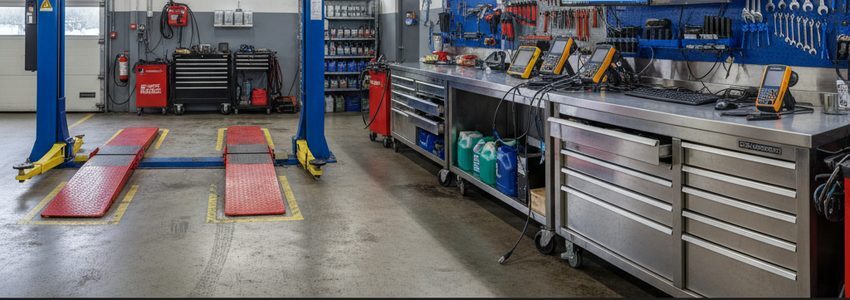
Ready to Upgrade Your Shop?
Whether you need diagnostic equipment, lifts, or working capital, we have a financing solution tailored for auto repair professionals. Rates from 6.99% APR.
Get Your Rate →Tips for Getting Approved
Securing an auto repair shop loan is a significant step, and a well-prepared application can make all the difference. By taking a proactive approach to your business finances, you can substantially increase your chances of approval and secure the most favorable terms available. Here are some practical tips to help you get approved:- Know Your Numbers and Have a Clear Plan: Before you even speak to a lender, you need to know exactly how much money you need and precisely how you plan to use it. Lenders are more confident in borrowers who have a clear, data-driven plan. If you need a loan for a new alignment machine, be prepared to explain how many alignments you currently do, how many more you could do with the new machine, and what the projected return on investment (ROI) will be.
- Organize Your Financial Documents in Advance: Disorganization can delay or even derail your loan application. Gather all the necessary paperwork ahead of time, including several years of tax returns, recent bank statements, profit and loss statements, and a list of outstanding debts. Having everything ready shows professionalism and makes the underwriter's job easier.
- Review and Understand Your Credit Report: Pull both your personal and business credit reports before applying. Check for any errors or inaccuracies that could be dragging your score down and dispute them if necessary. If your score is lower than you would like, take steps to improve it, such as paying down existing balances and ensuring all payments are made on time.
- Demonstrate Strong and Consistent Cash Flow: This is one of the most critical factors for lenders. Your bank statements should tell a story of a healthy business. Avoid letting your account balance drop to zero or go negative. If possible, try to build up a small cash cushion in the months leading up to your application to show stability.
- Separate Your Business and Personal Finances: If you are still running business expenses through your personal checking account, stop now. Open a dedicated business bank account and use it for all business income and expenditures. This makes your financial records much cleaner and easier for a lender to analyze, and it projects a more professional image.
- Choose the Right Lender: Do not just walk into the first bank you see. Different lenders have different appetites for risk and different areas of expertise. A large national bank may not understand the nuances of an auto repair business as well as a lender that specializes in your industry. Working with a firm like Crestmont Capital connects you to a curated network of lenders who are actively looking to fund businesses like yours.
- Be Honest and Transparent: Do not try to hide financial weaknesses or past challenges on your application. Lenders will uncover them during their due diligence. It is far better to be upfront and provide context for any issues, such as a past slow year or a one-time major expense that impacted your profitability. Honesty builds trust.
Frequently Asked Questions
Frequently Asked Questions
Q1: What types of loans are available for auto repair shops?
Auto repair shops can access a wide range of business financing options. The most common include Equipment Financing for purchasing tools and machinery, Working Capital Loans for operational costs, Business Lines of Credit for flexible cash flow management, SBA Loans for major expansions or real estate purchases, and traditional Term Loans for large, one-time investments.
Q2: How much can auto repair shops typically borrow?
The amount an auto repair shop can borrow depends heavily on its annual revenue, cash flow, time in business, and credit history. Loan amounts can range from as little as $5,000 for a small working capital need to over $5 million for an SBA loan used to acquire a large commercial property. Equipment loans are typically tied to the value of the asset being purchased.
Q3: What credit score do I need to get an auto repair shop loan?
Qualification requirements vary by lender. Traditional banks often look for a personal credit score of 680 or higher. However, many alternative lenders and online financing partners have more flexible criteria and can work with business owners with scores in the low 600s. Secured loans, like equipment financing, often have lower credit score requirements than unsecured loans.
Q4: How quickly can I get funding for my auto repair shop?
Funding speed is determined by the loan type. Fast options like a merchant cash advance or a short-term working capital loan can provide funds in as little as 24 to 48 hours. Equipment financing typically takes 2 to 10 business days. SBA loans are the slowest, often taking several weeks to a few months from application to funding.
Q5: Can I get a loan for auto repair shop equipment with bad credit?
Yes, it is often possible. Equipment financing is one of the most accessible loan types for those with challenged credit. Because the equipment itself serves as collateral, it reduces the lender's risk. While the interest rates may be higher, many lenders offer bad credit business loans specifically for essential equipment purchases.
Q6: What documents do I need to apply for an auto repair shop loan?
Typical documents include 3-6 months of business bank statements, 2-3 years of business and personal tax returns, a profit and loss statement, a balance sheet, and a copy of your driver's license. For equipment financing, you will also need a quote or invoice from the vendor. SBA loans require more extensive documentation, including a detailed business plan.
Q7: What is the best loan type for buying diagnostic equipment?
Equipment financing is almost always the best option for purchasing diagnostic tools, scanners, or other specific machinery. The loan is structured around the asset, the repayment term often aligns with the equipment's useful life, and it allows you to conserve your cash for other business needs. It can also offer significant tax benefits through Section 179.
Q8: Can a startup auto repair shop get financing?
While challenging, it is not impossible. Startups lack the financial history most lenders require. However, some financing options are available, such as SBA microloans, equipment financing (if the owner has strong personal credit), or loans based on a strong business plan and significant personal investment from the owner. Securing a loan is easier after at least one year of operation.
Q9: What is the typical repayment term for auto repair shop loans?
Repayment terms vary widely. Short-term working capital loans may have terms of 6-18 months. Equipment financing typically ranges from 2-7 years, depending on the expected life of the equipment. SBA loans offer the longest terms, often 10 years for working capital or equipment and up to 25 years for real estate.
Q10: Do SBA loans work for auto repair shops?
Absolutely. SBA loans are an excellent tool for established and profitable auto repair shops looking to make a significant investment. They are ideal for buying the building your shop operates in, acquiring a competing business, or funding a major ground-up expansion. Their long terms and competitive rates make large projects affordable.
Q11: How does equipment financing differ from a working capital loan for auto repair?
The key difference is the use of funds and collateral. Equipment financing is a secured loan used exclusively to purchase a specific piece of equipment, which serves as collateral. A working capital loan is typically unsecured and provides cash for general operational expenses like payroll, inventory, or marketing, not for large asset purchases.
Q12: Can I use a business line of credit for auto repair shop inventory?
Yes, a business line of credit is perfect for managing inventory. It allows you to draw funds to purchase parts when you need them-perhaps to take advantage of a supplier discount-and then repay the funds as you use the parts and collect payment from customers. This flexibility helps you manage inventory costs without tying up all your cash.
Q13: What interest rates can auto repair shops expect on business loans?
Interest rates are based on the loan type, your creditworthiness, time in business, and overall market conditions. SBA loans and bank term loans offer the lowest rates, often in the single digits or low double digits. Equipment financing and working capital loans from alternative lenders typically have rates ranging from the low double digits upwards, depending on risk.
Q14: Can I get a loan to buy an existing auto repair shop?
Yes. This is a common use of funds, known as a business acquisition loan. An SBA 7(a) loan is one of the best products for this purpose. Lenders will evaluate the financial health of the business you are acquiring, as well as your own experience and financial standing, to approve the loan.
Q15: How does Crestmont Capital help auto repair shop owners get funded?
Crestmont Capital acts as a funding advisor, simplifying the entire process. With a single application, we connect you to our extensive network of lenders who specialize in the auto repair industry. We help you identify the best loan product for your needs, prepare your application for success, and secure the most competitive terms available, saving you time and improving your chances of approval.
How to Get Started
Taking the next step toward funding your auto repair shop's growth is a straightforward process with Crestmont Capital. Our team is ready to help you navigate your options and find the perfect financing solution. We have streamlined the journey to ensure it is fast, transparent, and tailored to your specific needs. Here is how you can get started on securing the capital your business deserves:Complete our quick application at offers.crestmontcapital.com/apply-now - it takes just a few minutes and there is no impact on your credit score to check your rate.
A Crestmont Capital advisor who understands the auto repair industry will review your needs and match you with the right financing option - whether that's equipment financing, a working capital loan, or an SBA product.
Receive your funds and put them to work - often within days of approval. Upgrade equipment, hire staff, expand your facility, or simply stabilize cash flow while you scale.
Conclusion
In the dynamic and technology-driven world of automotive service, standing still is not an option. Growth, adaptation, and investment are the keys to long-term success. From upgrading to the latest diagnostic systems to expanding your physical footprint, having access to capital is the critical element that turns ambition into reality. Auto repair shop loans are not a sign of financial trouble; they are a strategic tool used by savvy business owners to build more resilient, competitive, and profitable enterprises. By understanding the different types of financing available and preparing your business to meet lender qualifications, you can unlock the funding needed to fuel your shop's journey forward. Whether you are looking to purchase a single piece of equipment or undertake a major expansion, the right financing partner can make all the difference. At Crestmont Capital, we are committed to providing the expertise and resources you need to navigate the funding landscape with confidence. We encourage you to explore your options and take the decisive step toward securing the future of your business with one of the many available auto repair shop loans.Start Your Application Today
Join thousands of auto repair shop owners who have grown their businesses with Crestmont Capital financing. Apply in minutes, get a decision fast.
Apply Now →Disclaimer: The information provided in this article is for general educational purposes only and is not financial, legal, or tax advice. Funding terms, qualifications, and product availability may vary and are subject to change without notice. Crestmont Capital does not guarantee approval, rates, or specific outcomes. For personalized information about your business funding options, contact our team directly.








