
 (800) 949-0401
Tortilla Production Equipment Financing: The Complete Guide for Tortilla Manufacturers
Tortilla production equipment financing gives corn and flour tortilla manufacturers a way to acquire presses, ovens, mixers, packaging lines, and cooling conveyors without draining cash reserves needed for flour, masa, oil, and payroll. Whether you are opening your first small-batch tortilleria or scaling a regional wholesale operation supplying grocery chains and restaurants, the right financing structure can be the difference between a production line that keeps up with orders and one that falls behind demand.
Tortillas remain one of the fastest-growing segments of the American food industry. The U.S. tortilla manufacturing sector generates billions in annual revenue, and independent producers, from small regional tortillerias to family-owned wholesale bakeries, compete for a growing slice of that market. Getting there requires reliable, high-output equipment, and reliable equipment requires capital.
In This Article
- What Is Tortilla Production Equipment Financing?
- Key Benefits
- How It Works
- Types of Tortilla Equipment You Can Finance
- Who This Financing Is Best For
- Industry Trends
- Common Mistakes to Avoid
- Comparing Your Financing Options
- What Affects Your Rate
- How Crestmont Capital Helps
- Real-World Scenarios
- FAQ
- Next Steps
What Is Tortilla Production Equipment Financing?
Tortilla production equipment financing is a category of business funding used specifically to purchase, lease, or upgrade the machinery involved in making tortillas at commercial scale. That includes automated presses, gas or electric ovens, dough mixers, sheeters, cooling conveyors, packaging and sealing equipment, and cold storage for finished product. Rather than paying the full purchase price upfront, a manufacturer spreads the cost over monthly payments tied to the equipment's useful life.
This type of financing typically falls under equipment financing or equipment leasing, two of the most common funding tools used by food manufacturers of every size. Lenders structure these deals so the equipment itself often serves as collateral, which usually makes approval faster and terms more favorable than an unsecured loan.
For most tortilla manufacturers, equipment represents the single largest fixed-cost investment outside of a physical facility. A commercial press, oven, mixer, and packaging line together can easily run into six figures for a mid-size wholesale operation. Financing that investment rather than paying cash upfront allows a business to allocate more capital toward inventory, hiring, marketing, and expanding into new retail or foodservice accounts, all of which drive the revenue needed to support the equipment payment itself.
Because tortilla production equipment tends to hold resale value and has a well-understood useful life, lenders who specialize in food manufacturing equipment are generally comfortable financing both new and used machines. This gives manufacturers flexibility to choose between a brand-new automated line from an established equipment manufacturer or a well-maintained used system that costs significantly less, depending on their production volume needs and budget.
Key Stat: The U.S. tortilla manufacturing industry generates an estimated $6.6 billion in annual revenue, according to industry market research, with steady annual growth driven by demand for Mexican and Tex-Mex cuisine, wraps, and convenient meal formats.
Key Benefits of Financing Tortilla Production Equipment
Buying commercial tortilla equipment outright can require a significant lump sum, especially for an integrated press-and-oven system or a full production line. Financing spreads that cost out and preserves working capital for ingredients, staffing, and day-to-day operations.
- Preserve cash flow. Keep working capital available for flour, corn masa, packaging supplies, and payroll instead of tying it up in a single equipment purchase.
- Match payments to revenue. Monthly payments can be structured around your production cycle and cash flow patterns, including seasonal demand spikes around holidays.
- Access newer, more efficient equipment. Modern automated tortilla lines produce more output with less labor and less waste than older or secondhand machines.
- Potential tax advantages. Many equipment financing structures allow businesses to deduct the cost of qualifying equipment, though you should always confirm specifics with a tax professional.
- Build business credit. Consistent, on-time payments on an equipment loan or lease help establish a track record that can support future financing needs.
- Faster approval than many other funding types. Because the equipment secures the loan, approval timelines are often shorter than for unsecured working capital loans.
Ready to Upgrade Your Tortilla Production Line?
Get fast, flexible financing from the #1 business lender in the U.S. No obligation, apply in minutes.
Apply Now →How Tortilla Equipment Financing Works
The process for financing tortilla production equipment follows a fairly standard sequence, whether you are buying your first commercial tortilla machine or replacing an aging production line.
- Get a quote for your equipment. Whether it is a single manual press, an all-in-one press-and-oven combo, or a full automated line with a mixer, sheeter, cooking tunnel, and cooling conveyor, get a firm quote from the equipment vendor.
- Choose financing versus leasing. With financing (an equipment loan), you own the equipment once the loan is paid off. With leasing, you make payments to use the equipment and may have the option to buy it out at the end of the term, often for a nominal fee under a $1 buyout lease.
- Apply with your lender. Provide basic business information, the equipment quote, and financial documentation. Many equipment lenders, including Crestmont Capital, can approve applications quickly for standard equipment purchases.
- Review and sign your agreement. Confirm the payment schedule, interest rate or factor rate, term length, and any end-of-term options before signing.
- Equipment is delivered and installed. The lender typically pays the vendor directly, and you begin making scheduled payments once the equipment is in production.
By the Numbers
Tortilla Production Equipment Financing: Key Statistics
$6.6B
Estimated annual U.S. tortilla manufacturing industry revenue
$5M
Maximum loan amount available under an SBA 7(a) loan for equipment
10 Yrs
Typical maximum repayment term for equipment under SBA 7(a)
$14K-$44K
Typical price range for a small automated tortilla production line
Types of Tortilla Equipment You Can Finance
Tortilla manufacturing spans a wide equipment range, from single-machine startups to fully automated wholesale operations. Financing can typically cover any of the following:
- Manual and electric tortilla presses. Entry-level manual presses suit very small operations, while electric heated-platen presses can produce several hundred tortillas per hour.
- All-in-one press-and-oven machines. These combo units press and partially cook tortillas in a single step, ideal for restaurants, small tortillerias, and specialty grocers making tortillas on-site.
- Full automated production lines. Integrated systems that handle mixing, dividing, pressing, cooking, cooling, and stacking can produce 800 to 1,500 or more tortillas per hour for wholesale-scale operations.
- Dough mixers and dividers. Industrial mixers for masa or flour dough, along with automatic dough dividers that portion consistent-sized balls for pressing.
- Cooking tunnels and comales. Gas or electric conveyor ovens that cook tortillas evenly at scale, replacing manual griddle stations.
- Cooling conveyors. Essential for bringing tortillas to a safe packaging temperature quickly, which also extends shelf life.
- Packaging and sealing equipment. Automated bagging, sealing, and labeling machines that prepare finished tortillas for retail or wholesale distribution.
- Refrigeration and cold storage. Walk-in coolers and freezers for storing finished product and raw ingredients like masa and shortening.
- Delivery vehicles. Refrigerated vans or trucks for distributing fresh tortillas to grocery stores, restaurants, and distributors.
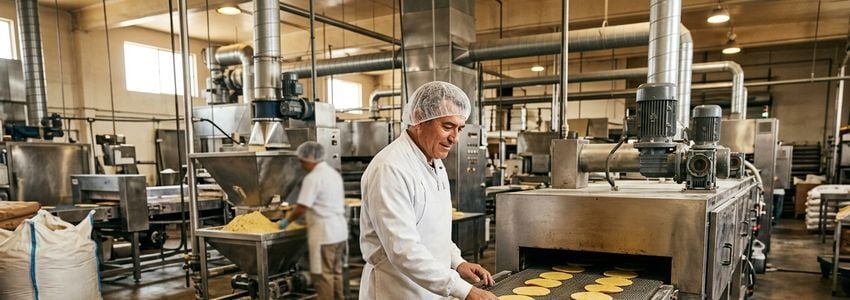
Who Tortilla Equipment Financing Is Best For
This type of financing is a fit for a wide range of tortilla and flatbread producers, including:
- New tortillerias and small-batch producers launching a first commercial location and needing a press-and-oven system or small production line.
- Wholesale tortilla manufacturers supplying grocery chains, restaurants, or foodservice distributors who need to scale output with automated equipment.
- Restaurant groups and taquerias that make fresh tortillas in-house and want to upgrade from manual presses to higher-volume automated equipment.
- Existing producers replacing aging equipment that is breaking down, slowing production, or no longer meeting food safety and efficiency standards.
- Specialty and organic tortilla brands expanding into new product lines, such as gluten-free, low-carb, or whole-grain tortillas, that require dedicated equipment.
Industry Trends Shaping Tortilla Manufacturing
The tortilla category has grown from a regional staple into a mainstream American pantry item, driven by the popularity of Mexican and Tex-Mex cuisine, the rise of wraps as a lunch and snack format, and consumer demand for convenient, versatile bread alternatives. That growth has created room for independent and regional manufacturers to compete alongside large national brands, particularly by serving local grocery chains, restaurant groups, and specialty retailers that value freshness and shorter supply chains.
At the same time, the food and beverage manufacturing sector as a whole is facing real operational pressure. Persistent labor shortages are pushing more producers toward automation, since a single automated line can often replace multiple manual labor positions while increasing consistency and output. Rising ingredient and packaging costs are also squeezing margins, which makes efficient, well-maintained equipment more important than ever for protecting profitability.
Consumer preferences are shifting too. Demand for specialty formats such as gluten-free, low-carb, organic, and whole-grain tortillas continues to expand, and producing these variants often requires dedicated equipment or production runs to avoid cross-contamination and maintain consistent quality. Manufacturers who can finance the equipment needed to add these product lines are positioned to capture a growing, higher-margin segment of the market rather than competing purely on price with commodity tortillas.
Underinvestment in equipment is a common pitfall in food manufacturing more broadly. Businesses that treat machinery as a one-time purchase rather than an ongoing competitive investment often end up running older, less energy-efficient equipment that costs more to operate and produces lower-quality output over time. Structured financing makes it easier to treat equipment upgrades as a regular part of the business plan rather than a rare, disruptive expense.
Common Mistakes to Avoid When Financing Tortilla Equipment
Manufacturers sometimes make avoidable missteps when financing production equipment for the first time. Being aware of these common mistakes can save time, money, and production headaches.
- Underestimating future output needs. Financing a machine sized for today's volume without considering growth over the next two to three years can mean needing another round of financing sooner than expected.
- Ignoring total cost of ownership. A cheaper machine with higher energy use, more frequent maintenance, or slower throughput can end up costing more over its useful life than a pricier, more efficient alternative.
- Not comparing multiple financing structures. Business owners who accept the first offer they receive often miss better rates or terms available through SBA programs or specialized equipment lenders.
- Overlooking installation and training costs. Some equipment purchases benefit from including installation, staff training, or warranty coverage in the overall financing package rather than paying separately out of pocket.
- Waiting too long to replace failing equipment. Aging equipment that frequently breaks down can cost more in lost production and emergency repairs than the monthly payment on a financed replacement.
Comparing Your Financing Options
Not every funding structure fits every tortilla manufacturer. Here is how the main options compare.
| Financing Type | Best For | Ownership | Typical Term |
|---|---|---|---|
| Equipment Financing (Loan) | Producers who want to own equipment long-term | You own it once paid off | 2 to 7 years |
| Equipment Leasing | Producers who want lower upfront costs or plan to upgrade often | Lease, with buyout option at term end | 2 to 5 years |
| SBA 7(a) Loan | Established manufacturers seeking lower rates and longer terms | You own the equipment | Up to 10 years for equipment |
| Business Line of Credit | Smaller equipment purchases or ongoing supply needs | You own what you purchase | Revolving, draw as needed |
How Crestmont Capital Helps Tortilla Manufacturers
Crestmont Capital works with food and beverage manufacturers across the country to finance the equipment their production lines depend on. Our equipment financing and equipment leasing programs are built to help tortilla producers move quickly on time-sensitive equipment purchases, whether that means replacing a broken press before a big order ships or scaling up an entire production line.
For manufacturers who qualify, our SBA loan programs offer longer repayment terms and competitive rates for larger equipment purchases. If your business also needs working capital alongside equipment, our business line of credit and equipment lines of credit give you flexibility to draw funds as needs arise, rather than taking a single lump-sum loan.
We have also written detailed guides for related food manufacturing needs, including our food processing business loans guide, our commercial kitchen equipment financing guide, and our bakery equipment financing guide, all of which cover financing strategies that apply closely to tortilla manufacturing operations.
Scale Your Tortilla Production Today
From presses to full automated lines, get the equipment your business needs without draining cash reserves.
Apply Now →Real-World Scenarios
Scenario 1: The First-Time Tortilleria Owner. A first-generation entrepreneur wants to open a small tortilleria selling fresh corn tortillas to local restaurants and a retail counter. She needs a $15,000 all-in-one press-and-oven combo but does not want to use all her startup savings on one machine. Equipment financing lets her spread the cost over 36 months while she builds her customer base.
Scenario 2: The Wholesale Manufacturer Scaling Up. A regional tortilla manufacturer supplying three grocery chains has outgrown its current line and needs a $180,000 automated system capable of 1,200 tortillas per hour. An SBA 7(a) loan gives the business a 10-year term with manageable monthly payments that align with new contract revenue.
Scenario 3: The Restaurant Group Going In-House. A taqueria chain with five locations decides to make its own tortillas instead of buying from a supplier, aiming to cut costs and improve freshness. Leasing two mid-range electric presses per location lets them test the model with lower upfront investment before committing to full ownership.
Scenario 4: Replacing Aging Equipment. A 20-year-old family tortilla business is losing production hours to a comal oven that keeps breaking down. Fast equipment financing approval lets the owners replace the oven within two weeks, avoiding missed orders during a busy holiday season.
Scenario 5: Adding a Specialty Product Line. An established tortilla manufacturer wants to launch a certified gluten-free line to serve a growing segment of health-conscious grocery shoppers. Rather than retrofitting existing equipment and risking cross-contamination, the company finances a dedicated small production line reserved exclusively for gluten-free product, positioning it to sign a new regional grocery contract.
Scenario 6: Expanding Cold Storage Capacity. A wholesale tortilla producer wins a large new distribution contract but lacks the cold storage capacity to hold finished inventory before shipping. Financing a walk-in freezer and refrigerated delivery van alongside the production upgrade allows the business to fulfill the contract without delaying other orders.
Pro Tip: When comparing tortilla press and oven equipment quotes, ask vendors for output specifications (tortillas per hour) alongside the price. A slightly more expensive machine with significantly higher throughput often pays for itself faster in labor savings.
What Affects Your Rate and Approval Odds
Several factors influence the rate and terms a tortilla manufacturer will receive on equipment financing. Understanding them ahead of time can help you present a stronger application and negotiate better terms.
- Time in business. Manufacturers with two or more years of operating history and consistent revenue typically qualify for better rates than brand-new businesses.
- Personal and business credit history. Stronger credit profiles generally unlock lower rates and require less documentation, though many equipment lenders work with a wide range of credit scores.
- Equipment type and resale value. Standard, widely-used equipment like commercial tortilla presses and ovens tends to secure better terms than highly specialized or custom-built machinery, since lenders can more easily resell standard equipment if needed.
- Down payment amount. A larger down payment reduces the lender's risk and can lower your interest rate or monthly payment.
- Revenue and cash flow trends. Lenders want to see that your business generates enough consistent revenue to comfortably support the new payment alongside existing obligations.
Manufacturers who are unsure where they stand can request a preliminary quote from a lender before committing to a specific equipment purchase. This lets you understand your likely rate range and monthly payment before finalizing a vendor contract, avoiding surprises later in the process.
Frequently Asked Questions
Get Your Tortilla Production Line Funded
Apply in minutes and see what financing options are available for your business.
Apply Now →Next Steps
Choose the press, oven, or production line that fits your output needs and get a firm price.
Weigh equipment financing, leasing, and SBA loans against your cash flow and ownership goals.
Submit your equipment quote and basic financials to get a fast decision.
Once approved, your lender pays the vendor and your new equipment goes into production.
Conclusion
Tortilla production equipment financing gives manufacturers a practical path to acquiring the presses, ovens, mixers, and packaging systems that keep production running without exhausting cash reserves. Whether you are opening a small tortilleria, scaling a wholesale operation, or replacing aging equipment before it fails, the right financing structure lets you invest in growth while preserving the working capital your business needs day to day. Crestmont Capital works with tortilla manufacturers across the country to structure financing that fits their production goals and timeline.
Disclaimer: The information provided in this article is for general educational purposes only and is not financial, legal, or tax advice. Funding terms, qualifications, and product availability may vary and are subject to change without notice. Crestmont Capital does not guarantee approval, rates, or specific outcomes. For personalized information about your business funding options, contact our team directly.








