
 (800) 949-0401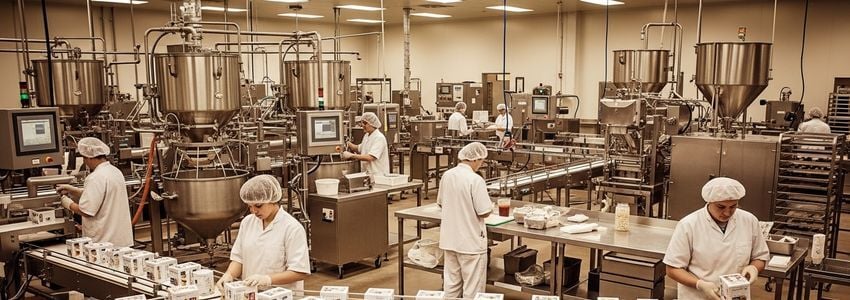
Food Processing Business Loans: The Complete Financing Guide for Food Processing Business Owners
The food processing industry is one of the most capital-intensive sectors in the U.S. economy, requiring consistent investment in equipment, facilities, labor, inventory, and regulatory compliance. Whether you run a small artisan production facility or a large-scale commercial operation, having access to the right financing can mean the difference between seizing a contract and losing it to a better-capitalized competitor. This guide breaks down everything food processing business owners need to know about securing the right business loans - from the types of funding available to how Crestmont Capital can help you move fast and grow confidently.
In This Article
- What Is a Food Processing Business Loan?
- Key Benefits of Financing for Food Processors
- How Food Processing Business Loans Work
- Types of Loans for Food Processing Businesses
- Who Qualifies for Food Processing Financing?
- How Crestmont Capital Helps Food Processors
- Real-World Financing Scenarios
- Frequently Asked Questions
- Next Steps to Get Funded
What Is a Food Processing Business Loan?
A food processing business loan is a form of commercial financing specifically used by companies that transform raw agricultural goods into packaged or processed food products. This includes manufacturers of sauces, frozen meals, beverages, dairy products, meat products, baked goods, snacks, canned goods, and hundreds of other food categories.
Food processing companies face unique financial challenges. Unlike service businesses that can scale without heavy capital investment, food processors need large upfront investments in specialized equipment such as commercial mixers, pasteurizers, bottling lines, walk-in coolers, and packaging machines. They also carry high working capital demands because they must purchase raw ingredients, pay labor, and maintain inventory - often before a single dollar arrives from customers.
According to the U.S. Small Business Administration, food manufacturing is among the top sectors receiving small business loan approvals due to its high collateral value and stable revenue profiles. Yet many food processors are unaware of the full spectrum of financing tools available to them beyond traditional bank loans.
Food processing business loans can be used for:
- Purchasing or upgrading production equipment
- Expanding or renovating production facilities
- Meeting FDA compliance and USDA certification requirements
- Building inventory before peak season or large orders
- Hiring and training production staff
- Covering payroll during slow cash flow periods
- Launching new product lines
- Funding marketing and distribution expansion
Key Benefits of Financing for Food Processing Businesses
Access to business financing unlocks opportunities that cash-constrained food processors simply cannot pursue. Here are the most significant advantages of securing the right loan for your operation:
1. Scale Production to Meet Demand
A major retailer wants to put your product on shelves nationwide - but you need triple the production capacity to fulfill the order. Without capital, you turn down the deal. With the right loan, you purchase equipment and hire staff to scale up. This is the most direct way financing drives revenue growth.
2. Maintain Consistent Cash Flow
Food processors often operate on 30 to 90 day payment cycles while raw ingredient suppliers demand upfront payment. A business line of credit bridges this gap, allowing you to buy inputs now and repay when customers pay.
3. Invest in Food Safety and Compliance
The FDA Food Safety Modernization Act (FSMA) and related regulations require ongoing investment. Financing allows you to implement required safety systems, upgrade facilities, and maintain certifications without draining operating cash.
4. Reduce Long-Term Equipment Costs
Leasing or financing processing equipment rather than paying cash preserves working capital. Equipment financing often comes with tax advantages under Section 179 deductions, making the total cost of ownership significantly lower.
5. Lock In Seasonal Ingredient Pricing
Many food processing operations rely on agricultural commodities subject to price volatility. Having access to financing allows you to purchase large quantities when prices are low and lock in favorable costs for the production year.
6. Compete with Larger Manufacturers
Big food corporations invest continuously in process improvements, automation, and new product development. Financing gives smaller processors the capital to modernize and stay competitive, rather than losing market share to better-equipped rivals.
Ready to Grow Your Food Processing Business?
Get funding from $5,000 to $5 million - fast decisions, minimal paperwork.
Apply Now - Free, No ObligationHow Food Processing Business Loans Work
Understanding the loan process helps you prepare effectively and choose the right product for your situation. Here is a step-by-step overview of how commercial financing works for food processing companies:
Step 1: Determine Your Capital Need
Start by identifying exactly what you need the funds for and how much you require. Equipment purchases, working capital gaps, expansion projects, and emergency cash flow needs all call for different loan structures and amounts. Being specific about your purpose makes lenders more confident and improves your approval odds.
Step 2: Gather Your Financial Documentation
Most lenders will request:
- 3 to 12 months of business bank statements
- Most recent 1 to 2 years of business tax returns
- Profit and loss statements
- Balance sheet
- Accounts receivable and payable aging reports
- Business license and food handling permits
- Any existing debt schedules
Step 3: Choose Your Lender and Product
Your options range from traditional banks and credit unions to SBA lenders and alternative online lenders. Each has different requirements, speeds, and pricing. Alternative lenders like Crestmont Capital typically fund within 24 to 72 hours with less documentation, while banks may take 4 to 8 weeks but offer lower rates for qualified borrowers.
Step 4: Complete the Application
Online applications typically take 10 to 15 minutes. You will provide basic business information, financial details, and the loan purpose. Many alternative lenders use soft credit pulls initially so there is no impact to your score during exploration.
Step 5: Review Your Offer
You will receive a term sheet showing loan amount, rate, term, payment schedule, and any fees. Compare multiple offers before accepting. Evaluate the total cost of capital, not just the interest rate.
Step 6: Receive Funds and Deploy Capital
Once approved, funds are typically deposited directly to your business bank account. Equipment financing may require direct payment to the vendor. Working capital loans give you full flexibility to deploy funds as needed.
Typical Timeline: Food Processing Business Loan
- Day 1: Submit application with bank statements
- Day 1-2: Receive preliminary approval decision
- Day 2-3: Review and sign loan agreement
- Day 3-4: Funds deposited to your account
- Week 2+: Begin deploying capital toward your goal
Types of Loans for Food Processing Businesses
No single loan type fits all food processing situations. Here is a comprehensive breakdown of the financing options available to food manufacturers:
1. Term Loans
Term loans provide a lump sum of cash repaid over a fixed period - typically 1 to 5 years - with regular monthly payments. They are ideal for expansion projects, facility renovations, or large capital purchases where you need predictable repayment. Small business term loans from Crestmont Capital are available from $5,000 to $5 million with competitive rates.
2. Equipment Financing
This specialized product is designed specifically for purchasing machinery and equipment. The equipment itself serves as collateral, making it easier to qualify - even for businesses with limited credit history. Food processing equipment eligible for financing includes:
- Commercial mixers and blenders
- Pasteurization and sterilization systems
- Bottling and canning lines
- Packaging machinery (vacuum sealers, label applicators)
- Commercial refrigeration and freezer systems
- Conveyors and automated filling systems
- Food extruders and slicers
- Dehydrators and spray dryers
Equipment financing typically covers 80 to 100 percent of the equipment cost with terms of 2 to 7 years. Interest is often tax-deductible, and Section 179 may allow you to deduct the full cost in year one.
3. Business Line of Credit
A revolving line of credit works like a business credit card - you draw what you need when you need it and only pay interest on what you use. This is the most flexible tool for managing working capital gaps, seasonal fluctuations, and unexpected expenses. Learn more about qualifying for a business line of credit from Crestmont Capital.
4. SBA Loans
SBA 7(a) loans are government-backed loans with favorable terms - longer repayment periods (up to 10 years for working capital, 25 years for real estate), lower down payments, and competitive interest rates. The tradeoff is a longer approval timeline (typically 30 to 90 days) and more documentation. Food processing companies with strong financials and at least 2 years in business are often excellent candidates. Explore SBA loan options through Crestmont Capital.
5. Invoice Factoring and Accounts Receivable Financing
If your food processing business sells to distributors, grocery chains, or food service operators on net 30 to 90 terms, invoice factoring can accelerate your cash flow dramatically. You sell outstanding invoices to a factoring company for 80 to 95 percent of their face value upfront and receive the remainder (minus fees) when the customer pays.
6. Short-Term Business Loans
Short-term loans (typically 3 to 18 months) are ideal for bridge financing, seasonal inventory buildup, or covering a specific short-term need. They fund fast but carry higher rates. Best used strategically when you have high-confidence revenue coming soon.
7. Merchant Cash Advances (MCA)
An MCA provides an upfront lump sum in exchange for a percentage of daily credit and debit card sales until the advance is repaid. This can work for food processors with strong point-of-sale volume at retail locations, though it is one of the more expensive forms of capital.
8. Bad Credit Business Loans
If your credit score is below 600, traditional bank options may be closed to you - but alternative lenders specialize in funding food processors with imperfect credit histories. Bad credit business loans consider your revenue, cash flow, and business history more heavily than personal credit scores.
Who Qualifies for Food Processing Business Loans?
Qualification requirements vary significantly by lender type and product. Here is a general breakdown:
| Loan Type | Min. Time in Business | Min. Annual Revenue | Min. Credit Score |
|---|---|---|---|
| Term Loan (Alternative) | 6 months | $100,000 | 550+ |
| Equipment Financing | 1 year | $75,000 | 600+ |
| Business Line of Credit | 1 year | $120,000 | 600+ |
| SBA 7(a) Loan | 2 years | Varies | 680+ |
| Short-Term Loan | 3 months | $60,000 | 500+ |
| Invoice Factoring | 3 months | Any | Any |
Beyond these baseline metrics, food processing lenders look closely at:
- Consistent revenue history: Lenders want to see stable or growing monthly deposits
- Positive cash flow: Operating cash flow should comfortably cover proposed debt payments
- Industry licensing and permits: FDA registration, USDA certification, and state food handler permits
- Customer concentration: Lenders prefer borrowers with diversified customer bases rather than one major client representing 80 percent of revenue
- Existing debt load: High levels of existing debt can limit loan amounts and approval likelihood
The good news: alternative lenders are significantly more flexible than traditional banks when evaluating food processing companies. Revenue and cash flow often matter more than credit scores at many non-bank lenders.
How Crestmont Capital Helps Food Processing Businesses
Crestmont Capital is rated one of the top business lenders in the country, specializing in providing fast, flexible funding to established businesses in all industries - including food processing, food manufacturing, and food distribution. Here is why food processors choose Crestmont:
Fast Funding
Traditional bank loans for food processors can take 60 to 90 days. Crestmont Capital offers approvals in as little as 4 hours and funding within 24 to 72 hours for qualified applicants. When an equipment deal or contract opportunity requires fast capital, we deliver. Learn about our fast business loan options.
Flexible Qualification Standards
We look beyond your credit score to evaluate the full picture of your business - including revenue trends, cash flow, contracts, and industry experience. Food processors with credit scores as low as 500 have been approved.
Broad Product Menu
From working capital lines to equipment financing and SBA-backed loans, Crestmont offers the right solution for every stage of your food processing business. We match you to the product that fits your situation - not the product that benefits us most.
Dedicated Industry Expertise
Our team understands the seasonal cycles, inventory demands, and compliance costs unique to food processing. We speak your language and structure loans that work with your business model - not against it.
Speak With a Food Processing Loan Specialist
Get a personalized funding plan - no obligation, no hard credit pull to start.
Get Started Today
Real-World Financing Scenarios for Food Processors
The following scenarios illustrate how food processing businesses across the country have used business loans to solve real challenges and capture real opportunities:
Scenario 1: Sauces Manufacturer Lands Retail Contract
A family-owned hot sauce producer in Texas landed a distribution contract with a regional grocery chain - their biggest order ever. The problem: they needed a $180,000 automated bottling line to fulfill the volume. Their existing equipment could not scale to the required output. Crestmont Capital structured an equipment financing deal that covered 100 percent of the equipment cost with a 48-month term. The new bottling line was operational within 30 days, the contract was fulfilled, and the business doubled its annual revenue in one year.
Scenario 2: Frozen Meal Producer Bridges Seasonal Cash Gap
A frozen meal company in Ohio experienced predictable cash flow gaps every spring as restaurants cut orders after the holiday season. Accounts receivable from large distributors stretched 60 to 90 days. Without a bridge, they had to reduce staff hours during the slow season. With a $250,000 revolving line of credit, they maintained full staffing, purchased ingredients at favorable spring pricing, and entered the summer season at full capacity - delivering stronger Q3 results than any previous year.
Scenario 3: Craft Beverage Brand Expands Production
A craft kombucha brand in California outgrew its shared production facility and needed to establish its own certified space. The buildout required $350,000 for facility improvements, fermentation tanks, and refrigeration systems. An SBA 7(a) loan through Crestmont Capital provided a 10-year term at competitive rates. The monthly payment was 40 percent lower than a conventional term loan would have been - dramatically improving cash flow while enabling long-term investment.
Scenario 4: Meat Processor Upgrades for USDA Compliance
A regional meat processing facility in Missouri received notice of required USDA facility upgrades. The estimated cost was $220,000. With 90 days to complete upgrades before a required re-inspection, the owner needed fast capital. Crestmont Capital provided a $230,000 term loan with approval in 6 hours and funds in the account within 48 hours. The facility passed inspection and maintained its USDA certification without interruption to production.
Scenario 5: Bakery Scales Wholesale Division
A specialty bakery in Georgia operated a successful retail location but identified an opportunity to supply wholesale to hotels, caterers, and corporate cafeterias. Scaling up required a $75,000 commercial deck oven, new proofing equipment, and 3 additional production staff. A combination of equipment financing and a working capital loan through Crestmont Capital funded the expansion. Within 6 months, the wholesale division was generating more revenue than the retail location.
Frequently Asked Questions About Food Processing Business Loans
How much can a food processing business borrow?
Loan amounts range widely based on your revenue, credit profile, and loan type. Working capital loans typically range from $10,000 to $500,000. Equipment financing can reach $5 million or more for large production machinery. SBA loans go up to $5 million for the 7(a) program. Crestmont Capital offers funding from $5,000 to $5 million.
How long does it take to get a food processing business loan?
Timeline depends entirely on the lender. Alternative lenders like Crestmont Capital can approve and fund in 24 to 72 hours. Traditional banks may take 30 to 90 days. SBA loans typically require 30 to 90 days due to government processing requirements.
Do I need collateral for a food processing loan?
Equipment financing uses the equipment itself as collateral. SBA loans and larger term loans typically require collateral such as business assets, real estate, or equipment. Working capital loans and lines of credit from alternative lenders often require only a general lien on business assets and a personal guarantee.
What credit score do I need for a food processing business loan?
Credit score requirements vary by lender and product. SBA loans typically require 680 or higher. Traditional bank loans often want 700 or better. Alternative lenders may approve applications with scores as low as 500 to 550, particularly when business revenue and cash flow are strong. Bad credit business loans are available for processors with lower scores.
Can a startup food processing business get a loan?
True startups (less than 6 months in business with no revenue history) face the most significant hurdles with conventional lenders. However, if you have existing orders, contracts, or strong personal credit, SBA Microloan programs, equipment financing, and some alternative lenders may still have options. Generally, 6 to 12 months of operating history significantly improves access.
What documents do I need to apply for a food processing business loan?
Most lenders require 3 to 12 months of bank statements, 1 to 2 years of business tax returns, profit and loss statements, a business license, and food handling permits or FDA registration. Alternative lenders often only need bank statements for initial approval decisions.
Can I use a food processing loan for employee wages?
Yes. Working capital loans and business lines of credit can be used for payroll, including both hourly production workers and salaried management. This is especially important for food processors dealing with seasonal demand spikes that require temporary staffing increases.
What are typical interest rates for food processing business loans?
Rates vary significantly by product and lender. SBA 7(a) loan rates typically range from 10 to 14 percent APR. Alternative working capital loans range from 15 to 45 percent APR depending on risk. Equipment financing rates generally fall between 6 and 20 percent APR. The strongest borrowers - with 2-plus years in business, strong cash flow, and good credit - access the most competitive pricing.
Is equipment financing or a term loan better for buying food processing machinery?
Equipment financing is specifically designed for machinery purchases and typically offers better rates, longer terms (matched to equipment life), and uses the equipment as its own collateral. Term loans give you more flexibility in how you use funds. For specific equipment purchases, equipment financing is usually the better choice. For a mix of equipment and working capital needs, a term loan may offer more flexibility.
Do food processors qualify for SBA loans?
Yes. Food processing and food manufacturing businesses are SBA-eligible. The SBA does not restrict food industry lending (unless the business involves alcohol production, which has different requirements). Strong candidates have 2-plus years in business, $250,000 or more in annual revenue, good credit, and clear documentation of loan purpose.
Can I get a loan to expand my food production facility?
Yes. Commercial real estate loans, SBA 504 loans, and large term loans can all fund facility expansions. SBA 504 loans are especially attractive for owner-occupied commercial property, offering up to 90 percent financing on building purchases and renovations with 20 to 25-year terms. Crestmont Capital works with borrowers on all types of expansion financing.
How do seasonal sales cycles affect food processing loan eligibility?
Seasonal revenue patterns are common in food processing and understood by experienced lenders. Banks may view seasonal volatility negatively, but alternative lenders often look at 12-month averages to smooth out seasonality. Providing year-over-year revenue comparisons and explaining your seasonal model clearly in the application helps significantly.
Can I use a business loan to fund FDA or USDA compliance upgrades?
Absolutely. Regulatory compliance is a legitimate and common use of business loan proceeds. Whether you need to upgrade HACCP systems, install required sanitation equipment, renovate to meet Good Manufacturing Practices (GMP) standards, or achieve USDA organic certification facility requirements, lenders view compliance-driven investments positively.
What is the difference between invoice factoring and accounts receivable financing?
Invoice factoring involves selling outstanding invoices to a third party (the factor) at a discount in exchange for immediate cash. The factor then collects from your customers. Accounts receivable financing (also called AR financing or an AR line) uses your outstanding invoices as collateral for a revolving credit line - you retain ownership of the receivables and collect from customers yourself. Factoring is faster and easier to qualify for; AR financing is typically cheaper for established businesses.
What happens if my food processing business misses a loan payment?
Missing a payment triggers a late fee and, after a grace period, may be reported as delinquent to credit bureaus. Repeated missed payments can lead to default, which may allow the lender to accelerate the full loan balance, seize collateral, or pursue legal action. If you anticipate difficulty making a payment, contact your lender proactively - most will work with you on a modified payment plan before escalating.
Next Steps: How to Get Your Food Processing Business Loan
- Determine your funding need - How much do you need and what will you use it for?
- Gather your documents - Bank statements, tax returns, licenses, and permits
- Check your credit - Know your score before applying so there are no surprises
- Compare lenders - Match your profile to the right product and lender type
- Apply with Crestmont Capital - Fast decisions, flexible terms, industry expertise
- Review your offer - Compare total cost of capital, not just interest rate
- Deploy your capital strategically - Focus funds on the highest-ROI uses first
Apply for Your Food Processing Business Loan Today
Join thousands of businesses funded by Crestmont Capital. Fast approvals. Flexible terms. Real results.
Start Your Application - Free & EasyConclusion
The food processing industry powers one of the most essential sectors of the American economy. Whether you produce snacks, beverages, proteins, frozen meals, baked goods, or specialty food products, the capital demands of your business are real and constant. Equipment wears out, opportunities arise, compliance requirements evolve, and cash flow cycles create predictable gaps that require smart financing to navigate.
The good news is that food processing businesses have more financing options than ever before. From SBA loans with favorable long-term rates to alternative working capital products that fund in 24 hours, the right capital is available for every stage of your growth journey.
According to Forbes Advisor, business loan approvals for manufacturing and food-related sectors have remained strong even in tightening credit environments, making this an excellent time for qualified food processors to seek financing. The U.S. Census Bureau reports that food manufacturing accounts for over $900 billion in annual output, demonstrating the scale and stability of the industry that lenders appreciate. And as CNBC has reported extensively, alternative lending has become a critical source of capital for food businesses that cannot wait for traditional bank timelines.
Crestmont Capital combines speed, flexibility, and expertise to help food processing businesses across America get the capital they need to grow. If you are ready to expand production, upgrade equipment, hire more staff, or simply stabilize your cash flow, our team is ready to build a financing solution that works for your specific operation.
The next step is simple: apply today, get a decision fast, and put your capital to work.
Disclaimer: The information provided in this article is for general educational purposes only and is not financial, legal, or tax advice. Funding terms, qualifications, and product availability may vary and are subject to change without notice. Crestmont Capital does not guarantee approval, rates, or specific outcomes. For personalized information about your business funding options, contact our team directly.








