
 (800) 949-0401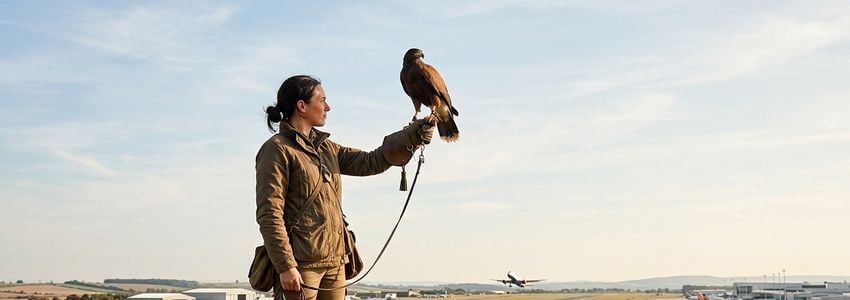
Bird Control Services Business Financing: The Complete Guide for Falconry and Bird Abatement Companies
Bird control services businesses, including falconry-based abatement companies, netting and deterrent installers, and integrated bird management firms, need reliable access to capital to grow. Financing for a bird control services company typically covers falconry birds and mews, specialized vehicles, netting and deterrent equipment, drone systems, and the working capital needed to bridge seasonal contract cycles at airports, landfills, agricultural operations, and commercial properties.
Whether you operate a falconry-based abatement service protecting vineyards and airports from nuisance birds, or you run a broader bird control company installing netting, spikes, sonic deterrents, and visual scare devices, the right financing lets you win larger contracts, add trained raptors and handlers, and maintain cash flow between billing cycles. This guide covers every financing option available to bird abatement and bird control services businesses, how to qualify, what lenders look for, and how to use capital strategically to grow.
In This Article
- What Is a Bird Control Services Business?
- Why Bird Control Companies Need Financing
- Types of Financing Available
- How Bird Control Business Financing Works
- Who Qualifies?
- Comparing Your Financing Options
- How Crestmont Capital Helps
- Real-World Scenarios
- Tips for Getting Approved
- Frequently Asked Questions
- How to Get Started
What Is a Bird Control Services Business?
A bird control services business provides commercial and institutional clients with solutions to manage nuisance bird populations that threaten safety, sanitation, crops, or infrastructure. This industry spans several specialized service models, all built around the same core need: keeping birds away from places where they cause damage, health hazards, or safety risks.
Falconry-based abatement companies use trained raptors, primarily hawks and falcons, along with their handlers, to patrol properties and create a natural predator presence that disperses nuisance birds like pigeons, gulls, starlings, and geese. This method is widely used at airports (where bird strikes threaten aircraft), landfills, vineyards, orchards, solar farms, and stadiums.
Broader bird control companies combine falconry with physical deterrents such as netting, bird spikes, sloped ledge guards, sonic and ultrasonic devices, laser deterrent systems, and visual scare devices (reflective tape, predator decoys, and inflatable eyes). Many companies also offer nest removal, bird proofing installation, and ongoing maintenance contracts.
Key Stat: According to FAA wildlife strike data, bird strikes cost U.S. civil aviation hundreds of millions of dollars annually in aircraft damage and delays, which is why airports maintain year-round contracts with bird control and falconry abatement companies as a standard part of runway safety operations.
The business model for bird control services is typically contract-based, with clients signing monthly or annual agreements for recurring visits, seasonal surge coverage (such as harvest season for vineyards or migration season near airports), or one-time installation projects for physical deterrent systems. This creates a mix of recurring service revenue and larger project-based revenue that financing needs to account for.
Why Bird Control Companies Need Financing
Bird control and falconry abatement businesses are more capital-intensive than most people realize. Common financing needs include:
- Falconry birds, mews, and handler equipment: Acquiring and training raptors, building proper mews (housing enclosures), and equipping handlers with jesses, hoods, telemetry trackers, and transport crates requires meaningful upfront investment before a bird is contract-ready.
- Specialized vehicles: Trucks and vans outfitted to transport birds, netting equipment, ladders, and installation tools to job sites, often requiring climate-controlled compartments for live raptors.
- Netting and physical deterrent inventory: Commercial-grade bird netting, spike strips, sonic/ultrasonic units, and laser deterrent systems represent significant per-job material costs, especially for large installation contracts.
- Drone and technology systems: Some modern bird abatement companies now supplement falconry with drone-based deterrent systems, requiring capital investment in aerial equipment and operator certification.
- Winning larger contracts: Airport, landfill, and municipal contracts often require proof of insurance, bonding, and the operational capacity to service multiple sites simultaneously, which means hiring additional handlers and acquiring more birds and equipment before revenue starts.
- Seasonal cash flow bridging: Agricultural bird abatement work is highly seasonal (concentrated around planting and harvest), while airport and landfill contracts are steady. Companies that serve both need working capital to smooth out the gaps.
- Insurance and bonding costs: Liability insurance for live-animal-based services and performance bonds for municipal contracts require upfront capital that financing can help cover.
Ready to Grow Your Bird Control Business?
Get fast, flexible financing from the #1 rated business lender in the U.S. No obligation, apply in minutes.
Apply Now →Types of Financing Available for Bird Control Services Businesses
Equipment Financing
Equipment financing is the most direct product for bird control companies investing in netting installation tools, sonic/laser deterrent units, mews construction materials, and handler gear. The equipment or materials often serve as partial collateral, which can make approval more accessible than unsecured products. Terms typically run 2 to 6 years depending on the equipment's useful life.
Commercial Vehicle Financing
Bird control companies rely on trucks and vans to transport raptors, netting, ladders, and installation crews between job sites. Commercial vehicle financing covers new or used trucks, often including custom outfitting for bird transport compartments, with terms of 3 to 6 years.
Working Capital Loans
Working capital loans are the most flexible option for covering payroll for handlers, insurance premiums, bonding costs, and the seasonal gaps between agricultural contract cycles. These unsecured, short-to-medium-term loans are approved primarily based on monthly revenue and banking history, with funding often available within 24 to 72 hours.
SBA Loans
SBA 7(a) loans offer competitive rates for established bird control companies expanding into new markets, acquiring competitors, or investing heavily in raptor training programs and facility build-outs. The process takes 30 to 90 days with detailed documentation requirements, but the long repayment terms keep monthly payments manageable. For a full overview, see: Pest Control Business Loans: The Complete Financing Guide.
Business Lines of Credit
A business line of credit provides revolving access to capital that bird control companies can draw on during slow contract periods and repay once seasonal or contract-based revenue resumes. This is one of the most efficient tools for businesses with lumpy, contract-driven cash flow like agricultural and municipal bird abatement work.
| Financing Type | Best For | Amount Range | Speed |
|---|---|---|---|
| Equipment Financing | Netting, deterrent units, mews build-out | $10K - $500K | 1-5 days |
| Commercial Vehicle Financing | Trucks and vans for bird transport | $15K - $250K | 2-5 days |
| Working Capital | Payroll, insurance, seasonal gaps | $10K - $500K | 24-72 hours |
| SBA Loan | Market expansion, acquisitions | Up to $5M | 30-90 days |
| Line of Credit | Contract cycle cash flow flexibility | $25K - $500K | Days-weeks |
By the Numbers
Bird Control Services Financing - Key Figures
700
Monthly U.S. searches for bird control services
80-100%
Equipment cost typically covered by equipment financing
24-72 Hrs
Typical working capital funding speed
10 Yrs
Standard SBA 7(a) repayment term
How Bird Control Business Financing Works
Application and Underwriting
Most bird control services financing starts with a straightforward application: business details, time in operation, and monthly revenue. Lenders review 3 to 6 months of business bank statements to confirm consistent deposits from contract billing. Because much of this industry runs on recurring contracts (airport agreements, municipal deals, agricultural service contracts), lenders view predictable monthly billing very favorably.
Equipment and Vehicle Underwriting
For equipment or vehicle financing, lenders review the specific quote or invoice for the equipment, netting materials, or vehicle being financed. The asset itself typically serves as collateral, which reduces risk for the lender and often results in more favorable terms than unsecured working capital.
Funding Timeline
Working capital loans can be approved within hours and funded within 24 to 72 hours once bank statements are submitted. Equipment financing typically takes 1 to 5 business days, since it requires reviewing the equipment quote alongside financial documents. SBA loans take significantly longer (30 to 90 days) due to the depth of documentation required, but they carry the lowest rates for qualified businesses.
Repayment Structures
Working capital loans are typically repaid via daily or weekly ACH debits tied to a factor rate. Equipment and vehicle financing use fixed monthly payments over a set term matched to the asset's useful life. Lines of credit only charge interest on the amount drawn, making them ideal for bridging seasonal gaps between agricultural contract cycles.
Who Qualifies for Bird Control Business Financing?
Time in Business
Most working capital lenders require a minimum of 6 months in business, though some accept newer companies with strong contract documentation. Equipment financing is sometimes available to newer companies when sufficient collateral value exists. SBA loans typically require at least 2 years of operating history and complete financial records.
Monthly Revenue
Revenue is the primary qualification driver for working capital products. Most lenders look for at least $8,000 to $15,000 in average monthly revenue. A bird control company running three active municipal and agricultural contracts at $4,000 each generates $12,000 monthly, which is typically sufficient for initial working capital financing. Loan amounts are generally calculated at 100% to 150% of average monthly revenue.
Credit Score
Working capital lenders accept credit scores as low as 550 to 580. Equipment and vehicle financing typically requires 575 to 620. SBA loans require 650 to 680 or higher. Business owners with average personal credit but consistent contract revenue and clean banking history routinely access financing successfully.
Contract Documentation
Because much of this industry runs on service contracts, having signed agreements with airports, municipalities, landfills, or agricultural clients strengthens an application significantly. Lenders view multi-month or multi-year contracts as evidence of predictable future revenue, which can improve approval odds and terms.
Insurance and Licensing
Businesses using live raptors typically need specific liability coverage and, in many states, falconry permits or wildlife handling licenses. Lenders reviewing applications for this niche industry look favorably on companies that can document proper permits, insurance, and any required certifications, since this reduces operational risk.
Comparing Your Financing Options
Choosing the right financing product depends on what you're funding and how quickly you need capital.
Working Capital vs. Equipment Financing
Working capital is unsecured and flexible, best for payroll, insurance, and bridging seasonal cash flow gaps. Equipment financing is secured by the specific asset (netting systems, deterrent units, mews construction), typically offering longer terms and lower monthly payments for larger purchases. If you know exactly what equipment you need and have a quote in hand, equipment financing usually offers better economics than working capital for the same purchase.
Line of Credit vs. Term Loan
A line of credit only charges interest on funds actually drawn, which suits companies whose revenue fluctuates with agricultural seasons or contract renewal cycles. A term loan or working capital advance provides a lump sum upfront, better suited to a specific one-time investment like acquiring a competitor's book of business or building a new mews facility.
SBA Loans vs. Conventional Working Capital
SBA loans offer the lowest rates and longest terms but require 2+ years in business, strong financials, and 30 to 90 days for approval. Conventional working capital and equipment financing approve much faster (often within days) and accept newer businesses or lower credit scores, at the cost of higher rates. Companies with an urgent equipment need or contract deadline often use working capital now and refinance into an SBA loan later once eligible.
Get Your Bird Control Company Financed
Crestmont Capital works with specialty service businesses every day. Fast decisions, transparent terms.
Start Your Application →How Crestmont Capital Helps Bird Control Services Businesses
Crestmont Capital is a direct lender and one of the top-rated business financing companies in the United States. We work with specialty service businesses, including bird control, falconry abatement, and wildlife management companies, at every stage of growth.
Through Crestmont Capital's small business financing programs, bird control company owners can access:
- Equipment financing for netting systems, deterrent units, and mews construction
- Commercial vehicle financing for trucks and vans outfitted to transport raptors and installation crews
- Working capital loans from $10,000 to $2,000,000+ for operational needs
- Business lines of credit for ongoing seasonal and contract cycle cash flow management
- Fast approvals, often within hours for working capital products
- Direct lender access with no brokers and no markups
Bird abatement and wildlife control companies share many of the same financing considerations as the broader pest control industry. See our related guide: Wildlife Removal Business Loans: The Complete Financing Guide for additional context on financing specialty animal and wildlife service businesses.
Start your application at offers.crestmontcapital.com/apply-now, it takes less than 10 minutes with no credit score impact.
Real-World Scenarios
Scenario 1: Winning a Regional Airport Contract
A falconry-based abatement company with two active municipal contracts was invited to bid on a regional airport's year-round bird strike prevention contract. Winning the bid required demonstrating the capacity to service the airport six days a week, which meant training two additional raptors and hiring a second full-time handler before the contract could start. A $65,000 equipment and working capital package covered raptor acquisition, mews expansion, and two months of payroll ahead of the first invoice. The airport contract added $9,500 per month in recurring revenue, and the loan was repaid within 14 months.
Scenario 2: Bridging the Off-Season
A bird abatement company serving vineyards and orchards saw revenue drop by 60% between November and February when agricultural clients paused service. A $30,000 working capital loan covered handler payroll, raptor care costs, and equipment maintenance through the off-season without layoffs. When the spring growing season began, the company retained its full trained staff and immediately resumed full contract capacity, avoiding the cost and delay of rehiring and retraining handlers each year.
Scenario 3: Expanding Into Netting and Physical Deterrents
A single-service falconry company wanted to diversify into commercial netting and spike installation to capture larger, higher-margin building protection contracts. A $45,000 equipment financing package covered netting inventory, installation tools, and a lift-equipped van. The new service line added three commercial building contracts worth $6,200 combined monthly revenue within the first quarter, and the equipment loan was repaid within 20 months from the new service line alone.
Scenario 4: Landfill Contract Equipment Upgrade
A bird control company holding a long-term landfill contract needed to add sonic deterrent units and a second falconry team to meet an expanded scope requirement from the municipality. A $38,000 equipment loan funded the new deterrent units and additional raptor housing. The expanded contract scope increased monthly billing by $3,800, and the company recovered the full equipment investment within 11 months.
Tips for Getting Approved
Maintain Clean, Consistent Business Banking
All contract revenue should flow through a dedicated business checking account. Lenders need to see clean, consistent deposit patterns to assess cash flow health. Mixing business and personal finances slows underwriting and can hurt approval odds.
Document Your Contracts
Have signed service agreements, purchase orders, or municipal contract letters ready to share. Multi-month or multi-year agreements demonstrate predictable revenue and materially strengthen an application, especially for newer businesses without years of tax returns.
Get Equipment Quotes in Advance
For equipment or vehicle financing, having a specific quote from a netting supplier, deterrent equipment manufacturer, or vehicle dealer speeds up underwriting significantly and adds credibility to the application.
Keep Insurance and Permits Current
Proof of current liability insurance and any required falconry or wildlife handling permits reduces perceived risk for lenders evaluating a specialty live-animal service business. Keep these documents organized and ready to provide.
Apply With a Direct Lender
Brokers add cost and delay to the financing process. Apply directly at offers.crestmontcapital.com/apply-now for transparent, fast service with no markup on your rate.
Frequently Asked Questions About Bird Control Services Business Financing
How to Get Started
Identify whether you need equipment, a vehicle, working capital, or a line of credit, and connect it to the contract or growth opportunity it will unlock.
Pull together 3 to 6 months of business bank statements, any signed contracts, and equipment quotes if applicable.
Apply at offers.crestmontcapital.com/apply-now, it takes under 10 minutes with no credit score impact.
Understand total repayment, payment schedule, and all fees before signing. A reputable lender provides full transparency.
Use the funds for the specific purpose identified, whether that's a new contract, additional raptors, or bridging a seasonal gap, and track the revenue or savings it generates.
Conclusion
Bird control services financing gives falconry abatement companies and broader bird management businesses the capital to win larger airport, municipal, and agricultural contracts, invest in trained raptors and deterrent equipment, and maintain steady operations through seasonal revenue swings. Whether you need equipment financing for netting and mews construction, a vehicle to transport your team and raptors, or working capital to bridge the off-season, the right financing product is available for your business.
Approach your application with clean banking records, documented contracts, and a clear purpose for the capital, and you will find that bird control services companies have strong access to business financing. Crestmont Capital works with specialty service businesses every day to deliver fast, transparent financing decisions. Start your application today at offers.crestmontcapital.com/apply-now.
Ready to Grow Your Bird Control Business?
Apply now for fast decisions, flexible terms, no obligation, and no credit score impact.
Apply Now →Disclaimer: The information provided in this article is for general educational purposes only and is not financial, legal, or tax advice. Funding terms, qualifications, and product availability may vary and are subject to change without notice. Crestmont Capital does not guarantee approval, rates, or specific outcomes. For personalized information about your business funding options, contact our team directly.








