
Construction Business Loans: Financing for Contractors & Construction Companies
Running a construction business means operating in one of the most financially demanding industries in America. You win a contract, mobilize equipment, hire crews, purchase materials — and then wait. Net-30, net-60, even net-90 payment terms from general contractors mean your cash goes out months before it comes back in. Meanwhile, the excavator sitting on your job site cost $350,000, your bonding renewal is due, and your subcontractors need payroll on Friday regardless of when your draw is released.
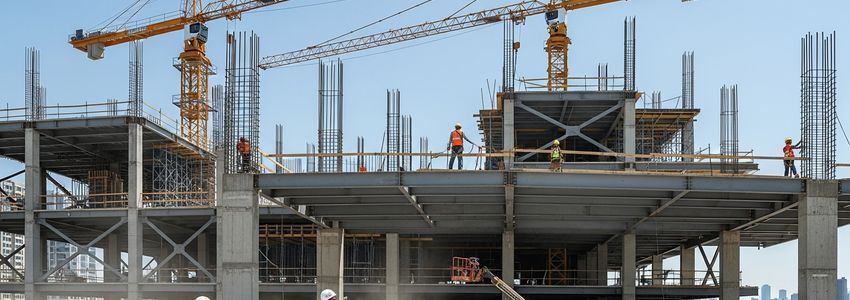
The construction industry generated over $2.1 trillion in output in 2023 according to the Associated General Contractors of America, yet it remains one of the most underserved sectors when it comes to traditional bank financing. Banks struggle to underwrite contractors because revenue is project-based, cash flow is lumpy, and collateral is often mobile equipment — not real estate. The result? Qualified contractors get denied or wait 60–90 days for a loan decision while opportunities pass them by.
At Crestmont Capital, we've been bridging that gap since 2015. We specialize in construction business financing designed around how contractors actually operate — fast approvals, flexible structures, and funding amounts from $10,000 to $5,000,000. Whether you need to finance a new excavator, cover payroll during a slow draw period, or secure a line of credit for bidding season, we have a solution built for your business.
Why Construction Companies Need Specialized Financing
Construction businesses face a unique set of financial pressures that generic small business lenders simply aren't equipped to handle. Understanding these challenges is the first step to solving them.
The Cash Flow Gap Problem
According to a survey by Forbes, cash flow is the number one reason small businesses fail — and construction companies are especially vulnerable. When you complete a phase of work, you submit a pay application. That application goes to the GC, who processes it and submits to the owner, who may have 30, 60, or even 90 days to remit payment under the contract terms. During that time, you're still paying workers, fuel, material suppliers, and equipment costs. The gap between expense and income can be tens or hundreds of thousands of dollars on a single project.
Equipment Acquisition and Depreciation
Construction equipment is expensive and essential. A single excavator runs $80,000 to $500,000. A crawler crane can cost $300,000 to $2,000,000. Bulldozers range from $100,000 to $400,000. Concrete mixers typically cost $80,000 to $200,000, and even workhorse dump trucks run $80,000 to $200,000. Skid steers — the compact workhorses of smaller contractors — range from $40,000 to $80,000. Purchasing this equipment outright drains working capital; renting it on every job erodes margins. Financing allows you to own income-producing equipment while preserving cash.
Bonding and Licensing Requirements
Most public and large private construction contracts require performance and payment bonds. Surety bonds typically cost 1–3% of the contract value upfront — a $2M contract requires $20,000–$60,000 in bonding costs before the first shovel breaks ground. Contractor license renewals, insurance premiums, and certifications add to the front-loaded nature of construction cash outflows.
Material Costs Before Draws Are Released
Most construction projects operate on a draw schedule tied to project milestones. You must purchase materials, install them, pass inspection, and then wait for the draw to be released. On a $500,000 project, you might front $100,000+ in materials before seeing a single dollar of the draw. Working capital loans and lines of credit solve this problem by funding material purchases and operations between draws.
Subcontractor Payroll Management
General contractors who use subcontractors must often pay those subs faster than the owner pays the GC. Maintaining payroll and subcontractor payments on time is critical to keeping jobs moving and retaining quality crews. A delay in your payment doesn't justify a delay in theirs — at least not legally or reputationally.
Seasonal Revenue Fluctuations
Construction is seasonal in much of the country. Northern contractors may have 6–8 months of peak revenue followed by a slow winter. During the off-season, overhead continues: equipment storage, insurance, office staff, and loan payments don't stop. A business line of credit bridges these seasonal gaps and ensures you're ready to mobilize when the busy season returns.
Types of Construction Business Loans
Crestmont Capital offers multiple financing products designed to address the specific needs of construction companies at every stage of growth.
1. Equipment Financing
Equipment financing is one of the most powerful tools available to contractors. Instead of tying up working capital in equipment purchases, you finance the asset and pay it down over time while the equipment earns revenue on your jobs. With equipment financing, the equipment itself typically serves as collateral, which makes approval easier and rates more favorable than unsecured loans.
Common construction equipment financed through Crestmont Capital includes:
- Excavators: $80,000–$500,000 — the backbone of earthmoving operations
- Bulldozers: $100,000–$400,000 — essential for grading and land clearing
- Cranes: $300,000–$2,000,000 — tower cranes, crawler cranes, and mobile cranes for vertical construction
- Concrete mixers: $80,000–$200,000 — drum mixers and transit mixers for concrete contractors
- Dump trucks: $80,000–$200,000 — haul material efficiently on any job site
- Skid steers: $40,000–$80,000 — versatile compact loaders for tight spaces
- Backhoes, compactors, forklifts, pavers, graders, and more
The economics are clear: renting an excavator costs $3,000–$8,000 per week. Financing the same machine at $350,000 might cost $7,500/month — and after 5 years, you own a piece of equipment that still has 15+ years of useful life and significant resale value.
2. Business Line of Credit
A construction line of credit is a revolving facility that functions like a business credit card but with much higher limits and lower rates. You draw funds when you need them, repay them, and the credit replenishes. Lines of credit are ideal for:
- Covering payroll between project draws
- Purchasing materials before a draw is released
- Funding bid bonds and performance bonds
- Bridging cash flow gaps during slow payment periods
- Managing seasonal slow periods
Construction lines of credit from Crestmont Capital range from $10,000 to $500,000, with draw-and-repay flexibility that matches your project cycle.
3. Working Capital Loans
Working capital loans provide a lump sum of cash to cover operational expenses. Unlike equipment loans that are tied to a specific asset, working capital loans can be used for any legitimate business purpose — payroll, materials, insurance, subcontractors, overhead. Terms range from 6 months to 5 years, with weekly or monthly repayment schedules designed to align with construction cash flow cycles.
4. SBA Loans
SBA loans — backed by the U.S. Small Business Administration — offer the lowest interest rates and longest repayment terms available to small contractors. The SBA 7(a) program offers up to $5 million for working capital, equipment, and real estate, while the SBA 504 program is ideal for large equipment purchases or commercial real estate acquisition. SBA loans require more documentation and take 30–90 days to close, but for contractors seeking long-term, low-cost capital, they represent exceptional value.
5. Term Loans
Traditional term loans provide a fixed amount of capital repaid over a set period, typically 1–10 years. Term loans are ideal when you have a specific, large capital need — purchasing a used crane, hiring a project manager, expanding your yard, or acquiring a competitor. Fixed monthly payments make budgeting simple and predictable.
6. Fast Business Loans
When an opportunity arises — a bid you need to bond immediately, equipment at auction, a subcontractor who needs payment or walks — you don't have weeks to wait. Fast business loans from Crestmont Capital can fund in as little as 24 hours. With minimal documentation and streamlined approval, these loans are designed for contractors who need capital now, not next month.
7. Invoice Financing / Accounts Receivable Financing
If you're sitting on $200,000 in submitted but unpaid invoices, invoice financing converts that receivable into immediate cash. You receive a percentage (typically 80–90%) of the invoice value upfront, and the remainder (minus fees) when the invoice is paid. This is particularly valuable for subcontractors dealing with slow-paying GCs on net-60 or net-90 terms.
Who Qualifies for Construction Business Loans?
Crestmont Capital works with a wide range of construction businesses. Here are typical eligibility benchmarks — though we evaluate each application holistically:
| Requirement | Minimum | Preferred |
|---|---|---|
| Time in Business | 6 months | 2+ years |
| Annual Revenue | $100,000 | $500,000+ |
| Personal Credit Score | 550 | 650+ |
| Business Credit | Not required | Established preferred |
| Contractor License | Required (where applicable) | Active & in good standing |
| Business Bank Account | Required | 3+ months statements |
| Collateral | Not always required | Equipment preferred for large loans |
| Bankruptcies | Discharged 1+ year | Clean history preferred |
Ready to Fund Your Next Project?
Get a decision in as little as 24 hours. No obligation, no hard credit pull to apply.
Apply for Construction Financing →Rates, Fees, and Terms
Construction loan rates vary based on loan type, amount, term, and the strength of your business profile. Here is a general overview of what to expect:
| Loan Type | Typical Rate Range | Term | Amount Range |
|---|---|---|---|
| Equipment Financing | 5%–25% APR | 24–84 months | $10K–$5M |
| Business Line of Credit | 10%–35% APR | Revolving (6–24 month draw period) | $10K–$500K |
| Working Capital Loan | 15%–45% factor rate | 6–36 months | $10K–$500K |
| SBA 7(a) Loan | Prime + 2.25%–4.75% | Up to 10 years (25 for RE) | Up to $5M |
| Term Loan | 8%–30% APR | 1–10 years | $25K–$2M |
| Fast Business Loan | 1.15–1.45 factor rate | 3–18 months | $10K–$250K |
| Invoice Financing | 1%–5% per 30 days | Per invoice cycle | Up to 90% of invoice value |
How It Works: 5 Steps to Construction Financing
Complete our simple online application at offers.crestmontcapital.com/apply-now. Tell us how much you need, what it's for, and basic information about your business. No lengthy paper forms, no branch visits required.
We'll request supporting documents — typically 3–6 months of bank statements, a copy of your contractor license, and basic business info. For larger loans, we may request tax returns or financial statements. Our team guides you through exactly what's needed.
Our construction-specialized underwriting team evaluates your application typically within 24 hours. We analyze cash flow patterns, contract pipeline, equipment value, and business health — not just your credit score. We understand how construction businesses operate.
You'll receive a clear, transparent loan offer detailing the amount, rate, term, payment schedule, and total cost of capital. No hidden fees, no surprises. You're under no obligation to accept, and reviewing the offer does not affect your credit.
Once you accept and complete final verification, funds are deposited directly to your business bank account — often the same day or next business day. For equipment financing, we work directly with the seller or dealer on your behalf.
Construction Financing by Contractor Type
Different types of contractors have different financing needs. Here's how Crestmont Capital supports each sector of the construction industry:
| Contractor Type | Primary Financing Need | Best Product | Typical Loan Size |
|---|---|---|---|
| General Contractors | Working capital between draws, subcontractor payments | Line of credit, term loan | $100K–$1M |
| Subcontractors | Payroll during net-60/90 payment cycles | Working capital, invoice financing | $25K–$300K |
| Roofing Contractors | Equipment, materials, seasonal working capital | Equipment loan, term loan | $50K–$250K |
| Plumbing Contractors | Vehicle fleets, tools, materials | Equipment financing, line of credit | $30K–$200K |
| Electrical Contractors | Materials pre-purchase, project mobilization | Working capital, line of credit | $30K–$300K |
| HVAC Contractors | Equipment, seasonal cash flow management | Equipment loan, term loan | $50K–$400K |
| Excavation Companies | Heavy equipment (excavators, bulldozers) | Equipment financing, SBA 504 | $100K–$2M |
| Concrete Contractors | Mixers, pumps, batch plants, materials | Equipment financing, term loan | $75K–$500K |
| Painting Contractors | Vehicles, equipment, crew expansion | Working capital, line of credit | $20K–$150K |
| Landscaping Companies | Equipment, vehicles, seasonal expansion | Equipment financing, line of credit | $25K–$200K |
Construction Industry by the Numbers
Sources: AGC of America, U.S. SBA, OSHA
Don't Let Cash Flow Kill Your Next Contract
Crestmont Capital has funded construction companies across all 50 states. Get your offer today with no obligation.
Get My Construction Loan →Real-World Financing Scenarios for Construction Companies
Abstract financing concepts become much clearer with real examples. Here's how construction businesses are using Crestmont Capital financing to solve common problems and seize opportunities.
Scenario 1: Roofing Contractor — $85,000 Equipment Purchase
A roofing contractor in Texas with 8 years in business and $1.2M in annual revenue was tired of renting a hydraulic lift and boom truck for every commercial job. Rental costs were running $2,200 per week — roughly $28,000 per year for a single piece of equipment. The contractor found a quality used boom truck for $85,000.
Crestmont Capital approved an equipment loan for the full $85,000 at 12% APR over 60 months. Monthly payment: $1,890. Annual cost: $22,680. First-year savings vs. renting: over $5,000 — and growing each year as rental rates rise. After 5 years, the contractor owns an asset worth an estimated $30,000–$45,000 and has paid less in total than the equivalent rental cost.
Scenario 2: General Contractor — $200,000 Working Capital Bridge
A general contractor in Georgia won a $1.8M commercial tenant improvement project. The project included a 30-day mobilization period followed by monthly draw requests — but draws could take 45–60 days to be approved and paid by the property owner. Within 90 days of starting the project, the GC had fronted $185,000 in materials, subcontractor deposits, and labor costs with no draws received yet.
Crestmont Capital provided a $200,000 working capital loan at a factor rate of 1.22, repaid over 18 months. The GC used the capital to maintain cash flow, pay subcontractors on time, and keep the project on schedule. The first draw was received at month 3, and the GC used those funds to begin repaying the loan ahead of schedule.
Scenario 3: Excavation Company — $350,000 Excavator Financing
An excavation company in Ohio had been renting a 35-ton excavator at $7,500 per week for two years — totaling approximately $390,000 in rental fees for a machine it didn't own. With a growing pipeline of earthmoving contracts, ownership made obvious financial sense. The company identified a late-model Caterpillar 336 excavator priced at $350,000.
Crestmont Capital structured an equipment financing package for $350,000 at 9.5% APR over 72 months — a monthly payment of $6,290. Compared to their $7,500 weekly rental bill on busy weeks, the owned excavator effectively pays for itself. The company also qualified for significant Section 179 tax deductions in year one, further improving the economics.
Scenario 4: Electrical Subcontractor — $75,000 Line of Credit for Payroll
An electrical subcontractor in Florida had a reliable roster of commercial clients but was constantly cash-strapped between invoice submission and payment. The company had 12 electricians on payroll with bi-weekly pay cycles, but GCs consistently paid on net-45 to net-60 terms. A single large job representing $180,000 in receivables created a $75,000 payroll gap during a 6-week stretch.
Crestmont Capital approved a $100,000 business line of credit. The subcontractor drew $75,000 to cover payroll, repaid $45,000 when the first payment came in at week 6, and drew again as needed for the second job starting immediately after. The revolving structure meant the credit was available project after project without reapplying.
How Construction Financing Compares to Other Options
Not all financing is created equal. Here's how Crestmont Capital stacks up against common alternatives for construction companies:
| Option | Speed | Requirements | Rates | Flexibility | Best For |
|---|---|---|---|---|---|
| Crestmont Capital | 24–48 hrs | 6 mo. in business, $100K revenue | Competitive | High | Contractors needing fast, flexible funding |
| Traditional Bank | 30–90 days | Strong credit, 2+ yrs, financials | Low | Low | Well-established contractors with perfect credit |
| SBA Loan (via broker) | 30–90 days | Good credit, financials, collateral | Very low | Medium | Long-term capital needs, patient borrowers |
| Equipment Rental | Immediate | None | Highest (long-term) | High | Short-term or one-off jobs only |
| Business Credit Card | Immediate | Personal credit | High (18–26%) | Medium | Small purchases, emergencies only |
| Merchant Cash Advance | 24–48 hrs | Revenue-based | Very high | Low | Last resort — avoid for equipment |
| Factoring Company | 3–7 days | Verified invoices | High (1–5%/30d) | Medium | Sub with slow-paying GC |
Compare Your Options With a Real Advisor
Not sure which product is right for your construction business? Our advisors specialize in contractor financing and will help you choose the most cost-effective solution.
Talk to a Construction Financing Advisor →6 Tips for Getting Approved for Construction Business Loans
While Crestmont Capital works with a wide range of contractors — including those with credit challenges — here are six steps you can take to maximize your approval odds and get the best possible terms.
Tip 1: Keep Your Contractor License Current
An expired or lapsed license is a red flag for any construction lender. Before applying, verify that your general contractor license, specialty licenses, and any required state registrations are active, paid up, and not under any disciplinary proceedings. Lenders may verify license status during underwriting.
Tip 2: Maintain a Dedicated Business Bank Account
Lenders evaluate your bank statements to assess cash flow patterns. If personal and business transactions are commingled, it makes underwriting harder and can hurt your approval. Maintain a dedicated business checking account and route all project payments and expenses through it. Ideally, show 3–6 months of consistent deposits.
Tip 3: Document Your Contract Pipeline
Signed contracts and letters of intent demonstrate future revenue — something traditional banks struggle to evaluate but alternative lenders like Crestmont Capital understand deeply. If you have upcoming projects under contract, include that documentation with your application. A $500,000 contract in hand is powerful supporting evidence for a $150,000 working capital loan.
Tip 4: Build Business Credit Separately from Personal Credit
A strong business credit profile — maintained through Dun & Bradstreet, Experian Business, and Equifax Business — gives lenders additional confidence and can help you access higher amounts at lower rates. Open trade credit accounts with your material suppliers, pay them early, and ensure they report to business credit bureaus.
Tip 5: Be Transparent About Cash Flow Cycles
Don't try to hide the seasonality or lumpiness of construction cash flow — lenders who specialize in construction understand it. Explain your draw schedules, your typical payment cycles from GCs, and your seasonal patterns. A lender who understands the construction business will see a well-managed contractor; a lender who doesn't will see volatility and say no.
Tip 6: Apply Before You Desperately Need It
The worst time to apply for a line of credit is when you're already cash-strapped and behind on bills. Apply when your business is healthy and you have upcoming projects. Establish the line of credit before you need it, and it will be there when you do. According to CNBC, businesses that secure financing proactively — not reactively — consistently outperform peers during economic downturns and slow periods.
Why Choose Crestmont Capital for Construction Financing
Since 2015, Crestmont Capital has been a trusted financing partner for construction companies across all 50 states. Here's what sets us apart:
- Construction Industry Expertise: We understand construction cash flow, draw schedules, equipment economics, and bonding requirements. Our underwriters don't penalize you for how construction businesses actually work.
- Speed When It Matters: Decisions in as little as 24 hours. Funding in 1–3 business days. When a job is on the line or equipment is at auction, we don't make you wait 60 days.
- Multiple Products, One Relationship: Whether you need equipment financing today and a line of credit in six months, Crestmont Capital handles it all. One lender, one relationship, growing with your business.
- Transparent Terms: No prepayment penalties on most products. No hidden origination fees buried in fine print. We show you the total cost of capital upfront so you can make informed decisions.
- Flexible Credit Standards: We don't require perfect credit. We look at your entire business picture — revenue, contracts, equipment, business history — not just a three-digit score.
- Dedicated Advisors: You'll work with a real person who knows your industry, not an algorithm. Our advisors are available to walk you through options, structure solutions, and advocate for your approval.
- Nationwide Reach: Licensed to fund in all 50 states, with experience across residential, commercial, civil, industrial, and specialty construction sectors.
Frequently Asked Questions — Construction Business Loans
How much can I borrow for a construction business loan?
What is the minimum credit score needed for a construction loan?
How fast can I get funded?
Can I finance used construction equipment?
Do I need collateral to get a construction business loan?
Can a new contractor with less than a year in business qualify?
Can I use a construction loan to cover subcontractor payments?
What documents do I need to apply?
Is there a prepayment penalty?
Can I refinance existing construction equipment debt?
How does a construction line of credit work for bid bonding?
What happens if I miss a payment?
Does applying hurt my credit score?
Get Your Construction Business Loan Today
Join thousands of contractors who trust Crestmont Capital for fast, flexible financing. Amounts from $10,000 to $5,000,000. Decisions in 24 hours.