
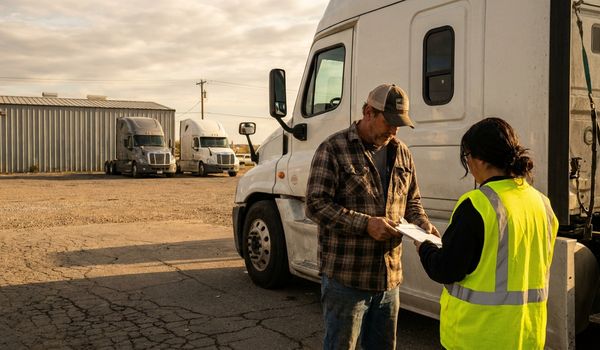
The trucking industry keeps American commerce moving, and the latest trucking industry statistics tell a story of a sector that is large, capital intensive, and increasingly dependent on flexible financing. Whether you run a single truck as an owner-operator or manage a regional fleet of fifty power units, understanding the numbers behind trucking industry financing helps you benchmark your costs, time your purchases, and negotiate from a position of knowledge. This report compiles the most important trucking industry statistics for 2026, with a focus on what they mean for financing decisions: truck prices, loan terms, approval rates, down payments, and the market forces shaping lender behavior this year.
Every figure below is drawn from government data, industry surveys, or lender portfolio reporting, and each one carries a practical takeaway for fleet owners who plan to buy, lease, or refinance equipment in the next twelve months. Bookmark this page; we update our statistics coverage as new data releases throughout the year.
In This Article
- What Trucking Industry Statistics Cover
- Key Trucking Industry Financing Statistics for 2026
- The Trucking Financing Landscape in 2026
- How Trucking Companies Finance Trucks and Equipment
- Types of Trucking Industry Financing
- Financing Cost Comparison
- Who These Statistics Matter Most For
- Real-World Scenarios
- How Crestmont Capital Helps Trucking Companies
- Frequently Asked Questions
- How to Get Started
- The Bottom Line
What Trucking Industry Statistics Cover
Trucking industry statistics span three distinct layers, and each layer matters for a different kind of decision. The first layer is macro industry data: total revenue, freight tonnage, carrier counts, and employment. These numbers tell you whether the sector is expanding or contracting, which directly affects freight rates and your revenue per truck. The second layer is operating cost data: fuel, insurance, driver wages, maintenance, and the all-in cost per mile that determines whether a lane is profitable. The third layer, and the focus of this report, is financing data: what trucks cost, what lenders charge, how much you need down, how long approvals take, and which financing structures dominate the market.
Most published trucking statistics stop at the first two layers. They tell you that trucking generates more than $900 billion in annual revenue and moves roughly 72% of domestic freight tonnage, but they leave out the numbers a fleet owner actually needs before signing a purchase order. This report fills that gap. We pair the headline industry figures with the financing statistics that shape real purchase decisions, so you can see both the size of the opportunity and the cost of the capital required to capture it.
A quick note on sources: industry revenue and tonnage figures come from American Trucking Associations reporting, establishment and employment counts come from the U.S. Census Bureau's County Business Patterns program, loan program data comes from the U.S. Small Business Administration, and market condition reporting draws on coverage from outlets such as Reuters and CNBC's transportation desk. Where figures vary by source, we present ranges and note the variation.
Key Trucking Industry Financing Statistics for 2026
The headline numbers below summarize the state of trucking industry financing this year. Each statistic is explored in more depth in the sections that follow, with sourcing notes and practical context for fleet owners.
- Industry size: The U.S. trucking industry generates more than $900 billion in annual revenue and moves approximately 72% of the nation's freight by weight, making it the dominant mode of domestic freight transportation.
- Carrier structure: The industry is overwhelmingly made up of small businesses. Roughly 95% of registered motor carriers operate ten trucks or fewer, and the large majority operate six or fewer power units.
- Workforce: Approximately 3.5 million professional truck drivers work in the United States, and total employment across trucking-related occupations exceeds 8 million people.
- New truck pricing: A new Class 8 sleeper tractor typically costs between $175,000 and $220,000 in 2026, while new day cabs generally run $130,000 to $160,000 depending on specification.
- Used truck pricing: Used Class 8 tractors with moderate mileage commonly trade between $60,000 and $95,000, well below the 2021-2022 peak but firm compared with pre-2020 levels.
- Trailer pricing: New dry van trailers typically cost $40,000 to $55,000, while refrigerated trailers run $70,000 to $85,000 depending on unit and insulation package.
- Down payments: Truck and trailer financing typically requires 10% to 20% down, with first-time buyers and newer authorities trending toward the top of that range.
- Typical terms: Equipment loans for Class 8 trucks most commonly run 36 to 72 months, with some lenders extending to 84 months on new equipment for well-qualified borrowers.
- Rate environment: Well-qualified trucking borrowers in 2026 generally see equipment financing rates between 6% and 11%, while working capital and newer-authority products price higher.
- Approval rates: Approval outcomes vary widely by lender type. Large banks approve roughly half of small business loan applications overall, while alternative and specialty equipment lenders frequently report approval rates between 60% and 75% for established trucking operations.
- Funding speed: Bank and SBA financing typically takes two to eight weeks from application to funding, while alternative equipment lenders routinely fund truck deals in two to five business days.
- Operating cost context: Industry cost benchmarks place the average operating cost of a for-hire truck near $2.25 per mile excluding some overhead items, with non-fuel costs at record highs, which is why predictable fixed financing payments matter so much to margin planning.
By the Numbers
Trucking Industry Financing - Key Statistics for 2026
$900B+
Annual U.S. trucking industry revenue, the largest share of domestic freight
95%
Share of U.S. motor carriers operating ten trucks or fewer
$175K-$220K
Typical price of a new Class 8 sleeper tractor in 2026
2-5 days
Typical funding time with alternative equipment lenders, versus weeks at banks
Sources: American Trucking Associations industry reporting, U.S. Census Bureau County Business Patterns, SBA lending data, and lender portfolio benchmarks. Figures are estimates and vary by source, region, and borrower profile.
Key Stat: Trucks move approximately 72% of U.S. freight tonnage, and the industry generates more than $900 billion in annual revenue. With roughly 95% of carriers operating ten trucks or fewer, this is an industry built on small businesses that depend on equipment financing to compete.
The Trucking Financing Landscape in 2026
The financing environment for trucking companies in 2026 is shaped by the aftermath of the freight recession that ran from late 2022 through much of 2024. Spot rates fell hard during that period, carrier exits accelerated, and lenders tightened standards for newer authorities and thin-file borrowers. As freight markets have stabilized, lender appetite has returned in stages: first for established fleets with clean payment histories, then for growing mid-size carriers, and finally for well-prepared owner-operators making their first equipment purchase.
Rate behavior has tracked the broader rate environment. Equipment financing rates for well-qualified trucking borrowers generally sit between 6% and 11% in 2026, with the strongest credits, largest down payments, and newest collateral landing at the bottom of that band. Working capital products, unsecured term loans, and financing for newer authorities price above that range because the collateral position is weaker or the operating history is shorter. Borrowers with challenged credit can still find approvals, but pricing often runs several points higher and down payment requirements climb toward 20% or more.
Approval speed has become a competitive weapon among lenders. Traditional banks and SBA-backed programs still offer the lowest nominal rates, but their timelines of two to eight weeks do not match the pace of the used truck market, where a fairly priced tractor can sell within days of listing. Alternative equipment lenders have built their pitch around that gap: two to five day funding, softer credit minimums, and documentation requirements built around bank statements and revenue rather than multi-year tax returns. Market coverage from outlets such as CNBC has tracked how this speed premium has shifted share toward non-bank lenders since the freight recession ended.
One more landscape shift matters for 2026 planning: lenders are looking harder at cost discipline. With industry cost benchmarks placing non-fuel operating costs at record levels, underwriters increasingly ask how a borrower will absorb a payment when freight rates soften. Fleets that can show maintenance reserves, contracted freight, or diversified customer bases are winning approvals and pricing that less-prepared applicants are not. The statistics in this report are the same ones those underwriters use to benchmark you, which is exactly why they are worth knowing before you apply.
Need a Truck or Trailer Financed This Month?
Get a fast, no-obligation funding decision from the #1 business lender in the U.S. Apply in minutes.
Apply Now →How Trucking Companies Finance Trucks and Equipment
Despite the industry's size, the mechanics of truck financing are straightforward once you see the steps. The process below reflects how most Class 8 truck and trailer deals actually move from quote to funded in 2026, whether the borrower is a first-time owner-operator or a fleet adding its fortieth power unit.
Step 1: Define the Purchase
Lenders underwrite the collateral as carefully as they underwrite you. Before applying, nail down the year, make, model, mileage, and price of the truck or trailer, along with the seller type. Dealer purchases are the simplest to finance. Private-party sales are financeable but may require an inspection or appraisal, and auction purchases sometimes need same-week funding commitments that rule out slower bank programs.
Step 2: Gather Documentation
Established fleets typically need three to six months of business bank statements, a completed application, and proof of insurance authority. Newer authorities and first-time buyers should also expect requests for a CDL history, a brief business plan or lane projections, and occasionally tax returns. Having these ready before you apply is the single fastest way to shorten approval time, because documentation gaps cause more delays than credit issues.
Step 3: Compare Structures, Not Just Rates
A loan and a lease with the same monthly payment are not the same deal. Loans build equity and leave you owning the truck at payoff. Leases often lower the payment and simplify replacement cycles but may limit mileage or return conditions. Section ahead covers the main structures in detail; the key point here is to compare total cost of ownership, end-of-term position, and flexibility, not just the rate sheet.
Step 4: Get Approved and Fund
With a complete file, alternative equipment lenders typically issue decisions in 24 to 48 hours and fund within two to five business days. Banks and SBA programs take longer but reward strong files with lower pricing. Once funded, the lender pays the seller directly, you take title or possession per the structure, and payments begin on the agreed schedule.
Types of Trucking Industry Financing
Trucking companies use a wider mix of financing products than almost any other small business category, because a fleet's capital needs range from a $200,000 sleeper tractor to a $15,000 insurance premium. The statistics below reflect how these products distribute across the industry in 2026.
Equipment Loans
The workhorse of trucking finance. The truck or trailer secures the loan, which keeps pricing lower than unsecured products. Typical structures run 36 to 72 months with 10% to 20% down, and the borrower owns the equipment at payoff. Industry data consistently shows equipment loans account for the majority of Class 8 purchases by small carriers, and Crestmont Capital's equipment financing programs are built around exactly this use case.
Equipment Leases
Leasing remains popular with fleets that replace equipment on three-to-five-year cycles or want lower monthly payments. Operating leases keep trucks off the balance sheet, while finance leases function more like loans with a purchase option. Roughly a quarter to a third of new Class 8 deliveries to small and mid-size fleets are estimated to be leased rather than purchased.
SBA Loans
SBA 7(a) and 504 loans offer some of the lowest rates available to trucking companies, with 7(a) capped at $5 million and terms that can stretch to ten years or more. The trade-off is time and paperwork: approvals commonly take several weeks, and newer authorities rarely qualify. SBA data shows transportation and warehousing consistently ranks among the program's active industry categories, as reflected in SBA lending program reporting.
Working Capital and Lines of Credit
Freight pays slowly. Shippers and brokers commonly pay 30 to 45 days after delivery, while fuel, payroll, and insurance run weekly. A business line of credit or working capital facility bridges that gap, and for many carriers it is the difference between accepting a growth contract and turning it down. These products price higher than equipment loans because they are unsecured, but they solve a timing problem that equipment financing cannot.
Invoice Factoring
Factoring converts outstanding freight bills into immediate cash, typically advancing 85% to 95% of invoice value within a day and remitting the balance minus fees when the shipper pays. It is especially common among newer authorities that lack the history for traditional credit lines, and the industry's 30-to-45-day payment norms make it a permanent fixture of trucking finance rather than a stopgap.
Key Stat: A new Class 8 sleeper tractor runs $175,000 to $220,000 in 2026, and a refrigerated trailer adds $70,000 to $85,000. A five-truck fleet expansion can easily require $1 million or more in financed equipment, which is why structure and lender choice matter as much as rate.
Financing Cost Comparison
The table below compares the main financing structures trucking companies use in 2026, with typical rates, terms, down payments, and funding speeds. Ranges reflect common market pricing for qualified borrowers; individual quotes vary with credit, time in business, and collateral.
| Financing Type | Typical Rate Range | Typical Term | Down Payment | Funding Speed |
|---|---|---|---|---|
| Equipment Loan | 6% - 11% | 36 - 72 months | 10% - 20% | 2 - 5 business days (alternative lenders) |
| Equipment Lease | Varies by structure | 36 - 60 months | First/last payment to 10% | 2 - 5 business days |
| SBA 7(a) Loan | Prime + margin, often among the lowest available | Up to 10+ years | 10% - 20% | 3 - 8 weeks |
| Working Capital Loan | Higher than secured equipment pricing | 6 - 24 months | None | 24 - 72 hours |
| Invoice Factoring | Fee-based, typically 1% - 4% of invoice | Ongoing, per invoice | None | Same day - 24 hours |
| Business Line of Credit | Interest on drawn balance only | Revolving, renewed annually | None | 1 - 5 business days to open |
Two patterns in this table drive most fleet financing strategy. First, secured equipment financing is dramatically cheaper than unsecured cash flow products, so nearly every carrier finances the truck itself and reserves working capital products for the gaps equipment loans cannot cover. Second, speed and price trade off against each other: the cheapest money is the slowest, and the fastest money costs more. Matching the product to the urgency of the purchase is where experienced fleet owners save five figures over a truck's financing life.
Who These Statistics Matter Most For
Trucking industry financing statistics are not abstract research. They are negotiation tools, and four groups get the most mileage out of them.
First-Time Owner-Operators
A driver buying a first truck is making a $150,000-plus decision, often with limited financing history. Knowing that 10% to 20% down is standard prevents sticker shock, and knowing that alternative lenders fund in days while banks take weeks shapes where to apply first. Industry data showing that the large majority of carriers run six trucks or fewer also matters here: lenders built for small fleets understand this borrower far better than a generalist bank branch does.
Growing Small Fleets
Fleets moving from two or three trucks toward ten face a different challenge: sequencing. Financing five trucks in twelve months without overleveraging requires knowing typical approval patterns, how lenders view stacked debt, and when a line of credit is the right supplement. Benchmark approval-rate and rate-range data tells a growing fleet whether a quote is competitive before they sign it.
Established Carriers Refinancing or Refreshing
Carriers with equipment coming off loan face a choice between keeping paid-off trucks, refinancing aging units, or trading into new equipment. Used truck pricing statistics and current rate ranges are the inputs to that decision, and carriers who track them buy at soft points in the market instead of replacing in a panic after a breakdown.
Dispatchers, Brokers, and Industry Vendors
Finally, the businesses that serve trucking companies use these statistics for market sizing and planning. A trailer dealer setting inventory levels or a dispatch service projecting customer growth both need the same carrier-count, pricing, and financing-trend data that fleet owners use for purchase decisions.
Real-World Scenarios: How the Numbers Play Out
Statistics become useful when you apply them to a real purchase. The six scenarios below reflect the most common financing situations we see across the trucking industry in 2026, with the relevant benchmarks applied.
Scenario 1: The First Truck Purchase
A company driver with eight years of experience and a clean record is buying a $185,000 new sleeper tractor. With 15% down ($27,750), the financed amount is roughly $157,000. On a 60-month equipment loan in the 7% to 9% band, the payment lands near $3,100 to $3,260 per month. Against industry revenue benchmarks for a well-dispatched solo truck, that payment is absorbable, but only with disciplined cost per mile tracking. The statistics that matter here are the down payment norm, the rate band, and the term options.
Scenario 2: The Two-Truck Expansion
A four-truck fleet wins a dedicated contract requiring two more power units. Buying two late-model used tractors at $75,000 each with 10% down finances $135,000. Because the fleet has three years of clean payment history, it qualifies near the bottom of the rate band and funds in three business days. The scenario shows how established history compresses both cost and timeline compared with a first purchase.
Scenario 3: The Cash Flow Bridge
A refrigerated carrier lands a large grocery contract, but the customer pays on 45-day terms. Fuel and driver payroll run weekly. Rather than turning down the contract, the carrier opens a line of credit sized to roughly six weeks of operating cost and pairs it with factoring on the new account until payment history builds. This is the classic working capital gap, and it is why unsecured products exist alongside cheap equipment loans.
Scenario 4: The Trailer Fleet Refresh
A dry van fleet replaces ten aging trailers at $48,000 each, a $480,000 package. Splitting the purchase into two tranches six months apart keeps any single approval conservative and lets the fleet stagger new payment streams against retiring old ones. Trailer pricing and multi-unit approval behavior are the relevant statistics here.
Scenario 5: The Credit Rebuild
An owner-operator with a 2023-era repossession and two clean years since needs a $68,000 used day cab. Bank programs are closed to him, but alternative lenders approve the deal at a higher rate with 20% down, contingent on his recent bank statements showing consistent deposits. Eighteen months of clean payments later, he refinances the balance at materially better pricing. The scenario illustrates how approval-rate statistics by lender type translate into a two-step financing strategy.
Scenario 6: The Refinance Decision
A ten-truck fleet has three units coming off 72-month loans taken at 2021 pricing. Used values have firmed, and the trucks are worth more than expected. The fleet refinances two units to pull out equity for down payments on two new tractors, effectively converting appreciation into expansion capital. Used truck pricing data and current rate ranges made the math visible.
Run Your Own Numbers Against These Benchmarks
Apply in minutes and get a real quote for your truck, trailer, or working capital need. No obligation.
Apply Now →How Crestmont Capital Helps Trucking Companies
Crestmont Capital works with trucking companies at every stage described in this report, from first-time owner-operators to multi-state fleets. As the #1 rated business lender in the U.S., we built our trucking programs around the realities the statistics above describe: fast-moving used truck markets, 30-to-45-day freight payment cycles, and equipment costs that can exceed $200,000 per unit.
Our equipment financing programs cover Class 8 tractors, trailers, and specialty equipment with terms from 24 to 72 months and funding as fast as 24 hours for qualified borrowers. For fleets managing the gap between delivery and shipper payment, our working capital loans and revolving credit lines smooth the cycle without touching equipment equity. And for companies comparing structures, our advisors walk through loan versus lease trade-offs using real numbers from your operation, not generic rate sheets.
We have also published companion guides that go deeper on the subjects this report benchmarks. Our complete guide to trucking company business loans covers qualification requirements and documentation in detail, and our walkthrough of how trucking fleets finance new rigs shows the step-by-step process for multi-unit purchases. Both pair naturally with the statistics here.
Key Stat: With freight invoices commonly paid 30 to 45 days after delivery while fuel and payroll run weekly, a ten-truck fleet can have $100,000 or more permanently tied up in receivables. A properly sized line of credit converts that gap from a growth limiter into a non-issue.
Frequently Asked Questions
How much does a new semi truck cost in 2026? +
A new Class 8 sleeper tractor typically costs between $175,000 and $220,000 in 2026, depending on specification, powertrain, and aerodynamics packages. New day cabs generally run $130,000 to $160,000. Used tractors with moderate mileage trade between roughly $60,000 and $95,000. These figures are the single biggest input into your financing decision, because the purchase price sets the loan amount, the down payment, and the monthly payment.
What credit score do I need to finance a commercial truck? +
A score of 680 or higher unlocks the widest lender selection and the best pricing. Scores between 620 and 680 can still qualify with stronger down payments or additional documentation, and specialized programs exist for borrowers rebuilding credit, particularly when recent bank statements show consistent revenue. Because the truck itself secures the loan, equipment financing is one of the more accessible credit categories for thin or recovering files.
How much down payment is required for truck financing? +
Most truck and trailer loans require 10% to 20% down. First-time buyers, newer authorities, and borrowers with credit challenges trend toward the top of that range, while established fleets with clean payment histories often qualify at 10% or occasionally less. On a $185,000 sleeper, a typical down payment is $18,500 to $37,000, so cash planning is the first step of any purchase.
How many trucking companies are there in the United States? +
Government and industry data place the count of registered motor carriers in the high hundreds of thousands, with the overwhelming majority operating ten trucks or fewer. Census Bureau County Business Patterns data tracks more than one hundred thousand employer establishments in truck transportation alone, and hundreds of thousands of additional carriers operate as small for-hire or private fleets. This is why trucking is best understood as a small business industry, not a corporate one.
Are truck loans hard to get as a new authority? +
They are harder than loans for established fleets, but far from impossible. Lenders compensate for short operating history with larger down payments, closer review of your CDL and driving record, and sometimes lane contracts or dispatch agreements that demonstrate revenue. Expect more documentation requests and slightly higher pricing in your first two years, then materially better terms once you have clean payment history.
How long does truck financing approval take? +
Alternative equipment lenders typically issue decisions in 24 to 48 hours and fund within two to five business days on a complete file. Banks commonly take two to four weeks, and SBA-backed loans can run three to eight weeks from application to funding. The most common cause of delay is missing documentation, not credit review, so assembling bank statements and equipment details before applying saves more time than shopping does.
Is it better to lease or buy a semi truck? +
Buying builds equity and usually wins on total cost if you keep the truck past payoff, while leasing lowers the monthly payment and simplifies replacement on three-to-five-year cycles. Fleets that want predictable upgrades and off-balance-sheet treatment often lease; owner-operators and fleets that run trucks long past payoff usually buy. Compare total cost of ownership across the full holding period, not just the payment.
What are current interest rates for trucking equipment loans? +
In 2026, well-qualified trucking borrowers generally see equipment financing rates between 6% and 11%, depending on credit, time in business, down payment, and collateral age. Newer authorities and challenged credit files price several points higher, and unsecured working capital products price above secured equipment loans. Because rate bands shift with the broader rate environment, a current quote is the only reliable number for your file.
Can I finance a used truck with high mileage? +
Yes, within limits. Most equipment lenders finance trucks up to roughly 700,000 to 800,000 miles, with terms shortening and pricing rising as mileage climbs. A well-maintained truck with 450,000 miles and documented service history finances far better than a neglected one with 300,000. Expect requests for inspection reports or maintenance records on high-mileage collateral.
What documents do I need to apply for truck financing? +
The core package is a completed application, three to six months of business bank statements, the truck or trailer specs and purchase price, and proof of insurance authority. Newer operations should add a CDL history and a short business plan or lane projections. Some lenders request tax returns for larger packages. Having everything ready before applying is the fastest route to a same-week funding.
How does invoice factoring work for trucking companies? +
A factoring company buys your outstanding freight invoices, typically advancing 85% to 95% of the invoice value within 24 hours. When your shipper or broker pays, the factor remits the remaining balance minus a fee that commonly runs 1% to 4%. Factoring is not a loan, so approval depends mainly on your customers' creditworthiness rather than yours, which makes it accessible to new authorities.
Can I get trucking financing with bad credit? +
Yes. Equipment-secured financing is among the most accessible categories for credit-challenged borrowers because the collateral protects the lender. Expect larger down payments, higher pricing, and closer documentation review, and consider starting with a less expensive used unit to rebuild history. Many fleets follow a two-step path: accept higher pricing on the first truck, then refinance or upgrade after eighteen to twenty-four months of clean payments.
How many trucks can I finance at one time? +
There is no universal cap; lenders size total exposure to your revenue, payment history, and equity position. Established fleets routinely carry loans on five, ten, or more units simultaneously. Newer operations may be limited to one or two until history builds. Lenders look at debt coverage, so strong contracts and consistent deposits matter more than the raw unit count.
What is the average operating cost per mile for a truck in 2026? +
Industry cost benchmarks place the average operating cost of a for-hire truck near $2.25 per mile, with non-fuel costs such as driver wages, insurance, and maintenance at record highs. Your own number will vary with lanes, equipment age, and pay structure, but knowing the benchmark matters because lenders increasingly underwrite to it. If your projected cost per mile is materially above the benchmark, expect harder questions about margins.
Should I pay off my truck loan early or keep the cash? +
It depends on your rate and your growth plans. If your loan carries pricing well above current market rates and you have no higher-return use for the cash, early payoff saves real interest. If expansion opportunities, maintenance reserves, or slow-season protection compete for the same cash, keeping liquidity usually wins. Review prepayment terms first, because some contracts include fees that change the math.
How to Get Started
Complete our quick application at offers.crestmontcapital.com/apply-now - it takes just a few minutes.
A Crestmont Capital advisor will review your operation's needs and match you with the right financing structure for your truck, trailer, or working capital goal.
Receive your funds and put them to work in your fleet, often within days of approval.
Your Next Truck Is One Application Away
Join the thousands of trucking companies funded by the #1 business lender in the U.S. Fast decisions, no obligation.
Apply Now →The Bottom Line
The trucking industry statistics for 2026 describe a sector that is enormous, fragmented, and built on small businesses making large capital decisions. More than $900 billion in annual revenue flows through an industry where roughly 95% of carriers run ten trucks or fewer, a new sleeper costs up to $220,000, and the difference between a well-timed, well-structured financing package and a rushed one can run to tens of thousands of dollars per truck.
The fleets that win in this environment treat data as a negotiating asset. They know current truck pricing before they shop, current rate bands before they apply, and current approval norms before they choose a lender. They match the financing structure to the asset and the urgency, and they keep working capital products ready for the payment-cycle gaps that equipment loans cannot solve. The benchmarks in this report give you the same starting point their finance teams work from.
Whether you are buying your first truck or your fiftieth, the numbers say the same thing: preparation beats speed, and the right financing partner compresses both. When you are ready to see what your operation qualifies for, Crestmont Capital's team is ready with a fast, no-obligation answer.
Disclaimer: The information provided in this article is for general educational purposes only and is not financial, legal, or tax advice. Funding terms, qualifications, and product availability may vary and are subject to change without notice. Crestmont Capital does not guarantee approval, rates, or specific outcomes. For personalized information about your business funding options, contact our team directly.

Allan Garfinkle
Allan Garfinkle is the Chief Revenue Officer at Crestmont Capital, where he has spent more than a decade leading revenue strategy, business development, and operational growth. With 28 years of experience building and advising startups and small businesses, Allan has helped more than 10,000 business owners navigate financing decisions, growth opportunities, and changing economic conditions. He earned a Bachelor of Science in Economics and an MBA with a concentration in Finance from Northeastern University, as well as a Juris Doctor from New England Law, where his studies focused on contracts and business law. His writing draws on extensive practical experience in small-business lending, equipment financing, business credit, and commercial finance.