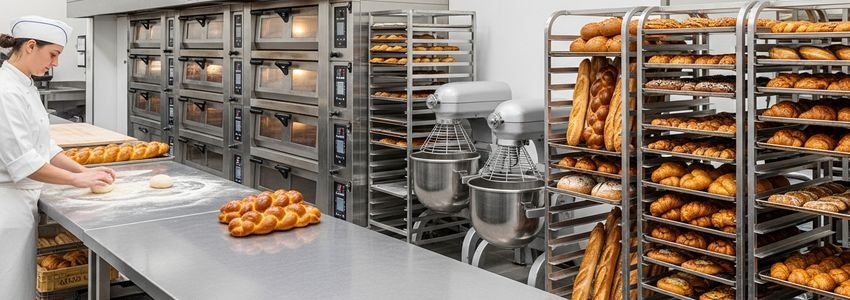
Running a successful bakery means more than perfecting your recipes. It means having the right equipment to produce consistently, scale your output, and meet customer demand day after day. Commercial ovens, deck ovens, planetary mixers, proofing cabinets, dough sheeters, display cases - the list of essential bakery equipment is long and the price tags are steep.
For most bakery owners, purchasing all of this equipment outright is not realistic. That is where bakery equipment financing comes in. The right financing solution lets you acquire the tools you need now, preserve your working capital, and pay over time as your bakery generates revenue. Whether you are opening a new location, replacing aging equipment, or scaling production, financing gives you a strategic path forward.
This guide covers everything you need to know: how bakery equipment financing works, which loan types make the most sense, what lenders look for, and how to get approved fast.
Commercial bakery equipment can cost anywhere from $50,000 for a small setup to $500,000 or more for a full production bakery. Equipment financing lets you spread that cost over 12 to 72 months while putting the equipment to work immediately.
In This Article
- What Is Bakery Equipment Financing?
- Types of Bakery Equipment You Can Finance
- Financing Options for Bakery Owners
- How Much Does Bakery Equipment Cost?
- How to Qualify for Bakery Equipment Financing
- The Application Process Step by Step
- Bakery Equipment Financing at a Glance
- Tips to Get the Best Rates and Terms
- Common Mistakes Bakery Owners Make
- Frequently Asked Questions
- Next Steps
What Is Bakery Equipment Financing?
Bakery equipment financing is a type of business funding that allows bakery owners to purchase, lease, or upgrade commercial baking equipment without paying the full cost upfront. Instead of depleting your cash reserves, you finance the equipment over a set term and repay in monthly installments while using the equipment to generate revenue.
Equipment financing is typically self-collateralized - the equipment itself serves as the collateral for the loan. This makes it easier to qualify compared to unsecured business loans, and it often results in lower interest rates. Lenders know they can repossess the equipment if you default, which reduces their risk.
There are two primary approaches to bakery equipment financing:
- Equipment Loans: You borrow money to purchase the equipment outright. Once the loan is paid off, you own the equipment free and clear. Best for equipment with a long useful life that you plan to keep.
- Equipment Leasing: You rent the equipment for a set period. Monthly payments are typically lower, and you may have the option to purchase at the end of the lease. Best for equipment that becomes outdated quickly or if you prefer flexibility.
Both approaches have merit depending on your business model, cash flow situation, and growth plans. Most established bakeries prefer equipment loans for core production equipment because it builds equity and results in full ownership. Leasing may be smarter for technology-heavy equipment like point-of-sale systems or refrigeration units with evolving technology.
You can also use a general small business loan or a business line of credit for equipment purchases if you prefer more flexibility in how you deploy the funds.
Types of Bakery Equipment You Can Finance
Nearly any commercial baking equipment can be financed. Lenders work with bakeries of all sizes, from artisan storefronts to large wholesale production facilities. Common equipment categories include:
Production Equipment
- Commercial convection ovens - Standard workhorse for cookies, pastries, and breads
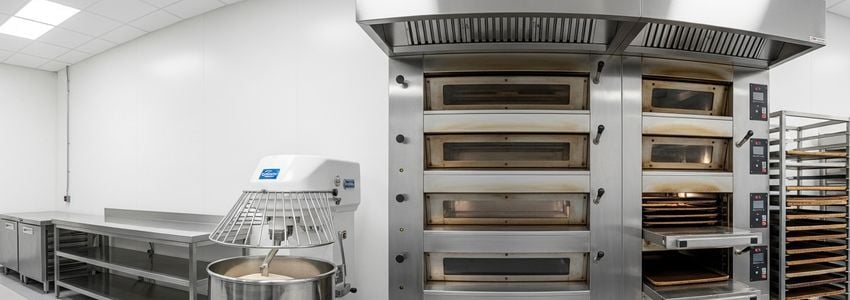
- Deck ovens - Preferred for artisan breads and European-style baking
- Rack ovens - High-capacity ovens for production bakeries
- Commercial mixers - Planetary, spiral, and floor-standing models for dough and batter
- Dough sheeters and laminators - Essential for croissants, puff pastry, and Danish
- Proofers and proofing cabinets - Controlled temperature and humidity for fermentation
- Bread slicers - For retail and wholesale loaf operations
- Dough dividers and rounders - Precision portioning for consistent product
Storage and Refrigeration
- Walk-in coolers and freezers
- Reach-in refrigerators and display cases
- Ingredient storage systems
- Blast chillers
Display and Retail Equipment
- Glass display cases (refrigerated and ambient)
- Pastry display counters
- Cake decorating workstations
- POS systems and payment terminals
Preparation and Ancillary Equipment
- Commercial dishwashers
- Worktables and prep surfaces
- Ventilation hoods and exhaust systems
- Packaging and labeling equipment
- Delivery vehicles and vans
Ready to Grow Your Business?
Get fast, flexible financing from the #1 business lender in the U.S.
Apply Now →Financing Options for Bakery Owners
Bakery owners have more financing choices than most realize. The best option depends on your credit profile, time in business, revenue, and how you plan to use the funds.
1. Equipment Financing (Dedicated Equipment Loans)
Purpose-built equipment financing is the most common choice for bakery owners. The loan is tied directly to the equipment being purchased, which serves as collateral. Terms typically range from 24 to 72 months, and approval rates are higher than general business loans because the lender has the security of the equipment.
Best for: New or replacement equipment purchases with a clear asset value. For more on this, see our guide to equipment financing.
2. SBA 7(a) Loans
Small Business Administration loans offer the longest repayment terms and some of the lowest interest rates available. SBA 7(a) loans can be used for equipment purchases up to $5 million, with terms up to 10 years for equipment. The tradeoff is a longer approval timeline - typically 30 to 90 days. SBA 504 loans are also available for larger capital equipment investments.
Best for: Well-established bakeries with strong financials looking to finance major equipment investments. Read our full overview at SBA Loans.
3. Business Line of Credit
A business line of credit gives you revolving access to capital that you can draw on as needed. Rather than financing one specific piece of equipment, you access funds when needed and only pay interest on what you draw. This flexibility works well for bakeries that need to make multiple smaller equipment purchases over time.
Best for: Ongoing equipment needs, seasonal purchases, and bakeries that want flexible access to capital for multiple items.
4. Short-Term Business Loans
If you need funding quickly, short-term business loans can provide capital in 24 to 72 hours. Terms are typically 3 to 18 months, with higher interest rates compared to traditional equipment loans. These work best for urgent equipment replacements when a broken oven is costing you sales every day.
Best for: Emergency equipment replacements, urgent upgrades when time matters more than cost.
5. Long-Term Business Loans
Long-term business loans offer repayment periods of 3 to 10 years, making monthly payments more manageable. These are ideal for major equipment investments where you need to keep monthly costs low to preserve cash flow. Interest rates are typically lower than short-term loans.
Best for: Large equipment investments of $50,000 or more where low monthly payments are the priority.
6. Bad Credit Equipment Financing
Even if your credit score is below 620, you may still qualify for bakery equipment financing. Some lenders specialize in bad credit business loans and focus more on your business revenue, time in business, and cash flow rather than your personal credit score alone. Expect higher rates, but financing is often still available.
If you have bad credit but strong revenue, lenders may approve you based on bank statement analysis rather than traditional credit underwriting. Monthly revenue is often a more important factor than your credit score for equipment-secured loans.
How Much Does Bakery Equipment Cost?
Understanding the cost of commercial bakery equipment is essential before you explore financing options. Here is a breakdown of typical price ranges for common equipment categories:
| Equipment Type | New Price Range | Used Price Range |
|---|---|---|
| Commercial Convection Oven | $3,000 - $20,000 | $1,500 - $10,000 |
| Deck Oven (2-deck) | $10,000 - $50,000 | $4,000 - $25,000 |
| Rack / Rotary Oven | $25,000 - $100,000 | $10,000 - $50,000 |
| Commercial Spiral Mixer | $5,000 - $25,000 | $2,000 - $12,000 |
| Planetary Mixer (60 qt) | $8,000 - $18,000 | $2,500 - $9,000 |
| Dough Sheeter | $3,000 - $15,000 | $1,200 - $7,000 |
| Walk-in Cooler/Freezer | $5,000 - $30,000 | $2,000 - $15,000 |
| Full Production Setup | $100,000 - $500,000+ | $40,000 - $200,000 |
Note that used equipment is often financed at slightly higher rates due to depreciation risk, but many lenders will finance quality used commercial bakery equipment. Some lenders specialize in used restaurant and food production equipment financing.
You can also explore equipment financing rates and trends to understand what interest rates to expect based on your credit profile and loan term.
How to Qualify for Bakery Equipment Financing
Qualification requirements vary by lender and loan type, but here are the general benchmarks most equipment lenders use:
Credit Score
Most equipment financing lenders prefer a personal credit score of 620 or higher for standard rates and terms. However, many lenders will work with scores as low as 550 if your business revenue and time in business are strong. Equipment-secured loans are generally more forgiving of credit challenges than unsecured options.
Time in Business
Most traditional lenders require at least 1 to 2 years in business. Some alternative lenders work with bakeries that have been operating for 6 months or more. Startups may need to seek specialized startup equipment financing or bring in a personal guarantee.
Annual Revenue
Most lenders want to see at least $100,000 in annual revenue, though requirements vary. Some lenders set their minimum at $10,000 per month ($120,000 annually). Higher revenue opens the door to larger financing amounts and better rates.
Business Financials
Lenders typically review 3 to 6 months of bank statements, recent tax returns, and a profit and loss statement. For larger loans above $150,000, expect to provide full financial statements and possibly a business plan.
- Credit score: 550+ (620+ for best rates)
- Time in business: 6+ months
- Annual revenue: $100,000+
- Equipment type: Eligible commercial bakery equipment
- Business structure: Sole proprietor, LLC, S-corp, C-corp
The Application Process Step by Step
Applying for bakery equipment financing is simpler than most business owners expect. Here is how the process typically works when you work with Crestmont Capital:
- Complete an online application - Provide basic information about your bakery, the equipment you want to finance, and your revenue.
- Submit documentation - Typically 3 to 6 months of bank statements, a government-issued ID, and basic business information. Some lenders require tax returns.
- Receive offers - Lenders review your application and present financing options with terms, rates, and monthly payment amounts.
- Review and select - Compare offers and choose the loan that best fits your cash flow and growth goals.
- Sign documents - Review and sign the loan agreement electronically.
- Receive funding - Funds are disbursed directly to your equipment vendor, or to your business account for equipment purchases you arrange yourself.
With Crestmont Capital, many bakery owners receive same-day or next-day decisions. For those who need funds quickly, our same-day business loans and fast business loans can have funding in your account within 24 hours of approval.
Ready to Grow Your Business?
Get fast, flexible financing from the #1 business lender in the U.S.
Apply Now →Bakery Equipment Financing at a Glance
By the Numbers
Bakery Equipment Financing: Key Stats and Facts
- Loan amounts: $5,000 to $5 million
- Terms: 12 to 72 months
- Rates: 6% to 35% APR
- Collateral: The equipment itself
- Commercial ovens and mixers
- Refrigeration and storage
- Display cases and retail equipment
- Production and packaging equipment
Data represents typical market ranges. Actual terms vary by lender, credit profile, and business financials.
Tips to Get the Best Rates and Terms
The interest rate and terms you receive on bakery equipment financing are directly influenced by factors you can control. Here are proven strategies to improve your offer:
1. Improve Your Credit Score Before Applying
Even a 20-point improvement in your personal credit score can make a meaningful difference in the rate you receive. Pay down revolving balances, dispute any errors on your credit report, and avoid applying for new credit in the 90 days before you apply for equipment financing.
2. Build Business Credit
Your business credit profile matters separately from your personal credit. Make sure you have a business bank account, a DUNS number, and at least a few trade references showing on-time payment history. Strong business credit can qualify you for better rates and larger amounts.
3. Make a Down Payment If Possible
A 10% to 20% down payment reduces the lender's risk and often results in lower rates and better terms. For a $100,000 equipment purchase, putting $15,000 down could save you thousands in interest over the loan term.
4. Compare Multiple Lenders
Never accept the first offer you receive. Working with a financing broker or marketplace like Crestmont Capital means getting multiple competitive offers simultaneously, so you can choose the best rate and terms for your situation.
5. Choose the Right Loan Term
Shorter loan terms typically come with lower interest rates but higher monthly payments. Longer terms reduce monthly payments but cost more in total interest. Choose a term that balances affordable payments with total cost of borrowing.
6. Finance New vs. Used Equipment Strategically
New equipment typically qualifies for better rates than used. If cost savings from buying used are significant, used equipment financing may still make financial sense even at a slightly higher rate. Do the math on total cost of ownership.
Common Mistakes Bakery Owners Make When Financing Equipment
Avoid these frequent errors that cost bakery owners money and create unnecessary complications:
Mistake 1: Financing Everything at Maximum Term
It can be tempting to choose the longest available loan term to minimize monthly payments. But equipment with a 5-year useful life that you finance over 7 years means you may be paying for a piece of equipment after it needs replacing. Match your loan term to the useful life of the equipment.
Mistake 2: Ignoring Total Cost of Borrowing
Monthly payments are easy to compare, but they do not tell the full story. Always calculate the total interest you will pay over the life of the loan. An offer with lower monthly payments over a longer term may cost significantly more in total than a higher-payment shorter-term option.
Mistake 3: Financing Operating Expenses
Equipment financing should be used for equipment - capital assets with multi-year useful lives. Using equipment loan proceeds to cover rent, payroll, or ingredients is a misuse that creates cash flow problems down the line. For operating expenses, a business line of credit is the better tool.
Mistake 4: Not Checking for Prepayment Penalties
Some equipment loans charge prepayment penalties if you pay off the loan early. If you anticipate having cash to pay off the loan early, make sure your loan agreement allows it without penalty.
Mistake 5: Not Shopping Around
Many bakery owners accept the first offer from their bank without comparing alternatives. Alternative lenders and financing marketplaces can often offer better rates, faster approvals, and more flexible terms than traditional banks, especially for businesses that have been operating for less than 3 years.
Under Section 179 of the U.S. tax code, bakeries may be able to deduct the full purchase price of qualifying equipment in the year of purchase rather than depreciating it over time. This deduction can significantly reduce your tax liability. Consult your accountant for details specific to your situation.
Bakery Equipment Financing for New Businesses
Starting a bakery and financing equipment with no established business history is harder but not impossible. Here are strategies for new bakery owners:
Startup Equipment Leasing
Leasing tends to have more lenient qualification requirements than purchasing. Monthly payments are lower, and some lessors specialize in startup-friendly programs that rely more on personal credit than business history.
Vendor Financing Programs
Many commercial oven and mixer manufacturers (Hobart, Rational, Middleby, Baxter) offer captive financing programs through their dealer networks. These programs are sometimes available to startups who would not qualify for traditional financing.
SBA Loans for Startups
The SBA offers microloan programs and certain 7(a) loan products specifically designed for newer businesses. These require strong personal credit and a detailed business plan but can provide substantial financing for equipment even before your bakery has two years of operating history.
Personal Guarantee or Co-Signer
If your business lacks history, adding a personal guarantee or a creditworthy co-signer can make lenders more willing to approve equipment financing for a startup bakery. Be aware that this ties your personal credit and assets to the loan.
For bakeries that have been in business less than 6 months but need equipment fast, fast business loans with shorter terms may be the fastest path to getting the equipment you need while you build your business history for future refinancing.
Industry Trends Affecting Bakery Equipment Decisions
The bakery industry is evolving rapidly, and these trends should inform your equipment financing strategy:
Automation and Smart Ovens
Modern commercial ovens are increasingly programmable and connected, with features like automated loading systems, humidity control, and remote monitoring. These higher-cost pieces of equipment are often best financed rather than purchased outright because of the capital required and their long useful lives (10 to 15 years).
Energy Efficiency
Energy costs are one of the largest operating expenses for bakeries. Newer, energy-efficient ovens and refrigeration systems can reduce operating costs by 20% to 40% compared to older equipment. Financing an upgrade may cost more upfront but pays for itself in energy savings over the loan term. According to the U.S. Department of Energy, upgrading industrial food production equipment to energy-efficient models can reduce energy consumption by 15% to 30%.
Wholesale and Distribution Growth
Many retail bakeries are expanding into wholesale channels - supplying restaurants, hotels, and food service companies. This growth requires production capacity that often exceeds what current equipment can deliver. Equipment financing is the most practical way to scale production capacity quickly.
E-Commerce and Shipping
Bakeries are increasingly selling direct-to-consumer online, requiring packaging equipment, blast chillers, and shipping supplies. This creates additional equipment needs beyond the core production environment. A business line of credit can be ideal for these more varied, smaller equipment purchases that do not justify a dedicated equipment loan.
According to the Small Business Administration, food production businesses that invest in capacity-expanding equipment experience revenue growth at roughly double the rate of those that delay equipment investment due to capital constraints.
How Crestmont Capital Helps Bakery Owners
Crestmont Capital is the #1 business lender in the United States, specializing in helping small businesses - including bakeries of all sizes - access fast, flexible financing. Here is what sets us apart:
- Speed: Many bakery owners receive funding in 24 to 48 hours from application
- Flexibility: We work with bakeries across all credit profiles, including those with imperfect credit
- Multiple products: Equipment loans, lines of credit, working capital loans, and SBA loan options all in one place
- No surprises: Transparent terms with no hidden fees
- Dedicated support: Real advisors who understand the bakery and food service industry
Whether you need $10,000 for a new commercial mixer or $300,000 to outfit an expansion facility, Crestmont Capital has financing solutions designed for bakery owners.
You might also find our guide on air duct cleaning business loans relevant if you are comparing how different specialty businesses approach equipment-focused financing - the underlying strategies are very similar.
Ready to Grow Your Business?
Get fast, flexible financing from the #1 business lender in the U.S.
Apply Now →Frequently Asked Questions About Bakery Equipment Financing
What is bakery equipment financing?
Bakery equipment financing is a type of business loan used to purchase or lease commercial baking equipment. The equipment serves as collateral, making it easier to qualify and often resulting in lower interest rates than unsecured loans. Repayment terms typically range from 12 to 72 months.
What credit score do I need for bakery equipment financing?
Most lenders prefer a credit score of 620 or higher for standard equipment financing terms. However, many lenders will work with bakery owners who have scores as low as 550 if business revenue and cash flow are strong.
Can a new bakery get equipment financing?
Yes, though options are more limited for startups. New bakeries can explore equipment leasing programs, vendor financing offered by equipment manufacturers, SBA microloan programs, and alternative lenders that focus on personal credit rather than business history.
What is the difference between equipment financing and equipment leasing for bakeries?
With equipment financing (loans), you borrow money to purchase the equipment and own it outright once the loan is repaid. With leasing, you rent the equipment and return it at the end of the lease or have the option to buy. Financing is generally better for long-lived equipment you want to own. Leasing may be better for equipment that becomes outdated quickly.
How fast can I get bakery equipment financing?
With alternative lenders like Crestmont Capital, many bakery owners receive approval decisions within a few hours and funding within 24 to 48 hours. Traditional bank loans take 2 to 8 weeks and SBA loans take 30 to 90 days.
What interest rates can I expect for bakery equipment financing?
Interest rates for bakery equipment financing typically range from 6% to 35% APR depending on your credit score, time in business, revenue, loan amount, and term length. Borrowers with strong credit profiles (700+) and established businesses (3+ years) qualify for the best rates.
Can I finance used bakery equipment?
Yes, many lenders finance used commercial bakery equipment, though rates may be slightly higher than for new equipment. Lenders typically require an appraisal or invoice showing the current value of the used equipment.
Is there a down payment required for bakery equipment financing?
Most equipment financing requires no down payment, with lenders financing 100% of the equipment cost. However, making a voluntary down payment of 10% to 20% can lower your interest rate and strengthen your application.
Can I finance multiple pieces of equipment at once?
Yes. You can finance a complete equipment package under a single loan, or use a business line of credit to purchase multiple pieces of equipment over time. Bundling multiple items into one loan often simplifies the process and can result in better terms.
What documents do I need to apply for bakery equipment financing?
For most alternative lenders, you will need 3 to 6 months of business bank statements, a government-issued ID, basic business information (name, address, EIN), and an equipment invoice or quote. For larger loans or SBA programs, you may also need business tax returns and financial statements.
Are there tax benefits to financing bakery equipment?
Yes. Under Section 179, you may be able to deduct the full purchase price of qualifying equipment in the year it is placed in service. Bonus depreciation rules may allow further deductions. Consult your tax advisor to maximize the tax benefits of your equipment purchase.
What happens if my bakery can't repay the equipment loan?
If you default on an equipment loan, the lender typically has the right to repossess the equipment used as collateral. If you provided a personal guarantee, your personal assets may also be at risk. Contact your lender before missing payments - many lenders offer hardship programs or payment deferrals.
Can I refinance my bakery equipment loan later?
Yes, refinancing equipment loans is possible and may make sense if interest rates have dropped or your credit profile has improved significantly. Check for any prepayment penalties in your current loan before pursuing refinancing.
Does bakery equipment financing affect my personal credit?
Most business equipment loans require a soft pull for the initial application and a hard pull at approval. If your loan requires a personal guarantee, the loan may also appear on your personal credit report, and late payments would affect your personal credit score.
How is bakery equipment financing different from a regular business loan?
The primary difference is collateral. Equipment financing is secured by the specific piece of equipment being purchased, which typically results in lower rates and easier approval compared to unsecured business loans. General business loans offer more flexibility in how proceeds are used but may require more collateral or charge higher rates.
Next Steps: How to Get Bakery Equipment Financing Today
Your Action Plan
- Assess your equipment needs: Make a complete list of the equipment you need to purchase, including model numbers and approximate costs from vendor quotes.
- Check your credit: Review your personal and business credit scores so you know what financing options and rates to expect.
- Gather your documents: Collect 3 to 6 months of bank statements, a copy of your business license, and recent tax returns if available.
- Apply online: Complete Crestmont Capital's simple online application - it takes less than 5 minutes and does not affect your credit score.
- Review your offers: Compare the financing options presented, paying attention to total cost of borrowing, not just monthly payments.
- Accept your offer and get funded: Sign your loan agreement electronically and receive funding - often within 24 to 48 hours.
- Purchase your equipment and grow: Order your equipment, install it, and start generating the revenue that pays for the investment.
Bakery equipment financing is one of the most straightforward ways to invest in your business growth without draining cash reserves. Whether you are a boutique artisan bakery, a wholesale production facility, or a multi-location chain, the right financing partner can help you acquire the equipment you need on your timeline.
Crestmont Capital works with bakery owners at every stage - from startups to established operations - to find the financing solution that fits their goals. Our team understands the capital needs of food production businesses and can move quickly when your business needs equipment now.
Ready to take the next step? Apply now and get a decision in hours, not weeks.
Disclaimer: The information provided in this article is for general educational purposes only and is not financial, legal, or tax advice. Funding terms, qualifications, and product availability may vary and are subject to change without notice. Crestmont Capital does not guarantee approval, rates, or specific outcomes. For personalized information about your business funding options, contact our team directly.