Grain cart financing helps farms and agricultural businesses add the high-capacity harvest equipment they need without tying up hundreds of thousands of dollars in working capital. A modern grain cart is one of the hardest-working machines on any row-crop operation, keeping combines running through short harvest windows and protecting yield quality when every hour counts. Whether you are upgrading to a 1,000-bushel cart with tracks, adding a second cart for a custom harvesting crew, or replacing an aging unit before it fails mid-season, the right financing structure lets you spread the cost into predictable monthly payments that match your farm's revenue cycle. This guide covers everything business owners need to know about grain cart financing: how it works, what it costs, who qualifies, and how to choose the structure that fits your operation.
In This Article
- What Is Grain Cart Financing?
- Key Benefits of Grain Cart Financing
- How Grain Cart Financing Works
- Types of Grain Cart Financing
- Grain Cart Costs and Financing Rates
- Who Qualifies for Grain Cart Financing?
- Financing vs Other Funding Options
- Real-World Scenarios
- How Crestmont Capital Helps
- Frequently Asked Questions
- Next Steps
What Is Grain Cart Financing?
Grain cart financing is a form of agricultural equipment financing that lets a farm or agribusiness acquire a grain cart through a loan or lease instead of paying the full purchase price in cash. The lender provides the funds to buy the cart from a dealer, auction, or private seller, and the borrower repays the balance over a fixed term, typically 24 to 84 months. In most structures the cart itself serves as collateral, which keeps approval straightforward and rates competitive compared with unsecured borrowing.
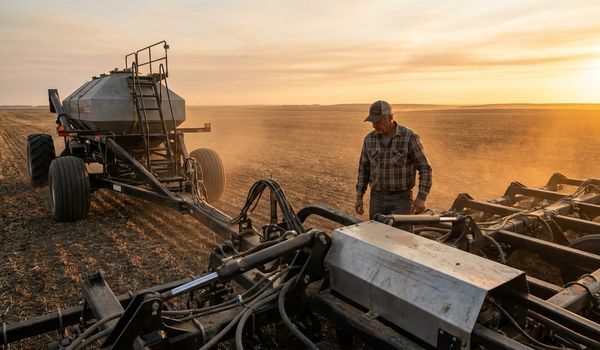
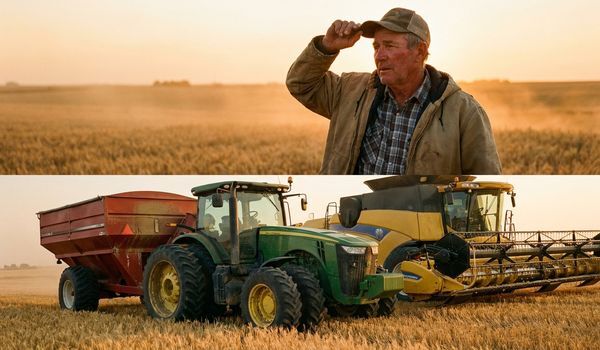
A grain cart, sometimes called a grain buggy or auger wagon, is a tractor-towed wagon fitted with a large unloading auger. Its job is to receive grain from the combine on the go, shuttle it across the field, and unload into trucks or trailers at the field edge. By keeping the combine cutting instead of waiting on trucks, a properly sized cart can add meaningful acres per day to a harvest operation. Carts from manufacturers like Brent, Unverferth, J and M, Kinze, Demco, and Parker range from roughly 500 bushels for smaller operations up to 1,500 bushels or more for large acreage and custom harvesting crews, with prices to match.
Because grain carts are seasonal workhorses with long useful lives and strong resale values, lenders view them as financeable assets. That is why dedicated grain cart financing exists alongside broader farm equipment financing programs: the asset holds value, the revenue case is clear, and the purchase timing is predictable. Financing also lets operators choose the right machine for their acreage rather than the machine their cash position allows this month.
For most buyers, the decision is not whether a grain cart pays for itself. It is how to structure the purchase so the payment schedule, down payment, and term length fit the cash flow of a business that earns most of its revenue in a compressed harvest window. That is exactly the problem grain cart financing solves.
Key Benefits of Grain Cart Financing
Paying cash for a grain cart is simple, but it concentrates a large capital outlay in a single month. Financing spreads that cost across the years the cart actually produces value. The core benefits for business owners include:
- Preserve working capital. Cash stays available for seed, fertilizer, fuel, land rent, and payroll instead of sitting in a depreciating asset.
- Predictable fixed payments. A fixed-rate equipment loan locks in a monthly payment that is easy to budget around, season after season.
- Match payments to revenue. Many agricultural lenders offer seasonal or annual payment structures that align with when crops are actually sold.
- Harvest-ready timing. Financing lets you take delivery before harvest starts, rather than waiting until cash flow allows and losing a season of efficiency.
- Build equity in the asset. With a loan, every payment builds ownership in a machine that retains meaningful resale value.
- Upgrade sooner. Instead of running an undersized or unreliable cart for another three seasons, financing makes the right-sized machine affordable now.
- Keep bank credit lines open. Using dedicated equipment financing preserves your operating line for true operating expenses.
- Fast decisions. Specialized equipment lenders routinely deliver approvals in 24 to 48 hours, compared with weeks at a traditional bank.
There is also an operational benefit that rarely shows up on a spreadsheet: reliability. A grain cart that breaks down with a full combine hopper and trucks waiting costs real money in lost harvesting hours. Financing a newer machine with modern auger capacity, better flotation, and accurate scale systems reduces that risk during the one stretch of the year when downtime is most expensive.
Harvest Timing Matters
Dealers see grain cart demand spike in late summer. Applying for financing 60 to 90 days before harvest gives you the best selection of new and used inventory, time to arrange delivery, and room to handle any paperwork without rushing into a weak deal.
How Grain Cart Financing Works
The process is simpler than most farm owners expect, especially with a lender that specializes in equipment financing. Here is the typical sequence from decision to delivery.
Step 1: Choose the cart. Identify the make, model, capacity, and features your operation needs, and get a purchase price from a dealer, auction listing, or private seller. New carts from major brands commonly run from $45,000 for a mid-size unit to well over $150,000 for a high-capacity tracked cart. Quality used carts can range from $15,000 to $90,000 depending on age, capacity, and condition.
Step 2: Apply. With an equipment-focused lender, the application is usually a one-page form plus three to six months of business bank statements. Larger balances may call for basic financials or a debt schedule, but the documentation burden is far lighter than a bank term loan.
Step 3: Credit review and approval. The lender evaluates your credit profile, time in business, revenue, and the cart itself. Because the equipment secures the transaction, approvals are fast: 24 to 48 hours is typical for well-qualified buyers, and many lenders issue same-day decisions on smaller deals.
Step 4: Review terms and sign. You receive an approval with the amount, rate, term, and payment. Review the structure carefully, confirm whether payments are monthly or seasonal, and sign the financing documents electronically.
Step 5: Funding and delivery. The lender pays the dealer or seller directly, and you take delivery of the cart. With a private-party purchase, the lender handles the payoff and title work with the seller.
Step 6: Repayment. You make scheduled payments over the term. With a loan, you own the cart free and clear at the end. With a lease, you exercise the purchase option or return the equipment depending on the structure you chose.
Types of Grain Cart Financing
Not all grain cart financing is built the same. The right structure depends on how long you plan to keep the machine, how you want to own it, and how your revenue flows through the year.
Equipment Loans
An equipment loan is the most common structure. The lender funds the purchase, you hold title, and the cart secures the loan until it is paid off. Terms typically run 36 to 84 months on new equipment and 24 to 60 months on used, with fixed rates that make budgeting easy. Loans suit owners who keep equipment for a decade or more and want to build equity with every payment.
Finance Leases
A finance lease, often structured with a $1 buyout or a fixed purchase option, works like a loan in practice: you make payments for the term and own the cart at the end for a nominal amount. Some operators prefer leases for the simplified documentation and end-of-term flexibility they offer.
Fair Market Value Leases
An FMV lease carries lower payments because you are paying for the use of the cart rather than its full cost. At the end of the term you can buy the cart at its fair market value, renew the lease, or return it and upgrade. This structure fits operations that like to rotate into newer equipment every few years.
Used Grain Cart Financing
Used carts are where many of the best deals live, and they are fully financeable. Lenders will fund used equipment purchased from dealers, auctions, or private parties, though rates and terms adjust for age and condition. A well-maintained five-year-old cart at half the price of new can be the highest-value move on the farm, and financing keeps the payment comfortable.
Refinancing Existing Equipment
If you already own a grain cart outright or carry a high-rate note, refinancing can free up cash or lower your payment. The lender pays off the existing balance or funds against your equity, and you repay under new terms.
Ready to Finance Your Next Grain Cart?
Get a fast decision from a lender that understands agriculture. Approvals in as little as 24 hours.
Apply Now - It Takes MinutesGrain Cart Costs and Financing Rates
What you pay each month depends on four variables: the purchase price, the down payment, the rate, and the term. Understanding typical ranges helps you sanity-check any quote you receive.
New grain carts generally sell between $45,000 and $160,000. A 750-bushel single-auger cart sits at the lower end, while a 1,100-bushel-plus cart with tracks, scale systems, and a hydraulic tarp commands the top of the range. Used carts trade at steep discounts: a solid ten-year-old 800-bushel unit might list between $25,000 and $45,000.
As for rates, well-qualified agricultural borrowers typically see equipment financing rates from the mid-single digits up to the low teens, with the exact number driven by credit strength, time in business, and equipment age. Terms of 36 to 72 months are most common, and down payments range from zero for strong credits to 10 to 20 percent for newer operations or older machines.
| Cart Type | Typical Price | Est. Monthly Payment* |
|---|---|---|
| Used 600-800 bu cart (8-12 yrs old) | $20,000 - $45,000 | $450 - $1,000 |
| New 750-850 bu single-auger cart | $50,000 - $85,000 | $950 - $1,600 |
| New 1,000-1,100 bu cart, tires | $85,000 - $120,000 | $1,600 - $2,300 |
| New 1,100+ bu tracked cart, loaded | $120,000 - $160,000+ | $2,300 - $3,100 |
*Estimates assume 60-month terms at representative rates for qualified borrowers. Your actual payment depends on credit, term, down payment, and equipment specifics.
Grain Cart Financing at a Glance
$45K - $160K
Typical new grain cart price range
24 - 84 mo
Common financing term lengths
24 - 48 hrs
Typical approval turnaround
0% - 20%
Down payment range by credit strength
Who Qualifies for Grain Cart Financing?
Grain cart financing is accessible to a wide range of agricultural businesses because the equipment secures the transaction. Lenders that specialize in equipment financing evaluate the whole picture rather than a single credit score cutoff.
Established operations with two or more years in business, consistent revenue, and credit scores above 650 generally qualify for the best rates and lowest down payments, sometimes with zero down. Mid-tier credit profiles in the 600 to 650 range are routinely approved with modest down payments. Credit-challenged buyers can often still finance a cart by putting more money down, choosing a less expensive used unit, or adding collateral, since the equipment itself backs the deal.
Lenders typically look at the following factors:
- Time in business. Two years or more is ideal, though younger operations with strong cash flow and a solid down payment get approved every day.
- Revenue and cash flow. Bank statements showing healthy deposits and balances carry significant weight.
- Credit history. Both personal and business credit are reviewed for most small and mid-size operations.
- The equipment. Age, condition, capacity, and brand all influence how much a lender will advance and on what terms.
- Existing obligations. A manageable debt load relative to revenue supports approval and better pricing.
One practical note: approval amounts track equipment value closely. If you are stretching for a high-capacity tracked cart, a slightly larger down payment often moves a marginal file into an approval at a better rate. A good lender will tell you exactly where the line is rather than leaving you guessing.
Grain Cart Financing vs Other Funding Options
Business owners generally weigh five ways to put a grain cart in the field: paying cash, a bank loan, dealer financing, a dedicated equipment lender, or leasing. Each has a place, but the trade-offs matter.
| Option | Speed | Cash Impact | Flexibility |
|---|---|---|---|
| Cash purchase | Immediate | Drains working capital in one hit | None once spent |
| Bank term loan | Weeks | Preserves cash | Rigid underwriting, heavy documentation |
| Dealer financing | Days | Preserves cash | Limited to dealer inventory and programs |
| Equipment lender | 24 - 48 hours | Preserves cash, low or zero down | Any seller, new or used, flexible terms |
| Lease (FMV or $1 buyout) | 24 - 48 hours | Lowest payments | Easy upgrade path at term end |
Cash is unbeatable on total cost but brutal on liquidity, and liquidity is what carries a farm through a bad basis or a wet spring. Bank loans can price well for borrowers with deep financials and patience, but the timeline rarely cooperates with harvest deadlines. Dealer programs are convenient yet confine you to one brand's promotions and inventory. A dedicated equipment lender combines speed, flexibility on equipment age and seller type, and structures like seasonal payments that fit farm revenue. For a side-by-side look at how lease structures compare, our grain trailer financing guide walks through similar math for another essential harvest asset.
Compare Your Real Numbers
One short application shows you actual rates and payments on the exact cart you are considering. No obligation.
Get My QuoteReal-World Scenarios: How Operations Use Grain Cart Financing
Financing structures make the most sense in context. Here are five common situations where the right grain cart financing package changed the math for an operation.
Scenario 1: The Pre-Harvest Upgrade
A 2,400-acre corn and soybean operation in Iowa had been running a 700-bushel cart behind a combine that could empty faster than the cart could keep up. Sixty days before harvest, the owner financed a new 1,050-bushel cart with a scale system for $98,000 over 60 months. The payment came in near $1,900 a month, and the combine gained an estimated 15 to 20 extra acres per day by cutting without interruption. Across a 25-day harvest, that is roughly 400 acres of timeliness captured in the first season alone.
Scenario 2: The Custom Harvester Adding Capacity
A custom harvesting crew running two combines needed a second cart to keep both machines moving on large wheat fields. Cash was committed to truck repairs, so they financed a used 900-bushel cart for $52,000 with 10 percent down. The added cart let them take on two additional clients that season, and the incremental contract revenue covered the annual payments several times over.
Scenario 3: The Auction Find
A wheat and milo grower spotted a well-maintained three-year-old cart at a regional auction with an expected hammer price far below dealer retail. Because the lender could fund auction purchases with a pre-approval in hand, the grower bid confidently, won the cart at $41,000, and had funding wired within days. Buying used at auction with financing already arranged is one of the most reliable ways to capture equipment value.
Scenario 4: The Mid-Season Breakdown
A Nebraska operation lost the gearbox on its aging cart in the middle of soybean harvest. Waiting on a bank was not an option with trucks lined up. An equipment lender approved a replacement used cart in under 48 hours, funded a private-party purchase, and had the crew back in the field the same week. The seasonal payment structure meant the first meaningful payment landed after the crop was sold.
Scenario 5: The Expanding Acreage Play
A family farm picking up 900 rented acres needed more harvest capacity across the board: cart, storage, and trucking. Rather than depleting cash on any single purchase, they financed the grain cart and used the structure described in our grain bin financing guide to fund storage at the same time. Layering two fixed equipment payments preserved the liquidity they needed for the new ground's input costs.
Used Equipment Is Fully Financeable
Dealer, auction, or private seller: a specialized lender can fund all three. Get pre-approved before you shop so you know your budget and can move fast when the right cart appears.
How Crestmont Capital Helps
Crestmont Capital is a top-rated U.S. business lender with deep experience financing agricultural equipment, including grain carts of every size and age. Our equipment financing programs are built around how farms actually operate: fast decisions, minimal paperwork, and payment structures that respect seasonal revenue.
Here is what working with us looks like:
- Speed. Most applications receive a decision within 24 to 48 hours, and funding can follow days later. When a harvest window or an auction deadline is driving the timeline, speed is the difference between getting the cart and losing it.
- Flexibility. We finance new and used grain carts from dealers, auctions, and private parties, with terms from 24 to 84 months and down payments tailored to your credit profile.
- Agricultural expertise. Our team funds the full spectrum of farm operations through our agricultural equipment financing and farm equipment financing programs, so we understand the equipment, the seasons, and the revenue cycles behind every application.
- One relationship for the whole operation. From equipment financing across your fleet to working capital for input costs, a single lending partner simplifies your financial life.
If you are comparing a new high-capacity cart against a strong used unit, we can quote both so you can see the real monthly difference before you commit. And if your operation also needs storage, trucking, or handling equipment, we can structure one coordinated package rather than a patchwork of one-off loans. For many farms, pairing a cart purchase with the strategies in our grain truck financing guide covers the entire field-to-elevator chain in one plan.
Government-backed programs are another resource worth knowing. The U.S. Small Business Administration guarantees several loan programs that can apply to agricultural equipment, though their timelines are measured in weeks rather than days. Broader industry conditions matter too: recent reporting from Reuters Business has tracked how farm equipment demand and used machinery values have shifted with commodity prices, and analysts at Forbes Advisor regularly compare business financing costs across lender types. Whatever the market does, having a direct equipment lender in your corner keeps your options open.
Get Harvest-Ready Financing
Join thousands of business owners who trust Crestmont Capital for fast, flexible equipment financing.
Start Your ApplicationFrequently Asked Questions
What is grain cart financing? +
Grain cart financing is a loan or lease that funds the purchase of a grain cart, letting a farm or agribusiness pay for the equipment over a fixed term instead of in one cash payment. The cart itself typically secures the financing, which keeps approval fast and rates competitive.
How much does a grain cart cost? +
New grain carts generally range from about $45,000 for a mid-size single-auger unit to $160,000 or more for a high-capacity tracked cart with scales and tarp systems. Well-maintained used carts commonly sell between $20,000 and $90,000 depending on age, capacity, and condition.
What credit score do I need to finance a grain cart? +
The best rates typically go to borrowers with scores above 650, but equipment lenders routinely approve scores in the low 600s and sometimes below, especially with a larger down payment or a less expensive used cart. Because the equipment secures the deal, credit is one factor among several rather than a hard cutoff.
Can I finance a used grain cart? +
Yes. Used grain carts are fully financeable whether you buy from a dealer, an auction, or a private seller. Rates and terms adjust for the age and condition of the machine, and a quality used cart often delivers the best value per dollar of payment.
How long are grain cart financing terms? +
Terms typically run from 24 to 84 months. New equipment usually qualifies for longer terms of 60 to 84 months, while older used carts are often financed over 24 to 60 months. Longer terms lower the monthly payment but increase total interest paid.
How fast can I get approved? +
Specialized equipment lenders typically deliver decisions within 24 to 48 hours, and funding can follow within a few business days. That is dramatically faster than a traditional bank, which often takes weeks to underwrite agricultural equipment.
Do I need a down payment? +
Strong credit profiles often qualify for zero down financing. Most buyers put between zero and 20 percent down depending on credit strength, time in business, and the age of the equipment. A larger down payment usually earns a better rate and lower payment.
Can I finance a grain cart from a private seller or auction? +
Yes. Equipment lenders regularly fund private-party and auction purchases. The lender verifies the equipment, handles payoff and title work with the seller, and wires funds directly. Getting pre-approved before an auction lets you bid with a firm budget in hand.
What documents do I need to apply? +
Most applications require a short one-page form plus three to six months of business bank statements. Larger balances may call for basic financial statements or a debt schedule. Compared with bank underwriting, the documentation burden is minimal.
Is a loan or a lease better for a grain cart? +
A loan builds equity and suits owners who keep equipment for many years. A lease offers lower payments and an easier upgrade path, which fits operations that rotate into newer machines regularly. The right choice depends on how long you plan to run the cart and how you want ownership to work at the end of the term.
Can I get seasonal payments that match my harvest income? +
Many agricultural equipment lenders offer seasonal, quarterly, or annual payment structures that align with when crops are sold. If your revenue is concentrated in a harvest window, ask about payment schedules that match that cycle instead of standard monthly payments.
What size grain cart should I finance? +
Match cart capacity to your combine and acreage. A common rule is that the cart should hold at least one full combine hopper unload with room to spare, and larger operations benefit from 1,000-bushel-plus carts that minimize trips. Financing makes it practical to buy the right size rather than undersizing to save cash.
Can I refinance a grain cart I already own? +
Yes. Refinancing can lower your payment, extend your term, or pull cash out of equity in a cart you own free and clear. Owners often refinance older equipment to fund repairs, upgrades, or other working capital needs on the farm.
Will financing a grain cart hurt my cash flow? +
Financing is designed to protect cash flow, not strain it. Instead of a six-figure cash outlay, you make predictable payments sized to your budget, keeping cash available for seed, fertilizer, fuel, and land costs. Seasonal payment options can further align outflows with crop revenue.
Why choose an equipment lender over my local bank? +
Speed, flexibility, and specialization. Equipment lenders approve deals in days rather than weeks, fund used and private-party purchases banks often decline, and structure payments around farm revenue. Many farmers keep their bank relationship for operating lines and use equipment lenders for machinery purchases.
Next Steps
If a grain cart is on your equipment list this year, here is the simplest path from research to delivery:
Define the machine you need
Settle on capacity, tires versus tracks, and must-have features like scales or a tarp, then price two or three specific units, new and used.
Get pre-approved
Submit a short application with your bank statements. Pre-approval tells you your budget, rate, and payment before you negotiate with any seller.
Compare structures
Look at loan versus lease, term length, and down payment side by side. Ask for seasonal payments if your revenue concentrates at harvest.
Close and take delivery
Sign documents electronically, let the lender pay the seller, and put the cart to work. Plan ahead so delivery lands well before your first field is ready.
Conclusion
A grain cart is not a luxury purchase. It is the machine that keeps your combine cutting, your trucks loaded, and your harvest on schedule when weather compresses every window. Grain cart financing makes that capability affordable by turning a large capital outlay into predictable payments that fit the rhythm of farm revenue, whether you choose a loan on a new high-capacity tracked cart, a value-priced used unit from an auction, or a lease that keeps your fleet current.
The operations that win at harvest are the ones that plan ahead: they size the cart to the combine, arrange financing before the rush, and protect their working capital for the inputs that actually grow the crop. Crestmont Capital helps agricultural businesses do exactly that with fast approvals, flexible terms, and a team that understands equipment and the seasons that drive your revenue. When you are ready to put the right cart in the field, start your application and get a decision in as little as 24 hours.
Disclaimer: The information provided in this article is for general educational purposes only and is not financial, legal, or tax advice. Funding terms, qualifications, and product availability may vary and are subject to change without notice. Crestmont Capital does not guarantee approval, rates, or specific outcomes. For personalized information about your business funding options, contact our team directly.

Allan Garfinkle
Allan Garfinkle is the Chief Revenue Officer at Crestmont Capital, where he has spent more than a decade leading revenue strategy, business development, and operational growth. With 28 years of experience building and advising startups and small businesses, Allan has helped more than 10,000 business owners navigate financing decisions, growth opportunities, and changing economic conditions. He earned a Bachelor of Science in Economics and an MBA with a concentration in Finance from Northeastern University, as well as a Juris Doctor from New England Law, where his studies focused on contracts and business law. His writing draws on extensive practical experience in small-business lending, equipment financing, business credit, and commercial finance.