Tea is big business in the United States. Americans drink more than 159 million cups of tea every single day, and the U.S. tea market has grown into an industry worth more than $13 billion a year. Behind every successful tea brand, from small artisan blenders to large private-label producers, sits a production floor full of specialized machinery: blending drums, mixers, dryers, sifters, scales, and packaging lines. That equipment is expensive, and paying cash for it can drain the working capital a tea business needs for inventory, marketing, and payroll. That is exactly why tea blending equipment financing exists.
Whether you are launching a specialty tea company, scaling an established blending operation, or adding capacity to fulfill a new wholesale contract, financing lets you acquire commercial-grade tea blending equipment now and spread the cost over months or years. This guide explains how tea blending equipment financing works, what it covers, who qualifies, and how to get funded quickly so your tea business can keep growing.
In This Article
What Is Tea Blending Equipment Financing?
Tea blending equipment financing is a type of business funding designed specifically to help tea companies purchase the machinery used to blend, process, and package tea. Instead of paying the full purchase price upfront, a lender or financing company provides the capital to buy the equipment, and the business repays that amount over a fixed term with interest or finance charges. In most arrangements, the equipment itself serves as collateral, which makes this kind of financing easier to qualify for than unsecured loans and keeps your other business assets unencumbered.
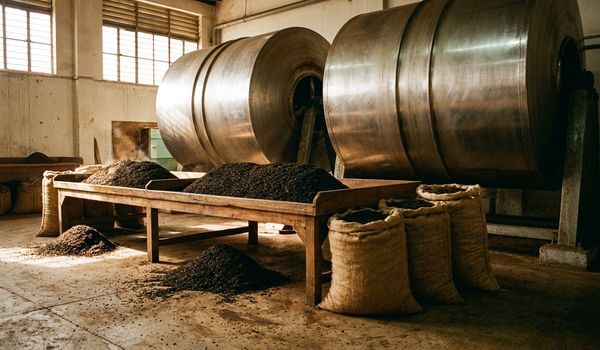
The category covers a surprisingly wide range of machinery. A commercial tea blending operation might use rotating stainless steel blending drums, ribbon mixers, paddle mixers, flavoring and spraying systems, drying ovens, sifters and sieves, weighing and batching scales, conveyors, and dust collection systems. Downstream, most blenders also rely on packaging equipment such as tea bag machines, pouch fillers, sealers, and labeling systems. All of it can typically be financed under a single equipment financing agreement, which means a tea business can outfit an entire production line with one application and one monthly payment.
Tea blending equipment financing is used by businesses at every stage. Startups use it to move from hand blending in small batches to true commercial production. Growing tea brands use it to add capacity when a big retail or wholesale account lands. Established producers use it to replace aging machinery, add a second blending line, or expand into new product categories like functional herbal blends, matcha, or ready-to-brew concentrates. According to the U.S. Census Bureau's Economic Census, food and beverage manufacturing remains one of the largest manufacturing sectors in the country, and tea production is one of its fastest-evolving niches as consumer tastes shift toward premium and wellness-oriented products.
Key Benefits of Tea Blending Equipment Financing
Financing tea blending equipment offers advantages that go well beyond simply deferring a large purchase. Done right, it becomes a strategic tool for managing cash flow and accelerating growth.
- Preserve working capital. Tea businesses live and die by inventory. Keeping cash available for tea leaf purchases, packaging materials, and marketing is usually worth far more than avoiding finance charges.
- Fixed, predictable payments. Equipment loans and leases come with set monthly payments, which makes budgeting simple even when sales fluctuate seasonally.
- Revenue-generating from day one. A financed blending drum starts producing sellable product immediately, so the equipment can effectively pay for itself out of new revenue.
- Easier qualification. Because the equipment secures the financing, lenders can approve businesses that might not qualify for a large unsecured loan, including younger companies.
- 100% financing is common. Many equipment financing agreements cover the full purchase price, and soft costs like delivery, installation, and training can often be rolled in.
- Scale on your timeline. When a wholesale contract or private-label deal requires more capacity than you have, financing lets you say yes now instead of saving for years.
- Stay current with technology. Modern blending and packaging equipment is faster, more consistent, and more energy efficient. Financing makes upgrading practical.
For tea companies competing in a market where consumers expect consistent flavor, attractive packaging, and reliable supply, production capacity is not optional. Financing puts that capacity within reach without forcing the business to stall other growth initiatives.
Ready to Scale Your Tea Business?
Get fast, flexible equipment financing from the #1 business lender in the U.S. No obligation - apply in minutes.
Apply Now →How Tea Blending Equipment Financing Works
The mechanics of equipment financing are straightforward, and the process moves much faster than most business owners expect. Here is the typical sequence from start to funded.
Step 1: Identify the equipment you need. Get a quote or invoice from your equipment vendor. Lenders want to see exactly what you are buying, the purchase price, and the seller's details. Quotes for blending drums, mixers, dryers, or full production lines all work, and used equipment from a dealer or auction can often be financed too.
Step 2: Submit a short application. With a lender like Crestmont Capital, the application takes minutes. You provide basic business information, the amount you need, and recent bank statements. There is no need for a multi-week document chase.
Step 3: Get a decision. Equipment financing decisions are typically fast because the equipment itself secures the deal. Many applicants receive an answer within 24 to 48 hours, sometimes the same day.
Step 4: Review terms and sign. Approval comes with a clear offer: the financed amount, term length, monthly payment, and total cost. Terms commonly run from 24 to 72 months depending on the equipment's expected useful life.
Step 5: The lender pays the vendor. Once documents are signed, the financing company pays your equipment seller directly. You take delivery, install the machinery, and start production.
Step 6: Make fixed monthly payments. You repay over the agreed term. With a loan structure, you own the equipment outright at the end. With a lease, you can typically buy it for a residual amount, return it, or upgrade to newer machinery.
Pro Tip: Ask your lender to include soft costs in the financed amount. Delivery, installation, calibration, and operator training for a commercial blending line can add 10% to 20% to the project total, and rolling them into the financing keeps that cash in your business.
Types of Tea Blending Equipment You Can Finance
Tea production involves more machinery than most people realize, and virtually all of it qualifies for equipment financing. Here are the major categories tea businesses fund every day.
Blending Drums and Mixers
The heart of any tea blending operation is the blending vessel itself. Commercial operations use rotating stainless steel blending drums, ribbon blenders, paddle mixers, and V-blenders sized from small 50-pound batch units up to industrial systems handling thousands of pounds per cycle. Entry-level commercial blending drums often start around $15,000, while large automated systems can exceed $80,000 or more.
Flavoring and Spraying Systems
Flavored teas require precise application of oils and flavor compounds. Dedicated spraying and flavoring systems coat leaves evenly during the blending cycle, which is nearly impossible to achieve consistently by hand at commercial volumes.
Drying, Sifting, and Sorting Equipment
Industrial dryers, sifters, vibrating sieves, and optical sorters prepare leaf material before and after blending. These machines control moisture, remove dust and stems, and grade particle size so every batch meets spec.
Weighing, Batching, and Conveying Systems
Precision scales, batching systems, augers, and conveyors keep material moving through the plant and ensure recipe accuracy. Automation in this category is where many growing tea companies see their biggest labor savings.
Tea Packaging Equipment
Blended tea has to be packaged before it can be sold, and packaging machinery is one of the most commonly financed categories alongside blending equipment. This includes tea bag machines, pyramid sachet machines, pouch filling and sealing systems, tin and jar filling lines, labelers, and case packers. A tea packaging machine can range from under $10,000 for a compact filler to well over $100,000 for a fully automated sachet line. Businesses that also need downstream capacity can explore packaging equipment financing as part of the same project.
Support and Facility Equipment
Air compressors, dust collection systems, dehumidifiers, forklifts, and storage racking all support the blending operation and can frequently be bundled into the same financing agreement.
By the Numbers
Tea Blending Equipment Financing - Key Statistics
$13B+
Annual U.S. tea market size, with specialty blends growing fastest
159M
Cups of tea Americans drink every day
24-48 hrs
Typical equipment financing decision time with Crestmont Capital
100%
Financing available for equipment plus soft costs like delivery and installation
Financing Options: Loans, Leases, and Lines of Credit
Tea businesses generally fund blending equipment through one of three structures. Each has distinct mechanics, and the right choice depends on how long you plan to keep the equipment, how fast it depreciates, and how much flexibility you want.
Equipment loans are the most straightforward option. The lender provides funds to buy the machinery, you own it from day one, and you repay the loan over a fixed term. When the last payment clears, the equipment is yours free and clear. Loans suit tea companies buying durable assets like stainless steel blending drums that will run for a decade or more. Crestmont Capital's equipment financing programs are built around this model.
Equipment leasing works more like a long-term rental with a purchase option. Monthly payments are often lower than a loan because you are paying for the use of the equipment rather than full ownership. At the end of the lease you can typically buy the equipment at a residual price, return it, or roll into a new lease on upgraded machinery. Leasing makes sense for fast-evolving categories like automated sachet packaging, where technology improves quickly. Learn more about how equipment leasing compares to buying.
Business lines of credit offer revolving access to capital you can draw for equipment deposits, smaller machinery purchases, or the soft costs a loan does not cover. A line of credit is less common for a six-figure blending line, but it is an excellent complement for ongoing needs like replacement parts and small ancillary machines.
Some tea businesses also consider government-backed options. The SBA's loan programs, including 7(a) and 504 loans, can fund major equipment purchases at competitive rates, though the application process is slower and documentation requirements are heavier than private equipment financing.
| Feature | Equipment Loan | Equipment Lease | Line of Credit |
|---|---|---|---|
| Ownership | You own it from day one | Lessor owns it during term | You own purchases outright |
| Typical term | 24 to 72 months | 24 to 60 months | Revolving, renewed annually |
| Monthly cost | Higher, builds equity | Often lower than a loan | Pay interest only on what you draw |
| Best for | Long-life assets like blending drums | Fast-evolving packaging technology | Deposits, parts, and smaller machines |
| End of term | Equipment is yours free and clear | Buy, return, or upgrade | Keep drawing as needed |
Key Stat: According to the SBA, more than 33 million small businesses operate in the United States, and access to capital is consistently cited as one of their top growth barriers. Equipment financing exists precisely to close that gap for asset-heavy businesses like tea producers.
Who Qualifies for Tea Blending Equipment Financing?
Qualification standards for equipment financing are generally more flexible than for unsecured business loans, because the machinery itself secures the transaction. That said, lenders still evaluate a handful of core factors.
Time in business. Most programs prefer at least six months to two years of operating history, though startup financing exists for founders with strong personal credit and relevant industry experience. A first-time tea entrepreneur who spent years managing production for an established brand presents a very different risk profile than a first-time business owner with no food production background.
Credit profile. Personal credit scores of 600 and above open the door at many equipment lenders, and scores above 650 unlock meaningfully better rates and terms. Business credit history helps too, but young companies without an established file can still qualify based on the owner's personal credit and the strength of the deal.
Revenue and cash flow. Lenders want to see that the business generates enough monthly revenue to cover the new payment comfortably. Recent bank statements are the standard way to demonstrate this. For a tea company financing a $60,000 blending line, a lender might look for monthly deposits several times larger than the proposed payment.
The equipment itself. Because the machinery is the collateral, its type, age, condition, and resale market all matter. Standard equipment from recognized manufacturers is the easiest to finance. Highly customized one-off machinery can still be funded, but terms may be tighter.
Down payment. Many approvals come with 100% financing, especially for established businesses with solid credit. Startups or weaker files may be asked for 10% to 20% down, which reduces the lender's exposure and lowers the monthly payment.
Businesses across the tea supply chain qualify: dedicated tea blenders and packagers, coffee and tea companies expanding into blending, herbal and wellness brands, private-label co-packers, importers adding value-added blending, and even restaurants or cafes producing signature house blends at commercial scale. If your operation resembles light manufacturing, lenders experienced in manufacturing equipment financing will understand your needs immediately.
Good to Know: Startups are not automatically disqualified. A strong personal credit score, a credible business plan, industry experience, and a reasonable down payment can get a brand-new tea company funded for its first commercial blending line.
How Crestmont Capital Helps Tea Businesses
Crestmont Capital is rated the #1 business lender in the United States, and equipment financing is one of the company's core strengths. Tea businesses choose Crestmont because the process is built for speed and simplicity, and because the team understands production businesses rather than treating them like generic loan applicants.
Fast decisions and faster funding. Applications take minutes, decisions often arrive within 24 to 48 hours, and funding can follow within days. When a vendor is holding a blending drum for you or a contract depends on added capacity, that speed matters.
Flexible programs for real-world businesses. Crestmont works with startups and established companies alike, finances new and used equipment, and can structure loans or leases around your cash flow. Seasonal tea businesses can often align payments with their strongest sales months.
One point of contact for the whole project. Blending drums, packaging lines, and support equipment can typically be combined into a single financing agreement, so you make one monthly payment instead of juggling several.
Experience across food and beverage production. Crestmont finances equipment across the food and beverage spectrum, from blending and processing machinery to the food equipment financing programs used by producers of every size. That breadth means fewer surprises during underwriting and terms that reflect how your industry actually operates.
For a look at how similar financing works in adjacent niches, see our guides to spice blending equipment financing and nut butter production equipment financing, which cover parallel decisions for blending and production machinery.
Get the Equipment Your Tea Business Needs
Fast approvals, flexible terms, and funding in days - not weeks. Talk to a financing specialist today.
Apply Now →Real-World Scenarios: Tea Blending Equipment Financing in Action
Abstract benefits only go so far. Here is how tea blending equipment financing plays out for real businesses at different stages.
Scenario 1: The startup scaling out of hand blending. A two-year-old specialty tea brand sells through farmers markets and an online store, blending everything by hand in 20-pound batches. A regional grocery chain offers shelf space, but the account requires 800 pounds per week of consistent product. The founders finance a $38,000 stainless steel blending drum and a semi-automatic pouch sealer with no money down, ramp production within three weeks, and the grocery revenue covers the monthly payment many times over.
Scenario 2: The established blender landing a private-label contract. A ten-year-old tea company wins a contract to produce a national retailer's house blend, doubling its volume overnight. Rather than deplete cash reserves, the company finances a second blending line, an automated batching system, and a high-speed tea bag machine for $210,000 over 60 months. The contract's margins comfortably cover the payments, and the added capacity positions the company to pursue more private-label work.
Scenario 3: The herbal wellness brand bundling blending and packaging. A fast-growing herbal tea startup needs a paddle mixer, a drying oven, and a pyramid sachet machine to bring production in-house instead of relying on a co-packer. The owner finances all three machines plus installation in a single $95,000 agreement. Bringing production in-house cuts per-unit costs by 40% and gives the brand full control over quality and formulation.
Scenario 4: The importer upgrading aging equipment with a lease. A tea importer that blends for wholesale clients is running a 15-year-old blending line that breaks down increasingly often. Instead of a large cash purchase, the company leases a refurbished blending line with a fair-market-value purchase option, keeping monthly costs low and preserving the ability to upgrade again as volumes grow.
Scenario 5: The seasonal producer smoothing cash flow. A tea company whose sales spike during the holiday gifting season uses equipment financing with a payment schedule weighted toward its strongest months. The business adds capacity before the rush without straining cash during the slow summer quarter.
The Application Process Step by Step
Applying for tea blending equipment financing is simpler than most owners expect, especially compared to traditional bank loans. Preparation is the main variable you control, and a few hours of organization can shave days off the timeline.
1. Gather your equipment quote. Get a formal quote or pro forma invoice from your vendor listing each machine, the price, and the seller's contact information. If you are buying used equipment, include photos, serial numbers, and condition details.
2. Pull basic business documents. Have three to six months of business bank statements ready, along with your EIN, business entity details, and a government-issued ID. Established companies may also want recent financial statements, though they are not always required.
3. Know your numbers. Be ready to describe monthly revenue, your time in business, and how the new equipment will be used. Lenders respond well to a clear story: what you are buying, what it will produce, and how it pays for itself. The SBA's market research guide is a useful framework for articulating your market opportunity if you are preparing a broader funding package.
4. Submit the application. With Crestmont Capital, the online application takes only a few minutes. A financing specialist reviews your file and follows up with questions if anything needs clarification.
5. Review your offer. Compare the term length, monthly payment, and total cost of funds. Ask about soft-cost coverage, early payoff options, and end-of-term choices if you are leasing.
6. Sign and fund. Once you accept, documents are signed electronically and the lender pays your vendor. Delivery and installation proceed on your schedule, and your repayment term begins.
Frequently Asked Questions
What is tea blending equipment financing? +
Tea blending equipment financing is business funding used to purchase the machinery that blends, processes, and packages tea, such as blending drums, mixers, dryers, sifters, and packaging lines. A lender provides the capital to buy the equipment, and you repay over a fixed term, usually 24 to 72 months, with the equipment itself serving as collateral.
What types of tea equipment can be financed? +
Virtually all production machinery qualifies: blending drums, ribbon and paddle mixers, flavoring systems, drying ovens, sifters, optical sorters, scales, batching systems, conveyors, tea bag and sachet machines, pouch fillers, sealers, labelers, and support equipment like compressors and forklifts. New and used equipment are both eligible at most lenders.
How much does tea blending equipment cost? +
Costs vary widely by capacity and automation level. Small commercial blending drums often start around $15,000, mid-size automated systems run $40,000 to $80,000, and fully automated production lines with packaging can exceed $150,000. Financing spreads these costs into predictable monthly payments, which is why most growing tea companies fund rather than buy outright.
Can a startup tea company qualify for equipment financing? +
Yes. Startups qualify regularly, especially when the owner has strong personal credit, relevant industry experience, and a credible plan for the equipment. Lenders may ask for a down payment of 10% to 20% from younger companies, but startup equipment financing is a well-established path for first-generation tea producers.
What credit score do I need for tea blending equipment financing? +
Many equipment lenders work with personal credit scores of 600 and above, and scores over 650 typically receive better rates and terms. Because the equipment secures the financing, credit standards are more flexible than for unsecured loans. Businesses with challenged credit can often still be approved with a larger down payment or shorter term.
How long does approval and funding take? +
With a direct business lender like Crestmont Capital, decisions typically arrive within 24 to 48 hours of a complete application, and funding can follow within a few days of signing. The total timeline from application to vendor payment is often under a week, compared to the weeks or months common with traditional bank or SBA loans.
What terms and rates are typical for equipment financing? +
Terms commonly run 24 to 72 months depending on the equipment's useful life and the deal size. Rates vary with credit strength, time in business, and equipment type, but well-qualified borrowers often secure fixed rates that keep monthly payments comfortably below the revenue the equipment generates. Your offer will spell out the exact monthly payment and total cost before you sign.
Is leasing or buying better for tea blending equipment? +
It depends on the equipment and your plans. Buying with an equipment loan builds equity and suits long-life assets like stainless blending drums you will run for a decade. Leasing offers lower monthly payments and easy upgrades, which suits fast-evolving packaging technology. Many tea businesses mix both: loans for core blending machinery and leases for packaging lines they expect to upgrade.
Can I finance used tea blending equipment? +
Yes. Used equipment from dealers, auctions, and private sellers is financed every day, and it can be a smart way to add capacity at a lower price point. Lenders will typically ask for photos, serial numbers, and condition details, and terms may be slightly shorter than for new machinery, but used blending and packaging equipment is a routine approval.
Do I need a down payment? +
Often not. Established businesses with solid credit frequently qualify for 100% financing with no money down. Startups, newer businesses, or weaker credit files may be asked for 10% to 20% down, which lowers the lender's risk and reduces your monthly payment. Your approval will state clearly whether a down payment is required.
Can delivery, installation, and training be included in the financing? +
Yes, in most cases. Soft costs such as freight, rigging, installation, calibration, and operator training can typically be rolled into the financed amount, often up to 20% or more of the total. Bundling these costs preserves your cash for inventory and operating expenses, which matters most in the first months of a capacity expansion.
What documents do I need to apply? +
The core package is simple: an equipment quote or invoice from your vendor, three to six months of business bank statements, your EIN and business entity information, and a government-issued ID. Larger or more complex requests may ask for recent financial statements or tax returns, but most tea blending equipment deals move forward on bank statements alone.
Does equipment financing affect my business credit? +
Equipment financing is generally reported to business credit bureaus, so on-time payments build your company's credit profile and make future borrowing easier and cheaper. That is one of the hidden benefits for young tea companies: the blending line you finance today helps establish the credit history that funds your next expansion.
Can tea packaging equipment be financed in the same agreement? +
Yes. Most lenders happily bundle blending, processing, and packaging machinery into a single financing agreement with one monthly payment. Combining a blending drum, batching system, and sachet machine in one deal simplifies your bookkeeping and often strengthens the overall approval because the full production line is what generates revenue.
How do I get started with Crestmont Capital? +
Start with the quick online application at offers.crestmontcapital.com/apply-now. It takes a few minutes and requires only basic business information and recent bank statements. A financing specialist will review your file, present your options, and, once you approve the terms, pay your equipment vendor directly so production can begin.
Start Your Tea Equipment Application Today
Join the thousands of business owners who trust Crestmont Capital for fast, flexible funding.
Apply Now →How to Get Started
Complete our quick application at offers.crestmontcapital.com/apply-now - takes just a few minutes.
A Crestmont Capital advisor will review your equipment quote and match you with the right financing structure for your tea business.
We pay your equipment vendor directly, and you put your new blending line to work - often within days of approval.
Conclusion: Fund Your Tea Production Growth
The U.S. tea market rewards producers who can deliver consistent quality at commercial volumes, and that consistency starts with the right machinery. Tea blending equipment financing removes the biggest obstacle between your business and that machinery: the upfront price tag. Instead of tying up months of cash flow in a single purchase, you spread the cost into fixed payments that the equipment itself helps generate.
The businesses winning in specialty tea, herbal wellness, and private-label production are the ones that invest in capacity before demand outpaces them. Whether you need your first commercial blending drum, a full production line with automated packaging, or a lease that keeps your technology current, the financing options covered in this guide can get you there. Qualification is more flexible than most owners expect, decisions come in days rather than weeks, and 100% financing is common for established businesses.
If you are ready to explore tea blending equipment financing for your business, Crestmont Capital is ready to help. As the #1 rated business lender in the country, Crestmont has funded equipment for producers across the food and beverage industry, and our specialists understand the tea business well enough to structure terms around your cash flow. Apply in minutes, get a decision in as little as 24 hours, and put your new equipment to work while your competitors are still saving up.
Disclaimer: The information provided in this article is for general educational purposes only and is not financial, legal, or tax advice. Funding terms, qualifications, and product availability may vary and are subject to change without notice. Crestmont Capital does not guarantee approval, rates, or specific outcomes. For personalized information about your business funding options, contact our team directly.

Allan Garfinkle
Allan Garfinkle is the Chief Revenue Officer at Crestmont Capital, where he has spent more than a decade leading revenue strategy, business development, and operational growth. With 28 years of experience building and advising startups and small businesses, Allan has helped more than 10,000 business owners navigate financing decisions, growth opportunities, and changing economic conditions. He earned a Bachelor of Science in Economics and an MBA with a concentration in Finance from Northeastern University, as well as a Juris Doctor from New England Law, where his studies focused on contracts and business law. His writing draws on extensive practical experience in small-business lending, equipment financing, business credit, and commercial finance.