Walk down any grocery aisle and the shift is hard to miss. Shelves that once held a single jar of peanut butter now stock almond butter, cashew butter, mixed nut blends, and protein-fortified spreads from a growing field of specialty brands. Behind every one of those jars is a production line, and at the center of that line sits a commercial nut butter machine that can cost anywhere from a few thousand dollars to well over six figures.
For food businesses ready to scale, that price tag is the main barrier between a proven recipe and real production capacity. Nut butter production equipment financing removes that barrier by spreading the cost of roasters, grinders, mills, and filling lines into predictable monthly payments, so you can grow output without draining the cash your business needs for inventory, payroll, and marketing.
This guide covers everything you need to know: what this financing is, how it works, what the equipment actually costs, which option fits your operation, and how to get funded quickly.
In This Article
- What Is Nut Butter Production Equipment Financing?
- Key Benefits of Financing Your Equipment
- How Equipment Financing Works
- Types of Nut Butter Production Equipment
- What Does Nut Butter Production Equipment Cost?
- Financing Options Compared
- Who Qualifies for Equipment Financing?
- How Crestmont Capital Helps
- Real-World Scenarios
- Frequently Asked Questions
- How to Get Started
What Is Nut Butter Production Equipment Financing?
Nut butter production equipment financing is a type of business funding designed specifically for the machinery used to roast, grind, blend, fill, and package nut butter products. Instead of paying the full purchase price up front, a lender provides the capital to acquire the equipment, and you repay that amount over a fixed term, typically two to seven years. In most structures, the equipment itself serves as collateral for the financing, which keeps approval requirements more accessible than unsecured funding.
This category covers the full production chain. That includes nut roasters and cooling conveyors, industrial grinders and colloid mills (the core nut butter machine in any line), homogenizers and mixers, and the filling, sealing, and labeling machines that get finished product into jars. It also covers related soft costs like delivery, installation, and operator training when those are rolled into the purchase.
The financing comes in two main forms. An equipment loan gives you ownership from day one, with the lender holding a lien on the machinery until the balance is paid. An equipment lease lets you use the machinery for a set term in exchange for monthly payments, with options to purchase, upgrade, or return the equipment at the end. Both paths let a food business put commercial-grade capacity to work immediately rather than waiting to accumulate cash.
The timing matters because demand is on the side of producers. Food manufacturing remains one of the largest sectors of U.S. manufacturing, employing well over a million workers according to the U.S. Census Bureau's Annual Survey of Manufactures, and specialty spreads have been one of its most resilient growth niches. Business outlets like CNBC and Forbes have tracked the broader surge in premium and better-for-you food brands, and nut butter sits squarely inside that trend.
Key Benefits of Financing Your Equipment
Paying cash for production machinery is possible for some businesses, but it is rarely the best use of capital. Financing spreads the cost over the productive life of the equipment and delivers several practical advantages:
- Preserve working capital. Keep cash available for peanuts, almonds, packaging, payroll, and the marketing that actually sells your product.
- Predictable monthly payments. Fixed payments make it simple to budget and to match equipment costs against the revenue the equipment generates.
- The equipment secures the financing. Because the machinery itself is the collateral, approvals are typically faster and more accessible than unsecured loans.
- Speed. Specialized lenders routinely approve equipment financing in 24 to 72 hours, compared with the weeks or months a traditional bank can take.
- Scale when demand says so. Add a second grinder, a faster roaster, or an automated filling line the moment orders justify it, not years later when cash allows.
- Flexible structures. Loans, leases, and hybrid programs can be tailored to seasonal revenue, growth projections, and equipment lifespan.
For a growing nut butter brand, these benefits compound. Every month spent waiting to afford equipment is a month of unfilled purchase orders and shelf space going to competitors.
Ready to Scale Your Nut Butter Production?
Get fast, flexible equipment financing from the #1 business lender in the U.S. No obligation, apply in minutes.
Apply Now →How Equipment Financing Works
The process is far simpler than most business owners expect, especially compared with a traditional bank loan. Here is the typical sequence from quote to funded equipment:
Step 1: Choose your equipment and get a quote. Identify the machinery your line needs and request a formal quote or invoice from the vendor. Lenders finance new and used equipment from dealers, manufacturers, auctions, and even private sellers.
Step 2: Submit a short application. With a specialized lender, the application is usually a one-page form plus a few months of business bank statements. You share basic information about your business, time in operation, revenue, and the equipment you want to buy.
Step 3: Get approved and review terms. Approvals often arrive within 24 to 72 hours. You receive an offer spelling out the amount, term length, monthly payment, and any down payment, and you can review it with an advisor before signing.
Step 4: The lender pays the vendor. Once you accept, the lender sends payment directly to the equipment seller. You never have to front the full amount.
Step 5: Take delivery and start producing. The equipment ships, gets installed, and starts generating revenue for your business immediately.
Step 6: Make fixed monthly payments. You pay over the agreed term, usually two to seven years. With a loan, you own the equipment free and clear at the end. With a lease, you can buy it out, upgrade to newer machinery, or return it.
By the Numbers
Nut Butter Production - Key Statistics
9 in 10
U.S. households keep peanut butter in the pantry, making it one of the most penetrated food categories in the country
$2B+
Estimated annual U.S. retail sales of peanut butter alone, before almond, cashew, and specialty blends
6-8%
Projected annual growth rate for specialty nut butters such as almond and cashew through the decade
$25K-$250K
Typical equipment investment for a small to mid-size nut butter production line, from grinder to filling station
Types of Nut Butter Production Equipment
A nut butter line is not a single machine but a chain of specialized equipment, and financing can cover any or all of it. Understanding each category helps you build a funding request that matches your actual production plan.
Nut Roasters
Roasting develops flavor and prepares nuts for grinding. Small batch roasters start around a few thousand dollars, while continuous industrial roasters that feed a high-volume line can run $50,000 to $150,000 or more. Consistent roast profiles are what separate a premium product from a commodity one, so this is not the place to underbuy.
Grinders and Colloid Mills
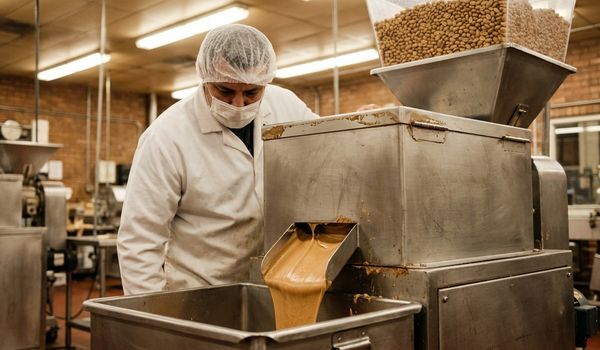
This is the heart of the operation, the machine people mean when they say nut butter machine. Commercial nut butter grinders use stone, steel, or colloid mill technology to reduce roasted nuts to a smooth or crunchy paste at controlled temperatures. Entry-level commercial units handling 20 to 50 pounds per hour start near $2,000, while industrial colloid mills capable of continuous production run $10,000 to $80,000 depending on throughput and build quality.
Homogenizers and Mixers
Homogenization keeps oil from separating and gives the finished butter a consistent texture and mouthfeel. Mixers and blending tanks handle added ingredients like salt, sweeteners, protein powders, or chocolate. For specialty brands, this stage is where a recipe becomes a repeatable product.
Cooling and Handling Equipment
Cooling conveyors bring roasted nuts down to grinding temperature without scorching, and destoners, sifters, and blanchers clean and prep raw stock. Peanut and almond processors in particular rely on blanching equipment to remove skins before roasting or grinding.
Filling, Sealing, and Labeling Machines
Viscous product requires piston or pump fillers designed for thick pastes. A semi-automatic filling station might cost $15,000 to $40,000, while a fully automated filling, capping, sealing, and labeling line can exceed $200,000. Automation at this stage is usually the single largest labor saver in the plant.
Packaging and Conveyor Systems
Conveyors, accumulators, case packers, and palletizers tie the line together. Individually modest, these systems add up quickly, which is why most buyers finance the full line as one package rather than machine by machine.
What Does Nut Butter Production Equipment Cost?
Costs vary widely based on capacity, automation level, and whether you buy new or used. These ranges reflect what most small to mid-size producers actually pay:
- Commercial nut butter grinder (batch): $2,000 to $30,000
- Industrial colloid mill: $10,000 to $80,000
- Continuous nut roaster: $15,000 to $150,000
- Homogenizer or mixing tank: $8,000 to $60,000
- Semi-automatic filling station: $15,000 to $40,000
- Automated filling, sealing, and labeling line: $50,000 to $200,000+
- Complete small production line: $75,000 to $250,000 all in
Remember to budget for the soft costs that come with machinery: freight, rigging, installation, electrical and ventilation work, and operator training. Most equipment lenders will roll these into the financed amount when they appear on the vendor invoice, which keeps more cash in your business on day one.
Pro Tip: Used equipment can cut your initial investment by 30 to 50 percent, and most lenders finance it the same way they finance new machinery. If you go this route, ask the seller for maintenance records and have the machine inspected before the lender sends payment. Ask your lender about used equipment financing programs before you commit.
Financing Options Compared
There is no single right way to fund production equipment. The best structure depends on how long you plan to run the machinery, how fast you need it, and how you want ownership to work. Here are the four options most nut butter producers use:
| Feature | Equipment Loan | Equipment Lease | Line of Credit | SBA Loan |
|---|---|---|---|---|
| Ownership | You own from day one | Lessor owns; buyout option | N/A (revolving funds) | You own from day one |
| Best for | Core machines you will run for years | Fast-evolving or upgrade-heavy equipment | Smaller purchases and cash flow gaps | Lowest rates when time allows |
| Typical term | 2 to 7 years | 2 to 5 years | Revolving, renews annually | Up to 10 years for equipment |
| Down payment | 0% to 20% | Often first and last payment | None | Usually 10% or more |
| Funding speed | 24 to 72 hours | 24 to 72 hours | A few days | 30 to 90 days |
Equipment loans are the workhorse of this category. You get ownership, fixed payments, and a structure built around the machine's useful life. For a grinder or roaster you expect to run for a decade, this is usually the most cost-effective path.
Equipment leasing trades ownership for flexibility and often a lower monthly payment. Leasing makes sense when technology is improving quickly or when you want an easy upgrade path as your volume grows. Many producers lease their first automated line, then buy once their product mix stabilizes.
A business line of credit works well for smaller machines, spare parts, and the working capital gaps that come with big purchase orders. It is revolving, so you draw what you need, repay, and draw again, but it is usually not the cheapest way to fund a six-figure line.
SBA loans offer some of the lowest rates available for equipment, with terms up to 10 years, and they are partially guaranteed by the U.S. Small Business Administration. The tradeoff is time and paperwork: expect 30 to 90 days and a much deeper documentation review. Producers with a patient timeline and strong financials should at least compare an SBA quote against conventional equipment financing.
Who Qualifies for Equipment Financing?
Equipment financing is among the most accessible forms of business funding because the machinery itself secures the transaction. While every lender weighs applications differently, these benchmarks reflect what specialized lenders typically look for:
- Time in business: Six months to two years is the common window. Strong applicants with industry experience can qualify sooner.
- Credit score: A personal score of 600 or higher opens most programs, with the best rates reserved for 680 and above. Options exist below that range with stronger revenue or a larger down payment.
- Revenue: Many programs start around $100,000 to $250,000 in annual revenue, scaled to the size of the equipment request.
- The equipment itself: Lenders evaluate the machine's condition, age, and resale market. A well-known brand of colloid mill is easier to finance than obscure custom fabrication.
Lenders also look at the story behind the numbers. A signed purchase order from a grocery chain, a co-packing contract, or two years of farmers market sales growth all strengthen an application because they show the equipment will generate the revenue that repays the financing.
Key Stat: According to the U.S. Small Business Administration, access to capital remains one of the top challenges for small manufacturers. Equipment-secured financing sidesteps many of the hurdles that make unsecured bank loans hard to get.
How Crestmont Capital Helps
Crestmont Capital is rated the #1 business lender in the U.S., and equipment financing is one of our core specialties. We fund food production machinery every week, from single grinders for emerging brands to complete automated lines for established co-packers, and we structure every deal around how your business actually operates.
Working with us looks different from working with a bank. Applications take minutes instead of weeks, approvals typically arrive within 24 to 72 hours, and a dedicated funding advisor walks you through term options instead of handing you a take-it-or-leave-it offer. We finance new and used equipment, roll soft costs like freight and installation into the deal, and work with credit profiles that banks routinely decline.
Our equipment financing programs cover the full production chain, and our team understands food manufacturing specifically. Producers who need broader capacity can also explore manufacturing equipment financing or our dedicated food equipment financing programs. For adjacent reading, see how other food businesses funded their lines in our guides to candy making equipment financing and chocolate enrober financing.
Whether you are buying your first commercial nut butter machine or automating a line that already runs three shifts, we can match you with a structure that fits your cash flow and your growth plan.
Get the Equipment Your Business Needs
Fast approvals, flexible terms, and a dedicated advisor. See your options in minutes.
Apply Now →Real-World Scenarios: How Producers Use Equipment Financing
Every nut butter operation hits the same inflection point: demand outgrows capacity. Here is how five typical producers used financing to get through it.
Scenario 1: The farmers market brand going regional. A specialty almond butter company selling at weekend markets lands a trial placement with a regional grocery chain. The handshake deal requires 4,000 jars a month, but their tabletop grinder produces a tenth of that. A $68,000 equipment loan covers an industrial grinder, a mixing tank, and a semi-automatic filler. Payments run about $1,400 a month against roughly $22,000 in new monthly revenue.
Scenario 2: The co-packer adding a nut butter line. An established co-packing facility sees private-label clients requesting nut butter SKUs. Rather than refer the business out, they finance a complete $240,000 line with a continuous roaster, colloid mill, and automated filling system. The line pays for itself through co-packing contracts within two years and becomes their highest-margin service.
Scenario 3: The producer replacing an aging mill. A peanut butter manufacturer running a 15-year-old mill faces mounting downtime and repair bills right as orders peak. Waiting to save cash means risking their biggest accounts. Financing a replacement mill for $55,000 with no money down keeps production running and actually lowers their monthly cost compared with the old machine's maintenance.
Scenario 4: The confectioner bringing filling in-house. A chocolate and confectionery company buying nut butter filling from an outside supplier calculates they can cut ingredient costs by a third by producing it internally. A lease on a $95,000 grinder and tempering-adjacent setup lets them test the economics with a lower monthly commitment, then buy the equipment outright once the savings prove out.
Scenario 5: The organic brand solving allergen separation. An organic snack company needs a dedicated peanut-free line to launch a cashew butter without cross-contamination risk. Financing a $120,000 dedicated line, installed in a separate room, unlocks a product category their certified-organic customers had been requesting for years.
Pro Tip: Before you apply, gather three to six months of business bank statements, your equipment quote, and a one-paragraph summary of what the machine will do for your revenue. Applications that arrive complete get approved fastest, often the same day.
Frequently Asked Questions
What is nut butter production equipment financing?+
It is business funding designed for the machinery used to roast, grind, blend, fill, and package nut butter products. A lender pays the vendor, and you repay over a fixed term, typically two to seven years, with the equipment itself serving as collateral.
How much does a commercial nut butter machine cost?+
Entry-level commercial grinders start around $2,000 to $5,000, mid-range machines run $10,000 to $30,000, and industrial colloid mills built for continuous production cost $10,000 to $80,000. A complete small production line typically lands between $75,000 and $250,000.
Can I finance used nut butter equipment?+
Yes. Most equipment lenders finance used machinery from dealers, auctions, and private sellers at the same structures as new equipment. The machine's age, condition, and remaining useful life factor into the term and rate you are offered.
What credit score do I need to qualify?+
Most programs start around a 600 personal credit score, with the strongest rates reserved for scores of 680 and above. Because the equipment secures the financing, lenders can work with lower scores when revenue is strong or the down payment is larger.
How fast can I get funded?+
Specialized equipment lenders typically approve applications within 24 to 72 hours and pay the vendor within days of acceptance. Bank and SBA options take considerably longer, often 30 to 90 days from application to funding.
Do I need collateral beyond the equipment itself?+
Usually not. In most equipment financing structures, the machinery serves as the collateral, which is what makes this funding more accessible than unsecured loans. Some larger deals may include a personal guarantee from the business owner.
Can a newer business qualify for equipment financing?+
Yes, though options expand with time in business. Many programs require six months to two years of operating history, and newer companies with strong owner credit, industry experience, or signed purchase orders can often qualify with a larger down payment.
What is the difference between an equipment loan and an equipment lease?+
With a loan, you own the equipment from day one and the lender holds a lien until you pay it off. With a lease, the financing company owns the machine during the term and you make payments to use it, with options to buy, upgrade, or return it at the end.
What documents do I need to apply?+
Most lenders ask for a completed application, three to six months of business bank statements, and a quote or invoice for the equipment. Larger requests may also call for tax returns, financial statements, or a debt schedule.
Can I finance a full production line instead of individual machines?+
Absolutely, and most producers do. Lenders routinely package roasters, grinders, mixers, conveyors, and filling lines from one or multiple vendors into a single financing agreement with one monthly payment.
What term lengths are available?+
Equipment loans and leases typically run two to seven years, matched to the expected useful life of the machinery. SBA equipment loans can extend to 10 years, which lowers the monthly payment on larger purchases.
Does financing cover soft costs like shipping and installation?+
In most cases, yes. Freight, rigging, installation, and operator training can be rolled into the financed amount when they are itemized on the vendor invoice, which keeps those upfront costs from draining your cash reserves.
Is a down payment required?+
Not always. Many programs offer 100 percent financing for qualified buyers, while others ask for 10 to 20 percent down. A larger down payment generally earns a better rate and lowers the monthly payment.
Can I pay off my equipment loan early?+
Most equipment loans allow early payoff, and many do so without a prepayment penalty. Terms vary by lender, so confirm the prepayment policy before signing if you expect to pay the balance off ahead of schedule.
How do I choose the right nut butter machine for my operation?+
Start with your target output in pounds per hour and your texture requirements, then size the grinder or mill to meet peak demand, not average demand. From there, match roaster capacity upstream and filling capacity downstream so no single machine bottlenecks the line.
Start Your Application Today
Join thousands of businesses that have funded their growth with Crestmont Capital. Applying takes minutes.
Apply Now →How to Get Started
Complete our quick application at offers.crestmontcapital.com/apply-now, it takes just a few minutes.
A Crestmont Capital advisor will review your equipment quote and production goals, then match you with the financing structure that fits your cash flow.
Once approved, we pay your equipment vendor directly and you put your new machinery to work, often within days of approval.
Conclusion: Turn Production Capacity Into Growth
The nut butter market rewards producers who can deliver consistent quality at scale, and the businesses winning that race are the ones with the right machinery on the floor. Nut butter production equipment financing lets you become one of them without tying up the cash your operation depends on, spreading the cost of roasters, grinders, mills, and filling lines into payments that the equipment itself helps generate.
Whether you need your first commercial nut butter machine or a fully automated production line, the path is straightforward: get a quote, apply, review your terms, and start producing. Crestmont Capital has funded thousands of equipment deals for food businesses across the country, and our advisors are ready to structure yours. Apply today and turn the demand on those grocery shelves into your growth story.
Disclaimer: The information provided in this article is for general educational purposes only and is not financial, legal, or tax advice. Funding terms, qualifications, and product availability may vary and are subject to change without notice. Crestmont Capital does not guarantee approval, rates, or specific outcomes. For personalized information about your business funding options, contact our team directly.

Allan Garfinkle
Allan Garfinkle is the Chief Revenue Officer at Crestmont Capital, where he has spent more than a decade leading revenue strategy, business development, and operational growth. With 28 years of experience building and advising startups and small businesses, Allan has helped more than 10,000 business owners navigate financing decisions, growth opportunities, and changing economic conditions. He earned a Bachelor of Science in Economics and an MBA with a concentration in Finance from Northeastern University, as well as a Juris Doctor from New England Law, where his studies focused on contracts and business law. His writing draws on extensive practical experience in small-business lending, equipment financing, business credit, and commercial finance.