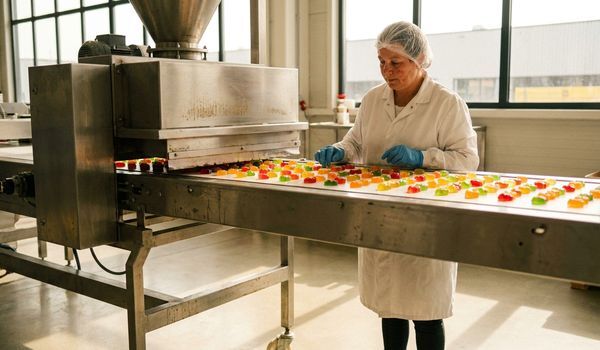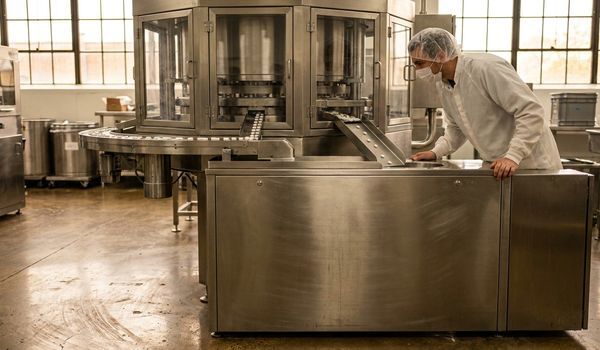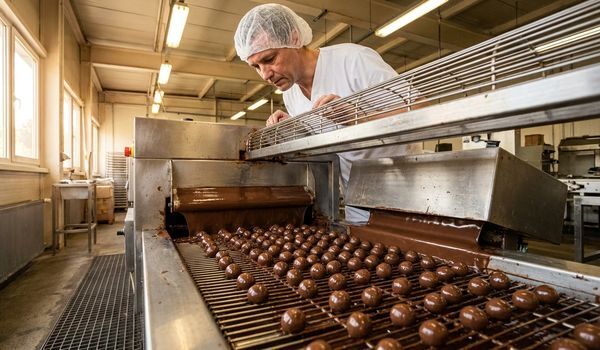
A chocolate enrober is one of the most important machines on a confectionery production line. It coats centers such as truffles, caramels, nuts, fruits, and biscuits in a smooth, even layer of chocolate at a speed no hand-dipping operation can match. It is also a serious capital purchase, with new machines ranging from compact tabletop units to fully automated lines that cost well into six figures. That is exactly why chocolate enrober financing exists: it lets confectionery businesses put this production-critical equipment to work immediately while spreading the cost over predictable monthly payments.
This guide covers everything a business owner needs to know about financing a chocolate enrobing machine. You will learn how financing works, what machines cost, which loan structures fit best, what lenders look for, and how to choose terms that protect your cash flow while you scale production.
In This Article
- What Is Chocolate Enrober Financing?
- Why a Chocolate Enrober Is Worth Financing
- How Chocolate Enrober Financing Works
- Types of Chocolate Enrobers You Can Finance
- How Much Does a Chocolate Enrober Cost?
- Financing Options Compared
- Who Qualifies for Chocolate Enrober Financing?
- How Crestmont Capital Helps
- Real-World Scenarios
- Frequently Asked Questions
- How to Get Started
What Is Chocolate Enrober Financing?
Chocolate enrober financing is a form of equipment financing designed for confectionery producers, chocolatiers, bakeries, and food manufacturers that need an enrobing machine but prefer not to pay the full purchase price upfront. A lender provides the capital to buy the machine, and the business repays that amount, plus interest, over a fixed term. The enrober itself typically serves as collateral, which keeps approval requirements more flexible than unsecured borrowing.
Because the loan is tied to a specific piece of equipment, lenders evaluate the deal differently than they would a general-purpose loan. They look at the machine's value, its expected useful life, and how it will contribute to your revenue. A well-chosen enrober often pays for itself through increased throughput and reduced labor costs, which makes lenders more comfortable approving these loans even for younger businesses.
Financing structures for enrobing equipment include equipment loans, equipment leases, and equipment financing agreements. Each structure handles ownership, end-of-term options, and monthly cost differently, and the right choice depends on how long you plan to keep the machine and how fast technology in your segment changes. We break down each option later in this guide.
It is worth distinguishing chocolate enrober financing from a general chocolate equipment financing package. A broad equipment loan might cover kettles, depositors, and cooling tunnels all at once, while an enrober-specific loan targets the single most expensive machine on many lines. Some businesses finance the enrober on its own to keep payments aligned with the revenue that specific machine generates, then add other equipment under separate agreements as production grows.
Why a Chocolate Enrober Is Worth Financing
Hand-dipping is where most confectionery businesses start, and it is also where most of them stall. A skilled dipper might coat a few hundred pieces per hour with acceptable consistency. A commercial chocolate enrober coats thousands of pieces per hour with uniform thickness, a clean bottom coat, and a glossy finish that commands premium shelf placement. The jump in capacity changes what a business can promise to wholesale accounts, retailers, and private-label clients.
The benefits of adding an enrobing machine extend well beyond raw speed:
- Consistent product quality. Enrobers deliver uniform coating thickness across every piece, which reduces rejects and rework while protecting your brand reputation with retail buyers.
- Lower labor cost per unit. One operator can oversee a machine that replaces several hand-dippers, freeing your team for higher-value tasks like product development and packaging.
- Larger contract capacity. Wholesale and private-label buyers require volume commitments. An enrober makes those commitments possible without adding shifts or overtime.
- Better chocolate temper control. Modern enrobing machines integrate tempering and precise curtain control, which improves snap, shine, and shelf life.
- Expanded product lines. With an enrober, a business can add coated nuts, enrobed bars, chocolate-covered fruit, and seasonal items that were impractical to produce by hand.
- Food safety and consistency. Enclosed systems reduce handling and contamination risk while keeping allergen controls easier to manage.
Key Stat: According to the U.S. Census Bureau's Annual Survey of Manufactures, chocolate and confectionery manufacturing is a multi-billion-dollar segment of U.S. food production, and demand for premium coated confections continues to grow. Producers with automated coating capacity are best positioned to capture that demand.
The math behind financing is straightforward. If an enrober lets you take on a wholesale account worth $15,000 per month in new revenue at a 40 percent margin, the machine generates roughly $6,000 per month in gross profit. A financed payment of $2,000 to $4,000 per month leaves the business cash-flow positive from the first full production run. Waiting to save the full purchase price, by contrast, can mean years of turning away orders your competitors are happy to take.
Ready to Automate Your Chocolate Production?
Finance a chocolate enrober with fast, flexible terms from the #1 business lender in the U.S. No obligation. Apply in minutes.
Apply Now →How Chocolate Enrober Financing Works
The financing process for a chocolate enrobing machine follows a predictable sequence. Knowing the steps in advance helps you move quickly once you find the right machine, which matters because quality used enrobers and factory build slots both move fast.
Step 1: Identify the machine and get a quote. Decide on the enrober model, belt width, and capacity you need, then request a formal quote or invoice from the manufacturer or equipment dealer. Lenders need this document to structure the loan. Include any accessories such as pre-bottomers, cooling tunnels, decorators, and feeders, since these can usually be financed in the same agreement.
Step 2: Choose a financing structure. Decide between an equipment loan, a lease, or an equipment financing agreement based on how long you plan to keep the machine and whether you want ownership at the end. The next sections compare these structures in detail.
Step 3: Submit your application. A complete application includes basic business information, a few months of bank statements, and the equipment quote. Many lenders, including Crestmont Capital, can issue a decision within one to two business days for well-qualified buyers.
Step 4: Review terms and sign. Once approved, you receive a term sheet covering the amount financed, rate, term length, and monthly payment. Review the total cost of financing, any documentation fees, and the end-of-term provisions before signing.
Step 5: The lender pays the vendor. After paperwork is complete, the lender sends funds directly to the equipment seller. You take delivery, install the machine, and begin production while making fixed monthly payments over the agreed term.
Step 6: Own or upgrade at the end of term. With a loan, you own the enrober free and clear once the final payment is made. With a lease, you typically choose between a purchase option, a renewal, or returning the machine and upgrading to newer technology.
Most chocolate enrober financing agreements run 24 to 72 months. Longer terms lower the monthly payment but increase total interest paid. Shorter terms cost more each month but build equity faster and reduce total cost. Aligning the term with the machine's expected production life, which for a well-maintained commercial enrober is often 15 years or more, keeps the economics favorable.
Types of Chocolate Enrobers You Can Finance
Enrobing machines come in several configurations, and lenders will finance virtually all of them as long as the machine has a verifiable value and a reputable seller. Understanding the main categories helps you match the machine to your production goals and your budget.
Tabletop and Compact Enrobers
Tabletop enrobers are the entry point for small chocolatiers, candy shops, and test kitchens. They typically handle belt widths of 7 to 12 inches and produce a few hundred pounds of coated product per day. Prices for new compact units generally run from $10,000 to $30,000, and financing keeps the monthly cost manageable for a growing retail operation.
Mid-Size Production Enrobers
Mid-size machines suit established confectionery brands moving into regional wholesale. Belt widths of 12 to 24 inches, integrated tempering, and optional pre-bottomers and cooling tunnels push output into the thousands of pounds per day. Expect pricing between $40,000 and $120,000 depending on configuration, which makes this the most commonly financed category of chocolate enrobing equipment.
Industrial Enrobing Lines
Industrial lines serve contract manufacturers and national brands. Fully automated systems with wide belts, multi-stage cooling, decorating attachments, and automated feeding can cost $150,000 to $500,000 or more. Financing is essentially standard practice at this level, since even highly profitable manufacturers prefer to preserve working capital rather than commit that much cash to a single purchase.
New vs. Used Chocolate Enrobers
A used chocolate enrober can cost 30 to 60 percent less than a comparable new machine, and lenders do finance used equipment. The key differences are documentation and term length. Used machines require clear title, verifiable condition, and sometimes an inspection, and lenders may offer shorter terms to match the remaining useful life. For many buyers, a well-maintained used enrober from a reputable brand is the fastest path to automation because the lower price produces a lower monthly payment.
Enrobers with Integrated Tempering
Some machines combine a tempering unit and enrobing station in one footprint, while others pair a standalone tempering machine with a separate enrobing line. Integrated units save floor space and simplify operation for smaller teams. If your operation already has a tempering machine, a standalone enrober may be the better buy. If you are building a line from scratch, an integrated chocolate enrobing machine often delivers the best total value, and both machines can be bundled into one financing agreement.
How Much Does a Chocolate Enrober Cost?
Price is the first question most buyers ask, and the honest answer is that it depends on belt width, throughput, automation level, and whether the machine is new or used. The table below shows realistic price ranges by category, along with the approximate monthly payment if the machine were financed over 60 months. Actual payments depend on your credit profile, time in business, and the rate you qualify for.
| Machine Category | Typical Price Range | Best For | Est. Monthly Payment (60 mo) |
|---|---|---|---|
| Tabletop / compact enrober | $10,000 - $30,000 | Chocolatiers, candy shops, R&D kitchens | $200 - $600 |
| Mid-size production enrober | $40,000 - $120,000 | Regional brands, growing wholesale accounts | $800 - $2,400 |
| Industrial enrobing line | $150,000 - $500,000+ | Contract manufacturers, national brands | $3,000 - $10,000+ |
| Used commercial enrober | $15,000 - $80,000 | Budget-conscious buyers, fast automation | $300 - $1,600 |
Input costs add urgency to the decision. Cocoa prices have seen historic volatility in recent years, as tracked by Reuters commodities coverage, which makes preserving cash for ingredient purchases a priority for every confectionery business. Financing the machine keeps that cash available.
Beyond the machine price, budget for shipping, installation, electrical or plumbing work, spare belts and parts, and operator training. Many lenders let you roll these soft costs into the financed amount, which keeps your out-of-pocket expense near zero on day one. Ask for a single quote that itemizes everything so the loan covers the full project rather than just the sticker price of the machine.
By the Numbers
Chocolate Enrober Financing - Key Figures
$10K - $500K
Typical price range for new enrobing machines across all categories
24 - 72 mo
Common financing term lengths for confectionery equipment
1 - 2 Days
Typical decision time for a complete equipment financing application
15+ Years
Expected service life of a well-maintained commercial enrober
Financing Options for Chocolate Enrobing Equipment
There is no single best way to finance a chocolate enrober. The right structure depends on how long you will keep the machine, how you want ownership to work, and how your accountant prefers to treat the payments. Here are the four structures confectionery businesses use most.
Equipment Loans
An equipment loan is the most straightforward option. The lender provides funds to purchase the enrober, you own the machine from day one, and you repay the loan over a fixed term with the equipment as collateral. When the final payment clears, the machine is yours with no further obligation. Equipment loans suit buyers who plan to run the machine for a decade or more and want to build equity with every payment.
Equipment Leasing
With equipment leasing, the lender purchases the machine and rents it to you for a fixed term. Monthly payments are often lower than a loan because you are paying for use rather than ownership. At the end of the term, you can buy the machine at a predetermined price, renew the lease, or upgrade to newer equipment. Leasing fits businesses that want the lowest monthly cost or expect to upgrade machines as coating technology improves.
Equipment Financing Agreements (EFA)
An EFA blends features of loans and leases. You take ownership of the equipment immediately, like a loan, but the agreement is structured with fixed payments and streamlined documentation. EFAs are popular for mid-size equipment purchases because they close quickly and give the buyer full ownership rights at the end of the term with no balloon payment.
SBA Loans
SBA loan programs, particularly the 7(a) and 504 programs, can fund equipment purchases at attractive rates for qualified borrowers. The tradeoff is speed and paperwork: SBA loans involve more documentation and longer approval timelines than direct equipment financing. Businesses planning a large facility expansion that includes an enrober alongside real estate or construction often wrap the machine into a broader SBA package, while businesses that need a machine quickly usually choose direct equipment financing.
| Feature | Equipment Loan | Equipment Lease | SBA Loan |
|---|---|---|---|
| Ownership | Immediate | At end (purchase option) | Immediate |
| Monthly cost | Moderate | Lowest | Low (if approved) |
| Approval speed | 1 - 3 days | 1 - 3 days | Weeks to months |
| Documentation | Light | Light | Heavy |
| Upgrade flexibility | Low (you own it) | High | Low |
| Best for | Long-term owners | Cash-flow-sensitive buyers | Large facility expansions |
Many confectionery businesses combine structures. A common approach is financing the enrober with an equipment loan for ownership, then adding a business line of credit to cover ingredients, packaging, and seasonal inventory swings. The loan builds equity in the machine while the line of credit smooths working capital between production runs.
Who Qualifies for Chocolate Enrober Financing?
Equipment financing is one of the most accessible forms of business funding because the machine itself secures the loan. Lenders still evaluate risk, but the collateral reduces the emphasis on perfect credit. Here is what most lenders look for when reviewing a chocolate enrober financing application.
- Time in business. Two or more years is ideal, but many lenders work with younger businesses when the equipment and the contract pipeline are strong.
- Credit profile. Scores of 650 and above typically qualify for the best rates. Lower scores can still be approved, sometimes with a larger down payment or a shorter term.
- Revenue and cash flow. Lenders want to see that the business generates enough monthly revenue to cover the new payment alongside existing obligations. Three to six months of bank statements usually tell this story.
- The equipment itself. A quote from a reputable manufacturer or dealer, with clear pricing and specifications, makes approval faster. For used machines, expect questions about condition, hours, and service history.
- Industry experience. Owners with a track record in confectionery or food production present lower risk than first-time operators, all else equal.
Pro Tip: Apply before you need the machine. Getting pre-qualified tells you exactly how much enrober you can afford and lets you move immediately when the right unit, new or used, hits the market. Strong used machines often sell within days of listing.
Startups and businesses with credit challenges are not automatically excluded. A larger down payment, a co-signer, or additional collateral can bridge the gap. Businesses with past credit issues can also explore bad credit equipment financing programs designed specifically for buyers rebuilding their profiles.
How Crestmont Capital Helps
Crestmont Capital is the #1 rated business lender in the U.S., and equipment financing is one of our core specialties. We fund chocolate enrobers and complete confectionery production lines for chocolatiers, candy manufacturers, bakeries, and contract food producers across the country.
Our process is built for speed. A complete application with an equipment quote can receive a decision in as little as one to two business days, and funding follows quickly after documents are signed. We finance new and used machines, private-party and dealer purchases, and we can include shipping, installation, and training in the financed amount so your out-of-pocket cost stays minimal.
Terms range from 24 to 72 months with fixed monthly payments, and our advisors structure each deal around your production cycle. Confectionery businesses with heavy seasonal swings, such as holiday and Valentine's Day production peaks, can discuss payment timing that matches how cash actually flows through the business. We have funded everything from a first tabletop enrober for a growing truffle brand to multi-machine industrial lines for contract manufacturers.
If you are also upgrading the rest of your line, we can bundle tempering machines, depositors, cooling tunnels, and packaging equipment into a single agreement. Our team has deep experience with chocolate equipment financing of every scale, and we regularly help clients who started with a financed tempering machine add enrobing capacity as orders grow.
Get Your Enrober Funded Fast
Decisions in as little as one business day. New and used machines, dealer or private-party purchases. Fixed payments, no surprises.
Apply Now →Real-World Scenarios: How Businesses Use Enrober Financing
Every confectionery business reaches the automation decision differently. These scenarios show how real financing structures solve real production problems.
Scenario 1: The truffle shop going wholesale. A two-person truffle operation lands a regional grocery chain that wants 4,000 pieces per week. Hand-dipping caps out at a fraction of that. The owners finance a mid-size enrober for $65,000 over 60 months. The machine covers its own payment with the grocery contract alone, and the shop keeps its farmers market and online business running on the same line.
Scenario 2: The bean-to-bar maker adding coating capacity. A craft chocolate maker produces excellent bar chocolate but watches competitors win contracts for enrobed almonds and cocoa nibs. Rather than divert cash reserves from a recent facility build-out, the company finances a compact enrober with an integrated tempering unit. The new coated snack line becomes its fastest-growing wholesale category within two quarters.
Scenario 3: The bakery expanding into confectionery. A successful wholesale bakery sees holiday demand for chocolate-covered cookies and enrobed brownies. Ownership finances a tabletop enrober for under $20,000, keeping the payment under $400 per month. Seasonal sales cover the annual cost of the machine in the fourth quarter alone, and the equipment opens a year-round product line the following year.
Scenario 4: The contract manufacturer scaling an industrial line. A co-packer wins a national brand's enrobed bar contract but needs a second industrial line to guarantee volume. The company finances a $380,000 fully automated line over 72 months, bundling installation and operator training into the agreement. The contract revenue exceeds the monthly payment by an order of magnitude, and the added capacity attracts two more clients within a year.
Scenario 5: The opportunistic used-machine purchase. A candy maker learns that a closing competitor is selling a well-maintained commercial enrober at 45 percent of replacement cost. Because the business was pre-qualified for financing, the owner signs within days and beats two other buyers to the machine. Pre-qualification turned a market opportunity into a production asset before the week ended.
Scenario 6: The seasonal producer smoothing cash flow. A holiday-focused candy company produces 70 percent of annual revenue between October and December. Ownership chooses equipment financing with payments structured around that cycle rather than draining cash reserves in August, right before the production ramp. The machine arrives in time for peak season, and the season's revenue comfortably covers the year's payments.
Frequently Asked Questions
What is a chocolate enrober and how does it work?+
A chocolate enrober is a machine that coats food centers such as truffles, nuts, caramels, or biscuits in a continuous curtain of tempered chocolate. Pieces travel along a wire belt through the chocolate curtain, receive a bottom coat, pass through a cooling section, and emerge fully and evenly coated at speeds of thousands of pieces per hour.
How much does a chocolate enrober cost?+
Tabletop units start around $10,000 to $30,000, mid-size production machines run $40,000 to $120,000, and fully automated industrial lines can exceed $500,000. Quality used machines typically sell for 30 to 60 percent less than comparable new models.
Can I finance a used chocolate enrober?+
Yes. Lenders regularly finance used enrobing equipment from dealers and private sellers. Expect to provide documentation of the machine's condition, age, and service history, and note that terms may be shorter to match the machine's remaining useful life.
What credit score do I need to finance a chocolate enrober?+
Scores of 650 and above typically qualify for the most competitive rates. Lower scores can still be approved because the equipment serves as collateral, though the lender may request a larger down payment, a shorter term, or additional collateral to offset risk.
How long does approval take?+
A complete application with an equipment quote can receive a decision in one to two business days at Crestmont Capital. Funding follows shortly after documents are signed, which means a business can often go from application to ordered machine within a week.
What is the difference between an equipment loan and an equipment lease?+
With a loan, you own the machine from day one and build equity with each payment. With a lease, the lender owns the machine and rents it to you, usually at a lower monthly cost, with an option to purchase, renew, or upgrade at the end of the term.
Can a startup qualify for chocolate enrober financing?+
Startups face stricter review but are not automatically disqualified. Strong personal credit, industry experience, a meaningful down payment, and signed purchase commitments from wholesale accounts all improve a young company's chances of approval.
What documents do I need to apply?+
Most applications require basic business information, three to six months of business bank statements, and a formal quote or invoice for the machine. Larger financing amounts may also call for recent tax returns or financial statements.
Can shipping, installation, and training be included in the financing?+
In most cases, yes. Lenders commonly allow soft costs such as freight, rigging, installation, electrical work, and operator training to be rolled into the financed amount, provided they appear on the vendor invoice. This keeps your upfront cash requirement close to zero.
What term lengths are available?+
Most chocolate enrober financing agreements run 24 to 72 months. Longer terms reduce the monthly payment but increase total interest, while shorter terms raise the payment and lower total cost. Match the term to the machine's expected production life and your cash flow.
Is a down payment required?+
Well-qualified buyers can often finance 100 percent of the purchase with no down payment. Buyers with weaker credit, limited time in business, or very large purchases may be asked for 10 to 20 percent down to reduce the lender's exposure.
Can I pay off the loan early?+
Most equipment loans allow early payoff, and doing so reduces total interest paid. Review your agreement for prepayment provisions before signing, since some contracts include minimum interest periods or modest prepayment fees.
What happens at the end of an equipment lease?+
At lease end, you typically choose between purchasing the machine at a predetermined price, renewing the lease, or returning the equipment and upgrading to a newer model. The right choice depends on the machine's condition and how coating technology has evolved during your term.
Can I finance multiple machines in one agreement?+
Yes. Enrobers are frequently financed alongside tempering machines, cooling tunnels, depositors, and packaging equipment under a single agreement. Bundling simplifies paperwork, produces one monthly payment, and keeps your entire production line on the same financing schedule.
Why finance an enrober instead of paying cash?+
Financing preserves working capital for ingredients, packaging, payroll, and marketing while the machine generates revenue immediately. Because a productive enrober typically earns far more per month than its payment, most owners find that financing accelerates growth rather than simply deferring a cost.
Your Production Line Is Waiting
Join the confectionery businesses that scaled with Crestmont Capital equipment financing. Fast decisions, fixed payments, real support.
Apply Now →How to Get Started
Complete our quick application at offers.crestmontcapital.com/apply-now. It takes just a few minutes, and there is no obligation.
A Crestmont Capital advisor will review your production goals, your equipment quote, and your timeline, then match you with the right financing structure.
Once approved, funds go directly to your equipment seller. Take delivery, install your enrober, and put new capacity to work, often within days of approval.
Conclusion
A chocolate enrober is the machine that turns a kitchen operation into a production business. It multiplies output, stabilizes quality, and unlocks the wholesale and private-label contracts that drive real growth. The only question is how to pay for it without starving the rest of the business.
Chocolate enrober financing solves that problem. Fixed monthly payments aligned with your production cycle let the machine pay for itself out of the revenue it creates, while your cash stays available for ingredients, staffing, and sales. Whether you need a compact tabletop unit or a fully automated industrial line, Crestmont Capital can structure funding that fits how your business actually operates.
The confectionery market rewards producers who can say yes to big orders. With the right financing in place, your business can be one of them.
Disclaimer: The information provided in this article is for general educational purposes only and is not financial, legal, or tax advice. Funding terms, qualifications, and product availability may vary and are subject to change without notice. Crestmont Capital does not guarantee approval, rates, or specific outcomes. For personalized information about your business funding options, contact our team directly.

Allan Garfinkle
Allan Garfinkle is the Chief Revenue Officer at Crestmont Capital, where he has spent more than a decade leading revenue strategy, business development, and operational growth. With 28 years of experience building and advising startups and small businesses, Allan has helped more than 10,000 business owners navigate financing decisions, growth opportunities, and changing economic conditions. He earned a Bachelor of Science in Economics and an MBA with a concentration in Finance from Northeastern University, as well as a Juris Doctor from New England Law, where his studies focused on contracts and business law. His writing draws on extensive practical experience in small-business lending, equipment financing, business credit, and commercial finance.