
 (800) 949-0401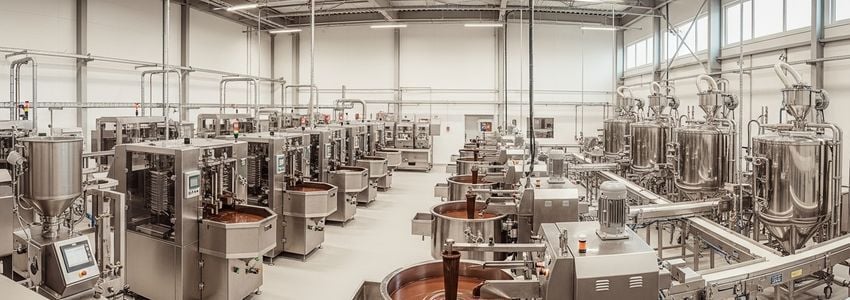
Chocolate Equipment Financing: The Complete Guide for Business Owners
Chocolate production equipment financing helps confectionery manufacturers, chocolatiers, and food businesses acquire the specialized machinery needed to produce chocolate at scale - without depleting working capital. Whether you're tempering machines, enrobers, molding lines, or cocoa grinding equipment, financing makes high-cost production assets accessible through structured monthly payments.
In This Article
- What Is Chocolate Equipment Financing?
- Types of Chocolate Production Equipment You Can Finance
- Key Benefits for Confectionery Businesses
- How Chocolate Equipment Financing Works
- Who Qualifies?
- Costs, Rates, and Terms
- How Crestmont Capital Helps
- Real-World Scenarios
- Frequently Asked Questions
- How to Get Started
What Is Chocolate Equipment Financing?
Chocolate equipment financing is a form of asset-based lending that allows confectionery businesses to acquire processing machinery by paying for it over time rather than all at once. The equipment itself often serves as collateral, making this financing type accessible even for businesses that lack substantial outside assets.
The confectionery industry operates on tight margins and seasonal demand cycles. A boutique chocolatier scaling from handcrafted production to commercial output, or a food manufacturer adding a new chocolate line, faces equipment costs that can range from $20,000 for an entry-level tempering machine to $500,000 or more for a full continuous chocolate production line. Financing converts those capital expenditures into manageable operating costs.
Unlike general-purpose business loans, chocolate production equipment financing is structured specifically around the lifecycle and value of the equipment being acquired. Terms, advance rates, and repayment structures reflect how quickly chocolate machinery depreciates, how long it remains productive, and how liquid the secondary market is for used equipment.
Industry Context: The global confectionery equipment market is projected to exceed $7.5 billion by 2028, according to industry research, driven by rising demand for automated chocolate production and premium confectionery products. Financing is a key enabler for businesses looking to compete in this capital-intensive sector.
Types of Chocolate Production Equipment You Can Finance
Virtually any piece of commercial chocolate manufacturing equipment can be financed. Lenders evaluate equipment based on useful life, resale value, and the creditworthiness of the borrower. Here are the most commonly financed categories:
Primary Processing Equipment
- Cocoa bean roasters: Large-capacity drum or continuous flow roasters for raw bean processing, typically ranging from $30,000 to $200,000
- Cracking and winnowing machines: Equipment for separating cocoa nibs from shell material
- Grinding and refining mills: Ball mills, stone grinders, and roller refiners that process nibs into chocolate liquor and refine particle size
- Conching machines: Long-cycle mixing equipment that develops chocolate flavor and texture, from laboratory-scale units to multi-ton industrial conches
Tempering and Molding Equipment
- Continuous tempering machines: Units that precisely control chocolate crystallization for gloss, snap, and shelf life - a core investment for any serious chocolate producer
- Molding lines: Automated systems including depositors, vibration tables, and cooling tunnels for tablet and shell production
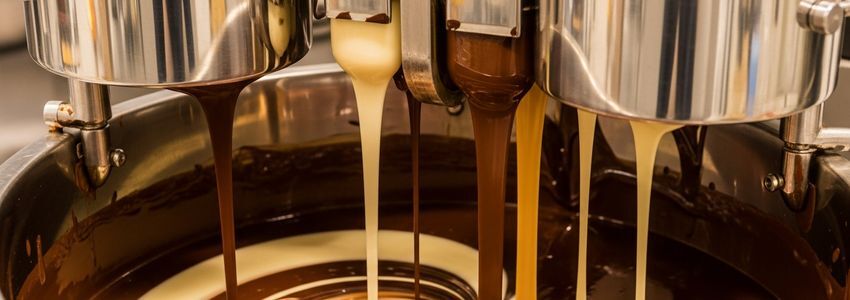
- Enrobers: Coating machines that apply a continuous curtain of chocolate over centers like caramel, nougat, or wafer
- Hollow figure machines: Rotating mold systems for seasonal products like Easter eggs and holiday figures
Supporting Chocolate Production Equipment
- Chocolate storage tanks: Temperature-controlled jacketed vessels that maintain fluid chocolate at precise working temperatures
- Transfer pumps and piping systems: Food-grade stainless steel transport systems
- Depositors and filling machines: Equipment for pralines, truffles, and filled bars
- Packaging lines: Flow wrappers, foil wrapping machines, box filling systems
- Cooling tunnels: Refrigerated conveyors for setting chocolate after molding or enrobing
- Tempering pots and small-batch equipment: Tabletop units for artisan and R&D operations
Finance Your Chocolate Production Equipment Today
Get competitive rates on chocolate tempering machines, enrobers, molding lines, and more. Fast decisions from a lender that understands food manufacturing.
Apply Now →Key Benefits for Confectionery Businesses
Chocolate equipment financing delivers strategic advantages that go beyond simply acquiring machinery. For confectionery businesses at every scale, here is what makes financing the right choice:
Preserve Working Capital
High-quality chocolate production equipment can represent 30% to 60% of a small manufacturer's total capital. Purchasing outright depletes the cash reserves needed for ingredients, staffing, seasonal inventory build-up, and marketing. Financing keeps capital liquid and operational.
Match Payments to Production Revenue
Equipment financing terms of 24 to 84 months allow payments to align with the revenue generated by the equipment itself. A new enrober that adds production capacity immediately begins generating income that funds its own monthly payment - a fundamentally sound financial structure.
Access Current Technology
The chocolate equipment market is evolving rapidly, with energy-efficient motors, IoT-connected systems, and precision control technology now standard on professional-grade machinery. Financing makes current-generation equipment accessible without requiring full capital outlay, and some lease structures allow upgrades at term end.
Predictable Budget Planning
Fixed-rate equipment financing means consistent monthly payments for the full term - no surprises, no variable rate exposure. This predictability is critical for food businesses managing tight operating budgets and seasonal cash flow.
Potential to Finance Soft Costs
Many lenders, including Crestmont Capital, can structure financing to include installation, shipping, training, and first-year maintenance contracts as part of the financed amount. This keeps even the ancillary costs of a new production line off the balance sheet in the near term.
Pro Tip: Many small and mid-size chocolate producers underestimate the full cost of a new production line when they include installation, commissioning, and operator training. Work with your lender to bundle these costs into a single financing arrangement so you start production without cash flow disruption.
How Chocolate Equipment Financing Works
The process for chocolate production equipment financing is straightforward, particularly through an alternative lender like Crestmont Capital. Here is the step-by-step flow:
Quick Guide
How Chocolate Equipment Financing Works — At a Glance
Identify the chocolate production equipment you need - from a single tempering unit to a complete production line. Get quotes from equipment vendors.
Submit a simple application with basic business information, recent bank statements, and equipment details. Many decisions come within 24-48 hours.
Review your offer including loan amount, interest rate, monthly payment, and term. Terms typically range from 24 to 84 months for production equipment.
Execute the financing agreement. Funds are sent directly to your equipment vendor. Equipment is delivered and installed on your timeline.
Loan vs. Lease Structures
Chocolate equipment financing comes in two primary structures, each with different implications for your balance sheet and long-term ownership:
| Feature | Equipment Loan | Equipment Lease |
|---|---|---|
| Ownership | You own the equipment immediately | Lender owns; you acquire at term end |
| Down Payment | Often $0 or 5-20% | Often first/last payment |
| Monthly Payments | Typically higher | Often lower |
| End of Term | Equipment is yours outright | Buy, return, or upgrade |
| Best For | Long-term use equipment | Equipment that needs upgrading |
| Chocolate Application | Conching machines, grinders, molding lines | Packaging lines, tempering units |
Who Qualifies for Chocolate Production Equipment Financing?
Equipment financing for chocolate and confectionery businesses is more accessible than traditional bank loans, particularly through alternative lenders. Lenders focus primarily on the business's ability to repay and the value of the equipment being financed.
Typical Qualification Criteria
- Time in business: Most lenders prefer 1+ years in operation; some alternative lenders work with newer businesses at higher rates
- Credit score: Personal credit scores of 600+ are preferred, though lenders like Crestmont Capital can work with borrowers down to 550
- Annual revenue: Generally $100,000+ annually, though equipment value and down payment can offset lower revenue figures
- Cash flow: Positive monthly cash flow demonstrating ability to service the new payment
- Equipment age: New or late-model used equipment is most financeable; older machinery may require a larger down payment
Who Typically Uses This Financing
- Artisan chocolatiers scaling to commercial production
- Established confectionery manufacturers upgrading aging equipment
- Candy companies adding a chocolate processing line
- Private label chocolate manufacturers expanding capacity
- Bean-to-bar producers adding tempering or molding capacity
- Bakery businesses integrating chocolate coating or enrobing into their operations
- Food manufacturers launching a new chocolate product line
By the Numbers
Chocolate Equipment Financing — Key Statistics
$7.5B
Global confectionery equipment market value projected by 2028
80%
Of small food manufacturers use financing for major equipment acquisitions
24-84
Months - typical repayment term range for chocolate production equipment
$20K+
Starting cost for commercial-grade chocolate tempering equipment
Costs, Rates, and Terms for Chocolate Equipment Financing
Understanding the cost structure of chocolate production equipment financing allows you to evaluate offers accurately and make informed decisions. Here is what to expect across key variables:
Interest Rates
Equipment financing rates vary based on your credit profile, time in business, equipment type, and lender. Typical ranges:
- Excellent credit (720+): 6% to 10% APR
- Good credit (680-719): 8% to 14% APR
- Fair credit (620-679): 12% to 20% APR
- Lower credit (580-619): 15% to 28% APR, may require down payment
Loan Terms
Term length reflects the expected useful life of the equipment. Chocolate processing machinery is built for durability, which enables longer financing terms:
- Entry-level equipment (tempering pots, small depositors): 24-36 months
- Mid-range equipment (continuous tempering machines, enrobers): 36-60 months
- Full production lines, industrial conches, bean processing systems: 60-84 months
Down Payment Requirements
Many equipment lenders offer $0 down financing for qualified borrowers. Others require 10-20% down. A larger down payment lowers your monthly obligation and often improves the rate you are offered. For used or older equipment, a 20-30% down payment may be required to offset higher depreciation risk.
Total Cost of Financing
To evaluate the real cost of financing, calculate total payments over the full term. A $100,000 chocolate production line financed over 60 months at 10% APR results in approximately $2,125 per month and $127,500 in total payments - a $27,500 premium over the cash price. Whether that premium is worthwhile depends on what you accomplish with the $100,000 you retained in working capital.
According to the U.S. Small Business Administration, maintaining healthy cash flow is one of the top priorities for small business financial management - and equipment financing directly supports that goal by converting large capital expenditures into predictable operating costs.
Ready to Scale Your Chocolate Production?
Crestmont Capital offers fast, flexible equipment financing for confectionery businesses of all sizes. Get a decision in as little as 24 hours.
Apply Now →How Crestmont Capital Helps Chocolate and Confectionery Businesses
Crestmont Capital is a direct lender specializing in equipment financing and small business loans for companies across every industry, including food manufacturing and confectionery production. Our approach is built around speed, flexibility, and a genuine understanding of what growing food businesses need.
What We Offer
- Financing from $10,000 to $5,000,000+ for chocolate and confectionery equipment
- Terms from 12 to 84 months tailored to equipment lifecycle
- Decisions in as little as 24-48 hours for straightforward applications
- $0 down options for qualified borrowers
- Financing for new and used equipment including imported machinery
- Soft cost inclusion for shipping, installation, and training
Our Lending Philosophy
We evaluate the full picture of your business - not just a credit score. Cash flow trends, industry experience, equipment quality, and growth trajectory all factor into our decisions. If you're a chocolatier with strong revenue and a solid business plan but imperfect credit, we can often work with you when traditional banks cannot.
Our food equipment financing programs are specifically designed for food manufacturers and producers, meaning we understand the unique dynamics of chocolate processing equipment - including seasonal demand, the capital-intensive nature of scaling from craft to commercial production, and the long productive life of quality confectionery machinery.
For businesses that also need general working capital for ingredient purchases, seasonal inventory, or staffing, we offer working capital loans that complement equipment financing and give you the full financial toolkit to grow your chocolate business.
You can also explore our bakery equipment financing guide for insights on financing production equipment across related food categories, or our food processing equipment financing guide for a broader look at the food production financing landscape.
According to Forbes Advisor, equipment financing remains one of the most efficient ways for small and mid-size businesses to acquire essential machinery while protecting cash reserves. CNBC has highlighted that access to equipment financing is a key growth driver for small food and beverage businesses competing in increasingly demanding markets.
Real-World Scenarios: Chocolate Equipment Financing in Action
Understanding how chocolate equipment financing plays out in practice helps you evaluate whether it's the right move for your business. Here are six scenarios drawn from common situations among confectionery businesses:
Scenario 1: The Artisan Chocolatier Scaling Up
A small bean-to-bar chocolate maker has been selling $280,000 per year in premium chocolate at farmers markets and online. They're ready to add a commercial tempering machine ($65,000) and a small molding line ($85,000) to produce at higher volume and pursue retail accounts. By financing $140,000 over 60 months at 9% APR, their monthly payment is approximately $2,900 - well within their projections for the added revenue these accounts will generate. They retain their working capital to fund ingredient inventory for the new volume.
Scenario 2: The Candy Manufacturer Adding Chocolate Capability
An established hard candy and gummy manufacturer wants to launch a chocolate-covered line. A complete enrober, cooling tunnel, and packaging integration costs $320,000. Paying cash would create a cash crunch during the seasonal peak when they need ingredient inventory. By financing the equipment over 72 months, they keep their cash cycle intact while building a new product category that launches in time for the holiday season.
Scenario 3: The Private Label Producer Replacing Aging Equipment
A 15-year-old private label chocolate company has a conching machine that needs $40,000 in repairs. A new model with significantly better energy efficiency and flavor development capability costs $180,000. By financing the new equipment and rolling in the disposal costs, their monthly payment is similar to what they would have spent on repeated repairs while gaining a 20-year productive asset with lower energy bills.
Scenario 4: The Bakery Adding Chocolate Enrobing
A wholesale bakery producing 8,000 units per day wants to launch a chocolate-dipped biscotti and pretzel line. A tabletop enrober capable of handling their volume costs $45,000. Financed over 36 months at 8%, their $1,410 monthly payment is covered by the margin on just 300 additional units per day - well within projections for the new line's contribution.
Scenario 5: The Import/Export Business Entering Chocolate Manufacturing
A specialty food importer decides to create their own branded chocolate line using imported cocoa. They need a grinding system, tempering machine, and molding line totaling $240,000. Because they're new to manufacturing (though established in business), a lender asks for 20% down. They put $48,000 down and finance $192,000 over 60 months. Production begins three months after equipment installation, and the new line generates sufficient margin to cover payments within six months.
Scenario 6: The Chocolatier Upgrading for Allergen Compliance
A specialty manufacturer needs to dedicate separate production equipment to nut-free and gluten-free product lines as retailer requirements tighten. They finance a second tempering machine ($55,000) and dedicated cooling system ($28,000) to maintain separate production streams. This $83,000 financed over 48 months allows them to retain key retail accounts that require allergen protocols without a large capital outlay.
Frequently Asked Questions
How to Get Started
Contact equipment vendors for formal quotes on the chocolate machinery you need. Having a specific invoice or quote makes the application process faster and more accurate.
Complete our quick application at offers.crestmontcapital.com/apply-now with your basic business and equipment information. The application takes just a few minutes.
A Crestmont Capital equipment financing specialist will review your application, discuss your chocolate business's specific needs, and present tailored financing options with transparent terms.
Once you accept your financing offer, funds are sent directly to your equipment vendor. Your new chocolate production equipment ships or is installed on your timeline - and your payment schedule begins.
Start Your Chocolate Equipment Financing Application
Crestmont Capital is the #1 business lender for food manufacturers and confectionery businesses. Fast decisions, competitive rates, and real expertise in equipment financing.
Apply Now →Conclusion
Chocolate production equipment financing is one of the most effective tools available to confectionery businesses looking to scale production, upgrade aging machinery, or launch new product lines without depleting working capital. Whether you're a bean-to-bar chocolatier ready to go commercial, an established manufacturer replacing a conche, or a food company adding a chocolate capability, the right financing structure puts world-class equipment within reach on a budget that works for your business.
Crestmont Capital specializes in equipment financing for food manufacturers and confectionery businesses across the United States. With fast approvals, flexible terms, and access to equipment financing solutions from $10,000 to $5,000,000+, we help chocolate businesses invest in the equipment they need to grow. Explore our equipment leasing options as well if you prefer the flexibility of a lease structure for your production machinery.
Ready to invest in your chocolate production capacity? Apply today and let us help you find the chocolate production equipment financing solution that fits your business.
Disclaimer: The information provided in this article is for general educational purposes only and is not financial, legal, or tax advice. Funding terms, qualifications, and product availability may vary and are subject to change without notice. Crestmont Capital does not guarantee approval, rates, or specific outcomes. For personalized information about your business funding options, contact our team directly.








