Mudjacking equipment financing gives concrete leveling contractors a practical way to acquire the pumps, rigs, mixers, and injection systems they need without draining working capital. Whether you are launching a concrete raising startup or expanding an established foundation repair company, the right financing structure turns a five-figure equipment purchase into a predictable monthly payment that pays for itself job after job. This guide covers everything business owners need to know about financing mudjacking equipment in 2026: what the equipment does, what it costs, who qualifies, and how to structure a deal that keeps cash flow healthy from day one.
In This Article
- What Is Mudjacking Equipment?
- Benefits of Financing Mudjacking Equipment
- How Mudjacking Equipment Financing Works
- Types of Mudjacking Equipment You Can Finance
- How Much Does Mudjacking Equipment Cost?
- Who Qualifies for Mudjacking Equipment Financing?
- Financing vs Leasing vs Buying Outright
- How Crestmont Capital Helps
- Real-World Scenarios
- FAQ
- How to Get Started
What Is Mudjacking Equipment?
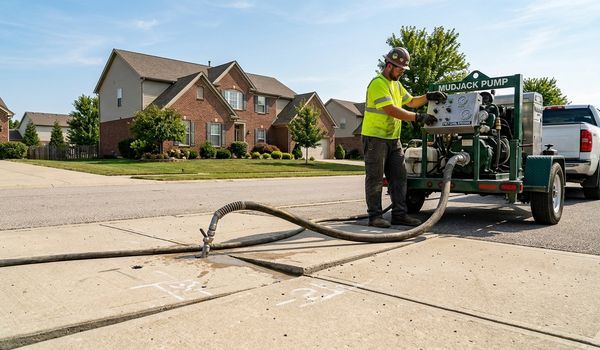
Mudjacking, also called slab jacking or concrete raising, is the process of lifting sunken concrete slabs back to their original level by pumping a cement-based slurry beneath them. Driveways, sidewalks, warehouse floors, pool decks, and parking lots all settle over time as soil compacts or erodes. Instead of demolishing and repouring the slab, a mudjacking contractor drills small holes through the concrete, injects a pressurized slurry mix underneath, and raises the slab back to grade in a matter of hours. The repair typically costs the property owner half or less of full replacement, which is exactly why demand for the service keeps growing.
The equipment that makes this possible is specialized. A professional mudjacking operation relies on hydraulic or piston-driven mud pumps capable of moving thick slurry at controlled pressures, paddle mixers that keep the cement, soil, and water blend consistent, hose reels and injection wands, core drills for access holes, and a truck or trailer platform to carry it all. Many contractors also run polyurethane concrete lifting equipment alongside traditional slurry systems. Poly foam systems use two-component proportioners, heated hoses, and injection guns to expand structural foam beneath the slab. Both approaches solve the same problem, and both equipment categories are financeable.
Because these machines are purpose-built and durable, lenders treat them as strong collateral. That makes mudjacking equipment financing one of the more accessible forms of equipment finance for contractors, including younger businesses with limited operating history.
Key Stat: According to the U.S. Census Bureau, annual construction spending in the United States exceeds $2 trillion. Repair and maintenance work, including concrete leveling, continues to take a growing share as property owners choose restoration over replacement.
Benefits of Financing Mudjacking Equipment
Buying a mudjacking rig outright is possible, but it ties up capital that most contracting businesses need elsewhere. Financing spreads the cost over time and delivers several concrete advantages.
- Preserve working capital. A truck-mounted mudjacking system can cost as much as a house down payment. Financing keeps that cash available for payroll, materials, marketing, and insurance.
- Start earning immediately. A financed rig can be generating revenue within weeks. Many contractors report that a single weekend of residential driveway jobs covers the monthly payment.
- Fixed, predictable payments. Term structures lock in a set monthly cost, which makes bidding and cash flow planning far easier than managing a large lump-sum purchase.
- Build business credit. On-time payments on an equipment loan strengthen your company's credit profile, improving terms on future financing for trucks, additional rigs, or working capital.
- Upgrade without friction. Financing lets you add polyurethane foam lifting capability or a second crew rig at the right moment instead of waiting years to save the full purchase price.
- Potential tax advantages. Financed equipment may qualify for depreciation benefits under current tax rules. Always confirm specifics with your tax professional.
The underlying math is simple. Mudjacking jobs carry high gross margins because material costs are low relative to the ticket price. When the equipment payment is fixed and the revenue per job is strong, the machine effectively pays for itself while you build equity in it.
How Mudjacking Equipment Financing Works
Equipment financing is a secured loan where the machine itself serves as collateral. Because the lender can recover the asset if the borrower defaults, approval standards are typically more flexible than unsecured lending, and rates are lower. Here is the process from application to funded rig.
Step 1: Identify the Equipment
Start with a quote or invoice from the equipment seller. Lenders want specifics: make, model, year, new or used condition, and the purchase price. Whether you are buying a complete trailer-mounted slab jacking system from a manufacturer or a used pump from a retiring contractor, the deal starts with documentation of what you are buying.
Step 2: Submit an Application
A streamlined application asks for basic business information, time in business, estimated annual revenue, and the equipment details. Many lenders, including Crestmont Capital, offer a short online application that takes only a few minutes. You will typically provide recent business bank statements so the lender can verify cash flow.
Step 3: Review and Approval
The lender evaluates your credit profile, time in business, revenue trends, and the equipment's value. Approvals for equipment financing frequently arrive within 24 to 48 hours. Terms offered usually run 24 to 72 months depending on the equipment type, age, and amount financed.
Step 4: Funding and Delivery
Once you accept terms and sign the agreement, the lender pays the equipment seller directly. You take delivery of the rig and put it to work. Your first payment is typically due 30 days after funding, which gives you time to book the first jobs with the new machine.
Step 5: Own the Equipment
With a standard equipment loan, you own the machine from day one and the lender holds a lien until the final payment. At the end of the term, the lien releases and the equipment is yours free and clear, with years of productive life remaining.
Ready to Finance Your Mudjacking Rig?
Get fast, flexible equipment financing from the #1 business lender in the U.S. No obligation, apply in minutes.
Apply Now →Types of Mudjacking Equipment You Can Finance
Concrete leveling operations vary in scale and technique, and lenders finance the full range of machinery involved. Understanding the main equipment categories helps you build the right package for your business model.
Hydraulic Mud Pumps and Slab Jacking Pumps
The pump is the heart of the operation. Piston and hydraulic mud pumps push slurry through hoses at pressures high enough to lift thousands of pounds of concrete with precise control. Standalone pumps for smaller operations start in the low five figures, while high-output units for commercial work cost significantly more. Used pumps from reputable manufacturers hold value well and are commonly financed.
Trailer-Mounted Mudjacking Rigs
A trailer rig packages the pump, mixer, water tank, and hose reels into a towable unit. These systems suit startups and residential-focused contractors because a pickup truck can pull them to any job site. New trailer-mounted systems typically run $25,000 to $60,000 depending on capacity and configuration.
Truck-Mounted Systems
Truck-mounted mudjacking systems integrate everything onto a dedicated truck chassis. They carry more material, mix faster, and support bigger jobs like warehouse floors, municipal sidewalks, and commercial parking structures. Complete truck-mounted packages frequently range from $75,000 to $150,000 or more. Financing structures for these deals often bundle the truck and equipment into a single loan.
Polyurethane Foam Lifting Systems
Poly jacking equipment injects expanding two-part polyurethane foam instead of cement slurry. The systems include a proportioner that meters and heats the two components, heated hose lines, and injection guns. Foam rigs cost $30,000 to $90,000 for professional-grade setups. Many contractors finance a foam system as a second rig to offer both methods, since foam excels at lighter slabs and precision lifts while slurry remains more economical for large void fills.
Mixers, Drills, and Support Equipment
Paddle mixers and material batching systems keep slurry consistent throughout the workday. Core drills cut the one to two inch access holes through slabs. Air compressors, generators, water tanks, hose reels, and injection wands round out the package. Individually these items are inexpensive, but bundled into a rig package they add real value, and they can be included in the financed amount.
| Equipment Type | Typical Cost Range | Best For |
|---|---|---|
| Trailer-mounted mudjacking rig | $25,000 - $60,000 | Startups and residential contractors |
| Truck-mounted system | $75,000 - $150,000+ | Commercial and municipal work |
| Polyurethane foam lifting system | $30,000 - $90,000 | Precision lifts and dual-method contractors |
| Standalone mud pump | $8,000 - $25,000 | Backup units and rig upgrades |
| Support equipment bundle | $5,000 - $20,000 | Mixers, drills, compressors, reels |
By the Numbers
Mudjacking and Concrete Leveling - Key Statistics
50%
Typical savings of mudjacking versus full slab replacement
$2T+
Annual U.S. construction spending tracked by the Census Bureau
24-48 hrs
Typical approval window for equipment financing decisions
72 mo
Maximum terms commonly available on mudjacking rigs
How Much Does Mudjacking Equipment Cost?
Your total investment depends on the scale of operation you want to run. A lean startup can enter the market with a used pump and a trailer for under $30,000. A full commercial operation with a new truck-mounted rig, foam system, and support equipment can exceed $200,000. Most first-rig purchases land somewhere between $40,000 and $90,000.
Beyond the machine itself, budget for soft costs that are easy to overlook: sales tax, delivery and freight, initial material inventory, insurance, and any custom fabrication like toolbox mounts or signage. The good news is that many equipment lenders let you roll a portion of soft costs into the financed amount, which keeps your out-of-pocket total low at delivery.
Used equipment deserves special mention. Mudjacking pumps and rigs are built for decades of service, and a healthy used market exists as contractors upgrade or retire. A well-maintained used trailer rig might cost 40 to 60 percent of its new price. Lenders finance used equipment readily, though terms may be slightly shorter and a down payment slightly higher than on new machines.
Pro Tip: Ask your lender to finance the truck and the mudjacking rig together as one package. A single loan with one payment is simpler to manage than separate financing, and bundling can sometimes improve the blended rate.
Who Qualifies for Mudjacking Equipment Financing?
Equipment financing serves a wide range of borrowers because the machine secures the loan. Here is how different business profiles typically fare.
Established Concrete Leveling Contractors
If you already run a mudjacking or foundation repair business, adding or replacing equipment is straightforward. Lenders look at your revenue history, and two or more years in business with consistent deposits usually qualifies you for the best rates and longest terms.
Startups and New Concrete Raising Businesses
New businesses get approved every day, especially when the owner brings industry experience. A contractor who spent five years running crews for someone else and is now going independent is a strong candidate. Expect slightly higher down payment requirements, often 10 to 20 percent, and consider adding a co-signer if your personal credit is still building.
Foundation Repair and Waterproofing Companies Adding Services
Companies already serving the foundation and basement market are natural fits for concrete leveling. The equipment pays for itself quickly when you already have a customer base asking about sunken driveways and settled slabs.
General Concrete and Paving Contractors
Concrete contractors who currently sub out leveling work or turn it away can capture that revenue with their own rig. Existing equipment financing history and established revenue make approvals fast.
Credit expectations vary by lender, but many equipment finance programs work with personal credit scores in the low 600s and up. Stronger credit earns better rates and lower down payments. Time in business matters less for equipment loans than for unsecured products, precisely because the collateral reduces lender risk.
Financing vs Leasing vs Buying Outright
Three paths put a mudjacking rig on your job sites. Each fits a different cash position and growth plan.
Equipment financing (loan). You own the machine immediately, the lender holds a lien, and you build equity with every payment. Terms run 24 to 72 months. Best for contractors who plan to keep the equipment long term and want an asset on the balance sheet.
Equipment leasing. You pay for the use of the machine over a set term, then return it, renew, or buy it at residual value. Payments are often lower than loan payments, and leasing can make sense for technology-adjacent gear you may want to upgrade frequently, like polyurethane proportioners that improve generation by generation. Our equipment leasing programs cover most mudjacking and foam lifting machinery.
Buying outright. Paying cash eliminates interest costs entirely, but it also concentrates risk in one asset and empties reserves. For most growing contractors, keeping cash liquid for marketing and payroll outweighs the interest saved. Cash purchases make the most sense for inexpensive add-ons like drills and small tools, not six-figure rig packages.
A business line of credit pairs well with any of these structures. Use the loan or lease for the rig itself, and keep a credit line available for materials, fuel, and seasonal cash flow swings.
Compare Your Equipment Financing Options
One quick application shows you loan and lease terms side by side. No obligation to accept.
Get My Options →How Crestmont Capital Helps
Crestmont Capital is the #1 rated business lender in the United States, and equipment financing is one of our core specialties. Contractors choose us because we understand how trades businesses actually operate: seasonal revenue swings, job-based income, and the need to move fast when the right machine hits the market.
Our equipment financing programs fund new and used mudjacking rigs, polyurethane foam systems, trucks, mixers, and support equipment with a simple application and decisions in as little as 24 to 48 hours. We work with established contractors, startups, and owners whose credit histories are less than perfect.
What sets the process apart:
- Speed. Applications take minutes, approvals arrive in one to two business days, and funding goes directly to the seller so you take delivery fast.
- Flexible structures. Loans, leases, deferred payment options, and terms up to 72 months let you match payments to your revenue cycle.
- Real advisors. You work with a funding specialist who understands construction equipment, not a call center reading a script.
- Full package funding. Truck, rig, foam system, and soft costs can be bundled into one clean deal.
Contractors exploring adjacent opportunities often pair a mudjacking rig with other concrete services. Our guides on concrete contractor business loans and concrete mixer truck financing cover those financing paths in detail. The U.S. Small Business Administration also offers guaranteed loan programs that some equipment buyers use, though approval timelines run considerably longer than direct equipment financing.
Real-World Scenarios
Numbers on a page only tell part of the story. Here is how mudjacking equipment financing plays out for real contracting businesses.
Scenario 1: The Crew Leader Going Independent
Marcus spent seven years running mudjacking crews for a regional foundation repair company. He knows the work, has relationships with local realtors and property managers, and wants his own rig. A new trailer-mounted system costs $42,000. With two years of strong personal income but a brand-new business entity, he puts 15 percent down and finances the balance over 60 months. His payment lands near $620 a month. Booking just six average residential jobs a month covers the payment, and by month four he is turning away overflow work and pricing a second used pump.
Scenario 2: The Waterproofing Company Adding Concrete Leveling
A basement waterproofing company in the Midwest fields weekly calls about settled driveways and garage floors. Instead of referring the work out, the owner finances a truck-mounted mudjacking system for $98,000 over 72 months. The rig runs three to four jobs a week at an average ticket of $1,400. The new service line pays the equipment note in its first month and becomes the company's highest-margin offering by the end of the year.
Scenario 3: The Established Contractor Upgrading to Foam
Dana has run a traditional slurry mudjacking business for a decade. Competitors in her market are winning precision-lift jobs with polyurethane foam. She finances a $55,000 foam injection system over 48 months, keeping her existing slurry rig for big void fills. The dual-method capability lets her bid municipal sidewalk contracts she previously could not touch, and the foam rig's lower material waste improves her margins on residential work.
Scenario 4: The Paving Contractor Capturing Repair Revenue
A small asphalt and concrete paving company loses repair jobs because full tear-out and replacement scares off budget-conscious property managers. The owner finances a used trailer rig for $24,000. Now his estimators offer mudjacking as the budget option on every repair bid. Close rates climb, crews stay busy between paving projects, and the used rig pays for itself in a single quarter.
Scenario 5: The Rural Startup Bundling Truck and Rig
In a rural market with no dedicated concrete leveling provider, two brothers see an opening. They finance a used diesel truck and a new trailer-mounted mudjacking package together, $71,000 total, 10 percent down, 66-month term. One payment, one lender, and a service territory covering three counties. Municipal sidewalk repairs for two small towns alone cover their annual equipment cost.
Pro Tip: Run the payment math against your slowest realistic month, not your best one. If a winter lull still covers the note, the deal structure is right. Lenders can also build seasonal payment schedules for contractors in cold-weather markets.
Frequently Asked Questions
What is mudjacking equipment financing? +
Mudjacking equipment financing is a secured business loan used to purchase concrete leveling machinery such as mud pumps, slab jacking rigs, mixers, and polyurethane foam systems. The equipment itself serves as collateral, which keeps rates competitive and approval standards flexible. You make fixed monthly payments over a set term and own the equipment outright when the loan is paid off.
How much does mudjacking equipment cost? +
Costs vary by setup. Standalone mud pumps run $8,000 to $25,000, trailer-mounted rigs typically cost $25,000 to $60,000, truck-mounted systems range from $75,000 to $150,000 or more, and polyurethane foam lifting systems run $30,000 to $90,000. Well-maintained used equipment commonly sells for 40 to 60 percent of new pricing.
What credit score do I need to finance mudjacking equipment? +
Many equipment finance programs approve borrowers with personal credit scores in the low 600s and above. Because the machine secures the loan, lenders can be more flexible than with unsecured products. Stronger credit earns lower rates and smaller down payments, but a perfect score is not required.
Can I finance a used mudjacking rig? +
Yes. Used mudjacking equipment is financed routinely. Lenders will review the machine's age, condition, and hours of use. Terms on used equipment may run slightly shorter and down payments slightly higher than on new machines, but approvals remain fast and the lower purchase price often makes used rigs an excellent value for startups.
What is the difference between mudjacking and polyurethane foam lifting equipment? +
Traditional mudjacking equipment pumps a cement and soil slurry beneath the slab through larger injection holes. Polyurethane foam systems inject an expanding two-part polymer through smaller holes, curing in minutes with less weight added to the soil. Foam rigs cost more but excel at precision lifts, while slurry systems remain more economical for large voids. Many contractors operate both, and both categories are financeable.
How long does it take to get approved for mudjacking equipment financing? +
Most equipment financing decisions arrive within 24 to 48 hours of a completed application. Funding to the equipment seller typically follows within a few business days of signing. That speed matters when a used rig hits the market at a good price and other buyers are circling.
Can a new concrete leveling business qualify for equipment financing? +
Yes. Startups qualify regularly, particularly when the owner has hands-on industry experience. Expect down payment requirements of 10 to 20 percent, and be prepared to show a basic business plan and any contracts or letters of intent you have lined up. Strong personal credit compensates for limited business history.
Is it better to lease or buy mudjacking equipment? +
Buying through a loan builds equity and suits durable machines like mud pumps and rigs that stay productive for decades. Leasing offers lower monthly payments and easy upgrades, which can suit polyurethane proportioners that improve with each generation. Many contractors finance the core rig and lease technology-driven add-ons. A funding advisor can model both side by side.
What loan terms are available for mudjacking equipment? +
Terms commonly run 24 to 72 months depending on the equipment type, age, and amount financed. New truck-mounted systems qualify for the longest terms. Used equipment and smaller support gear usually carry shorter schedules. Longer terms lower the monthly payment but increase total interest paid.
Can I finance a truck and mudjacking rig together? +
Yes, and bundling is common. Combining the truck chassis and the mounted equipment into a single loan gives you one payment and one lien, simplifying bookkeeping. Some borrowers find the blended package easier to approve because the combined collateral strengthens the deal.
Does financing cover soft costs like shipping and installation? +
Often, yes. Many lenders allow a portion of soft costs such as freight, sales tax, installation, and initial training to be rolled into the financed amount. Ask your funding advisor to structure the package so these expenses do not come out of pocket at delivery.
How profitable is a mudjacking business? +
Concrete leveling carries strong gross margins because material costs are low relative to job prices. Residential tickets commonly run $500 to $2,500, and commercial jobs go much higher. A rig running a handful of jobs per week can cover its financing payment many times over, which is why so many contractors expand quickly once the first machine proves itself.
What documents do I need to apply? +
Plan on a short application, three to six months of business bank statements, a quote or invoice for the equipment, and basic identification. Startups may also provide a business plan and proof of industry experience. Larger packages sometimes request a recent tax return, but many deals close on bank statements alone.
Can I pay off my equipment loan early? +
Most equipment loans allow early payoff, and doing so saves interest. Review your agreement for any prepayment provisions before signing. Contractors who land a strong season often retire their notes early and free up monthly cash flow for the next equipment addition.
How do I apply for mudjacking equipment financing with Crestmont Capital? +
Complete the quick online application, upload a few months of bank statements and your equipment quote, and a funding specialist will review your options. Decisions typically arrive within one to two business days, and funding goes directly to the seller so you can take delivery and get to work.
Get Your Rig Working This Month
Fast approvals, flexible terms, and funding straight to the seller. Start your application today.
Start My Application →How to Get Started
Complete our quick application at offers.crestmontcapital.com/apply-now - takes just a few minutes.
A Crestmont Capital advisor will review your needs and match you with the right financing option for your mudjacking rig or foam system.
We pay your equipment seller directly, and you take delivery and put your new rig to work - often within days of approval.
Conclusion
Concrete leveling is a high-margin, recession-resistant service, and the contractors who win in this space are the ones with reliable, well-matched equipment on the ground. Mudjacking equipment financing removes the biggest barrier between where your business is and where it should be, converting a major capital purchase into a manageable monthly cost that the machine itself can cover with a handful of jobs.
Whether you are pricing your first trailer rig, adding polyurethane foam capability, or scaling to a multi-crew commercial operation, the right financing partner makes the difference between a deal that fits and one that strains cash flow. Crestmont Capital has funded thousands of equipment purchases for contractors across the country, and our advisors speak the language of the trades. Start your application today, compare real numbers, and put your mudjacking equipment to work building the business you have been planning.
Disclaimer: The information provided in this article is for general educational purposes only and is not financial, legal, or tax advice. Funding terms, qualifications, and product availability may vary and are subject to change without notice. Crestmont Capital does not guarantee approval, rates, or specific outcomes. For personalized information about your business funding options, contact our team directly.

Allan Garfinkle
Allan Garfinkle is the Chief Revenue Officer at Crestmont Capital, where he has spent more than a decade leading revenue strategy, business development, and operational growth. With 28 years of experience building and advising startups and small businesses, Allan has helped more than 10,000 business owners navigate financing decisions, growth opportunities, and changing economic conditions. He earned a Bachelor of Science in Economics and an MBA with a concentration in Finance from Northeastern University, as well as a Juris Doctor from New England Law, where his studies focused on contracts and business law. His writing draws on extensive practical experience in small-business lending, equipment financing, business credit, and commercial finance.