An edge bander machine is one of the highest-impact upgrades a cabinet shop, furniture maker, or millwork operation can make, and edge bander machine financing is how most successful shops afford one. Instead of tying up tens of thousands of dollars in cash, financing lets you put a professional machine to work immediately while spreading the cost over predictable monthly payments.
Edge banding equipment covers an enormous price range, from portable units under $5,000 to fully automatic laser zero-joint production machines that run well past $200,000. The right financing structure depends on the machine class you need, how long you plan to run it, and how much cash you want to keep available for materials, payroll, and growth.
This guide walks through everything a business owner should know before financing an edge bander: what the machines do, what they cost, which type fits your production volume, how financing and leasing compare, what lenders look for, and how shops like yours are using financed equipment to win better work.
In This Article
- What Is an Edge Bander Machine?
- Key Benefits of Financing an Edge Bander
- How Edge Bander Machine Financing Works
- Types of Edge Banding Machines You Can Finance
- Edge Bander Machine Price Ranges
- Financing vs Leasing vs Paying Cash
- Who Qualifies for Edge Banding Equipment Financing?
- How Crestmont Capital Helps
- Real-World Scenarios
- FAQ
- How to Get Started
What Is an Edge Bander Machine?
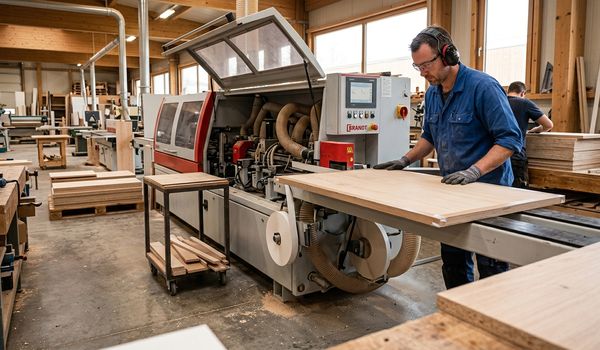
An edge bander machine applies a thin strip of material, called edge banding or edge tape, to the raw exposed edges of sheet goods such as plywood, MDF, and particleboard. The machine applies adhesive, presses the banding onto the panel edge, trims the excess flush, and buffs the finished edge, all in a single pass. The result is a clean, durable edge that looks and performs like solid wood.
Banding material comes in several forms, including PVC, ABS, wood veneer, melamine, and acrylic. Each serves a different segment of the market. PVC and ABS dominate commercial casework and closet systems, veneer is common in fine furniture, and acrylic banding produces the deep-gloss look seen in contemporary European-style cabinetry.
Any shop that cuts panels on a table saw, CNC router, or beam saw has edges that need finishing. Manual methods, such as a household iron and pre-glued veneer tape, work for hobbyists and occasional repair, but they are slow, inconsistent, and impossible to scale. A dedicated edge banding machine turns edge finishing from a production bottleneck into a fast, repeatable step that matches the pace of the rest of your shop.
That consistency is why edge banders show up in so many different businesses: custom cabinet shops, furniture manufacturers, closet and garage organization companies, store fixture builders, millwork houses, RV and boat interior shops, and countertop fabricators who band laminate and solid surface edges. If your business sells panel-based products, edge quality is part of what your customers are paying for.
Key Benefits of Financing an Edge Bander Machine
Paying cash for a major machine is simple, but it is rarely the best use of capital in a growing shop. Financing an edge bander machine offers advantages that go well beyond affordability:
- Preserve working capital. Keep cash available for lumber and sheet goods, hardware, payroll, and the slow-paying commercial accounts that every shop deals with.
- Predictable fixed payments. A fixed monthly payment makes budgeting straightforward and protects you from rate swings.
- Revenue from day one. The machine starts producing sellable work immediately, so it can help cover its own payment from the first month.
- Bundle soft costs. Many agreements let you roll delivery, rigging, installation, tooling, and operator training into the financed amount.
- Own a durable asset. A well-maintained edge bander routinely runs for 15 to 20 years, long after the financing term ends.
- Build business credit. Consistent on-time payments strengthen your business credit profile, which improves your terms on future equipment purchases.
There is also an opportunity cost argument. A shop that waits three years to save $40,000 for a mid-range automatic edge bander spends those three years either hand-banding edges or turning away work that demands a factory finish. Financing closes that gap now instead of later.
Key Stat: According to Census.gov business and manufacturing data, U.S. furniture and related product manufacturers ship tens of billions of dollars of product each year, and the shops winning that work increasingly compete on finish quality and turnaround time, exactly the two things an edge bander improves.
Ready to Upgrade Your Edge Banding?
Get the machine your shop needs without draining cash flow. Apply in minutes, get a decision fast.
Apply Now →How Edge Bander Machine Financing Works
Equipment financing is a straightforward structure: a lender provides the funds to purchase the machine, you make fixed monthly payments over a set term, and the machine itself serves as collateral for the agreement. Because the equipment secures the financing, approvals are generally faster and more accessible than unsecured loans, and you own the machine outright once the final payment clears.
Here is how the process typically unfolds from quote to delivery:
- Get a machine quote. Choose the edge bander you want and get a written quote or invoice from the dealer or seller. The quote drives the amount financed.
- Submit a short application. Most lenders use a one-page application covering the business, the owners, and the equipment. Three to six months of business bank statements usually accompany it.
- Receive a decision. Complete applications often get decisions within 24 to 48 hours.
- Sign documents. Review the payment, term, and end-of-term conditions, then sign electronically.
- Funds go to the vendor. The lender pays the dealer directly, and the machine ships to your shop.
- Make fixed payments. Terms typically run 24 to 72 months with the same payment each month.
Financing amounts for edge banding equipment commonly range from $5,000 for a compact bander up to $500,000 or more for fully loaded production machines. Rates and approvals depend on your credit profile, time in business, revenue, and the machine type. Well-qualified buyers can often finance 100 percent of the purchase price with no money down.
It is worth comparing equipment financing against government-backed options as well. The SBA loan programs can fund equipment purchases, though they typically involve longer timelines and more documentation than dedicated equipment financing, which is built specifically for machinery purchases like an edgebander.
Types of Edge Banding Machines You Can Finance
Edge bander machine is a broad category, and the type you choose has the single biggest impact on price. Any of the following machine classes can be financed:
Portable and Manual Edge Banders
Handheld and benchtop units apply pre-glued or hot melt banding to small batches and curved parts. They are the entry point for startups, on-site installers, and shops that band occasionally. Prices run roughly $500 to $5,000, and while they are often bought outright, financing makes sense when bundled with a panel saw or other machinery.
Hot Melt Edge Banders (EVA and PUR)
The workhorse of small and mid-size shops, hot melt banders heat EVA or PUR adhesive and apply banding at feed speeds suited to custom cabinet and furniture production. Stepping up within this class adds stations such as pre-milling, end trimming, corner rounding, scraping, and buffing. Expect $3,000 to $30,000 for new machines, with fully equipped automatic banders from brands like Cantek, SCM, and Grizzly at the upper end.
Hot Air Zero-Joint Edge Banders
Hot air machines reactivate a functional layer pre-applied to the banding, bonding it without a visible glue line. This zero-joint finish is what high-gloss acrylic and premium contemporary work demands. Machines in this class typically run $20,000 to $60,000.
Laser and Plasma Edge Banders
The top of the market. Laser edge banders, such as machines built around laserTec-style technology, and plasma-based systems deliver true zero-joint edges at production speed. Fully automatic laser banders from manufacturers like Homag, Brandt, Biesse, and SCM commonly run $80,000 to $250,000 and up. These are almost always financed or leased given the capital involved.
Production and Through-Feed Banders
High-volume lines integrate edge banding into automated material handling for closet systems, RTA furniture, and commercial casework. Single-sided and double-sided production banders are priced to match their throughput, and financing structures for this class often bundle multiple machines into one agreement.
Compare Your Options
Edge Bander Machines At a Glance
Portable / Manual
$500 - $5,000
Startups, installers, small-batch and curved work
Hot Melt (EVA/PUR)
$3,000 - $30,000
Custom cabinets, furniture, general shop production
Hot Air Zero-Joint
$20,000 - $60,000
High-gloss panels, premium seamless finishes
Laser / Plasma
$80,000+
High-volume zero-joint production lines
Edge Bander Machine Price Ranges and What Drives Cost
Understanding edge banding machine price ranges helps you size the financing request correctly and avoid under-buying or over-buying. The table below summarizes typical pricing across the market:
| Machine Class | Typical New Price | Typical Used Price | Estimated Monthly (60 mo) |
|---|---|---|---|
| Portable / manual bander | $500 - $5,000 | $300 - $3,000 | $25 - $110 |
| Entry hot melt bander | $3,000 - $12,000 | $1,800 - $7,500 | $70 - $260 |
| Automatic hot melt bander | $15,000 - $30,000 | $9,000 - $18,000 | $320 - $650 |
| Hot air zero-joint bander | $20,000 - $60,000 | $14,000 - $40,000 | $430 - $1,300 |
| Laser / plasma zero-joint bander | $80,000 - $250,000+ | $55,000 - $170,000 | $1,700 - $5,400 |
Monthly figures are estimates for illustration; actual payments depend on your credit, term length, and the amount financed. Several factors push a machine toward the top or bottom of its class range:
- Adhesive system. EVA is the least expensive, PUR adds moisture and heat resistance at a higher cost, and zero-joint systems (hot air, laser, plasma) command the biggest premium.
- Number of stations. Each added station, such as pre-milling, corner rounding, profile scraping, or buffing, adds capability and cost.
- Feed speed and automation. Faster machines with automatic setup and quick-change glue systems cost more but pay off in throughput.
- Brand and support. European brands like Homag, Brandt, Biesse, SCM, and Holz-Her carry premium pricing, while value brands such as Cantek, Grizzly, and Laguna offer lower entry points with solid capability.
- New vs used. A well-maintained used edgebander often sells for 30 to 50 percent below its new price, which is why the used market stays active.
Pro Tip: Buying used can cut your machine cost nearly in half, but have a technician inspect the glue pot, pressure zone, and trimming stations before you commit. Most lenders will finance used edge banding equipment from dealers, auctions, and private sellers as long as the machine meets age and condition guidelines.
Financing vs Leasing vs Paying Cash for an Edge Bander
There are three realistic ways to put an edge banding machine on your shop floor, and each fits a different situation:
Equipment financing spreads the purchase price over fixed monthly payments, and you own the machine at the end of the term. This suits shops buying a machine they plan to run for a decade or more, which describes most edge bander purchases.
Equipment leasing trades ownership for lower monthly payments and flexibility. At the end of the lease you can typically buy the machine at a preset price, return it, or upgrade. Leasing makes sense if you expect to move up to newer zero-joint technology every few years, or if you want the lowest possible payment while a contract runs its course. Crestmont Capital offers equipment leasing alongside financing for exactly this reason.
Paying cash eliminates interest cost entirely, but it concentrates risk. A $45,000 wire transfer for a hot air bander is $45,000 that cannot cover a slow receivables month, a lumber price spike, or a hiring opportunity. Most growing shops prefer to keep that cash working.
| Factor | Financing | Leasing | Cash |
|---|---|---|---|
| Ownership at end | Yes, automatic | Optional buyout | Yes, immediate |
| Upfront cost | Low, often $0 down | Low, first payment | Full purchase price |
| Monthly payment | Moderate, fixed | Usually lowest | None |
| Upgrade flexibility | Sell or trade anytime | Built-in upgrade path | Must resell machine |
| Best for | Long-term ownership | Fast-moving technology | Cash-rich, low-growth shops |
Who Qualifies for Edge Banding Equipment Financing?
Equipment financing is one of the most accessible forms of business funding because the machine secures the agreement. Lenders still evaluate the whole picture, but the bar is lower than for unsecured working capital. Here is what most lenders look for:
- Credit score. A personal score of 600 or higher opens most programs, with the strongest pricing above 680. Options exist into the 550s when revenue is strong.
- Time in business. One year or more is preferred for the best terms. Younger businesses can qualify with stronger credit or a larger down payment.
- Revenue. Lenders want to see that monthly revenue comfortably covers the new payment plus existing obligations.
- The machine itself. A quote for a machine with strong resale value, such as a late-model automatic bander from a major brand, is easier to finance than an obscure unit.
Documentation is refreshingly light compared to bank loans. Most edge bander financing applications need a completed one-page application, three to six months of business bank statements, the equipment quote or invoice, and basic ownership information. Requests above roughly $150,000 may also call for financial statements or tax returns.
Startups can qualify as well. Expect lenders to lean harder on personal credit, industry experience, and the strength of your order pipeline, and expect to put 10 to 20 percent down in many cases. A signed contract or letters of intent from prospective customers goes a long way for a new shop buying its first production bander.
Pro Tip: Apply with the machine quote already in hand. A complete file, application plus bank statements plus quote, is what turns a multi-week bank process into a 24 to 48 hour decision. Demand for finished wood products stays resilient, as CNBC small business coverage regularly highlights, and the shops that move fastest on capacity tend to capture it.
How Crestmont Capital Helps
Crestmont Capital is rated the #1 business lender in the United States, and woodworking machinery is one of the most common equipment categories we fund. Our team structures woodworking equipment financing for shops of every size, from a first automatic bander for a two-person cabinet shop to full production lines for commercial casework manufacturers.
Working with Crestmont Capital means:
- Fast decisions. Complete applications typically receive decisions within 24 to 48 hours, and funding follows within days of signing.
- Flexible structures. Financing and leasing options with terms from 24 to 72 months, including 100 percent financing for qualified buyers.
- Soft cost bundling. Delivery, rigging, installation, tooling, and training can be rolled into the agreement.
- Used equipment friendly. We finance used edge banders from dealers, auctions, and private sellers, not just new dealer machines.
- A real advisor. You work with a funding specialist who understands shop equipment and can structure the agreement around your cash flow cycle.
If you are still mapping out your shop's equipment plan, our guide to woodworking equipment financing covers the full machinery landscape, and our breakdown of cabinet making shop equipment financing walks through how cabinet shops sequence their machine purchases as they grow.
Get Your Edge Bander Financed Fast
Crestmont Capital funds woodworking equipment nationwide. Decisions in hours, funding in days.
Apply Now →Real-World Scenarios: How Shops Use Edge Bander Financing
Financing structures look abstract until you see them attached to real machines and real shops. These scenarios reflect how businesses typically put financed edge banding equipment to work:
Scenario 1: The Cabinet Shop Moving Past Iron-On Banding
A three-person custom cabinet shop was banding every panel edge with a household iron and pre-glued tape, burning roughly an hour of labor per sheet of plywood. They financed a $28,500 automatic hot melt bander with pre-milling and corner rounding over 60 months, landing a payment near $600 a month. Edge finishing dropped to minutes per panel, the finish quality jumped, and the shop took on a commercial casework account it previously could not bid. The new contract alone covers the payment several times over.
Scenario 2: The Furniture Maker Winning High-Gloss Work
A custom furniture maker kept losing contemporary kitchen and closet bids because his hot melt bander left a visible glue line on high-gloss acrylic panels. He financed a $46,000 hot air zero-joint machine with nothing down and a payment under $1,000 a month. Within two months he was producing seamless edges that matched imported European work, and he raised his prices on gloss projects by 20 percent. The machine opened a market segment instead of just cutting labor.
Scenario 3: The Closet Company Scaling to Contract Volume
A closet and garage organization company landed a regional builder contract that tripled its panel volume overnight. Outsourced banding was eating margin and adding a week of lead time, so the company financed an $88,000 production bander with automatic setup over 60 months for roughly $1,800 a month. Bringing banding in-house cut per-panel finishing cost by more than half, and the contract volume made the payment a rounding error in the project economics. According to Reuters business reporting, residential construction demand continues to drive exactly this kind of capacity investment across the trades.
Scenario 4: The Millwork Shop Buying Used at Auction
An architectural millwork shop spotted a well-maintained used edgebander from a major European brand at an equipment auction, priced at $19,500 against a new cost near $55,000. The shop financed the full auction price, rolled rigging and delivery into the agreement, and had the machine running within two weeks. Buying used through financing let them add zero-compromise capability while keeping their cash reserve intact for an upcoming showroom build-out.
Frequently Asked Questions
What is an edge bander machine? +
An edge bander machine applies a thin strip of material, called edge banding, to the exposed edges of panels such as plywood, MDF, and particleboard. The machine glues, presses, trims, and buffs the banding in one pass, producing a clean, durable edge that looks like solid wood. Edge banders range from portable handheld units to fully automatic production machines with laser zero-joint technology.
How much does an edge bander machine cost? +
Prices range widely by type. Portable edge banders start around $500 to $5,000. Hot melt edge banders for small and mid-size shops typically run $3,000 to $30,000. Hot air zero-joint machines run $20,000 to $60,000, and fully automatic laser edge banders can exceed $250,000. Used machines often sell for 30 to 50 percent less than new.
Can I finance an edge bander machine with bad credit? +
Yes, in many cases. Because the machine itself serves as collateral, equipment financing is more accessible than unsecured loans. Lenders weigh credit alongside time in business, revenue, and the equipment value. A larger down payment or a co-signer can strengthen a weaker credit profile.
What credit score do I need to finance edge banding equipment? +
Most equipment lenders look for a personal credit score of 600 or higher, with the best rates reserved for scores above 680. Some programs work with scores in the 550s when the business shows strong revenue and the machine holds its value well.
Is it better to finance or lease an edge banding machine? +
Financing is usually better if you plan to keep the machine long term, because you own it at the end of the term. Leasing can offer lower monthly payments and easier upgrades, which suits shops that want to move to newer zero-joint technology every few years. The right choice depends on how long you will use the machine and how quickly the technology in your segment is changing.
How long are typical edge bander financing terms? +
Most equipment finance agreements run 24 to 72 months. Longer terms lower the monthly payment but increase total cost. Many shops match the term to the expected useful life of the machine, commonly 48 to 60 months for an automatic edge bander.
Can I finance a used edge bander? +
Yes. Many lenders finance used equipment purchased from dealers, auctions, or private sellers, subject to age and condition guidelines. Used edge banders under ten years old with documented maintenance are the easiest to finance.
What is the difference between hot melt and laser edge banding? +
Hot melt edge banders apply heated EVA or PUR glue to bond the banding, which leaves a fine glue line. Laser and hot air machines reactivate a pre-glued functional layer on the banding, creating a seamless zero-joint edge with no visible glue line. Zero-joint technology costs more but delivers the premium finish that high-gloss and contemporary work demands.
How fast can I get approved for edge bander machine financing? +
With a complete application, many lenders issue decisions within 24 to 48 hours. Funding to the equipment vendor typically follows within a few business days of signing, so a shop can often go from quote to delivery inside of two weeks.
Do I need a down payment to finance an edge bander? +
Not always. Many qualified buyers finance 100 percent of the purchase price, and some programs roll delivery, installation, and training into the amount financed. Buyers with newer businesses or lower credit scores may be asked for 10 to 20 percent down.
Can startups qualify for edge banding machine financing? +
Startups can qualify, though options are narrower. Lenders typically want strong personal credit, industry experience, a signed equipment quote, and sometimes a larger down payment. A solid business plan with contracts or letters of intent from customers helps significantly.
What documents do I need to apply? +
Most applications require a one-page application, three to six months of business bank statements, the equipment quote or invoice, and basic ownership information. Larger requests above roughly $150,000 may also ask for financial statements or tax returns.
Does edge bander financing cover installation and training? +
Often yes. Many lenders let you bundle soft costs such as delivery, rigging, installation, tooling, and operator training into the financed amount, typically up to a set percentage of the equipment cost. Ask your lender to structure these into the agreement so you avoid out-of-pocket surprises.
What happens at the end of an equipment finance agreement? +
With a standard equipment finance agreement, you own the machine outright once the final payment is made. With a lease, you typically choose to buy the machine at a preset price, return it, or upgrade to new equipment. Review the end-of-term options before signing so they match your plans for the machine.
Why finance an edge bander instead of paying cash? +
Financing preserves cash for materials, payroll, and growth while the machine generates revenue that helps cover its own payment. A shop that finances a $30,000 edge bander can book profitable cabinet work immediately instead of waiting years to save the full amount. Fixed payments also make budgeting predictable, which matters when material prices and project timelines keep moving.
Bring Flawless Edges to Every Panel
Apply today and put a professional edge banding machine to work in your shop this month.
Apply Now →How to Get Started
Complete our quick application at offers.crestmontcapital.com/apply-now. It takes just a few minutes.
A Crestmont Capital advisor will review your needs and match you with the right financing option for your edge bander purchase.
We pay your equipment vendor directly and your machine ships to your shop, often within days of approval.
Conclusion
An edge bander machine transforms panel-based production: faster throughput, a factory-grade finish, and access to the high-gloss and commercial work that manual banding cannot touch. Edge bander machine financing puts that capability within reach for shops at every stage, whether you are buying a first automatic hot melt bander for $15,000 or a laser zero-joint production machine for six figures.
The key is matching the machine class to your production volume, then matching the financing structure to how long you will run it. Own the machines you will keep for a decade, lease the technology that moves fast, and keep your cash working on materials, people, and growth.
Crestmont Capital finances woodworking equipment for shops across the country every day, with fast decisions, flexible terms, and advisors who understand the machinery. If you are ready to put a professional edge on every panel you ship, apply today and see what your shop qualifies for.
Disclaimer: The information provided in this article is for general educational purposes only and is not financial, legal, or tax advice. Funding terms, qualifications, and product availability may vary and are subject to change without notice. Crestmont Capital does not guarantee approval, rates, or specific outcomes. For personalized information about your business funding options, contact our team directly.

Allan Garfinkle
Allan Garfinkle is the Chief Revenue Officer at Crestmont Capital, where he has spent more than a decade leading revenue strategy, business development, and operational growth. With 28 years of experience building and advising startups and small businesses, Allan has helped more than 10,000 business owners navigate financing decisions, growth opportunities, and changing economic conditions. He earned a Bachelor of Science in Economics and an MBA with a concentration in Finance from Northeastern University, as well as a Juris Doctor from New England Law, where his studies focused on contracts and business law. His writing draws on extensive practical experience in small-business lending, equipment financing, business credit, and commercial finance.