
 (800) 949-0401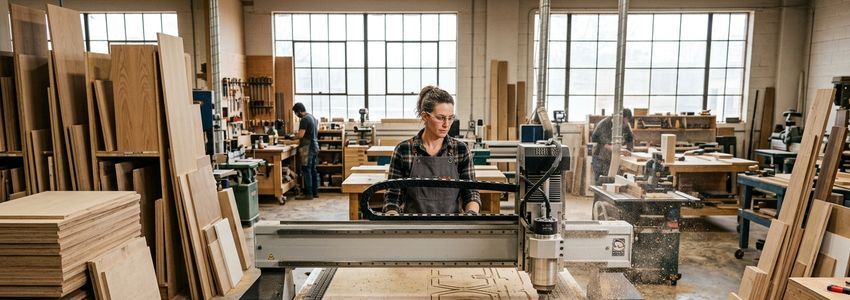
Cabinet Making Shop Equipment Financing: The Complete Guide for Cabinet Makers
Cabinet making equipment financing gives custom cabinet shops, millwork operations, and woodworking businesses a way to acquire panel saws, CNC routers, edge banders, dust collection systems, and finishing booths without paying the full purchase price up front. Rather than draining cash reserves on a single machine, shop owners spread the cost over manageable monthly payments while the equipment itself generates revenue from day one. For an industry where a single CNC router or wide-belt sander can cost more than a delivery van, financing is often the difference between a shop that upgrades on schedule and one that falls behind on capacity and precision.
This guide walks through exactly how cabinet making equipment financing works, what it costs, which machines qualify, and how to choose between financing, leasing, and other funding options. Whether you are opening a new cabinet shop, replacing aging machinery, or scaling a wholesale cabinet manufacturing operation, the goal is the same: get the right equipment in your shop without disrupting cash flow.
In This Article
What Is Cabinet Making Equipment Financing?
Cabinet making equipment financing is a business loan or lease structured specifically to fund the purchase of machinery used in cabinet manufacturing, millwork, and custom woodworking. Instead of an unsecured, general-purpose loan, the equipment itself typically serves as collateral, which allows lenders to offer more competitive rates and terms than they would on a standard working capital loan.
This type of financing covers the full range of machinery a cabinet shop needs to operate at a professional level: panel saws, CNC routers and machining centers, edge banders, wide-belt and drum sanders, dust collection and air filtration systems, spray booths and finishing equipment, dowel and boring machines, and even the software and tooling that runs alongside the hardware. Financing can apply to brand-new equipment purchased from a manufacturer or dealer, as well as used and refurbished machinery bought from a private seller or auction.
The core idea is simple: a lender pays for the equipment (or reimburses you for a recent purchase), and you repay that amount plus interest over a fixed term, usually two to seven years depending on the equipment's useful life. Once the term ends, in most equipment financing arrangements, you own the machine outright.
Key Stat: According to U.S. Census Bureau data, there are nearly 12,000 active wood kitchen cabinet and countertop manufacturing establishments in the United States generating more than $14 billion in annual revenue, an industry where machinery capacity directly drives how much work a shop can take on.
Key Benefits of Financing Cabinet Making Equipment
Cabinet shops that finance their equipment rather than paying cash typically see advantages across cash flow, capacity, and competitiveness:
- Preserve working capital. Keep cash on hand for payroll, lumber and hardware inventory, and unexpected repairs instead of tying it all up in one machine.
- Match payments to revenue. The equipment generates cabinets and revenue the same month it arrives, so payments are covered by the jobs it helps you complete.
- Upgrade technology faster. Financing makes it realistic to move from hand-fed table saws to a CNC nesting router or automated edge bander years sooner than a cash-only shop could.
- Fixed, predictable payments. Most equipment financing carries a fixed rate and fixed term, so budgeting stays simple even as material costs fluctuate.
- Build business credit. On-time equipment payments reported to business credit bureaus can strengthen your shop's credit profile for future financing needs.
- Bid on larger jobs. Added capacity and precision from modern machinery lets a shop compete for volume production runs, builder contracts, and commercial millwork jobs it couldn't handle before.
Ready to Upgrade Your Cabinet Shop?
Get fast, flexible equipment financing from the #1 rated business lender in the U.S. No obligation, apply in minutes.
Apply Now →How Cabinet Making Equipment Financing Works
The process is more straightforward than most first-time applicants expect. Lenders that specialize in equipment financing have streamlined the application specifically because the equipment itself secures the loan, which reduces underwriting risk compared to unsecured lending.
Quick Guide
How Cabinet Equipment Financing Works, At a Glance
Get a written quote from your dealer or manufacturer, whether it's a new CNC router or a used panel saw from an auction.
Provide basic business information, the equipment quote, and financial documentation appropriate to the loan size.
Many equipment financing applications receive a decision within one to two business days.
The lender pays the vendor directly, and you begin using the machine right away while making fixed monthly payments.
Underwriters generally look at time in business, personal and business credit history, cash flow, and the type and value of equipment being financed. A shop with two years of operating history and steady revenue will typically see faster approvals and stronger rates than a brand-new operation, though startup-friendly options exist for newer cabinet shops as well.
Lenders also weigh the resale value and expected lifespan of the specific machine being financed. A well-maintained CNC router or panel saw from an established manufacturer tends to hold value longer than a niche or highly specialized tool, which can influence both the approval decision and the length of term offered. This is one reason equipment financing terms are typically matched closely to the useful life of the machine rather than offered as a flat, one-size-fits-all schedule.
It also helps to understand how a lender evaluates your shop's cash flow relative to the new payment. Most underwriters want to see that the monthly payment on the new equipment represents a manageable percentage of monthly revenue, factoring in existing debt obligations, payroll, materials costs, and overhead. Shops that can clearly show how the new machine will increase throughput or reduce labor costs strengthen their case, since it demonstrates the equipment will help cover its own payment rather than simply add fixed overhead.
Pro Tip: Get a written, itemized quote from your equipment dealer before applying. Lenders fund faster when the make, model, price, and vendor are already documented rather than left as an estimate.
Types of Equipment and Financing Structures
Cabinet shops use a wide range of machinery, and most of it qualifies for equipment financing. Common categories include:
- Panel processing: panel saws, beam saws, and vertical panel saws for breaking down sheet goods
- CNC machinery: CNC routers, nested-based CNC machining centers, and point-to-point boring machines
- Edge treatment: edge banders, both manual and fully automatic
- Sanding and finishing: wide-belt sanders, drum sanders, spray booths, conveyor finishing systems, and UV curing equipment
- Dust and air management: dust collection systems, cyclone separators, and air filtration units required for safety and code compliance
- Assembly and hardware: dowel inserters, clamp carriers, hinge boring machines, and pneumatic assembly tools
- Material handling: forklifts, pallet jacks, and delivery vehicles used to move sheet stock and finished cabinetry
Once you know what equipment you need, the next decision is which financing structure fits your shop best. The three most common structures are:
- Equipment financing (loan): A traditional loan secured by the equipment. You build equity in the machine with every payment and own it free and clear at the end of the term.
- Equipment leasing: Lower monthly payments in exchange for using, rather than owning, the equipment during the lease term. Many leases include a purchase option (often $1 buyout or fair-market-value buyout) at the end.
- Working capital loan applied to equipment: An unsecured loan used at the shop's discretion, including for equipment purchases, useful when you need funds for machinery plus installation, training, or facility upgrades in a single package.
By the Numbers
Cabinet Making Equipment Financing, Key Statistics
11,900+
Active wood cabinet and countertop manufacturing shops in the U.S.
$14.3B
Annual industry revenue for wood cabinet and countertop manufacturing
2-7 Years
Typical repayment term for cabinet shop equipment financing
1-2 Days
Typical time to a financing decision on a completed application
Who Cabinet Making Equipment Financing Is Best For
This type of financing fits a wide range of cabinet and millwork operations, but it tends to deliver the most value for:
- Custom cabinet shops replacing a bottleneck machine, such as an outdated table saw setup, with a CNC router or automatic edge bander to speed up production.
- Wholesale cabinet manufacturers scaling up capacity to serve builders, developers, or big-box retail contracts that require consistent, high-volume output.
- Millwork and architectural woodworking shops investing in precision CNC machining centers to win larger commercial and institutional projects.
- Startup cabinet shops building out a functional shop floor from scratch without spending all of their startup capital on machinery alone.
- Established shops modernizing aging equipment to reduce labor costs, improve consistency, and meet updated safety or dust collection code requirements.
It is generally not the right fit for a hobbyist woodworker without a registered business, or for a shop looking to finance consumable materials like lumber, hardware, or finishing supplies rather than durable equipment.
It's also worth noting that cabinet making equipment financing works well alongside other forms of business funding rather than as a replacement for them. A shop might finance a CNC router through an equipment loan while using a separate business line of credit to cover the fluctuating cost of lumber and hardware inventory throughout the year. Structuring capital this way keeps fixed asset debt separate from working capital needs, which tends to make both easier to manage and easier for future lenders to evaluate.
Key Stat: Industry-wide, equipment financing approval rates have remained close to historic highs, with a majority of U.S. businesses now financing rather than purchasing equipment outright, a trend Forbes has noted as a broader shift toward preserving cash reserves amid fluctuating interest rates.
Comparing Your Financing Options
Cabinet shop owners often weigh equipment financing against a business line of credit, an SBA loan, or a general working capital loan. Each option serves a different purpose:
| Financing Option | Best For | Typical Term | Collateral |
|---|---|---|---|
| Equipment Financing | Purchasing a specific machine (CNC router, panel saw, edge bander) | 2-7 years | The equipment itself |
| Equipment Leasing | Lower monthly payments, flexibility to upgrade technology | 2-5 years | The leased equipment |
| SBA Loan | Larger purchases, facility buildouts, or combined equipment plus real estate needs | Up to 25 years | Varies, often the asset financed |
| Business Line of Credit | Ongoing flexibility for smaller tools, repairs, or unexpected shop expenses | Revolving | Often unsecured or blanket lien |
| Unsecured Working Capital Loan | Combining equipment cost with installation, training, or facility prep | Short to medium term | Typically unsecured |
For a single, well-defined machine purchase like a CNC router or panel saw, dedicated equipment financing is usually the fastest and most cost-effective route because the collateral reduces the lender's risk. For broader capital needs (facility upgrades plus new equipment plus a cash reserve), a working capital loan or business line of credit can be layered alongside equipment financing.
How Crestmont Capital Helps Cabinet Shops Finance Equipment
Crestmont Capital works with cabinet makers, millwork shops, and woodworking businesses across the country to structure financing around the equipment they actually need, not a generic loan product. Our woodworking equipment financing program is built specifically for shops purchasing panel saws, edge banders, sanders, and finishing equipment, while our CNC machine financing option covers the CNC routers and machining centers that have become standard in modern cabinet production.
If your shop is also investing in a broader capital project, such as expanding your fabrication capacity or upgrading multiple machines at once, our fabrication equipment financing and general equipment financing programs can bundle several purchases into one predictable monthly payment. For cabinet shops that qualify for government-backed financing, our team can also walk you through SBA loan options for larger, longer-term capital needs.
Many cabinet shop owners also read our related guide on CNC router financing, which goes deeper into financing structures specifically for CNC machinery, and our cabinet business loans guide, which covers broader financing needs beyond equipment alone, such as inventory, payroll, and facility costs. Once you know which machine or package of machines you need, our equipment financing application is designed to move quickly, often with a decision in one to two business days.
Ready to Add Capacity to Your Cabinet Shop?
Finance your next CNC router, panel saw, or edge bander with a lender that understands cabinet manufacturing. Apply in minutes, no obligation.
Apply Now →Real-World Scenarios
Scenario 1: The bottleneck machine. A custom cabinet shop with four employees was turning down jobs because its manual edge bander couldn't keep pace with orders. Financing a new automatic edge bander over five years let the shop double its finished-panel output without hiring additional labor, and the added throughput covered the monthly payment within the first two months.
Scenario 2: The startup shop. A first-time cabinet shop owner leaving a corporate job needed a panel saw, an edge bander, and a basic dust collection system to open the doors. Rather than spending nearly all of his startup savings on machinery, he financed the equipment package and kept his cash reserve intact for the first several months of slower, ramp-up revenue.
Scenario 3: The wholesale scale-up. A wholesale cabinet manufacturer won a multi-year contract with a regional homebuilder that required significantly higher output. Financing a nested-based CNC machining center allowed the shop to meet the builder's volume and lead-time requirements without pulling capital from other parts of the business.
Scenario 4: The equipment refresh. An established millwork shop was running 15-year-old sanding equipment that produced inconsistent results and required frequent repairs. Financing a new wide-belt sander reduced rework, improved finish quality on high-end architectural projects, and cut unplanned downtime.
Scenario 5: The dust collection upgrade. A growing cabinet shop expanded its floor space and added a second CNC router, but its existing dust collection system was undersized for the additional machinery and fell out of compliance with local fire code requirements. Rather than delaying the expansion, the shop financed a larger cyclone dust collection system alongside the new equipment, bringing the shop into compliance while protecting the investment in its new machinery.
Scenario 6: The seasonal cash flow gap. A cabinet shop that does significant business with vacation home builders experiences a predictable slow season each winter. Rather than waiting for its strongest months to invest in a new spray booth and finishing line, the owner financed the equipment during the slow season with a fixed monthly payment structured to remain manageable through the seasonal dip, positioning the shop to take on more finishing work as soon as spring orders picked back up.
Key Stat: The average U.S. Small Business Administration 504 loan, commonly used for major fixed assets like heavy equipment and machinery, reached over $1.15 million in fiscal year 2025, reflecting how significant equipment investments have become for growing manufacturing and production businesses.
Frequently Asked Questions
Stop Turning Down Jobs Because of Equipment Limits
See how much your cabinet shop qualifies for, with no obligation and no impact on running your business today.
Apply Now →Next Steps
Get a written quote for the specific machine or package, including make, model, and vendor.
Recent bank statements and business information will speed up your application.
Submit your application and review the rate, term, and monthly payment before committing.
Once funded, install and start running the machine, using the added capacity to grow revenue.
Conclusion
Cabinet making equipment financing lets shop owners acquire the panel saws, CNC routers, edge banders, and finishing equipment their business needs without draining working capital or delaying growth. With structured terms, competitive rates tied to the equipment as collateral, and approval decisions often available within a day or two, financing has become the standard path for cabinet shops looking to add capacity, modernize aging machinery, or launch a new operation. The right financing partner will look at your shop's specific equipment needs, not just a generic credit score, to structure a payment that fits your cash flow and helps your business take on the next job.
Disclaimer: The information provided in this article is for general educational purposes only and is not financial, legal, or tax advice. Funding terms, qualifications, and product availability may vary and are subject to change without notice. Crestmont Capital does not guarantee approval, rates, or specific outcomes. For personalized information about your business funding options, contact our team directly.








