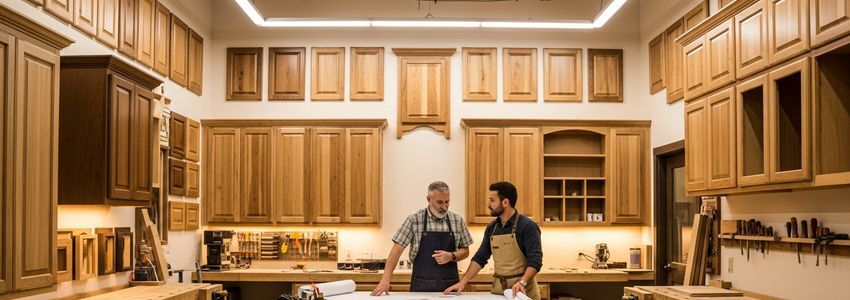
Cabinet shop owners face a unique set of financial challenges. Between raw materials, CNC machinery, finishing equipment, skilled labor, and the cash flow gaps that come from large project timelines, the need for reliable financing is constant. Cabinet business loans are designed to help cabinetry shop owners and woodworking businesses get the capital they need to grow, upgrade equipment, hire staff, and take on larger commercial contracts.
Whether you run a custom cabinetry shop serving high-end residential clients, a wholesale cabinet manufacturer supplying builders, or a kitchen and bath showroom with an in-house fabrication operation, financing can be the difference between staying small and scaling into a serious enterprise. This guide covers every loan option available to cabinet businesses, how to qualify, how much you can borrow, and how to choose the right product for your specific situation.
Crestmont Capital has helped hundreds of woodworking and cabinetry business owners access fast, flexible financing since 2015. We work with shops of every size, and we understand that your cash flow needs do not fit neatly into a traditional bank application timeline.
- What Are Cabinet Business Loans?
- Types of Financing Available for Cabinet Shops
- How Much Can Cabinet Shop Owners Borrow?
- How to Qualify for Cabinet Business Loans
- How to Apply: Step-by-Step
- Comparing Financing Options
- Real-World Scenarios for Cabinet Shop Financing
- How Crestmont Capital Helps Cabinet Businesses
- Frequently Asked Questions
- Next Steps
What Are Cabinet Business Loans?
Cabinet business loans are financing products designed for businesses that fabricate, install, or sell cabinetry and millwork. This includes custom cabinet shops, semi-custom kitchen and bath studios, wholesale cabinet manufacturers, furniture makers, commercial millwork operations, and combination retail-fabrication showrooms.
These loans work exactly like other small business financing products but are evaluated based on the financial profile of a cabinetry operation. Lenders look at revenue, time in business, credit history, and cash flow - the same fundamentals that apply to any business loan - but the use of funds is often tied to the specific capital needs of wood fabrication, including large equipment, material inventory, project draw cycles, and skilled labor payroll.
The U.S. cabinet manufacturing sector generates over $16 billion annually, with more than 24,000 establishments across the country according to U.S. Census Bureau data for NAICS code 337110. This is a large, diverse industry with businesses ranging from one-person shops to multi-million dollar commercial operations. Financing needs vary just as widely.
Types of Financing Available for Cabinet Shops
Cabinet businesses have access to a broad range of financing products. The best option depends on your use of funds, revenue profile, credit score, and how quickly you need the capital. Below are the primary options available through Crestmont Capital and our lending network.
Term Loans for Cabinet Shops
A term loan provides a lump sum of capital that you repay over a fixed period with set monthly payments. Term loans are ideal for large purchases or expansions where you know the exact amount you need. Cabinet shops use term loans to buy CNC routers, wide-format sanders, finishing booths, trucks, and to fund leasehold improvements. Terms typically range from 1 to 5 years for short-term products and up to 10 years for longer financing.
Business Lines of Credit
A revolving business line of credit gives you flexible access to funds up to a set limit. You draw as needed and only pay interest on what you use. This is one of the most popular tools for cabinet shops because it handles the cash flow variability that comes with project-based work. Need to buy lumber before a job starts? Draw from your line. Waiting on payment from a contractor? Your line of credit keeps payroll covered.
Equipment Financing
Equipment financing is one of the most common loan types for cabinet shops. The equipment itself serves as collateral, which typically means easier approval requirements and more competitive rates. Cabinet shop equipment that qualifies for equipment loans includes:
- CNC routing machines and machining centers
- Edge banders and panel saws
- Wide-belt sanders and drum sanders
- Spray booths and finishing systems
- Clamp carriers and assembly jigs
- Dust collection systems
- Laser cutters and engravers
- Delivery vehicles and trucks
- Forklifts and material handling equipment
As we covered in our guide to Equipment Financing 101: How It Works and Who Should Use It, equipment loans often allow 100% financing with no down payment, making it easy to acquire high-value machinery without depleting operating cash reserves.
SBA Loans
The Small Business Administration offers loan programs that provide favorable terms for qualifying cabinet businesses. SBA loans feature low interest rates, long repayment terms (up to 25 years for real estate, up to 10 years for working capital), and smaller down payment requirements than conventional bank loans. The SBA 7(a) program is the most flexible and can be used for equipment, working capital, real estate, and business acquisition. The SBA 504 program is designed for major fixed assets like commercial property and large equipment.
The drawback of SBA loans is the longer application timeline - typically 30 to 90 days - and stricter documentation requirements. According to the SBA's official 7(a) loan page, applicants must demonstrate adequate cash flow, good character, and reasonable equity investment. Cabinet shops with strong financial records and over 2 years in business are well-positioned for SBA approval.
Short-Term Business Loans
Short-term business loans offer fast access to capital - often within 24-48 hours - with repayment terms of 3 to 18 months. These are ideal for urgent needs: a piece of equipment breaks down, a large order requires immediate material purchase, or a contract opportunity requires front-end investment. Rates are higher than SBA or bank loans but the speed and flexibility justify the cost in the right situation.
Revenue-Based Financing
Revenue-based financing provides capital in exchange for a fixed percentage of future business revenue until the advance is repaid. This model works well for cabinet shops with consistent monthly sales but variable cash flow. Because repayment scales with revenue, slow months mean smaller payments, which protects cash flow during seasonal slowdowns or project gaps.
Working Capital Loans
Working capital loans are designed to cover day-to-day operating expenses: payroll, supplier invoices, utilities, and overhead. They typically come with short terms and are not intended for capital expenditures. For cabinet shops experiencing a temporary cash flow crunch - waiting on a builder to pay a large draw request, for example - a working capital loan can keep the shop running without disruption.
Ready to Fund Your Cabinet Business?
Compare your best loan options in minutes. Crestmont Capital has helped cabinet and woodworking shops access fast, flexible financing since 2015.
Apply Now - No Impact to Credit ScoreHow Much Can Cabinet Shop Owners Borrow?
Loan amounts for cabinet businesses range from as little as $5,000 to over $5 million, depending on your revenue, credit profile, and the loan type you are seeking. Here is a general breakdown by loan category:
- Short-term working capital loans: $5,000 to $500,000
- Business lines of credit: $10,000 to $500,000 (revolving)
- Equipment loans: $5,000 to $5 million or more
- SBA 7(a) loans: Up to $5 million
- SBA 504 loans: Up to $5.5 million (real estate and equipment)
- Term loans (bank or alternative): $25,000 to $2 million
The most important factor determining your loan amount is your annual revenue. Most lenders will approve financing up to 10-15% of your annual gross revenue for working capital products, and up to 100% of equipment value for equipment financing. A cabinet shop doing $2 million in annual revenue could realistically access $200,000 to $300,000 in working capital or $500,000+ in equipment financing depending on the asset being purchased.
How to Qualify for Cabinet Business Loans
Qualification requirements vary by lender and loan type, but the following are the general benchmarks you should aim to meet before applying for cabinet business financing.
Minimum Requirements for Alternative Lenders
- Time in business: 6 months or more (some require 1 year)
- Monthly revenue: $10,000 or more
- Credit score: 550+ (580+ preferred)
- No active bankruptcies
Minimum Requirements for Bank Loans and SBA
- Time in business: 2 years or more
- Annual revenue: $250,000+ (often higher for larger loan sizes)
- Credit score: 680+ (700+ for best rates)
- Debt service coverage ratio (DSCR): 1.25 or higher
- Clean financial records: 2-3 years of tax returns and financial statements
Documents Typically Required
- Last 3-6 months of business bank statements
- Business and personal tax returns (last 2 years)
- Profit and loss statement (current year)
- Balance sheet
- Business license and formation documents
- Driver's license (personal identification)
- Accounts receivable aging report (for larger loans)
For equipment loans specifically, you will also need an invoice or quote for the equipment being purchased, along with information about the asset type and any existing loans on equipment you already own.
What If Your Credit Is Below 600?
Challenging credit does not disqualify cabinet shop owners from getting financing. Alternative lenders place more emphasis on your revenue stream and business bank statements than on your personal credit score. Revenue-based financing and merchant cash advances, for example, are typically available to businesses with scores as low as 500-520, provided you have consistent monthly revenue. Our guide on small business cash flow management also covers strategies for improving your financial position before applying.
Cabinet Business Financing at a Glance
How to Apply: Step-by-Step
Applying for a cabinet business loan is straightforward when you know what to expect. Here is a step-by-step walkthrough of the Crestmont Capital application process.
- Choose your loan type. Identify whether you need working capital, equipment financing, a line of credit, or another product. Your use of funds will determine the best loan structure.
- Gather your documents. Collect the last 3-6 months of business bank statements, your most recent business tax return, a profit and loss statement, and your business license. Equipment quotes are needed for equipment loans.
- Submit a quick application. Our online application takes less than 10 minutes. You will provide basic business information, loan amount, and use of funds. No hard credit pull at this stage.
- Receive a funding decision. Most applications receive a decision within a few hours. For larger or SBA loans, the timeline extends to several days or weeks.
- Review your offer. We present your loan options clearly, including rate, term, payment amount, and total cost. Ask questions - a good lender will explain everything before you sign.
- Sign and receive funds. After signing, funds are typically deposited within 1-3 business days for alternative loan products. SBA loans take longer but offer significantly better terms.
Our full guide on how to apply for a business loan covers each step in greater detail with tips for improving your approval odds at every stage.

Comparing Financing Options: Which Is Best for Cabinet Shops?
The right loan depends on what you are trying to accomplish. Use the comparison table below to match your business need to the best financing product.
| Loan Type | Best For | Typical Amount | Funding Speed | Credit Needed |
|---|---|---|---|---|
| Equipment Loan | CNC machines, finishing booths, panel saws | $5K - $5M+ | 1-3 days | 550+ |
| Business Line of Credit | Cash flow gaps, material purchases, payroll | $10K - $500K | 1-3 days | 580+ |
| Term Loan | Shop expansion, leasehold improvements | $25K - $2M | 2-7 days | 620+ |
| SBA 7(a) Loan | Large capital needs, working capital, acquisition | Up to $5M | 30-90 days | 680+ |
| Revenue-Based Financing | Fast capital, flexible repayment | $10K - $500K | Same day - 2 days | 500+ |
| Working Capital Loan | Short-term gaps, supplier invoices, payroll | $5K - $500K | 24-48 hours | 550+ |
Real-World Scenarios for Cabinet Shop Financing
Understanding how other cabinet businesses use financing can help you identify the best approach for your own situation. Here are six realistic scenarios that represent common needs across the cabinetry industry.
Scenario 1: Upgrading to a CNC Router
A two-person custom cabinet shop is producing 8-10 kitchens per month using older, manual equipment. A new CNC router would allow them to produce 25+ kitchens per month and significantly expand their custom work capabilities. The equipment costs $120,000. Using equipment financing with no down payment, they acquire the machine immediately and begin generating additional revenue that more than covers the monthly payment within the first quarter.
Scenario 2: Covering a Material Purchase Before a Large Project
A cabinet fabricator lands a $200,000 commercial project for a new apartment complex. The general contractor requires a 10% deposit from the cabinet shop before materials can be ordered, but the shop does not have $20,000 sitting in reserve. A short-term working capital loan covers the material purchase. The shop completes the job, collects the full payment, and repays the loan within 90 days.
Scenario 3: Managing Seasonal Revenue Fluctuations
A kitchen and bath showroom with fabrication in the back experiences slow winters and very busy spring and summer seasons. They use a business line of credit to carry overhead during January and February when project revenue is low, then pay the balance down as spring orders pick up. This prevents the owner from pulling personal funds into the business during slow months.
Scenario 4: Expanding Into a Larger Shop
A cabinet business has outgrown its 3,000 square foot space and found a 7,500 square foot facility that would allow for a fully equipped finishing room and dedicated CNC bay. An SBA 7(a) loan finances the leasehold improvements and equipment for the new location at a rate and term that keeps monthly payments manageable relative to the increased revenue the expansion will generate.
Scenario 5: Hiring Before Revenue Comes In
A cabinetry business wins a large hotel renovation contract requiring 3 additional craftsmen immediately, but payroll will outpace cash reserves for the first 60 days before draws start coming in. A payroll-focused working capital loan bridges the gap and keeps the team staffed without putting the contract at risk. As discussed in our article on construction business loans, contractor-adjacent businesses face similar project timing challenges where financing makes the difference between taking a job and turning it down.
Scenario 6: Recovering from an Equipment Breakdown
A production cabinet shop's wide-belt sander fails mid-project. A replacement will cost $45,000 and the shop has 15 active orders in the pipeline. A same-day equipment loan funds the replacement the same day the old machine fails. The shop loses minimal production time and meets all project deadlines.
Get Pre-Qualified in 10 Minutes
Our team specializes in cabinet shop and woodworking business financing. Check your options with no commitment and no impact on your credit score.
See My Loan OptionsHow Crestmont Capital Helps Cabinet Businesses
Crestmont Capital is a direct business lender that has specialized in small and mid-size business financing since 2015. We understand the unique financial dynamics of cabinet shops and woodworking businesses, including long receivables cycles, high equipment costs, and seasonal revenue fluctuations.
What sets us apart from banks is speed and flexibility. Traditional bank applications can take 30-90 days and require extensive documentation that many small shop owners struggle to compile. Our streamlined process delivers decisions in hours, funding in days, and requires far less paperwork for most loan products. According to CNBC reporting on small business lending, large banks approve only about 12% of small business loan applications. Alternative lenders like Crestmont Capital offer significantly higher approval rates for businesses that do not fit the rigid bank lending box.
We offer cabinet businesses access to:
- Equipment financing for CNC machines, finishing equipment, and vehicles
- Business lines of credit for cash flow management and material purchasing
- Working capital loans for payroll and overhead coverage
- Short-term loans for urgent needs and fast capital deployment
- SBA loan assistance for long-term growth capital at favorable rates
- Revenue-based financing for shops with variable monthly revenue
Pros and Cons of Cabinet Business Loans
Like any financial decision, taking on business debt has advantages and disadvantages. Understanding both helps you make a more informed choice about when and how to use financing for your cabinet shop.
Advantages
- Accelerate growth without depleting cash reserves. Buying equipment or expanding with borrowed capital keeps your operating cash available for daily needs.
- Access better equipment sooner. Waiting to save up for a $150,000 CNC machine takes years. Financing puts that equipment to work generating revenue today.
- Smooth out cash flow gaps. Project-based businesses inherently have irregular revenue. A line of credit eliminates the stress of slow-pay clients and seasonal slowdowns.
- Build business credit history. Responsibly repaying a business loan improves your business credit profile, which makes future financing easier and less expensive to obtain.
- Take on larger contracts. Many cabinet shops have to turn down large jobs because they lack the capital to front materials and labor. Business financing eliminates that constraint.
Potential Drawbacks
- Interest and fees add to project costs. All borrowed capital has a cost. Factor financing costs into your project pricing and profitability calculations.
- Personal guarantee may be required. Most small business loans below $250,000 require a personal guarantee, meaning your personal assets are at risk if the business cannot repay.
- Variable revenue creates repayment stress. If you take a fixed-payment term loan during a period of slow business, the payments can strain cash flow. Matching loan type to revenue stability is important.
- Overborrowing is a risk. Taking on more debt than your revenue can support is a common mistake. Borrow what you need and ensure your cash flow projections can cover payments with a comfortable buffer.
Frequently Asked Questions
What types of cabinet businesses qualify for loans?
Custom cabinet shops, semi-custom fabricators, kitchen and bath showrooms, wholesale cabinet manufacturers, commercial millwork companies, and woodworking businesses of all kinds can qualify. The primary requirements are at least 6 months in business and a minimum of $10,000 in monthly revenue, though requirements vary by lender and loan type.
What is the minimum credit score needed for cabinet shop financing?
For alternative lenders and equipment financing, the minimum is typically 550. For SBA loans and traditional bank products, a score of 680 or higher is preferred. Having a lower credit score does not disqualify you - lenders will weigh revenue, business bank statements, and time in business alongside your credit history.
Can I finance a CNC router or finishing equipment?
Yes. CNC routers, panel saws, edge banders, wide-belt sanders, finishing booths, spray systems, and virtually all cabinet shop equipment qualifies for equipment financing. The equipment serves as collateral, which typically makes approval easier and rates more competitive than unsecured working capital products.
How fast can I get a cabinet business loan?
Alternative lenders like Crestmont Capital can approve applications within hours and fund within 1-3 business days. Revenue-based financing and short-term working capital loans can sometimes fund the same day. SBA loans take 30-90 days. The speed depends on the loan type and how quickly you can provide the required documents.
Can I get a business loan for a cabinet shop startup?
Most lenders require at least 6 months in business and at least $10,000 in monthly revenue. True startups with zero operating history have limited options, which typically include SBA Microloan programs, equipment financing based on personal credit, and business credit cards. Building 6-12 months of operating history before applying for working capital loans significantly improves your options.
What documents do I need to apply?
For a quick approval through an alternative lender, you need 3-6 months of business bank statements, a business license, and a driver's license. For larger loans or SBA products, you will also need 2 years of business and personal tax returns, a profit and loss statement, and a balance sheet. Equipment loans additionally require a quote or invoice for the asset being purchased.
What interest rates should I expect on cabinet shop loans?
Rates vary significantly by loan type and your financial profile. SBA loans range from approximately 6% to 11%. Equipment loans typically range from 4% to 18% depending on credit and time in business. Short-term working capital loans and revenue-based financing carry higher effective rates, often expressed as factor rates between 1.15 and 1.50. Understanding the total cost of capital rather than just the interest rate is important when comparing loan offers.
Do I need collateral for a cabinet business loan?
For equipment loans, the equipment itself serves as collateral. For unsecured working capital and line of credit products, no specific collateral is required, but a personal guarantee is typically required from owners with 20% or more ownership stake. SBA loans often require a lien on business assets. If you are concerned about collateral requirements, unsecured short-term loans and revenue-based financing offer the most flexibility.
Can I use a business loan to purchase lumber, hardware, and raw materials?
Yes. Working capital loans, business lines of credit, and term loans can all be used to purchase raw materials including lumber, sheet goods, hardware, finishing supplies, and components. This is one of the most common uses of business financing for cabinet shops - buying materials for a large project before payment comes in from the client or general contractor.
What is a business line of credit and how does it help a cabinet shop?
A business line of credit is a revolving credit facility that lets you draw funds as needed up to a set limit, repay them, and draw again. For cabinet shops, it functions like a financial safety net - covering material purchases before project income arrives, bridging payroll during slow months, and handling unexpected costs without disrupting operations. You only pay interest on the funds you use, making it more cost-effective than a fixed term loan for variable cash flow needs.
How does equipment financing differ from an equipment lease?
With equipment financing (also called an equipment loan), you own the equipment at the end of the repayment term. With an equipment lease, you make payments for use of the equipment but ownership remains with the leasing company - though most leases include a buyout option at the end. Equipment loans are typically better for long-lived assets you plan to use for many years. Leases make more sense for technology equipment that may become obsolete quickly or when you want to preserve capital and keep monthly payments lower. Both options allow you to acquire equipment without a large upfront cash investment.
Can a cabinet shop get approved with bad credit?
Yes, cabinet shops with credit scores below 600 can still qualify for financing. Revenue-based financing and short-term working capital loans from alternative lenders prioritize cash flow and bank statement data over credit scores. Equipment loans secured by the asset being financed are also available to borrowers with imperfect credit. The tradeoff is typically a higher rate or factor rate, which reflects the additional risk the lender is taking. Improving your credit score over time remains the best strategy for accessing lower-cost financing.
Are there SBA loans specifically for cabinet and woodworking businesses?
There are no SBA programs exclusively for cabinet businesses, but cabinet shops qualify for all standard SBA loan programs including the 7(a) and 504 programs. The SBA 7(a) is the most flexible and can fund equipment, working capital, real estate, and business acquisitions. The SBA 504 is designed for real estate and large equipment purchases. Both programs are available to woodworking and cabinet businesses that meet the SBA's eligibility criteria, which center on being a for-profit U.S. business of appropriate size with demonstrated ability to repay.
How much can a cabinet shop realistically borrow?
Working capital loan amounts are typically 10-15% of annual gross revenue for most lenders. A shop doing $1 million annually could realistically access $100,000 to $150,000 in working capital. Equipment loans can go much higher since the asset provides collateral - a $250,000 CNC machining center can typically be fully financed if your business profile is solid. SBA loans go up to $5 million. The best approach is to apply and let the lender give you a specific pre-qualification based on your actual financials.
Is it possible to get same-day funding for a cabinet shop?
Yes. Revenue-based financing, merchant cash advances, and some short-term working capital loans can fund within the same business day if you apply early and provide your documents quickly. Equipment loans typically take 1-3 days because the lender needs to evaluate the asset. SBA loans take the longest at 30-90 days. If you have an emergency need - a broken machine, a large material purchase - same-day and next-day options are available from alternative lenders, though they come with higher costs than longer-timeline products.
Next Steps: How to Get Started with Cabinet Business Financing
Start Your Application Today
Crestmont Capital works with cabinet shop owners across the country to fund equipment, manage cash flow, and fuel growth. Get a decision in hours - not weeks.
Apply for a Cabinet Business LoanConclusion
Cabinet business loans are one of the most effective tools available for cabinetry shop owners who want to grow faster, acquire better equipment, manage cash flow gaps, and take on larger projects. The right financing product depends on your use of funds, your financial profile, and how quickly you need capital - but there is a solution for virtually every situation a cabinet business faces.
Whether you are looking to finance a CNC router that will double your production capacity, establish a line of credit to handle the irregular cash flow of project-based work, or secure an SBA loan to expand into a larger facility, Crestmont Capital has the lending relationships and industry expertise to get you there. According to Forbes Advisor small business lending data, businesses that access financing at the right time grow significantly faster than those that rely on organic cash flow alone. The question is not whether to use financing - it is whether you are using the right kind at the right time.
Take the next step today. Apply online in under 10 minutes and see your real options without any commitment or impact to your credit score.
Disclaimer: The information provided in this article is for general educational purposes only and is not financial, legal, or tax advice. Funding terms, qualifications, and product availability may vary and are subject to change without notice. Crestmont Capital does not guarantee approval, rates, or specific outcomes. For personalized information about your business funding options, contact our team directly.