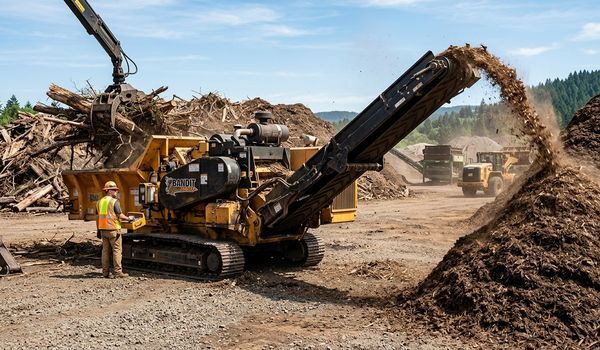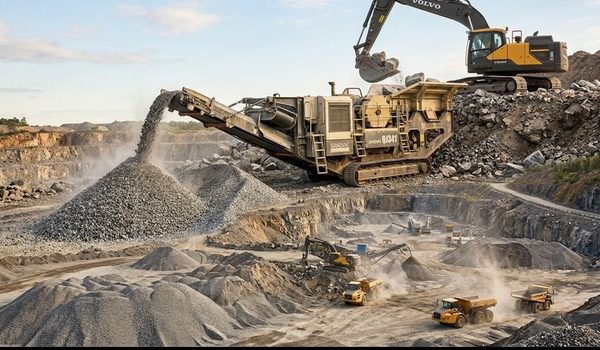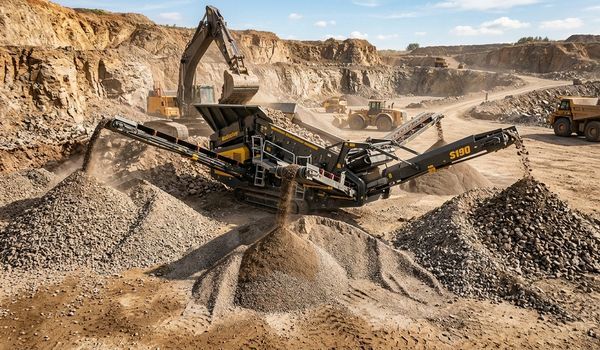
For aggregate producers, quarry operators, recyclers, and mining contractors, the screening plant is the machine that turns raw material into revenue. Every ton of crushed stone, sand, gravel, or recycled concrete that leaves your site has to be sized and sorted first, and screening equipment is what makes that happen. When it is time to add capacity, replace an aging screener, or mobilize for a new project, the price tag can be substantial. New screening plants routinely run from $150,000 for compact track-mounted units to well over $1 million for high-production stationary systems.
That is exactly why screening plant equipment financing exists. Instead of draining working capital or waiting years to save up, business owners can spread the cost of new or used screening equipment over predictable monthly payments while the machine generates income from day one. With infrastructure spending and construction activity keeping aggregate demand strong across the country, as tracked by outlets like CNBC's business coverage, producers who can screen more material, faster, are the ones winning the work. This guide covers everything you need to know about screening plant financing: how it works, what it costs, who qualifies, and how to choose the right structure for your operation.
In This Article
- What Is Screening Plant Equipment Financing?
- Key Benefits of Financing a Screening Plant
- How Screening Plant Financing Works
- Types of Screening Plants You Can Finance
- Screening Plant Costs and Financing Amounts
- Who Qualifies for Screening Plant Financing
- Financing Options Compared
- How Crestmont Capital Helps
- Real-World Scenarios
- Frequently Asked Questions
- Next Steps
What Is Screening Plant Equipment Financing?
Screening plant equipment financing is a funding arrangement that lets a business acquire a screening plant, whether new or used, without paying the full purchase price upfront. A lender provides the capital to buy the machine, and you repay that amount plus financing charges in fixed monthly installments over an agreed term, typically 24 to 84 months. The screening plant itself serves as collateral for the financing, which is why approvals are often faster and more flexible than unsecured borrowing.
A screening plant is heavy equipment that separates bulk material into different sizes using vibrating screens, rotating drums, or grizzly bars. Quarries use screening plants to size crushed stone. Sand and gravel operations use them to wash and classify aggregate. Concrete and asphalt recyclers use them to turn demolition debris into sellable base material. Topsoil producers, compost facilities, and mining contractors all depend on screening equipment to produce a consistent, spec-grade product.
Because these machines sit at the center of production, most owners cannot afford extended downtime or capacity bottlenecks. Screening plant financing solves the timing problem: you get the machine on site and working now, and you pay for it out of the revenue it produces over the following years. Structures include straightforward equipment loans, where you own the machine from day one, and equipment leases, where the lender holds title during the term and you have a purchase option at the end. Both are common in the aggregate screening equipment market, and both keep your cash free for fuel, labor, maintenance, and payroll.
Key Stat: The United States produces well over two billion tons of construction aggregates every year, and virtually all of it passes through a screen before it is sold. With U.S. Census Bureau construction spending data showing total construction activity at record levels, screening capacity is directly tied to revenue for producers of every size.
Financing also tracks naturally with how screening plants earn. A portable screening plant might work a sand and gravel pit for six months, then move to a demolition recycling job for the rest of the year. Payment structures can be matched to that kind of seasonal or project-based cash flow, which is something a lump-sum purchase can never do.
Key Benefits of Financing a Screening Plant
Business owners choose screening plant equipment financing over cash purchases for reasons that go well beyond simply not having the money on hand. The structure itself creates financial advantages that matter for operations of every size.
- Preserve working capital. A $400,000 screening plant paid in cash is $400,000 you cannot spend on fuel, wear parts, labor, or the next job's startup costs. Financing keeps that liquidity in the business where it earns a return.
- Predictable fixed payments. Monthly payments stay the same for the entire term, which makes bidding work and forecasting cash flow far simpler than managing a variable revenue stream against a massive one-time expense.
- The machine pays for itself. A screening plant producing 300 tons per hour of sellable material generates revenue every day it runs. Payments come out of production, not out of savings.
- Build equity in a hard asset. With an equipment loan, every payment increases your ownership stake in a machine that holds real resale value, especially well-maintained units from major manufacturers.
- Faster than traditional bank credit. Equipment-focused lenders approve deals in days, not weeks, because the collateral is the machine itself and the underwriting is built around equipment value and business cash flow.
- Bundle soft costs. Delivery, setup, initial wear parts, and even operator training can often be rolled into the financed amount, so the machine arrives ready to work with no additional outlay.
- Match payments to your season. Many aggregate and recycling operations run heavy in construction season and light in winter. Structured or seasonal payment plans can align bigger payments with bigger revenue months.
For operations comparing financing against holding off entirely, the opportunity cost question matters most. Every month without adequate screening capacity is a month of unprocessed stockpile, lost sales, or paying a contract screener's rates instead of your own cost per ton. Owners who finance into capacity early usually find the added production dwarfs the financing cost within the first season.
Ready to Add Screening Capacity?
Get fast, flexible equipment financing from the #1 rated business lender in the U.S. Apply in minutes with no obligation.
Apply Now →How Screening Plant Financing Works
The financing process for screening equipment is more straightforward than most owners expect, especially when you work with a lender that specializes in equipment. Here is how a typical deal moves from quote to funded machine.
Step 1: Identify the Equipment and Get a Quote
Start with the machine itself. Whether you are buying a new track-mounted screening plant from a dealer, a used trommel screen from an auction, or a stationary incline screen from a private seller, get a formal quote or bill of sale with the year, make, model, hours, condition, and price. Lenders underwrite against this document, so accuracy here speeds everything up.
Step 2: Submit a Simple Application
Equipment financing applications are deliberately light. Most lenders ask for basic business information, the equipment details, and a few months of business bank statements to verify revenue. Unlike a bank loan, you generally will not need years of tax returns, detailed financial statements, or a formal business plan for deals in the small to mid six figures.
Step 3: Credit Review
The lender reviews the owner's personal credit, the business's time in operation, revenue trends, and the equipment's value. Because the screening plant secures the deal, the equipment's make, age, and condition carry real weight. Strong machines from recognized manufacturers are easier to finance at strong terms. Most reviews complete within 24 to 48 hours.
Step 4: Approval and Terms
You receive an approval outlining the financed amount, term length, monthly payment, and any upfront costs such as a first and last payment or documentation fee. This is the moment to compare structures: a shorter term costs less overall but raises the payment, while a longer term lowers the payment and preserves more monthly cash flow.
Step 5: Documentation and Funding
After you sign the financing documents, the lender pays the equipment seller directly. For dealer purchases this is nearly automatic. For private-party or auction purchases, the lender verifies title and condition before releasing funds, which protects you as much as it protects them.
Step 6: Delivery and Repayment
The machine ships to your site, goes to work, and you begin making monthly payments according to the schedule. From this point forward, the screening plant's production revenue is what services the debt, which is exactly how equipment financing is supposed to work.
By the Numbers
Screening Plant Financing - Key Figures
$150K+
Entry price for compact track-mounted screening plants
24-84
Typical financing term length in months
24-48 hrs
Typical credit review turnaround for equipment deals
100%
Financing available for qualified buyers, soft costs included
Types of Screening Plants You Can Finance
Screening plants come in several distinct configurations, and virtually all of them are financeable as long as they hold verifiable value. Understanding which type fits your material and production goals helps you borrow the right amount for the right machine.
Track-Mounted Portable Screening Plants
Track-mounted units are the workhorses of contract crushing and screening. They move around a site under their own power, set up in under an hour, and handle everything from blasted rock to recycled concrete. Compact models start around $150,000 to $300,000, while high-production track screens from premium manufacturers run $500,000 to $800,000 or more. Contractors who move between jobs get the most from this type.
Wheeled Portable Screening Plants
Wheeled plants trade on-site mobility for a lower purchase price. They tow between sites behind a truck but need a loader or crane to position. For producers who stay at one location for months at a time, a wheeled portable screening plant often delivers the same production as a tracked unit for meaningfully less money, which also means a smaller financed amount and lower monthly payments.
Stationary Screening Plants
Stationary systems are built for permanent quarry and plant installations where volume is everything. Multi-deck incline and horizontal screens in fixed structures can process 500 to 1,500 tons per hour in continuous operation. Complete stationary screening installations frequently exceed $1 million, making financing essentially mandatory for all but the largest producers.
Trommel Screens
Trommel screens use a rotating drum instead of vibrating decks, which makes them ideal for wet, sticky, or organic material that blinds conventional screens. Compost facilities, topsoil producers, and recycling yards favor trommels. New trommel screens typically run $200,000 to $600,000 depending on drum size and throughput.
Scalping Screens and Grizzly Feeders
Scalping screens remove oversize material before it reaches a crusher, protecting downstream equipment and boosting total plant output. Heavy-duty scalpers with grizzly bars handle the most abrasive feed in the industry, including shot rock and demolition rubble. These machines are commonly financed alongside crushers as part of a complete spread.
Incline and Horizontal Vibrating Screens
The vibrating screen is the core technology inside most screening plants. Incline screens use gravity and vibration together and dominate aggregate production, while horizontal screens excel at precise sizing and washing applications. Producers upgrading an existing spread often finance standalone vibrating screens to add a deck or replace a worn unit without rebuilding the entire plant.
Used versions of every type above are also financeable. A well-maintained used screening plant at 50 to 70 percent of new pricing can be the smartest capacity dollar in the business, and lenders that understand aggregate equipment will finance used machines with reasonable hours and documented condition.
Screening Plant Costs and Financing Amounts
What you pay for a screening plant depends on capacity, mobility, condition, and manufacturer. Here is how the market generally breaks down.
Compact track-mounted screeners suitable for small contractors and recycling yards typically run $150,000 to $350,000 new. Mid-size portable screening plants handling 200 to 400 tons per hour usually price between $300,000 and $600,000. High-production track or stationary systems for quarry and mining applications run $600,000 to $1.2 million and beyond. Used screening plants with reasonable hours commonly trade at 40 to 60 percent of their original price, which is why used equipment financing is so popular in this category.
What does that mean in monthly terms? As an illustrative example, a $300,000 screening plant financed over 60 months lands roughly in the $5,500 to $6,500 per month range depending on credit strength and structure. A $150,000 compact unit over 48 months comes out around $3,500 to $4,200 per month. Larger $750,000 packages over 72 to 84 months typically run $11,000 to $13,500 per month. Actual rates vary with credit, time in business, and equipment age, but these ranges give you a realistic planning baseline before you request a quote.
The key comparison is always payment versus production value. A screening plant producing 250 tons per hour at a $12 per ton margin generates roughly $3,000 per operating hour. In that light, a $6,000 monthly payment is recovered in the first two or three working days of the month, which is why experienced producers focus on uptime and throughput rather than the sticker price alone.
Pro Tip: Ask your lender to bundle delivery, setup, and your first set of screen media or wear parts into the financed amount. Rolling $15,000 to $30,000 of soft costs into the deal keeps cash in the business and usually adds only a few hundred dollars to the monthly payment.
Who Qualifies for Screening Plant Financing
Screening plant financing is built for operating businesses, and the qualification bar reflects that. Lenders look at a combination of the business, the owner, and the machine.
- Time in business. Two or more years of operating history unlocks the best terms, but younger companies and even startups can qualify with strong owner credit, industry experience, or a larger down payment.
- Credit profile. Most programs look for owner credit scores of 600 or higher, with the strongest pricing reserved for scores above 680. Because the equipment secures the deal, credit matters less than it would for an unsecured loan.
- Revenue and cash flow. Lenders verify revenue through recent business bank statements. Consistent deposits that cover the proposed payment several times over make approvals fast and clean.
- The equipment itself. Newer machines from recognized manufacturers finance most easily. Used screening plants are financeable too, with the age, hours, and condition factored into the amount and term.
- Industry. Quarries, sand and gravel producers, mining contractors, concrete and asphalt recyclers, demolition firms, compost and topsoil operations, and site-work contractors all qualify. If the machine produces verifiable revenue, there is a program for it.
Businesses with a past credit blemish are not automatically out. Equipment-secured financing is one of the most accessible funding categories precisely because the collateral reduces lender risk. Owners with scores in the low 600s get approved every day, often with a modestly larger upfront payment in exchange for the flexibility.
Screening Plant Financing Options Compared
There is no single best way to fund a screening plant. The right structure depends on how long you will keep the machine, how your cash flows, and what else your business needs. Here is how the main options stack up.
| Option | Structure | Typical Term | Upfront Cost | Best For |
|---|---|---|---|---|
| Equipment Loan | You own the machine; it secures the financing | 24-84 months | 0-10% | Long-term ownership and equity building |
| Equipment Lease | Lender holds title; purchase option at term end | 24-72 months | First and last payment | Lower payments and easy upgrades |
| Equipment Line of Credit | Pre-approved pool you draw on as machines come up | Revolving | None until drawn | Dealers and fleets buying multiple units |
| SBA Loan | Government-guaranteed term loan | 7-10 years | 10-20% | Lowest rates for patient, well-documented buyers |
| Working Capital Loan | Unsecured cash you can apply anywhere | 6-24 months | None | Down payments, repairs, or smaller used units |
For most screening plant purchases, an equipment financing agreement hits the sweet spot: competitive rates, ownership from day one, terms matched to the machine's productive life, and approval speed measured in days. Used equipment financing follows the same structure with the machine's age priced into the deal. Fleets and high-volume buyers often add an equipment line of credit so they can move on auction deals without reapplying each time.
The SBA loan programs deserve mention for buyers with strong documentation and time to spare. SBA 7(a) and 504 loans can carry the lowest rates in the market, but the paperwork and multi-week timelines make them a poor fit when a machine is available now and a job starts next month. Many producers use fast equipment financing to secure the machine immediately and keep SBA options in reserve for larger facility projects.
How Crestmont Capital Helps
Crestmont Capital is rated the #1 business lender in the country, and equipment financing is one of the categories where that reputation was earned. The team funds screening plants, crushers, conveyors, and complete aggregate spreads for operations of every size, from single-machine owner-operators to multi-site quarry groups.
What that looks like in practice: a simple application that takes minutes, not days. Credit decisions typically within 24 to 48 hours. Programs for both new and used screening equipment, including private-party and auction purchases. Flexible terms from 24 to 84 months, with structures that can match seasonal production cycles. And funding amounts that scale from compact $150,000 track screens to multi-million dollar stationary installations.
Crestmont also understands the aggregate business specifically. Producers adding screening capacity alongside crushing equipment can package everything into one facility; readers planning a complete spread should see our guide to rock crusher financing for the crusher side of the equation, and operations moving sized material will want to review conveyor belt financing for the stacking and transfer equipment that completes the circuit. One application can cover the full production line.
Get Your Screening Plant Funded Fast
Decisions in as little as 24 hours. New and used equipment, private-party and auction purchases welcome.
Apply Now →Real-World Scenarios: Screening Plant Financing in Action
Numbers on a page only go so far. Here is how screening plant financing plays out for real operations facing real decisions.
Scenario 1: The Quarry Replacing an Aging Incline Screen
A family-owned quarry in the Southeast was running a 20-year-old stationary incline screen that needed weekly welding repairs and still could not keep up with its crusher. Unplanned downtime was costing an estimated $8,000 per incident in lost production and emergency labor. The owners financed a new high-capacity screening plant for $640,000 over 72 months, putting nothing down beyond the first payment. The new unit eliminated the downtime, lifted throughput by 35 percent, and the $11,800 monthly payment was covered by less than a week of added production each month.
Scenario 2: The Concrete Recycler Adding a Trommel Screen
A concrete recycling operation in Texas was turning away wet, clay-contaminated demolition material because their vibrating screen blinded over constantly. They financed a used trommel screen for $285,000 over 60 months at roughly $5,400 per month. The trommel opened an entirely new feed stream, and the recycler now sells a clean 57-stone product and a screened fill product from material they previously rejected. The added product line pays the financing twice over.
Scenario 3: The Site Contractor Mobilizing for a Highway Project
A site-work contractor won a two-year highway materials contract that required on-site screening of borrow material. With six weeks before mobilization, they financed a track-mounted scalping screen for $425,000 with a 10 percent down payment and a 60-month term. Approval came through in 48 hours, the machine was delivered inside three weeks, and the contract's materials clause was satisfied with time to spare. Without financing, the contractor would have had to pass on the largest job in the company's history.
Scenario 4: The Sand and Gravel Producer Adding Peak-Season Capacity
A sand and gravel producer in the Midwest sells 70 percent of annual volume between May and October. Every spring, a rented screening plant covered the overflow at $28,000 per month. The owners financed a second portable screening plant for $380,000 over 60 months at about $7,200 per month, structured with higher payments during the production season and lower payments in winter. Owning replaced renting, and the seasonal structure kept winter cash flow comfortable. The machine also freed the business from rental availability risk during the busiest months.
Pro Tip: If you currently rent screening capacity for more than four or five months a year, run the ownership math. Rental rates of $20,000 to $30,000 per month against a financed payment of $5,000 to $8,000 is one of the clearest financing cases in the aggregate business.
Frequently Asked Questions
What is screening plant equipment financing? +
Screening plant equipment financing is a funding arrangement where a lender provides the capital to purchase a new or used screening plant and you repay it in fixed monthly installments over a set term, typically 24 to 84 months. The machine itself serves as collateral, which keeps approvals faster and more flexible than unsecured borrowing. You get the screening plant working on your site immediately while paying for it out of the production revenue it generates.
How much does a screening plant cost? +
Compact track-mounted screeners start around $150,000 to $350,000 new. Mid-size portable screening plants handling 200 to 400 tons per hour typically run $300,000 to $600,000. High-production stationary or tracked systems for quarry and mining applications range from $600,000 to more than $1.2 million. Used screening plants with reasonable hours commonly sell for 40 to 60 percent of original pricing.
Can I finance a used screening plant? +
Yes. Used screening plant financing is one of the most common deal types in the aggregate equipment market. Lenders evaluate the machine age, operating hours, condition, and manufacturer, then structure the amount and term around its remaining productive life. Well-maintained used screeners from recognized brands often qualify for terms nearly as strong as new equipment, at a much lower purchase price.
What credit score do I need to finance screening equipment? +
Most programs look for owner credit scores of 600 or higher, with the strongest rates and lowest upfront costs reserved for scores above 680. Because the screening plant secures the financing, credit matters less than it would for an unsecured loan. Owners with scores in the low 600s are approved regularly, sometimes with a modestly larger first payment or down payment.
How long are screening plant financing terms? +
Terms typically range from 24 to 84 months. Shorter terms cost less in total financing charges but carry higher monthly payments. Longer terms lower the monthly payment and preserve cash flow, which many seasonal operations prefer. The lender matches the term to the expected useful life of the machine, so newer equipment generally qualifies for longer terms than older used units.
What is the difference between financing and leasing a screening plant? +
With an equipment loan, you own the screening plant from day one and build equity with every payment. With an equipment lease, the lender holds title during the term and you have a purchase option, often for a residual amount, at the end. Leases usually carry slightly lower monthly payments and simpler upgrade paths, while loans are better for owners who plan to run the machine for its full working life.
Can I finance a portable screening plant? +
Absolutely. Portable and track-mounted screening plants are among the most frequently financed machines in the aggregate industry because contractors move them between pits, quarries, and job sites. Lenders treat mobility as a value feature, since a machine that can chase work holds its resale value well. Both new and used portable screening plants qualify for standard equipment financing programs.
Do I need a down payment for screening plant financing? +
Many qualified buyers finance 100 percent of the purchase price with no down payment beyond the first monthly payment and a documentation fee. Startups, buyers with credit challenges, or very large packages may be asked for 10 to 20 percent down to strengthen the deal. Soft costs like delivery and setup can usually be rolled into the financed amount either way.
How fast can I get approved for screening equipment financing? +
Equipment-focused lenders typically return credit decisions within 24 to 48 hours of receiving a complete application and recent bank statements. Funding follows within a few days of signed documents, and dealer purchases can move even faster. That speed matters when a machine is priced right at auction or a job starts in weeks rather than months.
Can startups or newer businesses qualify? +
Yes, though the terms adjust for risk. Newer operations usually qualify with strong owner credit, relevant industry experience, a larger down payment, or some combination of the three. Lenders weigh the revenue the screening plant will produce alongside the business history, so a well-planned operation with contracts in hand can absolutely get funded in its first years.
What documents do I need to apply? +
Expect to provide a one-page application with basic business and owner information, an equipment quote or bill of sale with the machine details, and three to six months of recent business bank statements. Larger packages may request a year of tax returns or financial statements, but most deals in the small to mid six figures fund on the application, bank statements, and equipment details alone.
Are tracked screeners easier to finance than stationary plants? +
Both finance readily, but tracked and wheeled portable screeners are often the simplest approvals because their mobility supports strong resale values and broad buyer demand in the secondary market. Stationary plants finance just as routinely but may involve site and installation considerations in the underwriting. Neither type presents a meaningful obstacle with an equipment-focused lender.
Can I finance multiple pieces of aggregate equipment at once? +
Yes, and it is often the smartest way to structure a project. Producers regularly bundle a screening plant with crushers, conveyors, stackers, and loaders into a single financing facility with one monthly payment. Bundling simplifies documentation, keeps the whole spread on one schedule, and can strengthen the overall approval because the complete production line generates the repayment revenue.
What happens at the end of the financing term? +
With an equipment loan, you own the screening plant free and clear once the final payment is made, and it keeps producing revenue with no further financing cost. With a lease, you typically have the option to purchase the machine for a pre-agreed residual, return it, or upgrade to a newer unit. Well-maintained screening plants commonly run productively for years beyond the financing term.
How do I apply for screening plant financing with Crestmont Capital? +
Start with the online application, which takes just a few minutes to complete. Have your equipment quote and recent business bank statements ready. A funding specialist reviews the deal, typically returns a decision within 24 to 48 hours, and walks you through structure options. Once documents are signed, the seller is paid directly and your screening plant ships to your site.
Put a Screening Plant to Work This Season
One quick application. Decisions in 24 to 48 hours. Funding for new and used machines at any price point.
Apply Now →Next Steps
If you are ready to move on a screening plant, the process from here is simple:
Line up the year, make, model, hours, and price for the machine you want, whether from a dealer, auction, or private seller.
Complete the quick application at Crestmont Capital and upload a few months of business bank statements.
Compare the approved structures, pick the term and payment that fits your cash flow, and sign the documents.
The seller is paid directly, the machine ships, and your new screening capacity starts earning from day one.
Conclusion
A screening plant is one of the most productive assets an aggregate, recycling, or mining operation can own, and it is also one of the most natural fits for equipment financing. The machine produces measurable revenue from its first day on site, it holds real resale value, and the payments can be matched to the way your business actually earns. Screening plant equipment financing turns a six or seven figure capital decision into a manageable monthly line item that the equipment itself pays for.
Whether you are replacing a worn incline screen, adding a trommel for difficult material, mobilizing for a new contract, or finally buying instead of renting, the right financing structure keeps your cash working and your production growing. Crestmont Capital funds screening equipment for operations of every size with fast decisions, flexible terms, and programs for both new and used machines. When you are ready to add screening capacity, the application takes minutes and the answer usually comes within a day or two.
Disclaimer: The information provided in this article is for general educational purposes only and is not financial, legal, or tax advice. Funding terms, qualifications, and product availability may vary and are subject to change without notice. Crestmont Capital does not guarantee approval, rates, or specific outcomes. For personalized information about your business funding options, contact our team directly.

Allan Garfinkle
Allan Garfinkle is the Chief Revenue Officer at Crestmont Capital, where he has spent more than a decade leading revenue strategy, business development, and operational growth. With 28 years of experience building and advising startups and small businesses, Allan has helped more than 10,000 business owners navigate financing decisions, growth opportunities, and changing economic conditions. He earned a Bachelor of Science in Economics and an MBA with a concentration in Finance from Northeastern University, as well as a Juris Doctor from New England Law, where his studies focused on contracts and business law. His writing draws on extensive practical experience in small-business lending, equipment financing, business credit, and commercial finance.