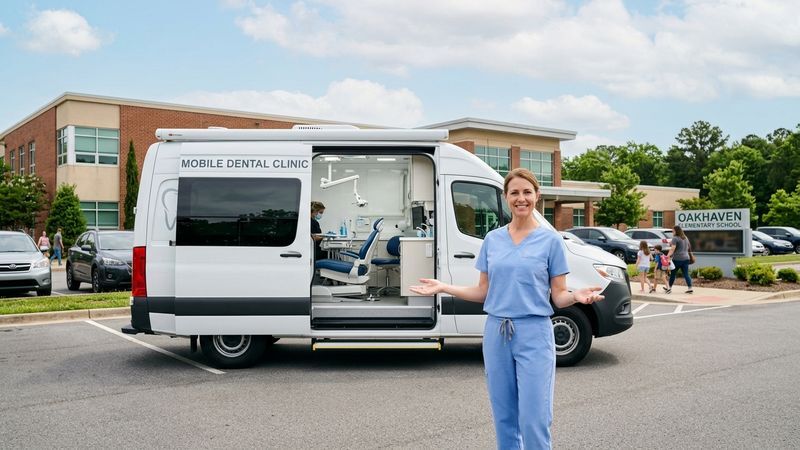
Mobile dental clinic van financing gives dentists, dental groups, and healthcare entrepreneurs a practical way to fund a fully equipped mobile dental unit without draining working capital. A turnkey mobile dental clinic can cost anywhere from $150,000 to more than $500,000 once the vehicle, build-out, and clinical equipment are combined, and very few practices want to pay that in cash. The right financing structure spreads that cost into predictable monthly payments while your mobile dental clinic starts generating revenue from day one.
This guide covers everything you need to know about funding a mobile dental van: what it is, how the lending process works, what vehicles and equipment can be included, what it costs, who qualifies, and how to compare your options. Whether you are an established practice expanding into schools, nursing homes, or rural communities, or an entrepreneur launching a mobile dentistry business from scratch, this is the roadmap.
In This Article
- What Is Mobile Dental Clinic Van Financing?
- Why Mobile Dentistry Is Growing
- Key Benefits of Financing a Mobile Dental Van
- How Mobile Dental Clinic Financing Works
- Types of Mobile Dental Vehicles and Equipment
- What Does a Mobile Dental Clinic Cost?
- Who Is Mobile Dental Van Financing Best For?
- Financing Options Compared
- How Crestmont Capital Helps
- Real-World Scenarios
- Frequently Asked Questions
- How to Get Started
What Is Mobile Dental Clinic Van Financing?
Mobile dental clinic van financing is a form of equipment and vehicle financing designed specifically for dental professionals who want to deliver care on wheels. Instead of purchasing a converted van, sprinter, RV-style coach, or trailer outright, you borrow the funds (or lease the vehicle) and repay the lender over a fixed term, typically three to seven years. The vehicle and its installed equipment serve as collateral, which keeps rates lower than unsecured borrowing and makes approval accessible even for newer practices.
A mobile dental clinic is far more than a van with a chair bolted to the floor. A professionally built unit includes dental operatories, digital X-ray systems, sterilization equipment, compressors, vacuum systems, generators or shore-power hookups, wheelchair lifts, cabinetry, water systems, and often wheelchair-accessible patient areas. Lenders who understand this asset class will finance the full package: the chassis, the medical build-out, and the clinical equipment, all under one agreement.
This is what separates specialized mobile dental unit financing from a generic auto loan. A consumer or standard commercial vehicle lender may only finance the base vehicle, leaving you to fund a $100,000 to $250,000 clinical build-out out of pocket. Healthcare-focused equipment lenders structure the entire project as a single financing package, which preserves your cash for staffing, marketing, and operations.
Why Mobile Dentistry Is Growing
Mobile dentistry is one of the fastest-growing delivery models in oral health, and the demand drivers are structural, not faddish. Access to care remains a serious problem across the United States. Millions of Americans live in dental health professional shortage areas, and transportation is consistently cited as one of the top barriers that keeps patients from seeing a dentist. A mobile dental clinic eliminates that barrier by bringing the operatory to the patient. Coverage of ongoing healthcare access challenges in Reuters' healthcare reporting underscores how delivery models that reach patients where they are continue to gain share.
Several markets are fueling growth:
- Schools and Head Start programs. Districts increasingly contract with mobile dental providers for on-site screenings, cleanings, sealants, and fluoride treatments. Parents sign consent forms, and students receive care without missing a full day of class.
- Nursing homes and assisted living. The senior population is growing rapidly, and many residents cannot travel to a dental office. Mobile units park at the facility and treat patients on site, often on recurring monthly or quarterly schedules.
- Corporate and employer programs. Large employers book mobile dental visits as an employee wellness benefit, reducing time away from work and improving benefits utilization.
- Rural and underserved communities. Counties without a practicing dentist rely on visiting mobile clinics, often coordinated with public health departments and community organizations.
- Public health and nonprofit initiatives. Grant-funded programs and community health events frequently contract mobile dental providers, creating a second revenue stream alongside private-pay work.
For practice owners, the economics are compelling. A mobile dental clinic extends your reach without the cost of a second brick-and-mortar location: no long commercial lease, no build-out of permanent space, and no duplicate front-desk overhead. One well-run mobile unit can serve dozens of sites on a rotating schedule and feed new patients back to your flagship practice.
Key Stat: According to the U.S. Census Bureau, the population aged 65 and older is projected to reach roughly 80 million by 2040, and this demographic is a core driver of demand for on-site dental care in senior living communities.
Key Benefits of Financing a Mobile Dental Van
Paying cash for a mobile dental clinic is possible for some practices, but financing is usually the smarter business move. Here is why owners choose to finance:
- Preserve working capital. Keeping $300,000 in the bank means you can cover payroll, supplies, marketing, and the slow ramp-up months while the unit builds its route and referral base.
- Match payments to revenue. Fixed monthly payments align with the income the unit generates. Many operators find the unit covers its own payment within the first year of operation.
- Launch faster. Financing lets you order the vehicle and build-out now rather than saving for years while competitors claim contracts with schools and senior facilities in your area.
- Build business credit. Consistent on-time payments on a substantial equipment loan strengthen your practice's credit profile, making future expansion cheaper.
- Flexible structures. Loans, equipment finance agreements, and leases let you choose between ownership, lower payments, or easy upgrades when newer vehicle platforms and digital dentistry technology arrive.
- Potential tax advantages. Many practices can deduct equipment purchases under prevailing tax rules. Consult your accountant about how current expensing provisions apply to your situation.
Ready to Put Your Dental Practice on Wheels?
Crestmont Capital finances mobile dental clinics, vehicles, and complete clinical build-outs. Apply in minutes with no obligation.
Apply Now →How Mobile Dental Clinic Financing Works
The lending process for a mobile dental unit is straightforward when you work with a lender experienced in healthcare and vehicle assets. Here is the typical sequence:
Step 1: Define Your Unit and Budget
Start by deciding what kind of mobile clinic fits your model: a sprinter-style van with a single operatory, a larger RV-coach with two or three operatories, or a towable trailer. Get written quotes from reputable mobile medical vehicle builders. Lenders will want a detailed spec sheet and itemized quote covering the chassis, conversion, and installed equipment.
Step 2: Apply With a Lender
Submit an application with basic business information: time in business, revenue, credit profile, and the quote for the unit. Online lenders like Crestmont Capital make this step fast, often with a simple application and recent bank statements rather than years of tax returns.
Step 3: Review Your Approval and Terms
Strong applicants typically see decisions within one to two business days. Review the amount approved, term length, monthly payment, and any down payment requirement. Terms of 36 to 84 months are common for mobile medical vehicles.
Step 4: Documentation and Funding
Once you accept terms, the lender finalizes documents and pays the vehicle builder or seller directly. Deposits and progress payments during a custom build can often be accommodated, so the builder can start work immediately.
Step 5: Delivery and Revenue
Your unit is delivered, inspected, and put into service. Your fixed monthly payment begins, and the unit starts producing revenue through patient visits, contracts, and reimbursements.
By the Numbers
Mobile Dental Clinic Financing - Key Figures
$150K+
Typical starting cost for a single-operatory mobile dental van build
84 Mo
Maximum term lengths available on qualified mobile medical vehicle loans
57M
Americans living in dental health professional shortage areas, per federal estimates
24-48 Hrs
Typical approval window for qualified applicants at Crestmont Capital
Types of Mobile Dental Vehicles and Equipment
Mobile dental clinics come in several configurations, and the right choice depends on your patient volume, service area, and procedures offered. Lenders finance all of the common formats.
Sprinter-Style Dental Vans
Built on a Mercedes-Benz Sprinter, Ford Transit, or Ram ProMaster chassis, these are the most maneuverable and affordable entry point, typically with one operatory. They fit in standard parking spaces, are easy to drive without a special license, and work well for school programs, corporate visits, and senior facilities in urban and suburban areas. Expect total project costs in the $150,000 to $300,000 range.
RV-Coach Mobile Dental Clinics
Built on a larger motorcoach or cutaway chassis, these units offer two or three full operatories, a reception area, sterilization center, and sometimes a wheelchair lift. They function as a complete rolling dental office and can serve high-volume sites for days at a time. Total costs commonly run $350,000 to $600,000 or more.
Towable Dental Trailers
Trailers offer generous clinical space at a lower cost than self-propelled coaches, and the tow vehicle stays available for other uses. They are popular with public health programs and practices serving fixed recurring sites like schools and factories.
Portable Dental Equipment Setups
Some providers skip the vehicle entirely and use portable dental equipment (folding chairs, portable X-ray units, and self-contained delivery systems) that sets up inside gyms, community centers, and offices. Equipment financing covers these packages as well, often at a much lower price point of $25,000 to $75,000.
Equipment Typically Financed With the Vehicle
- Dental chairs, delivery systems, and operatory lights
- Digital X-ray sensors, panoramic units, and imaging software
- Autoclaves and sterilization centers
- Air compressors, vacuum systems, and amalgam separators
- Generators, inverters, and shore-power electrical systems
- Cabinetry, plumbing, and wheelchair lifts
- Practice management hardware and networking
When you finance through a lender familiar with dental equipment financing, the vehicle conversion and every installed component can be bundled into a single agreement, so you make one monthly payment on the complete clinic.
What Does a Mobile Dental Clinic Cost?
Total project cost breaks into three buckets, and understanding each helps you borrow the right amount:
1. The Base Vehicle
A new Sprinter or Transit chassis runs $45,000 to $70,000. A larger cutaway or motorcoach chassis runs $80,000 to $150,000. Used vehicles in good condition can reduce this significantly, and many lenders will finance quality used units, which is a smart way to lower your monthly payment when launching.
2. The Clinical Build-Out
The medical conversion is usually the largest line item. A professional single-operatory build-out with cabinetry, plumbing, electrical, generator, and an installed chair typically costs $80,000 to $180,000. Multi-operatory coach conversions routinely exceed $250,000. Work only with builders experienced in mobile medical regulations, since health department licensing and Americans with Disabilities Act accessibility requirements apply.
3. Clinical Equipment and Technology
Digital X-ray systems, sensors, sterilizers, compressors, and software add $40,000 to $120,000 depending on whether you buy new or certified pre-owned. Buying refurbished imaging and sterilization equipment is a common cost-control strategy for first-time mobile operators.
Pro Tip: Get an itemized, line-item quote from your vehicle builder before you apply. Lenders approve faster and more accurately when they can see exactly what they are funding, and you avoid borrowing too little and covering a surprise gap in cash.
All-in, most single-operatory mobile dental van projects land between $150,000 and $350,000, while multi-chair coaches run $350,000 to $600,000 or more. Financing the full amount with terms of five to seven years typically produces monthly payments between roughly $2,500 and $9,000 depending on the amount, term, and your credit profile. A well-booked mobile unit seeing 12 to 20 patients per day can cover that payment within its first several months of operation.
Who Is Mobile Dental Van Financing Best For?
Mobile dental clinic financing serves several distinct buyer profiles, and lenders evaluate each slightly differently:
- Established dental practices expanding their reach. Owners adding a mobile unit as a satellite service to feed their main office, serve contracts with schools or senior facilities, or reach patients who will never visit a traditional office. This is the strongest applicant profile, with existing revenue and patient flow.
- Dental groups and DSOs. Multi-location organizations adding mobile units across a region, often financing several units over time as contracts grow.
- Dentists launching a dedicated mobile practice. Practitioners going all-in on mobile dentistry as their primary model, serving nursing homes, homebound patients, and corporate clients.
- Hygienists and dental entrepreneurs. In states where dental hygienists can practice independently or under collaborative agreements, hygienist-owned mobile practices are a fast-growing segment.
- Nonprofits and community health organizations. Mission-driven providers expanding access in underserved areas, often combining grants with financing.
Qualification standards are straightforward. Lenders generally look for a credit score of 650 or higher (better scores unlock better rates), at least one to two years in business for the best terms, and revenue or practice cash flow that supports the payment. Startups can qualify too, usually with a larger down payment of 10 to 20 percent, strong personal credit, and a credible business plan or signed service contracts. According to the U.S. Small Business Administration, equipment-backed loans are among the most accessible forms of small business credit precisely because the asset secures the debt.
Financing Options Compared
You have several ways to fund a mobile dental clinic, and each fits a different situation:
| Option | Best For | Typical Terms | Trade-Offs |
|---|---|---|---|
| Equipment Loan / EFA | Owners who want to own the unit outright | 36-84 months, fixed rate, 0-10% down | Higher payment than a lease; you own the depreciation |
| Equipment Lease | Lower payments, easy upgrades | 24-72 months, $1 or 10% buyout options | No equity unless you exercise the buyout |
| SBA 7(a) or 504 Loan | Lowest rates for strong, patient applicants | Up to 10-25 years, prime-based rates | Slow process (weeks to months), heavy documentation |
| Business Line of Credit | Build-out overruns, operating cash during ramp-up | Revolving, draw as needed | Not ideal as the primary vehicle funding source |
| Cash | Practices with surplus capital | None | Ties up capital that could fund growth elsewhere |
For most buyers, an equipment loan or lease through a specialized lender hits the sweet spot: fast approval, the vehicle and equipment as collateral, and terms that match the useful life of the unit. SBA loans offer attractive rates but the timeline rarely fits a build slot with a vehicle upfitter, which is why many mobile clinic buyers use faster equipment financing and keep SBA options for later expansion. Practices weighing a loan against a lease should also review how each structure appears on the balance sheet and discuss the details with their accountant.
How Crestmont Capital Helps
Crestmont Capital is the #1 rated business lender in the United States, and mobile medical and dental vehicles are exactly the kind of revenue-producing assets our equipment financing programs are built for. We fund the complete project: the chassis, the clinical conversion, and the installed equipment, in one streamlined agreement.
Here is what working with Crestmont looks like:
- Fast decisions. Most applicants receive an answer within 24 to 48 hours, so you can lock in a build slot with your vehicle upfitter instead of losing weeks to a bank committee.
- Full-project funding. We finance new and used vehicles, the medical build-out, and clinical equipment together, with amounts that cover complete turnkey units.
- Flexible terms. Terms up to 84 months with fixed payments keep cash flow predictable while your route and contracts ramp up.
- Programs for a range of credit profiles. Strong-credit borrowers get our most competitive rates, and we have options for borrowers with challenged credit as well, including bad credit equipment financing programs.
- Specialists who understand healthcare assets. Our team funds dental, medical, and specialty vehicles every day, so we understand itemized builder quotes, progress payments during conversion, and delivery timelines.
If your project is primarily vehicle-based, our commercial van financing programs cover Sprinter, Transit, and ProMaster conversions, and our medical equipment financing covers imaging, sterilization, and operatory packages. Practices that also need operating cash during the ramp-up period often pair the equipment loan with a business line of credit for payroll, supplies, and marketing. For a deeper look at equipping the clinical side of your practice, see our guide to dental equipment financing and our overview of dental practice loans.
Get a Funding Decision in as Little as 24 Hours
One simple application. No obligation. See exactly what your mobile dental clinic qualifies for today.
Apply Now →Real-World Scenarios
To see how mobile dental clinic van financing plays out in practice, here are five common situations we see every week:
Scenario 1: The Suburban Practice Adding a School Program
A two-doctor general practice wins a contract to provide screenings and preventive care at 14 elementary schools in its district. The owners finance a $265,000 Sprinter-based single-operatory unit over 72 months. The school contract alone covers the monthly payment, and hygiene visits booked at schools convert into new family patients at the main office.
Scenario 2: The Dentist Serving Senior Living Communities
A dentist with 15 years in practice notices that her oldest patients stop scheduling because they can no longer travel. She finances a $340,000 wheelchair-accessible unit with a lift and one large operatory, then signs recurring monthly visit agreements with six assisted living communities. Within nine months the route is booked two weeks out.
Scenario 3: The Startup Mobile-Only Practice
A recent dental school graduate with strong credit but limited collateral launches a mobile-only practice serving homebound patients. With 15 percent down and signed letters of intent from two home health agencies, he qualifies for financing on a used, professionally converted unit at $185,000. Lower overhead than a traditional office lets him reach profitability in his first year.
Scenario 4: The DSO Building a Regional Fleet
A dental support organization with 22 locations finances three coach-style units over five years to serve corporate wellness contracts across a metro area. Financing preserves capital for two acquisitions the same year, and the mobile division becomes a top-three growth channel.
Scenario 5: The Community Health Nonprofit
A nonprofit clinic combines a state grant covering 40 percent of the project with financing for the remaining $210,000 of a trailer-based two-operatory unit. The trailer rotates monthly among rural counties with no practicing dentist, funded by a mix of Medicaid reimbursement and foundation support.
The pattern across all five: the unit is an income-producing asset, and financing lets the revenue pay for the equipment while cash stays available for everything else the organization needs.
Frequently Asked Questions
How much does a mobile dental clinic van cost? +
A single-operatory Sprinter-based unit typically runs $150,000 to $300,000 all-in, including the chassis, clinical build-out, and equipment. Larger coach-style units with two or three operatories commonly range from $350,000 to $600,000 or more. Buying a quality used vehicle or refurbished clinical equipment can bring the total down substantially.
Can I finance a mobile dental clinic van with no money down? +
Yes, established practices with strong credit and solid revenue frequently qualify for 100 percent financing. Newer practices and startups usually need 10 to 20 percent down. A down payment reduces your monthly payment and can improve your rate, so put money down if you comfortably can.
What credit score do I need for mobile dental clinic financing? +
Most lenders look for a score of 650 or higher for standard programs, with the best rates reserved for scores above 700. Scores in the 600 to 649 range can still qualify with stronger revenue or a larger down payment, and specialized programs exist for borrowers with challenged credit.
How long does it take to get funded? +
With an online equipment lender, approval typically takes 24 to 48 hours and funding follows within a few days of signing documents. Banks and SBA loans can take several weeks to several months. Since vehicle builders book conversion slots in advance, fast funding often determines whether you get your unit this quarter or next year.
Can I finance the dental equipment inside the van too? +
Yes, and you should. Specialized lenders treat the entire project as one asset package: the vehicle, the conversion, chairs, X-ray systems, sterilizers, compressors, and generators all go on a single agreement with one monthly payment. Splitting the vehicle and equipment into separate loans usually costs more and complicates your books.
Is it better to lease or buy a mobile dental clinic van? +
Buying (through an equipment loan) builds equity and suits buyers planning to run the unit for seven years or more. Leasing offers lower monthly payments and easier upgrades, which suits fast-evolving technology or organizations that refresh vehicles on a cycle. Many operators start with a lease on their first unit and purchase once the model is proven.
Can a startup dental practice get mobile clinic financing? +
Yes, though terms differ from those for established practices. Startups typically need a credit score above 680, a down payment of 10 to 20 percent, and evidence of demand such as signed service contracts, letters of intent from facilities, or a detailed business plan. Lenders want to see that the unit will generate revenue quickly.
What loan terms are available for mobile dental units? +
Terms of 36 to 84 months are standard, with the longest terms reserved for new or late-model units and strong applicants. Longer terms lower the monthly payment but increase total interest paid. Match the term to the useful life of the vehicle and the length of your anchor contracts.
Can I convert a used van into a mobile dental clinic with financing? +
Yes. Many lenders finance used vehicles and the conversion work together, provided the vehicle meets age and mileage guidelines and the build is done by a professional upfitter. Used units are a popular way to cut total project cost by 25 to 40 percent, especially for first-time mobile operators proving the model.
What insurance do I need for a mobile dental clinic? +
You will need commercial auto coverage for the vehicle, inland marine or equipment coverage for the clinical build-out, general liability, and professional liability (malpractice) coverage that extends to mobile delivery. Lenders require proof of insurance naming them as loss payee before funding. Work with an agent experienced in mobile medical units.
How much revenue can a mobile dental clinic generate? +
Revenue varies widely by model. A single-operatory unit seeing 12 to 20 patients per day for preventive and basic restorative care can generate $400,000 to $800,000 in annual collections, while contract-heavy models with schools or senior facilities often build steadier, lower-overhead books of business. Well-run units commonly cover their financing payment within the first year.
Are there grants for mobile dental clinics? +
Yes, particularly for programs serving underserved populations. Federal, state, and foundation grants frequently fund mobile dental projects for schools, rural communities, and low-income seniors. Most operators combine grant funding with equipment financing for the remaining balance, since grants rarely cover 100 percent of a project and often reimburse after purchase.
Can I finance a mobile dental clinic with bad credit? +
It is possible. Because the vehicle and equipment secure the debt, equipment lenders can approve borrowers that unsecured lenders would decline. Expect a larger down payment, a shorter term, or a higher rate. Strong practice revenue, signed contracts, and a co-signer with better credit all improve your chances.
What documents do I need to apply? +
Online lenders keep it light: a one-page application, three to six months of business bank statements, and the itemized quote from your vehicle builder or equipment vendor. Larger requests may call for recent tax returns or financial statements. Banks and SBA lenders require far more paperwork, which is one reason mobile clinic buyers choose specialized equipment lenders.
Can I serve multiple locations with one mobile dental van? +
Absolutely, and that is the core strength of the model. Most operators run a rotating schedule, serving schools on certain days, senior facilities on others, and corporate or community events on weekends. One unit can maintain recurring relationships with a dozen or more sites, maximizing utilization and revenue per vehicle.
Your Mobile Dental Clinic Is One Application Away
Join the dental practices and organizations that trust Crestmont Capital to fund their growth. Fast approvals, flexible terms, real people.
Apply Now →How to Get Started
Complete our quick application at offers.crestmontcapital.com/apply-now - takes just a few minutes.
A Crestmont Capital advisor will review your mobile clinic project, your builder quote, and your goals, then match you with the right financing structure.
We pay your vehicle builder or seller directly so production can start, and your unit is delivered ready to generate revenue - often within weeks of approval.
Conclusion
Mobile dental clinic van financing turns one of the largest capital purchases a dental business will ever make into a predictable monthly expense that the unit itself can cover. Demand for mobile dentistry keeps climbing across schools, senior living communities, employers, and rural communities, and the practices that move first lock in the contracts and relationships that make these units so profitable.
The keys are simple: define the right vehicle for your model, get an itemized quote from a reputable builder, choose a financing structure that matches your cash flow, and work with a lender that funds healthcare vehicles every day. Crestmont Capital has helped thousands of businesses finance the equipment that powers their growth, and a mobile dental clinic is exactly the kind of income-producing asset that smart financing was designed for.
Ready to explore your options? Apply online in minutes or contact our team to talk through your mobile dental clinic project with a financing specialist.
Disclaimer: The information provided in this article is for general educational purposes only and is not financial, legal, or tax advice. Funding terms, qualifications, and product availability may vary and are subject to change without notice. Crestmont Capital does not guarantee approval, rates, or specific outcomes. For personalized information about your business funding options, contact our team directly.

Allan Garfinkle
Allan Garfinkle is the Chief Revenue Officer at Crestmont Capital, where he has spent more than a decade leading revenue strategy, business development, and operational growth. With 28 years of experience building and advising startups and small businesses, Allan has helped more than 10,000 business owners navigate financing decisions, growth opportunities, and changing economic conditions. He earned a Bachelor of Science in Economics and an MBA with a concentration in Finance from Northeastern University, as well as a Juris Doctor from New England Law, where his studies focused on contracts and business law. His writing draws on extensive practical experience in small-business lending, equipment financing, business credit, and commercial finance.