Rock crusher financing gives quarry operators, aggregate producers, demolition contractors, and mining companies a practical way to acquire crushing equipment without draining cash reserves. A rock crusher is one of the largest capital purchases a materials business will ever make, with new machines routinely priced between $150,000 and well over $1 million. Paying cash for that kind of equipment can stall growth, strain payroll, and leave nothing in reserve for fuel, labor, or wear parts. Financing spreads the cost into predictable monthly payments while the machine generates revenue from day one.
Demand for crushed stone, sand, and gravel remains strong across the United States, driven by highway work, commercial construction, and the ongoing buildout of data centers and industrial facilities. U.S. Census Bureau construction spending data shows total construction activity holding near record levels, which means aggregate producers need reliable crushing capacity to keep up. For most operators, the question is not whether to add a crusher, but how to pay for it intelligently.
This guide covers everything you need to know about rock crusher financing: how it works, the types of crushers you can finance, what lenders look for, what rates and terms to expect, and how to choose the right funding structure for your operation. Whether you run an established quarry or a growing demolition recycling business, you will finish this guide with a clear path to funding your next machine.
In This Article
- What Is Rock Crusher Financing?
- Key Benefits of Financing a Rock Crusher
- How Rock Crusher Financing Works
- Types of Rock Crushers You Can Finance
- Rock Crusher Financing Options
- Who Qualifies for Rock Crusher Financing?
- Costs and Rates: What to Expect
- Financing vs. Other Funding Options
- How Crestmont Capital Helps
- Real-World Scenarios
- How to Apply
- Frequently Asked Questions
What Is Rock Crusher Financing?
Rock crusher financing is a form of equipment financing designed specifically for businesses that need crushing machinery. Instead of paying the full purchase price upfront, a lender provides the capital to buy the crusher from a dealer, auction, or private seller, and your business repays the amount over a fixed term, usually 24 to 84 months. In most structures, the crusher itself serves as collateral, which keeps approval standards more flexible than unsecured lending and preserves your other credit lines.
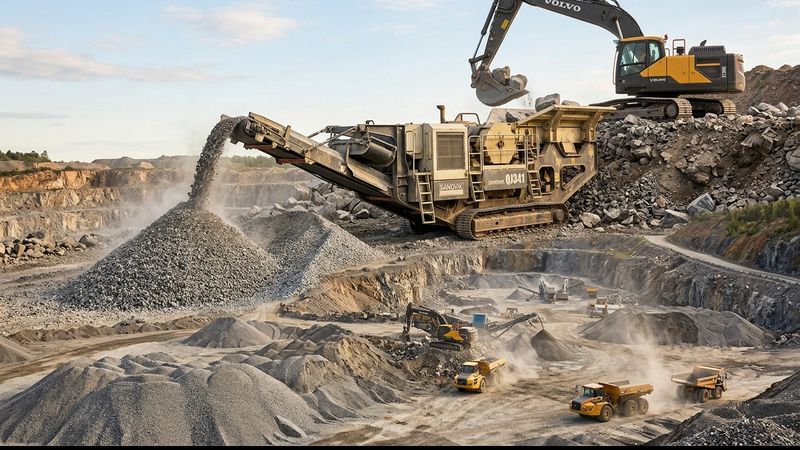
The category covers every major crusher configuration used in aggregate production and material processing: jaw crushers for primary reduction, cone crushers for secondary and tertiary stages, horizontal and vertical shaft impact crushers for shaping and recycling applications, gyratory crushers for high-tonnage mining, and fully mobile track-mounted plants that move between job sites. Stationary crushing and screening plants with conveyors and feeders can also be financed as a package.
Businesses that typically use rock crusher financing include quarry owners scaling production, demolition contractors adding concrete and asphalt recycling lines, site development companies processing material on site, mining operations, and road builders who need portable crushing capacity. What these businesses share is a direct revenue link to the equipment: every ton of material the crusher produces has a market value, so the machine effectively pays for its own monthly payment when utilization stays high.
Financing can be structured as a loan, where you own the crusher from day one, or as a lease, where you use the equipment for a set term with an end-of-term purchase option. Both structures fall under the rock crusher financing umbrella, and the right choice depends on your cash flow, how long you plan to keep the machine, and how quickly crushing technology in your segment is evolving.
Key Benefits of Financing a Rock Crusher
Financing a crusher instead of paying cash is a strategic decision, not just a budget workaround. Here are the core benefits business owners point to when they choose this route.
- Preserve working capital. A mid-size track-mounted crusher can cost $400,000 or more. Keeping that cash in the business protects payroll, fuel budgets, maintenance reserves, and your ability to bid on new contracts without hesitation.
- Revenue covers the payment. A productive crusher generating 1,000 to 3,000 tons per day of saleable material can cover its monthly payment in a matter of days. The rest of the month is margin.
- Fixed, predictable payments. Financing locks in a level monthly obligation for the full term, which makes bidding, budgeting, and job costing far more accurate than absorbing a massive one-time expense.
- Faster acquisition. Saving cash to buy a crusher outright can take years. Financing puts the machine on your site in weeks, so you capture contracts that are available now instead of watching competitors take them.
- Flexible structures. Loans, leases, used equipment programs, and terms from two to seven years let you match the payment to your cash flow cycle, including seasonal operations in northern climates.
- Upgrade path. Leasing structures in particular make it easier to move into newer, more fuel-efficient crushers every few years instead of running a machine into the ground and absorbing major rebuild costs.
Industry Insight
The United States consumes well over two billion tons of construction aggregates every year, and federal infrastructure investment continues to push multi-year project pipelines for highways, bridges, and industrial sites. Producers with modern crushing capacity are positioned to win that work; producers without it face rising rental costs and lost bids.
There is also a less obvious benefit: financing builds your business credit profile. Successfully paying off a large equipment loan strengthens your borrowing position for the next machine, the next wash plant, or the next fleet expansion. Operators who finance strategically often find that each subsequent approval comes faster and on better terms than the last.
How Rock Crusher Financing Works
The process is more straightforward than most business owners expect, especially when working with a lender that specializes in heavy equipment. Here is the typical sequence from quote to funding.
Step 1: Identify the Crusher and Get a Quote
Start with the machine itself. Whether you are buying a new jaw crusher from a dealer, a used cone crusher at auction, or a track-mounted impactor from a private seller, the lender will need an equipment quote or bill of sale that lists the year, make, model, serial number, hours, and purchase price. Used machines may require additional documentation such as photos, inspection reports, or maintenance records.
Step 2: Submit an Application
Most equipment lenders use a simple one-page application for transactions up to a few hundred thousand dollars. You provide basic business information, ownership details, time in business, and the equipment specs. Larger transactions, typically above $500,000, usually require two to three years of business financials or tax returns, a current interim statement, and a brief explanation of how the crusher fits your operation.
Step 3: Credit Review and Approval
The lender evaluates your business credit, personal credit of the owners, time in business, cash flow, and the equipment itself. Because the crusher serves as collateral, approvals are often possible for credit profiles that would struggle to get unsecured funding. Many decisions come back within 24 to 48 hours for well-qualified applicants.
Step 4: Review Terms and Sign Documents
Approval comes with a term sheet: the amount financed, term length, monthly payment, any down payment or advance payments due at signing, and the end-of-term structure. Review the documents carefully, confirm the equipment details match your quote, and sign.
Step 5: Funding and Delivery
The lender pays the seller directly, and the crusher is released for delivery. Your payment schedule typically begins 30 days after funding, which gives you time to get the machine commissioned and producing before the first payment hits.
Ready to Put a Crusher to Work?
Get a fast, no-obligation financing quote for your crushing equipment. Approvals in as little as 24 hours.
Get Started TodayTypes of Rock Crushers You Can Finance
Lenders that understand the aggregate and recycling industries will finance virtually every crusher configuration, new or used. The main categories below cover most transactions, and each maps to different production goals and price points.
Jaw Crushers
Jaw crushers are the workhorses of primary crushing. They use a fixed and moving jaw plate to compress and break large feed material down to a manageable size for secondary stages. They handle hard, abrasive rock well and are common in quarries and mining operations. New jaw crushers typically range from about $150,000 for smaller units to over $800,000 for large track-mounted models.
Cone Crushers
Cone crushers handle secondary, tertiary, and quaternary crushing, producing well-graded aggregate for concrete and asphalt specifications. They excel at hard rock and deliver consistent product shape. Prices commonly run from $200,000 to over $900,000 depending on size and mobility.
Impact Crushers
Horizontal shaft impact crushers and vertical shaft impact crushers are favorites in recycling applications because they break concrete, asphalt, and softer limestone efficiently while producing a cubical product. Demolition recyclers favor them for their versatility. Expect prices from roughly $175,000 for compact units to $700,000 or more for high-capacity track-mounted machines.
Gyratory Crushers
Gyratory crushers are high-tonnage primary crushers used in mining and very large quarries. These are capital-intensive machines, often exceeding $1 million, and financing structures for them frequently involve longer terms and more detailed financial review.
Portable and Track-Mounted Plants
Mobile crushing plants combine a crusher with on-board screening, conveyors, and tracks so the entire unit moves between sites under its own power. Contractors who crush on demolition sites or move between pits prefer these. Complete mobile setups often run $400,000 to $1.2 million, and lenders will typically finance the crusher, screen, and stacker conveyors together as a single package.
| Crusher Type | Best For | Typical Price Range | Mobility |
|---|---|---|---|
| Jaw crusher | Primary crushing of hard, abrasive rock | $150,000 to $800,000+ | Stationary or track-mounted |
| Cone crusher | Secondary and tertiary aggregate production | $200,000 to $900,000+ | Stationary, wheeled, or tracked |
| Impact crusher (HSI/VSI) | Concrete and asphalt recycling, softer rock | $175,000 to $700,000+ | Often track-mounted |
| Gyratory crusher | High-tonnage mining and large quarries | $1,000,000+ | Stationary |
| Portable crushing plant | Multi-site contractors and on-site recycling | $400,000 to $1,200,000+ | Fully mobile |
Rock Crusher Financing Options
There is no single rock crusher financing product. The right structure depends on whether you want to own the machine, how long you plan to run it, and how your cash flow behaves across the year.
Equipment Loans
An equipment loan is the most common structure. The lender funds the purchase, you own the crusher immediately, and you repay principal plus interest over a fixed term, usually 36 to 84 months. At the end of the term the machine is yours free and clear. Loans suit operators who plan to keep a crusher for its full useful life and want to build equity with every payment. Terms up to seven years are common because crushers hold value well and deliver long service lives when maintained.
Equipment Leases
Leasing trades ownership for flexibility and often a lower monthly payment. A fair market value lease lets you return the crusher, renew, or buy it at its residual value at the end of the term, which works well if you like upgrading to newer, more fuel-efficient models every few years. A dollar buyout lease functions more like a loan: slightly higher payments, but you own the machine for a nominal dollar at the end. Leases can also simplify bundling wear parts, extended warranties, and delivery into one payment.
Used Crusher Financing
Used crushers represent a large share of financed transactions, and for good reason. A well-maintained used jaw or cone crusher can deliver years of production at 40 to 60 percent of the new price. Lenders will finance used machines from dealers, auctions, and private sellers, though they will look closely at hours, condition, and age. Expect slightly shorter terms on older machines, and be ready to provide inspection reports or photos for units more than ten years old. Crestmont Capital offers dedicated used equipment financing programs for exactly these transactions.
Sale-Leaseback on Existing Equipment
If you already own a crusher free and clear, a sale-leaseback lets you sell it to a lender and lease it back, converting trapped equity into working capital without losing use of the machine. Operators use this to fund a second crusher, cover a slow season, or bankroll a plant expansion.
Structuring Tip
Ask your lender about seasonal or skip-payment structures if your operation shuts down or slows dramatically in winter. Matching payments to your production calendar can make a six-figure machine comfortable to carry through the off-season.
Bundling Support Equipment
Most crushing operations need more than the crusher. Excavators and wheel loaders to feed it, screen plants to size material, stacker conveyors, magnets for rebar in recycling applications, and dust suppression systems all add up. Many lenders will bundle the entire spread into one financing package with a single payment, which simplifies budgeting and often improves the overall approval because the full production line is more valuable than the crusher alone.
Compare Your Financing Options in Minutes
Loans, leases, and used equipment programs for crushers of every size. One simple application.
Apply NowWho Qualifies for Rock Crusher Financing?
Qualification standards vary by lender and deal size, but the core factors are consistent across the industry. Understanding them before you apply puts you in a stronger negotiating position.
Credit Profile
Established equipment lenders typically look for personal credit scores of 650 or higher from the business owners for the most competitive terms. Scores in the 600 to 650 range can still qualify, usually with a larger down payment or a slightly higher rate. Below 600, options narrow but do not disappear; some lenders specialize in challenged credit equipment deals, and the crusher itself securing the transaction helps considerably.
Time in Business
Two or more years in business is the standard threshold for the best pricing. Younger companies can still get approved, particularly when the owners have direct industry experience. A startup quarry run by a manager with fifteen years of aggregate production history is a very different risk than a first-time operator, and good lenders price accordingly.
Financial Strength
For transactions under roughly $250,000 to $500,000, many lenders approve on the application alone, meaning no tax returns or financial statements. Above that threshold, expect to provide two to three years of business financials, a current year interim statement, and sometimes a debt schedule. Lenders want to see that cash flow comfortably covers existing obligations plus the new payment.
Down Payment Expectations
Well-qualified buyers often finance 100 percent of the purchase price with no money down beyond the first payment or a nominal documentation fee. More commonly, lenders ask for 10 to 20 percent down, with the exact figure tied to credit strength, time in business, and the age of the machine. A meaningful down payment almost always improves your rate and term options.
The bottom line: if your business has revenue, some operating history, and a crusher lined up to buy, there is almost certainly a financing structure available to you. The operators who struggle are usually the ones who apply to the wrong lender for their profile, not the ones with imperfect credit.
Costs and Rates: What to Expect
Budgeting for a crusher means looking beyond the sticker price to the full cost of putting the machine to work and carrying it through the term.
Purchase Price Benchmarks
As a general guide, compact jaw crushers suitable for small recycling operations start around $100,000 to $150,000 used. Mid-size track-mounted jaw and impact crushers, the most commonly financed category, run $300,000 to $600,000 new. Large cone crushers and complete mobile crushing and screening spreads push past $1 million. Used machines in good condition typically trade at 40 to 70 percent of their original price depending on hours and maintenance history.
Rate and Term Factors
Your financing rate depends on credit quality, time in business, down payment, and equipment age rather than a single published number. Well-qualified buyers financing newer machines see the most competitive pricing, while younger companies, challenged credit, or older used equipment price higher. Terms commonly run 36 to 84 months, with longer terms reserved for newer, higher-value machines. Shorter terms raise the monthly payment but cut total interest cost substantially.
A Sample Payment Scenario
To make the math concrete, consider a $400,000 track-mounted impact crusher financed over 60 months with 10 percent down. That leaves $360,000 financed. At a representative fixed rate for a well-qualified buyer, the monthly payment lands roughly in the $6,800 to $7,600 range. If that crusher produces 1,500 tons per day of saleable recycled aggregate at a modest net margin per ton, it can cover the entire monthly payment in its first few days of production. Every operating day after that contributes directly to profit.
Costs Beyond the Machine
Smart buyers budget for transport to the site, commissioning and setup, initial wear parts such as jaw dies, blow bars, and screens, and the first major service interval. Delivery alone for a large crusher can run $10,000 to $50,000 depending on distance and permitting. Many lenders will roll these soft costs into the financed amount, so ask before you sign rather than paying them out of pocket.
Rock Crusher Financing vs. Other Funding Options
Financing is not the only way to pay for a crusher, and an honest comparison helps you choose deliberately. Here is how the main alternatives stack up.
| Funding Option | Speed | Cash Impact | Best Use Case |
|---|---|---|---|
| Equipment financing | Days to about two weeks | Low upfront, fixed monthly payments | Most crusher purchases, new or used |
| Bank term loan | Weeks to months | Often requires significant down payment and collateral | Established companies with strong banking relationships |
| SBA loan | One to three months | Low down payment, longer process | Buyers who can wait and want government-backed terms |
| Paying cash | Immediate | Full purchase price out of reserves at once | Cash-rich buyers with no better use for the capital |
| Renting | Days | High ongoing cost, zero equity | Short-term projects under about a year |
Bank loans offer attractive pricing for borrowers who qualify, but underwriting is slow, documentation requirements are heavy, and many banks simply do not understand used heavy equipment values well enough to lend against them confidently. SBA loans, outlined on the SBA funding programs page, can be an excellent fit for patient buyers, and the SBA 7(a) loan program in particular allows equipment purchases with long terms, but the one-to-three-month timeline kills many equipment deals, especially auction purchases and time-sensitive dealer pricing.
Paying cash avoids interest entirely, but it concentrates risk. If the crusher needs a major component rebuild in year two or a slow quarter hits, the cash is already gone. Renting makes sense for genuinely short projects, yet rental rates on crushers often run $30,000 to $60,000 per month, which means a year of renting approaches the cost of owning. For any operation with steady crushing volume, financing almost always delivers the best blend of speed, cash preservation, and long-term economics.
How Crestmont Capital Helps
Crestmont Capital specializes in exactly this kind of transaction: heavy equipment financing for businesses that need real answers fast. As the top-rated business lender in the country, Crestmont has funded equipment for quarry operators, recyclers, contractors, and mining companies across the United States, and the team understands what a crushing spread is worth because they finance them every week.
Through Crestmont, you can access dedicated construction equipment financing and heavy machinery financing programs built for crushers, screens, loaders, and the support equipment around them. Transactions range from compact crushers for startup recyclers to multi-million-dollar plant packages for established producers, with terms structured around your cash flow rather than a rigid bank template.
The process is deliberately simple: a short application, a fast credit decision, and funding wired directly to your seller. Approvals frequently come back within 24 to 48 hours, and application-only programs mean many deals close without tax returns or financial statements. If you are weighing a crusher purchase against other fleet needs, Crestmont's broader equipment financing programs can bundle everything into a single, manageable payment.
Contractors building out their fleets often pair a crusher with trucks and support machines. Crestmont's guides to work truck financing and financing options for concrete contractors cover those adjacent needs in the same depth, so you can plan the entire equipment roadmap, not just one machine.
Real-World Scenarios: Who Uses Rock Crusher Financing?
Abstract benefits only go so far. These four scenarios, drawn from the most common crusher financing situations, show how the numbers work in practice.
Scenario 1: The Expanding Quarry
A family-owned quarry in the Southeast wins a three-year supply contract with a ready-mix concrete producer but needs 40 percent more throughput to fulfill it. Rather than draining reserves, they finance a $525,000 track-mounted jaw crusher over 72 months with 10 percent down. The new machine pays for its own monthly note within the first week of each month, and the contract lifts annual revenue by more than $2 million.
Scenario 2: The Demolition Recycler
A demolition contractor in the Midwest is paying $18 per ton to haul concrete to a landfill and watching competitors crush on site and sell the product back as road base. He finances a used horizontal shaft impact crusher for $240,000 with no money down. Between avoided disposal fees and aggregate sales, the machine turns a cost center into a profit center in its first quarter, and the financing payment is less than half of what he used to spend monthly on hauling and tipping fees alone.
Scenario 3: The Startup Aggregate Producer
Two partners with decades of combined quarry management experience lease a gravel pit and need a crusher to launch. Their business is new, but their industry resumes are deep. A lender approves a $380,000 financing package on a used jaw crusher and screen plant based on the strength of their experience, signed supply agreements, and a 15 percent down payment. The operation ships its first spec material 45 days after funding.
Scenario 4: The Road Contractor Going Mobile
A road building company that subcontracts crushing decides to bring the work in-house. They finance a complete mobile spread: crusher, screen, and three stackers, packaged at $950,000 over 84 months. Crushing their own material cuts per-ton costs by a third, adds a new revenue line crushing for other contractors, and the longer term keeps the payment aligned with seasonal project revenue.
Rock Crusher Financing: By the Numbers
$150K-$1M+
Typical crusher price range, new
24-84 mo
Common financing term lengths
24-48 hrs
Typical approval turnaround
0-20%
Typical down payment range
40-70%
Used crusher price vs. new
2B+ tons
Annual U.S. aggregate consumption
How to Apply for Rock Crusher Financing
Once you have a crusher in mind, the application process takes less time than most owners expect. Follow these steps to move from quote to funding.
- Get your equipment quote. Collect the year, make, model, serial number, hours, and price from the dealer or seller. Photos and inspection reports help on used machines.
- Gather basic business information. Legal business name, time in business, ownership details, and a rough sense of annual revenue cover most application-only deals.
- Submit the application. A one-page application takes about ten minutes. Larger transactions may call for financial statements, so have them ready if your deal exceeds $500,000.
- Review your approval. Compare the term, payment, and any money due at signing. Ask about seasonal payments or bundled soft costs if they fit your situation.
- Sign and take delivery. The lender pays the seller, the crusher ships, and your first payment typically comes due about 30 days later.
Get Your Crusher Funded This Week
One application, fast decisions, and terms built around your operation. Apply in minutes.
Start Your ApplicationFrequently Asked Questions
What is rock crusher financing?+
Rock crusher financing is a type of equipment financing that lets a business acquire crushing machinery through a loan or lease instead of paying the full price upfront. A lender funds the purchase, the business makes fixed monthly payments over a set term, and the crusher itself typically serves as collateral for the transaction.
How much does a rock crusher cost?+
Prices vary widely by type and size. Compact jaw crushers start around $100,000 to $150,000, mid-size track-mounted jaw and impact crushers commonly run $300,000 to $600,000, and large cone crushers or complete mobile crushing plants can exceed $1 million. Well-maintained used crushers typically sell for 40 to 70 percent of their original price.
What credit score do I need to finance a rock crusher?+
The most competitive terms generally go to owners with personal credit scores of 650 or higher. Scores between 600 and 650 often still qualify with a larger down payment, and some lenders work with scores below 600 because the equipment secures the deal. Time in business and cash flow matter alongside the score itself.
Can I finance a used rock crusher?+
Yes. Used crusher financing is a large and active market. Lenders will fund used machines purchased from dealers, auctions, or private sellers, though they will review the age, hours, and condition carefully. Be prepared to provide photos, inspection reports, and maintenance records for older units, and expect somewhat shorter terms on machines past ten years of age.
How long are typical rock crusher financing terms?+
Terms usually run from 24 to 84 months. Newer, higher-value machines qualify for the longest terms because they hold value and deliver long service lives. Shorter terms raise the monthly payment but reduce total financing cost, so the right choice depends on your monthly cash flow and how long you plan to keep the machine.
What is the difference between a rock crusher loan and a lease?+
With a loan, you own the crusher from day one and build equity with every payment until it is yours free and clear. With a lease, the lender owns the equipment during the term and you pay for its use, usually at a lower monthly cost. Fair market value leases let you return or buy the machine at the end, while dollar buyout leases transfer ownership for a nominal final payment.
Can I finance a portable or mobile rock crusher?+
Absolutely. Track-mounted and wheeled portable crushing plants are among the most commonly financed machines because contractors value their mobility between sites. Lenders will also finance the full mobile spread, including screens, stacker conveyors, and magnets, bundled into one package with a single monthly payment.
Do I need a down payment for rock crusher financing?+
Not always. Well-qualified buyers with strong credit and established businesses frequently secure 100 percent financing with no money down beyond the first payment. More commonly, lenders ask for 10 to 20 percent down, with the exact amount tied to credit strength, time in business, and equipment age. A larger down payment generally improves your rate and term options.
How fast can I get approved for rock crusher financing?+
Specialized equipment lenders often return decisions within 24 to 48 hours for application-only transactions. Larger deals requiring full financial review take longer, typically a few business days to two weeks. Funding itself moves quickly once documents are signed, with most sellers paid within days, which makes financing viable even for time-sensitive auction purchases.
Can a new business qualify for rock crusher financing?+
Yes, though the bar is higher. Lenders evaluating startups focus on the owners' industry experience, personal credit, the size of the down payment, and evidence of revenue such as signed supply agreements or contracts. A first-time operator with a thin file will struggle, while an experienced quarry manager launching a new venture with 15 to 20 percent down often gets approved.
What documents do I need to apply for rock crusher financing?+
For application-only deals, you need basic business information, ownership details, and an equipment quote listing year, make, model, serial number, hours, and price. Transactions above roughly $500,000 usually require two to three years of business financials or tax returns, a current interim statement, and a debt schedule. Used machines may also need photos and inspection reports.
Can I bundle attachments and support equipment into one financing package?+
Yes, and it is one of the smartest ways to structure a crushing deal. Screens, conveyors, stackers, magnets, dust suppression systems, and even the loader feeding the crusher can be bundled into a single financing package with one monthly payment. Delivery, setup, and initial wear parts can often be rolled in as soft costs as well.
What happens at the end of a rock crusher lease?+
It depends on the lease type. With a fair market value lease, you can return the crusher, renew the lease, or purchase the machine at its current market value. With a dollar buyout lease, you pay a final nominal dollar and own the equipment outright. Many operators use the end of a lease as an upgrade point to move into a newer, more efficient machine.
Can I pay off rock crusher financing early?+
Most equipment loans allow early payoff, and doing so saves interest cost. Some agreements include prepayment penalties or yield maintenance clauses, particularly in the first year or two, so review the payoff terms in your contract before signing. If a big contract windfall or equipment sale is plausible, negotiate prepayment flexibility upfront.
Why finance a rock crusher instead of paying cash?+
Financing preserves the working capital your operation needs for fuel, labor, maintenance, and new opportunities, while the crusher generates revenue that covers its own payment. Paying cash concentrates risk in a single asset and can leave the business exposed if a slow quarter or major repair hits. For most operators, fixed monthly payments plus healthy reserves beat a depleted bank account.
Conclusion: Put Rock Crusher Financing to Work for Your Operation
A rock crusher is a revenue machine. Every ton of aggregate it produces has a buyer, and every day it sits unpurchased is margin left on the table. Rock crusher financing removes the one obstacle between your operation and that revenue: the upfront capital. With loan and lease structures built for heavy equipment, terms stretching to seven years, and approvals that move in days rather than months, there is rarely a good reason to delay a machine that pays for itself.
The key is matching the structure to your situation. Choose a loan when you want long-term ownership and equity. Choose a lease when flexibility and lower payments matter more. Bundle support equipment when the full spread needs to work together. And work with a lender that actually understands crushing equipment, because a machine's value, useful life, and resale market all shape the deal you get offered.
Crestmont Capital funds rock crushers and complete crushing operations for businesses across the country, from startup recyclers to multi-site producers. If you have a machine in mind, the next step is simple: apply, get your terms, and put the crusher to work.
Disclaimer: The information provided in this article is for general educational purposes only and is not financial, legal, or tax advice. Funding terms, qualifications, and product availability may vary and are subject to change without notice. Crestmont Capital does not guarantee approval, rates, or specific outcomes. For personalized information about your business funding options, contact our team directly.

Allan Garfinkle
Allan Garfinkle is the Chief Revenue Officer at Crestmont Capital, where he has spent more than a decade leading revenue strategy, business development, and operational growth. With 28 years of experience building and advising startups and small businesses, Allan has helped more than 10,000 business owners navigate financing decisions, growth opportunities, and changing economic conditions. He earned a Bachelor of Science in Economics and an MBA with a concentration in Finance from Northeastern University, as well as a Juris Doctor from New England Law, where his studies focused on contracts and business law. His writing draws on extensive practical experience in small-business lending, equipment financing, business credit, and commercial finance.