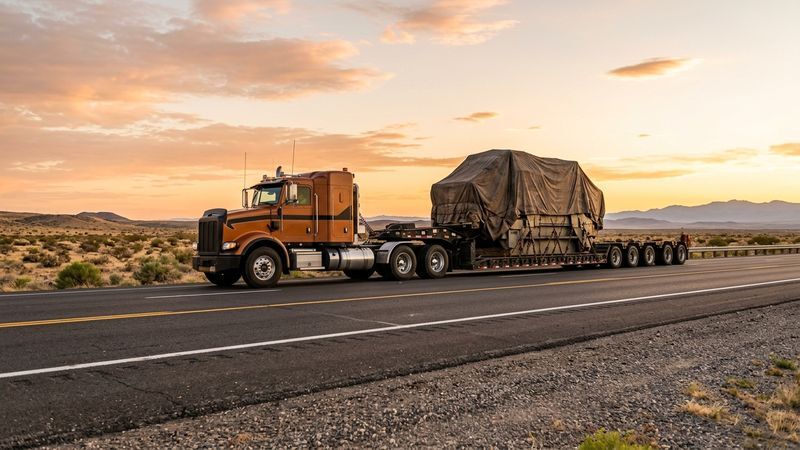
Standard freight keeps the economy moving, but the biggest loads on the road belong to heavy haul trucking: the wind turbine nacelles, power transformers, excavators, and industrial modules that cannot fit inside a legal box trailer. Behind every one of those moves is a serious capital investment. A single heavy-spec tractor and multi-axle trailer combination can cost more than most small businesses earn in a year, which is why heavy haul trucking financing has become the standard way carriers buy, expand, and replace their fleets without draining cash reserves.
This guide walks through everything a business owner needs to know about financing heavy haul equipment: what qualifies as heavy haul, what the equipment costs, which financing structures exist, who qualifies, and how to get funded quickly when a contract is on the line.
In This Article
- What Is Heavy Haul Trucking?
- Why Financing Matters for Heavy Haul Operations
- How Heavy Haul Trucking Financing Works
- Types of Heavy Haul Equipment You Can Finance
- What Does Heavy Haul Equipment Cost?
- Who Qualifies for Heavy Haul Financing?
- Heavy Haul Financing Options Compared
- How Crestmont Capital Helps
- Real-World Scenarios
- Frequently Asked Questions
- How to Get Started
What Is Heavy Haul Trucking?
Heavy haul trucking is the segment of the freight industry that moves loads exceeding standard legal limits for weight, width, height, or length. On interstate highways, a standard combination vehicle is generally limited to 80,000 pounds gross vehicle weight, 8.5 feet of width, roughly 13.5 to 14 feet of height, and a 48 to 53 foot trailer. Anything beyond those limits is classified as an oversize or overweight load, and moving it legally requires special permits, specialized trailers, and often escort vehicles.
The cargo in this segment reads like a catalog of American industry: wind turbine blades and nacelles, electrical transformers and substations, cranes and excavators, bridge beams, refinery vessels, generators, mining equipment, and prefabricated building modules. These loads are the backbone of construction, energy, and infrastructure work, and they command premium rates because so few carriers have the equipment and expertise to move them.
What separates heavy haul from general freight is not just size. Each move is an engineered project. Routes must be surveyed for bridge ratings and overhead clearances. Permits must be pulled in every state the load crosses. Many loads require pilot cars, and the largest require police escorts or utility bucket trucks to lift lines. That project-based nature is exactly why heavy haul trucking companies tend to be better insulated from the rate swings of the spot freight market, and why lenders who understand the segment view it favorably.
Why Financing Matters for Heavy Haul Operations
Heavy haul is one of the most capital-intensive corners of trucking. A carrier stepping up from general freight cannot simply buy a bigger trailer. Heavy haul work demands heavy-spec tractors with reinforced frames, upgraded drivetrains, and multiple drive axles, paired with trailers engineered to spread enormous weight across many axles. The combined investment for a single truck and trailer setup routinely runs into the mid six figures.
Financing spreads that cost over three to seven years, matching the expense of the equipment to the revenue it generates. Instead of writing one enormous check, a carrier makes predictable monthly payments while the equipment earns from day one. That structure matters in a segment where cash flow is already under pressure from permit fees, escort costs, higher insurance premiums, and the long payment cycles common in construction and energy work.
There is also a growth argument. Heavy haul contracts often arrive with tight timelines. A carrier that wins a transformer move or a wind project may need an additional trailer configuration within weeks. Pre-arranged financing relationships let a carrier say yes to that work instead of watching it go to a competitor.
Key Stat: Trucks move roughly 72 percent of the freight tonnage in the United States, according to the American Trucking Associations, and the specialized heavy haul segment sits at the premium end of that market, moving the oversized cargo that keeps construction, energy, and manufacturing projects on schedule.
Need Equipment for Your Next Heavy Haul Contract?
Get fast, flexible financing from the #1 business lender in the U.S. No obligation - apply in minutes.
Apply Now →How Heavy Haul Trucking Financing Works
Heavy haul equipment financing follows the same basic mechanics as other commercial vehicle financing, with a few segment-specific wrinkles. Understanding the sequence helps you move quickly when a deal is on the table.
Step 1: Identify the Equipment and Get a Quote
Start with the specific asset: a heavy-spec tractor, a lowboy or removable gooseneck trailer, a multi-axle platform, or a full combination. Get a written quote or bill of sale from the dealer or private seller, since lenders size the loan to the asset and its documented value.
Step 2: Submit an Application
The application covers your business details, time in operation, revenue, and the equipment you intend to buy. Most lenders also ask for several months of business bank statements, your operating authority information, and a description of your hauling experience. Specialized lenders want to see that you understand the heavy haul segment, because the underwriting reflects the work you will actually be doing.
Step 3: Credit Review and Underwriting
Underwriters review personal and business credit, cash flow, and the collateral itself. In heavy haul, the equipment is strong collateral because specialized trailers hold value well and there is an active resale market. Strong cash flow from existing contracts can offset a thinner credit file, and larger down payments can compensate for almost any weakness in the application.
Step 4: Approval and Terms
Approvals spell out the amount financed, term length, rate, and monthly payment. Terms of 24 to 84 months are common, with longer terms reserved for newer, higher-value equipment. Many deals fund with 10 to 20 percent down, though well-qualified buyers can sometimes do better.
Step 5: Funding and Title
The lender pays the seller directly, you take delivery, and the lender holds a lien on the equipment until the final payment. After that, title transfers free and clear. You own the asset, and in a segment where a well-maintained lowboy or multi-axle trailer can work for decades, that ownership has real long-term value.
Types of Heavy Haul Equipment You Can Finance
One of the advantages of equipment financing is flexibility. Almost any asset used in heavy haul operations can be financed, new or used, from dealers, auctions, or private sellers. The most common categories include:
Heavy-Spec Tractors
Heavy haul tractors are built differently from line-haul trucks: triple or quad drive axles, heavier frames, larger cooling systems, and gear ratios designed to move 100,000 pounds or more of combined weight. Expect these trucks to cost significantly more than a standard road tractor, particularly with the heavy-haul packages the work demands.
Lowboy Trailers
The lowboy is the workhorse of the segment, with a deck that rides inches off the ground to maximize height clearance for tall equipment like excavators and cranes. If you are weighing trailer options, our guide to lowboy trailer financing breaks down configurations, costs, and loan structures in detail.
Removable Gooseneck (RGN) Trailers
RGN trailers detach at the front so equipment can be driven directly onto the deck, which makes them ideal for self-propelled machinery. Extendable versions stretch to handle long loads like bridge beams and wind components.
Step Deck and Extendable Trailers
Step decks handle taller freight than a flatbed while staying simpler mechanically than a lowboy. Stretch trailers adjust in length for long, relatively light loads. Both are common entry points for carriers growing into oversize work.
Multi-Axle and Perimeter Trailers
The heaviest loads ride on platform trailers with six, nine, thirteen, or more axle lines that distribute weight to meet bridge and road limits. Perimeter trailers and steerable dolly systems handle extreme loads like transformers and refinery vessels, and represent the top end of trailer pricing.
Support Equipment
Escort vehicles, steer cars, and support trucks are part of every heavy haul operation and can often be financed alongside the primary equipment, either as part of the same deal or as a separate vehicle loan.
| Equipment Type | Typical Cargo | Typical Cost Range (New) |
|---|---|---|
| Heavy-spec tractor | Pulling all heavy haul trailer types | $150,000 - $250,000+ |
| Lowboy / RGN trailer | Construction machinery, cranes, excavators | $80,000 - $160,000 |
| Step deck / stretch trailer | Tall or long freight, structural steel | $60,000 - $120,000 |
| Multi-axle platform trailer | Transformers, vessels, extreme loads | $150,000 - $350,000+ |
| Escort / pilot vehicles | Load escorting and route support | $40,000 - $70,000 |
By the Numbers
Heavy Haul Trucking - Key Figures
80,000 lbs
The standard legal gross vehicle weight limit - anything above it is heavy haul territory
$500K+
Typical all-in cost of a new heavy-spec tractor and multi-axle trailer combination
72%
Share of U.S. freight tonnage moved by truck, per the American Trucking Associations
24-84 mo
Typical heavy haul equipment financing term range
What Does Heavy Haul Equipment Cost?
Budgeting for a heavy haul purchase means looking beyond the sticker price of the truck or trailer. The full picture includes the primary equipment, the support gear, and the operating costs that scale with the size of the loads you move.
On the tractor side, a new heavy-spec unit typically runs $150,000 to $250,000 or more depending on axle configuration and drivetrain. Lowboy and RGN trailers generally range from $80,000 to $160,000 new, while multi-axle platform systems climb from $150,000 well past $350,000. The used market is active and deep, and a well-maintained used trailer can cut the acquisition cost by a third or more while still delivering years of service.
Operating costs in heavy haul also exceed general freight. Oversize load permits are issued state by state and can add hundreds of dollars per state per trip for the largest loads. Escort vehicles typically bill by the mile or day. Insurance premiums reflect the higher cargo values and liability exposure. Smart carriers build all of these figures into their per-mile or per-project pricing, and many use a business line of credit to smooth the gap between paying trip expenses and collecting on invoices.
Pro Tip: Do not overlook used equipment. Heavy haul trailers are overbuilt by design, and a ten-year-old lowboy with good maintenance records often has decades of work left in it. Financing a used unit lowers both the purchase price and the monthly payment, which improves cash flow while you build your book of oversize business.
Who Qualifies for Heavy Haul Financing?
Heavy haul equipment financing is available to a wider range of businesses than most owners expect. Lenders who specialize in commercial trucking evaluate the whole picture: the business, the borrower, and the equipment itself.
The strongest applicants bring two or more years in business, credit scores in the mid-600s or better, verifiable revenue, and documented experience in oversize work. Operating authority matters: lenders want to see an active USDOT number and motor carrier authority, plus the insurance certificates the segment requires. A history of successfully completing permitted loads tells an underwriter that the equipment will be worked by people who know how to use it profitably.
That said, imperfect files get approved every day. A carrier with a shorter track record can strengthen an application with a larger down payment, a signed contract for upcoming heavy haul work, or additional collateral. Owner-operators moving up from flatbed or step deck work into full heavy haul are a common and financeable profile, especially when they can show steady revenue and a relationship with brokers or direct shippers in the oversize market.
Heavy Haul Financing Options Compared
There is no single right structure for every carrier. The right choice depends on how long you plan to keep the equipment, how you want the payments to behave, and whether ownership or flexibility matters more to your operation.
Equipment Loans
The classic structure: the lender funds the purchase, you own the equipment, and you build equity with every payment. Loans suit carriers buying core assets like a primary tractor or a lowboy they expect to run for a decade or more. Fixed payments make budgeting simple, and at the end of the term the asset is yours free and clear.
Equipment Leasing
Leasing trades ownership for lower payments and flexibility. It works well for expensive trailer configurations you may want to upgrade as your mix of work changes, or for carriers who prefer to keep equipment cycles short. Fair market value leases minimize the monthly cost, while dollar-buyout structures function more like a loan with a lease wrapper.
Working Capital and Lines of Credit
Heavy haul generates lumpy cash flow: big invoices, long payment terms, and heavy upfront trip costs. Working capital products cover the operational side - permits, escorts, fuel, and payroll between paydays - while equipment financing handles the assets. Many established carriers run both. Our overview of business loans for trucking companies covers the working capital side of the equation in depth.
| Feature | Equipment Loan | Equipment Lease | Line of Credit |
|---|---|---|---|
| Best for | Core assets kept long-term | Flexibility and lower payments | Trip costs and cash flow gaps |
| Ownership | You own it from day one | Optional at lease end | Not applicable |
| Typical term | 36 - 84 months | 24 - 60 months | Revolving |
| Down payment | 10 - 20% typical | Often lower upfront cost | None |
How Crestmont Capital Helps Heavy Haul Businesses
Not every lender understands the difference between a day cab pulling vans and a four-axle tractor pulling a thirteen-axle platform. Crestmont Capital does. As the #1 rated business lender in the U.S., we work with carriers across every segment of commercial trucking, including the specialized oversize and heavy haul market.
Our commercial truck financing programs cover heavy-spec tractors from all major manufacturers, and our heavy truck financing options extend to the specialized trailers, dollies, and support vehicles that heavy haul work demands. We finance new and used equipment, from dealers, auctions, and private sellers, with terms structured around the way project-based carriers actually earn.
Speed matters in this segment. When a transformer move or a wind project lands on your desk, you do not have six weeks to wait on a bank committee. Crestmont Capital delivers decisions fast - often within hours of a completed application - and funds directly to the seller so you can put the equipment to work while the contract is hot.
Ready to Add Heavy Haul Capacity?
Fast decisions, flexible terms, and financing built for specialized carriers. Apply in minutes.
Get Funded →Real-World Scenarios: Heavy Haul Financing in Action
Every heavy haul business arrives at financing from a different direction. These scenarios reflect the most common situations we see.
Scenario 1: Winning a Wind Energy Contract
A Texas-based flatbed carrier lands a subcontract moving wind turbine components from port to a West Texas wind farm. The work requires an extendable RGN trailer the company does not own. With the signed contract in hand, the carrier finances a $140,000 extendable RGN with 15 percent down and a 72-month term. The contract revenue covers the monthly payment several times over, and when the project ends, the trailer opens the door to bidding future energy work.
Scenario 2: Replacing an Aging Lowboy
A family-owned carrier in Ohio has run the same lowboy for fifteen years. Maintenance costs are climbing and downtime is starting to cost contracts. Rather than pay cash for a replacement, the owners finance a well-maintained used RGN for $95,000. The payment runs less than what they were spending annually on repairs and lost work, and reliability returns immediately.
Scenario 3: The Owner-Operator Steps Up
An owner-operator with six years of flatbed experience sees the rate premium in oversize work and decides to make the jump. With $45,000 saved, solid credit, and letters of intent from two brokers, he finances a heavy-spec used tractor and a step deck trailer in a single package. The step deck lets him learn the permitting and escort side of the business on simpler loads before graduating to a full lowboy setup two years later.
Scenario 4: The Rigging Company Expands
A crane and rigging company in the Southeast keeps hiring outside carriers for transformer moves and decides to bring that work in-house. The company finances a nine-axle perimeter trailer configuration - a $300,000 asset - through an equipment loan, and pairs it with a line of credit to cover permits, escorts, and route surveys on each project. The in-house capability turns a cost center into a profit center within the first year.
Frequently Asked Questions
What is considered a heavy haul load? +
A heavy haul load exceeds standard legal limits for highway freight: generally more than 80,000 pounds gross vehicle weight, over 8.5 feet wide, taller than about 13.5 to 14 feet, or longer than a 53-foot trailer. These loads require oversize or overweight permits in every state they cross, and many require escort vehicles.
How much does heavy haul equipment cost? +
New heavy-spec tractors typically run $150,000 to $250,000 or more. Lowboy and RGN trailers range from about $80,000 to $160,000 new, while multi-axle platform systems can exceed $350,000. Used equipment is widely available and can cut those figures significantly while still delivering years of reliable service.
Can I finance used heavy haul trucks and trailers? +
Yes. Most commercial lenders finance used heavy haul equipment from dealers, auctions, and private sellers. Because specialized trailers are built to last for decades, used units are common in financed deals. Lenders may adjust term length or require a larger down payment for older equipment, and an inspection or appraisal is sometimes part of the process.
What credit score do I need for heavy haul financing? +
The strongest terms generally go to borrowers with scores in the mid-600s and above, but approvals happen across a wide range. Heavy haul equipment is strong collateral, and lenders weigh time in business, revenue, contracts in hand, and down payment size alongside credit. A larger down payment can offset a weaker credit profile.
How much down payment is required? +
Most heavy haul equipment deals fund with 10 to 20 percent down. Well-qualified buyers with strong credit and established businesses sometimes qualify for less, while newer operations or weaker files may be asked for more. The down payment lowers both the amount financed and the monthly payment.
How long can I finance heavy haul equipment? +
Terms typically run 24 to 84 months. Newer, higher-value equipment qualifies for the longest terms, while older used equipment usually carries shorter ones. Longer terms lower the monthly payment but increase total interest paid, so most carriers match the term to the expected working life of the asset.
Can owner-operators qualify for heavy haul financing? +
Yes. Owner-operators are a core part of the heavy haul market, and lenders work with them regularly. Expect to show your operating authority, insurance, business bank statements, and hauling experience. A record of completed oversize loads or letters of intent from brokers strengthens the application considerably.
What documents do I need to apply? +
A typical application package includes basic business information, three to six months of business bank statements, your USDOT and motor carrier authority details, a quote or bill of sale for the equipment, and a description of your experience in oversize work. Larger deals may call for financial statements or tax returns.
How fast can I get funded? +
Specialized commercial lenders move far faster than traditional banks. Decisions often arrive within hours of a completed application, and funding can follow within days once documents are signed. That speed matters in heavy haul, where contracts frequently come with equipment requirements on a tight timeline.
Is leasing or buying better for heavy haul trailers? +
It depends on how you use the equipment. Buying makes sense for core assets like a primary lowboy you expect to run for a decade or more, because you build equity and eventually own the trailer outright. Leasing suits expensive configurations you may want to upgrade as your work mix evolves, and typically offers lower monthly payments in exchange for flexibility.
Can I finance escort vehicles and support equipment? +
Yes. Escort and pilot vehicles, steer cars, and other support trucks can be financed as commercial vehicles, either bundled into a larger equipment deal or financed separately. Many carriers finance their escort fleet alongside the primary tractor and trailer so the whole operation is ready for permitted loads at once.
What is the difference between heavy haul and oversize load trucking? +
The terms overlap heavily and are often used interchangeably. Oversize load trucking describes any freight exceeding legal dimensional or weight limits. Heavy haul typically refers to the heaviest end of that spectrum, usually loads well over 80,000 pounds requiring multi-axle trailers and detailed route engineering. Both require permits, and both are financeable under the same equipment programs.
Do lenders require operating authority? +
In most cases, yes. Lenders want to see an active USDOT number and motor carrier authority, along with the insurance coverage heavy haul work requires. Operating authority demonstrates that the business is legitimate, insured, and able to legally generate the revenue that will repay the financing.
Can I refinance existing heavy haul equipment? +
Yes. Carriers refinance heavy haul tractors and trailers to lower monthly payments, shorten or extend terms, or pull equity out of paid-down assets to fund additional purchases. Because specialized trailers hold value well, refinancing a seasoned trailer can release meaningful capital for growth.
Does financing cover permits, escorts, or insurance costs? +
Equipment financing covers the assets themselves, not operating expenses. Trip-level costs like state permits, escort services, and insurance are typically handled with working capital products or a business line of credit. Many heavy haul carriers pair equipment financing for their trucks and trailers with a line of credit for the operational side of each move.
Your Next Heavy Haul Contract Is Waiting
Join the carriers who finance their growth with the #1 business lender in the U.S.
Apply Today →How to Get Started
Complete our quick application at offers.crestmontcapital.com/apply-now - it takes just a few minutes and there is no obligation.
A Crestmont Capital advisor will review your operation, your contracts, and the equipment you need, then match you with the right financing structure.
Receive approval fast, take delivery of your equipment, and put it to work on your next oversize load - often within days.
Conclusion
Heavy haul trucking sits at the premium end of the freight market, and the carriers who succeed in it are the ones with the right equipment and the capital structure to acquire it. Financing turns a six-figure equipment barrier into a manageable monthly payment, preserves cash for the permits, escorts, and insurance every oversize load demands, and lets you say yes when the next big contract lands. Whether you are an owner-operator stepping up from flatbed work or an established carrier adding multi-axle capacity, the right financing partner makes the difference between watching heavy haul freight go by and hauling it yourself. When you are ready to grow your heavy haul trucking operation, Crestmont Capital is ready to help you fund it.
The oversize freight market rewards carriers who can move quickly. With specialized equipment, experienced drivers, and financing built for the way this segment actually works, your business can claim its share of the most profitable loads on the road. For more on the lending programs that support small businesses, visit the SBA's loan programs page, review national industry data at the U.S. Census Economic Census, or read small business coverage at CNBC Small Business.
Disclaimer: The information provided in this article is for general educational purposes only and is not financial, legal, or tax advice. Funding terms, qualifications, and product availability may vary and are subject to change without notice. Crestmont Capital does not guarantee approval, rates, or specific outcomes. For personalized information about your business funding options, contact our team directly.

Allan Garfinkle
Allan Garfinkle is the Chief Revenue Officer at Crestmont Capital, where he has spent more than a decade leading revenue strategy, business development, and operational growth. With 28 years of experience building and advising startups and small businesses, Allan has helped more than 10,000 business owners navigate financing decisions, growth opportunities, and changing economic conditions. He earned a Bachelor of Science in Economics and an MBA with a concentration in Finance from Northeastern University, as well as a Juris Doctor from New England Law, where his studies focused on contracts and business law. His writing draws on extensive practical experience in small-business lending, equipment financing, business credit, and commercial finance.