Every two seconds, someone in the United States needs blood. Meeting that demand takes more than donors. It takes infrastructure, and for many blood collection organizations, hospitals, and mobile health companies, that infrastructure rolls on wheels. A blood donation bus, often called a bloodmobile, brings the donation experience directly to workplaces, schools, community events, and neighborhoods. The challenge is that these custom-built vehicles carry price tags that can reach well into six figures, which is exactly why blood donation bus financing has become an essential tool for the organizations that keep America's blood supply moving.
Whether you operate a regional blood center, run a nonprofit collection service, manage a hospital network, or own a mobile healthcare company, this guide walks you through everything you need to know about financing a mobile blood donation vehicle. You will learn what these vehicles cost, which financing structures fit different situations, what lenders look for, and how to move from application to approval without draining your operating capital.
In This Article
- What Is Mobile Blood Donation Bus Financing?
- Why Organizations Invest in a Blood Donation Bus
- How Bloodmobile Financing Works
- Types of Mobile Blood Donation Vehicles
- How Much Does a Blood Donation Bus Cost?
- Who Qualifies for Blood Donation Bus Financing?
- Financing Options Compared
- How Crestmont Capital Helps
- Real-World Financing Scenarios
- Frequently Asked Questions
- How to Get Started
What Is Mobile Blood Donation Bus Financing?
Mobile blood donation bus financing is a specialized form of equipment and vehicle financing that allows blood collection organizations to acquire a bloodmobile without paying the full purchase price upfront. Instead of writing a single check for $400,000 or more, the organization spreads the cost over fixed monthly payments, typically across three to seven years, while the vehicle goes into service immediately.
Because a blood donation bus is both a commercial vehicle and a piece of medical infrastructure, it sits at the intersection of two financing categories. Lenders who understand bus financing and medical equipment financing can structure a single agreement that covers the chassis, the custom interior build-out, and the installed clinical equipment in one package. That matters, because a bloodmobile is rarely just a bus. It is a rolling donation center with donor beds, blood collection monitors, refrigeration units, centrifuges, generators, and HVAC systems designed to meet strict clinical standards.
Financing can be structured as a loan, where your organization owns the vehicle from day one and builds equity with every payment, or as a lease, where you pay for the use of the vehicle over a set term with options to purchase, renew, or upgrade at the end. Both structures preserve cash flow, but they serve slightly different strategies, which we will compare later in this guide.
The organizations that use this type of financing most often include independent community blood centers, hospital-affiliated collection programs, nonprofit blood services, plasma collection companies expanding into whole blood, and mobile healthcare operators adding donation services to their fleet offerings.
Why Organizations Invest in a Blood Donation Bus
A fixed donation site depends on donors coming to you. A blood donation bus flips that model by taking the collection operation to where donors already are. That shift in logistics produces measurable results for collection organizations of every size.
- Higher collection volumes. Mobile drives at employers, schools, and community events consistently rank among the most productive collection channels for blood centers, because they remove the travel barrier that keeps willing donors from visiting a fixed site.
- Access to new donor demographics. Younger donors and first-time donors are far more likely to give at a convenient mobile drive than to schedule an appointment at a donation center they have never visited.
- Stronger community partnerships. A branded bloodmobile parked outside a corporate headquarters or a Friday night football game is a visible community asset that deepens relationships with host organizations and local media.
- Operational resilience. When a fixed site undergoes renovation or an emergency disrupts normal operations, a mobile unit keeps collections running without interruption.
- Revenue and mission alignment. For hospital systems and independent blood centers, every additional unit collected supports both patient care and the financial sustainability of the program.
Key Stat: According to the American Red Cross, someone in the United States needs blood every two seconds, and a single donation can save up to three lives. Mobile collection units are one of the primary ways blood centers reach the donors who make that possible.
The barrier, of course, is capital. A purpose-built blood donation bus is one of the most expensive vehicles a collection organization will ever buy, and most operating budgets cannot absorb that cost in a single year. Financing turns a capital mountain into a manageable monthly line item, which is why even well-funded organizations choose to finance rather than pay cash.
Ready to Put Your Bloodmobile on the Road?
Get fast, flexible vehicle and equipment financing from the #1 business lender in the U.S. No obligation, apply in minutes.
Apply Now →How Bloodmobile Financing Works
The financing process for a blood donation bus follows the same general path as other commercial vehicle and equipment transactions, with a few nuances that come from the custom, medical-grade nature of the asset. Here is the typical sequence from start to funded.
Step 1: Define the vehicle specification. Before a lender can underwrite the deal, you need a build quote from a qualified manufacturer or upfitter. This document lists the chassis, the interior conversion, the installed medical equipment, and the total delivered price. Lenders use it to confirm the asset value that anchors the financing.
Step 2: Choose the financing structure. Decide whether a loan or a lease fits your strategy. A loan leads to ownership and suits organizations planning to run the vehicle for a decade or more. A lease can lower the monthly payment and suits organizations that expect to refresh their fleet on a shorter cycle.
Step 3: Submit the application. A streamlined lender will ask for basic business information, recent bank statements, and the equipment quote. Larger requests may also call for financial statements or tax returns, but many bloodmobile transactions under $500,000 can be reviewed with a surprisingly light document package.
Step 4: Underwriting and approval. The lender evaluates your organization's credit profile, time in operation, cash flow, and the asset itself. Established blood centers with stable operating history often receive decisions within one to three business days from an experienced equipment lender.
Step 5: Documentation and funding. Once approved, you sign the financing agreement, the lender pays the manufacturer or seller directly, and the vehicle moves into production or delivery. Your payment schedule typically begins after funding, giving you time to put the bus into service before the first invoice arrives.
Step 6: Title, insurance, and deployment. For loan structures, the lender files a lien on the vehicle title until the balance is paid. You will need commercial vehicle insurance with the lender listed as loss payee. After that, the bloodmobile is yours to schedule, staff, and deploy.
By the Numbers
Mobile Blood Donation Vehicles: Key Statistics
2 sec
How often someone in the U.S. needs blood, according to the American Red Cross
3 lives
Potential lives saved by a single whole blood donation
$400K+
Typical starting range for a new, custom-built blood donation bus
10-15 yrs
Expected service life of a well-maintained bloodmobile
Types of Mobile Blood Donation Vehicles
Not every blood collection operation needs a 40-foot coach. The market offers several distinct vehicle classes, and the right choice depends on your collection model, your service territory, and your budget. Each class can be financed, and many organizations finance a mix of vehicle types as their fleet matures.
Coach-Style Bloodmobiles
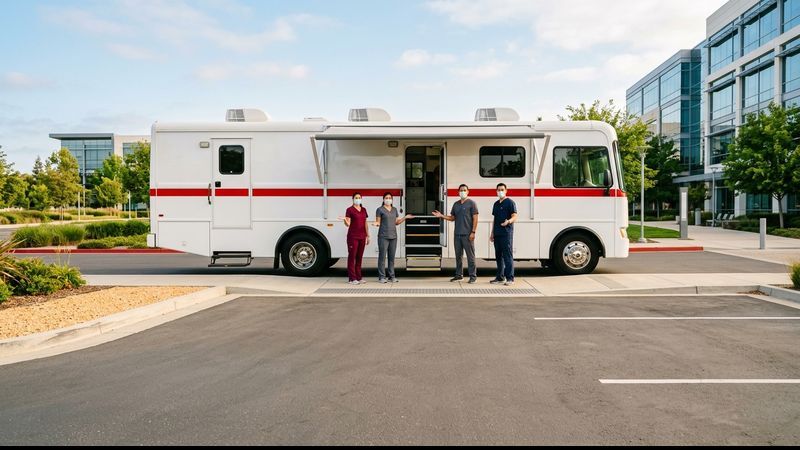
The flagship of most fleets is the full-size coach bloodmobile, typically built on a commercial bus or motorcoach chassis between 35 and 45 feet long. These units carry four to eight donor beds, a private health history screening area, a refreshment and recovery zone, an onboard laboratory workspace, refrigeration, and restroom facilities. A new coach blood donation bus usually starts around $400,000 and can exceed $800,000 with premium specifications. Because of their size and cost, coach units are almost always financed, and their long service life makes them strong candidates for equipment loans with terms of five to seven years.
Van-Based Bloodmobiles
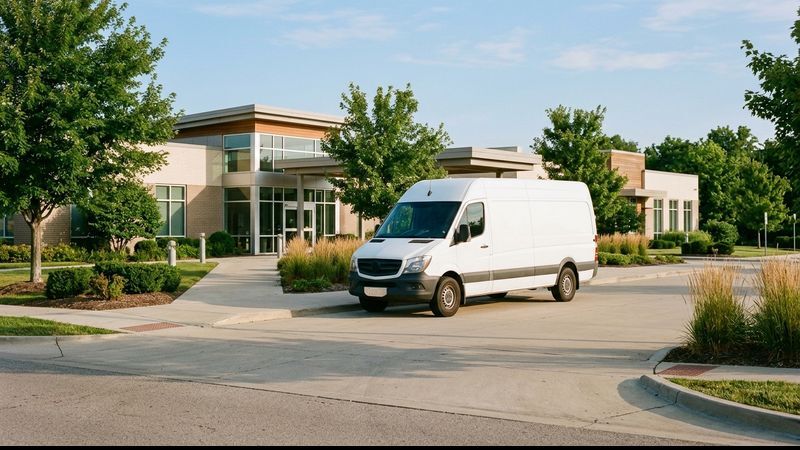
Built on heavy-duty van platforms such as the Mercedes Sprinter or Ford Transit, van-based units serve smaller drives and tighter venues where a full coach cannot park. They typically support one to three donor beds and a compact lab setup, with prices commonly ranging from $150,000 to $300,000 depending on the conversion. Their lower price point makes them accessible to smaller organizations, and their maneuverability makes them ideal for corporate campuses and urban drives. Buyers weighing commercial vehicle financing options will find that van-based units often qualify for faster, lighter-documentation approvals simply because of their lower transaction size.
Blood Collection Trailers
Towable trailers offer a middle path: generous interior space without the cost of a self-propelled chassis. A purpose-built donation trailer can be parked at a host site for days or weeks at a time, functioning almost like a temporary fixed site. Pricing typically falls between $100,000 and $250,000. The trade-off is that you need a suitable tow vehicle and a driver comfortable moving a large trailer, so total program cost should account for both.
Refurbished and Remanufactured Units
A growing segment of the market takes retired bloodmobiles or used coach shells and rebuilds them to current clinical standards. Refurbished units commonly run 40 to 60 percent less than comparable new builds, which puts them in reach for organizations launching their first mobile program. Lenders finance refurbished units regularly, though they may request an inspection or appraisal to confirm the asset value. Much like financing an ambulance or other specialty medical vehicle, the key is working with a lender that understands how to value a custom conversion rather than treating it as an ordinary used truck.
Pro Tip: When you compare a new build against a refurbished unit, compare the monthly payment rather than the sticker price. A refurbished bloodmobile financed over five years can cut your monthly obligation nearly in half, freeing budget for staffing, marketing, and drive incentives that actually fill donor beds.
How Much Does a Blood Donation Bus Cost?
Blood donation bus cost varies widely because every unit is a custom build, but the ranges below reflect what buyers typically see in today's market. Use them as planning benchmarks rather than quotes, since chassis supply, interior specifications, and medical equipment packages move the final number considerably.
| Vehicle Type | Typical Price Range | Typical Donor Capacity | Common Financing Term |
|---|---|---|---|
| New coach-style bloodmobile | $400,000 - $800,000+ | 4 - 8 beds | 5 - 7 years |
| Van-based mobile unit | $150,000 - $300,000 | 1 - 3 beds | 3 - 5 years |
| Blood collection trailer | $100,000 - $250,000 | 2 - 4 beds | 3 - 5 years |
| Refurbished bloodmobile | $175,000 - $400,000 | 3 - 6 beds | 3 - 5 years |
Beyond the vehicle itself, budget for the costs that surround the purchase. Custom graphics and donor-facing branding, onboard technology such as donor check-in systems, extended warranties, delivery, and staff training all add to the program total. The good news is that most lenders will roll soft costs like delivery, graphics, and even initial training into the financed amount when they appear on the same invoice, so your monthly payment reflects the true all-in cost of putting the unit in service.
It is also worth planning for the operating side. A bloodmobile needs a CDL-licensed driver in most states, clinical staff, regular maintenance, insurance, fuel, and a schedule of hosted drives to stay productive. Lenders look favorably on applicants who present a realistic operating plan alongside the purchase quote, because it demonstrates that the vehicle will generate the collections that support the payment.
Who Qualifies for Blood Donation Bus Financing?
Qualification standards vary by lender and transaction size, but most approvals come down to a consistent set of factors. Understanding them before you apply saves time and improves your terms.
Time in operation. Lenders generally prefer at least two years of operating history, because it demonstrates organizational stability. That said, newer entities with experienced leadership, hospital affiliations, or strong community backing do get approved, especially when the application includes contracts or letters of intent from host organizations.
Credit profile. For nonprofit blood centers, lenders review the organization's credit standing and, where applicable, the personal credit of guarantors. A score in the mid-600s or higher typically unlocks the most competitive terms, though approvals exist across a wider range. For-profit mobile health companies are underwritten much like any other commercial borrower.
Cash flow and financials. Underwriters want to see that existing revenue covers current obligations with room for the new payment. Recent bank statements are the usual starting point, and larger transactions may call for two years of financial statements or tax returns.
The asset itself. Because the vehicle secures the financing, its age, condition, and build quality matter. New units from established bloodmobile manufacturers are the easiest to finance. Used and refurbished units are financed every day, but expect the lender to ask for photos, specifications, and sometimes an independent appraisal.
Nonprofit status is not a barrier. A common misconception is that nonprofits cannot get equipment financing. In practice, community blood centers and nonprofit collection services finance vehicles routinely. Lenders evaluate the organization's ability to pay, not its tax designation, and many have dedicated experience with nonprofit borrowers.
Financing Options Compared
There is no single best way to finance a blood donation bus. The right structure depends on how long you plan to keep the vehicle, how your accounting team prefers to treat the asset, and how much flexibility you want at the end of the term. Here is how the four most common structures stack up.
| Feature | Equipment Loan | Equipment Lease | SBA 7(a) Loan | Business Line of Credit |
|---|---|---|---|---|
| Ownership | Immediate, lender holds lien | Lessor owns during term, buyout options at end | Immediate, SBA guarantees portion | Immediate, revolving access |
| Typical down payment | 0 - 10% | First and last payment | 10 - 20% | None, draw as needed |
| Typical term | 3 - 7 years | 3 - 5 years | Up to 10 years for equipment | Revolving, renewed annually |
| Approval speed | 1 - 3 business days | 1 - 3 business days | Several weeks to months | 1 - 5 business days |
| Best for | Long-term ownership, building equity | Lower payments, planned fleet refresh cycles | Lowest rates for well-qualified buyers who can wait | Smaller units, soft costs, or gap funding |
For most established blood centers purchasing a new or late-model bloodmobile, an equipment loan delivers the cleanest path: competitive rates, immediate ownership, and terms matched to the vehicle's service life. Leasing earns serious consideration when you expect technology or capacity needs to change within five years, because the end-of-term options let you upgrade without selling a used unit yourself. The SBA loan programs, particularly the 7(a) loan, can offer attractive rates for highly qualified borrowers, but the timeline rarely fits a build slot that a manufacturer is holding for you. A business line of credit works well as a companion tool for soft costs, deposits, or a down payment rather than as the primary vehicle for a six-figure asset.
How Crestmont Capital Helps
Crestmont Capital is the #1 business lender in the United States, and specialty vehicles like bloodmobiles are exactly the kind of asset our equipment finance teams handle every day. We underwrite the full transaction, including the chassis, the custom medical conversion, the installed equipment, and the soft costs on the same invoice, so you get one payment that covers the entire project instead of stitching together multiple sources of capital.
Our healthcare equipment financing programs are built for clinical-grade assets, which means our underwriters understand donor beds, blood storage refrigeration, and laboratory conversions rather than treating your bloodmobile like a generic used bus. That expertise shows up in practical ways: realistic valuations on refurbished units, terms matched to a 10-to-15-year service life, and structures that accommodate nonprofit blood centers as comfortably as for-profit operators.
Organizations that have worked through our process for other clinical assets will recognize the same approach we describe in our guide on how to finance medical equipment: a streamlined application, decisions in as little as one to three business days on most transactions, and funding that goes directly to your manufacturer so your build slot stays secure. For buyers comparing a blood donation bus against other mobile clinical platforms, our teams can also structure fleet packages that combine multiple unit types under a single financing relationship.
Whether you are adding your first van-based unit or replacing a flagship coach, a Crestmont Capital advisor will walk you through loan versus lease structures, payment modeling, and documentation, then match you with the program that fits your organization's balance sheet and mission.
Financing Built for Mobile Medical Fleets
One application covers the vehicle, the conversion, and the equipment. Decisions in as little as one business day.
Apply Now →Real-World Financing Scenarios
Abstract numbers only go so far. These scenarios, drawn from the most common situations we see in specialty vehicle financing, show how the math and the structure come together for different kinds of organizations.
Scenario 1: A Regional Blood Center Replaces an Aging Coach
A nonprofit community blood center in the Southeast has run the same 45-foot coach for 14 years. Maintenance costs are climbing, the generator is unreliable, and the interior no longer meets current clinical standards. A new build is quoted at $560,000 with a 10-month production slot. The center finances the full amount over seven years with no down payment, keeping its cash reserves intact for staffing and donor recruitment. Because the lender worked directly with the manufacturer, the build slot stayed locked while underwriting completed in two business days. The center's finance team models the payment against projected collections and finds the new unit pays for itself in under three years of additional mobile drive volume.
Scenario 2: A Hospital System Launches Its First Mobile Program
A three-hospital health system in the Midwest wants to expand community outreach and relieve pressure on its fixed donation rooms. Leadership approves a van-based unit at $220,000 as a pilot. Because the system is a first-time bloodmobile buyer with strong financials, it qualifies for a five-year equipment loan at a competitive rate with 10 percent down. The smaller footprint lets the unit park at corporate campuses and farmers markets where a coach would never fit, and first-year collections exceed projections by 20 percent, prompting the board to approve a second unit.
Scenario 3: A Mobile Health Company Diversifies Into Blood Collection
A for-profit mobile healthcare operator running dental and vision clinics on wheels sees demand from corporate wellness clients for on-site blood drives. Rather than building new, the company buys a refurbished eight-year-old coach rebuilt to current standards for $310,000, roughly half the cost of new. The lender requests an independent appraisal, confirms the rebuild quality, and finances 90 percent of the purchase over five years. The company cross-utilizes its existing CDL drivers and clinical staff, so the only new operating cost is the payment itself. Blood services become a profitable new line within the first year.
Scenario 4: A Plasma Collector Adds Whole Blood Capability
An established plasma collection company wants to enter the whole blood market with a trailer-based model that can be staged at partner sites for multi-day drives. Two trailers at $180,000 each are financed together under a single equipment loan, simplifying documentation and payments. The company's existing donor recruitment engine fills the schedule from day one, and the trailer model keeps per-collection overhead well below a self-propelled fleet. When the program scales, the company refinances its expansion into a coach fleet using the same lending relationship.
Planning Note: According to the U.S. Census Bureau's health statistics, healthcare remains one of the largest and fastest-growing sectors of the American economy. Mobile delivery models, from blood collection to screening clinics, are a growing share of how that care reaches communities, which is one reason lenders have become increasingly comfortable financing mobile medical assets.
Frequently Asked Questions
What is a blood donation bus, and how is it different from a regular bus? +
A blood donation bus, commonly called a bloodmobile, is a commercial vehicle custom-built or converted to function as a mobile blood collection center. Unlike a regular passenger bus, it contains donor beds, private screening areas, blood collection monitoring equipment, medical-grade refrigeration, onboard power generation, and clinical-grade HVAC systems. Because it is a medical facility on wheels, it must meet health and safety standards that ordinary buses never face, which is why these vehicles are built by specialty manufacturers and financed as medical-grade equipment.
How much does a blood donation bus cost? +
Costs depend on the vehicle class and specification. A new coach-style bloodmobile typically runs $400,000 to $800,000 or more. Van-based mobile units generally fall between $150,000 and $300,000. Blood collection trailers usually cost $100,000 to $250,000, and refurbished bloodmobiles commonly range from $175,000 to $400,000. Soft costs such as custom graphics, delivery, technology packages, and training add to the total, and most lenders will include them in the financed amount when they appear on the same invoice.
Can I finance a used or refurbished bloodmobile? +
Yes. Used and refurbished bloodmobiles are financed regularly, and they are a popular way to launch or expand a mobile program at 40 to 60 percent of the cost of a new build. Expect the lender to request detailed photos, build specifications, maintenance records, and sometimes an independent appraisal to confirm the asset's value. Working with a lender experienced in specialty medical vehicles makes this process smoother, because they understand how to value a custom clinical conversion rather than pricing it like an ordinary used bus.
What credit score is needed to finance a blood donation bus? +
There is no universal cutoff, because underwriting weighs credit alongside time in operation, cash flow, and the asset itself. As a general guide, credit in the mid-600s or higher typically unlocks the most competitive rates and terms. Strong financials can offset a thinner credit file, and weaker credit can sometimes be offset with a larger down payment, additional collateral, or a guarantor. The fastest way to know where you stand is to apply, since a streamlined equipment lender can usually give you a decision within one to three business days.
Are nonprofit blood centers eligible for financing? +
Absolutely. Nonprofit community blood centers and collection services finance vehicles and equipment routinely. Lenders evaluate the organization's ability to repay, not its tax designation. Underwriting for a nonprofit looks at operating revenue, grant and contract income, cash reserves, and organizational history rather than owner equity, and many equipment lenders have dedicated experience with nonprofit borrowers. Hospital-affiliated programs and organizations with long-standing community host relationships are often particularly strong applicants.
How long are typical repayment terms for a bloodmobile? +
Most bloodmobile financing runs three to seven years, matched to the expected service life and the organization's budget. New coach units with 10-to-15-year service lives often carry terms of five to seven years, which keeps payments manageable relative to the vehicle's productive lifespan. Van-based units, trailers, and refurbished vehicles more commonly carry three-to-five-year terms. Longer terms lower the monthly payment but increase total interest paid, so most buyers model two or three term options before deciding.
What is the difference between financing and leasing a blood donation bus? +
With a loan, your organization owns the vehicle from day one, builds equity with each payment, and holds the title free and clear once the balance is paid. With a lease, the lessor owns the vehicle during the term and you pay for its use, usually with options to purchase at fair market value or a fixed price, renew, or return and upgrade at the end. Loans suit organizations planning to run the vehicle for a decade or more. Leases suit organizations that want lower payments or expect to refresh their fleet on a shorter cycle. Both preserve cash compared to an outright purchase.
Can the medical equipment inside the bus be included in the financing? +
Yes, and it usually should be. When the donor beds, collection monitors, refrigerators, centrifuges, and generators are part of the build and appear on the same invoice, most equipment lenders will finance the entire package as a single transaction. That gives you one monthly payment covering the chassis, the conversion, and the clinical equipment. Separately purchased equipment added later can also be financed, either as a second schedule on the existing agreement or as its own equipment financing transaction.
How long does approval take? +
With a streamlined equipment lender, most bloodmobile transactions receive decisions within one to three business days once the application package is complete. Funding follows shortly after documents are signed, with payment going directly to the manufacturer or seller. The timeline stretches when transactions are larger, when used equipment needs appraisal, or when financial statements are required, so the best way to keep things moving is to submit a complete package upfront: application, recent bank statements, and the manufacturer quote. SBA loans, by contrast, can take weeks to months, which rarely suits a manufacturer's production schedule.
Do I need a down payment? +
Not always. Well-qualified organizations with strong credit and operating history routinely finance 100 percent of the purchase price, including soft costs. Down payments of 10 to 20 percent are more common for newer organizations, thinner credit files, or older used equipment, because they reduce the lender's exposure and can improve the rate. Some buyers fund the down payment from an existing line of credit to preserve cash reserves. Your advisor can model how different down payment levels change both the monthly payment and the total cost of financing.
Can a new organization launch a mobile blood collection program with financing? +
Yes, though newer organizations face closer underwriting. Lenders look for experienced leadership, such as executives with backgrounds in blood banking or mobile healthcare, evidence of demand such as contracts or letters of intent from host organizations, realistic financial projections, and often a larger down payment or personal guarantee. Hospital affiliations and partnerships with established blood centers strengthen a new entrant's application considerably. A detailed business plan that shows how the vehicle will be scheduled, staffed, and kept productive goes further than any single document.
What documents do I need to apply? +
For most transactions under roughly $500,000, the core package is simple: a completed application, three to six months of recent business bank statements, and the manufacturer or seller quote detailing the vehicle and equipment. Larger transactions typically add two years of financial statements or tax returns. Nonprofits should be ready to provide organizational documents such as IRS determination letters. Used vehicle purchases may also require photos, specifications, and an appraisal. Submitting a complete package on day one is the single biggest factor in getting a fast decision.
Can I finance multiple blood donation buses at once? +
Yes. Fleet transactions that combine two or more units under a single financing agreement are common, especially for organizations expanding regionally or standardizing a mixed fleet of coaches, vans, and trailers. Combining units simplifies documentation and administration, and it can improve pricing because the lender views the larger relationship favorably. Many organizations also establish a master financing line with their lender, which lets them add vehicles on pre-approved schedules as the program grows rather than starting a new application each time.
Is it better to buy a new or used bloodmobile? +
It depends on your program's stage and budget. New builds offer the latest clinical standards, full manufacturer warranties, a 10-to-15-year service horizon, and the easiest financing, but they carry the highest price and production wait times that can approach a year. Used and refurbished units cost 40 to 60 percent less and can often be delivered in weeks, making them ideal for pilots and expansions, but they demand careful inspection and may carry shorter remaining service lives. Many mature fleets run a mix: new flagships for high-volume territories and refurbished units for newer or smaller markets.
How do I get started with blood donation bus financing? +
Start with two parallel tracks. First, get a detailed build quote from a qualified bloodmobile manufacturer or upfitter, since the quote anchors the financing amount. Second, apply with a lender that understands specialty medical vehicles. With Crestmont Capital, the application takes minutes online, and most decisions arrive within one to three business days. From there, your advisor structures the loan or lease, coordinates funding directly with your manufacturer, and keeps your production slot secure. The fastest path from decision to deployment is a complete application package and a lender who has financed vehicles like yours before.
Your Community Is Waiting for Its Next Bloodmobile
Join the organizations that trust the #1 business lender in the U.S. for specialty vehicle financing.
Apply Now →How to Get Started
Complete our quick application at offers.crestmontcapital.com/apply-now, it takes just a few minutes.
A Crestmont Capital advisor will review your build quote, structure the right loan or lease, and match you with the financing option that fits your organization.
We pay your manufacturer directly so your production slot stays secure, and your bloodmobile moves from approval to the road on schedule.
Conclusion
A blood donation bus is more than a vehicle. It is a community lifeline that brings donors and patients together, and for most organizations it is also one of the largest capital purchases they will ever make. Financing turns that purchase from a budget-breaking event into a planned, predictable investment, with structures that fit nonprofits, hospital systems, and for-profit operators alike.
The organizations that succeed with mobile collection share a pattern: they match the vehicle class to their service model, they finance in a way that protects operating cash, and they work with lenders who understand that a bloodmobile is a medical asset, not a used bus. Whether you are replacing a flagship coach, piloting a van-based unit, or scaling a full fleet, the right financing partner makes the difference between a project that stalls in committee and one that starts collecting within the year.
Ready to put your next blood donation bus on the road? Crestmont Capital has funded thousands of specialty vehicle and medical equipment transactions, and our advisors are ready to structure yours. Apply in minutes, get a decision in days, and keep your mission moving.
Disclaimer: The information provided in this article is for general educational purposes only and is not financial, legal, or tax advice. Funding terms, qualifications, and product availability may vary and are subject to change without notice. Crestmont Capital does not guarantee approval, rates, or specific outcomes. For personalized information about your business funding options, contact our team directly.

Allan Garfinkle
Allan Garfinkle is the Chief Revenue Officer at Crestmont Capital, where he has spent more than a decade leading revenue strategy, business development, and operational growth. With 28 years of experience building and advising startups and small businesses, Allan has helped more than 10,000 business owners navigate financing decisions, growth opportunities, and changing economic conditions. He earned a Bachelor of Science in Economics and an MBA with a concentration in Finance from Northeastern University, as well as a Juris Doctor from New England Law, where his studies focused on contracts and business law. His writing draws on extensive practical experience in small-business lending, equipment financing, business credit, and commercial finance.