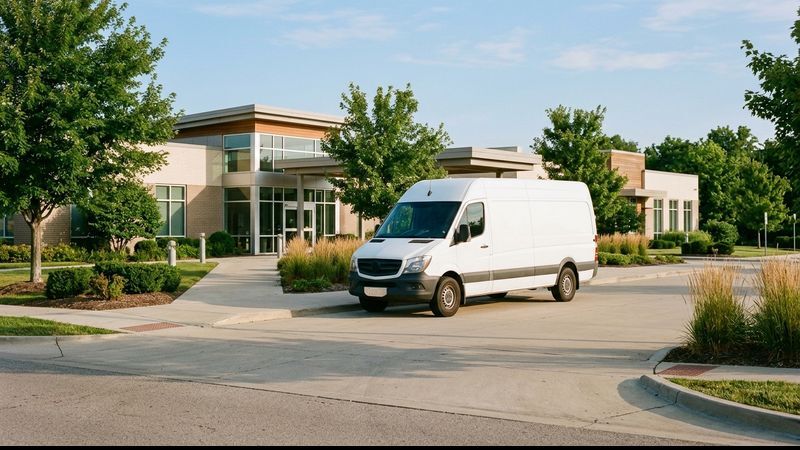
Mobile crisis response vehicle financing gives behavioral health providers, nonprofits, healthcare systems, and government contractors a practical way to acquire the custom units they need without draining operating reserves. As communities across the country expand their crisis response infrastructure, demand for these specialized vehicles has grown sharply, and so has the need for funding options that match how these organizations actually operate.
A mobile crisis response vehicle is far more than a van with a logo. These units are purpose-built or professionally upfitted to serve as rolling clinics, private consultation spaces, telehealth hubs, and safe transport environments for people experiencing a mental health or substance use crisis. The total investment, including the base vehicle and the upfit, routinely runs from $85,000 to well over $300,000 per unit. For most organizations, financing that investment is the only realistic path to getting units on the road quickly.
This guide covers everything a business owner or organizational leader needs to know about financing a mobile crisis response vehicle: what these vehicles are, what they cost, how financing works, who qualifies, and how to compare loan and lease structures side by side.
In This Article
- What Is Mobile Crisis Response Vehicle Financing?
- The Growing Market for Mobile Crisis Response
- Key Benefits of Financing
- Types of Mobile Crisis Response Vehicles
- How Financing Works, Step by Step
- Costs and Budget Planning
- Who Qualifies?
- Financing Options Compared
- How Crestmont Capital Helps
- Real-World Scenarios
- FAQ
- Next Steps
What Is Mobile Crisis Response Vehicle Financing?
Mobile crisis response vehicle financing is a specialized form of commercial vehicle financing designed for organizations that deploy mobile behavioral health and crisis intervention units. It covers the acquisition cost of the base vehicle and, in most structures, the professional upfit that transforms a standard van or coach into a functioning crisis response unit.
These vehicles serve as the physical backbone of mobile crisis teams. A typical unit carries two to four staff members, including licensed clinicians and peer support specialists, and is equipped with private consultation areas, secure storage for medical supplies, communications equipment, and increasingly, telehealth stations that connect field teams with psychiatrists and physicians in real time. Some units also provide basic medical triage, harm reduction supplies, or safe transport to stabilization centers.
Because these are commercial specialty vehicles, they do not fit neatly into a standard auto loan. Lenders who understand specialty vehicle financing evaluate the vehicle, the upfit, the organization's contracts and revenue, and the mission-driven nature of the operation. That is why working with a lender experienced in both commercial vehicles and healthcare-adjacent equipment matters so much.
Financing structures typically include equipment loans, equipment leases, and hybrid arrangements. The right structure depends on how long the organization plans to keep the vehicle, whether it wants ownership at the end of the term, how its funding is structured, and how quickly it needs the unit deployed.
The Growing Market for Mobile Crisis Response
The market for mobile crisis response vehicles is expanding faster than almost any other segment of the specialty vehicle industry. The catalyst was the nationwide launch of the 988 Suicide and Crisis Lifeline in July 2022, which created a three-legged crisis care model: someone to call, someone to respond, and somewhere to go. Mobile crisis teams are the "someone to respond" leg, and every team needs vehicles.
According to the Associated Press, the federal government invested more than $1.5 billion into building out the crisis care continuum, with states layering on their own funding through grants, Medicaid reimbursement models, and in some cases, telecom surcharges similar to 911 fees. Early reporting highlighted a significant gap: while 988 call centers were broadly available at launch, only about half of regional public health systems had 24/7 mobile crisis response capacity in place. Closing that gap requires vehicles, and lots of them.
The investment appears to be working. A separate Associated Press report covered research linking the expanded crisis system to measurable reductions in suicide deaths among teens and young adults. Outcomes like these sustain political and funding support for the programs that deploy mobile units.
For behavioral health providers and healthcare organizations, the practical implication is straightforward: counties, states, and managed care organizations are actively contracting for mobile crisis services, and those contracts require vehicles. Organizations that can acquire and deploy units quickly are positioned to win multi-year contracts. Financing is the tool that makes rapid fleet expansion possible without waiting years to accumulate capital.
Funding Note: Many states fund mobile crisis services through Medicaid mobile crisis add-on rates and block grants. When underwriting a vehicle loan, lenders can often consider executed government contracts as part of the revenue picture, which strengthens applications for mission-driven organizations.
Key Benefits of Financing a Mobile Crisis Response Vehicle
Paying cash for a specialty vehicle that costs six figures is rarely the best use of an organization's capital. Financing offers several concrete advantages:
- Preserve working capital. Keep cash available for payroll, clinician recruitment, insurance, and program operations instead of tying it up in a depreciating asset.
- Deploy units faster. Financing lets you acquire vehicles as soon as contracts are awarded, rather than fundraising or saving for years first.
- Match payments to revenue. Monthly payments can be structured to align with contract reimbursement cycles, including seasonal or ramp-up considerations.
- Bundle the upfit. Many structures allow the base vehicle and the professional conversion to be financed together in a single transaction.
- Fixed, predictable payments. Locking in a fixed rate simplifies budgeting across the life of a multi-year service contract.
- Build organizational credit. Successfully managing vehicle financing strengthens the organization's credit profile for future expansion.
- Potential payment flexibility. Some lenders offer deferred first payments or step-up structures that accommodate contract start dates.
Ready to Put Your Crisis Response Unit on the Road?
Get a fast, no-obligation financing decision for your mobile crisis response vehicle. Approvals in as little as 24 hours.
Apply Now - Fast DecisionsTypes of Mobile Crisis Response Vehicles
Not every crisis response program needs the same vehicle. The right platform depends on staffing model, service geography, population served, and the services delivered on board. Here are the most common configurations being financed today.
Sprinter-Style Crisis Vans
High-roof commercial vans, most commonly Mercedes-Benz Sprinter, Ford Transit, or Ram ProMaster platforms, are the workhorse of urban and suburban crisis response. They are maneuverable, fuel-efficient relative to larger platforms, and can be upfitted with a private consultation booth, workstations, secure storage, and a small waiting area. Total cost with upfit typically ranges from $90,000 to $160,000.
Type II and Type III Ambulance-Style Units
Some programs need a vehicle that can handle light medical triage or safe transport in addition to crisis counseling. Ambulance-style units, built on van or cutaway chassis, provide more interior room, medical-grade electrical systems, and the option for a stretcher or reclined seating. These units often serve co-responder programs where clinicians work alongside paramedics. Expect total costs between $130,000 and $250,000 depending on chassis and medical equipment level.
RV and Coach-Based Mobile Clinics
For rural and frontier regions, larger coach-style units function as full mobile clinics with multiple private rooms, ADA-accessible entries, onboard restrooms, and generator or solar power systems. These units support longer deployments and community-based events such as outreach at shelters, encampments, and community centers. Total investment commonly runs $200,000 to $400,000 or more.
Telehealth-Equipped Crisis Units
A fast-growing configuration pairs field clinicians with remote psychiatrists via secure video. Telehealth upfits add satellite or multi-carrier cellular connectivity, shielded consultation spaces, and clinical-grade video stations. The connectivity and equipment premium is usually $15,000 to $40,000 over a standard upfit, and most lenders will finance it as part of the total package.
Mobile Command and Co-Response Units
Law enforcement co-response programs and multi-agency crisis collaborations sometimes deploy command-style vehicles that combine dispatch, records access, and on-scene coordination with clinical space. These units sit at the higher end of the cost spectrum but can be financed through the same specialty vehicle structures.
How Mobile Crisis Response Vehicle Financing Works, Step by Step
The financing process for a specialty crisis vehicle follows a predictable path. Understanding each step helps organizations move from contract award to vehicle delivery without surprises.
Step 1: Define the Vehicle Specification
Start with the platform and upfit specification. Work with a reputable upfitter that has experience with behavioral health or medical mobile units. Lenders will want a detailed quote that separates the base vehicle cost from the upfit cost, because both are typically financed together.
Step 2: Gather Organizational Financials
Prepare the documents lenders expect: two to three years of organizational financial statements or tax returns, recent bank statements, details of existing debt, and copies of executed contracts or grant award letters that will support repayment. Nonprofits should include their most recent Form 990. For contract-funded programs, the contract itself is often the single most persuasive underwriting document.
Step 3: Submit the Application
Applications for specialty vehicle financing are usually brief. With an experienced lender, the initial application can take minutes online, with documents uploaded through a secure portal. Many lenders issue preliminary decisions within 24 to 48 hours.
Step 4: Review the Term Sheet
The term sheet outlines the amount financed, rate, term length, monthly payment, any down payment, and the structure (loan or lease). Review it alongside your contract reimbursement schedule. This is the moment to negotiate structure, not after documents are drafted.
Step 5: Documentation and Funding
Once terms are accepted, the lender prepares documents, verifies the vehicle and upfit invoices, and funds the transaction. In most structures, the lender pays the vehicle dealer and the upfitter directly, with progress payments available for longer upfit builds.
Step 6: Delivery, Titling, and Deployment
The vehicle is titled with the lender listed as lienholder (in a loan) or owner (in a lease). Your organization takes delivery, completes any required inspections or licensing, and puts the unit into service.
How Much Does a Mobile Crisis Response Vehicle Cost?
Budget planning starts with understanding the two cost layers: the base vehicle and the upfit. The base vehicle is the chassis and cab as delivered by the dealer. The upfit is everything that turns it into a crisis response unit: interior buildout, electrical systems, climate control, cabinetry, consultation furniture, communications equipment, lighting, signage, and safety features.
For a standard sprinter-style crisis van, the base vehicle typically costs $45,000 to $65,000, and the upfit adds $45,000 to $95,000 depending on specification. Larger ambulance-style or coach units push the total significantly higher. Organizations should also budget for soft costs that may or may not be financeable: graphics and wraps, initial insurance, registration, staff training, and any technology subscriptions.
On the financing side, most lenders offer terms of 36 to 84 months for specialty vehicles, with rates driven by organizational credit strength, time in operation, and the age of the vehicle. Down payments commonly range from zero to 20 percent, with stronger applicants frequently qualifying for 100 percent financing of the vehicle and upfit combined.
Mobile Crisis Response Vehicles: By the Numbers
$85K - $300K+
Typical total cost per unit, base vehicle plus professional upfit
$1.5B+
Federal investment in the 988 crisis care continuum, per AP reporting
36 - 84 mo
Common financing term range for specialty crisis vehicles
0 - 20%
Typical down payment range; strong applicants may qualify for zero down
Figures are general market estimates for planning purposes. Actual pricing and terms vary by specification, credit profile, and lender.
Budget Tip: Ask your upfitter for a line-item quote early. Lenders can finance soft costs like graphics, delivery, and extended warranties when they appear on the invoice, but items invoiced separately after delivery usually must be paid from operating funds.
Who Qualifies for Crisis Response Vehicle Financing?
Specialty vehicle financing is available to a wider range of organizations than many applicants expect. The common thread is a credible repayment story, which for crisis response programs usually means executed contracts, grant awards, or established service revenue.
Organization Types That Commonly Qualify
- Behavioral health providers operating under county or state mobile crisis contracts
- Nonprofit organizations funded through grants, Medicaid, or community health programs
- Healthcare systems and hospitals expanding community-based crisis outreach
- For-profit crisis services companies holding managed care or municipal contracts
- Government contractors operating crisis response programs under public awards
- Tribal health organizations deploying culturally specific crisis teams
What Lenders Evaluate
Underwriting for a specialty vehicle transaction typically weighs five factors. First, organizational credit history and any guarantor credit, with scores of 650 and above generally unlocking the strongest terms. Second, time in operation, where two or more years is standard and younger organizations may need stronger compensating factors. Third, revenue quality, with executed multi-year contracts carrying significant weight. Fourth, existing debt load relative to cash flow. Fifth, the vehicle itself, since the unit serves as collateral and its value, age, and condition directly affect terms.
Organizations with challenged credit are not automatically excluded. Structures like larger down payments, shorter initial terms, or a co-obligor can bridge a weaker profile. Our guide to ambulance financing covers a closely related underwriting process for another class of emergency response vehicle, and the qualification logic is nearly identical.
Nonprofit Advantage: Grant-funded nonprofits sometimes assume financing is out of reach because they lack traditional profit metrics. In practice, lenders underwrite nonprofits every day using grant letters, contract values, and board-approved budgets. A clean 990 and an executed contract are often enough.
Financing Options Compared
Four structures cover nearly every mobile crisis response vehicle purchase. Each has a different ownership, payment, and flexibility profile.
Equipment Loan
The straightforward option: the lender funds the purchase, you own the vehicle (subject to a lien), and you pay a fixed monthly amount over 36 to 84 months. At the end of the term, the vehicle is yours free and clear. Loans suit organizations planning to run units for seven years or more. Because crisis response vehicles are a form of business equipment, an equipment financing structure is often the cleanest fit for organizations that want ownership.
Equipment Lease
Leasing trades ownership for lower monthly payments and easier replacement cycles. A fair market value lease minimizes payments and lets you return, renew, or buy the vehicle at term end. A dollar-buyout lease functions like a loan with a lease label, ending in ownership for one dollar. Leases appeal to programs that expect to refresh vehicles every four to six years or that want off-balance-sheet treatment under applicable accounting rules.
SBA Loans
For qualifying organizations, SBA-backed loans can offer long terms and competitive rates on vehicle and equipment purchases. The tradeoff is speed: SBA transactions involve more documentation and longer timelines, which can conflict with contract-driven deployment deadlines. The SBA's loan programs page outlines the current government-backed options. Many providers use conventional specialty vehicle financing for speed and reserve SBA products for larger facility or multi-vehicle projects.
Working Capital and Lines of Credit
A business line of credit is not the right primary tool for a six-figure vehicle, but it pairs well with vehicle financing as a flexible backstop for upfit overruns, staffing ramp-up, or reimbursement timing gaps. Some organizations also use short-term working capital to cover deposits that secure build slots with upfitters while the vehicle loan closes.
| Feature | Equipment Loan | Equipment Lease | SBA Loan |
|---|---|---|---|
| Ownership | Immediate, with lien | Lender owns during term | Immediate, with lien |
| Typical term | 36 - 84 months | 36 - 72 months | Up to 10+ years |
| Monthly payment | Moderate | Lowest (FMV lease) | Lower (long amortization) |
| Speed to funding | Days | Days | Weeks to months |
| Upfit financeable | Yes, usually bundled | Yes, usually bundled | Yes, with documentation |
| Best for | Long-term ownership | Refresh cycles, cash flow | Large projects with time |
How Crestmont Capital Helps
Crestmont Capital specializes in exactly the kind of financing a mobile crisis response vehicle requires: commercial specialty vehicles, custom upfits, and organizations whose revenue comes from contracts, grants, and healthcare reimbursement rather than retail sales. Our team structures transactions around deployment deadlines, because a crisis response contract with a start date does not wait for a slow lender.
We work with behavioral health providers, nonprofits, healthcare systems, and government contractors across the country. Applications are streamlined, decisions are fast (often within 24 hours of receiving complete documents), and we can finance the base vehicle and the upfit together so you are not stitching two funding sources across one build. For organizations expanding into adjacent services, we also finance the full range of emergency and medical transport vehicles; our overview of business loans for emergency medical service companies explains how we approach that neighboring segment.
Whether you are putting your first unit on the road or scaling a fleet under a new county contract, the process starts with a short application and a conversation with a funding specialist who understands this vehicle class.
Finance Your Crisis Response Vehicle With a Specialist
Vehicle plus upfit in one transaction. Fast decisions for contract-driven deadlines.
Get My Financing QuoteReal-World Scenarios: How Organizations Use Vehicle Financing
Every crisis response program reaches vehicle financing from a different direction. These five scenarios reflect the most common situations we see.
Scenario 1: The County Contract Winner
A regional behavioral health nonprofit wins a three-year county contract to operate a 24/7 mobile crisis team covering four precincts. The contract requires two units on the road within 90 days of execution. Cash on hand would cover one vehicle but leave payroll exposed. The organization finances both sprinter-based units over 72 months, aligns payments with the monthly contract reimbursement, and keeps its reserves intact for the hiring surge.
Scenario 2: The Hospital System Expansion
A hospital system already operates a successful co-response pilot with one leased van. Grant funding plus operating revenue supports an expansion to five units covering three counties. Rather than five separate transactions, the system structures a master lease facility that lets it add units on a schedule as upfit slots open, with one monthly payment and staggered maturity dates.
Scenario 3: The Rural Provider
A community mental health center serving a frontier region needs a coach-based mobile clinic that can run multi-day outreach circuits. The $280,000 price tag exceeds any single grant cycle. A 84-month equipment loan with a modest down payment from a state grant brings the monthly cost inside the program's Medicaid revenue, and the unit doubles as a telehealth hub for medication management appointments.
Scenario 4: The Growing For-Profit Provider
A private crisis services company holding managed care contracts in two states wins a third award and needs four units fast. With strong revenue but limited hard collateral beyond vehicles, the company uses equipment loans on each unit, bundling the telehealth upfits into each transaction. The new contract revenue services the debt from month one.
Scenario 5: The First-Unit Startup Program
A newly formed nonprofit with a founding team of experienced clinicians secures its first city pilot contract. With limited operating history, the organization pairs a board member guaranty with the executed contract and finances a single used, professionally reconditioned crisis van on a 48-month term, proving the model before scaling.
Frequently Asked Questions
What is a mobile crisis response vehicle? +
A mobile crisis response vehicle is a specially outfitted commercial vehicle, typically a sprinter van, ambulance-style unit, or coach, used by behavioral health teams to deliver on-scene crisis intervention. Upfits usually include private consultation space, workstations, secure storage, communications gear, and often telehealth capability.
How much does a mobile crisis response vehicle cost? +
Total cost typically ranges from $85,000 for a lightly upfitted sprinter van to $300,000 or more for a coach-based mobile clinic. The base vehicle usually represents $45,000 to $120,000 of that total, with the upfit accounting for the rest. Telehealth equipment adds roughly $15,000 to $40,000.
Can I finance the upfit costs along with the vehicle? +
Yes, in most structures. Specialty vehicle lenders routinely finance the base vehicle and the professional upfit together in a single transaction, as long as both appear on itemized invoices. Soft costs like graphics, delivery, and extended warranties can often be included when invoiced with the build.
What credit score do I need to qualify? +
Scores of 650 and above generally unlock the strongest rates and terms for organizational borrowers and guarantors. Lower scores can still qualify with compensating factors such as a larger down payment, an executed government contract, shorter terms, or a co-obligor. Each application is evaluated on its full profile, not a single number.
Are nonprofit organizations eligible for vehicle financing? +
Absolutely. Lenders underwrite nonprofits using grant award letters, executed contracts, Medicaid revenue, and board-approved budgets rather than traditional profit metrics. A clean Form 990 and a signed service contract are often the core of a strong nonprofit application.
How long does approval and funding take? +
With complete documents, many specialty vehicle lenders issue decisions within 24 to 48 hours and fund within days of document execution. Builds with long upfit timelines can be structured with progress payments so the upfitter is paid as work advances. SBA-backed options take longer, often several weeks to a few months.
What terms and down payments are typical? +
Terms of 36 to 84 months are standard for specialty crisis vehicles. Down payments range from zero to 20 percent, with strong applicants frequently qualifying for full financing of vehicle plus upfit. Rates are fixed in most structures, keeping payments predictable across a contract period.
Should I lease or buy my crisis response vehicle? +
Buy (via an equipment loan or dollar-buyout lease) if you plan to run the unit seven years or more and want to own it outright. Choose a fair market value lease if you prefer lower payments and expect to refresh the vehicle every four to six years. Many fleets mix both structures across units.
Can I finance a used or reconditioned crisis vehicle? +
Yes. Used and professionally reconditioned units are financeable, usually on slightly shorter terms that reflect the vehicle's age and mileage. A used sprinter with a fresh upfit can cut total cost by 25 to 40 percent compared with new, which is attractive for pilot programs and first units.
Can a brand-new organization or program qualify? +
Newer organizations can qualify, though underwriting leans more heavily on the strength of the founding team, executed contracts, grant awards, and any guarantors. A signed government or managed care contract is the single strongest asset a young program can bring to an application.
What documents will I need to apply? +
Expect to provide a completed application, two to three years of organizational financial statements or tax returns, several months of bank statements, a debt schedule, the vehicle and upfit invoices, and copies of executed contracts or grant letters. Nonprofits should include their latest Form 990.
Do lenders count government contracts as income? +
Executed government and managed care contracts are among the strongest forms of revenue in specialty vehicle underwriting. Lenders review the contract value, duration, payment terms, and renewal history. A multi-year county or state award can anchor an approval even for organizations with modest other revenue.
Can I finance multiple vehicles or an entire fleet? +
Yes. Fleets can be financed as individual transactions or under a master lease or loan facility that allows scheduled additions. Master facilities simplify paperwork for multi-unit rollouts and provide a single monthly payment with staggered maturity dates as units are delivered.
What happens if my contract funding changes mid-term? +
Contact your lender early. Options can include restructuring the remaining term, deferring payments briefly while replacement contracts are secured, or selling or reassigning the unit. Lenders experienced with contract-funded programs understand these cycles and generally prefer workout solutions over repossession.
How do I get started with an application? +
Start with a short online application and your vehicle specification or upfitter quote. A funding specialist will review your profile, confirm the best structure for your contract timeline, and issue a decision quickly. There is no obligation to accept terms, and applying does not commit your organization to anything.
Next Steps: Getting Your Unit Financed and Deployed
The path from funding decision to first dispatch is shorter than most organizations expect. Here is the sequence we recommend.
Lock your vehicle specification
Finalize the platform and upfit scope with your builder, and get an itemized quote that separates base vehicle and upfit costs.
Assemble your documents
Pull financial statements, bank statements, contract awards, and (for nonprofits) your latest Form 990 into one folder before you apply.
Submit a complete application
A complete file gets the fastest decision. Gaps in documentation are the number one cause of delays for otherwise strong applicants.
Align terms with your contract
Review the term sheet against your reimbursement schedule, negotiate structure, and only then move to documentation.
Fund, build, and deploy
Coordinate funding with your upfitter's build schedule so payments and progress draws keep the unit moving toward delivery day.
Your Community Is Counting on Your Team
Get the vehicle financing that lets you answer. Apply in minutes and get a fast decision from specialists who fund crisis response fleets.
Start My ApplicationConclusion
Mobile crisis response has moved from pilot programs to core public health infrastructure, and the organizations delivering these services need vehicles that are as specialized as the teams inside them. Mobile crisis response vehicle financing makes those units attainable now, without stripping the working capital your programs depend on, and structures exist for nonprofits, healthcare systems, government contractors, and growing for-profit providers alike.
The keys are straightforward: know your total cost including the upfit, match the financing structure to your ownership horizon and contract timeline, and work with a lender that understands specialty vehicles and contract-funded revenue. Crestmont Capital finances mobile crisis response vehicles and the upfits that complete them, with fast decisions built around deployment deadlines. When your next contract award arrives, your units can be on the road in weeks, not years.
Disclaimer: The information provided in this article is for general educational purposes only and is not financial, legal, or tax advice. Funding terms, qualifications, and product availability may vary and are subject to change without notice. Crestmont Capital does not guarantee approval, rates, or specific outcomes. For personalized information about your business funding options, contact our team directly.

Allan Garfinkle
Allan Garfinkle is the Chief Revenue Officer at Crestmont Capital, where he has spent more than a decade leading revenue strategy, business development, and operational growth. With 28 years of experience building and advising startups and small businesses, Allan has helped more than 10,000 business owners navigate financing decisions, growth opportunities, and changing economic conditions. He earned a Bachelor of Science in Economics and an MBA with a concentration in Finance from Northeastern University, as well as a Juris Doctor from New England Law, where his studies focused on contracts and business law. His writing draws on extensive practical experience in small-business lending, equipment financing, business credit, and commercial finance.