Pellet mill financing gives biomass producers, feed operations, sawmills, farms, and fuel businesses a practical way to acquire production equipment now and pay for it over time. A commercial ring-die pellet mill can cost anywhere from $20,000 to $250,000 or more, and a complete pellet production line with grinding, drying, and bagging equipment can run well into six figures. Paying cash for that kind of machinery ties up the working capital you need for raw material, labor, and distribution. Financing converts a large capital expense into predictable monthly payments while the equipment starts producing revenue from day one.
Demand for pellets keeps expanding across several markets at once: residential heating fuel, industrial biomass, animal feed, and animal bedding all rely on pelleted material, and producers who control their own production capacity capture margins that toll processors and resellers never see. This guide covers everything you need to know about financing a pellet mill: how the process works, which machines and production lines qualify, who qualifies, what rates and terms to expect, and how to apply. Whether you are adding a pellet line to monetize your sawdust stream or launching a dedicated pellet fuel business, the right financing structure makes the numbers work from the first ton.
In This Article
- What Is Pellet Mill Financing?
- Key Benefits of Financing a Pellet Mill
- How Pellet Mill Financing Works
- Types of Pellet Mills You Can Finance
- Who Qualifies for Pellet Mill Financing?
- Financing vs. Leasing vs. Paying Cash
- Costs, Rates, and Terms to Expect
- How Crestmont Capital Helps
- Real-World Scenarios
- How to Apply
- Frequently Asked Questions
- How to Get Started
What Is Pellet Mill Financing?
Pellet mill financing is a form of equipment financing built around pellet production machinery: flat-die and ring-die pellet mills, and the hammer mills, dryers, coolers, conveyors, and bagging systems that complete a production line. As with other equipment loans, the machinery itself serves as collateral. That structure makes approval more accessible than unsecured borrowing and keeps pricing well below credit cards or merchant cash advances.
The arrangement is straightforward. You select the equipment you want, whether that is a new ring-die mill from a manufacturer like CPM, Bliss Industries, Colorado Mill Equipment, or Buskirk Engineering, or a used line from a dealer, auction, or private seller. The lender pays the seller directly. You take delivery and repay the financed amount in fixed monthly installments over a set term, usually 24 to 84 months. With a standard equipment loan, you own the machinery from day one and hold it free and clear at payoff.
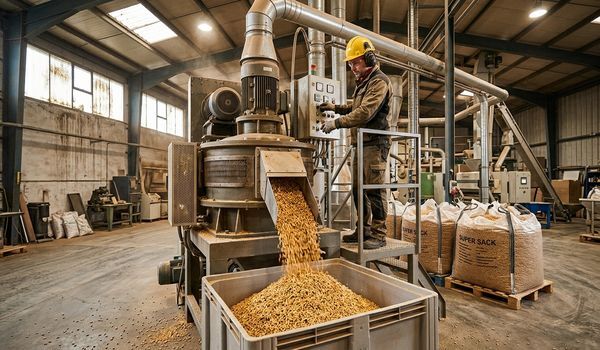
Financing is not limited to the pellet mill head. Most lenders will finance the entire production line on a single agreement: the hammer mill or grinder that prepares raw material, the dryer that brings moisture content into the ideal range, the pellet mill itself, the cooler, the screening and bagging equipment, and even the conveyors connecting them. Bundling matters because a pellet mill alone cannot produce saleable pellets; the supporting equipment is what turns a machine into a production line, and financing it together keeps your cash free for feedstock and operating costs.
Because the equipment secures the loan, lenders weigh the value of the machinery and the health of your business rather than demanding perfect credit or years of audited financials. That makes pellet mill financing one of the more accessible funding products in industrial equipment lending, including for rural businesses, agricultural operations, and first-time producers with a credible plan and raw material supply.
Key Benefits of Financing a Pellet Mill
Buying production equipment outright is simple, but for most businesses it is not the smartest use of capital. Financing delivers several concrete advantages:
- Preserve working capital. Keep cash available for feedstock purchases, wear parts like dies and rollers, labor, energy, and distribution instead of sinking it into machinery.
- Start producing immediately. Wood pellets routinely wholesale for $150 to $250 per ton and retail for $250 to $350 per ton. A financed mill can begin covering its own payment within the first weeks of production.
- Fixed, predictable payments. Monthly installments stay constant for the life of the agreement, which simplifies cash flow planning against seasonal demand.
- Convert waste into revenue. Sawmills, cabinet shops, and farms often finance pellet equipment specifically to monetize sawdust, shavings, and crop residue they currently pay to dispose of.
- Build business credit. Consistent on-time payments strengthen your credit profile and improve pricing on future expansion equipment.
- Flexible structures. Many lenders offer deferred first payments, seasonal schedules matched to heating-fuel demand cycles, and terms aligned with the useful life of the line.
For producers with buyers already in place, waiting a year to save the purchase price is the most expensive option available. Every month without the line running is a month of pellet sales that goes to a competitor, and in markets with limited local supply, customers you lose early are hard to win back.
Key Stat: The U.S. is one of the world's largest wood pellet producers, with export demand from Europe and Asia complementing steady domestic heating-fuel consumption. Energy market coverage from Reuters has tracked biomass demand growth as utilities and households diversify fuel sources.
Ready to Start Producing Pellets?
Get fast, flexible equipment financing from the #1 business lender in the U.S. Apply in minutes with no obligation.
Apply Now →How Pellet Mill Financing Works
The process is faster and simpler than most business owners expect. Here is how it typically unfolds from quote to first production run:
1. Choose Your Equipment and Get a Written Quote
Decide on the mill and production-line configuration you need, then get a formal quote or invoice from the manufacturer or dealer. For used equipment from an auction or private seller, you will need a bill of sale with serial numbers, years, and the agreed price. Lenders fund against this documentation, so quotes need to be current and itemized.
2. Submit a Short Application
A modern equipment financing application takes minutes. You provide basic business information, the amount you want to finance, and a few months of business bank statements. There is no business plan requirement for most transactions and no lengthy package to assemble.
3. Credit Review and Approval
The lender reviews your credit profile, time in business, revenue, and the equipment itself. Decisions typically come back within 24 to 48 hours. Because the machinery secures the financing, approvals span a wide range of credit profiles, and larger production lines may involve a quick conversation about your feedstock supply and buyer contracts.
4. Sign Documents and Get Funded
Once approved, you review and sign the financing agreement electronically. The lender pays the seller directly. For new equipment, funds go to the manufacturer or dealer; for used machinery, funds go to the seller once equipment details are verified.
5. Commission the Line and Start Producing
You take delivery, install and commission the line, and start running material. Fixed monthly payments begin per the agreement, and most producers are selling pellets within weeks of applying. One practical note on used lines: expect the lender to verify the machinery exists and matches the described condition. Photos, serial number plates, and occasionally a third-party inspection are standard, and they protect you as much as the lender.
By the Numbers
Pellet Mill Financing - Key Numbers
$2K-$250K+
Price range for pellet mills, from small flat-die machines to commercial ring-die production units
$150-$350
Typical per-ton pricing for wood pellets, from wholesale to retail, depending on market and season
24-48 Hrs
Typical approval turnaround for equipment financing applications at Crestmont Capital
24-84 Mo
Common repayment terms, matched to the useful life of the equipment and your cash flow
Types of Pellet Mills You Can Finance
Lenders will finance virtually any commercially produced pellet equipment, new or used. Understanding the categories helps you match the machinery to your feedstock, your market, and your budget.
Flat-Die Pellet Mills ($2,000 to $15,000)
Flat-die machines are the entry point for small-scale production. A rotating roller presses material against a flat die plate, producing pellets at rates from roughly 100 to 600 pounds per hour. Farms making their own feed pellets, small woodshops pelletizing their sawdust, and pilot operations testing a market all start here. Financing amounts in this range are small, approvals are fast, and payments on a longer term can run a few hundred dollars a month.
Ring-Die Pellet Mills ($20,000 to $250,000 and Up)
Ring-die mills are the commercial standard. Material feeds into the center of a rotating ring die and rollers press it outward through the die holes, delivering one to ten tons per hour or more depending on the machine. This is the category for dedicated pellet fuel producers, feed manufacturers, and sawmills adding serious pellet lines. Financing at this level often bundles the hammer mill, dryer, cooler, and bagging system into a single agreement, because the mill head alone is only part of a working line.
Complete Pellet Plants ($100,000 to $1 Million and Beyond)
Turnkey pellet plants integrate raw material intake, grinding, drying, pelleting, cooling, screening, and bagging into one engineered system. Industrial biomass producers and export-oriented operations run plants at this scale. Financing structures for complete plants typically involve longer terms, staged funding matched to delivery and commissioning milestones, and a closer look at feedstock contracts and off-take agreements.
Support Equipment and Wear Parts Packages
The machines around the mill matter as much as the mill itself. Hammer mills and grinders size the raw material. Dryers bring moisture content into the 10 to 15 percent window that quality pellets require. Coolers, screens, conveyors, and bagging lines finish the product. Spare dies and rollers, the main wear parts, can be itemized into the financing so you start with backup parts on the shelf. If it has a serial number or an itemized invoice, it can usually ride in the same agreement.
If your operation sits in a related part of the supply chain, our guides to agricultural equipment financing and logging equipment financing cover the machinery that often feeds or complements a pellet production line.
Pro Tip: Finance the dryer with the mill, even if it stretches the loan amount. Raw material moisture is the number one reason new pellet operations struggle, and an undersized or missing dryer will cost you more in downtime and rejected product than the incremental payment ever will.
Who Qualifies for Pellet Mill Financing?
Pellet mill financing serves a broad range of borrowers because the equipment collateral reduces lender risk. Here is what a typical approval profile looks like:
- Time in business: Two or more years is ideal for the best pricing, but businesses as young as six months are approved regularly. Newer ventures with industry experience and secured feedstock can qualify with stronger credit or a larger down payment.
- Credit score: Approvals commonly start around 600. Scores above 680 unlock the best rates and lowest down payments. Programs exist below 600 for credit-challenged buyers, especially when the equipment value is strong.
- Revenue: Consistent monthly revenue visible in business bank statements matters more than tax returns. Most approvals are based on three to six months of statements.
- The equipment: Newer machinery from recognized manufacturers is the easiest to finance. Used lines remain financeable with verification, sometimes with a larger down payment or shorter term.
- The story: For larger production lines, lenders like to see where the feedstock comes from and who buys the pellets. A sawdust supply agreement or a letter of intent from a fuel distributor strengthens a big request considerably.
The borrower mix in this space is diverse. Sawmills and cabinet shops converting sawdust into heating pellets, farmers and ranchers producing their own feed pellets, biomass fuel startups supplying pellet stove retailers, livestock and dairy operations pelleting custom rations, landscaping and agricultural businesses pelletizing crop residue and grasses, and animal bedding producers all use this financing. If your credit has taken hits, do not count yourself out: bad credit equipment financing programs exist precisely because the machinery anchors the deal.
Wood product manufacturing remains a significant sector of the U.S. economy, and the Census Bureau's manufacturing shipments data tracks the industry that pellet production feeds into. Producers with established operations and documented revenue are exactly the borrowers equipment lenders compete to fund.
Financing vs. Leasing vs. Paying Cash
You have three realistic ways to acquire pellet production equipment, and each fits a different situation:
| Factor | Financing (Loan) | Leasing | Paying Cash |
|---|---|---|---|
| Ownership | You own it from day one | Lessor owns it; buyout at end | You own it outright |
| Upfront cost | 0-20% down payment | First/last payment, minimal | Full purchase price |
| Monthly cost | Fixed payment, builds equity | Often lowest monthly outlay | None |
| Best for | Long-term producers building an asset base | Operations wanting low payments or easy upgrades | Buyers with surplus cash and no better use for it |
| Flexibility | Modify or resell the line anytime | Upgrade path at lease end | Total control, but capital is sunk |
For most pellet producers, financing hits the right balance. Ring-die mills are long-life assets that run for decades with proper die and roller maintenance, so ownership builds real equity in machinery that holds value. Leasing fits if you want the lowest monthly outlay, expect to upgrade capacity within a few years, or prefer to keep equipment off the balance sheet. Paying cash only makes sense when the business genuinely has no better use for the money, which is rare when feedstock inventory, wear parts, and distribution all compete for the same dollars.
Costs, Rates, and Terms to Expect
Every transaction is priced on the borrower's credit, time in business, and the equipment, but these ranges reflect the current market for pellet mill financing:
- Financing amounts: $10,000 to $500,000 or more, covering everything from a flat-die starter mill to a complete production line.
- Rates: Roughly 6 to 20 percent depending on credit strength and time in business. Strong profiles land at the low end; challenged credit pays more but still gets funded.
- Terms: 24 to 84 months. Longer terms lower the payment; shorter terms reduce total interest cost.
- Down payment: Zero to 20 percent. Established businesses with good credit frequently qualify for little or no money down.
Here is a concrete example. Finance a $45,000 ring-die mill package at 10 percent over 60 months and the payment works out to about $956 per month. A line producing just two tons per hour and running one shift produces roughly 80 tons a month. At a conservative $200 per ton wholesale, that is $16,000 in monthly gross revenue against a payment under $1,000. Even after feedstock, energy, labor, and wear parts, the line clears its own financing cost by a wide margin. That is the math that makes pellet equipment financing compelling for producers with feedstock and buyers lined up.
Budget for the full cost of ownership, not just the payment. Dies and rollers are wear items: a ring die might last 1,000 to 2,000 production hours depending on material, and replacement dies run from a few hundred to several thousand dollars. Add energy for grinding, drying, and pelleting (drying is usually the biggest energy load), routine maintenance, insurance, and bagging supplies. None of these costs should surprise you; they all belong in the pro forma you build before signing.
On the revenue side, wood pellets wholesale around $150 to $250 per ton and retail for $250 to $350 per ton in most heating markets, feed pellets price against conventional ration ingredients, and premium bedding pellets command strong margins in equine markets. Government-backed programs can be worth comparing for some buyers: the SBA loan programs offer competitive pricing for qualified borrowers, though multi-week approval timelines make dedicated equipment financing the faster path when machinery is available now.
Key Stat: A single commercial ring-die line running one shift can produce 80 to 200 tons of pellets per month. At typical wholesale pricing, that production value covers a financed payment many times over, which is why equipment lenders view established pellet producers as strong borrowers.
How Crestmont Capital Helps
Crestmont Capital is rated the #1 business lender in the U.S., and equipment financing is one of our core strengths. We fund pellet mills and complete production lines for biomass producers, sawmills, farms, feed operations, and fuel businesses across the country, with a process built for speed:
- Fast approvals: Most applications receive a decision within 24 to 48 hours, and funding often follows within days.
- New and used equipment: We finance new machinery from any manufacturer and used lines from dealers, auctions, or private sellers, subject to equipment verification.
- Full production lines: Hammer mills, dryers, coolers, conveyors, bagging systems, and spare dies can all ride in the same agreement as the mill.
- Flexible structures: Terms from 24 to 84 months, seasonal payment options for operations tied to heating-fuel demand, and little or no down payment for qualified buyers.
- All credit profiles considered: Strong credit gets our best pricing, and our bad credit programs keep the door open for everyone else.
Most pellet equipment buyers use our equipment financing programs, and buyers of pre-owned machinery often find our used equipment financing options to be the cleanest fit. Many producers also pair the equipment loan with a business line of credit to smooth out feedstock purchases and wear-part replacements between production runs. One application shows you everything your business qualifies for, and there is no obligation to proceed.
Get the Equipment Your Operation Needs
Approvals in as little as 24 hours. New or used, single machines or complete lines, we fund it.
Apply Now →Real-World Scenarios: How Businesses Use Pellet Mill Financing
Numbers on a page are one thing. Here is how pellet mill financing plays out for real operations:
Scenario 1: The Sawmill Monetizing Its Sawdust
A hardwood sawmill in Pennsylvania generates 40 tons of sawdust and shavings a month and pays to have it hauled away. They finance a $120,000 ring-die pellet line with dryer and bagger over 72 months at about $2,200 a month. The line converts their waste stream into premium heating pellets sold to regional retailers. Disposal costs disappear, the pellet revenue covers the payment in the first week of each month, and a cost center becomes a profit center.
Scenario 2: The Farm Producing Its Own Feed
A cattle operation in Nebraska spends $180,000 a year on purchased feed. They finance a $60,000 flat-die and ring-die combination line over 60 months at roughly $1,270 a month and begin pelleting their own corn, distillers grains, and hay into custom rations. Feed costs drop by a fifth, ration quality improves because they control every ingredient, and the line pays for itself in under four years while adding resilience against feed price spikes.
Scenario 3: The Biomass Startup Supplying Pellet Stove Retailers
Two partners in Oregon identify a regional gap: pellet stove retailers routinely sell out of premium fuel by mid-winter. They finance a $200,000 production line with an off-take letter from two distributors, put 15 percent down, and start production in early fall. By their second heating season they are running two shifts and negotiating a second line. The financing structure let them launch with enough working capital intact to survive the seasonal cash cycle.
Scenario 4: The Cabinet Shop Turning Scrap into Bedding Pellets
A cabinet manufacturer in Indiana produces mountains of clean hardwood scrap. Rather than pay disposal fees, they finance a $35,000 flat-die setup and begin producing premium animal bedding pellets for the equine market in nearby horse country. A single regional tack and feed distributor takes their full output. The payment runs under $750 a month, and the bedding revenue turns a disposal expense into a steady secondary income stream.
Scenario 5: The Established Producer Adding Capacity
A pellet fuel producer in Maine has run the same line for six years and turns away orders every winter. They finance a second, larger ring-die line for $300,000 over 84 months, keeping the original line as backup and for peak-season parallel runs. Doubled capacity lets them take on a grocery-chain private-label contract they previously could not fulfill, and the incremental revenue covers both equipment payments with room to spare.
How to Apply for Pellet Mill Financing
The application is deliberately simple. Here is what to have ready and what to expect:
What You Will Need
- A completed application with basic business information (legal name, EIN, time in business, ownership)
- Three to six months of business bank statements
- A written quote, invoice, or bill of sale for the equipment (with serial numbers for used machinery)
- Basic details about the equipment: make, model, year, capacity, and condition
- For complete production lines: a brief description of your feedstock supply and target buyers
The Timeline
Most applicants complete the application in under ten minutes. Approval decisions typically arrive within 24 to 48 hours. Once you sign documents electronically, funding goes out to the seller, usually within one to three business days for standard transactions. From application to equipment delivery, straightforward deals often close inside a week.
Tips for the Smoothest Approval
Know exactly which equipment you want before you apply, and get the quote in writing with every component itemized. Check your credit report ahead of time so there are no surprises. Have your bank statements downloaded and ready. If you are buying used, photograph the machinery and the serial plates. And size the request realistically: financing the full production line including the dryer and spare dies is smart, but borrowing beyond what your feedstock supply and buyer commitments support is not.
Frequently Asked Questions
What credit score do I need to finance a pellet mill? +
Approvals commonly start around a 600 credit score, with the best rates and lowest down payments reserved for scores above 680. Lower scores can still qualify through credit-flexible programs because the equipment itself secures the financing, which reduces lender risk considerably.
How much does a pellet mill cost? +
Small flat-die pellet mills run from about $2,000 to $15,000. Commercial ring-die mills range from $20,000 to $250,000 or more depending on capacity, and complete turnkey pellet plants with grinding, drying, cooling, and bagging equipment can run from $100,000 past $1 million for industrial-scale systems.
Can I finance used pellet mill equipment? +
Yes. Used pellet mills and production lines from dealers, auctions, and private sellers are financed regularly. The lender will verify the equipment details, including serial numbers, year, and condition, and may request photos or an inspection. Older machinery may call for a larger down payment or a shorter term.
What interest rates are typical for pellet mill financing? +
Current rates generally fall between 6 and 20 percent depending on your credit profile, time in business, and the equipment being financed. Established businesses with strong credit land at the low end of that range, while newer operations or challenged credit profiles pay more but still get funded.
How long are pellet mill loan terms? +
Terms typically run from 24 to 84 months. Longer terms produce lower monthly payments and are common on complete production lines, while shorter terms reduce total interest paid. Many borrowers match the term to the revenue the equipment is expected to generate.
Do I need a down payment to finance a pellet mill? +
Not always. Established businesses with solid credit frequently qualify for zero down or very low down payments. Newer businesses, lower credit scores, or older used equipment may require 10 to 20 percent down. A down payment always improves your pricing, so put money down if you comfortably can.
Can I finance a complete pellet production line? +
Yes, and most commercial buyers do exactly that. The hammer mill, dryer, pellet mill, cooler, conveyors, and bagging system can all be itemized on one financing agreement. For larger plants, lenders may ask about your feedstock supply and buyer contracts, and funding can be staged to match delivery milestones.
Can a new business qualify for pellet mill financing? +
Yes, though the bar is higher than for established operations. New businesses typically need stronger personal credit, relevant industry experience, and often a down payment of 10 to 20 percent. Documented feedstock supply and buyer letters of intent strengthen a startup application considerably.
Can I get pellet mill financing with bad credit? +
Yes. Because the machinery serves as collateral, equipment financing is one of the most accessible funding types for borrowers with damaged credit. Expect a higher rate and possibly a larger down payment, but approvals happen every day for scores that traditional banks would decline.
What documents do I need to apply? +
A short application, three to six months of business bank statements, and a written quote or bill of sale for the equipment. For used machinery, include serial numbers and photos. Complete production lines may warrant a brief description of feedstock and buyers. Tax returns are rarely required in this size range.
How long does approval and funding take? +
Approval decisions typically arrive within 24 to 48 hours of a complete application. After you sign documents electronically, funds usually reach the seller within one to three business days. Most buyers go from application to equipment delivery in about one to two weeks.
Is it better to lease or finance pellet mill equipment? +
Financing is the better fit for most producers because pellet mills are long-life assets that hold value, so ownership builds equity. Leasing offers lower monthly payments and easier upgrades but you do not own the equipment unless you exercise a buyout. If you plan to run the line for years, finance it.
Can I bundle the hammer mill, dryer, and bagging equipment into one loan? +
Yes, and you should. Every component of the production line, including grinders, dryers, coolers, conveyors, baggers, and spare dies and rollers, can be itemized on the same invoice and financed together. Bundling keeps your cash free for feedstock and operating costs during ramp-up.
Can I pay off my equipment loan early? +
In most cases, yes. Many equipment financing agreements allow early payoff, sometimes with a small prepayment adjustment in the first year or two. Ask about the payoff terms before signing. Given how quickly a well-run line can pay for itself, early payoff is a common and welcome outcome.
How do I apply for pellet mill financing? +
Complete the short online application at offers.crestmontcapital.com/apply-now with your basic business information and the equipment details. Have three to six months of bank statements and a written quote ready. Most applicants receive a decision within 24 to 48 hours and funding within days of approval.
Start Producing Sooner
One short application. Fast decisions. Funding in days, not weeks.
Apply Now →How to Get Started
Complete our quick application at offers.crestmontcapital.com/apply-now. It takes just a few minutes and there is no obligation.
A Crestmont Capital advisor will review your application, discuss the equipment you need, and match you with the financing structure that fits your production plan.
Once approved, funds go directly to the seller, often within days. Take delivery of your equipment and start turning raw material into revenue.
The Bottom Line
A pellet mill is one of the few machines that can convert a waste stream or a raw commodity into a branded, shelf-stable product with buyers in multiple markets. Whether you are a sawmill sitting on sawdust, a farm feeding livestock, or an entrepreneur supplying the heating-fuel market, the economics of pellet production reward the operators who control their own capacity, and pellet mill financing removes the one barrier that stops most producers: the upfront cost.
With approvals in as little as 24 hours, terms from 24 to 84 months, options for new and used equipment across every credit profile, and the ability to bundle your entire production line into one payment, there has never been an easier time to put pellet equipment to work. Apply today, get your answer fast, and let the machinery pay for itself, ton after ton.
Disclaimer: The information provided in this article is for general educational purposes only and is not financial, legal, or tax advice. Funding terms, qualifications, and product availability may vary and are subject to change without notice. Crestmont Capital does not guarantee approval, rates, or specific outcomes. For personalized information about your business funding options, contact our team directly.

Allan Garfinkle
Allan Garfinkle is the Chief Revenue Officer at Crestmont Capital, where he has spent more than a decade leading revenue strategy, business development, and operational growth. With 28 years of experience building and advising startups and small businesses, Allan has helped more than 10,000 business owners navigate financing decisions, growth opportunities, and changing economic conditions. He earned a Bachelor of Science in Economics and an MBA with a concentration in Finance from Northeastern University, as well as a Juris Doctor from New England Law, where his studies focused on contracts and business law. His writing draws on extensive practical experience in small-business lending, equipment financing, business credit, and commercial finance.