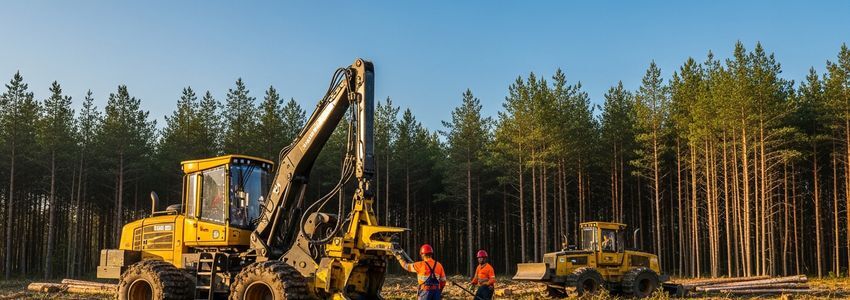
The timber and forestry industry is the backbone of countless supply chains, but it runs on powerful, expensive machinery. For business owners, securing the right tools is non-negotiable, and that’s where a strategic approach to logging equipment financing becomes essential. This specialized funding allows you to acquire everything from feller bunchers to logging trucks without depleting your working capital, ensuring your operations remain productive and profitable.
In This Article
What Is Logging Equipment Financing?
Logging equipment financing is a specific type of business loan or lease designed to help timber, forestry, and land-clearing companies purchase new or used machinery. Instead of paying the full, often substantial, cost of a piece of equipment upfront, you make predictable monthly payments over a set term. The equipment itself typically serves as the collateral for the loan, which simplifies the application process and can make it easier to secure funding compared to traditional, unsecured business loans. This financial tool is critical for an industry where a single machine can cost hundreds of thousands of dollars.
The need for this specialized financing is driven by the capital-intensive nature of the logging industry. According to the U.S. Department of Agriculture, forest products are a significant contributor to the national economy, and maintaining a competitive edge requires modern, efficient equipment. Delaying an equipment purchase due to a lack of cash on hand can mean missing out on lucrative contracts, falling behind schedule, or facing costly repairs on aging machinery. Forestry equipment financing bridges this gap, providing the capital needed to acquire assets that generate revenue immediately. It allows business owners to preserve their cash for other critical expenses like payroll, fuel, insurance, and unexpected operational costs.
Whether you're a startup logging company purchasing your first skidder or an established timber enterprise upgrading an entire fleet, these financing solutions are structured to support your growth. Lenders who specialize in the heavy equipment sector, like Crestmont Capital, understand the unique cycles and demands of the forestry business. They can offer more flexible terms and a faster approval process than a general-purpose bank, getting you the equipment you need to keep your operations running smoothly and efficiently.
Ready to Finance Your Logging Equipment?
Get fast, flexible financing from the #1 business lender in the U.S. No obligation - apply in minutes.
Apply Now →Types of Logging Equipment You Can Finance
A modern logging operation relies on a wide array of specialized machinery to handle every stage of the timber harvesting process, from felling trees to transporting logs. Forestry equipment financing can cover virtually any piece of new or used equipment essential to your business. Here is a comprehensive look at the types of machinery you can acquire through a timber equipment loan.
Harvesting and Felling Equipment
This category includes the heavy-duty machines responsible for cutting down trees. They are the frontline of any logging operation and represent a significant capital investment.
- Feller Bunchers: These powerful machines are designed to quickly cut and gather multiple trees before felling them. Tracked feller bunchers are ideal for steep or rough terrain, while wheeled versions offer greater mobility on flatter ground. Feller buncher financing is one of the most common requests in the industry.
- Harvesters: Also known as cut-to-length harvesters, these sophisticated machines can fell, delimb, and buck a tree into predefined lengths in a single process. They offer incredible efficiency and are a cornerstone of modern logging.
- Chainsaws and Mechanical Saws: While larger machines do the bulk of the work, professional-grade chainsaws are still essential for select felling, limbing, and bucking tasks. Financing can bundle these smaller assets into a larger equipment package.
Extraction and Skidding Equipment
Once trees are felled, this equipment is used to move them from the stump to a central landing area for processing and loading.
- Skidders: A vital piece of any logging crew, skidders are used to drag or "skid" felled trees or logs to the landing. Grapple skidders use a hydraulic boom and grapple, while cable skidders use a winch and chokers. Skidder financing is crucial for companies looking to improve their extraction efficiency.
- Forwarders: Unlike skidders, forwarders carry logs completely off the ground in a bunk. This minimizes soil disturbance and keeps logs cleaner, which is important for sawmill operations. They are often used in cut-to-length systems alongside harvesters.
- Yarders: Used primarily in steep-slope or cable logging, yarders use a system of cables to pull logs uphill to a landing. This method is necessary in terrain that is inaccessible to skidders or forwarders.
Processing Equipment
At the landing, logs are processed to prepare them for transport. This can involve delimbing, cutting to length, and chipping.
- Delimbers: These machines strip the branches from felled trees. They come in various forms, including gate, pull-through, and flail delimbers, each suited to different types of trees and operational scales. -
- Processors and Slashers: A processor combines delimbing and bucking (cutting to length) into one machine. Slashers, or bucking saws, are large circular saws used to cut multiple logs to a uniform length simultaneously.
- Chippers and Grinders: Whole-tree chippers and grinders process entire trees, limbs, and other woody debris into wood chips. These chips are used for pulp, biomass fuel, and landscaping mulch.
- Sawmills and Portable Sawmills: For operations that process logs into lumber on-site, financing can cover both stationary and portable sawmills. This allows businesses to add value to their timber before it ever leaves the work site.
Loading and Transport Equipment
The final step in the field is loading processed logs onto trucks for transport to mills or other destinations.
- Log Loaders: These machines, which can be tracked, wheeled, or truck-mounted, are equipped with a grapple to sort, stack, and load logs onto trucks. They are essential for keeping the flow of timber moving efficiently. Log loader financing helps ensure you have the right capacity for your operation.
- Logging Trucks: The workhorses of timber transport, these specialized trucks are built to handle heavy loads on rugged terrain and highways. Logging truck financing can cover the tractor, trailer, and any specialized equipment like self-loaders.
Support and Land Clearing Equipment
Many logging operations also require general construction and earth-moving equipment to build roads, clear landing sites, and manage the worksite.
- Bulldozers: Crucial for building access roads, clearing brush, and preparing landing zones. Their power and versatility make them indispensable.
- Excavators: Often fitted with special attachments like thumbs or grapples, excavators are used for road building, stump removal, and loading in certain applications.
- Graders: Used to maintain the access roads that are critical for getting equipment in and logs out safely and efficiently.
How Logging Equipment Financing Works
Navigating the process of securing logging equipment financing is more straightforward than many business owners assume, especially when working with a lender that specializes in the industry. The process is designed to be fast and efficient, recognizing that time is money in the timber business. Here is a step-by-step breakdown of how it works, from application to funding.
Step 1: Application and Documentation
The journey begins with a simple application. Unlike traditional bank loans that often require mountains of paperwork, applications for equipment financing are typically streamlined. You will be asked to provide basic information about your business, including:
- Business name, address, and legal structure (sole proprietor, LLC, etc.)
- Time in business and number of employees
- Annual revenue and basic financial details
- Information on the equipment you wish to purchase (make, model, year, price, and seller details)
For most transactions, especially those under $250,000, a simple one-page application may be all that is required. For larger loan amounts or more complex situations, the lender might request additional documents such as business bank statements, financial statements, or a detailed equipment quote from the vendor.
Step 2: Credit Review and Approval
Once your application is submitted, it moves to the underwriting stage. The lender's team will review your business's financial health and credit history to assess risk and determine your eligibility. Key factors they consider include:
- Business and Personal Credit Scores: While a high score is beneficial, lenders like Crestmont Capital have programs for a wide range of credit profiles.
- Time in Business: Lenders typically prefer to see at least two years of operational history, but startup programs are often available.
- Cash Flow: Underwriters will review your bank statements to ensure your business has sufficient and consistent cash flow to support the new loan payment.
- Industry Experience: Your experience in the logging and forestry industry is a valuable asset and is often considered during the review.
Because the equipment itself serves as collateral, the approval process is often much faster than for other types of business loans. Decisions can frequently be made within a few hours to a single business day.
Step 3: Structuring the Loan Terms
Upon approval, the lender will present you with one or more financing offers. This is where you will see the specific details of the loan, including:
- Loan Amount: This can cover up to 100% of the equipment cost, and sometimes includes "soft costs" like taxes, delivery, and installation.
- Interest Rate: Rates are determined by your credit profile, time in business, and the age of the equipment. They can be fixed, providing a predictable payment for the life of the loan.
- Term Length: Typical terms for forestry equipment loans range from 24 to 84 months (2 to 7 years). A longer term results in a lower monthly payment, while a shorter term means you pay less interest overall.
- Down Payment: Many programs require little to no money down. In some cases, especially for businesses with challenged credit or startups, a down payment of 10-20% may be required to secure the loan.
Specialized lenders can also offer flexible payment structures, such as seasonal payments that are lower during your off-season, to align with the cyclical nature of the logging industry.
Step 4: Funding and Equipment Acquisition
Once you accept an offer and sign the loan documents, the final step is funding. The lender will coordinate directly with the equipment vendor (whether it's a dealer or a private seller) to pay for the machine. Once the seller confirms they have received the funds, you can take possession of your equipment and put it to work. The entire process, from application to funding, can often be completed in as little as 24-48 hours, minimizing downtime and allowing you to capitalize on opportunities quickly.
How Logging Equipment Financing Works - At a Glance
Apply Online
Complete our simple, secure application in just a few minutes from any device.
Get Approved
Receive a credit decision quickly, often on the same day you apply.
Choose Your Equipment
Select any new or used equipment from the dealer or private seller of your choice.
Get Funded
We pay the seller directly, and you put your new equipment to work generating revenue.
Key Benefits of Financing Your Logging Equipment
Opting for a timber equipment loan or lease offers numerous strategic advantages that go far beyond simply acquiring a new machine. It's a powerful financial strategy that can accelerate growth, improve efficiency, and enhance the financial stability of your forestry business. Here are the key benefits.
- Preservation of Working Capital: This is perhaps the most significant benefit. Heavy equipment is expensive, and paying cash can drain your reserves, leaving you vulnerable to unexpected expenses or unable to seize new opportunities. Financing allows you to keep your cash on hand for day-to-day operations, payroll, fuel, maintenance, and other costs that keep your business running.
- Access to Modern, More Efficient Equipment: The logging industry is constantly evolving with new technology. Modern machines are more fuel-efficient, more productive, and safer to operate. Financing gives you access to the latest models without the prohibitive upfront cost, allowing you to compete more effectively, reduce operating costs, and improve your bottom line.
- Predictable, Fixed Monthly Payments: Most equipment loans come with a fixed interest rate, meaning your monthly payment will not change for the entire term. This makes budgeting and financial planning much simpler and more predictable. You know exactly what your equipment costs will be each month, protecting you from interest rate fluctuations.
- Fast and Simple Funding Process: Unlike traditional bank loans that can take weeks or even months to approve, specialized equipment financing is designed for speed. With streamlined applications and a focus on the asset's value, you can often get approved and funded in as little as 24 hours. This speed allows you to acquire equipment quickly to start a new contract or replace a broken-down machine with minimal downtime.
- 100% Financing Options: Many financing programs allow you to roll the full cost of the equipment-including soft costs like taxes, delivery, and installation fees-into the loan. This means you can often acquire essential machinery with little or no money out of pocket, a huge advantage for cash flow management.
- Flexible and Customized Terms: Lenders who understand the timber industry know that cash flow can be seasonal. They can structure loan payments to match your business cycle. For example, you might arrange for lower payments during slower winter months and higher payments during your peak season, a level of flexibility rarely offered by traditional banks.
- Builds Business Credit: Making consistent, on-time payments on an equipment loan is an excellent way to build a strong credit history for your business. A solid credit profile will make it easier and more affordable to secure other types of financing you may need in the future as your company grows.
Industry Insight: The U.S. forestry and logging industry is a major economic driver. According to a Forbes analysis of the market, the sector's health is closely tied to construction and housing, making operational efficiency critical for navigating economic cycles. Access to modern equipment through financing is key to maintaining that efficiency.
Who Qualifies for Logging Equipment Financing?
Lenders who specialize in forestry equipment financing understand the unique characteristics of the industry and have developed flexible qualification criteria to serve a broad range of businesses. While every lender has slightly different standards, here are the general factors they assess to determine your eligibility for a loan.
Credit Score
Both your personal and business credit scores play a significant role in the approval process. A higher credit score generally leads to better interest rates and more favorable terms. However, a perfect score is not required. Many lenders have programs designed for different credit tiers:
- Excellent Credit (700+): Applicants in this range can expect the most competitive rates, longest terms, and highest likelihood of 100% financing with no down payment.
- Good Credit (650-699): Businesses with good credit are still strong candidates and can access very favorable financing options, sometimes with a small down payment.
- Fair or Challenged Credit (Below 650): Even if your credit history has some blemishes, financing is still very possible. Lenders who specialize in this area, like Crestmont Capital, focus more on your business's cash flow and the value of the equipment. You may be asked for a larger down payment or have a slightly higher interest rate, but you can still get the funding you need to grow.
Time in Business
Lenders generally like to see a track record of success. The standard preference is for businesses that have been in operation for at least two years. This history demonstrates stability and an ability to manage finances over time. However, many lenders recognize the need for new companies to get started and offer specific programs for startups. These programs might have different requirements, such as a stronger personal credit score from the owner, a larger down payment, or a detailed business plan showing projected revenue.
Annual Revenue and Cash Flow
Your business's revenue is a key indicator of its ability to handle a new monthly loan payment. Lenders will typically look at your last 3-6 months of business bank statements to verify your income and analyze your cash flow. They want to see consistent deposits and a healthy average daily balance. There isn't always a strict minimum annual revenue requirement; instead, the focus is on whether your current cash flow can comfortably support the new debt obligation. A general rule of thumb is that your total existing and proposed debt payments should not exceed a certain percentage of your monthly revenue.
Industry Experience
In the logging and forestry sector, hands-on experience is highly valued by lenders. If you are a new business owner but have years of experience working as a logger or managing timber operations, this can significantly strengthen your application. It shows the lender that you understand the industry, its challenges, and its opportunities, which reduces their perceived risk.
Pro Tip: Don't self-disqualify based on one factor. Lenders take a holistic view of your business. Strong cash flow or extensive industry experience can often offset a lower credit score or a shorter time in business. Always speak with a financing specialist to explore your options.
Upgrade Your Fleet Today
Secure the capital you need for new or used logging equipment. Our fast, flexible programs are designed for the timber industry.
Apply Now →
Financing vs. Leasing Logging Equipment: Which Is Right for You?
When acquiring new machinery, you generally have two main options: financing (a loan) or leasing. Both are excellent tools for getting the equipment you need without paying cash, but they function differently and offer distinct advantages. Choosing the right one depends on your business goals, financial situation, and how you plan to use the equipment.
| Feature | Financing (Equipment Loan) | Leasing |
|---|---|---|
| Ownership | You own the equipment from day one. The lender holds a lien until the loan is fully paid off. | The leasing company (lessor) owns the equipment. You (the lessee) pay to use it for a set period. |
| Upfront Cost | Typically requires a down payment, though 100% financing is available for qualified buyers. | Often requires less upfront cash, usually the first and last month's payment. |
| Monthly Payments | Payments are generally higher because you are paying off the full value of the asset to own it. | Payments are generally lower because you are only paying for the equipment's depreciation during the lease term. |
| Customization & Wear | Since you own it, you can customize or modify the equipment as needed. There are no restrictions on hours or usage. | Modifications are usually not allowed. Leases often have restrictions on annual hours of use and wear-and-tear conditions. |
| End-of-Term Options | At the end of the term, you own the equipment free and clear. You can keep it, sell it, or trade it in. | You have several options: return the equipment, renew the lease, or purchase it at its fair market value or a predetermined price. |
| Long-Term Goal | Best for building equity. Ideal if you plan to use the equipment for its entire useful life and want an asset on your balance sheet. | Best for managing cash flow and technology cycles. Ideal if you want lower monthly payments and prefer to upgrade to new models every few years. |
When to Choose Financing
An equipment loan is the best choice if your goal is long-term ownership. If the feller buncher, skidder, or logging truck you're acquiring is a core part of your operation that you expect to use for many years, financing makes the most sense. You build equity with every payment, and once the loan is paid off, the machine is a valuable asset that contributes to your company's net worth. This is the preferred path for business owners who want complete control over their equipment and its maintenance without worrying about usage restrictions.
When to Choose Leasing
Leasing is an excellent strategy if you prioritize lower monthly payments and want to regularly cycle into newer equipment. If having the latest technology is crucial for your competitive edge, a lease allows you to upgrade every 2-4 years without the hassle of selling the old machine. It's also a great option for preserving capital, as the upfront cash requirement is typically lower than a loan's down payment. Leasing is suitable for equipment that you may not need for its entire lifespan or for businesses that want to keep their options open at the end of the term.
How Crestmont Capital Helps Timber Operations Get Funded
In the demanding world of logging and forestry, having a financial partner who understands your industry is invaluable. Crestmont Capital is not just a lender; we are specialists in heavy machinery funding, and we have a deep appreciation for the challenges and opportunities timber business owners face. Our entire process is built to provide the speed, flexibility, and expertise you need to succeed.
We offer a comprehensive suite of funding solutions tailored to the timber industry. Our flagship equipment financing programs are designed to get you the machinery you need with minimal hassle. Whether you're eyeing a brand-new harvester or a reliable used log loader, we can structure a loan that fits your budget and cash flow. We finance all types of new and used logging equipment from any dealer or private seller nationwide, ensuring you have the freedom to choose the best machine for the job.
Beyond traditional loans, we understand that every business has unique capital needs. That’s why we also provide a range of other small business loans that can be used for working capital, repairs, or expansion. For those who prefer lower monthly payments and the flexibility to upgrade technology, our equipment leasing options are a perfect fit. We work with you to determine whether a loan or lease is the best strategic move for your long-term goals.
At Crestmont Capital, we believe that opportunity shouldn't wait. Our commitment to technology and streamlined underwriting allows us to offer fast business loans with approvals in hours, not weeks. We know that when a critical piece of equipment goes down or a new contract comes up, you need to act quickly. Furthermore, we are dedicated to serving the entire spectrum of business owners. We have robust programs for bad credit equipment financing, because we know that a credit score doesn't tell the whole story. We look at your cash flow, industry experience, and the value of the asset to find a path to "yes." Our extensive experience is detailed in our heavy equipment financing guide, showcasing our deep knowledge of the sector. With Crestmont Capital, you get a partner dedicated to fueling your growth.
Real-World Scenarios: How Timber Companies Use Equipment Financing
To better understand the practical impact of logging equipment financing, let’s explore a few real-world scenarios that timber and forestry businesses commonly face.
Scenario 1: The Startup Operation Securing its First Contract
The Business: "Ridgeback Logging," a new company founded by a logger with 15 years of industry experience. They have just won their first major contract to clear 200 acres of pine but lack the necessary capital to purchase equipment outright.
The Need: A reliable used grapple skidder and a used log loader. The total cost for both pieces of equipment from a reputable dealer is $180,000.
The Solution: Ridgeback Logging applies for forestry equipment financing. Despite being a new business, the owner's strong personal credit and extensive industry experience make them a solid candidate. The lender approves them for a $180,000 loan with a 15% down payment. The loan is structured over a 60-month term with fixed monthly payments.
The Outcome: By financing the equipment, the owner preserves his initial startup capital for fuel, insurance, and payroll. The company takes delivery of the skidder and loader within three days of applying, allowing them to start the contract on time. The revenue generated from the job easily covers the monthly loan payments and generates a healthy profit, setting the new business on a path to success.
Scenario 2: The Established Company Expanding its Fleet
The Business: "Three Rivers Timber," a well-established company with a 10-year operating history. Due to increased demand, they need to run a second logging crew to take on more work.
The Need: A new feller buncher and two new logging trucks to support the new crew. The total package price is $950,000.
The Solution: Three Rivers Timber has a strong credit history and consistent revenue. They apply for a timber equipment loan and, thanks to their excellent financial standing, are approved for 100% financing with no money down. The lender offers a 72-month term with a competitive fixed interest rate. They also structure a deferred payment plan, where the first payment isn't due for 90 days, giving the company time to get the new crew operational and generating revenue.
The Outcome: The company acquires the three essential pieces of equipment without impacting its cash reserves. The new crew is deployed immediately, doubling the company's harvesting capacity. The increased revenue not only covers the new loan payments but also significantly boosts the company's annual profits, allowing them to outpace competitors.
Scenario 3: The Tech-Savvy Owner Upgrading for Efficiency
The Business: "Evergreen Harvesting," a mid-sized company focused on sustainable, modern logging practices. Their current harvester is seven years old, less fuel-efficient, and requires frequent maintenance.
The Need: A new, state-of-the-art cut-to-length harvester that promises a 20% increase in fuel efficiency and 15% faster processing speeds. The cost is $600,000.
The Solution: The owner decides that a lease is the best option. They want to keep their technology current and prefer a lower monthly payment. They secure a 48-month operating lease. The monthly payment is significantly lower than a loan payment would be because it's based on the machine's depreciation over the four years, not its full purchase price.
The Outcome: Evergreen Harvesting gets the cutting-edge machine with minimal cash upfront. The fuel savings and increased productivity immediately offset the monthly lease payment. At the end of the four-year term, the owner plans to return the harvester and lease the next-generation model, ensuring their operation always benefits from the latest and most efficient technology.
Get Your Custom Funding Quote
See what your business qualifies for. Our simple application provides a fast, no-obligation quote tailored to your needs.
Apply Now →How to Get Started
Securing the financing you need for your logging equipment is a simple and fast process with Crestmont Capital. We've removed the complexity so you can focus on what you do best: running your timber business. Follow these three steps to get funded.
Apply in Minutes
Complete our secure online application. It's fast, simple, and won't impact your credit score. Provide some basic details about your business and the equipment you need.
Review Your Offer
Receive a decision in as little as a few hours. A dedicated funding advisor will walk you through your customized loan or lease options, explaining the rates and terms clearly.
Get Funded
Once you select your offer and sign the documents electronically, we pay the equipment seller directly. You get your machinery and put it to work, often in just 24-48 hours.
Conclusion
In the competitive and physically demanding timber industry, having the right equipment is not a luxury-it's a necessity. The productivity, safety, and profitability of your entire operation depend on reliable, efficient machinery. However, the high cost of this specialized equipment can present a significant barrier to entry and growth. This is precisely where logging equipment financing proves its value, serving as a critical tool for business owners who want to thrive without compromising their financial stability.
By leveraging a timber equipment loan or lease, you can acquire the exact assets you need, whether new or used, while preserving your precious working capital for the daily demands of the business. The benefits are clear: predictable payments, access to modern technology, and the ability to scale your operations to meet new opportunities head-on. As we've seen, the process is faster and more flexible than ever, with lenders like Crestmont Capital providing solutions tailored to the unique needs of the forestry sector. According to the Small Business Administration, access to capital remains a key factor in small business success, and equipment financing is one of the most direct ways to turn that capital into revenue-generating assets.
Don't let a lack of upfront cash hold your business back. Whether you need to finance a feller buncher, a skidder, or an entire fleet of logging trucks, a strategic financing plan is your path forward. It empowers you to invest in the tools that drive efficiency and profit, ensuring your timber business remains a strong, competitive force in the industry for years to come. Contact a financing specialist today to explore the options available for your company.
Frequently Asked Questions
What exactly is logging equipment financing?
It is a type of business loan or lease specifically created for acquiring new or used machinery for timber and forestry operations. Instead of paying the full price in cash, you make regular monthly payments over a set period. The equipment itself typically serves as the collateral for the loan.
What are typical interest rates for forestry equipment loans?
Interest rates vary based on several factors, including your credit score, time in business, annual revenue, and the age of the equipment. Businesses with strong credit and a solid history can expect very competitive rates, while businesses with challenged credit can still get approved, often at a higher rate.
Do I need a large down payment?
Not necessarily. Many well-qualified businesses can secure 100% financing with no money down. For startups or businesses with lower credit scores, a down payment of 10-20% might be required to lower the lender's risk and secure the loan.
Can I get logging equipment financing with bad credit?
Yes, it is possible. Crestmont Capital and other specialized lenders offer programs for businesses with less-than-perfect credit. Underwriters will place more emphasis on your business's cash flow, industry experience, and the value of the equipment being financed.
Can I finance both new and used logging equipment?
Absolutely. Financing is available for both new and used equipment. You can purchase from a certified dealer, an auction, or even a private seller. Lenders are flexible as long as the equipment is in good working condition and holds its value.
How long does the approval and funding process take?
The process is very fast. With a streamlined online application, you can often receive a credit decision within a few hours. The entire process from application to funding can be completed in as little as 24 to 48 hours.
What is the typical loan amount I can get?
Loan amounts can range from as little as $10,000 for a single piece of smaller equipment to several million dollars for an entire fleet of new machinery. The amount you qualify for depends on your business's financial profile and the value of the equipment.
Is collateral required for a timber equipment loan?
Yes, but in most cases, the logging equipment you are financing serves as the sole collateral for the loan. This means you typically do not need to pledge other business or personal assets.
What's the main difference between financing and leasing logging equipment?
The primary difference is ownership. With financing (a loan), you own the equipment from the start and build equity. With leasing, the lender owns the equipment, and you pay to use it for a specific term. Leasing often has lower monthly payments and makes it easier to upgrade to new technology every few years.
How do I apply for logging equipment financing?
The easiest way to start is by completing a simple, secure online application. Most lenders, including Crestmont Capital, have a one-page form that takes only a few minutes to fill out.
What documents will I need to provide?
For most applications under $250,000, a simple application is all that's needed. For larger amounts or more complex cases, you may be asked to provide 3-6 months of business bank statements, a quote for the equipment, and basic business financial statements.
Can a startup logging company get financing?
Yes. While lenders typically prefer to see at least two years in business, many have dedicated programs for startups. These programs often look for strong personal credit from the owner, significant industry experience, and may require a down payment.
Is it possible to refinance existing logging equipment?
Yes. If you have equity in equipment you already own, you can use it to secure a loan. This is known as an equipment refinance or a sale-leaseback, which can be a great way to generate working capital for your business.
Why should I work with a lender that specializes in the logging industry?
A specialized lender understands the unique challenges, equipment values, and cash flow cycles of the timber industry. This expertise leads to a higher approval rate, faster funding times, and more flexible terms (like seasonal payments) that a traditional bank may not offer.
How does Crestmont Capital help with skidder financing or feller buncher financing?
Crestmont Capital offers tailored financing programs for all types of logging equipment, including skidders and feller bunchers. We provide fast approvals, flexible terms from 2 to 7 years, and options for all credit profiles. Our deep industry knowledge ensures we can structure the best possible deal to help your business acquire these critical assets.
Disclaimer: The information provided in this article is for general educational purposes only and is not financial, legal, or tax advice. Funding terms, qualifications, and product availability may vary and are subject to change without notice. Crestmont Capital does not guarantee approval, rates, or specific outcomes. For personalized information about your business funding options, contact our team directly.