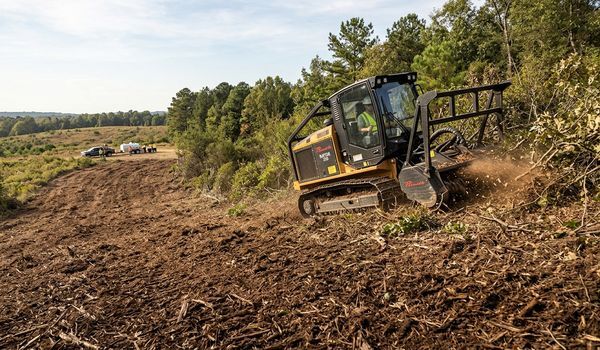
A forestry mulcher is one of the most profitable machines a land clearing contractor can own, and one of the most expensive. A single purpose-built mulching carrier can run well into six figures, and even a high-flow skid steer attachment represents a serious capital outlay. Forestry mulcher financing lets you put that machine to work now, earn revenue from it immediately, and spread the cost over predictable monthly payments that match your cash flow.
This guide covers everything a business owner needs to know about financing a forestry mulcher: what the machines cost, how equipment financing works, which mulcher types qualify, what lenders look for, and how to structure payments around the seasonal reality of land clearing work. Whether you run an established vegetation management company or you are adding mulching services to an existing excavation or tree service operation, the information below will help you fund the right machine on the right terms.
In This Article
- What Is Forestry Mulcher Financing?
- How Much Does a Forestry Mulcher Cost?
- Key Benefits of Financing a Forestry Mulcher
- How Forestry Mulcher Financing Works
- Types of Forestry Mulchers You Can Finance
- Financing vs. Leasing vs. Renting
- Who Qualifies for Forestry Mulcher Financing?
- How Crestmont Capital Helps
- Real-World Financing Scenarios
- Frequently Asked Questions
- How to Get Started
What Is Forestry Mulcher Financing?
Forestry mulcher financing is a form of equipment financing built around the purchase of mulching machinery: drum and disc mulcher attachments, skid steer and excavator mulching heads, and dedicated purpose-built carriers from manufacturers such as Fecon, FAE, Prinoth, Denis Cimaf, Loftness, and Tigercat. Instead of paying the full purchase price upfront, a lender funds the machine and you repay the balance in fixed monthly installments over an agreed term, typically 24 to 72 months.
The equipment itself serves as collateral for the transaction. That single feature is what makes forestry equipment financing so accessible compared to unsecured borrowing. Because the lender holds a security interest in a machine with strong resale value, approval standards focus more on the health of your business and the revenue the machine will produce than on perfect credit or years of financial history.
Mulcher financing is used by land clearing contractors, right-of-way and utility vegetation management crews, wildfire mitigation companies, site preparation firms, ranch and land management operations, and tree service companies expanding into full land clearing. It can cover new machines, used machines, attachments purchased separately from the carrier, and in many cases the trailers, grapples, and support gear that complete a working mulching package.
How Much Does a Forestry Mulcher Cost?
The answer depends on the class of machine you are buying. The forestry mulcher price spectrum is wide, and understanding it is the first step in deciding how much to finance. Here is how the market breaks down in 2026:
| Mulcher Type | Typical Price Range (New) | Common Use Case |
|---|---|---|
| Skid steer drum or disc mulcher attachment | $22,000 to $55,000 | Light land clearing, fence lines, residential lots |
| Excavator mulching head | $30,000 to $85,000 | Steep terrain, selective clearing, ditch banks |
| High-flow skid steer or compact track loader (carrier only) | $65,000 to $110,000 | Power source for mulching attachments |
| Dedicated purpose-built mulching carrier (Fecon, FAE, Prinoth) | $350,000 to $700,000+ | High-production commercial clearing, right-of-way work |
| Used forestry mulcher (attachment or carrier) | 40% to 70% of new price | Budget-conscious buyers, backup machines |
When owners ask how much does a forestry mulcher cost, the honest answer is that the attachment is only part of the equation. A skid steer forestry mulcher setup that can handle serious production work usually means a high-flow compact track loader in the $80,000 range plus a $35,000 to $45,000 mulching head, plus a trailer capable of moving the combined weight. All in, a working package frequently lands between $120,000 and $180,000. Dedicated carriers push total project cost far higher but deliver production rates attachments cannot match.
Key Stat: Forestry mulching services typically bill between $1,500 and $3,000 per acre depending on vegetation density and terrain, with many contractors also quoting hourly rates of $150 to $350 for machine and operator. At those rates, a financed mulcher working steady contracts can cover its monthly payment within the first week of each month.
These numbers matter to lenders as much as they matter to you. A machine that generates $20,000 to $60,000 in monthly revenue against a $2,500 to $6,000 payment is an easy underwriting story, which is exactly why well-run land clearing businesses get approved for mulcher financing quickly.
Key Benefits of Financing a Forestry Mulcher
Paying cash for a mulcher is possible for some operators, but it is rarely the best use of capital. Financing a forestry mulcher delivers advantages that go well beyond simple affordability:
- Preserve working capital. Land clearing is a cash-hungry business. Fuel, operators, insurance, transport, and maintenance demand liquidity every week. Financing keeps your cash reserves available for payroll and growth instead of locking them inside a single machine.
- Start earning immediately. A mulcher financed this month can be on a job site next week. The revenue it produces from day one services the debt, so the machine effectively pays for itself as it works.
- Fixed, predictable payments. Loan and lease payments stay constant for the full term, which makes bidding and job costing far more accurate than the uncertainty of rental rates or revolving credit.
- Build equity in a hard asset. Well-maintained mulchers hold their value. Each payment builds ownership equity you can leverage later through trade-in, sale, or refinance.
- Match the machine to the work you actually win. Financing lets you scale up to the right class of equipment for the contracts in front of you instead of making do with undersized gear that costs you bids.
- Potential payment structures for seasonal work. Some equipment financing programs offer seasonal or deferred payment schedules that line up with the heavier clearing season in your region.
Ready to Clear More Land This Season?
Finance the forestry mulcher your contracts demand. Fast decisions, flexible terms, and a team that understands land clearing equipment.
Apply Now →How Forestry Mulcher Financing Works
The mechanics of mulcher financing follow the same proven structure as other heavy equipment transactions, with a few land-clearing-specific nuances. Here is the process from application to funding:
Step 1: Identify the Machine and Get a Quote
Start with the dealer, private seller, or auction house and obtain a formal quote or purchase order. Lenders need the year, make, model, serial number, hours (for used machines), and sale price. If you are buying an attachment and carrier together, list both on the same quote so they can be funded in a single transaction.
Step 2: Submit a Financing Application
A complete application includes basic business information (legal name, EIN, time in business, annual revenue), owner details, and the equipment quote. For transactions under roughly $250,000, many equipment lenders, including Crestmont Capital, can make a decision on the application alone plus recent bank statements. Larger dedicated-carrier deals may call for two years of tax returns or financial statements.
Step 3: Underwriting and Approval
The underwriter evaluates three things: your business cash flow, your credit profile, and the collateral. Mulchers are viewed favorably because demand for used mulching equipment is strong and resale values hold up well. Approvals for qualified borrowers commonly arrive within 24 to 48 hours, and sometimes the same day.
Step 4: Documentation and Funding
Once approved, you sign the financing agreement, the lender pays the seller directly, and you take delivery of the machine. Funding typically completes within a few business days of document execution. Title or a UCC-1 filing is recorded with the lender listed as lienholder until the balance is paid off.
Step 5: Repayment
You make fixed monthly payments for the term of the agreement, usually 24 to 72 months depending on the machine age and amount financed. At the end of a loan, you own the mulcher outright. At the end of a lease, you can typically buy it at a preset residual, return it, or upgrade to a new machine.
Businesses that prefer a government-backed route can also look at SBA loan programs, including the SBA 504 loan program, which can fund major equipment purchases at long fixed terms. SBA loans involve more paperwork and slower timelines than direct equipment financing, so most contractors use them for very large purchases and use conventional equipment financing for speed.
Types of Forestry Mulchers You Can Finance
Lenders that understand land clearing equipment will finance virtually every class of mulching machine, provided it has verifiable value and a documented seller. The main categories:
Drum Mulchers
Drum mulchers use a rotating cylindrical drum fitted with fixed teeth to grind standing vegetation into mulch in a single pass. They excel at processing whole trees and dense brush quickly and produce a fine, even mulch that decomposes cleanly. Drum heads are the workhorse of high-production land clearing and are the most commonly financed mulcher type for full-time contractors.
Disc Mulchers
Disc mulchers spin a heavy steel disc with cutting teeth around its edge, functioning more like a giant saw. They cut faster than drums in light to medium brush and are popular for fence-line work, pasture reclamation, and utility corridor maintenance. Their simpler design usually means a lower purchase price, which translates to smaller monthly payments.
Skid Steer Forestry Mulcher Attachments
A skid steer forestry mulcher attachment turns a high-flow compact track loader into a capable clearing machine at a fraction of the cost of a dedicated carrier. This is the entry point for most land clearing businesses, and it is an easy financing story: both the attachment and the carrier can be funded together in one agreement. Our guide to skid steer financing covers the carrier side of that package in detail.
Excavator Mulching Heads
Excavator-mounted mulchers reach places wheeled machines cannot: steep slopes, wet ground, ditch banks, and selective thinning between keeper trees. Contractors doing right-of-way, pipeline, or environmental work favor them. Both the head and the excavator itself are financeable, often together.
Dedicated Purpose-Built Carriers
Machines like the Fecon FTX series, FAE tracked carriers, and Prinoth Raptor line are engineered from the ground up for mulching, with purpose-built hydraulics, cooling, and guarding. They deliver the highest daily production in the industry and command prices to match, commonly $350,000 to $700,000 or more. Financing is essentially mandatory at this level, and lenders experienced in forestry equipment handle these transactions routinely.
Used Mulchers
The used market for forestry mulchers is active, and used equipment is fully financeable. Expect lenders to consider machine hours, condition documentation, and remaining tooth and rotor life. A well-kept used drum mulcher at 60% of new price can be the highest-ROI purchase a growing clearing company makes.
By the Numbers
Forestry Mulcher Financing: Key Statistics
$22K-$55K
Typical price range for a new skid steer mulcher attachment
$700K+
Top end for a dedicated purpose-built mulching carrier
$1.5K-$3K
Typical per-acre billing rate for forestry mulching services
24-72
Common repayment term range in months for mulcher financing
Financing vs. Leasing vs. Renting: Which Is Right for Your Business?
There are three realistic ways to put a forestry mulcher on a job site, and the right choice depends on your utilization, cash position, and long-term plans. Here is how the options compare:
| Factor | Equipment Loan (Financing) | Equipment Lease | Rental |
|---|---|---|---|
| Ownership | You own it at payoff | Buyout, return, or upgrade at end | Never |
| Monthly cost | Moderate | Often lower than a loan | Highest per month of use |
| Down payment | 0% to 20% typical | First/last payment common | None, but deposits apply |
| Best for | High-utilization contractors building a fleet | Operators who upgrade machines every few years | Occasional clearing work or trying the service line |
| Long-term cost | Lowest total cost of ownership | Middle ground | Most expensive over time |
If you run mulching jobs more than about 40% of available working days, ownership through financing almost always wins on pure economics. Rental rates on a dedicated carrier can reach $3,000 to $6,000 per week; a financed machine doing steady work costs a fraction of that per productive day. Renting makes sense only when clearing is an occasional add-on to your core services. Leasing sits in between and shines for operators who want the newest machine every three to five years without managing trade-ins. Our breakdown of equipment leasing versus equipment financing walks through the math in more detail.
Who Qualifies for Forestry Mulcher Financing?
Mulcher financing is accessible to a wider range of businesses than most owners expect. Because the machine secures the transaction, lenders can work with profiles that would struggle to qualify for unsecured credit. The typical qualification picture:
- Time in business. Two or more years is ideal and unlocks the best rates, but younger businesses with strong revenue and contracts in hand are routinely approved. Newer operations may be asked for a larger down payment.
- Credit profile. A personal credit score of 650 or higher opens most programs, and scores above 700 access the strongest terms. Scores in the 600 to 650 range are workable with compensating factors like solid cash flow or additional collateral. Even challenged credit can qualify when the deal is structured correctly.
- Revenue and cash flow. Lenders want to see that monthly business deposits comfortably cover the projected payment plus existing obligations. For most transactions, three to six months of business bank statements tell that story.
- Industry experience. Documented experience in land clearing, logging, excavation, or tree work strengthens the file, especially for newer companies bidding on larger contracts.
- The machine itself. New or late-model equipment from recognized manufacturers underwrites easily. Older used machines may carry shorter terms or slightly higher rates to match their remaining useful life.
Pro Tip: If your business has strong monthly deposits but a thin credit file, apply with six months of bank statements ready. Application-only programs that underwrite on cash flow can approve transactions up to $250,000 without tax returns, which is often the fastest path to funding a mulcher package.
Not sure where your business stands? Reviewing current equipment financing rates and approval benchmarks gives you a realistic baseline before you apply, and the U.S. Census Bureau's small business data confirms what lenders already know: small firms dominate the land clearing and site preparation industry, and equipment financing is how most of them grow.
How Crestmont Capital Helps Land Clearing Businesses Finance Mulchers
Crestmont Capital is rated the #1 business lender in the country, and equipment financing is one of our core specialties. We fund forestry mulchers, carriers, attachments, and complete clearing packages for contractors across the United States, from first-time skid steer buyers to fleets adding dedicated Fecon carriers.
What working with our team looks like:
- Fast decisions. Most applications receive an answer within 24 hours, and funding can complete in as little as a few days. When a dealer is holding a machine for you, speed wins the deal.
- Flexible structures. Loan and lease options, terms from 24 to 72 months, deferred and seasonal payment schedules for qualifying borrowers, and financing for both new and used machines.
- One transaction for the whole package. Finance the mulcher, the carrier, the trailer, and the support attachments together so your crew arrives on site fully equipped from day one.
- Real equipment expertise. Our specialists understand what a drum mulcher is, why hours matter more than model year on a used carrier, and how land clearing revenue actually flows. You will not spend the call explaining your business.
Explore our equipment financing programs for the full picture of how we structure deals, or see how we handle related machinery in our guide to logging equipment financing for timber and forestry operations. If you are weighing ownership against a lease structure, our equipment leasing options are worth a look as well. Businesses purchasing a pre-owned machine can also review our dedicated used equipment financing programs.
Get the Machine Your Contracts Are Waiting For
One application, a decision in as little as 24 hours, and funding structured around your land clearing season. No obligation to see your options.
Check Your Options →Real-World Financing Scenarios
Abstract numbers only go so far. These four scenarios reflect how land clearing businesses actually use forestry mulcher financing in the field.
Scenario 1: The Tree Service Adding Land Clearing
A three-crew tree service in Georgia keeps losing bids to competitors who offer full lot clearing. The owner prices a high-flow compact track loader at $86,000 and a drum mulcher head at $41,000, with a trailer at $14,000: $141,000 all in. With four years in business, a 690 credit score, and $1.1 million in annual revenue, he finances the full package over 60 months at roughly $2,800 per month. His first two clearing contracts, a six-acre residential development site and a utility easement job, gross $34,000 in the first 45 days. The machine has covered its payment for the year before the quarter ends.
Scenario 2: The Established Contractor Upgrading to a Dedicated Carrier
A Texas land clearing company running two skid steer setups wins a 300-acre ranch reclamation contract that attachments cannot finish on schedule. The owner finances a used dedicated carrier with 1,400 hours for $385,000 over 66 months. The payment lands near $7,400 per month, but the machine mulches eight to ten acres a day where his skid steers managed three. The ranch contract alone bills over $400,000, and the carrier frees the skid steers for smaller residential jobs the company used to turn away.
Scenario 3: The Wildfire Mitigation Startup Division
An excavation contractor in Colorado launches a defensible-space and fuels-reduction division after his county expands wildfire mitigation grants. Two years of operating history and strong deposits get him approved for an excavator mulching head at $58,000 with 10% down and a 48-month term. Grant-funded municipal work fills his schedule from April through November, and his lender structures the agreement with a seasonal payment plan that lowers payments during the winter months when mitigation work pauses.
Scenario 4: The Vegetation Management Firm Replacing Rentals
A right-of-way maintenance firm in the Southeast has been renting a dedicated mulcher for 20 weeks a year at $4,500 per week: $90,000 annually with nothing to show for it. The owner finances a new disc mulcher and carrier package for $465,000 on a 72-month term at roughly $8,100 per month. Annual equipment cost drops from $90,000 in rent to about $97,000 in payments, but the firm now owns a $465,000 asset, bids year-round contracts it previously declined, and projects the machine will be paid off while still worth six figures.
Frequently Asked Questions
What is forestry mulcher financing?+
Forestry mulcher financing is an equipment loan or lease used to purchase mulching machinery, including drum and disc attachments, skid steer and excavator heads, and dedicated carriers. The lender funds the purchase, the machine serves as collateral, and you repay the balance in fixed monthly payments over a set term while the equipment generates revenue for your business.
How much does a forestry mulcher cost?+
New skid steer mulcher attachments typically run $22,000 to $55,000, excavator heads $30,000 to $85,000, and dedicated purpose-built carriers $350,000 to $700,000 or more. A complete working package with carrier, head, and trailer commonly totals $120,000 to $180,000. Used machines generally sell for 40% to 70% of new price depending on hours and condition.
Can I finance a used forestry mulcher?+
Yes. Used forestry mulchers are financed routinely, including private-party and auction purchases. Lenders will review the machine's hours, condition documentation, and serial number, and may assign a slightly shorter term or a modestly higher rate to match the remaining useful life. A well-maintained used drum mulcher is often the highest-ROI purchase in a growing fleet.
What credit score do I need to finance a forestry mulcher?+
A score of 650 or higher opens most equipment financing programs, and 700-plus accesses the strongest rates. Scores between 600 and 650 can still qualify with solid business cash flow, a larger down payment, or additional collateral. Because the machine secures the deal, credit matters less than it would for an unsecured loan.
How much down payment is required for forestry mulcher financing?+
Qualified borrowers with established businesses and strong credit can often finance 100% of the purchase price with no money down. More commonly, lenders ask for 5% to 20% down depending on credit, time in business, and the age of the machine. A larger down payment lowers both the monthly payment and the total interest cost.
Can I finance a skid steer forestry mulcher attachment by itself?+
Yes. Attachments are financeable on their own, and many contractors do exactly that when they already own a suitable high-flow carrier. If you need the carrier too, the attachment, loader, and trailer can usually be bundled into a single financing agreement with one monthly payment, which simplifies bookkeeping and often improves the overall terms.
How long are repayment terms on forestry mulcher loans?+
Terms typically range from 24 to 72 months. New machines and dedicated carriers usually qualify for the longest terms, while older used equipment may be limited to 36 to 60 months. Longer terms lower the monthly payment but increase total interest paid, so most contractors choose the shortest term their cash flow comfortably supports.
Is it better to lease or finance a forestry mulcher?+
Financing wins for high-utilization contractors who plan to keep the machine for years, because total cost of ownership is lowest and you build equity. Leasing makes sense if you prefer lower payments and plan to upgrade every three to five years. Operators who only need a mulcher occasionally should compare both against seasonal rental before committing.
Can a newer land clearing business qualify for mulcher financing?+
Often, yes. Businesses under two years old face tighter standards, but strong monthly revenue, signed contracts, industry experience, or a larger down payment can offset limited history. Lenders experienced in land clearing equipment understand seasonal revenue patterns and will look at the full picture rather than a single metric.
What documents do I need to apply?+
For most transactions under $250,000: a one-page application, three to six months of business bank statements, and the equipment quote or bill of sale. Larger deals for dedicated carriers may also require two years of business tax returns, a current profit and loss statement, and a balance sheet. Having documents ready at application shortens the path to funding considerably.
How fast can I get funded for a forestry mulcher?+
Application-only approvals frequently arrive within 24 hours, and funding typically completes within two to five business days after documents are signed. Deals requiring full financials take a few days longer. If a dealer is holding a machine for you, tell your lender the timeline up front; equipment lenders close time-sensitive purchases every day.
Can I finance multiple pieces of equipment in one deal?+
Yes, and it is usually smart to do so. Bundling the mulcher, carrier, trailer, grapple, and support attachments into a single agreement gives you one payment, one approval, and often better overall terms than separate transactions. Fleet additions of several machines at once can also be structured as a master lease or equipment line of credit.
Does financing cover trailers and support equipment?+
In most cases, yes. Tilt-deck and lowboy trailers, grapples, stump grinders, spare cutter heads, and teeth packages can be included on the same invoice and financed together with the mulcher. List every item on the dealer quote when you apply so the full working package is funded in one transaction rather than pieced together later.
What happens at the end of a mulcher lease?+
It depends on the lease structure. With a dollar-buyout or equipment finance agreement, you own the machine outright at the end. With a fair-market-value lease, you can purchase the mulcher at its then-current value, return it, or roll into a new machine. Many contractors use the end of a lease as a natural upgrade point to newer, higher-production equipment.
Are seasonal payment plans available for land clearing businesses?+
Some equipment financing programs offer seasonal or deferred payment structures for qualifying borrowers, with lower payments during your slow months and larger payments during peak clearing season. If your revenue concentrates in a specific part of the year, ask about seasonal scheduling when you apply; matching the payment calendar to your cash flow is one of the most valuable structures available.
Ready to Put a Mulcher to Work?
Join the land clearing businesses that fund equipment through the nation's #1 rated lender. Apply in minutes, get a decision in as little as 24 hours.
Get Started Now →How to Get Started
Complete our quick application at offers.crestmontcapital.com/apply-now. It takes just a few minutes and does not obligate you to anything.
A Crestmont Capital equipment advisor will review your application, discuss the mulcher and package you are buying, and structure terms around your cash flow and season.
Once approved and documented, we pay your seller directly, often within days, so you can take delivery and put the machine on a job site immediately.
The Bottom Line on Forestry Mulcher Financing
Land clearing is a business where the right machine changes everything: the contracts you can bid, the acreage you can finish, and the revenue each crew produces. Forestry mulcher financing puts that machine in your fleet now, on payments sized to your cash flow, while the equipment earns its keep from the first job. Whether you are adding a skid steer forestry mulcher attachment to an existing loader or stepping up to a dedicated carrier for high-production work, the financing structure matters as much as the iron.
Crestmont Capital funds mulchers, carriers, attachments, and complete clearing packages for contractors nationwide, with fast decisions, flexible terms, and advisors who understand the land clearing industry. If you are ready to stop renting, stop losing bids, and start building equity in the machine that grows your business, apply today and see your forestry mulcher financing options within 24 hours.
Disclaimer: The information provided in this article is for general educational purposes only and is not financial, legal, or tax advice. Funding terms, qualifications, and product availability may vary and are subject to change without notice. Crestmont Capital does not guarantee approval, rates, or specific outcomes. For personalized information about your business funding options, contact our team directly.

Allan Garfinkle
Allan Garfinkle is the Chief Revenue Officer at Crestmont Capital, where he has spent more than a decade leading revenue strategy, business development, and operational growth. With 28 years of experience building and advising startups and small businesses, Allan has helped more than 10,000 business owners navigate financing decisions, growth opportunities, and changing economic conditions. He earned a Bachelor of Science in Economics and an MBA with a concentration in Finance from Northeastern University, as well as a Juris Doctor from New England Law, where his studies focused on contracts and business law. His writing draws on extensive practical experience in small-business lending, equipment financing, business credit, and commercial finance.