
 (800) 949-0401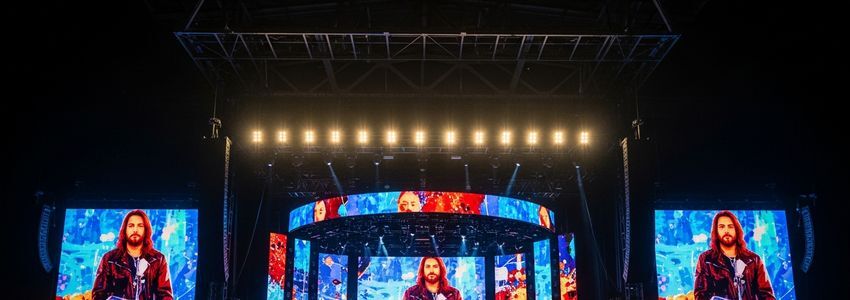
LED Wall and Projection System Leasing for Concerts: The Complete Guide for Event and Entertainment Businesses
Concert and live event production has never demanded more from visual technology. Audiences arrive expecting towering LED walls, synchronized projection mapping, and immersive displays that make the performance unforgettable. The challenge is that this equipment carries a steep price tag - a single high-quality LED wall can run $50,000 to $500,000 or more depending on size and resolution. For concert promoters, touring production companies, and permanent venues, LED wall leasing has become the preferred financing strategy to access world-class visual technology without depleting capital reserves.
In This Article
- What Is LED Wall and Projection System Leasing?
- Key Benefits for Concert and Event Businesses
- Types of Visual Equipment You Can Lease
- How the Leasing Process Works
- Leasing vs. Buying: A Full Comparison
- Who Should Consider Leasing Visual Equipment?
- How Crestmont Capital Helps
- Real-World Scenarios
- How to Get Started
- Frequently Asked Questions
What Is LED Wall and Projection System Leasing?
LED wall leasing and projection system leasing are equipment financing arrangements that allow concert promoters, touring companies, festival organizers, and entertainment venues to use high-value visual display technology by making regular payments rather than purchasing outright. The leasing company retains ownership of the equipment while the lessee enjoys full operational use for the duration of the lease term.
These arrangements are structured similarly to other commercial equipment leases. The lessee selects the LED panels, projection systems, rigging hardware, and related gear they need. A financing company like Crestmont Capital purchases the equipment and leases it back under agreed terms - typically 24 to 72 months. At the end of the term, options often include returning the equipment, renewing the lease, or exercising a purchase option.
LED wall leasing is especially common in the live events and concert industry because the technology evolves rapidly. What was cutting-edge two years ago may be noticeably outpaced by newer panels with higher pixel density, improved brightness, and advanced processing capabilities. Leasing allows production companies to refresh their inventory at each lease cycle rather than being locked into aging hardware they purchased outright.
Key Benefits of Leasing LED Walls and Projection Systems for Concert and Event Businesses
The financial and operational advantages of leasing over purchasing are substantial for businesses in the live events space. Here is what makes LED wall leasing so compelling for concert and entertainment businesses of every size.
Capital preservation. Concert promoters and production companies face significant cash outflows before an event generates revenue - venue deposits, talent fees, marketing, and crew costs. LED wall leasing keeps capital available for these operational needs instead of tying up hundreds of thousands of dollars in equipment that sits idle between events.
Access to premium technology. Leasing makes it financially viable to deploy the highest-quality visual gear. Rather than purchasing a mid-range system outright, a production company can lease a flagship-spec LED wall at a manageable monthly payment that fits within event budgets.
Technology upgradeability. LED panel technology advances significantly every 18 to 24 months. With a lease, you are never permanently committed to yesterday's specs. When your lease term ends, you can upgrade to the latest panels without the hassle of selling depreciated equipment.
Predictable costs. Fixed monthly lease payments simplify budgeting and cash flow forecasting. Production companies can incorporate equipment lease costs directly into event pricing and budgets without large capital expenditure surprises.
Potential financial statement benefits. Depending on lease structure, operating leases may be treated as operating expenses rather than capital assets, which can offer balance sheet advantages. Consult your accountant for guidance specific to your situation.
Faster deployment. Approved businesses can have equipment in hand quickly - often within days of lease approval. This matters enormously when a last-minute event booking requires visual equipment that was not in inventory.
Industry Perspective: According to the Event Production industry, LED display technology is one of the fastest-depreciating categories of professional AV equipment - often losing 30 to 50 percent of its value within three years. Leasing transfers that depreciation risk to the financing company.
Ready to Power Your Next Show?
Get fast, flexible equipment leasing from the #1 business lender in the U.S. No obligation - apply in minutes.
Apply Now →Types of LED Walls and Projection Systems You Can Lease
The category of visual display equipment available for leasing spans a wide spectrum, from portable outdoor LED panels to permanent installation projection mapping systems. Understanding what is available helps production companies and venue operators build financing strategies around their specific needs.
LED Video Walls
Indoor and outdoor LED video walls are composed of modular LED panel tiles that combine to create large, seamless displays. Pixel pitch - the distance in millimeters between individual LED clusters - determines resolution and optimal viewing distance. Fine-pitch LED walls (under 2.5mm) deliver exceptional image clarity for indoor use at close viewing distances. Outdoor LED walls typically use larger pixel pitches (3.9mm to 10mm) optimized for bright ambient conditions and longer viewing distances common at festivals and amphitheaters.
Projection Systems
High-lumen laser projectors are the workhorses of large-scale concert projection. Single-chip DLP projectors in the 20,000 to 50,000 lumen range can handle rear-projection setups behind scrims or front-projection onto large screen systems. Multi-projector blending rigs create seamless ultra-wide canvases. Projection mapping systems use software-controlled projectors to transform three-dimensional stage structures, set pieces, and architectural surfaces into dynamic visual canvases.
LED Stage Screens and IMAG Systems
Image Magnification (IMAG) systems use live camera feeds to display real-time close-up footage of performers on flanking LED screens or projection surfaces. These systems are essential at larger concerts and arenas where audience members in the back sections cannot see the stage clearly. IMAG systems typically include LED video walls, video switching hardware, camera systems, and signal processing equipment.
Transparent and Creative LED
Transparent LED panels, flexible LED curtains, and creative-format LED tiles open up new possibilities for stage design. These specialty formats allow lighting and set design to integrate visual content seamlessly into architectural and scenic elements rather than simply mounting a rectangular screen.
Supporting Infrastructure
Complete LED wall deployments require substantial supporting infrastructure: rigging hardware and motors, video processors and scalers, signal distribution equipment, power conditioning and distribution, cabling and management systems, and flight cases for transport and protection. Many leases can be structured to cover complete turnkey systems including this infrastructure.
By the Numbers
LED Wall and Visual Equipment - Key Industry Statistics
$32B+
Global live events market expected by 2030
40%
Of production companies use equipment leasing for major AV gear
24-72
Months - typical LED wall lease terms available
$500K+
Cost of major stage LED wall systems that can be leased
How LED Wall and Projection System Leasing Works
Understanding the mechanics of equipment leasing helps production companies and venue operators make informed financing decisions and negotiate favorable terms.
Step 1: Equipment Selection
The process begins with identifying the specific equipment needed. This includes LED panel specifications (pixel pitch, brightness measured in nits, outdoor/indoor rating), quantities needed to build the desired wall size, supporting processors and hardware, and any installation or rigging requirements. Many businesses work with their preferred equipment vendors to generate detailed quotes that serve as the basis for the lease application.
Step 2: Application and Approval
Commercial equipment lease applications evaluate the creditworthiness of the business. Lenders review time in business, annual revenue, existing debt obligations, credit history, and the nature of the business. Strong-performing production companies with established revenue histories typically qualify for competitive rates. Newer businesses may face higher rates but can still access financing through lenders specializing in entertainment industry equipment.
Step 3: Lease Structure Selection
Lessees choose between lease types based on their financial goals. A Finance Lease (also called a Capital Lease) functions more like a loan - payments build toward ownership and the asset typically appears on the balance sheet. An Operating Lease keeps the asset off the balance sheet, with lower payments and the option to return equipment or upgrade at term end. Fair Market Value (FMV) leases are operating leases structured around the residual equipment value, offering the lowest monthly payments.
Step 4: Documentation and Closing
Once approved and structured, the lease agreement is executed. The financing company pays the equipment vendor directly, and the equipment is delivered to the lessee. Monthly payments begin according to the agreed schedule.
Step 5: End-of-Lease Options
At lease maturity, businesses typically choose from three paths: return the equipment (common with FMV leases when upgrading to newer technology), purchase the equipment at pre-agreed residual value, or extend the lease with modified terms.
Leasing vs. Buying: A Full Comparison for Concert and Event Businesses
The decision between leasing and purchasing LED walls and projection systems is one of the most consequential financial choices a concert venue or production company makes. Here is a comprehensive breakdown across the key decision factors.
| Factor | Leasing | Buying Outright |
|---|---|---|
| Upfront Cost | Low - first/last payment or small deposit | High - full purchase price required |
| Monthly Cash Flow | Fixed monthly payments | No payments after purchase |
| Technology Refresh | Easy - upgrade at end of lease term | Must sell used equipment first |
| Depreciation Risk | Borne by lessor (for FMV leases) | Borne by owner |
| Balance Sheet Impact | Operating leases may be off-balance-sheet | Asset and any loan on balance sheet |
| Total Cost Over Time | Higher total paid (includes financing cost) | Lower total if held long-term |
| Maintenance Flexibility | Some leases include service agreements | Owner responsible for all repairs |
| Ownership at End | No (unless purchase option exercised) | Yes - full ownership throughout |
| Access to Capital for Operations | Capital preserved for events and operations | Capital tied up in equipment asset |
The conclusion drawn from this comparison by most professional production companies is that leasing is preferred when technology change is fast, cash flow is event-driven, or capital is needed for multiple operational priorities simultaneously. Purchasing makes more sense for stable, commoditized equipment with long useful lives and minimal technology change.
Who Should Consider Leasing LED Walls and Projection Systems?
Did You Know? The U.S. live events and entertainment industry generated more than $30 billion in revenue in recent years, according to industry research. Visual production quality is increasingly cited as a key differentiator for venues and touring acts competing for audience loyalty.
LED wall and projection system leasing is well-suited for a wide range of businesses in the concert and event space.
Concert Promoters and Production Companies. Organizations that produce concerts on a regular basis - from club-level shows to arena tours - benefit from leasing large-format LED systems that can be deployed across multiple events. Rather than renting equipment show by show at premium short-term rates, an annual or multi-year lease can dramatically reduce per-event visual production costs.
Festival Organizers. Multi-day music festivals require substantial quantities of LED stage screens, projection systems for side-stage displays and artwork installations, and specialty LED for immersive areas. Festival organizers who run recurring annual events are excellent candidates for leasing arrangements that provide guaranteed equipment availability and consistent quality year over year.
Permanent Entertainment Venues. Concert halls, performing arts centers, amphitheaters, and arena-style venues benefit from permanently installed LED walls and projection systems that serve every event on their booking calendar. The predictable monthly lease payment aligns well with steady venue operating revenue.
Touring Production Companies. Companies that provide full production services for touring artists - handling stages, lighting, sound, and visuals - increasingly own or operate LED inventories on lease structures. Having a consistent inventory under lease allows touring companies to offer clients reliable, high-spec visual production without the capital burden of ownership.
Corporate Event Production Firms. Corporate events, product launches, and brand activations regularly demand premium visual production. Corporate event companies that win contracts requiring top-tier LED installations can use leasing to access the right equipment for each project without building a permanent inventory.
Nightclubs and Immersive Entertainment Venues. LED walls, video tunnels, and projection mapping are central features of modern nightclub and immersive experience design. Venues in this space benefit from leasing because the visual identity of the space often needs refreshing every few years to remain competitive and attract new audiences.
Get Financing for Your Visual Production Equipment
Crestmont Capital specializes in entertainment and event industry equipment financing. Fast approvals, flexible terms - apply today.
Apply Now →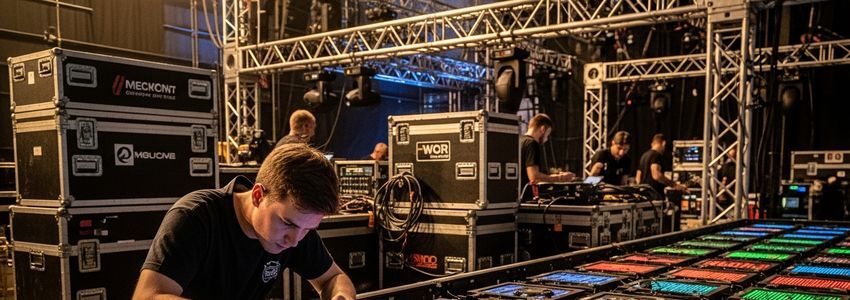
How Crestmont Capital Helps Concert and Event Businesses Finance Visual Equipment
Crestmont Capital is a leading U.S. business lender with deep expertise in equipment financing and leasing across industries including entertainment and live event production. Our team understands the unique financial dynamics of the concert and events industry - the seasonal cash flow patterns, the event-based revenue model, and the critical importance of having the right visual technology deployed on time.
Our equipment leasing programs are designed with flexibility that matches the realities of entertainment business operations. We offer lease terms from 24 to 72 months, competitive rates for qualified businesses, and structures that can accommodate both operating and finance lease preferences.
Beyond LED walls and projection systems, Crestmont Capital finances the full spectrum of production equipment - audio systems, lighting rigs, power distribution, staging, rigging hardware, and the vehicles and transport cases that keep touring productions moving. Our commercial equipment financing solutions scale from small production company startups to major touring operations.
If you are a venue investing in permanent visual infrastructure, our capital equipment financing programs offer terms and structures appropriate for long-term fixed assets. For production companies managing multiple concurrent leases across a diverse equipment inventory, our team can structure portfolio financing solutions that simplify management and optimize overall payment structure.
The application process is streamlined and designed for speed. Most businesses receive decisions within 24 to 48 hours, and funding can be completed within days of approval. We work directly with equipment vendors on your behalf, handling the vendor payment process so you can focus on your production.
Real-World Scenarios: LED Wall Leasing in Practice
Understanding how businesses actually use LED wall leasing helps illustrate the range of applications and the financial logic behind each decision.
Scenario 1: The Regional Concert Promoter. A regional concert promoter based in the Southeast runs 40 to 60 shows per year at 1,500 to 5,000 capacity venues. They previously rented LED IMAG systems for every show at roughly $8,000 to $15,000 per event. After analysis, they leased their own 8x4 LED IMAG system for a monthly payment of approximately $3,200 on a 36-month term. With the system deployed across 50 shows annually, per-show visual cost dropped from over $10,000 to under $800 per show in equipment cost. The lease paid for itself within two months of full booking.
Scenario 2: The Festival Operator. An annual three-day music festival in the Midwest wanted to upgrade from rental equipment to owned LED infrastructure across three stages. The full investment for main stage LED wall, side IMAG screens, and two secondary stage screens was quoted at $380,000. Through a 48-month lease with Crestmont Capital, monthly payments came to approximately $9,200. The festival's sponsor revenue and ticket sales easily absorbed this cost, and the lease gave the festival team guaranteed equipment access and quality control for the four-year term.
Scenario 3: The Nightclub Renovation. A high-volume nightclub in a major market wanted to integrate an 18 x 10 LED video wall behind the DJ booth as the centerpiece of a major renovation. The LED system alone cost $245,000. Rather than fund the entire renovation from cash reserves, the ownership group financed the LED wall on a 60-month lease at approximately $4,800 per month. The visual upgrade drove measurable increases in ticket sales and social media engagement, with the investment delivering strong return within the first operating year.
Scenario 4: The Touring Production Company. A touring production company that provides complete visual production for major recording artists entered a 36-month lease on a 12-truck touring LED inventory valued at $1.2 million. The structured lease allowed them to bid on and win three major touring contracts in the first year that would have been out of reach without the equipment. The touring revenue covered lease payments multiple times over while building the company's reputation and client roster.
Scenario 5: The Corporate Event Firm. A corporate event production company won a 12-month contract providing quarterly product launch events for a Fortune 500 technology company. The client required a specific 20x10 LED wall configuration with custom-ratio panels for each event. The production company leased the equipment on a 24-month term, locking in the right specs for the contract and several follow-on events while keeping their upfront capital available for staffing and operations.
Pro Tip: When structuring an LED wall lease for production company use, consider including rigging hardware, video processing, and cabling in the same lease rather than financing components separately. Bundled leases simplify paperwork and often achieve better overall payment terms than multiple individual agreements.
Build Your Production Business with Smart Financing
From LED walls to full stage production systems - Crestmont Capital has financing solutions built for the entertainment industry. Start your application today.
Apply Now →How to Get Started with LED Wall and Projection System Leasing
Determine what LED wall size, pixel pitch, brightness, and supporting systems you need. Get vendor quotes for the specific configuration required for your application.
Complete our quick application at offers.crestmontcapital.com/apply-now - takes just a few minutes. Have your vendor quote, business financials, and tax ID ready.
A Crestmont Capital specialist will review your application and present lease structure options tailored to your business. Review term length, monthly payment, and end-of-lease options.
Once documentation is complete, Crestmont Capital pays your vendor directly and your equipment ships. Receive your LED wall, projection system, or complete visual rig - ready to deploy at your next event.
Frequently Asked Questions
Disclaimer: The information provided in this article is for general educational purposes only and is not financial, legal, or tax advice. Funding terms, qualifications, and product availability may vary and are subject to change without notice. Crestmont Capital does not guarantee approval, rates, or specific outcomes. For personalized information about your business funding options, contact our team directly.








