
 (800) 949-0401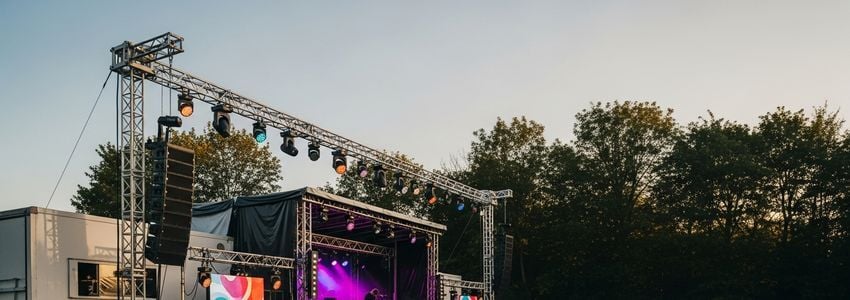
Mobile Stage Equipment Financing for Concerts and Festivals: The Complete Financing Guide for Business Owners
The live event industry is built on creating unforgettable experiences. From local music festivals to massive, multi-day concerts, the quality of the production is paramount. At the heart of any great outdoor event is the stage itself, a complex and costly piece of equipment that serves as the focal point for performers and audiences alike. For event production companies, festival organizers, and rental businesses, acquiring a high-quality mobile stage is a significant capital investment. Paying cash upfront can drain working capital, restricting a company's ability to cover other essential costs like marketing, staffing, and permits. This is where mobile stage equipment financing becomes a critical strategic tool. It provides a direct path to acquiring the necessary assets without depleting cash reserves. By spreading the cost of the equipment over time through predictable monthly payments, businesses can immediately put their new stage to work generating revenue. This financial solution is designed specifically for the acquisition of high-value, long-lasting assets, making it a perfect fit for the unique demands of the concert and festival circuit. Understanding how this financing works is the first step toward scaling your operations and taking on larger, more profitable events. As the #1 rated U.S. business lender, Crestmont Capital has extensive experience in providing capital for the live event and production industry. We recognize that mobile stages, along with the associated lighting, sound, and video equipment, are the revenue-generating engines of your business. This guide provides a comprehensive overview of mobile stage equipment financing, covering everything from the application process and qualification requirements to the long-term benefits for your business. We will explore the different types of equipment you can finance, explain the typical rates and terms, and show you how to secure the funding needed to elevate your event production capabilities.In This Article
- What is Mobile Stage Equipment Financing?
- Benefits of Financing Mobile Stage Equipment
- How Mobile Stage Equipment Financing Works
- Types of Mobile Stage Equipment You Can Finance
- Qualification Requirements for Mobile Stage Financing
- Understanding Rates and Terms
- How Crestmont Capital Helps You Secure Funding
- Real-World Scenarios for Mobile Stage Financing
- Frequently Asked Questions
- How to Get Started
- Conclusion
What is Mobile Stage Equipment Financing?
Mobile stage equipment financing is a specialized type of business loan or lease designed specifically for the purchase of mobile stages and related event production gear. Unlike a general-purpose working capital loan, this financing is asset-backed, meaning the stage itself serves as the collateral for the loan. This structure often makes it easier for businesses to qualify and can lead to more favorable terms, as the lender's risk is secured by a tangible, valuable asset.
The core purpose of this financing is to enable event production companies, rental houses, municipalities, and festival organizers to acquire expensive equipment without a prohibitive upfront cash outlay. A new, professional-grade mobile stage can cost anywhere from $50,000 to over $500,000, depending on its size, hydraulic systems, and included features. For most small to medium-sized businesses, this is a substantial capital expenditure. Financing converts this large one-time cost into a series of manageable monthly payments over a set term, typically ranging from two to seven years.
This financial product functions similarly to an auto loan. The lender provides the funds directly to the equipment manufacturer or vendor, and your business takes possession of the stage immediately. You then make regular payments to the lender until the loan is paid off, at which point you own the equipment outright. This allows you to generate revenue with the new stage from day one, with the equipment essentially paying for itself over its operational lifespan.
Furthermore, mobile stage equipment financing often covers more than just the stage structure. It can be bundled to include essential ancillary equipment such as sound systems, lighting rigs, video walls, power generators, and transportation cases. This comprehensive approach ensures that your business can acquire a complete, event-ready package, fully equipped to meet the demands of modern concerts and festivals. By preserving cash flow, this financing empowers businesses to invest in other growth areas, such as marketing, hiring skilled technicians, or securing contracts for larger events.
Benefits of Financing Mobile Stage Equipment
Opting to finance mobile stage equipment instead of purchasing it with cash offers a multitude of strategic advantages. These benefits extend beyond simple cash preservation, impacting your company's operational flexibility, tax position, and competitive standing in the market.
Preserve Working Capital
The most immediate and significant benefit is the preservation of cash flow. Large capital expenditures can deplete your liquid assets, leaving your business vulnerable to unexpected expenses or unable to seize new opportunities. Financing allows you to keep your cash on hand for daily operations, payroll, marketing campaigns, artist deposits, and other critical business needs. A healthy cash flow is the lifeblood of any business, particularly in the event industry where upfront costs are common.
Acquire Better Equipment
Financing can give you the purchasing power to acquire a larger, more advanced, or higher-quality mobile stage than you could afford with a cash purchase. This means you can invest in equipment with better hydraulics, a larger footprint, higher weight-bearing capacity, and more advanced safety features. Better equipment allows you to service larger events, attract higher-paying clients, and command premium rental rates, directly boosting your revenue potential.
Significant Tax Advantages
Equipment financing offers substantial tax benefits. Under Section 179 of the IRS tax code, businesses can often deduct the full purchase price of qualifying new or used equipment in the year it is placed into service. This can lead to a significant reduction in your company's tax liability. Additionally, the interest paid on the loan is typically tax-deductible as a business expense. These combined benefits can make the true cost of financing much lower than the sticker price. We recommend consulting a tax professional to understand how to best apply these deductions for your specific situation. You can learn more about the potential savings on our Section 179 Tax Deductions page.
Key Insight: The Section 179 deduction limit for 2026 allows businesses to write off up to $1.16 million in qualifying equipment purchases. This tax incentive is specifically designed to encourage businesses to invest in themselves.
Predictable, Fixed Payments
Equipment loans and capital leases typically come with a fixed interest rate and a set repayment term. This results in consistent, predictable monthly payments that do not fluctuate over the life of the loan. This stability makes budgeting and financial forecasting much simpler and more accurate. You know exactly what your equipment costs will be each month, allowing for better long-term financial planning and management.
Build Business Credit
Successfully managing and paying off an equipment loan is a positive mark on your business credit history. A strong credit profile is essential for securing future financing for other needs, such as a business line of credit or a commercial real estate loan. Each on-time payment demonstrates financial responsibility and builds a track record of creditworthiness with lenders.
Stay Competitive
The live event industry is highly competitive. Having state-of-the-art equipment is a key differentiator. A modern, safe, and visually impressive mobile stage can help you win contracts over competitors who may have older or smaller setups. Financing allows you to keep your inventory current with the latest technology and safety standards, ensuring you remain a top choice for event promoters and organizers.
Fast Funding and Acquisition
Compared to traditional bank loans, equipment financing through a specialized lender like Crestmont Capital is a much faster process. Applications are often streamlined, with decisions made in hours and funding available in as little as 24 hours. This speed means you can respond quickly to new opportunities, such as a last-minute contract for a major festival, without being held back by a lengthy loan approval process.
Ready to Upgrade Your Event Production Gear?
Get the mobile stage you need to grow your business. Our simple application takes just minutes.
Apply Now →
How Mobile Stage Equipment Financing Works
The process of securing financing for a mobile stage is designed to be straightforward and efficient, allowing you to get your equipment and put it to work as quickly as possible. While specific steps may vary slightly between lenders, the general workflow follows a clear and logical progression. Here is a step-by-step breakdown of how it typically works.
Step 1: Determine Your Equipment Needs and Budget
Before approaching a lender, the first step is to identify the exact mobile stage and any associated equipment you need. Research different manufacturers (like Stageline, APEX, or Show-Rig), compare models, and consider the size, features, and load capacity required for the types of events you plan to produce. Obtain a formal quote or invoice from the vendor of your choice. This document is crucial as it details the total cost of the equipment, which will be the basis for your financing application.
Step 2: Submit a Financing Application
The next step is to complete a financing application with a lender like Crestmont Capital. Our application is designed to be quick and simple, often taking only a few minutes to complete online. You will need to provide basic information about your business, including its legal name, address, time in business, and annual revenue. You will also need to provide personal information for the business owner(s). The quote for the equipment you wish to purchase should be submitted along with the application.
Step 3: Underwriting and Credit Review
Once your application is submitted, it moves to the underwriting stage. The lender will review your business's financial health and credit history to assess risk. This process typically involves checking your business and personal credit scores, reviewing recent bank statements to verify cash flow, and evaluating your time in business and industry experience. Because equipment financing is secured by the asset itself, the qualification criteria can be more flexible than for unsecured loans. Lenders are often able to approve businesses that might not qualify for a traditional bank loan.
Step 4: Receive and Review Financing Offers
If your application is approved, the lender will present you with one or more financing offers. These offers will outline the key details of the loan, including the total amount financed, the interest rate, the length of the term (e.g., 60 months), and the resulting monthly payment. It is important to carefully review these terms to ensure they align with your business's budget and financial goals. A dedicated funding specialist will typically walk you through the options and answer any questions you may have.
Step 5: Sign Documents and Finalize Funding
After you select the offer that works best for you, you will sign the final loan documents. This is often done electronically for speed and convenience. Once the paperwork is complete, the lender will coordinate directly with the equipment vendor. The lender pays the vendor the full amount for the mobile stage. This direct payment system simplifies the process for you; you do not have to handle the large sum of money yourself.
Step 6: Equipment Delivery and Repayment
With the vendor paid, they will arrange for the delivery and setup of your new mobile stage. You can put the equipment to work immediately, generating revenue from your very first event. Your loan repayments will begin on a pre-determined schedule, typically 30 days after the funding is complete. You will make regular monthly payments to the lender for the duration of the agreed-upon term. Once the final payment is made, you will own the mobile stage free and clear.
By the Numbers
The Live Event Industry - Key Statistics
$1.1 Trillion
Projected global value of the events industry by 2028, showcasing massive growth potential for production companies. (Source: Allied Market Research)
73%
Percentage of millennials who prefer to spend money on experiences rather than material goods, driving demand for concerts and festivals. (Source: Forbes)
$50k - $500k+
Typical price range for a new professional mobile stage, making financing an essential tool for acquisition. (Source: Industry Vendor Data)
24 Hours
The speed at which many equipment financing applications can be approved and funded, compared to weeks or months for traditional bank loans. (Source: Crestmont Capital Data)
Types of Mobile Stage Equipment You Can Finance
Mobile stage equipment financing is not limited to just the stage itself. A comprehensive financing package can cover a wide array of essential production gear, allowing you to acquire a complete, turnkey solution for your events. Understanding the full scope of what can be financed helps you build a more effective and valuable equipment package for your business.
Hydraulic Mobile Stages
These are the most common and sought-after types of mobile stages. They feature integrated hydraulic systems that allow for rapid setup and teardown, often by a small crew in just a few hours. They come in various sizes, from small "showmobiles" for community events to massive stages capable of supporting stadium-level productions. Financing covers the entire unit, including the trailer chassis, stage deck, roof system, and hydraulic controls.
Modular Staging Systems
For ultimate flexibility, many companies use modular staging systems. These consist of interlocking decks and support structures (like Steeldeck or Scaffdeck) that can be configured in countless shapes and sizes. Financing can cover the purchase of hundreds of these individual components, allowing you to build custom stages for any venue or event type, from a simple band riser to a complex, multi-level performance area.
Roof Systems and Trussing
A stage is incomplete without a roof and the framework to support lighting, sound, and video. Financing can cover the purchase of aluminum trussing, support towers, and complete roof grid systems. This equipment is essential for safety, protecting performers and gear from the elements, and providing the necessary infrastructure for a professional production.
Audio Equipment
A concert needs powerful, clear sound. Your financing package can include a complete professional audio system. This encompasses line array speakers, subwoofers, stage monitors, mixing consoles (both front-of-house and monitor), amplifiers, microphones, and all necessary cabling and signal processing equipment. Brands like L-Acoustics, d&b audiotechnik, and Meyer Sound are common in high-end financing packages.
Lighting Equipment
Visuals are a key part of the modern concert experience. Financing can cover a full lighting rig, including moving head fixtures (spots, washes, beams), LED PAR cans, strobes, fog machines, lighting control consoles (like GrandMA or Avolites), and dimming racks. This allows you to create dynamic and immersive lighting designs for any performance.
LED Video Walls
Large-format LED video walls have become a staple of festivals and major concerts. They are used for live video feeds, visual effects, and sponsor advertisements. These systems are incredibly expensive, making financing an almost essential acquisition method. A financing package can include the LED panels, video processors, and the support structures needed to fly or ground-stack the screens.
Power Generation and Distribution
Large-scale productions require massive amounts of electricity, often in locations without adequate shore power. Financing can cover towable diesel generators, power distribution units (distros), and heavy-gauge feeder cables. A reliable power solution is non-negotiable for any professional event, and financing ensures you have the capacity to power your entire production safely and effectively.
Backline Equipment
While often rented on a per-show basis, some production companies choose to own a stock of backline equipment to offer clients a full-service package. This can include drum kits, guitar and bass amplifiers, keyboards, and DJ equipment. Financing can be used to purchase this gear, adding another revenue stream to your business.
Qualification Requirements for Mobile Stage Financing
Qualifying for mobile stage equipment financing is generally more accessible than for other types of business loans, primarily because the stage itself acts as collateral. However, lenders still have a set of criteria they use to evaluate applicants and determine their creditworthiness. Understanding these factors can help you prepare a stronger application and increase your chances of approval.
Credit Score
Lenders will review both the business's credit profile and the personal credit score of the owner(s). While requirements vary, a personal FICO score of 620 or higher is often the benchmark for favorable terms. Businesses with stronger credit scores (700+) may qualify for lower interest rates and more flexible repayment options. However, even businesses with less-than-perfect credit may be approved, sometimes with a higher down payment or interest rate, due to the secured nature of the loan.
Time in Business
Most lenders prefer to work with established businesses. A minimum of two years in operation is a common requirement, as it demonstrates a track record of stability and revenue generation. That said, programs are available for newer businesses and even startups, especially if the business owner has significant prior experience in the event production industry. For startups, a strong business plan and financial projections will be critical.
Key Insight: According to the Small Business Administration (SBA), a well-written business plan is a crucial tool for new companies seeking financing, as it outlines your market, operations, and financial projections for lenders.
Annual Revenue
Lenders need to see that your business generates sufficient revenue to comfortably cover the new monthly loan payment in addition to its other operating expenses. While there isn't always a strict minimum, many lenders look for annual revenues of at least $100,000 to $250,000. Lenders will typically review your last 3-6 months of business bank statements to verify your cash flow and revenue consistency.
Industry Experience
For businesses in a specialized field like event production, industry experience is a significant factor. If you are a new business but the owner has worked as a production manager or lead technician for a decade, lenders view this as a major positive. It indicates that you have the expertise to operate the equipment effectively, manage projects, and maintain client relationships, reducing the overall risk.
Down Payment
While some financing programs offer 100% financing with no money down, many transactions require a down payment. This can range from as little as one or two payments in advance to 10-20% of the total equipment cost. A larger down payment reduces the amount financed, lowers the lender's risk, and can result in a lower monthly payment and better interest rate for your business.
Collateral
The primary collateral for the loan is the mobile stage equipment itself. The lender places a lien on the asset, which is recorded with the UCC (Uniform Commercial Code). This gives them the right to repossess the equipment if you default on the loan. In some cases, for businesses that are considered higher risk, a lender might ask for additional collateral or a personal guarantee from the owner.
Understanding Rates and Terms
The rates and terms of your mobile stage equipment financing will determine your monthly payment and the total cost of borrowing. These factors are influenced by the lender's assessment of your business's financial health, the broader economic climate, and the specifics of the equipment being financed. A clear understanding of these components is vital for making an informed financial decision.
Interest rates for equipment financing can vary significantly. For well-established businesses with excellent credit, rates can be highly competitive, often in the single digits. For newer businesses or those with challenged credit, rates will be higher to compensate the lender for the increased risk. Rates can be either fixed or variable. A fixed rate remains the same for the entire loan term, providing predictable payments. A variable rate can change over time based on a benchmark index, like the Prime Rate. For budgeting purposes, most businesses prefer the stability of a fixed interest rate for equipment loans.
The loan term is the period over which you will repay the financing. For mobile stage equipment, terms typically range from 24 to 84 months (2 to 7 years). A shorter term will result in a higher monthly payment but lower total interest paid. A longer term will lower your monthly payment, making it more manageable for your cash flow, but you will pay more in total interest over the life of the loan. The best term for your business depends on balancing affordability with the desire to minimize borrowing costs.
Finally, it's important to distinguish between a loan and a lease. An equipment finance agreement (EFA) or loan is a straightforward financing product where you make payments and own the equipment at the end. A capital lease, such as a $1 buyout lease, functions very similarly to a loan. An operating lease, on the other hand, is more like a long-term rental. The monthly payments are lower, but you do not own the equipment at the end of the term; you typically have the option to return it, renew the lease, or purchase it at its fair market value.
Get Your Custom Financing Quote
See the rates and terms you qualify for in minutes, with no impact on your credit score.
Get a Quick Quote →How Crestmont Capital Helps You Secure Funding
Navigating the world of business financing can be complex, but at Crestmont Capital, we make it simple, fast, and transparent. As the #1 rated U.S. business lender, we specialize in helping businesses in the event production industry acquire the mission-critical equipment they need to grow. Our deep understanding of your industry allows us to provide financing solutions that are specifically designed for your unique operational and financial needs.
Our application process is streamlined to save you time. The simple online application can be completed in minutes, and because we use advanced technology and a common-sense underwriting approach, we can provide credit decisions in hours, not weeks. Once approved, we can provide funding in as little as 24 hours, allowing you to secure your new mobile stage from the vendor without delay. This speed and efficiency mean you won't miss out on opportunities while waiting for a slow-moving traditional bank.
We offer a wide range of small business financing options beyond just equipment loans. This allows us to find the perfect product for your situation, whether it's an equipment finance agreement, a capital lease, or even a working capital loan to cover other event-related expenses. Our dedicated financing specialists work with you one-on-one to understand your goals and present the best possible terms. We pride ourselves on our high approval rates and our ability to fund businesses that may have been turned down elsewhere. You can see what our clients have to say by reading their testimonials.
At Crestmont Capital, we see ourselves as a partner in your success. We don't just provide a loan; we provide the capital that powers your growth. By financing your mobile stage with us, you gain the financial flexibility to take on bigger clients, produce more impressive events, and build a more profitable and sustainable business. We handle the financial details so you can focus on what you do best: creating incredible live experiences.
Real-World Scenarios for Mobile Stage Financing
To better understand the practical application of mobile stage equipment financing, let's explore a few hypothetical scenarios that reflect common situations for businesses in the live event industry.
Scenario 1: The Expanding Rental Company
Business: "Showtime Rentals," a regional A/V and staging company with 5 years in business.
Challenge: Showtime Rentals is consistently turning down lucrative contracts for larger summer festivals because their current inventory of modular staging is too small and labor-intensive to meet the demand. They need to acquire a large-format hydraulic mobile stage to compete for these bigger jobs.
Solution: The owner identifies a Stageline SL320 mobile stage, with a total cost of $350,000. Instead of draining their cash reserves, they apply for equipment financing with Crestmont Capital. With a strong credit history and consistent revenue, they are approved for a 7-year (84-month) loan with a 10% down payment. Their monthly payment is manageable, and the new stage is booked for three major festivals before it's even delivered. The revenue from just these three events covers more than a full year of loan payments, resulting in immediate profitability.
Scenario 2: The Startup Production House
Business: "Apex Productions," a new company founded by a veteran production manager with 15 years of industry experience.
Challenge: As a startup, Apex has limited capital and no established business credit history. They need a versatile, mid-sized mobile stage to begin servicing local town fairs, corporate events, and small music festivals. Paying cash is not an option.
Solution: The owner leverages his deep industry experience and a robust business plan to apply for startup equipment financing. While a traditional bank would likely decline the application, a specialized lender like Crestmont Capital sees the value in the owner's expertise. Apex is approved for financing on a $95,000 used mobile stage. The terms include a 20% down payment and a slightly higher interest rate, but it allows them to acquire their first major asset and start building a client base and business credit. This is a common path for new businesses, similar to those seeking specialized funding like RV repair business loans.
Scenario 3: The Growing Music Festival
Business: "Green Valley Music Fest," an independent festival that has grown from 2,000 to 10,000 attendees over three years.
Challenge: The festival has been renting a main stage each year, with rental and labor costs now exceeding $40,000 annually. They realize that owning their own stage would be more cost-effective in the long run and would also create a new revenue stream through rentals to other local events in the off-season.
Solution: The festival's organizing LLC applies for financing for a $220,000 mobile stage package that includes basic audio and lighting. They are approved for a 5-year (60-month) loan. The annual loan payments are significantly less than their previous rental costs. By renting the stage out just six times during the year, they completely cover their financing costs, making their own festival's stage use essentially free. This transforms a major expense into a revenue-generating asset.
Scenario 4: The Municipal Parks Department
Business: A city's Parks and Recreation Department.
Challenge: The city wants to host a "Concerts in the Park" series throughout the summer to foster community engagement. Renting a stage for ten separate events is logistically complex and expensive. They need a permanent solution that is easy to deploy in different parks.
Solution: The municipality uses a municipal lease-to-own financing program to acquire a $150,000 mobile stage. This type of financing is designed for government entities and often features very low, tax-exempt interest rates. The city now owns a valuable asset that can be used for dozens of community events each year, from concerts and movie nights to holiday celebrations and public announcements, all for a predictable annual budget line item.
Frequently Asked Questions
How to Get Started
Securing the financing you need for a mobile stage is a straightforward process with Crestmont Capital. Our team is ready to help you acquire the equipment that will drive your business forward. Follow these three simple steps to get started.
Submit Your Application
Click on our "Apply Now" link and fill out our simple, secure online application. It takes only a few minutes to complete and requires just basic information about you and your business. Have the quote for your desired mobile stage ready to upload.
Review Your Options
Once we receive your application, one of our dedicated financing specialists will review it and reach out to you, often within a few hours. They will discuss your needs and present you with the best financing options available, clearly explaining the rates, terms, and monthly payments.
Get Funded
After you select your preferred option and sign the documents electronically, we get to work. We will coordinate directly with the equipment vendor to process the payment. The funds are typically wired within 24 hours, allowing you to finalize your purchase and schedule the delivery of your new stage.
Don't Let Capital Hold You Back
Take your live events to the next level. Apply today and get the funding you need for a state-of-the-art mobile stage.
Apply Now →Conclusion
In the dynamic and competitive world of concerts and festivals, having the right equipment is not just an advantage; it's a necessity. A professional, safe, and impressive mobile stage is a cornerstone asset that enables you to attract premier clients, execute flawless events, and grow your business. However, the substantial cost of this equipment can be a major barrier to entry and expansion. Mobile stage equipment financing removes this barrier, providing a smart, strategic pathway to acquiring the assets you need while protecting your most valuable resource: your working capital.
By converting a massive upfront expense into predictable monthly payments, you can immediately put your new stage to work, generating revenue that more than covers its own cost. The benefits - from significant tax advantages and improved cash flow to the ability to secure better equipment and build business credit - make financing a powerful tool for growth. It allows you to scale your operations, take on larger and more profitable projects, and solidify your reputation as a leader in the event production industry.
At Crestmont Capital, we are committed to providing the fast, flexible, and transparent funding solutions that event production businesses need to succeed. We understand the unique demands of your industry and have the expertise to structure a financing package that aligns perfectly with your goals. If you are ready to elevate your production capabilities and invest in the future of your business, we invite you to contact our team or begin our simple application process today.
Disclaimer: The information provided in this article is for general educational purposes only and is not financial, legal, or tax advice. Funding terms, qualifications, and product availability may vary and are subject to change without notice. Crestmont Capital does not guarantee approval, rates, or specific outcomes. For personalized information about your business funding options, contact our team directly.








