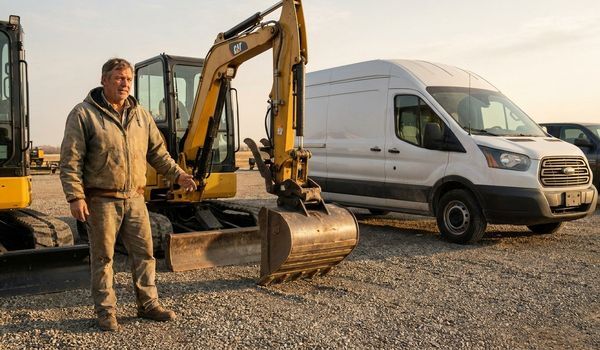
One of the most common questions business owners ask when exploring equipment financing is simply: what equipment can actually be financed or leased? The short answer is almost anything tangible your business needs to operate - from the obvious (trucks, forklifts, CNC machines) to the surprising (point-of-sale systems, office furniture, even software). If it has a useful life of more than 12 months and your business needs it to generate revenue, there is a strong chance it can be financed or leased.
Understanding the full scope of what qualifies helps business owners make smarter capital decisions - preserving cash flow, protecting credit lines, and acquiring the tools needed for growth without draining operating reserves. This guide covers every major equipment category, how financing works for each, and how Crestmont Capital helps businesses across the country put the right equipment to work quickly.
In This Article
- What Is Equipment Financing and Leasing?
- Vehicles and Transportation Equipment
- Construction and Heavy Equipment
- Medical and Healthcare Equipment
- Restaurant and Food Service Equipment
- Manufacturing and Industrial Equipment
- Technology and Office Equipment
- Agriculture and Farming Equipment
- Beauty, Salon, and Wellness Equipment
- Equipment Financing vs. Leasing: Key Differences
- How Crestmont Capital Helps
- Who Qualifies for Equipment Financing?
- Real-World Scenarios
- How to Get Started
- FAQ
What Is Equipment Financing and Leasing?
Equipment financing is a loan specifically used to purchase business equipment. The equipment itself serves as collateral, which typically means lower interest rates and less stringent credit requirements than general business loans. You own the equipment at the end of the loan term.
Equipment leasing, by contrast, allows you to use equipment for a set period while making regular payments - similar to renting. At lease end, you typically have the option to purchase, renew, or return the equipment. Leasing generally requires lower upfront costs and can help businesses stay current with fast-evolving technology.
Key Principle: If the asset has a useful life of more than 12 months and your business uses it to generate revenue, it can almost certainly be financed or leased. This includes physical equipment, vehicles, technology, and even some software systems.
Both financing and leasing fall under the broader category of equipment financing, and the two options serve different strategic purposes. Choosing between them depends on your cash flow needs, how quickly the equipment depreciates, and whether you want to own the asset at the end of the term.
Ready to Finance Your Equipment?
Get fast, flexible equipment financing from the #1 business lender in the U.S. No obligation - apply in minutes.
Apply Now →Vehicles and Transportation Equipment
Commercial vehicles represent one of the most commonly financed equipment categories. Virtually every type of business vehicle qualifies for financing or leasing, from small delivery vans to heavy semi-trucks.
Types of vehicles commonly financed or leased:
- Semi-trucks and tractor-trailers
- Dump trucks and flatbed trucks
- Cargo vans and delivery vehicles
- Box trucks and refrigerated trucks
- Tow trucks and specialty service vehicles
- Buses and shuttle vehicles
- Limousines and luxury transport vehicles
- Food trucks and mobile concession vehicles
- Service vans for HVAC, plumbing, and electrical contractors
- Commercial fleet vehicles of all types
Transportation companies frequently use commercial truck financing to expand their fleet without tying up working capital. Leasing is particularly popular for fleets where vehicles need to be upgraded regularly to meet fuel efficiency standards or emissions regulations.
By the Numbers
Equipment Financing - Key Statistics
80%
Of U.S. businesses use some form of equipment financing
$1T+
In equipment financed or leased annually in the U.S.
2-5 Days
Typical approval timeline with Crestmont Capital
$5K+
Minimum equipment value typically eligible for financing
Construction and Heavy Equipment
The construction industry relies heavily on equipment financing because the cost of heavy machinery is substantial and the equipment depreciates quickly with use. Nearly all construction equipment qualifies, including:
- Excavators and backhoes
- Bulldozers and graders
- Cranes and boom lifts
- Concrete pumps and mixers
- Forklifts and skid steers
- Scissor lifts and aerial work platforms
- Compaction equipment and rollers
- Drilling and foundation equipment
- Paving and asphalt equipment
- Survey equipment and GPS technology
Many construction contractors prefer leasing for large equipment to avoid carrying the asset as a long-term liability and to ensure they always have access to current-model machinery. Construction equipment financing can be structured with seasonal payment options that align with cash flow patterns common in the industry.
Pro Tip: For construction businesses, used equipment can often be financed just as easily as new equipment. Lenders evaluate the asset's remaining useful life and resale value - not just whether it came from a dealer showroom.
Medical and Healthcare Equipment
Medical practices, dental offices, veterinary clinics, and rehabilitation centers routinely finance specialized equipment. The high cost of diagnostic and treatment technology makes financing almost a necessity for independent healthcare providers.
Medical equipment commonly financed or leased includes:
- MRI machines and CT scanners
- X-ray machines and imaging systems
- Ultrasound equipment
- Dental chairs, X-ray units, and sterilization systems
- Surgical and anesthesia equipment
- Physical therapy and rehabilitation equipment
- Lab equipment including centrifuges and microscopes
- Hospital beds and patient care systems
- EHR systems and medical office technology
- Laser and aesthetic treatment devices
Healthcare equipment financing is particularly well-suited to leasing because medical technology evolves rapidly. A practice that leases rather than purchases can upgrade to newer diagnostic equipment at the end of the lease term without the burden of disposing of outdated assets. Explore medical equipment financing options from Crestmont Capital.
Finance the Equipment Your Practice Needs
From diagnostic imaging to dental chairs - Crestmont Capital finances medical equipment at competitive rates with fast approvals.
Start Your Application →Restaurant and Food Service Equipment
The restaurant industry has one of the highest equipment needs of any business sector. Commercial kitchen equipment is expensive, subject to heavy use, and needs to meet health and safety codes. Virtually all of it can be financed or leased.
Restaurant equipment commonly financed or leased:
- Commercial ovens, ranges, and fryers
- Refrigeration units and walk-in coolers
- Commercial dishwashers and warewashing equipment
- Food prep equipment and slicers
- Point-of-sale systems and restaurant technology
- Ice machines and beverage dispensers
- Coffee machines and espresso equipment
- Exhaust hoods and ventilation systems
- Bakery equipment including mixers and proofers
- Food truck builds and mobile food vehicles
Restaurant owners often use restaurant equipment financing to handle kitchen buildouts, upgrades after a remodel, or equipment replacement after breakdowns. Monthly payment structures help match equipment costs to revenue cycles, which is especially valuable for seasonal food service businesses.

Manufacturing and Industrial Equipment
Manufacturing businesses depend on specialized machinery to produce their products. This equipment can be among the most expensive in any industry, making financing essential for most manufacturers - especially growing companies that need to scale capacity.
Manufacturing and industrial equipment commonly financed:
- CNC machines and machining centers
- Injection molding machines
- Welding and fabrication equipment
- Industrial generators and compressors
- Conveyor systems and material handling equipment
- Packaging and labeling equipment
- Printing presses and bindery machines
- Industrial robots and automation systems
- Metalworking equipment
- Woodworking and woodmilling equipment
For manufacturers, equipment financing preserves working capital while allowing production capacity to grow. Many manufacturers use structured loan terms that align with the productive lifespan of the machinery - typically five to seven years for most industrial equipment. Learn more about manufacturing equipment financing options.
| Equipment Type | Finance or Lease? | Typical Term | Best For |
|---|---|---|---|
| Commercial Vehicles | Both | 24-72 months | Fleet operators, transporters |
| Heavy Construction | Both | 36-84 months | Contractors, developers |
| Medical Equipment | Lease preferred | 36-60 months | Clinics, hospitals, practices |
| Restaurant Equipment | Finance preferred | 24-60 months | Restaurants, cafes, food trucks |
| Technology/IT | Lease preferred | 24-48 months | All businesses with tech needs |
| Manufacturing/Industrial | Finance preferred | 48-84 months | Manufacturers, fabricators |
| Agricultural Equipment | Both | 36-84 months | Farms, agribusinesses |
Technology and Office Equipment
Technology equipment is one of the fastest-growing categories in equipment financing. Because IT assets depreciate quickly and need to be upgraded frequently, leasing is especially popular. Almost any business technology can be financed or leased.
Technology and office equipment commonly financed or leased:
- Computers, laptops, and workstations
- Servers and network infrastructure
- Copiers, printers, and multifunction devices
- Point-of-sale systems and kiosks
- Audio-visual and conference room technology
- Digital signage and LED display systems
- Cybersecurity hardware
- VoIP and communication equipment
- Cloud storage and backup equipment
- Remote workforce technology packages
Companies that lease technology equipment can refresh their systems every two to four years, staying current without large capital expenditures. For office environments, financing can cover everything from ergonomic furniture to high-end presentation systems.
Important: Software can sometimes be bundled with hardware financing. If a software system requires specific hardware to run (such as a medical EHR system), the entire package may qualify for equipment financing. Check with your lender about bundled technology packages.
Agriculture and Farming Equipment
Agriculture is one of the most capital-intensive industries in the United States, and farm equipment financing has a long history. Modern farming operations depend on sophisticated, expensive machinery that makes financing essential for most producers.
Agricultural equipment commonly financed or leased:
- Tractors and plowing equipment
- Harvesters and combines
- Irrigation systems and water management equipment
- Balers, sprayers, and spreaders
- Livestock handling equipment
- Greenhouse climate control systems
- Precision agriculture technology and GPS systems
- Dairy farm equipment
- Farm storage facilities and grain handling systems
- Poultry housing and feeding systems
Agricultural equipment financing is often structured with seasonal payment options that account for harvest-based income cycles - a critical feature for farms that generate most of their revenue in a few months of the year.
Beauty, Salon, and Wellness Equipment
The beauty and wellness industry has seen enormous growth in equipment financing as salon owners, spa operators, and fitness businesses invest in technology and specialized tools. This includes:
- Salon chairs, styling stations, and shampoo units
- Aesthetic laser and light therapy devices
- Commercial spa and sauna equipment
- Massage tables and treatment equipment
- Gym and fitness equipment (treadmills, weight systems, bikes)
- Nail salon equipment and pedicure chairs
- Medical spa equipment including microdermabrasion machines
- Tattoo studio equipment
- Barbershop equipment and renovation fixtures
Businesses in this sector often benefit from leasing because treatment technology evolves quickly. A medical spa, for example, may want to upgrade its laser systems every three to five years as newer, more effective technology becomes available. Spa equipment financing through Crestmont Capital can be tailored to the specific needs of wellness businesses.
Equipment Financing vs. Leasing: Key Differences
Both financing and leasing give your business access to essential equipment without paying the full purchase price upfront. However, the right choice depends on several factors unique to your situation.
Quick Guide
How Equipment Financing Works - At a Glance
Submit a simple application with basic business and financial details. No lengthy paperwork.
Receive approval within 24-72 hours in most cases. Terms are tailored to your equipment type and financial profile.
Funds are sent directly to the vendor. You take delivery of your equipment and begin using it immediately.
Pay monthly, quarterly, or seasonally depending on your cash flow. Build equity (financing) or upgrade at term end (leasing).
Choose equipment financing (loan) when:
- You want to own the equipment outright at the end of the term
- The equipment has a long useful life (10+ years)
- You plan to customize or modify the equipment
- The equipment is not technology-dependent and unlikely to become obsolete quickly
Choose equipment leasing when:
- You want lower monthly payments
- The equipment becomes obsolete quickly (technology, medical devices)
- You prefer predictable off-balance-sheet financing
- You want flexibility to upgrade at the end of the term
- You need equipment for a specific project or defined time period
How Crestmont Capital Helps
Crestmont Capital is a leading U.S. business lender with expertise in equipment financing and leasing across virtually every industry. Our team understands the specific requirements of different equipment categories and structures financing solutions that work for your business - not just the equipment.
We finance new and used equipment, domestic and imported assets, and work with both established businesses and growing companies that need fast access to capital. Our equipment financing programs are designed to preserve your working capital while giving you access to the tools you need immediately.
Key features of Crestmont Capital equipment financing:
- Financing from $5,000 to $10 million+
- Fast approvals - often within 24-48 hours
- Flexible terms from 12 to 84 months
- New and used equipment eligible
- Seasonal payment structures available
- Minimal documentation for smaller transactions
- Available to businesses across all 50 states
Did You Know? Crestmont Capital is rated the #1 business lender in the United States, with thousands of businesses funded across every industry. Our equipment specialists understand the nuances of different asset classes and can structure financing that matches your equipment's productive life.
Who Qualifies for Equipment Financing?
Equipment financing is one of the most accessible forms of business financing because the equipment itself serves as collateral. This means qualification requirements are generally less stringent than for unsecured business loans. Most businesses with the following profile qualify:
- Time in business: As little as 1 year in operation (startup equipment financing is available for some asset types)
- Credit score: 580+ (higher scores unlock better rates and terms)
- Annual revenue: Typically $100,000+ for standard programs
- Equipment type: Most business equipment with resale value
Businesses with challenged credit can still qualify for equipment financing, particularly when financing equipment with strong resale value. Even companies recovering from difficult periods often find equipment financing more accessible than other loan types because lenders are secured by the asset.
If you have any questions about whether your specific equipment qualifies or whether your business meets the criteria, Crestmont Capital's team can provide a quick, no-obligation assessment. Contact us or apply online to get started.
Real-World Scenarios
Scenario 1: Restaurant Chain Expansion
A regional restaurant chain needed to outfit two new locations with complete commercial kitchen packages - ovens, refrigeration, dishwashers, and POS systems. Rather than depleting cash reserves needed for marketing and staffing, they financed $280,000 in equipment over 48 months. Monthly payments fit comfortably within projected revenue from the new locations, and they preserved capital for the grand opening push.
Scenario 2: Medical Practice Upgrade
A physical therapy practice leased a comprehensive package of rehabilitation equipment including treadmills, treatment tables, and ultrasound therapy devices. Because the lease was structured as an operating lease, the payments were entirely expensed rather than capitalized, simplifying the practice's accounting. At the end of the three-year term, they upgraded to newer equipment without having to dispose of the old units.
Scenario 3: Construction Fleet Expansion
A mid-size general contractor won a large commercial project requiring two additional excavators. They financed both units through Crestmont Capital with a 60-month term and seasonal payment structure - paying higher amounts in peak construction months and reduced amounts during winter slowdowns. The financing aligned perfectly with the revenue cycle of the project.
Scenario 4: Manufacturing Upgrade
A metal fabrication shop needed a new CNC machining center to fulfill a large new contract. The $185,000 machine was financed over 72 months, with the monthly payment more than covered by the revenue generated by the new contract. The loan was secured by the equipment, requiring minimal additional documentation and closing in under five days.
Scenario 5: Salon Technology Refresh
A multi-location salon group leased point-of-sale systems, booking software hardware, and treatment chairs across five locations. The lease allowed them to standardize equipment across all locations with a single monthly payment, simplify maintenance through the lessor's service agreements, and plan for a complete equipment refresh at the end of the four-year term.
Scenario 6: Agricultural Equipment for Seasonal Business
A family farm financing a new combine harvester structured the loan with interest-only payments during winter months and principal-plus-interest payments during and after the harvest season. This cash-flow-aware structure made the $350,000 harvester financially manageable without straining the operation during slow revenue periods.
How to Get Started
Complete our quick application at offers.crestmontcapital.com/apply-now - takes just a few minutes. Include details about the equipment you need and your preferred financing amount.
A Crestmont Capital advisor will review your needs, verify the equipment type qualifies, and present tailored financing or leasing options.
Once approved, funds are sent directly to the equipment vendor. You take delivery and put the equipment to work - often within days of approval.
Finance the Equipment Your Business Needs Today
Crestmont Capital - rated #1 business lender in the U.S. Fast approvals, flexible terms, and financing for virtually any equipment type.
Apply Now →Frequently Asked Questions
What types of equipment can be financed or leased?
Almost any tangible business asset with a useful life of more than 12 months can be financed or leased. This includes commercial vehicles, construction equipment, medical devices, restaurant equipment, manufacturing machinery, IT systems, agricultural equipment, and more. The equipment must be used for business purposes and have identifiable resale value for most financing programs.
Can used equipment be financed?
Yes. Used equipment can be financed through most equipment financing programs. Lenders evaluate the remaining useful life and resale value of the equipment. Equipment that is well-maintained and has documented service history typically qualifies at terms similar to new equipment. Some lenders apply a small premium to used equipment interest rates to account for additional depreciation risk.
What is the minimum equipment value that can be financed?
Most lenders have a minimum financing amount of $5,000 to $10,000 for equipment loans. Some programs for small equipment or technology bundles may start lower. There is generally no maximum limit for most types of equipment - Crestmont Capital finances equipment packages worth millions of dollars for large commercial projects.
Is it better to finance or lease equipment?
It depends on the equipment type, your financial goals, and your cash flow situation. Financing is generally better for equipment with long useful lives that you want to own and potentially customize. Leasing is often better for technology-dependent equipment that becomes obsolete quickly, when you want lower monthly payments, or when you prefer flexibility to upgrade at the end of the term. A Crestmont Capital specialist can help you determine the best approach for your specific equipment.
How long does it take to get approved for equipment financing?
With Crestmont Capital, approvals typically take 24-72 hours for standard equipment financing applications. Smaller transactions (under $150,000) can often be approved within 24 hours with minimal documentation. Larger transactions or complex equipment types may require additional review time, but most applications are resolved within two to five business days.
What credit score do I need to qualify for equipment financing?
Most equipment financing programs require a credit score of 580 or higher. Scores above 650 typically unlock the best rates and terms. However, because equipment financing is secured by the asset, some programs are available to borrowers with scores below 580, particularly for equipment with strong resale value. Factors beyond credit score - including time in business, revenue, and the equipment type - all influence approval and pricing.
Can software be financed along with hardware?
Yes, in many cases. When software is bundled with hardware as part of an integrated system (such as a medical EHR system with its supporting servers and workstations), the entire package can often be financed together. Standalone software subscriptions are generally not eligible for equipment financing, but software licenses tied to specific hardware deployments may qualify under certain programs.
Are there seasonal payment options for equipment financing?
Yes. Many lenders, including Crestmont Capital, offer seasonal payment structures for businesses with cyclical revenue patterns. This can include interest-only payments during slow seasons, skip-payment options during designated months, or graduated payment structures where payments increase as revenue grows. Seasonal payment options are common for agricultural businesses, construction companies, and other industries with defined busy and slow periods.
What happens at the end of an equipment lease?
At the end of most equipment leases, you typically have three options: purchase the equipment at the residual value specified in the lease agreement, renew the lease for a new term (often at a lower payment since the residual has been partially established), or return the equipment and upgrade to a newer model. The residual purchase price is set in the original lease terms, so you know upfront what your buyout option will be.
Can a startup get equipment financing?
Yes, though startup equipment financing often has different requirements than financing for established businesses. Startups may need to provide stronger personal credit, a down payment, or additional documentation such as a business plan and revenue projections. Equipment with high resale value - like vehicles, medical equipment, or construction machinery - is generally more accessible for startups because the asset provides strong collateral protection for the lender.
How does equipment financing affect my balance sheet?
Equipment loans appear as both an asset and a liability on your balance sheet. The equipment's value is recorded as an asset, while the outstanding loan balance is recorded as a liability. This is known as a capital lease treatment. Operating leases, depending on accounting standards, may or may not appear on the balance sheet. Consult your accountant to understand the specific impact on your financial statements, as lease accounting rules have evolved under ASC 842.
Can I finance equipment purchased from a private seller?
Yes, in many cases. Private-party equipment purchases can be financed, though the process may require additional documentation such as a bill of sale, proof of ownership, and an equipment inspection or appraisal. Not all lenders accommodate private-party purchases, so it is worth confirming with your financing provider before pursuing this option. Crestmont Capital works with businesses on private-party equipment acquisitions on a case-by-case basis.
What documents do I need to apply for equipment financing?
For most equipment financing applications, you will need basic business information (name, address, EIN), recent bank statements (typically three to six months), a description of the equipment being financed, and a quote or invoice from the vendor. Larger transactions may also require business financial statements and tax returns. Applications under $150,000 often require minimal documentation and can be approved based on credit and bank statement review alone.
Can multiple pieces of equipment be financed together?
Yes. Equipment financing can be structured as a blanket loan covering multiple pieces of equipment purchased at the same time. This is common for restaurant buildouts, medical practice setups, and construction fleet acquisitions. Bundling multiple assets under one loan simplifies administration with a single monthly payment and one loan file. Equipment packages can also be financed in phases as additional items are needed.
How does equipment financing compare to a regular business loan?
Equipment financing is typically easier to qualify for than an unsecured business loan because the equipment serves as collateral. This also generally results in lower interest rates. Equipment financing is purpose-specific - funds go directly to the equipment vendor - while general business loans can be used for any purpose. For businesses that need equipment, a dedicated equipment loan is almost always a better option than a general term loan because of the lower rates, longer terms, and simpler qualification criteria.
Disclaimer: The information provided in this article is for general educational purposes only and is not financial, legal, or tax advice. Funding terms, qualifications, and product availability may vary and are subject to change without notice. Crestmont Capital does not guarantee approval, rates, or specific outcomes. For personalized information about your business funding options, contact our team directly.