Running a farm is one of the most capital-intensive businesses in America. From buying seed and fertilizer in the spring to purchasing equipment capable of working thousands of acres, agricultural businesses require consistent access to funding just to keep operations going. Agricultural business loans provide farmers, ranchers, and agribusinesses with the capital they need to plant, harvest, expand, and weather the inevitable ups and downs of a commodity-driven industry. Understanding your financing options can mean the difference between a thriving operation and one that is always one bad season away from crisis.
In This Article
- What Are Agricultural Business Loans?
- Types of Agricultural Business Loans
- How Agricultural Business Loans Work
- Who Qualifies for Agricultural Business Loans?
- How Farmers Use Agricultural Business Loans
- Comparing Loan Options for Farms
- How Crestmont Capital Helps Agricultural Businesses
- Real-World Scenarios
- Frequently Asked Questions
- How to Get Started
What Are Agricultural Business Loans?
Agricultural business loans are financing products designed specifically for the needs of farms, ranches, orchards, dairies, and agribusinesses. These loans acknowledge the unique financial cycle of agricultural operations - income often arrives in seasonal bursts after months of expense-heavy planting and growing seasons. Traditional lenders may struggle to underwrite these businesses because the cash flow patterns look nothing like a retail shop or a service firm.
Unlike conventional small business loans, agricultural loans often accommodate seasonal repayment schedules, accept farm assets and land as collateral, and come with terms structured around crop cycles or livestock production timelines. They can fund everything from purchasing seed and fertilizer to buying new combines, expanding cold storage facilities, or financing land acquisitions.
According to the U.S. Small Business Administration, agriculture-related businesses employ millions of Americans and generate hundreds of billions in economic output annually. Access to capital is consistently cited as one of the top challenges facing farm operators, especially smaller family-run operations trying to compete with large agribusiness corporations.
Key Stat: The USDA reports that U.S. farm debt reached approximately $540 billion in recent years, with the majority held by family farms using loans for land, equipment, and operating expenses - demonstrating how central financing is to American agriculture.
Types of Agricultural Business Loans
Farms have diverse funding needs, and the loan market has responded with a range of products to match. Understanding each type helps you select the financing that fits your operation's specific situation.
Farm Operating Loans
Operating loans are short-term financing tools used to cover the day-to-day costs of running a farm. This includes seed, fertilizer, pesticides, fuel, labor, and utilities. Because these expenses hit months before harvest revenue arrives, a line of credit or seasonal operating loan bridges the gap. Repayment typically occurs after the harvest when cash flow improves.
Farm Equipment Financing
Modern farming equipment - tractors, combines, irrigation systems, planters, and specialty harvesters - can cost hundreds of thousands of dollars. Equipment financing allows farms to acquire the machinery they need without depleting working capital. The equipment itself often serves as collateral, which can make approval more accessible even for farms with limited credit history. Crestmont Capital's agricultural equipment financing options cover a wide range of farm machinery.
Farm Real Estate Loans
Purchasing farmland is one of the largest capital outlays in agriculture. Farm real estate loans are long-term mortgages that allow operators to buy land, barns, grain storage facilities, or processing buildings. These loans typically have terms of 15 to 30 years and require substantial down payments, but they allow farmers to build equity in one of their most valuable assets.
Livestock Loans
Ranchers and dairy operators need financing to purchase cattle, hogs, poultry, or other livestock. These loans can cover the purchase price of animals, breeding stock, or feed inventory. Livestock itself may serve as collateral in some cases. Repayment schedules are designed around the production cycles of the specific type of livestock being financed.
Crop Production Loans
Specialty crop producers - fruit growers, vegetable farmers, nursery operators, and greenhouse businesses - often need financing that accounts for long growing cycles before any return on investment. Crop production loans provide the runway to plant, tend, and harvest specialty crops that may take years to mature to full production.
Agribusiness Term Loans
Larger agricultural businesses, including grain elevators, food processors, agricultural retailers, and co-ops, may need substantial term loans for major capital projects. These loans function similarly to commercial term loans in other industries, with fixed monthly payments over a set term. They are ideal for building construction, major equipment purchases, or business acquisitions.
SBA Farm Loans
The SBA's various loan programs, particularly the 7(a) program, can be used for agricultural purposes. SBA loans offer competitive interest rates and longer terms than many conventional options. However, the application process is more involved, and approval times can run several months. For farms that qualify, SBA loans can be an excellent source of low-cost capital.
By the Numbers
Agricultural Business Loans - Key Statistics
$540B
Total U.S. farm debt outstanding
2M+
Active farms in the United States
70%
Farms that use some form of debt financing
24-48h
Typical Crestmont Capital funding timeline
How Agricultural Business Loans Work
Agricultural loans function similarly to other business loans, but with key accommodations for the unique nature of farm economics. Understanding the mechanics helps you plan your financing strategy effectively.
The Application Process
Agricultural loan applications typically require financial statements from the past two to three years, tax returns, a description of the farming operation, information about land ownership or leases, and details about collateral. Some lenders also ask for a farm business plan or a detailed description of how the loan proceeds will be used.
Collateral in Agricultural Lending
Farms have significant assets that can serve as loan collateral. Farmland, equipment, livestock, stored commodities, and crop insurance proceeds can all be used to secure financing. Strong collateral positions often allow farmers to qualify for loans even when cash flow history is limited or when they have experienced poor seasons due to weather or market conditions.
Seasonal Payment Structures
One of the most important features of agricultural financing is the ability to structure payments around harvest cycles rather than fixed monthly schedules. A corn farmer, for example, may make one large loan payment after the fall harvest rather than 12 equal monthly payments. Lenders experienced with agriculture understand this and structure their products accordingly.
Quick Guide
How Agricultural Business Loans Work - At a Glance
Submit tax returns, financial statements, and a description of your farming operation and loan purpose.
Lenders evaluate your operation's revenue history, assets, debt load, and collateral to determine loan eligibility and terms.
Loan terms are structured around your operation's cash flow cycles, including seasonal payment options when available.
Funds are deposited directly to your business account. Use them for equipment, operating costs, expansion, or other approved purposes.
Ready to Fund Your Farming Operation?
Crestmont Capital works with farms and agribusinesses across the U.S. Fast approvals, flexible terms - apply in minutes.
Apply Now →Who Qualifies for Agricultural Business Loans?
Agricultural businesses vary enormously in size, structure, and financial profile. Understanding what lenders look for helps you prepare a strong application and identify the right products for your situation.
Farm Businesses That Typically Qualify
Most lenders consider the following types of operations for agricultural financing: row crop farms (corn, soybeans, wheat, cotton), livestock and ranching operations, dairy farms, poultry and hog producers, fruit and vegetable growers, orchards and vineyards, greenhouse and nursery operations, and agribusinesses such as grain elevators, feed stores, and farm supply retailers.
Basic Qualification Criteria
While specific requirements vary by lender and loan type, most agricultural business loans require:
- At least one to two years of farming operation history
- Verifiable revenue from agricultural activities
- Acceptable personal and/or business credit scores
- Farm assets or real estate that can serve as collateral
- Ability to demonstrate debt repayment capacity
Alternative lenders like Crestmont Capital often apply more flexible standards than traditional banks, particularly for farms with strong asset bases even if cash flow has been variable due to weather or commodity price swings. Our working capital loans can help bridge seasonal gaps even for operations that don't qualify for bank financing.
Credit Score Considerations
Agricultural lenders understand that farming is risky business. Droughts, floods, price crashes, and equipment failures can temporarily damage a farm's financial picture. While a strong credit score (640+) will open more doors and deliver better terms, farmers with imperfect credit may still find options - especially if they have significant land or equipment equity. Some lenders use asset value rather than credit score as the primary underwriting factor for agricultural borrowers.
Important Note: Farms with documented crop insurance policies, FSA program participation, or government contract sales often qualify more easily because these programs reduce lender risk. If your farm participates in these programs, be sure to mention it in your application.
How Farmers Use Agricultural Business Loans
Agricultural loans serve a wide range of purposes throughout the farm business lifecycle. The most common uses reflect the capital-intensive nature of modern farming operations.
Purchasing Farmland
Land is the foundation of any farming operation. Whether expanding an existing farm or establishing a new one, land acquisition financing allows farmers to lock in productive acreage before prices rise further. With farmland values rising significantly in many regions of the country, financing is often the only practical way to grow a land base. A commercial real estate financing arrangement may be appropriate for larger farm land purchases.
Equipment Purchases
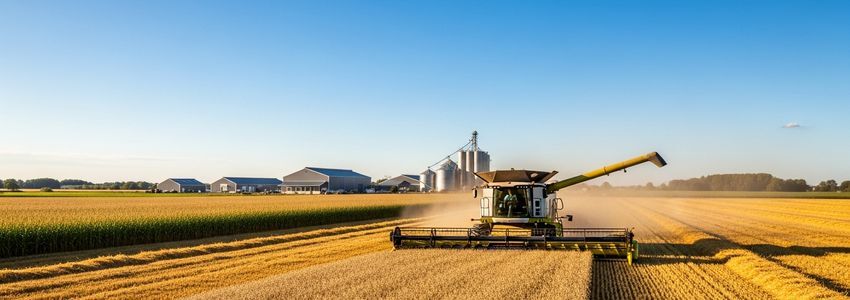
Modern agricultural equipment is extraordinarily capable - and extraordinarily expensive. A new combine harvester can cost $500,000 or more. Tractors, planters, sprayers, grain dryers, and irrigation systems all require significant capital investment. Equipment loans allow farms to access the technology they need to remain competitive without tying up all available cash. Farm equipment financing specifically is designed to accommodate the high ticket values common in agriculture.
Operating Capital
Seed, fertilizer, chemicals, fuel, and labor all must be paid for months before any harvest revenue arrives. A seasonal line of credit or operating loan covers these spring expenses and is repaid from fall harvest proceeds. For farms without adequate cash reserves, this type of financing is essential to planting a crop at all.
Livestock Expansion
Building a larger herd or flock requires capital up front that won't generate returns for months or years. Livestock financing lets ranchers and producers scale their operations on a timeline that makes biological and economic sense rather than being constrained by available cash.
Infrastructure Improvements
Grain bins, cold storage facilities, irrigation systems, fencing, barns, and processing equipment all add productive capacity to a farm. These capital improvements can significantly increase the income-generating potential of an operation. Term loans are well-suited to infrastructure investments with long useful lives.
Refinancing and Debt Restructuring
Farmers who took on expensive short-term debt during a difficult season may use refinancing to consolidate obligations at lower rates and longer terms, improving monthly cash flow. Strategic debt restructuring can be the difference between surviving a tough year and losing the farm. Our blog on business debt consolidation covers this approach in detail for business owners navigating financial complexity.
Comparing Loan Options for Farms
Agricultural businesses have more financing options than ever before, from traditional banks to government programs to alternative lenders. Each has distinct advantages and drawbacks depending on the farm's needs and financial profile.
| Loan Type | Best For | Timeline | Key Advantage |
|---|---|---|---|
| Farm Operating Loan | Seasonal input costs | Days to weeks | Seasonal repayment flexibility |
| Equipment Financing | Machinery purchases | 1-5 days | Equipment is collateral |
| SBA Loan | Long-term expansion | 30-90 days | Lowest interest rates |
| Working Capital Loan | Cash flow gaps | 24-48 hours | Fast funding, flexible use |
| Business Line of Credit | Ongoing variable needs | Days to weeks | Draw only what you need |
| Farm Real Estate Loan | Land purchases | 45-90 days | Long terms, land equity |
The right choice depends heavily on how quickly you need funds, what you plan to do with them, and what your operation's financial profile looks like. Many farms use multiple types of financing simultaneously - for example, a long-term mortgage on land plus a seasonal operating line of credit for annual input costs.
How Crestmont Capital Helps Agricultural Businesses
Crestmont Capital has been recognized as a leading business lender in the United States, and agricultural businesses are a core part of the clients we serve. We understand that farm finances don't always fit the neat boxes that traditional bank underwriting requires. That's why we take a different approach.
When a farm applies for financing through Crestmont, we look at the full picture of the operation - not just a credit score or a single year's tax return. We consider asset strength, operational history, land values, equipment equity, and the realistic income-generating potential of the farming operation. This allows us to approve financing for farms that might struggle to get conventional bank loans.
Our funding timeline is significantly faster than traditional agricultural lenders. While SBA loans and farm credit institutions may take months to process, Crestmont Capital can often fund agricultural businesses within 24 to 48 hours of a completed application. For farms facing time-sensitive situations - equipment that broke down at planting, an opportunity to purchase discounted land, or a cash flow crunch before harvest - this speed can be critical.
Crestmont Capital Serves Agricultural Businesses Nationwide
From row crop farms to cattle ranches to specialty growers - we have financing solutions built for your operation's unique needs.
Get Your Quote Today →We also offer flexible product structures that align with agricultural cash flow realities. Our business line of credit products allow farms to draw funds when needed and repay as revenue comes in, rather than making fixed monthly payments that don't align with harvest cycles. For farms that need a quick bridge, our blog on bridge loans for small business explains how short-term financing can help agricultural operations navigate timing gaps.
Real-World Scenarios: Agricultural Loans in Action
Understanding how other farm businesses have used financing helps illustrate when and how agricultural loans deliver the most value.
Scenario 1: The Corn Farmer Who Needed a New Combine
A 1,200-acre corn and soybean farmer in central Illinois had been using an aging combine that broke down at a critical point during harvest. The repair costs were estimated at $40,000 - nearly as much as putting that money toward a newer, more reliable machine. The farmer applied for an equipment loan and within 48 hours had approval for a $180,000 loan on a five-year-old used combine. The loan was structured with payments that concentrated in the fall post-harvest period. The farmer completed the season, sold the grain, and made the first loan payment - never missing a bushel.
Scenario 2: The Dairy Operation Expanding Its Herd
A family dairy in Wisconsin had been running at capacity with 300 cows. Milk prices had improved significantly and the owner wanted to expand to 450 cows before prices softened again. The challenge was that the new animals cost $1.2 million and the barn expansion another $400,000. A traditional bank was processing their application but the timeline was 60+ days. Crestmont Capital funded the working capital bridge within two days, allowing the expansion to proceed while the long-term financing was being finalized. The farm added the production capacity it needed and fully repaid the bridge loan when the bank financing closed.
Scenario 3: The Strawberry Grower Building Cold Storage
A specialty strawberry grower in California had been losing 15-20% of each harvest to spoilage because she lacked proper cold storage on her property. Trucking berries immediately to a co-op facility was both expensive and damaging to fruit quality. A $95,000 term loan funded construction of an on-farm cold storage building. Within one growing season, reduced spoilage and improved fruit quality increased net revenue by approximately $45,000 per year - meaning the infrastructure paid for itself in just over two years.
Scenario 4: The Cattle Ranch Surviving a Drought
A Texas cattle rancher faced a severe drought that destroyed pasture production and forced him to purchase expensive hay to feed his herd. The choice was to either sell cattle at distressed prices or find financing to bridge the feed costs until rain returned and grass grew back. A $75,000 working capital loan allowed the rancher to maintain his herd through the drought. When normal rainfall returned six months later, pasture recovered and the rancher was able to retain his core breeding herd - the most valuable asset in his operation.
Scenario 5: The Orchardist Waiting for Young Trees to Produce
An apple grower in Washington state planted 40 acres of new high-density apple trees that would take three years to reach commercial production. The investment required ongoing maintenance - irrigation, pruning, pest management - without generating income. A three-year operating loan covered the maintenance costs during the establishment period. When the trees came into full production, the higher yields from the modern planting more than justified the financing costs.
Scenario 6: The Grain Elevator Expanding Storage Capacity
A family-owned grain elevator in Iowa was turning away grain at harvest because its storage bins were full. Every bushel turned away represented lost storage and handling revenue. A $2.5 million commercial term loan funded construction of additional grain storage capacity. The increased throughput in just two harvest seasons generated revenue that exceeded the financing costs, and the owner had effectively doubled the earning capacity of the business.
Pro Tip: The most successful farm borrowers treat financing as a business tool rather than a last resort. Building a relationship with a lender before you desperately need money allows you to access capital quickly when the right opportunity - or the unexpected challenge - arrives.
Frequently Asked Questions
What types of farms qualify for agricultural business loans?
Most types of agricultural operations qualify, including row crop farms, livestock and cattle ranches, dairy operations, poultry and hog farms, fruit and vegetable growers, orchards, vineyards, greenhouses, nurseries, and agribusinesses like grain elevators, feed stores, and farm supply retailers. Lenders look for verifiable farm income and operations with a track record of at least one to two years.
How much can a farm borrow through agricultural business loans?
Loan amounts vary widely by lender and loan type. Equipment financing may start at $25,000 and go well above $1 million for large machinery. Operating loans typically range from $10,000 to $500,000 depending on farm size. Land purchase loans can run into the millions. Alternative lenders like Crestmont Capital typically offer business loans from $25,000 to several million dollars depending on the farm's financial profile.
What credit score is needed for agricultural business loans?
Credit score requirements vary by lender. Traditional banks and Farm Credit institutions typically look for scores above 680. SBA loans require minimum scores around 640-660. Alternative lenders are more flexible and may approve agricultural loans with scores in the 580-620 range, particularly when the farm has strong asset collateral. Lenders focused on equipment financing may weigh the equipment value more heavily than the credit score.
How long does it take to get an agricultural business loan?
Funding timelines vary dramatically by lender type. SBA loans typically take 30-90 days from application to funding. Traditional bank agricultural loans often take 30-60 days. Alternative lenders like Crestmont Capital can often fund agricultural business loans in 24-48 hours after a complete application. Farm Credit institutions typically require 2-4 weeks for standard operating loans.
Can I get an agricultural loan if I had a bad year due to weather or low prices?
Yes, many lenders understand that agricultural income is variable due to factors outside the operator's control. Weather events, pest pressure, and commodity price swings can significantly impact one or two years of farm income without reflecting the long-term viability of the operation. Lenders experienced with agriculture will often look at multi-year income averages and give weight to strong collateral positions. Documenting insurance claims and USDA program participation can also help demonstrate that the poor year was an aberration.
What documents are needed to apply for a farm business loan?
Typical documentation includes: three years of personal and farm income tax returns, current financial statements (balance sheet and income statement), a list of farm assets including land and equipment, any current lease agreements, crop insurance documents, bank statements from the past 3-6 months, and a description of the farming operation and purpose of the loan. Alternative lenders may require less documentation, sometimes just bank statements and tax returns.
Are USDA farm loans better than conventional agricultural loans?
USDA Farm Service Agency (FSA) loans often offer the lowest interest rates available and are specifically designed for farmers who cannot qualify for commercial credit. They are excellent for beginning farmers and operations rebuilding after setbacks. However, USDA loan applications are intensive, funding timelines can be long, loan amounts have caps, and eligible uses are more restricted. Conventional or alternative lenders typically offer faster approvals, larger amounts, and more flexibility in how funds can be used. Many farm operations use both - USDA loans for major long-term financing and commercial lenders for working capital and equipment.
Can beginning farmers qualify for agricultural business loans?
Beginning farmers face greater challenges qualifying for large conventional loans because they lack income history from their own operation. However, options exist. USDA FSA has a Beginning Farmer Direct Loan program specifically for this purpose. Equipment lenders may finance machinery purchases for new operations based on the equipment's collateral value. Alternative lenders sometimes work with newer operations, particularly when the owner has prior agricultural experience or other financial strength. Having a solid business plan and some initial equity helps significantly.
What interest rates should I expect on agricultural business loans?
Interest rates vary significantly by loan type, lender, and borrower qualifications. USDA FSA loans often carry rates below prime, sometimes 2-4%. SBA agricultural loans typically range from 6-10% depending on prevailing rates and loan terms. Conventional bank agricultural loans often run 6-9% for well-qualified borrowers. Equipment financing rates may range from 5-15% depending on equipment age, loan term, and borrower credit. Alternative lender working capital products carry higher rates (often factor rates expressed differently) but offer speed and flexibility that may justify the premium for time-sensitive needs.
How does crop insurance affect my ability to get a farm loan?
Having adequate crop insurance actually improves your ability to qualify for and service agricultural loans. Insurance reduces lender risk by ensuring that even in a catastrophic crop failure, the farm will receive enough proceeds to service its debt obligations. Some lenders actually require crop insurance as a condition of loan approval. Additionally, insurance documentation can help demonstrate to lenders that your operation takes risk management seriously.
Can I use an agricultural loan to buy another farm business?
Yes. Agricultural business acquisition loans can fund the purchase of an existing farm operation, including land, equipment, buildings, livestock, and goodwill. This is an increasingly common strategy for farm expansion, as acquiring an operating farm is often faster and more efficient than buying raw land and starting fresh. SBA 7(a) loans are frequently used for agricultural business acquisitions. Conventional and alternative lenders also offer acquisition financing for farm purchases.
What is the difference between an operating loan and a line of credit for farms?
An operating loan is a lump sum advance made at the beginning of the season and repaid in full at harvest. A business line of credit is a revolving credit facility that allows a farm to draw funds as needed, repay partially or fully, and draw again within the credit limit. Lines of credit offer more flexibility because you only pay interest on what you actually use. Operating loans are simpler and may offer slightly lower rates. Many farms use a line of credit for the flexibility of drawing funds on their own schedule throughout the season rather than taking one large advance.
Can organic farms and specialty agriculture operations get loans?
Yes. Organic farms, specialty crop producers, direct-market farms, agritourism operations, and other non-traditional agricultural businesses can access financing. Lenders assess these operations on their actual revenue and financial performance, not just the crop type. Specialty operations that sell at premium prices and demonstrate strong profitability may actually be better positioned for financing than commodity crop operations with thinner margins. Documenting your sales contracts, market relationships, and pricing history is particularly important for specialty operations.
How does seasonal income affect agricultural loan repayment structures?
Agricultural lenders who understand farming commonly offer seasonal or deferred payment structures that align with when income actually arrives. For grain farmers, this may mean a large balloon payment after the fall harvest rather than monthly payments throughout the year. For livestock operations, payments may be timed to when cattle are marketed. Equipment lenders may offer spring/fall payment options. The key is to communicate your cash flow cycle clearly during the application so the lender can structure an appropriate repayment schedule.
What should I look for when choosing an agricultural lender?
Look for lenders with experience financing agricultural operations and demonstrated understanding of farm economics. Key factors include: competitive rates and transparent fee structures, repayment terms that accommodate seasonal income patterns, reasonable documentation requirements for the loan amount, funding timelines that match your needs, customer service that is accessible and responsive, and flexibility to adjust terms if farm conditions change. References from other farm borrowers and lender reviews are valuable. Avoid any lender that pressures you for a quick decision without fully disclosing loan terms.
Your Farm Deserves Access to the Right Capital
Crestmont Capital has helped hundreds of agricultural businesses across the country access the financing they need to grow. Let us help your farm thrive.
Apply Now →How to Get Started
Complete our quick application at offers.crestmontcapital.com/apply-now - have your basic business information and revenue details ready.
A Crestmont Capital advisor familiar with farm business financing will review your needs and match you with the right loan product and structure for your operation.
Once approved, receive your funds - often within 24-48 hours - and direct them to the equipment, operating costs, expansion, or opportunities your farm needs most.
Conclusion
Agricultural business loans are not a luxury for farms - they are a business necessity for the vast majority of operations trying to remain competitive in an increasingly demanding industry. Whether you need an operating line of credit to bridge the gap from planting to harvest, equipment financing to replace aging machinery, or a term loan to expand your land base, the right financing partner makes all the difference. Agricultural business loans can give your farm the capital runway to invest confidently, manage risk effectively, and build the kind of operation that supports your family and community for generations to come.
Crestmont Capital is proud to serve agricultural businesses across the United States with fast, flexible financing solutions designed around the realities of farm business. Reach out to our team today to explore how we can help your farm thrive.
Disclaimer: The information provided in this article is for general educational purposes only and is not financial, legal, or tax advice. Funding terms, qualifications, and product availability may vary and are subject to change without notice. Crestmont Capital does not guarantee approval, rates, or specific outcomes. For personalized information about your business funding options, contact our team directly.