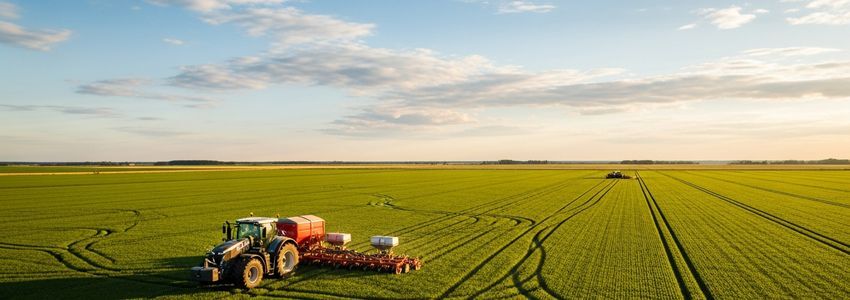
Modern farming depends on modern machinery. Tractors, harvesters, planters, sprayers, and irrigation systems are the backbone of productive agricultural operations - but they carry price tags that can strain even well-established farm budgets. Agricultural equipment financing gives farmers and agribusinesses a practical way to acquire the machinery they need without depleting working capital or taking on unmanageable debt. This guide breaks down everything you need to know about financing farm equipment: how it works, what it costs, which options fit different operations, and how Crestmont Capital helps farmers secure the right funding fast.
In This Article
- What Is Agricultural Equipment Financing?
- Types of Equipment You Can Finance
- How Agricultural Equipment Financing Works
- Loan vs. Lease: Which Is Right for Your Farm?
- Rates, Terms, and Qualification Requirements
- How Crestmont Capital Helps Farmers
- Real-World Financing Scenarios
- How to Get Started
- Frequently Asked Questions
What Is Agricultural Equipment Financing?
Agricultural equipment financing is a type of business loan or lease specifically structured to help farmers, ranchers, and agribusinesses acquire machinery and equipment. Rather than paying the full purchase price upfront - which can range from $30,000 for a small tractor to $500,000 or more for a combine harvester - financing spreads the cost over time through predictable monthly payments.
The equipment itself typically serves as collateral for the loan, which means lenders can offer competitive rates even when the borrower's credit profile is not perfect. This structure also means approvals are often faster and more accessible than traditional unsecured business loans. Farmers can finance new or used equipment, and funding can be deployed in as little as 24 to 72 hours after approval.
Agricultural equipment financing is not limited to large row-crop operations. Small family farms, specialty crop growers, livestock producers, and agricultural service businesses all benefit from equipment financing programs tailored to their unique seasonal cash flow patterns.
Key Stat: According to the USDA, the average U.S. farm spends over $50,000 annually on machinery and equipment. With the average combine harvester costing between $300,000 and $500,000, financing is not just convenient - it is often essential for maintaining competitive operations.
Types of Agricultural Equipment You Can Finance
One of the advantages of agricultural equipment financing is its versatility. Virtually any piece of farm machinery or equipment can be financed through the right program. Here is a breakdown of the most commonly financed agricultural assets:
Tractors
Tractors are the workhorses of nearly every farming operation. From compact utility tractors for small acreage to large row-crop tractors for commercial grain operations, financing is available across the entire horsepower range. Models from John Deere, Case IH, New Holland, Kubota, and other major manufacturers can be financed with terms up to 84 months.
Combine Harvesters
Combine harvesters represent one of the largest capital expenditures in agriculture. Modern combines equipped with precision agriculture technology can exceed $500,000. Financing allows grain and soybean farmers to access cutting-edge harvesting efficiency without a crushing upfront payment. Seasonal payment structures can align repayment with post-harvest cash flow.
Sprayers
Self-propelled and pull-behind sprayers are critical for crop protection programs. High-clearance sprayers with GPS section control technology run $150,000 to $350,000 for new units. Financing spreads this investment across multiple growing seasons while the equipment pays for itself in application efficiency and reduced input costs.
Planters and Seeders
Precision planting equipment has become indispensable for maximizing yield per acre. Multi-row planters with individual row clutches, downforce control, and variable-rate seeding capabilities can cost $80,000 to $250,000. Financing makes these yield-boosting investments accessible for operations of all sizes.
Irrigation Systems
Center pivots, drip irrigation, and subsurface irrigation systems represent long-term investments in land productivity. These systems can range from $50,000 for a basic center pivot to well over $200,000 for advanced automated systems. Equipment loans and leases help operators spread these infrastructure costs over the system's useful life.
Tillage and Soil Management Equipment
Disc harrows, subsoilers, chisel plows, field cultivators, and no-till drills all qualify for equipment financing. These implements are essential for soil health and seedbed preparation, and their high cost makes financing an attractive option for growing operations.
Livestock Equipment
Livestock operations can finance feeding systems, milking equipment, ventilation systems, handling chutes, and barn technology. Dairy operations, in particular, benefit from equipment financing for robotic milking systems that can cost $150,000 to $250,000 per unit.
Grain Handling and Storage
Grain bins, augers, dryers, and conveyors are eligible for agricultural equipment financing. On-farm grain storage allows producers to market grain strategically rather than selling at harvest-time lows, making these investments highly ROI-positive when properly financed.
By the Numbers
Agricultural Equipment Financing - Key Statistics
$50K+
Average annual farm equipment spending per U.S. farm
84 Mo
Maximum loan terms available for agricultural equipment
24 Hrs
Typical funding timeline after approval with alternative lenders
$500K+
Maximum equipment financing available through Crestmont Capital
How Agricultural Equipment Financing Works
Understanding the mechanics of agricultural equipment financing helps farmers make informed decisions before approaching lenders. The process generally follows these stages:
Step 1: Identify the Equipment
Before applying, determine exactly what equipment you need, whether new or used, and gather the dealer's quote or a realistic market value estimate. Lenders will need this information to structure the financing properly. Having a specific piece of equipment in mind also speeds up the underwriting process considerably.
Step 2: Choose Your Financing Structure
Decide between a loan (where you own the equipment outright after paying off the balance) and a lease (where you make payments for use of the equipment with options to purchase, return, or upgrade at term end). Each has different implications for cash flow, balance sheet presentation, and long-term equipment strategy. We cover this in detail in the next section.
Step 3: Apply with Documentation
Agricultural equipment financing applications typically require basic business information, financial statements or bank statements, and details about the equipment being purchased. Many alternative lenders, including Crestmont Capital, streamline this process significantly - often requiring just a few months of bank statements and a completed application form rather than extensive tax returns and financial audits.
Step 4: Underwriting and Approval
Lenders assess the farm's revenue, cash flow, existing debt obligations, and the value of the collateral equipment. Strong operations with consistent revenue histories can typically secure approval within 24 to 48 hours through alternative lenders. Traditional bank financing may take weeks or months for the same equipment.
Step 5: Funding and Equipment Acquisition
Once approved, funds are disbursed directly to the equipment dealer or, in some cases, directly to the borrower for private purchases. The farmer takes possession of the equipment and begins making monthly payments according to the agreed schedule.
Ready to Finance Your Farm Equipment?
Get fast, flexible agricultural equipment financing from the #1 business lender in the U.S. Apply in minutes - no obligation.
Apply Now →Loan vs. Lease: Which Is Right for Your Farm?
The choice between an equipment loan and an equipment lease is one of the most important decisions in agricultural equipment financing. Both options have distinct advantages depending on the farm's financial situation, equipment strategy, and operational needs.
| Feature | Equipment Loan | Equipment Lease |
|---|---|---|
| Ownership | You own the equipment after payoff | Lender owns equipment; you have use rights |
| Monthly Payment | Typically higher | Typically lower |
| Down Payment | Often 10-20% required | Often $0 down available |
| Equipment Upgrade | Must sell/trade old equipment | Return and upgrade at term end |
| End of Term | Equipment is yours free and clear | Return, purchase, or renew lease |
| Best For | Long-term equipment users, equity builders | Operations needing latest technology |
| Balance Sheet Impact | Asset and liability recorded | May be off-balance-sheet depending on structure |
For most established farms with long-term equipment needs, a loan makes sense because it builds equity and eliminates ongoing payments once the loan is retired. For operations that prioritize always having the latest precision agriculture technology, a lease structure may better serve their needs since it allows them to return older equipment and upgrade at the end of each term.
Pro Tip: Many agricultural equipment leases include a $1 buyout option at the end of the term, effectively functioning like a loan but with a lower monthly payment structure. Ask your financing partner about this option if you want the benefits of leasing with the long-term ownership of a loan.
Rates, Terms, and Qualification Requirements
Interest rates and terms for agricultural equipment financing vary based on several factors including the lender type, the borrower's creditworthiness, the age and type of equipment, and current market conditions. Here is what farmers can generally expect:
Interest Rates
Agricultural equipment financing rates typically range from 5% to 18% APR depending on the program and borrower profile. Traditional banks and the Farm Credit System often offer the most competitive rates - sometimes as low as 5% to 8% - but their approval requirements are strict and timelines can be slow. Alternative lenders and equipment financing specialists like Crestmont Capital offer faster approvals with rates that reflect the specific risk profile of each transaction. For farmers with strong revenue and good credit, rates from alternative lenders are often competitive with bank rates while offering significantly faster funding.
Loan Terms
Equipment loan terms in agriculture commonly range from 24 months for smaller implements to 84 months for major equipment like combines and large tractors. Longer terms reduce monthly payments but increase total interest paid. The optimal term balances the monthly payment to cash flow against total financing cost. Many lenders offer seasonal payment options that align with agricultural production cycles, allowing farmers to make lower payments during the growing season and larger payments after harvest.
Down Payment Requirements
Down payment requirements vary by lender. Traditional bank financing often requires 10% to 20% down. Many equipment financing programs through alternative lenders offer 100% financing with $0 down, preserving the farmer's working capital for inputs, labor, and operating expenses. Zero-down programs are particularly valuable at planting time when cash is already stretched across seed, fertilizer, and fuel purchases.
Qualification Requirements
Lenders evaluate agricultural equipment financing applications based on several criteria. Most programs require the farm business to have been operating for at least one year. Revenue thresholds vary but $100,000 to $250,000 in annual gross revenue is a common minimum for larger transactions. Personal credit scores play a role, with stronger scores unlocking better rates, but agricultural equipment financing is available even for borrowers with credit scores in the 550-600 range through specialized programs. Time in business, cash flow consistency, and the equipment's collateral value all factor into the final decision.
How Crestmont Capital Helps Farmers and Agribusinesses
Crestmont Capital has established itself as a leading financing partner for agricultural businesses across the United States. Our approach to agricultural equipment financing is built around the realities of farming - seasonal income cycles, weather-dependent revenue, and the need for fast decisions when equipment breaks down at the wrong time.
We offer agricultural equipment financing and leasing for tractors, harvesters, sprayers, irrigation systems, and virtually any other farm machinery. Our programs include both direct equipment loans and equipment leasing options with flexible terms structured around your farming operation's cash flow profile.
For farms needing broader access to capital - whether for equipment, operating expenses, or expansion - our working capital loans and business lines of credit provide flexible funding that can be deployed whenever opportunity arises. Farmers who have previously financed equipment through the SBA loan program often complement those structured loans with faster-moving alternative financing for urgent equipment needs.
What sets Crestmont Capital apart for agricultural clients:
- Fast approvals: Most decisions within 24-48 hours, with funding in as little as 1 business day after approval
- Flexible payment structures: Seasonal payment options available to match agricultural income cycles
- Broad equipment acceptance: New and used equipment eligible, including private-party purchases
- Minimal documentation: Simple application process with bank statements - no lengthy financial packages required for most transactions
- Dedicated specialists: Advisors who understand agricultural business cycles and can structure deals accordingly
Get Your Farm Equipment Financed Today
Join thousands of farmers who trust Crestmont Capital for fast, flexible equipment financing. No obligation to apply.
Apply Now →Real-World Agricultural Equipment Financing Scenarios
Understanding how agricultural equipment financing works in practice helps farmers anticipate what to expect. Here are several realistic scenarios that illustrate how different farming operations use equipment financing effectively:
Scenario 1: Family Row Crop Farm Replaces Aging Tractor
A 500-acre Illinois corn and soybean operation has been running a 15-year-old tractor that requires increasing maintenance and lacks modern precision agriculture capabilities. The farm generates $650,000 in annual revenue but has limited liquidity after a challenging year. They identify a new 200-horsepower tractor with GPS guidance for $175,000. Through an equipment loan with Crestmont Capital, they secure 100% financing at a competitive rate with 60-month terms and seasonal payment adjustments that align with their post-harvest income. The new tractor's fuel efficiency and reduced maintenance costs help offset the monthly payment within two seasons.
Scenario 2: Vegetable Grower Adds Irrigation Infrastructure
A 200-acre California vegetable operation needs to expand its drip irrigation system to bring an additional 80 acres into production. The system will cost $180,000 installed. Because this is a capital improvement to the farm's production infrastructure rather than standard equipment, the grower works with Crestmont to structure an equipment loan with a 72-month term. The expanded production generates enough additional revenue to cover loan payments by the second growing season.
Scenario 3: Grain Farmer Upgrades to Precision Sprayer
A Kansas wheat farmer wants to replace a pull-behind sprayer with a self-propelled precision sprayer featuring GPS section control and variable-rate capability. The new unit costs $285,000 but will reduce chemical input costs by 15-20% through reduced overlap and precise application rates. After calculating the ROI, the farmer finances the purchase over 84 months with a seasonal payment structure. The reduction in input costs pays the monthly financing cost within the first growing season.
Scenario 4: Startup Farm Establishes Equipment Base
A beginning farmer purchasing their first 300 acres needs a complete equipment package - tractor, planter, sprayer, and grain cart - totaling approximately $425,000. Despite limited operating history, the new operation has strong collateral in the land and pre-arranged grain marketing contracts. Through a combination of equipment financing and an SBA loan, the farmer secures funding for the full package with terms structured to match projected first-year cash flow. Equipment leasing on the combine allows them to manage their initial debt load while still accessing the harvesting capacity they need.
Scenario 5: Livestock Operation Invests in Milking Technology
A 200-cow dairy operation in Wisconsin is ready to invest in robotic milking technology to reduce labor costs and improve milk yield. Two robotic milking units cost $300,000 installed. The dairy's consistent monthly milk check revenue makes them an excellent candidate for equipment financing. Through a 60-month loan with monthly payments aligned to the dairy's regular income, the operation transitions to robotics and reduces labor costs by the equivalent of 1.5 full-time employees - covering the financing cost and generating a net positive return within 18 months.
Scenario 6: Custom Harvest Operation Expands Fleet
A custom harvesting business operating across three states needs to add a second combine and grain cart to handle growing contracted acreage. The equipment package totals $520,000. The operation's multi-year harvest contracts serve as evidence of stable future revenue. Crestmont structures an equipment loan with seasonal payment schedules that match the harvest season income pattern - lower payments during the off-season and higher payments during the fall harvest period when revenue peaks.
Industry Context: According to the USDA Economic Research Service, U.S. farm equipment and vehicle assets total over $300 billion. Financing plays a critical role in how farmers manage these assets - with the Association of Equipment Manufacturers reporting that over 70% of agricultural equipment purchases involve some form of financing.
How to Get Started
Complete our quick application at offers.crestmontcapital.com/apply-now - it takes just a few minutes and there is no obligation.
A Crestmont Capital advisor familiar with agricultural operations will review your needs and structure financing around your farming cycle.
Receive a decision within 24-48 hours and funding as fast as 1 business day after approval. Get your equipment in the field when you need it.
Conclusion
Agricultural equipment financing is one of the most effective tools available to farmers and agribusinesses looking to grow their operations, improve efficiency, and compete in an increasingly technology-driven industry. Whether you need to finance a new tractor, a combine harvester, a precision sprayer, or an entire equipment package, the right financing structure can help you acquire the machinery you need while preserving the working capital your operation depends on every day.
The key to successful agricultural equipment financing is finding a lender who understands farming - the seasonal nature of income, the urgency of equipment needs at critical times in the growing season, and the long-term nature of farming investments. Crestmont Capital brings that understanding to every agricultural equipment transaction, delivering fast approvals, flexible terms, and financing solutions built around the realities of modern farm management.
Ready to put the right equipment to work on your farm? Apply today and get a decision within 24 hours.
Start Your Agricultural Equipment Financing Today
From tractors to harvesters to irrigation systems - Crestmont Capital finances it all. Fast approvals, flexible terms, and a team that understands farming.
Apply Now →Frequently Asked Questions
What types of agricultural equipment can be financed?
Virtually all types of agricultural equipment can be financed, including tractors, combine harvesters, planters, sprayers, irrigation systems, tillage equipment, grain handling systems, livestock equipment, milking systems, and farm utility vehicles. Both new and used equipment qualify, and purchases through dealers or private parties are typically eligible.
How long does it take to get approved for agricultural equipment financing?
Approval timelines vary significantly by lender type. Traditional banks and Farm Credit institutions may take several weeks to months. Alternative lenders and equipment financing specialists like Crestmont Capital typically provide decisions within 24 to 48 hours, with funding available as quickly as one business day after approval. This speed is particularly valuable during planting and harvest seasons when equipment needs are urgent.
What credit score do I need for agricultural equipment financing?
Credit score requirements depend on the lender and the specific program. Traditional bank programs typically require scores above 680. Alternative lenders and equipment-focused financing programs may work with scores as low as 550-600, particularly when the equipment value provides strong collateral coverage. Factors like revenue consistency, time in business, and the equipment's value also influence approval decisions alongside credit score.
Can I get 100% financing with no money down for farm equipment?
Yes, many agricultural equipment financing programs offer 100% financing with no money down, particularly through alternative lenders and equipment leasing programs. Zero-down financing preserves your working capital for critical operating expenses like seed, fertilizer, and labor. Down payment requirements vary by lender - traditional banks often require 10-20%, while specialty equipment lenders frequently offer no-money-down options for qualified borrowers.
What is the difference between an equipment loan and an equipment lease for farm machinery?
With an equipment loan, you borrow money to purchase the equipment outright and own it after paying off the balance. With an equipment lease, the lender purchases the equipment and you pay for the right to use it over the lease term. Loans typically have higher monthly payments but build equity. Leases often have lower monthly payments and allow you to upgrade to newer equipment at the end of the term. Many agricultural leases include a $1 buyout option, giving you ownership at the end while keeping monthly payments lower during the lease period.
Are seasonal payment schedules available for agricultural equipment loans?
Yes, many agricultural equipment lenders offer seasonal payment structures designed around farming income cycles. These programs allow for lower payments during planting and growing seasons when cash is committed to inputs, and higher payments after harvest when grain sales or livestock proceeds create stronger cash flow. Seasonal payment programs are one of the most valuable features to look for when comparing agricultural equipment financing options.
Can I finance used farm equipment?
Yes, used agricultural equipment can be financed, though some lenders have age restrictions. Most programs finance equipment up to 10 to 15 years old, and some specialty programs cover older equipment that still has strong functional value. Lenders will assess the used equipment's current market value to determine the loan-to-value ratio. Private-party purchases of used equipment are also financeable through many programs.
How long are the loan terms for agricultural equipment financing?
Agricultural equipment loan terms typically range from 24 to 84 months, depending on the equipment type and the lender. Major equipment like combines and large tractors commonly qualify for longer terms of 60 to 84 months, which keeps monthly payments manageable. Smaller implements and attachments may have shorter terms of 24 to 48 months. Longer terms reduce monthly payments but increase total interest paid over the life of the loan.
What documents are required to apply for farm equipment financing?
Documentation requirements vary by lender. Traditional bank programs may require multiple years of tax returns, financial statements, and an extensive loan application. Alternative lenders like Crestmont Capital typically require a completed application, several months of business bank statements, and basic information about the equipment being purchased. The streamlined documentation requirements of alternative lenders are a significant advantage for farmers who need to move quickly on equipment purchases.
Can beginning farmers get agricultural equipment financing?
Yes, beginning farmers can access agricultural equipment financing, though they may face more limited options than established operations. USDA Farm Service Agency programs specifically target beginning farmers with more flexible requirements. Equipment manufacturers offer programs for new operators as well. The equipment's strong collateral value makes lenders more willing to work with newer businesses than they might be for unsecured financing. Having a solid business plan and grain marketing contracts can strengthen a beginning farmer's application considerably.
What happens if I miss a payment on my agricultural equipment loan?
Missing a payment can trigger late fees and may negatively impact your credit score. Repeated missed payments can lead to default, which gives the lender the right to repossess the equipment. If you anticipate difficulty making payments due to crop failure, weather events, or market conditions, the best approach is to contact your lender proactively before missing a payment. Many lenders offer hardship provisions or payment deferral options for agricultural borrowers facing documented difficulties.
Is equipment financing better than using cash to buy farm equipment?
For most farming operations, financing equipment is preferable to depleting cash reserves. Agricultural operations require significant ongoing liquidity for inputs, labor, and unexpected expenses. Using financing to acquire equipment preserves working capital for these operational needs while still adding the productive asset to your operation. The equipment's return on investment - through increased yield, reduced operating costs, or expanded capacity - often exceeds the financing cost, making equipment loans a net-positive financial decision for well-selected equipment purchases.
Can I finance equipment through a manufacturer or dealer instead of a separate lender?
Yes, many major agricultural equipment manufacturers offer financing through their captive finance arms - John Deere Financial, CNH Industrial Capital, and AGCO Finance, for example. Manufacturer financing can be competitive, particularly during promotional periods. However, independent lenders often provide greater flexibility in terms, are not limited to specific brands, and can offer financing for used equipment across all manufacturers. Comparing offers from both manufacturer financing and independent lenders like Crestmont Capital ensures you find the best terms for your situation.
How does agricultural equipment financing affect my farm's balance sheet?
Equipment loans appear on the farm's balance sheet as both an asset (the equipment) and a liability (the loan balance), increasing both sides equally. This is generally viewed positively by future lenders as it reflects productive asset investment. Equipment leases may be treated differently depending on the lease structure - capital leases appear similar to loans, while operating leases may not appear on the balance sheet at all. The balance sheet treatment can be an important consideration when planning for future financing needs.
What is the best way to compare agricultural equipment financing offers?
When comparing agricultural equipment financing offers, look beyond the monthly payment to evaluate the total cost of financing, which includes the interest rate (APR), term length, origination fees, and any prepayment penalties. Consider the speed of funding if timing is critical, the flexibility of payment structures, and the lender's experience with agricultural borrowers. Getting multiple quotes allows meaningful comparison. Working with a financing specialist at Crestmont Capital can simplify this process by presenting options structured specifically for your farming operation's needs.
Disclaimer: The information provided in this article is for general educational purposes only and is not financial, legal, or tax advice. Funding terms, qualifications, and product availability may vary and are subject to change without notice. Crestmont Capital does not guarantee approval, rates, or specific outcomes. For personalized information about your business funding options, contact our team directly.