Agricultural Equipment Leasing: Tractors, Harvesters, and Farm Machinery - The Complete Guide
Running a modern farm without the right equipment is nearly impossible. Tractors pull the weight of daily operations. Harvesters determine whether a crop comes in on time and at full value. Precision agriculture technology shapes decisions before seeds ever hit the ground. But all of this machinery carries an enormous price tag - and for most farm operations, writing a check for $200,000 to $1 million or more simply is not practical. Agricultural equipment leasing offers a smarter alternative.
This guide covers everything farmers and agribusinesses need to know about leasing agricultural equipment: how it works, what it costs, which crops and operations benefit most, how it compares to buying outright, and how Crestmont Capital helps farming operations across the country secure flexible, fast, and affordable equipment financing.
In This Article
- What Is Agricultural Equipment Leasing?
- How Agricultural Equipment Leasing Works
- Types of Farm Equipment You Can Lease
- Key Benefits of Leasing Farm Equipment
- Agricultural Leasing by the Numbers
- Leasing vs. Buying Farm Equipment
- Who Qualifies for Agricultural Equipment Leasing?
- Real-World Farming Scenarios
- How Crestmont Capital Helps Farmers
- How to Get Started
- Frequently Asked Questions
What Is Agricultural Equipment Leasing?
Agricultural equipment leasing is a financing arrangement in which a farmer or agribusiness gains use of tractors, combines, harvesters, irrigation systems, sprayers, or other farm machinery by making regular monthly payments to a lender or lessor - without needing to own the equipment outright. At the end of the lease term, the farmer typically has several options: purchase the equipment at fair market value or a fixed price, renew the lease, or return the machinery and upgrade to newer models.
Unlike a traditional equipment loan in which you build equity and eventually own the asset, leasing is structured around access. You pay for the right to use highly productive, often expensive equipment throughout its most productive years - and avoid taking on the full capital cost of ownership. This distinction matters enormously on a balance sheet and in day-to-day cash flow management.
Key Fact: According to the USDA Economic Research Service, U.S. farms collectively spend more than $25 billion annually on farm machinery, equipment, and vehicles. Leasing provides a path to access this capital-intensive inventory without draining working capital.
Agricultural equipment leasing is used by farmers at every scale - from family operations with 500 acres to commercial agribusinesses running tens of thousands of acres. The structure of the lease, the terms, and the equipment covered can be customized to match the seasonal cash flow patterns that define agriculture.
How Agricultural Equipment Leasing Works
The leasing process for farm equipment follows a straightforward framework, though the specifics vary depending on the lender, equipment type, and your operation's financial profile. Here is what to expect at each stage:
Step 1 - Select Your Equipment
The process begins with identifying the exact equipment you need. This might be a new 400-horsepower tractor from a major manufacturer like John Deere, Case IH, or AGCO, or it could be a used combine harvester you have already identified through a dealer. Most lenders will finance new and used equipment, though terms may differ slightly for older machinery.
Step 2 - Submit Your Application
You apply through your lender - either directly or through a broker like Crestmont Capital. The application covers business details, revenue history, time in operation, the specific equipment, and your intended use. Unlike many traditional bank loans, agricultural equipment leasers look primarily at the value of the equipment itself and your operational cash flow, making approvals more accessible than SBA or bank-based financing.
Step 3 - Receive Your Approval and Terms
Upon approval, your lender presents a lease agreement with the monthly payment amount, lease duration (typically 24 to 84 months), and end-of-lease options. Interest rates and monthly payments are influenced by your credit profile, the age and type of equipment, and the lease structure you select.
Step 4 - Sign and Take Delivery
Once you sign the lease, the lender purchases the equipment from the dealer on your behalf and you take immediate possession. Payments begin on the agreed schedule - monthly is most common, though seasonal payment structures are available through some lenders, which align with crop revenue cycles.
Step 5 - End-of-Lease Options
At the end of the term, you choose to purchase the equipment (at fair market value or a pre-negotiated price), renew the lease, or return the equipment and begin a new lease on updated machinery. This flexibility is one of the defining advantages of leasing over traditional financing.
Ready to Lease Farm Equipment?
Get flexible agricultural equipment leasing with competitive rates. Apply in minutes - no obligation to commit.
Apply Now →Types of Farm Equipment You Can Lease
Agricultural equipment leasing covers virtually every category of machinery used in modern farm operations. The range is wider than many farmers expect, extending well beyond tractors and combines into precision technology, livestock management systems, and post-harvest infrastructure.
Tractors
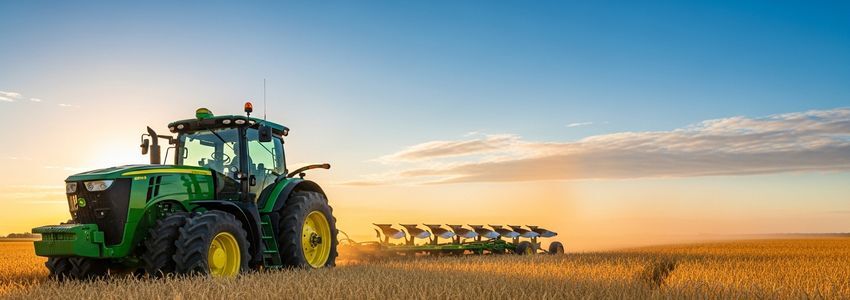
Tractors are the backbone of most farm operations and are among the most commonly leased pieces of farm equipment. Utility tractors (100 to 200 horsepower) typically range from $60,000 to $120,000 new. Row crop tractors and large horsepower units for commercial operations can reach $350,000 or more. Leasing spreads these costs across manageable monthly payments while ensuring you always have reliable, warranty-covered machinery.
Combine Harvesters and Grain Equipment
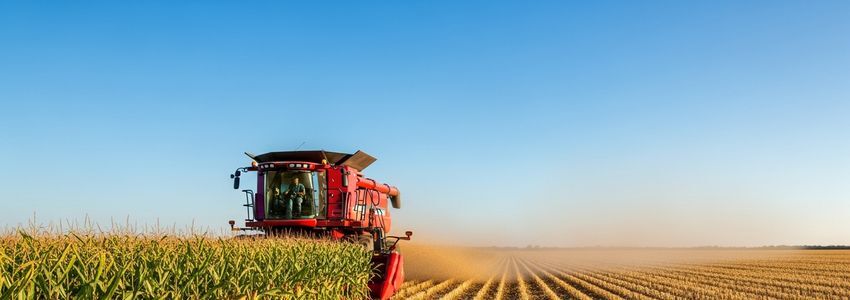
Modern combines represent some of the highest equipment costs on any farm. A top-of-line combine harvester with precision headers can cost $500,000 to $800,000. For grain farmers where timely harvest is the difference between a profitable year and a devastating loss, reliable harvesting equipment is non-negotiable. Leasing these machines allows grain operations to access the latest GPS-guided, yield-mapping combines without committing to full ownership costs.
Sprayers and Application Equipment
High-clearance self-propelled sprayers, which handle pesticide and fertilizer application across large fields, typically cost between $175,000 and $400,000. These machines have a defined useful life as technology evolves rapidly, making leasing particularly attractive - you can upgrade at the end of each term to stay current with precision ag technology.
Planters and Seeding Equipment
Multi-row planters for corn and soybean operations can range from $70,000 to $300,000 depending on size and technology. Precision planting systems add significant cost but also deliver measurable yield improvements. Leasing allows farmers to equip themselves with the latest variable-rate seeding and row-by-row shutoff technology without the full capital outlay.
Irrigation Systems
Center pivot irrigation systems, subsurface drip systems, and pump stations represent another major capital expenditure for farms in arid regions or operations maximizing yield potential. A single center pivot can cost $70,000 to $150,000 installed. Leasing spreads this investment over multiple seasons and preserves working capital for seeds, inputs, and labor.
Livestock and Specialty Equipment
Dairy farms, poultry operations, and livestock producers can also lease feeding systems, milking equipment, egg processing machinery, and handling facilities. Specialty crop operations - from orchards to vineyards - can finance harvesting aids, pruning equipment, and post-harvest sorting systems through agricultural leases.
Precision Agriculture Technology
GPS guidance systems, variable rate controllers, yield monitors, soil sampling technology, and drone platforms increasingly define modern farming profitability. These systems can cost $20,000 to $80,000 per unit and become obsolete faster than mechanical equipment. Leasing provides access to current technology without long-term commitment to rapidly evolving systems.
Key Benefits of Leasing Farm Equipment
The decision between leasing and financing outright involves multiple financial and operational considerations. For most farming operations, leasing delivers four distinct advantages that make it the preferred choice.
Cash Flow Preservation
Cash flow is the lifeblood of any farm operation. Between planting and harvest, expenses accumulate steadily while revenue remains seasonal. Leasing converts a massive one-time capital expenditure into predictable monthly installments that can be planned for in advance. For grain farmers who receive the bulk of their annual income at harvest, this structure allows equipment acquisition without depleting the working capital needed for seeds, fertilizer, and fuel during the growing season.
Access to the Latest Technology
Agricultural machinery evolves rapidly. Precision planting technology, GPS-guided application systems, and connected telematics platforms are transforming yield efficiency. Equipment purchased outright risks obsolescence within five to seven years as new systems emerge. Leasing on shorter terms allows farms to cycle through technology upgrades at each lease end, maintaining a competitive advantage with equipment that reflects the current state of precision agriculture.
Predictable Maintenance and Warranty Coverage
New equipment leases typically cover machinery during its manufacturer's warranty period, minimizing unexpected repair costs during the lease term. Some lease structures include maintenance agreements that further reduce the operational risk of equipment downtime during critical planting and harvesting windows.
Balance Sheet Benefits
Depending on the lease structure, leased equipment may be treated as an operating expense rather than a capital asset, keeping debt off the balance sheet. This can improve key financial ratios that lenders use to evaluate farm creditworthiness when you need additional working capital loans or lines of credit for operating inputs.
Industry Insight: A 2024 survey by the American Farm Bureau Federation found that over 40% of commercial farming operations use leasing or financing to acquire major equipment, citing cash flow management and technology access as primary drivers.
Agricultural Equipment Leasing - By the Numbers
By the Numbers
Agricultural Equipment Leasing - Key Statistics
$25B+
Annual U.S. farm machinery spending
40%
of commercial farms use equipment leasing or financing
$800K
Maximum cost of a top-tier combine harvester
48 Hrs
Average approval time with Crestmont Capital
Leasing vs. Buying Farm Equipment: A Side-by-Side Comparison
The right choice between leasing and purchasing depends on your operation's size, cash flow profile, credit strength, and long-term equipment strategy. Here is a direct comparison to help guide the decision:
| Factor | Leasing | Buying (Loan) | Buying (Cash) |
|---|---|---|---|
| Upfront Cost | Low (first/last payment or deposit) | Medium (10-20% down payment) | Full purchase price |
| Monthly Payment | Lower than loan | Higher than lease | None |
| Ownership | Option to purchase at term end | Full ownership after payoff | Immediate full ownership |
| Technology Upgrades | Easy at end of each term | Sell/trade required | Sell/trade required |
| Balance Sheet Impact | Operating expense (often) | Debt on balance sheet | Asset, no debt |
| Flexibility | High - multiple end-of-term options | Medium | Low - capital is committed |
| Best For | Cash flow-conscious operations wanting modern equipment | Operations wanting ownership with manageable payments | Debt-averse operations with strong reserves |
For most modern farm operations - particularly those managing significant machinery fleets, seasonal cash flow swings, and the need to stay current with precision ag technology - leasing delivers the best combination of financial flexibility and operational capability.
Who Qualifies for Agricultural Equipment Leasing?
Qualification requirements for agricultural equipment leasing are generally more accessible than traditional bank financing, in large part because the equipment itself serves as collateral. Lenders consider several factors when evaluating applications:
Time in Operation
Most lenders prefer farm operations with at least one to two years in business. Start-up farms may qualify with a strong business plan, a significant down payment, or by leveraging co-signers with strong credit histories. Established family farms with multi-generational history typically qualify with the most favorable terms.
Credit Profile
While there is no universal minimum credit score requirement, scores above 620 typically qualify for standard lease programs. Operations with scores above 680 access better rates and longer terms. For operations with challenged credit histories - including those recovering from drought years or commodity price downturns - bad credit equipment financing options are available through specialty lenders who factor in the overall health of the farming operation.
Revenue and Cash Flow
Lenders evaluate seasonal revenue patterns and overall farm income. Bank statements from the past three to twelve months, farm tax returns, and Schedule F income documentation are commonly requested. The ability to demonstrate consistent revenue, even if seasonal, significantly strengthens an application.
Equipment Value
The value of the equipment being leased directly influences terms. Well-maintained, late-model machinery from major manufacturers (John Deere, Case IH, AGCO, New Holland) is viewed as high-quality collateral. This quality collateral reduces lender risk and can result in more favorable lease rates even for borrowers with moderately challenged credit profiles.
Pro Tip: Having your past two years of Schedule F tax returns and three to six months of farm bank statements organized before applying can cut approval time in half and often results in better lease terms.
Real-World Agricultural Leasing Scenarios
Scenario 1 - The Mid-Size Grain Farmer Upgrading Technology
A 2,800-acre corn and soybean operation in Indiana is running an older combine that requires frequent repairs and lacks modern yield mapping capability. The farmer wants to upgrade to a current-generation combine with precision harvesting technology but does not want to commit $550,000 at once. Through a 60-month agricultural equipment lease, the farmer secures the new combine with a monthly payment that fits within harvest season revenue. At the end of five years, the farmer has the option to purchase at a pre-agreed residual value or upgrade again.
Scenario 2 - The Specialty Crop Producer Adding a Sprayer
A 700-acre specialty vegetable operation in California needs a new high-clearance sprayer to expand into a newly acquired plot. The equipment cost is $280,000 - a difficult sum to finance outright given recent capital expenditures on cold storage. Through a 48-month lease with seasonal payment adjustments, the operation structures larger payments during fall harvest months and smaller payments during the slower winter period. This alignment of payments with revenue cycles preserves working capital year-round.
Scenario 3 - The Livestock Operation Adding a New Feeding System
A beef cattle operation in Nebraska needs to expand its automated feed management system to accommodate a herd expansion. The system - including commodity storage bins, conveyors, and automated feeding controls - totals $190,000. An agricultural equipment financing arrangement through Crestmont Capital provides full coverage at a competitive rate over 60 months, with the option to purchase at the end of the term.
Scenario 4 - The New Farm Start-Up Establishing a Fleet
A young farmer starting a 400-acre operation after purchasing land needs to establish an equipment base from scratch. With limited capital history, traditional bank loans are difficult to secure. Through a combination of a starter tractor lease and a used implement lease, the operation acquires a functional equipment fleet with two separate manageable monthly payments, building credit history while establishing productive capacity from year one.
Scenario 5 - The Irrigation Upgrade Scenario
A dry-land wheat operation in Kansas wants to convert 600 acres to irrigated production using center pivot systems. Each pivot costs approximately $80,000 installed, meaning the total investment would exceed $250,000 for the planned coverage. Irrigation equipment leasing allows the farmer to add pivots incrementally - starting with two units and adding more as the expanded irrigated production generates additional revenue.
Scenario 6 - The Harvest Equipment Co-Op
Three neighboring family farms jointly lease a custom combine harvester and share its use across their combined 5,000 acres. By structuring the lease agreement with all three farms as co-signers, they access a top-tier machine that would be unaffordable individually, while sharing the monthly payment burden proportional to their respective acreage.
Get the Equipment Your Farm Needs
Crestmont Capital works with farmers of all sizes across every agriculture sector. Fast approvals, flexible terms, seasonal payment options available.
Start Your Application →How Crestmont Capital Helps Farmers Lease Agricultural Equipment
Crestmont Capital is a nationwide business lender specializing in equipment financing and leasing for operations across all industries - including agriculture. We understand that farming businesses operate on different timelines, face unique seasonal cash flow constraints, and require lenders who can move quickly when equipment needs emerge unexpectedly.
Here is what sets Crestmont Capital apart for agricultural equipment leasing:
Fast Approvals: We deliver decisions within 24 to 48 hours in most cases. When a piece of critical machinery breaks down at the start of planting season, time is not a luxury - it is an emergency. Our streamlined application process requires minimal documentation and delivers clear answers quickly.
Flexible Terms: Lease terms from 24 to 84 months, with seasonal payment options available for operations whose income is concentrated in specific months. No farmer should be forced into payment structures that create cash flow stress during the growing season.
All Equipment Types: We finance and lease tractors, combines, sprayers, planters, irrigation systems, livestock equipment, precision ag technology, and specialty crop machinery. Whether you need a single piece of replacement equipment or a comprehensive fleet update, Crestmont Capital can structure the right solution.
All Credit Profiles: From strong-credit commercial operations to farms rebuilding after difficult years, Crestmont Capital works with a broad spectrum of credit profiles. Our farm equipment financing programs include options designed specifically for operations that do not qualify for conventional bank products.
$10,000 to $5 Million+: Whether you are financing a single utility tractor or an entire fleet of high-horsepower equipment, our lending capacity covers the full range of agricultural equipment needs.
Crestmont Capital has been rated among the top business lenders in the country and takes pride in serving the farming and agribusiness community with the same commitment to results that farmers bring to every harvest season.
How to Get Started with Agricultural Equipment Leasing
Complete our quick application at offers.crestmontcapital.com/apply-now — provide basic information about your operation and the equipment you need. No lengthy paperwork, no in-person meetings required.
A Crestmont Capital agricultural financing specialist reviews your application and discusses the right lease structure for your operation — including seasonal payment options if applicable.
Once approved and documents are signed, equipment is delivered and payments begin. Most farmers are operational with their new equipment within days of approval.
Lease Your Farm Equipment Today
Tractors. Combines. Sprayers. Irrigation. We finance it all. Competitive rates, fast decisions, and a team that understands agriculture.
Apply Now →Frequently Asked Questions
What is the difference between agricultural equipment leasing and financing?
Leasing provides use of equipment for a defined period with monthly payments, with options to purchase, renew, or return the machinery at the end of the term. Financing (a loan) transfers ownership to the borrower from the start, with equity building over the payment period. Leasing typically offers lower monthly payments and greater flexibility for technology upgrades, while financing results in full ownership at the end of the term.
What credit score do I need to lease farm equipment?
Most standard agricultural equipment lease programs require a minimum credit score of 600 to 620. Operations with scores above 680 qualify for the best rates and longest terms. However, specialized agricultural lenders like Crestmont Capital work with operations across a range of credit profiles, particularly when the equipment itself has strong collateral value or when the farming operation demonstrates consistent seasonal revenue.
Can I lease used farm equipment?
Yes. Many lenders finance used agricultural equipment, though the age and condition of the machinery affect available terms. Equipment that is five years old or newer from major manufacturers typically qualifies for the same lease programs as new equipment. Older machinery may require a larger deposit or shorter lease term. Used equipment leasing can be an excellent option for operations looking to minimize monthly costs while still acquiring functional, reliable machinery.
Are seasonal payment structures available for farm equipment leases?
Yes. Seasonal payment structures allow larger payments to be scheduled during high-revenue months (typically at harvest) and smaller or deferred payments during planting or dormant periods. Not all lenders offer this, but specialized agricultural lenders and brokers like Crestmont Capital frequently structure leases with seasonal flexibility to match farm income cycles. This is one of the most important features to negotiate when arranging a farm equipment lease.
How long does it take to get approved for an agricultural equipment lease?
Approval timelines vary by lender. Traditional banks may take two to six weeks. Specialty equipment lessors and agricultural financing companies like Crestmont Capital typically provide decisions within 24 to 48 hours. For farmers facing equipment emergencies during critical growing or harvesting periods, rapid approval timelines are essential. Having your documentation (farm tax returns, bank statements, equipment quote) organized before applying accelerates the process significantly.
What happens at the end of a farm equipment lease?
At the end of the lease term, you typically have three options: purchase the equipment at fair market value or a pre-negotiated fixed price (often called a residual), renew the lease on the existing equipment for a new term at a reduced payment, or return the equipment and initiate a new lease on updated machinery. The best end-of-lease option depends on the equipment's condition, market value, and your farm's evolving needs.
Is a down payment required for agricultural equipment leasing?
Many lease programs require little to no down payment, making them accessible even for operations with limited upfront capital. Some structures require a first-and-last payment equivalent to two months of the lease cost. Operations with stronger credit may qualify for $0 down options. Providing a voluntary down payment can reduce monthly installments and sometimes improves the interest rate, but it is typically not mandatory for well-qualified applicants.
What types of tractors can I lease through Crestmont Capital?
Crestmont Capital can finance virtually any make and model of tractor through its agricultural equipment leasing programs. This includes utility tractors for small operations, row crop tractors for grain farms, four-wheel-drive articulated tractors for large-scale row crop and hay production, and compact utility tractors for specialty crop, livestock, and smaller farm operations. Both new and used tractors from brands including John Deere, Case IH, New Holland, AGCO, Kubota, and Fendt are eligible.
Can I lease precision agriculture technology as part of an equipment package?
Yes. GPS guidance systems, variable rate controllers, yield mapping technology, drones, and connected precision agriculture platforms can be financed as part of a broader equipment package. When bundled with larger equipment like tractors or combines, precision technology costs are absorbed into a single monthly payment, simplifying the financing structure and ensuring your entire equipment system is covered under one agreement.
How much does it cost to lease a combine harvester per month?
Monthly lease costs vary widely based on the equipment's purchase price, lease term, and your credit profile. As a general benchmark, a $400,000 combine harvester on a 60-month lease might carry a monthly payment in the range of $6,000 to $8,500 depending on rate and residual structure. A $600,000 machine on the same term could range from $9,000 to $13,000 per month. Shorter terms carry higher monthly payments but lower total interest costs. Longer terms reduce monthly obligations but extend the total commitment period.
Can start-up farms or beginning farmers qualify for equipment leasing?
Yes, though start-up farms face more scrutiny than established operations. Lenders look for a compelling business plan, a solid credit history from the principal owner, and sometimes a co-signer with a strong financial profile. USDA's Farm Service Agency also offers beginning farmer loan programs that can complement private lease financing. Crestmont Capital works with beginning farmers and can structure programs that account for limited operational history when strong personal credit and clear business plans are present.
What documentation is required to apply for an agricultural equipment lease?
Documentation requirements vary by lender and equipment cost. For smaller leases under $150,000, many lenders require only a completed application, the equipment quote or invoice, and basic identification. Larger transactions typically require two years of business or farm tax returns (including Schedule F), three to six months of business bank statements, and sometimes a personal financial statement. Having these documents ready before applying speeds the process considerably.
Can I lease irrigation systems and water management equipment?
Yes. Center pivot irrigation systems, lateral move systems, drip irrigation infrastructure, pump stations, and water management technology all qualify for agricultural equipment lease financing. Irrigation upgrades can dramatically improve yield potential and water efficiency, delivering measurable ROI that often offsets the monthly lease cost. Given the high capital cost of modern irrigation systems, leasing is frequently the most financially sensible path for farms making this investment.
Does leasing farm equipment affect my ability to get other business loans?
Operating leases are often structured to appear as off-balance-sheet obligations, which means they may not count as debt in the same way a traditional equipment loan would. This can preserve your debt-to-income ratios and improve your eligibility for additional working capital loans, lines of credit, or SBA programs. Capital leases, however, are treated more like debt on the balance sheet. It is important to clarify the accounting treatment with your financial advisor or CPA when selecting a lease structure.
How do I choose between a fair market value lease and a $1 buyout lease?
A fair market value (FMV) lease offers lower monthly payments because you are not paying to own the equipment - you have the option to purchase at the end at whatever the market value is at that time. A $1 buyout lease is essentially a financing arrangement - you pay a higher monthly rate but own the equipment outright at the end by paying $1. If you want long-term ownership and plan to keep the machinery for many years, the $1 buyout makes sense. If you want maximum cash flow flexibility and the ability to upgrade equipment regularly, an FMV lease is typically the better fit.
Disclaimer: The information provided in this article is for general educational purposes only and is not financial, legal, or tax advice. Funding terms, qualifications, and product availability may vary and are subject to change without notice. Crestmont Capital does not guarantee approval, rates, or specific outcomes. For personalized information about your business funding options, contact our team directly.