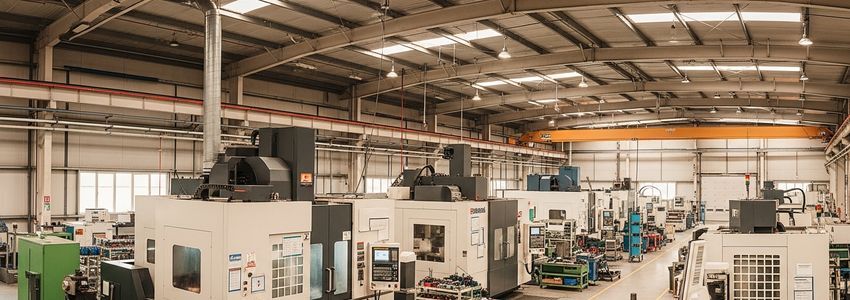
For manufacturers, acquiring the right equipment is not just an operational necessity-it is the engine of growth, innovation, and competitive advantage. This guide provides a comprehensive overview of manufacturing equipment financing, a strategic financial tool designed to help you procure essential machinery without depleting capital reserves. By understanding the options, processes, and qualifications, you can make informed decisions that propel your manufacturing operations forward.
In This Article
- What Is Manufacturing Equipment Financing?
- Types of Manufacturing Equipment You Can Finance
- How Manufacturing Equipment Financing Works
- Financing vs. Leasing: Which Is Right for Your Shop?
- Who Qualifies for Manufacturing Equipment Financing?
- How Crestmont Capital Helps Manufacturers
- Real-World Scenarios
- How to Apply
- Frequently Asked Questions
- Conclusion
What Is Manufacturing Equipment Financing?
Manufacturing equipment financing is a type of business loan or lease specifically structured for the acquisition of machinery and tools used in production. Instead of paying the full cost of the equipment upfront, a manufacturer can obtain funding from a lender like Crestmont Capital and repay the amount over a predetermined period. The equipment itself typically serves as the collateral for the loan, making it a secured form of financing that is often easier to obtain than a traditional unsecured business loan.
This financial tool is critical for the health and growth of the manufacturing sector, which, according to the U.S. Bureau of Economic Analysis, accounted for over $2.8 trillion of U.S. economic output. For individual businesses, financing provides a direct path to scaling operations, improving efficiency, and staying technologically relevant without compromising liquidity. By preserving working capital, companies can allocate cash to other vital areas such as payroll, inventory, marketing, and research and development.
The core benefits of using manufacturing equipment financing include:
- Cash Flow Management: Spreading the cost of expensive machinery over several years allows for predictable monthly payments, making budgeting easier and preventing large capital drains.
- Competitive Advantage: Access to the latest technology-such as advanced CNC machines, robotics, and 3D printers-enables manufacturers to produce higher quality goods more efficiently, bid on more complex projects, and outpace competitors.
- Scalability: As demand grows, financing allows businesses to quickly acquire additional equipment to increase production capacity without waiting to accumulate sufficient cash reserves.
- Potential Tax Advantages: Depending on the financing structure, businesses may be able to deduct monthly payments or take advantage of depreciation rules like Section 179. Consultation with a tax professional is recommended to understand the specific benefits for your business.
Ultimately, this form of equipment financing is not just about buying a machine; it is a strategic investment in the future productivity and profitability of your manufacturing enterprise. It bridges the gap between operational needs and financial constraints, empowering businesses to invest in the assets that generate revenue.
Types of Manufacturing Equipment You Can Finance
The range of machinery eligible for manufacturing equipment financing is vast, covering nearly every stage of the production lifecycle from raw material processing to final packaging. As technology evolves, the need to upgrade or acquire new types of equipment becomes more pressing. A Forbes article on the future of manufacturing highlights the increasing importance of smart, automated, and sustainable technologies. Lenders who specialize in this sector understand the diverse and specific needs of different manufacturing industries and can finance a wide array of assets. Below are some of the most common categories and specific types of equipment that can be financed.
Computer Numerical Control (CNC) Machinery
CNC machines are the cornerstone of modern precision manufacturing. They use computer programming to control machine tools with high accuracy and repeatability.
- CNC Mills: Used for cutting and drilling materials, available in 3-axis, 4-axis, and 5-axis configurations for increasingly complex geometries.
- CNC Lathes: Shape materials by rotating a workpiece and using various cutting tools.
- CNC Routers: Primarily used for cutting softer materials like wood, plastic, and aluminum.
- CNC Plasma & Laser Cutters: Use high-powered plasma or lasers to cut through metal sheets with precision.
- CNC Grinders: Provide high-precision finishing for metal parts.
Fabrication and Metalworking Equipment
This category includes machinery used to cut, bend, and assemble metal components.
- Press Brakes: Bend sheet metal into various shapes and angles.
- Shears: Make straight-line cuts on sheet metal.
- Welding Equipment: Includes MIG, TIG, and robotic welding systems.
- Ironworkers: Multi-functional machines that can punch, shear, notch, and bend metal.
- Tube & Pipe Benders: Shape metal tubing for various applications, from automotive to construction.
Plastic and Injection Molding Machinery
Essential for producing plastic parts and products in high volumes.
- Injection Molding Machines: Inject molten plastic into a mold to create parts.
- Extruders: Create continuous profiles of plastic, such as pipes or filaments.
- Blow Molding Machines: Used to create hollow plastic parts like bottles and containers.
- Thermoformers: Heat plastic sheets and form them over a mold.
Automation and Robotics
Robotic systems are increasingly integrated into production lines to improve speed, accuracy, and safety.
- Robotic Arms: Used for tasks like welding, painting, assembly, and pick-and-place operations.
- Automated Guided Vehicles (AGVs): Transport materials around a factory floor without human intervention.
- Conveyor Systems: Automated systems for moving parts and products through the assembly line.
Packaging and Processing Equipment
Machinery used in the final stages of production, especially in the food and beverage, pharmaceutical, and consumer goods industries.
- Fillers and Sealers: Package liquids, powders, and solids into containers.
- Labeling Machines: Apply labels to products and packaging.
- Wrapping and Palletizing Machines: Prepare products for shipping and distribution.
- Food Processing Equipment: Includes industrial mixers, ovens, slicers, and grinders.
This list is not exhaustive. Financing is also available for additive manufacturing (3D printers), woodworking machinery, printing presses, and specialized heavy equipment used in specific manufacturing niches. A knowledgeable financing partner can help structure a deal for virtually any piece of equipment that is critical to your production process.
Ready to Upgrade Your Manufacturing Equipment?
Don't let capital constraints hold back your production. Get a free, no-obligation quote today and see how affordable your next equipment acquisition can be.
Get Your Free QuoteHow Manufacturing Equipment Financing Works
The process of securing manufacturing equipment financing is designed to be more streamlined and faster than traditional bank loans. Lenders specializing in this area understand that speed is critical when an opportunity to expand or a need to replace a failing machine arises. The equipment itself serves as the primary collateral, which simplifies the underwriting process. While each lender's specific steps may vary slightly, the general workflow follows a clear and logical progression from application to funding.
Below is a typical process flow, followed by a detailed explanation of each stage.
How Manufacturing Equipment Financing Works
Application
Submit a simple online application with basic business information and details about the desired equipment.
Documentation Review
Provide necessary documents, such as bank statements and an equipment invoice, for the lender's review.
Approval & Terms
Receive a credit decision and a clear outline of the financing terms, including rate, term length, and monthly payment.
Funding
Once you accept the terms, the lender pays the equipment vendor directly, and the machinery is delivered to you.
Step 1: Application and Initial Consultation
The process begins when you identify the equipment you need and the vendor you wish to purchase it from. You will then complete a short application, which can often be done online in minutes. This form gathers basic information about your business (name, address, time in business, annual revenue) and the equipment (type, cost, vendor). A financing specialist will typically follow up to discuss your specific needs, answer initial questions, and clarify the next steps.
Step 2: Documentation Submission and Underwriting
After the initial application, you will be asked to provide supporting documents. For smaller financing amounts (e.g., under $250,000), this may only require a few recent business bank statements and an invoice for the equipment. For larger, more complex transactions, additional documentation like business tax returns, financial statements, and personal financial information may be requested. The lender's underwriting team then reviews this information along with your business and personal credit history to assess risk and determine your eligibility. Because the equipment serves as collateral, the approval criteria are often more flexible than for other types of business loans.
Step 3: Approval and Term Sheet Review
If your application is approved, the lender will present you with a term sheet or financing agreement. This document outlines all the critical details of the offer:
- Loan Amount: The total amount being financed.
- Term Length: The repayment period, typically ranging from 2 to 7 years.
- Interest Rate or Factor Rate: The cost of borrowing the funds.
- Monthly Payment: The fixed amount you will pay each month.
- Down Payment: Any initial payment required, though many programs offer 100% financing.
This is a crucial stage where you should carefully review the terms and ask your financing specialist to clarify any points you do not understand. Some manufacturers may also explore government-backed options, such as SBA loans, which can offer favorable terms but often involve a more extensive application process.
Step 4: Funding and Equipment Acquisition
Once you agree to the terms and sign the financing documents, the process moves to funding. The lender will coordinate directly with the equipment vendor. In most cases, the lender pays the vendor the full invoice amount. The vendor then releases the equipment for shipment and delivery to your facility. This direct payment system is efficient and ensures the funds are used for their intended purpose. Once you receive the equipment, you can put it to work immediately while your repayment schedule begins with the first monthly payment.
Financing vs. Leasing: Which Is Right for Your Shop?
When acquiring new manufacturing equipment, you will encounter two primary options: an equipment loan (financing) and an equipment lease. While both achieve the goal of getting new machinery into your facility, they function differently and offer distinct advantages. The best choice depends on your business's financial situation, long-term goals, and the type of equipment you need. Understanding the key differences is essential for making a sound strategic decision.
| Feature | Equipment Loan (Financing) | Equipment Lease |
|---|---|---|
| Ownership | You own the equipment outright at the end of the loan term. | The leasing company owns the equipment. You have the option to purchase it, return it, or renew the lease at the end of the term. |
| Monthly Cost | Typically higher monthly payments as you are paying off the full value of the asset to build equity. | Generally lower monthly payments as you are only paying for the depreciation of the equipment during the lease term. |
| Flexibility to Upgrade | Less flexible. You must sell or trade in the old equipment to upgrade, which can be a complex process. | Highly flexible. It is easy to upgrade to newer technology at the end of the lease term by simply starting a new lease. |
| Long-Term Cost | Potentially lower over the life of the asset, as you stop making payments once the loan is paid off but continue to use the equipment. | Can be higher over time if you choose to buy the equipment at the end or continuously lease new models. |
| Best For | Businesses that want to own long-lasting assets with a stable technological lifespan (e.g., heavy-duty presses, lathes). | Businesses that need equipment with a high rate of obsolescence (e.g., 3D printers, computer-driven machinery) or want lower monthly payments. |
Deep Dive into the Differences
Ownership and Equity: The most fundamental difference is ownership. With an equipment loan, you are the owner from day one, and once the loan is paid off, the asset is yours free and clear. This allows you to build equity on your balance sheet. With a lease, you are essentially renting the equipment for a set period. At the end of the lease, you typically have a few options: purchase the equipment at its fair market value, renew the lease, or return it to the leasing company. The most common lease is a Fair Market Value (FMV) lease, which offers the lowest payments and the most flexibility.
Cost Considerations: Leases often come with lower monthly payments because you are not paying for the full value of the equipment. Instead, you are paying for its use and depreciation over the lease term. This can be very beneficial for cash flow. However, the total cost over time might be higher if you decide to buy the equipment at the end of the term. A loan has higher payments but can be more cost-effective in the long run for equipment you plan to use for many years past the financing term.
Technology and Upgrades: For manufacturers who rely on cutting-edge technology that evolves rapidly, an equipment lease is often the superior choice. It provides a simple, structured path to upgrading your machinery every few years, ensuring you remain competitive without the hassle of selling old equipment. If the equipment you need is a durable workhorse with a long, reliable service life (like a hydraulic press), a loan makes more sense as the value of ownership outweighs the need for frequent upgrades.
Tax Implications: Both options offer potential tax benefits, but they work differently. With a loan, you can typically deduct the interest paid on the loan and claim depreciation on the asset each year. With an operating lease, the entire monthly lease payment can often be deducted as a business operating expense. It is crucial to consult with a tax advisor to determine which structure provides the most significant tax advantage for your specific financial situation.
Finance or Lease? We Can Help.
Our financing experts can walk you through the pros and cons of each option to find the perfect fit for your business goals and budget.
Speak with an ExpertWho Qualifies for Manufacturing Equipment Financing?
One of the primary advantages of manufacturing equipment financing is its accessibility. Because the equipment itself serves as collateral, lenders can be more flexible with their qualification criteria compared to unsecured loans. This opens up funding opportunities for a wide range of businesses, from established corporations to newer, growing operations. However, lenders still perform a thorough risk assessment based on several key factors to determine eligibility, rates, and terms.
Key Qualification Factors
1. Credit Score: Lenders will review both the business's credit profile and the personal credit scores of the owner(s). While a high score is always beneficial, many programs are available for business owners with less-than-perfect credit. Generally, a personal credit score of 620 or higher is preferred, but options may exist for scores in the high 500s, often with a larger down payment or higher rates. A strong business credit history demonstrating timely payments to other creditors will significantly improve your application.
2. Time in Business: The length of time your company has been in operation is a key indicator of stability. Most lenders prefer to work with businesses that have been established for at least two years. This track record provides evidence of consistent operations and revenue. However, specialized programs exist for startups and businesses with less than two years of history, particularly if the owners have strong personal credit and relevant industry experience. These programs might require a more detailed business plan or a larger down payment.
3. Annual Revenue: Your company's revenue demonstrates its ability to generate sufficient cash flow to cover the new monthly payment. Lenders do not typically have a strict minimum revenue requirement, but they will analyze your bank statements to verify consistent cash flow and ensure that the new debt obligation will not over-leverage the business. A healthy debt-to-income ratio is a positive sign for underwriters.
4. Industry and Equipment Type: Your industry and the specific equipment you are financing play a role. Lenders are very comfortable financing standard equipment with a strong secondary market value (like a popular model of CNC machine), as it represents lower risk. Financing highly specialized or custom-built machinery may require a stronger financial profile from the applicant. For businesses that might not meet the criteria for a large equipment purchase, other options like working capital loans can provide a stepping stone to build credit and revenue before pursuing a major asset acquisition.
5. Down Payment: While many lenders offer 100% financing, providing a down payment can significantly strengthen your application. A down payment of 10-20% reduces the lender's risk, which can result in a lower interest rate and more favorable terms. It also demonstrates your commitment and financial stake in the acquisition.
It is important to remember that these factors are often considered holistically. A weakness in one area, such as a shorter time in business, can be offset by strengths in others, like strong revenue and a good credit score. The best way to know if you qualify is to speak with a financing specialist who can assess your unique situation.
How Crestmont Capital Helps Manufacturers
At Crestmont Capital, we understand that for manufacturers, the right equipment is the difference between stagnation and growth. We are not just a lender; we are a strategic financing partner dedicated to the manufacturing industry. Our expertise goes beyond numbers on a page-we understand the machinery, the production cycles, and the competitive pressures you face every day. This deep industry knowledge allows us to provide financing solutions that are fast, flexible, and tailored to the unique needs of your operation.
Our approach is built on a foundation of speed and simplicity. We have streamlined our application and underwriting process to provide decisions in hours, not weeks. This means you can react quickly to opportunities, whether it is bidding on a new contract that requires an equipment upgrade or replacing a critical machine to avoid costly downtime. We offer a wide range of financing and leasing programs to accommodate businesses of all sizes, from startups acquiring their first piece of equipment to established enterprises expanding their production lines.
We provide comprehensive equipment financing solutions across all industries, but we have developed a specialized focus on the manufacturing sector. Our dedicated manufacturing equipment financing programs are designed with your challenges in mind. We can finance new and used equipment from any vendor, dealer, or private seller, giving you the freedom to choose the exact machine that is right for your shop. Our financing specialists work with you one-on-one to structure terms that align with your cash flow, from flexible payment schedules to 100% financing options that preserve your working capital.
With Crestmont Capital, you gain a partner who is invested in your success. We are committed to building long-term relationships and providing the capital you need to innovate, expand, and thrive in a competitive market.
Real-World Scenarios
To better illustrate the practical impact of manufacturing equipment financing, let's explore three common scenarios where manufacturers leverage this tool to achieve their business objectives.
Scenario 1: The Precision Machine Shop Upgrade
- The Business: A 10-year-old machine shop specializing in parts for the automotive and industrial sectors.
- The Challenge: The shop wants to expand into the more lucrative aerospace market, but its current 3-axis CNC mills cannot produce the complex, high-tolerance parts required by aerospace contracts. They identified a state-of-the-art 5-axis CNC machining center that costs $350,000, a sum too large to pay from cash reserves without jeopardizing operations.
- The Solution: The owner applies for manufacturing equipment financing. With a strong credit history and consistent revenue, they are quickly approved for 100% financing on a 60-month term. The lender pays the vendor directly.
- The Outcome: The new 5-axis mill is delivered and installed within two weeks. The shop can now produce complex aerospace components, allowing them to secure two major contracts that increase their annual revenue by 30%. The fixed monthly payment is easily covered by the income from the new projects, resulting in a significant net profit and a powerful new capability for the business.
Scenario 2: The Food Processing Plant Automation
- The Business: A regional food processing company that packages frozen goods for grocery chains.
- The Challenge: A major grocery chain offers them a contract to double their supply, but their current, semi-manual packaging line cannot meet the required volume. To fulfill the order, they need a fully automated packaging and palletizing system costing $180,000. The technology in this space evolves quickly, and they are hesitant to own an asset that might be outdated in five years.
- The Solution: The company opts for an equipment lease. They are approved for a 48-month Fair Market Value (FMV) lease. This results in a lower monthly payment compared to a loan, preserving their cash flow for purchasing raw materials for the increased production.
- The Outcome: The new automated line is installed, increasing their packaging speed by 150% and reducing labor costs. They successfully fulfill the large contract and improve their overall profit margins. At the end of the 48-month term, they can choose to lease the next generation of packaging technology, ensuring they always have an efficient and modern operation.
Scenario 3: The Startup Metal Fabrication Shop
- The Business: A new metal fabrication business founded by two experienced welders.
- The Challenge: The founders have secured a workshop and a few small jobs but need a press brake and a laser cutter to take on more substantial projects. As a startup with only six months of operating history, they have been turned down by traditional banks. The total cost for the two essential machines is $125,000.
- The Solution: They partner with a lender that has a dedicated startup program. While the business has a short history, the owners have excellent personal credit and a solid business plan. The lender approves them for a loan, requiring a 15% down payment to mitigate the risk associated with a new business.
- The Outcome: By making a down payment, the founders secure the necessary financing. With the press brake and laser cutter, they can offer a full range of fabrication services. They quickly build a reputation for quality work, and within their first year of having the equipment, their revenue triples, easily covering the loan payments and establishing a strong foundation for future growth.
How to Apply
Securing the financing you need for your next equipment purchase is a straightforward process. At Crestmont Capital, we have refined our application to be as efficient as possible, allowing you to get from inquiry to funding in record time. Follow these simple steps to get started.
-
Complete the Online Application
Fill out our secure, one-page application. It takes just a few minutes and requires only basic information about you, your business, and the equipment you want to finance. Click here to start your application.
-
Submit Your Documents
A dedicated financing specialist will contact you to discuss your needs and request a few simple documents, typically an equipment invoice and your last three months of business bank statements. You can submit these easily via our secure online portal.
-
Review and Accept Your Offer
Once our underwriting team reviews your file, you will receive a clear, transparent financing offer. Your specialist will walk you through the terms to ensure you are comfortable. Upon your acceptance, we will prepare the final documents for your electronic signature.
-
Receive Your Equipment
After the documents are signed, we handle the rest. We will coordinate payment directly with your chosen equipment vendor, who will then schedule the delivery of your new machinery. You can put your equipment to work right away and start generating revenue.
Your Next Machine is Within Reach
Take the first step toward a more productive and profitable future. Our simple application takes less than 5 minutes to complete.
Apply NowFrequently Asked Questions
1. What exactly is manufacturing equipment financing?
It is a specialized loan or lease used to purchase machinery for manufacturing. Instead of a large upfront cash payment, you make regular monthly payments over a set term. The equipment itself typically acts as collateral for the loan.
2. How does the financing process work?
The process involves four main steps: 1) submitting a simple application, 2) providing minimal documentation like bank statements and an equipment invoice, 3) receiving and accepting a financing offer, and 4) the lender paying the vendor directly so you can receive your equipment.
3. What are typical interest rates and terms?
Interest rates and terms vary based on your credit profile, time in business, and the equipment's cost. Terms typically range from 24 to 84 months (2-7 years). Rates are competitive and are fixed for the life of the loan, ensuring predictable payments.
4. What are the minimum credit score requirements?
While requirements vary, many lenders look for a personal credit score of 620 or higher. However, programs are available for a range of credit profiles. Strengths in other areas, such as strong revenue or time in business, can often offset a lower credit score.
5. Can I finance any type of manufacturing equipment?
Yes, you can finance almost any type of new or used equipment essential to your operations. This includes CNC machines, press brakes, 3D printers, packaging lines, welding equipment, and much more, from any vendor, dealer, or private seller.
6. How long does the application and funding process take?
The process is designed for speed. You can often get an approval decision within hours of submitting your application and documentation. Funding can occur in as little as 24-48 hours after you sign the final documents.
7. What is the difference between an equipment loan and a lease?
With a loan, you own the equipment at the end of the term. With a lease, the lender owns it, and you have options to buy, return, or upgrade at the end. Leases often have lower monthly payments, while loans build equity.
8. Can I finance used equipment?
Absolutely. Financing is widely available for used equipment. This can be a cost-effective way to acquire necessary machinery. The lender may want to verify the condition and value of the used asset as part of the underwriting process.
9. Do you offer financing for startups?
Yes, specialized financing programs are available for new businesses (typically those with less than two years in operation). These programs may have different requirements, such as a higher down payment or reliance on the owner's personal credit score.
10. How quickly can I get a decision on my application?
Most lenders specializing in equipment finance provide credit decisions very quickly, often within the same business day. Crestmont Capital aims to provide approvals in as little as a few hours.
11. Is a down payment always required?
Not always. Many programs offer 100% financing, meaning no down payment is required. However, providing a down payment (typically 10-20%) can strengthen your application and may help you secure better rates and terms.
12. Are there any prepayment penalties?
This depends on the specific loan agreement. Some financing structures may have prepayment penalties, while others do not. It is an important question to ask your financing specialist when reviewing your term sheet.
13. What manufacturing industries do you serve?
We serve all manufacturing sectors, including metal fabrication, aerospace, automotive, food and beverage processing, plastics, woodworking, printing, and many more. We can finance the specialized equipment unique to your industry.
14. Why should I choose Crestmont Capital over a traditional bank?
Crestmont Capital offers a faster, more flexible process with higher approval rates than traditional banks. We specialize in equipment financing, understand the manufacturing industry, and can provide customized solutions that banks often cannot.
15. How do I get started with an application?
Getting started is easy. You can fill out our simple, secure online application in just a few minutes or call us directly to speak with a manufacturing equipment financing specialist who can guide you through the process.
Conclusion
In the dynamic and capital-intensive world of manufacturing, strategic asset acquisition is paramount. The ability to invest in modern, efficient machinery dictates your capacity, quality, and ultimately, your profitability. Waiting to accumulate cash is a strategy that often leads to missed opportunities and falling behind competitors. Manufacturing equipment financing provides a powerful and accessible solution, enabling businesses to acquire critical assets now while preserving liquidity for day-to-day operations and future growth.
By converting a prohibitive upfront cost into manageable monthly payments, you can immediately leverage the revenue-generating power of new technology. Whether you are upgrading a single CNC mill, automating a production line, or outfitting a new facility, understanding your financing and leasing options is the first step toward building a more robust and competitive operation. With a clear process, flexible qualifications, and tailored solutions, manufacturing equipment financing is the key to unlocking your company's full potential.
Disclaimer: The information provided in this article is for general educational purposes only and is not financial, legal, or tax advice. Funding terms, qualifications, and product availability may vary and are subject to change without notice. Crestmont Capital does not guarantee approval, rates, or specific outcomes. For personalized information about your business funding options, contact our team directly.