Farm irrigation system leasing has emerged as one of the most practical financing strategies for agricultural operations looking to modernize their water management without the crippling upfront costs of outright purchase. Whether you operate a small family farm or manage thousands of acres of commercial cropland, understanding how to leverage leasing for irrigation infrastructure can mean the difference between thriving and simply surviving in today's competitive agricultural market.
Access to reliable irrigation is no longer optional for most U.S. farms. With shifting weather patterns, increasing drought frequency, and the rising cost of water, smart water management technology is becoming a baseline operational requirement. The challenge is that modern irrigation systems - including drip systems, pivot irrigators, smart water sensors, and automated controls - represent a significant capital investment that many farm operators simply cannot absorb from cash reserves.
In This Article
- What Is Farm Irrigation System Leasing?
- Key Benefits for Farm Operators
- How the Leasing Process Works
- Types of Irrigation Systems You Can Lease
- Leasing vs. Buying vs. Financing: Comparison
- Who Qualifies for Irrigation Leasing?
- How Crestmont Capital Helps Farm Operators
- Real-World Farm Scenarios
- How to Get Started
- Frequently Asked Questions
What Is Farm Irrigation System Leasing?
Farm irrigation system leasing is a financing arrangement in which a farm operator obtains use of irrigation equipment - including center pivot systems, drip lines, water pumps, controllers, and monitoring technology - in exchange for regular lease payments over a defined term, rather than purchasing the equipment outright. At the end of the lease period, the farmer typically has the option to renew the lease, upgrade to newer equipment, or purchase the system at a predetermined residual value.
This approach treats irrigation infrastructure the same way many farm operators treat tractors, combines, and other major equipment - as an operational tool that should be financed based on the revenue it generates, not purchased from cash flow that could otherwise fund seeds, labor, or operating expenses. Irrigation system leases are structured by specialty agricultural lenders and equipment finance companies with experience in farm operations.
The leasing model works particularly well for irrigation because modern systems are expensive, technology-driven, and subject to rapid advancement. A center pivot system with variable-rate irrigation controls and soil moisture sensors can cost $80,000 to $250,000 or more, depending on field size and features. Drip irrigation networks for specialty crops often run even higher per acre. Leasing allows farm operators to access this technology today while spreading the cost over the productive life of the system.
Key Stat: According to the USDA, farms using modern irrigation technology achieve 20-50% better water use efficiency compared to flood irrigation methods. Yet more than 60% of irrigated farmland in the U.S. still uses outdated systems. Farm irrigation system leasing is the primary tool helping operators close this technology gap.
Key Benefits of Leasing Irrigation Systems for Farm Operations
The advantages of farm irrigation system leasing extend far beyond simple cash flow preservation. For agricultural operations, where profit margins are often thin and capital is perpetually tied up in land, livestock, and commodity inputs, the benefits are compounding across multiple dimensions of the business.
Capital Preservation: The most immediate benefit is that leasing eliminates the need to deploy $50,000 to $300,000 in upfront capital. That preserved cash can be redirected to seeds, fertilizer, fuel, payroll, or expanding the cultivated acreage - uses that directly drive crop revenue in the current season.
Technology Access: Irrigation technology is advancing rapidly. Smart water sensors, variable-rate application controls, satellite-guided systems, and integrated weather data platforms represent significant productivity improvements. Leasing allows farm operators to access current-generation technology and upgrade at the end of the lease term, rather than being locked into equipment purchased five or ten years ago.
Predictable Operating Costs: Fixed monthly lease payments create budget certainty that outright equipment purchases rarely provide. Farm operators can model their water management costs precisely within annual operating budgets, which is particularly valuable when preparing financial statements for agricultural lenders or crop insurance providers.
Potential Payment Structure Flexibility: Many agricultural equipment leases can be structured with seasonal payment schedules - lower payments during winter months and higher payments during peak growing seasons - aligning cash outflow with crop revenue cycles. This seasonal structure is rarely available with traditional equipment loans.
Maintenance and Service Options: Some irrigation equipment leases include maintenance agreements that keep systems operating at peak efficiency without creating unpredictable repair expenses. For large-scale operations, this service coverage can be worth significant money annually.
Balance Sheet Benefits: Operating leases for irrigation equipment may not appear as long-term debt on certain farm financial statements, preserving debt ratios that affect agricultural credit availability. Farm operators should consult with their agricultural accountant to understand how specific lease structures affect their financial reporting.
Ready to Upgrade Your Farm's Irrigation?
Crestmont Capital offers flexible agricultural equipment financing with terms designed for farm cash flow cycles. Get a decision in as little as 24 hours.
Apply Now →How Farm Irrigation System Leasing Works
The process of leasing irrigation equipment for a farm operation follows a structured path that typically moves from initial assessment through equipment selection, lease approval, installation, and ongoing management. Understanding each phase helps farm operators prepare effectively and avoid common delays.
Phase 1 - Assessment and Equipment Selection: The process begins by identifying the specific irrigation needs of the operation. What crops are being grown? How many acres require irrigation? What is the existing water infrastructure - wells, pumps, delivery systems? Is the goal to install a new center pivot, upgrade an existing system with smart controls, or build out drip irrigation for specialty crops? These questions drive the equipment specification, which in turn determines the lease amount.
Phase 2 - Lender Selection and Application: Once equipment is specified, the farm operator applies for agricultural equipment leasing with a lender that understands farm operations. The application typically requires farm financial statements (two to three years of federal tax returns or Schedule F), a description of the farming operation, acreage under management, crop history and yields, and information about existing debt obligations. Agricultural equipment financing specialists at Crestmont Capital can typically review applications and provide decisions within 24 to 48 hours.
Phase 3 - Lease Structuring: The lender structures the lease terms including monthly payment amount, lease duration (typically 36, 48, or 60 months for irrigation equipment), end-of-term options, and any seasonal payment adjustments. The farm operator reviews and executes the lease agreement. For large systems, installation escrow arrangements may be set up so funds flow to the equipment vendor directly upon confirmed installation.
Phase 4 - Equipment Installation: The irrigation system is installed by the equipment vendor or a certified irrigation contractor. For center pivots, this involves site preparation, electrical connection, pump installation, and system calibration. For drip systems, it includes field layout, lateral installation, filtration systems, and emitter placement. Smart control systems require calibration of sensors and integration with farm management software.
Phase 5 - Ongoing Lease Management: Once operating, the farm operator makes regular lease payments per the agreed schedule. At the end of the lease term, options typically include returning the equipment (and leasing new/upgraded equipment), purchasing the equipment at the agreed residual value, or renewing the lease for an additional term.
Quick Guide
Farm Irrigation Leasing - At a Glance
Determine acreage, crop type, water source, and technology requirements.
Submit farm financials, operation history, and equipment specifications to an agricultural lender.
Finalize payment schedule, term length, and end-of-lease options with your lender.
Equipment is installed, commissioned, and you begin making lease payments tied to your seasonal cash flow.
Types of Irrigation Systems You Can Lease
The range of irrigation equipment available through leasing programs is broad, covering everything from basic sprinkler systems to sophisticated precision agriculture water management networks. Understanding which systems are available and what they cost helps farm operators identify the right technology for their operation.
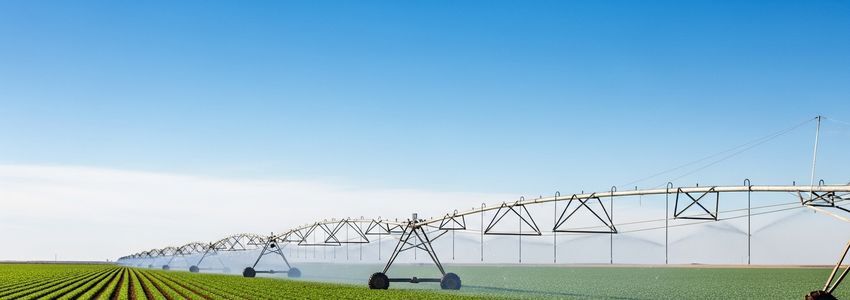
Center Pivot Irrigation Systems: These are the large rotating arm systems visible across corn and soybean country. Modern center pivots range from simple mechanical systems to GPS-guided precision units with variable-rate irrigation capabilities. A standard 1320-foot pivot covering approximately 130 acres may cost $60,000 to $120,000. Advanced precision systems for the same acreage can exceed $200,000. Lease terms of 48 to 72 months are common.
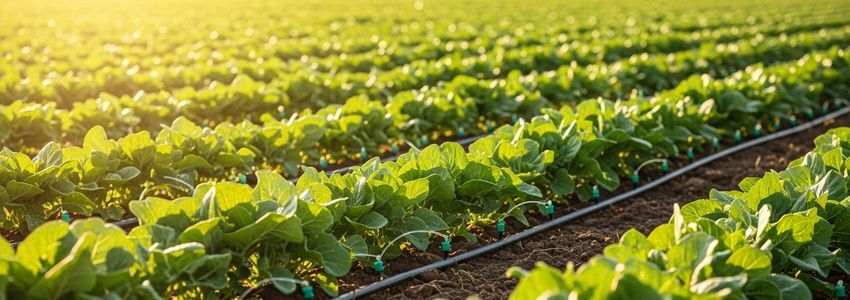
Drip and Micro-Irrigation Systems: Drip irrigation delivers water directly to plant root zones, achieving the highest water use efficiency of any irrigation method. These systems are particularly common in vineyards, orchards, vegetable operations, and specialty crops. Per-acre installation costs range from $800 to $3,000 depending on crop type and emitter density. Multi-hundred-acre drip systems can easily represent $500,000 or more in total equipment cost, making leasing a natural choice.
Solid Set and Portable Sprinkler Systems: Used extensively in vegetable production, frost protection, and turf operations, these systems involve stationary or moveable sprinkler heads connected to main lines. They are generally less expensive than pivots or drip systems, with costs typically ranging from $20,000 to $150,000 depending on acreage.
Linear Move Systems: Linear or lateral move irrigators travel in straight lines rather than circles, making them suitable for rectangular fields that don't accommodate center pivots. They are commonly used in hay production, specialty crops, and certain vegetable operations. Costs are similar to center pivots.
Smart Water Management Technology: Perhaps the fastest-growing segment of leaseable farm irrigation equipment is the technology layer - soil moisture sensors, weather stations, variable-rate controllers, remote monitoring systems, and AI-driven irrigation scheduling platforms. These systems can range from $5,000 for basic sensor networks to $100,000+ for fully integrated precision water management platforms. Many farm operators lease the hardware components and subscribe to the software platforms on separate service agreements.
Pump and Water Distribution Infrastructure: Electric and diesel irrigation pumps, mainline piping, pressure regulation, filtration systems, and water quality monitoring equipment are all leaseable. For operations building or upgrading their primary water delivery infrastructure, these components often represent $30,000 to $200,000 in equipment costs that lend themselves well to lease financing.
By the Numbers
U.S. Farm Irrigation - Key Statistics
56M+
Irrigated acres across U.S. farmland (USDA)
50%
Water savings achievable with drip vs. flood irrigation
$250K
Typical cost of advanced center pivot with precision controls
24 Hrs
Typical approval timeline for agricultural equipment leasing
Leasing vs. Buying vs. Financing: A Complete Comparison
Farm operators considering irrigation infrastructure improvements face a fundamental choice: lease the equipment, purchase it outright, or finance a purchase through a traditional equipment loan. Each option has distinct advantages and trade-offs, and the right choice depends on the farm's financial position, growth trajectory, and water management goals.
| Factor | Leasing | Equipment Loan | Cash Purchase |
|---|---|---|---|
| Upfront Cost | Low (first/last payment) | Down payment (10-25%) | Full equipment cost |
| Monthly Cost | Lower payments | Moderate payments | No payments |
| Technology Upgrade | Easy at end of term | Requires new loan | Requires new purchase |
| Ownership | No (unless buyout) | Yes (after payoff) | Yes (immediate) |
| Balance Sheet Impact | Operating expense | Adds to liabilities | Adds asset, no liability |
| Cash Flow Impact | Best cash preservation | Moderate | Worst - large outflow |
| Best For | Cash-constrained farms; technology-forward operations | Farms planning long-term ownership; strong credit | Debt-averse farms with strong cash reserves |
For most growing farm operations, equipment leasing provides the optimal balance of cash flow management, technology access, and operational flexibility. Equipment leasing through Crestmont Capital is structured specifically for agricultural operations, with payment terms that align with farm income cycles rather than generic commercial schedules.
Important Note: USDA reports indicate that farms adopting precision irrigation technology see average yield increases of 15-25% per acre while reducing water consumption by 20-40%. When evaluating leasing costs, factor in these productivity gains - the system often pays for itself within the first growing seasons.
Who Qualifies for Farm Irrigation System Leasing?
Agricultural equipment leasing qualification is generally more accessible than many farm operators expect. Unlike traditional bank loans that may require extensive collateral and long approval timelines, agricultural equipment lenders like Crestmont Capital focus primarily on the farm's operational history, cash flow, and the value of the equipment being leased.
Typical Qualification Criteria:
- Time in operation: Most agricultural equipment lenders prefer a minimum of 2 years of documented farm operation, though specialty programs exist for newer operations with strong business plans
- Annual farm revenue: Minimum thresholds vary by lender and lease amount; many programs start at $100,000 in annual farm revenue
- Credit profile: Personal credit scores typically considered, with most programs requiring 600+ though some programs accommodate lower scores with compensating factors
- Farm financials: Two to three years of federal agricultural tax returns (Schedule F) or audited farm financial statements
- Existing debt service: Lenders review existing farm debt obligations to ensure the new lease payment fits within manageable debt service ratios
Farmers with seasonal income patterns, variable year-to-year revenues due to weather or market conditions, or situations unique to agricultural operations may face challenges qualifying at traditional banks. Agricultural equipment leasing specialists understand these nuances and underwrite applications with agricultural expertise rather than applying rigid commercial lending standards that weren't designed for farm operations.
Operating structures including sole proprietorships, family farm partnerships, farm LLCs, and agricultural corporations can all qualify for equipment leasing. For multi-generation family farms, lenders may consider the combined financial profile of the farming operation and its principals.
Not Sure If You Qualify? Find Out in Minutes.
Crestmont Capital's agricultural equipment specialists review farm applications with real agricultural knowledge. No generic underwriting. No long waits.
Check Your Options →How Crestmont Capital Helps Agricultural Businesses
Crestmont Capital has established itself as a leading provider of agricultural equipment financing and leasing solutions for farm operators across the United States. Rather than treating farm applicants like commercial business borrowers, Crestmont's agricultural specialists understand the unique financial rhythms and challenges of farming operations.
The Crestmont approach begins with understanding the specific operation - not just the credit profile. What crops are grown, how many acres are under management, what existing irrigation infrastructure is in place, and what specific outcomes the farm operator is trying to achieve with new irrigation technology. This operational understanding allows Crestmont to structure leases that actually work for the farm, rather than forcing farm operations into generic commercial lease structures.
Through irrigation equipment financing, Crestmont provides access to leasing programs covering all major irrigation system types - center pivots, drip systems, linear moves, smart water management technology, and complete water infrastructure packages. Lease amounts typically range from $25,000 to $5 million or more for larger agricultural operations.
For farm operations looking beyond irrigation to broader capital needs, Crestmont also offers agricultural equipment financing for tractors, combines, and other farm machinery, as well as working capital solutions for operational expenses. This comprehensive approach means farm operators can work with a single financial partner across multiple funding needs, simplifying the capital management side of the farming business.
The application process at Crestmont is streamlined for agricultural operations. Farm operators can submit applications online, receive decisions within 24 to 48 hours in most cases, and execute documentation electronically. For time-sensitive situations - such as pre-season equipment needs or end-of-year purchasing decisions - Crestmont's rapid response capability is a significant operational advantage.
Real-World Farm Scenarios: How Irrigation Leasing Works in Practice
Understanding how farm irrigation system leasing works in real operational contexts helps farm operators evaluate whether it's the right choice for their specific situation. Here are several representative scenarios illustrating how different farm types approach irrigation equipment leasing.
Scenario 1 - Corn and Soybean Operation, Central Illinois: A 1,800-acre row crop operation has been relying on rainfall supplemented by an aging well and flood irrigation system. Drought conditions the previous two seasons caused significant yield losses. The operator wants to install three center pivot systems covering 1,200 acres but faces $480,000 in equipment costs. Rather than taking a large equipment loan that would strain the farm's debt service ratios, the operator leases the three pivots over 60 months with seasonal payment adjustments. The lease preserves $100,000 in operating capital for the season and provides access to modern variable-rate irrigation controls that improve water use efficiency by 30%.
Scenario 2 - Family Vineyard, Napa Valley: A 120-acre premium wine grape operation needs to replace aging overhead irrigation with drip irrigation throughout the vineyard. Total drip system installation is estimated at $380,000. The family has the option to use cash reserves built up over several strong vintage years, but the winery expansion they are planning simultaneously requires that capital. They lease the drip irrigation system over 48 months, preserving the cash reserves for the winery expansion that will increase revenue per ton of grapes processed. The lease payments are sized to fit comfortably within the vineyard's operating cash flow.
Scenario 3 - Organic Vegetable Farm, Pacific Northwest: A 90-acre certified organic vegetable operation has been growing rapidly as restaurant and retail demand for local organic produce increases. The current irrigation system can't support planned expansion into 40 additional acres. Rather than delaying expansion until cash accumulates, the operator leases a complete drip irrigation system for the expansion acres. The lease is structured as an operating lease with a $1 buyout option. The system is installed before spring planting, and the first lease payment is deferred 90 days to give the new acreage time to generate revenue.
Scenario 4 - Large-Scale Dairy/Forage Operation, Western States: A dairy operation with 2,500 acres of alfalfa and corn silage production needs to replace multiple aging linear move irrigators and upgrade to remote monitoring and GPS-guided systems for water management efficiency. The total package is valued at approximately $1.2 million. The operator works with Crestmont Capital to structure a lease covering all systems under a single agreement, with payments structured semi-monthly during peak irrigation months and reduced during winter months when the systems are not in active use.
Scenario 5 - Startup Hemp and Specialty Crop Farm, Colorado: A new farm operation entering hemp production and high-value specialty crops needs complete irrigation infrastructure for 150 acres. With limited operating history (18 months), qualifying for traditional equipment loans is challenging. The operator's strong personal credit profile and detailed business plan with crop contracts in hand allow Crestmont's agricultural specialists to structure a lease program that works around the limited operational history. The drip system is installed, the first crop season produces the projected returns, and the farm establishes the financial track record needed for broader financing options in future seasons.
How to Get Started with Farm Irrigation System Leasing
Identify which fields, crops, and acreage require irrigation upgrades. Get equipment quotes from two or three irrigation contractors or equipment suppliers to establish realistic costs.
Assemble two to three years of federal tax returns (Schedule F), a current balance sheet, and a brief description of your farming operation. Having these ready speeds the application process significantly.
Complete our quick application at offers.crestmontcapital.com/apply-now. Agricultural equipment specialists review your application and provide a decision typically within 24-48 hours.
Work with your Crestmont specialist to finalize lease structure, payment schedule, and end-of-term options. Execute documentation and coordinate equipment installation with your supplier.
Get Your Farm's Irrigation Working Harder
Crestmont Capital is rated the #1 business lender in the U.S. Our agricultural specialists understand farming. Apply in minutes and get a decision in as little as 24 hours.
Apply Now →Frequently Asked Questions
What types of irrigation systems can be leased for farm operations?
Virtually all types of commercial irrigation systems can be leased, including center pivot systems, drip and micro-irrigation networks, linear move irrigators, solid set sprinkler systems, pump and water distribution infrastructure, and smart water management technology such as soil moisture sensors, variable-rate controllers, and remote monitoring platforms.
How long are typical farm irrigation system lease terms?
Farm irrigation leases most commonly run 36, 48, or 60 months. Some larger systems or longer-lived infrastructure may carry 72-month or even 84-month terms. The appropriate term depends on the system's expected useful life, the farm's projected cash flow, and whether the operator plans to upgrade or purchase at the end of the lease period.
Can irrigation lease payments be structured seasonally to match farm cash flow?
Yes, many agricultural equipment lenders including Crestmont Capital can structure lease payments seasonally to align with farm income cycles. For row crop operations, this might mean higher payments from harvest through spring planting and lower payments during summer growing months.
What credit score is needed to qualify for an irrigation equipment lease?
Many agricultural equipment leasing programs work with personal credit scores of 600 or higher. However, credit score is only one factor - farm revenue stability, operational history, existing debt service coverage, and the value of the equipment being leased all play significant roles in qualification decisions.
What happens to the irrigation system at the end of the lease term?
At the end of a farm irrigation system lease, the operator typically has three options: return the equipment to the lessor, purchase the equipment at the predetermined residual value, or renew the lease for an additional term. End-of-term options should be clearly defined in the lease agreement before signing.
Is a down payment required for irrigation system leasing?
Many irrigation equipment leases do not require a traditional down payment. Instead, lessees typically provide the first and last lease payment at signing. This is significantly less capital required upfront compared to equipment loans that typically require 10-25% down.
Can I lease irrigation equipment for a new or startup farm operation?
Startup farm operations face more qualification challenges, but leasing options do exist. Factors that help newer operations qualify include strong personal credit, documented crop purchase contracts, a detailed business plan, equity in farmland, and prior agricultural management experience.
What documentation is needed to apply for farm irrigation leasing?
Typical documentation includes federal tax returns for the past 2-3 years including Schedule F, a current farm balance sheet, documentation of the equipment being leased, basic information about the farming operation, and government-issued identification for all principal operators.
How does farm irrigation leasing compare to USDA Farm Service Agency programs?
USDA FSA programs can offer favorable interest rates but typically involve lengthy application processes and eligibility restrictions. Private agricultural equipment leasing through lenders like Crestmont Capital offers much faster approval timelines (24-48 hours vs. weeks or months), greater flexibility, and no government program eligibility restrictions.
Who is responsible for irrigation system maintenance under a lease?
In most standard agricultural equipment leases, the lessee (farm operator) is responsible for routine maintenance and operation of the equipment during the lease term. Major structural failures or manufacturer defects are typically handled through equipment warranties.
Can I lease water management technology separately from physical irrigation equipment?
Yes, many farm operators lease smart water management technology including soil moisture sensor networks, variable-rate irrigation controllers, and automated scheduling platforms, either as part of a complete irrigation system lease or separately from the physical delivery equipment.
What is the minimum lease amount for farm irrigation equipment?
Many agricultural equipment leasing programs have minimums in the $10,000-$25,000 range. Crestmont Capital can accommodate leases starting from $25,000 with no maximum. For smaller needs below these thresholds, alternative options may include agricultural equipment lines of credit.
How quickly can I get approved and funded for an irrigation equipment lease?
Agricultural equipment leasing through Crestmont Capital typically moves from application to approval in 24 to 48 business hours for straightforward applications with complete documentation. Funding can occur within days of approval for smaller leases.
Are lease payments on farm irrigation equipment deductible?
Lease payments on agricultural equipment are generally treated as ordinary and necessary business expenses for farm operations, which means they may be deductible in the year paid. Farm operators should consult with their agricultural tax advisor or CPA for specific guidance regarding their individual situation.
Can irrigation equipment be added to or upgraded during an existing lease?
Many agricultural equipment lease programs allow for additions and upgrades during the lease term through lease modifications or supplemental lease agreements. This is particularly valuable for precision agriculture technology where capabilities continue to improve rapidly. Discuss upgrade options with your lender at the time of the initial lease.
Conclusion: Make Water Work Harder for Your Farm
Farm irrigation system leasing represents one of the most practical and financially intelligent tools available to agricultural operations looking to modernize their water management without straining operating capital. From small family farms adding their first center pivot to large-scale commercial operations building out precision irrigation networks across thousands of acres, leasing provides the access, flexibility, and cash flow management that outright purchase or traditional equipment loans rarely deliver.
The fundamentals are straightforward: modern irrigation technology improves yields, reduces water costs, provides protection against drought risk, and positions farm operations competitively in markets where water efficiency increasingly matters. The challenge has always been accessing this technology at a cost structure that works within farm economics. Farm irrigation system leasing solves that challenge by aligning payments with farm cash flow, preserving operating capital for production inputs, and providing the flexibility to upgrade as technology improves.
Crestmont Capital's agricultural equipment specialists understand the unique financial dynamics of farm operations. If you're ready to explore what irrigation equipment leasing can do for your operation, the first step is a simple application - one that can deliver a decision in as little as 24 hours and get your fields better irrigated before the season begins.
Disclaimer: The information provided in this article is for general educational purposes only and is not financial, legal, or tax advice. Funding terms, qualifications, and product availability may vary and are subject to change without notice. Crestmont Capital does not guarantee approval, rates, or specific outcomes. For personalized information about your business funding options, contact our team directly.