
 (800) 949-0401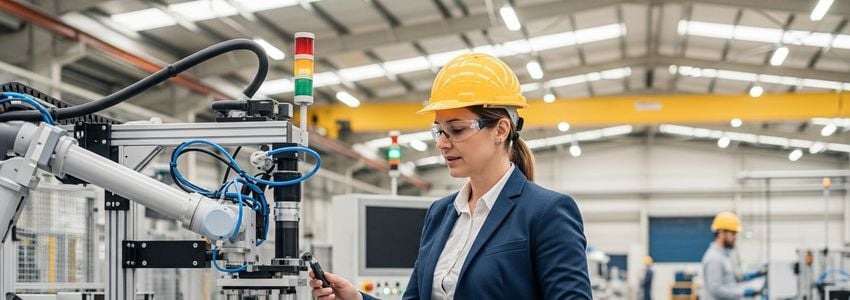
Equipment Loans for Specialized Equipment Add-Ons: A Complete Guide for Growing Businesses
In a competitive market, maintaining an edge often comes down to the capability and efficiency of your equipment. While purchasing a new primary machine is a significant step, the true optimization of your operations can be unlocked through specialized upgrades. Securing equipment loans for specialized equipment add-ons is a strategic financial move that allows businesses to enhance existing assets, boost productivity, and expand service offerings without the immense capital outlay of replacing entire systems.
In This Article
- What Are Specialized Equipment Add-Ons?
- Key Benefits of Financing Equipment Add-Ons
- How Equipment Loans for Add-Ons Work
- Equipment Add-On Financing: By the Numbers
- Types of Specialized Equipment Add-Ons That Qualify
- How Crestmont Capital Helps
- Who Qualifies for Equipment Add-On Loans?
- Real-World Scenarios: Equipment Add-On Financing in Action
- Equipment Loans vs. Other Financing Options
- Frequently Asked Questions
- How to Get Started
- Conclusion
What Are Specialized Equipment Add-Ons?
Specialized equipment add-ons are supplementary components, modules, or attachments that augment the functionality, efficiency, or capabilities of a primary piece of equipment. Unlike standalone machines, these add-ons are designed to integrate with an existing asset, unlocking new potential and extending its useful life. They represent a cost-effective way to modernize operations without undertaking the full cost of replacement.
Think of them as powerful upgrades. For a tractor, an add-on might be a precision GPS-guided planter. For a medical imaging machine, it could be an advanced diagnostic software package. For a CNC machine, it could be a robotic arm for automated loading and unloading. These additions are not just accessories; they are strategic investments that can fundamentally change how a business operates and competes.
The key characteristic of a specialized add-on is its direct enhancement of a core piece of machinery. This could mean:
- Increasing Output: Automating a manual process to increase production speed.
- Expanding Services: Adding a new feature that allows the business to offer a new service to clients.
- Improving Precision: Integrating technology like laser guidance or advanced sensors for higher-quality results.
- Boosting Efficiency: Reducing fuel consumption, minimizing waste, or lowering labor requirements.
- Enhancing Safety: Installing components that mitigate workplace hazards and protect operators.
Financing these specific components is often more straightforward than financing a general business loan because the asset itself provides inherent value and can serve as collateral, making it a lower-risk proposition for lenders.
Key Benefits of Financing Equipment Add-Ons
Choosing to finance specialized equipment add-ons instead of paying with cash or forgoing the upgrade altogether provides several powerful advantages for a growing business. These benefits extend beyond simple acquisition and impact your financial health, operational capacity, and competitive standing.
1. Preserve Working Capital
The most immediate benefit is cash flow preservation. Working capital is the lifeblood of any business, essential for covering daily operational costs like payroll, inventory, and marketing. A large cash purchase of an equipment add-on can deplete these crucial reserves, leaving the business vulnerable to unexpected expenses or market downturns. Financing allows you to acquire the necessary upgrade while keeping your cash on hand for strategic deployment elsewhere.
2. Gain a Competitive Advantage
In many industries, the company with the latest technology wins. An add-on, such as an advanced telematics system for a trucking fleet or a high-resolution lens for a diagnostic machine, can differentiate your business. It enables you to offer superior quality, faster turnaround times, or entirely new services that competitors cannot match. Financing provides immediate access to this technology, allowing you to leapfrog competitors who are waiting to accumulate enough cash for similar upgrades.
3. Increase Productivity and Profitability
Specialized add-ons are almost always acquired with a clear return on investment (ROI) in mind. An automated component can reduce labor costs, a more efficient engine modification can lower fuel expenses, and a precision tool can minimize material waste. These efficiency gains translate directly to a healthier bottom line. By financing the add-on, you can often start generating more revenue or savings than the monthly loan payment, resulting in a net positive cash flow from the investment from day one.
Key Point: A well-chosen equipment add-on can often pay for itself through increased revenue or cost savings long before the loan term is complete, making financing a highly profitable strategy.
4. Flexible and Predictable Payments
Equipment loans come with fixed monthly payments over a set term. This predictability simplifies budgeting and financial forecasting. Unlike a variable-rate line of credit, you know exactly what your payment will be each month, allowing you to manage your cash flow with greater accuracy. Lenders like Crestmont Capital can often structure loan terms to align with the expected useful life of the add-on, creating a manageable and logical payment schedule.
5. Potential Tax Advantages
Financing equipment can offer significant tax benefits. Under Section 179 of the IRS tax code, businesses may be able to deduct the full purchase price of qualifying equipment and software financed during the tax year. This means you could potentially deduct the entire cost of the add-on on your tax return, significantly lowering your tax liability. Additionally, the interest paid on the loan is typically tax-deductible as a business expense. (Consult with a tax professional to understand how these benefits apply to your specific situation).
6. Build Business Credit
Successfully managing and paying off an equipment loan is a positive mark on your business credit history. This demonstrates financial responsibility to future lenders and credit reporting agencies, making it easier to secure financing for larger projects down the road. It is a strategic way to build a strong credit profile while simultaneously improving your operational capabilities.
How Equipment Loans for Add-Ons Work
Securing an equipment loan for a specialized add-on is a focused and efficient process, typically faster and simpler than applying for a traditional bank loan. The process is designed around the value of the asset being financed, which streamlines underwriting and approval.
Here is a step-by-step breakdown of how it generally works:
- Identify the Add-On and Get a Quote: The first step is to pinpoint the exact add-on your business needs. Research vendors, compare features, and obtain a formal price quote or invoice. This document is crucial for the loan application, as it specifies the exact cost that needs to be financed.
- Submit a Simple Application: Lenders specializing in equipment finance, like Crestmont Capital, use a streamlined application process. Often, this is a one-page online form that asks for basic information about your business, the equipment you are acquiring, and its cost. For many transactions under $250,000, extensive financial documentation may not even be required.
- Underwriting and Credit Review: The lender will review your application. The review focuses on your business's credit history, time in business, and cash flow. A key difference from other loans is that the add-on itself serves as collateral. This secured nature of the loan often allows for more flexible credit requirements compared to unsecured loans.
- Receive and Accept an Offer: If approved, the lender will present you with a financing offer. This will detail the loan amount, interest rate, term (the length of the loan), and monthly payment. You will have the opportunity to review these terms and, if they meet your needs, formally accept the offer.
- Funding and Acquisition: Once you accept, the process moves quickly. The lender will pay the vendor directly for the equipment add-on. The vendor then releases the equipment to you for installation and use. You do not have to handle the large sum of money yourself; the lender takes care of the transaction with the supplier.
- Begin Repayments: Your loan repayments begin according to the agreed-upon schedule, typically on a monthly basis. You start making these fixed payments while the newly installed add-on is already generating value for your business by increasing efficiency, expanding capabilities, or reducing operational costs.
Key Point: Because the add-on itself acts as collateral, the approval process for an equipment loan is often faster and has more lenient credit requirements than for an unsecured working capital loan.
Ready to Upgrade Your Equipment?
Get the capital you need to add functionality and boost efficiency. Our simple application takes just minutes.
Apply Now →Equipment Add-On Financing: By the Numbers
By the Numbers
Equipment Add-On Financing - Key Statistics
$1.16 Trillion
The total annual new business volume for the U.S. equipment finance industry, highlighting how integral financing is for business investment. (Source: Forbes / ELFA)
99.9%
The percentage of all U.S. businesses that are small businesses. Access to flexible financing for upgrades is critical for their growth and survival. (Source: SBA)
15-25%
The potential productivity boost businesses can achieve by investing in technology upgrades and automation, demonstrating a clear return on investment.
$1.7 Trillion
Total capital expenditures for structures and equipment by U.S. employer firms in a single year, showing a massive ongoing need for asset acquisition. (Source: U.S. Census Bureau)
Types of Specialized Equipment Add-Ons That Qualify
A wide range of specialized add-ons across virtually every industry can be financed. As long as the add-on has a discernible value, a reasonable useful life, and contributes to business operations, it is likely a candidate for an equipment loan. Below are some common examples categorized by industry.
Construction and Heavy Machinery
- GPS and Telematics Systems: For tracking location, fuel usage, and maintenance schedules on excavators, bulldozers, and loaders.
- Advanced Attachments: Specialized buckets, augers, grapples, or hydraulic hammers that expand the functionality of a single machine.
- Laser Grading Systems: Add-ons for motor graders or dozers that enable highly precise leveling for site preparation.
- Safety Enhancements: Proximity detection systems, backup cameras, and advanced lighting packages.
Manufacturing and Industrial
- Robotic Arms and Automators: For machine tending, welding, or pick-and-place operations on an assembly line.
- CNC Machine Upgrades: 4th or 5th-axis rotary tables, high-speed spindles, or automated tool changers.
- Control System Upgrades: Modernizing the PLC (Programmable Logic Controller) or HMI (Human-Machine Interface) on older machinery.
- Vision and Inspection Systems: High-speed cameras and software for quality control on a production line.
Transportation and Logistics
- Auxiliary Power Units (APUs): For semi-trucks to power climate control and electronics without idling the main engine, saving significant fuel costs.
- Aerodynamic Kits: Skirts, tails, and fairings that reduce drag and improve fuel efficiency for long-haul trucks.
- Refrigeration Units (Reefers): Adding or upgrading the cooling system on a trailer to transport temperature-sensitive goods.
- Liftgates: Hydraulic lifts installed on the back of trucks or vans for easier loading and unloading of heavy cargo.
Medical and Healthcare
- Diagnostic Software Upgrades: Advanced imaging or analysis software for MRI, CT, or ultrasound machines.
- Specialized Probes and Transducers: High-frequency or 3D/4D probes for ultrasound equipment to expand diagnostic capabilities.
- Lab Equipment Modules: Autosamplers, specialized detectors, or new testing modules for existing analytical equipment.
- Patient Monitoring Systems: Upgrading a central monitoring station or adding new modules to bedside monitors.
Agriculture
- Precision Ag Technology: GPS auto-steer systems, yield monitors, and variable rate application controllers for tractors and combines.
- Planter and Seeder Add-Ons: Down-pressure systems, row clutches, or seed firmers that improve planting accuracy and yield.
- Bale Accumulators and Wrappers: Attachments for hay balers that automate the collection and wrapping process.
How Crestmont Capital Helps
Navigating the world of business financing can be complex, but at Crestmont Capital, we simplify the process of securing funds for your critical equipment upgrades. As the #1 rated business lender in the country, our focus is on providing fast, flexible, and transparent financing solutions that empower businesses to grow. When it comes to equipment financing, our expertise ensures you get the right terms for your specific needs.
Here’s how we make a difference:
- Speed and Efficiency: We understand that business opportunities are time-sensitive. Our streamlined online application and rapid underwriting process mean you can often get a credit decision in hours, not weeks. Funding can follow in as little as 24 hours, allowing you to acquire your add-on without delay.
- Financing for All Credit Types: We work with businesses across the credit spectrum. While strong credit secures the best rates, we have programs designed to help businesses with less-than-perfect credit access the capital they need to invest in productivity-boosting equipment.
- Customized Loan Structures: We know that one size does not fit all. Our financing experts work with you to structure a loan that fits your cash flow. We can offer flexible terms, deferred payment options, or seasonal payment plans to match your business's revenue cycle.
- Minimal Paperwork: For many add-on financing requests (typically those under $250,000), we operate on a simple, one-page application basis. We eliminate the burdensome paperwork requirements often associated with traditional bank loans, saving you time and hassle.
- Expert Guidance: Our team consists of seasoned financing professionals who understand various industries and equipment types. We can provide valuable insights and help you choose between financing options, such as an equipment loan versus an equipment lease, to best suit your long-term business goals.
Whether you are looking to upgrade a single machine or an entire fleet, Crestmont Capital provides the reliable small business financing you need to make it happen. Our commitment is to being a long-term partner in your success.
Partner with the Nation's #1 Business Lender
Experience a faster, more flexible approach to equipment financing. Let us help you acquire the add-ons that drive growth.
Get Your Quote →Who Qualifies for Equipment Add-On Loans?
Qualification criteria for equipment add-on loans are often more accessible than for other types of business financing because the loan is secured by the asset itself. This reduces the lender's risk, allowing for greater flexibility. While specific requirements vary by lender and transaction size, here are the general factors that are considered.
Key Qualification Factors:
- Time in Business: Most lenders prefer to work with businesses that have been in operation for at least two years. This demonstrates stability and a track record of revenue generation. However, programs are available for newer businesses and startups, especially if the owner has strong personal credit and industry experience.
- Business and Personal Credit Score: A strong credit history is a primary indicator of financial responsibility. Lenders will review both the business's credit profile and the personal credit score of the owner(s). While a score of 650 or higher is often preferred, lenders like Crestmont Capital have solutions for a wide range of credit scores.
- Annual Revenue: Your business's revenue demonstrates its ability to handle monthly loan payments. Lenders will look for consistent cash flow. There isn't always a strict minimum revenue requirement, as it's assessed relative to the size of the loan requested.
- Industry: Most mainstream industries, such as construction, manufacturing, transportation, healthcare, and professional services, are readily financed. Some lenders may have restrictions on certain high-risk industries, but equipment financing is broadly available.
- The Equipment Itself: The value, age, and expected useful life of the add-on are also considered. Financing a new, high-value add-on from a reputable manufacturer is typically very straightforward. Financing older or more obscure used add-ons may require more detailed underwriting.

Real-World Scenarios: Equipment Add-On Financing in Action
To better understand the practical impact of these loans, let’s explore a few detailed scenarios across different industries.
Scenario 1: The Construction Company
Business: A mid-sized civil construction company that specializes in site preparation and earthmoving.
Existing Equipment: A fleet of five bulldozers.
Challenge: The company is bidding on a large municipal contract that requires highly precise ground leveling with very tight tolerances. Their current bulldozers are operated manually, which is slower and less accurate, risking penalties if the grade is not perfect.
The Add-On Solution: A 3D GPS-automated grade control system. This add-on integrates with a bulldozer's hydraulics and uses GPS data to automatically control the blade's position, achieving a perfect grade with minimal operator input.
Cost of Add-On: $75,000 per unit, for a total of $375,000 to outfit the fleet.
Financing in Action: The company applies for an equipment loan with Crestmont Capital. With a strong business history of 10 years and good credit, they are approved quickly. They secure a 5-year (60-month) loan. The lender pays the technology vendor directly, and the systems are installed.
The Outcome:
- Increased Efficiency: The automated systems reduce grading time by 40%.
- Reduced Costs: Fuel consumption and machine wear are lowered due to fewer passes. The need for a manual grade checker on the ground is eliminated, reducing labor costs.
- Winning the Bid: The company's enhanced capability allows them to confidently win the lucrative municipal contract.
- Positive ROI: The monthly loan payment is easily covered by the savings in labor and fuel, plus the new revenue from the larger project. The add-on generates a positive return from the first month.
Scenario 2: The Medical Imaging Center
Business: An independent diagnostic imaging center.
Existing Equipment: A 5-year-old MRI machine that is mechanically sound but has outdated software.
Challenge: Competing hospitals in the area have newer machines with advanced cardiac and neurological imaging capabilities. The center is losing referrals from specialists who require these specific diagnostic tests.
The Add-On Solution: A comprehensive software and coil upgrade package from the original manufacturer. This includes new software for advanced imaging sequences and a set of specialized coils to improve signal quality for specific body parts.
Cost of Add-On: $150,000.
Financing in Action: The center's owners approach Crestmont Capital for an equipment loan. They provide the quote from the manufacturer. Because the add-on significantly increases the value and functionality of their existing high-value asset, they are approved for a 4-year loan with a competitive interest rate.
The Outcome:
- Expanded Service Offering: The center can now perform the advanced scans previously only available at the hospital, attracting new referral sources.
- Increased Revenue: They can bill at higher rates for these specialized scans, directly boosting their monthly revenue.
- Improved Patient Care: The higher-quality images lead to more accurate diagnoses.
- Cost-Effective Modernization: They achieve state-of-the-art capability for a fraction of the $2 million cost of a brand-new MRI machine.
Scenario 3: The Long-Haul Trucking Fleet
Business: A family-owned trucking company with a fleet of 10 semi-trucks.
Challenge: Volatile and high fuel prices are severely impacting their profit margins. Furthermore, drivers are required to idle their engines during mandatory rest periods to power heating, A/C, and electronics, which consumes a significant amount of diesel fuel and causes unnecessary wear on the main engine.
The Add-On Solution: Diesel-powered Auxiliary Power Units (APUs) for each truck. An APU is a small, highly efficient generator that provides power without needing to run the truck's main engine.
Cost of Add-On: $12,000 per unit, for a total of $120,000.
Financing in Action: The owner applies for an equipment loan. Based on the business's consistent revenue for the past 5 years, they are approved for a 36-month loan. The lender funds the APU vendor, and the units are installed over two weeks.
The Outcome:
- Drastic Fuel Savings: Each truck saves an average of 8-10 gallons of fuel per day that it would have spent idling. Across the fleet, this amounts to thousands of dollars in savings each month.
- Reduced Maintenance Costs: With thousands of fewer hours on the main engines each year, maintenance intervals are extended, and the risk of costly engine repairs is reduced.
- Improved Driver Retention: Drivers appreciate the quieter and more comfortable rest periods, improving morale and making the company a more attractive place to work.
- Rapid Payback: The monthly fuel savings are substantially higher than the monthly loan payment, meaning the APUs start generating a net profit immediately. For more information on financing for this sector, see our guide on equipment loans for manufacturing and logistics.
Equipment Loans vs. Other Financing Options
When you need to acquire an equipment add-on, an equipment loan is often the most direct solution. However, it is important to understand how it compares to other common business financing products.
| Feature | Equipment Loan | Equipment Lease | Business Line of Credit | Working Capital Loan |
|---|---|---|---|---|
| Ownership | You own the add-on at the end of the loan term. | The leasing company owns the asset. You have the option to buy, return, or upgrade at the end. | Not applicable; it's a revolving credit line, not asset-specific. | Not applicable; funds are for general business use. |
| Use of Funds | Strictly for the purchase of the specified equipment add-on. | For the use of the specified equipment for a set term. | Flexible. Can be used for any business expense (inventory, payroll, marketing). | Flexible. Typically used for short-term operational needs or opportunities. |
| Repayment Structure | Fixed monthly payments over a set term (e.g., 2-7 years). | Fixed monthly payments. Term is typically shorter than a loan. | Pay interest only on the amount you draw. Principal is repaid over time or when the line is paid down. | Fixed payments (often daily or weekly) over a short term (e.g., 3-18 months). |
| Collateral | The add-on itself serves as the primary collateral. | The asset is owned by the lessor, so it secures the agreement. | Often unsecured, but may require a general lien on business assets. | Typically unsecured but may require a personal guarantee and/or general lien. |
| Best For | Acquiring an add-on you intend to use for its entire lifespan and want to own. | Using technology that becomes obsolete quickly or if you prefer lower monthly payments and want to avoid ownership. | Managing ongoing, short-term cash flow gaps or having a safety net for unexpected expenses. | Seizing a short-term opportunity or covering a one-time operational expense. |
For most businesses looking to permanently upgrade a core piece of machinery, a dedicated equipment loan offers the most advantages in terms of ownership, predictable costs, and potential tax benefits. A business line of credit is better suited for managing fluctuating cash flow, while leasing is ideal for equipment you plan to replace in a few years.
Frequently Asked Questions
1. What types of equipment add-ons qualify for financing?
A very broad range of add-ons qualify. Generally, if the item is a tangible piece of equipment or integrated software that enhances a primary business asset, has a clear value, and a useful life of several years, it can be financed. This includes everything from GPS systems for construction machinery and robotic arms for manufacturing to specialized medical probes and APUs for trucks. Both new and used add-ons can typically be financed.
2. What are the typical loan amounts available?
Loan amounts are flexible and depend on the cost of the add-on. Financing can range from as little as $5,000 for a small component to over $500,000 for a major system upgrade. The amount you can be approved for depends on your business's financial health, credit history, and the value of the equipment being purchased.
3. What are the average loan terms and interest rates?
Loan terms are typically structured to match the expected useful life of the equipment, commonly ranging from 2 to 7 years (24 to 84 months). Interest rates are determined by factors like your credit score, time in business, and the loan term. Businesses with strong credit and a solid history will receive the most competitive rates, which are typically fixed for the life of the loan.
4. What are the minimum credit score requirements?
While a personal credit score of 650+ is often preferred for the best rates, lenders like Crestmont Capital have programs available for a wide range of credit profiles. Because the equipment itself secures the loan, the credit requirements can be more flexible than for unsecured loans. We work with business owners with scores in the low 600s and sometimes even lower, depending on other factors like cash flow and time in business.
5. How long does the application and approval process take?
The process is designed for speed. A simple online application can be completed in minutes. For transactions under $250,000, a credit decision can often be made within a few hours. Once you approve the terms, funding can happen in as little as 24-48 hours, with the lender paying the vendor directly.
6. Is a down payment required?
Many equipment loan programs offer 100% financing, meaning no down payment is required. This allows you to acquire the add-on with zero cash out of pocket, preserving your working capital. In some cases, for businesses with challenged credit or for very specialized equipment, a small down payment (e.g., 10-20%) may be requested to lower the lender's risk.
7. Can I finance a used equipment add-on?
Yes, used add-ons can be financed. The lender will assess the value and condition of the used item. The loan term for a used add-on may be shorter than for a new one, reflecting its remaining useful life, but financing is a very common way to acquire high-quality used components.
8. Can I finance multiple add-ons at once?
Absolutely. If you are upgrading an entire fleet or multiple machines, you can bundle the cost of all the add-ons into a single equipment loan. This simplifies the process and gives you one convenient monthly payment for the entire project.
9. How quickly can I get approved for a loan?
Approval times are very fast, especially when compared to traditional banks. With a streamlined application and digital underwriting, many applicants receive a credit decision the same day they apply, often within just a few hours.
10. What role does collateral play in these loans?
Collateral is a key feature that makes these loans so accessible. The specialized equipment add-on you are financing serves as the primary collateral for the loan. This is known as a self-collateralized loan. It means you generally do not have to pledge other business or personal assets, such as real estate or inventory.
11. Can I refinance an existing equipment add-on loan?
Yes, refinancing is an option. If interest rates have dropped since you first took out the loan, or if your business's credit profile has significantly improved, you may be able to refinance to get a lower monthly payment or better terms. You can also sometimes use the equity in an existing asset to get cash out for other business needs.
12. What are the benefits of an equipment loan over leasing an add-on?
The primary benefit is ownership. With a loan, you build equity in the equipment and own it outright at the end of the term. This is ideal for add-ons with a long useful life. Leasing is better for technology that becomes obsolete quickly, as it allows you to easily upgrade at the end of the term without being tied to an old asset.
13. Can startups or new businesses qualify?
While it can be more challenging for businesses with less than two years of history, financing is still possible. Lenders will place a stronger emphasis on the owner's personal credit score and industry experience. Having a solid business plan and some capital for a down payment can also significantly improve a startup's chances of approval.
14. How does Crestmont Capital help if I have less-than-perfect credit?
Crestmont Capital specializes in finding financing solutions for a wide array of businesses. We have a large network of lending partners and a variety of programs, some of which are specifically designed for businesses with challenged credit. Because the loan is secured by the equipment, we can often find approvals where other lenders cannot.
15. What happens at the end of the loan term?
Once you make the final payment, the lender releases its lien on the equipment, and you own the add-on free and clear. You can continue to use it for years to come, sell it, or trade it in for a newer model, with its residual value contributing to your company's balance sheet.
How to Get Started
Taking the next step to upgrade your equipment is simple and straightforward. At Crestmont Capital, we've designed a process that respects your time and gets you the answers you need quickly.
Submit Your Application
Fill out our secure, one-page online application. It takes only a few minutes and requires just basic information about your business and the add-on you wish to finance. Have your vendor's quote or invoice handy.
Review Your Options
A dedicated financing specialist will review your application and contact you to discuss your options. You'll receive clear, transparent term sheets outlining the loan amount, rate, and monthly payment with no obligation.
Get Funded and Grow
Once you select the offer that works best for you and sign the documents, we handle the rest. We fund the vendor directly, and you can take possession of your new equipment add-on and start putting it to work for your business.
Conclusion
In today's dynamic business environment, staying stagnant is not an option. Upgrading your existing machinery with targeted enhancements is one of the most cost-effective strategies for boosting efficiency, expanding capabilities, and securing a competitive edge. However, the capital cost of these upgrades can be a significant barrier. This is where equipment loans for specialized equipment add-ons provide a powerful solution.
By financing these critical additions, you can preserve your cash flow, access cutting-edge technology immediately, and generate a positive return on your investment from day one. The process is faster, more flexible, and more accessible than many other forms of business financing. Whether you are in construction, manufacturing, healthcare, or transportation, the right add-on financed with the right loan can be a transformative step for your business. When you are ready to explore your options, partnering with a trusted and experienced lender like Crestmont Capital can ensure you get the funding you need to fuel your growth.
Don't Let Capital Hold You Back
Finance the upgrades that will drive your business forward. Get started with our quick and easy application today.
Apply Now for an Equipment Loan →Disclaimer: The information provided in this article is for general educational purposes only and is not financial, legal, or tax advice. Funding terms, qualifications, and product availability may vary and are subject to change without notice. Crestmont Capital does not guarantee approval, rates, or specific outcomes. For personalized information about your business funding options, contact our team directly.








