
 (800) 949-0401
Loans for Underused Space: How to Turn Idle Areas Into Profitable Business Zones
Every square foot of your commercial property costs money. Lease payments, property taxes, utilities, and maintenance run whether your space is earning revenue or sitting idle. If your business has unused storage rooms, empty back offices, underused parking lots, or dormant retail areas, you are paying for square footage that is not working for you. Loans for underused space give business owners a practical path to change that - financing renovations, equipment, and improvements that transform wasted areas into revenue-generating assets.
From converting a stockroom into a private event space to building out a second service area in an auto shop, the opportunities are far more varied than most business owners realize. This guide walks through exactly how to finance these projects, what lenders look for, and how real businesses have turned idle space into measurable income.
In This Article
- What Are Loans for Underused Space?
- Key Benefits of Financing Space Improvements
- How It Works: Turning Idle Space Into Revenue
- Types of Loans for Underused Space Projects
- Who Qualifies and What Lenders Look For
- Common Underused Space Projects and Costs
- How Crestmont Capital Helps
- Real-World Scenarios
- Frequently Asked Questions
- How to Get Started
What Are Loans for Underused Space?
Loans for underused space are business financing products used to fund improvements, renovations, or equipment purchases that activate dormant areas within a commercial property. These are not a separate loan category - they are standard business financing instruments applied to a specific purpose: making idle square footage productive.
The financing can cover a wide range of project types. A restaurant might use a small business loan to convert an unused back dining room into a private event space. A retail store might use a business line of credit to install display fixtures in a previously empty corner section. A medical office might use equipment financing to add a second treatment bay in a room that was previously used for storage.
The common thread is converting cost centers - areas that consume overhead without generating revenue - into profit centers that contribute meaningfully to the business bottom line.
Industry Insight: According to the U.S. Small Business Administration, one of the most common reasons small businesses fail to scale is inefficient use of existing physical capacity. Many owners do not realize financing is available specifically to address this problem without requiring a move to a larger, more expensive location.
Key Benefits of Financing Space Improvements
Financing improvements to idle space offers several advantages that go beyond simply having more cash on hand. These benefits compound over time and often far outweigh the cost of the financing itself.
Revenue without relocation costs. Expanding your business into unused space at your current location is almost always cheaper than signing a new lease, paying build-out costs at a new property, and managing the operational disruption of a move. Financing lets you unlock revenue potential that already exists within your four walls.
Improved asset utilization. Commercial space is one of the most expensive line items in any business budget. Improving utilization of existing space means you get more value per dollar of overhead - a direct benefit to your profit margins.
Faster payback than you might expect. Many space improvement projects generate measurable revenue within 90 to 180 days of completion. A newly built-out private event room at a restaurant, for example, can often generate enough revenue in its first few months to cover several months of loan payments.
Competitive differentiation. In many industries, expanded service capacity or new service offerings created by activating idle space can meaningfully differentiate a business from competitors who are constrained by space limitations.
Ready to Unlock Hidden Revenue?
Get fast, flexible financing to activate idle space and grow your business. Apply in minutes - no obligation.
Apply Now →How It Works: Turning Idle Space Into Revenue
The process of financing a space improvement project follows a predictable sequence. Understanding each step helps business owners prepare effectively and avoid delays.
Step 1 - Assess your current space. Walk through your property and identify areas that are underutilized. Consider not just empty rooms but also areas that are in use but could be used more profitably. Ask: what would a different configuration or investment allow you to offer that you currently cannot?
Step 2 - Define the project and get cost estimates. Once you identify a viable opportunity, get contractor estimates, equipment quotes, or vendor proposals. Lenders want to see that you have a clear plan with defined costs. Vague projects are harder to finance than specific ones.
Step 3 - Assess financing needs. Determine how much you need to borrow and what repayment terms make sense given your projected revenue from the improved space. A project that generates $2,000 per month in new revenue can comfortably support loan payments in the $500 to $800 range with healthy coverage remaining.
Step 4 - Apply for financing. Submit your loan application with supporting documentation. For most small business loans, this includes recent bank statements, basic business financials, and information about the project.
Step 5 - Complete the project and activate the space. Once funded, complete the renovation or installation. Track revenue generated by the new space so you can document return on investment for future financing needs.
By the Numbers
Commercial Space Utilization - Key Statistics
30%
Average underutilized space in small commercial properties
2-3x
Typical ROI on well-planned space activation projects
90 Days
Typical time to first revenue from a completed project
$25K+
Typical financing range for small space improvement projects
Types of Loans for Underused Space Projects
Several financing products are well-suited to space improvement projects. The right choice depends on the scope, timeline, and nature of your project.
Term Loans. A term loan provides a lump sum that you repay over a fixed period with regular payments. This is ideal for well-defined renovation projects with a clear budget. Traditional term loans typically offer 12 to 60 month repayment periods and predictable monthly payments that make budgeting straightforward.
Business Lines of Credit. A business line of credit is a revolving credit facility that lets you draw funds as needed up to a credit limit. This works well for phased projects where you want to spend in stages and only borrow what you use. It also provides a financial cushion for unexpected costs during renovation.
Equipment Financing. If your space improvement requires specialized equipment - whether commercial kitchen appliances, salon chairs, fitness equipment, or retail fixtures - equipment financing is often the most cost-effective option. The equipment itself serves as collateral, which typically results in more favorable rates.
Working Capital Loans. For smaller projects or situations where you need to move quickly, a working capital loan provides fast access to funds with minimal documentation requirements. These are best for projects under $100,000 that need to be completed quickly.
SBA Loans. For larger projects - particularly those involving significant construction or property improvements - SBA loans offer competitive rates and longer repayment terms than most conventional business loans. The SBA 7(a) program is particularly useful for renovation projects. The tradeoff is longer processing times, typically 30 to 90 days.
| Loan Type | Best For | Typical Amount | Speed |
|---|---|---|---|
| Term Loan | Defined renovation budget | $25K - $500K | 1-5 days |
| Line of Credit | Phased projects, flexibility | $10K - $250K | 1-3 days |
| Equipment Financing | Specific equipment purchases | $5K - $500K | 1-3 days |
| Working Capital Loan | Small, fast projects | $5K - $100K | Same day |
| SBA Loan | Large renovations, low rates | $50K - $5M | 30-90 days |
Who Qualifies and What Lenders Look For
Most established businesses can qualify for financing to improve underused space. Lenders generally evaluate the same core factors for space improvement projects as for any business loan, with some project-specific considerations.
Time in business. Most conventional lenders want to see at least 1-2 years of operating history. Alternative lenders often work with businesses as young as 6 months. Longer operating history signals stability and reduces lender risk.
Revenue and cash flow. Lenders want to see that your business generates enough revenue to service the new debt. Typically, lenders look for monthly revenue of at least 1.25 to 1.5 times the projected monthly payment. For space improvement loans, they may also consider projected revenue from the improved space.
Credit profile. Business credit scores and personal credit history both factor into approval decisions. Scores in the 600s often qualify for conventional loans; scores below 600 may still qualify through alternative lenders or secured financing options. If your credit score needs work, bad credit business loans remain an option for many borrowers.
Project viability. For larger loans, lenders often want to see that the project has a clear revenue potential. A simple one-page business case explaining what the space will be used for, how it will generate revenue, and what your projected income looks like can be very helpful in the application process.
Property situation. Whether you own or lease the property can affect loan structure. If you are leasing, lenders want to see that your lease has enough remaining term to justify the improvement. A renovation that costs $50,000 on a lease expiring in 8 months is a harder sell than the same project on a lease with 5 years remaining.
Pro Tip: Before applying for financing, calculate your projected revenue per square foot for the improved space versus current revenue per square foot. Lenders who see that your project has a logical business case are more likely to approve quickly and at favorable rates.
Common Underused Space Projects and Costs
The range of space improvement projects that businesses finance is broader than most owners assume. Here is a look at some of the most common project types and typical cost ranges.
Private event and meeting room buildout. Converting a storage room, back dining area, or unused conference space into a bookable private room is one of the highest-ROI projects available to service businesses. A basic buildout with furniture, lighting upgrades, and AV equipment can run $15,000 to $60,000 depending on the size and finish level. Private event rooms can generate $800 to $3,000 per booking at most venues.
Additional service bay or treatment room. For auto shops, medical offices, salons, and similar businesses, adding a service bay or treatment room in an underused area dramatically increases throughput and revenue per hour. Costs typically range from $20,000 to $100,000 depending on plumbing, electrical, and equipment needs.
Retail expansion and display installation. Retailers often have dead zones within their stores - corners, back walls, or areas with poor lighting and no displays. Investing in fixtures, lighting, and product display systems can convert these areas into productive selling floor. Projects in this category typically range from $5,000 to $40,000.
Co-working or rental space buildout. Property owners and businesses with extra space increasingly rent out desks, offices, or meeting rooms by the hour or day. Building out a professional co-working area requires furniture, technology, and potentially HVAC adjustments. Projects range from $20,000 to $150,000 for a full suite.
Storage optimization and warehouse expansion. Converting inefficient storage areas into usable production or fulfillment space often involves shelving systems, mezzanine installations, and sometimes lighting or HVAC upgrades. These projects are common among e-commerce businesses and manufacturers trying to scale output without moving. Costs range from $10,000 to $200,000.
Outdoor space activation. Patios, parking lots, courtyards, and rooftops are frequently underutilized. Outdoor furniture, weather protection, lighting, and permit costs for a usable outdoor dining or commercial area typically run $15,000 to $80,000 and can significantly extend a food and beverage business's capacity and season.
Get Funded for Your Space Project
Whether it is $25,000 or $500,000, Crestmont Capital has financing solutions for commercial space improvement projects of all sizes.
Start Your Application →How Crestmont Capital Helps
Crestmont Capital is a direct business lender rated #1 in the United States. We specialize in fast, flexible financing for established businesses looking to grow - including businesses that want to maximize the revenue potential of their existing commercial space.
Our lending team understands that space improvement projects are investments, not expenses. We evaluate your application with that context in mind, looking at your business's overall financial health and the realistic revenue potential of your project - not just a credit score.
Crestmont Capital offers multiple financing products that are well-suited to space improvement projects:
- Small business loans with fast approvals and flexible terms
- Equipment financing for specific equipment purchases tied to your project
- Business lines of credit for phased or ongoing projects
- Working capital loans for smaller, fast-moving projects
- Commercial financing for larger renovation and expansion projects
Our application process is streamlined and can be completed in minutes. Many borrowers receive a decision the same day they apply, with funding arriving within 24 to 48 hours for approved loans. We do not believe in making business owners wait weeks to take advantage of a clear growth opportunity.
Crestmont Capital also works with businesses across all credit profiles. If your credit score is not where you want it, we have bad credit business loan options and can structure financing that makes sense for your situation.
Real-World Scenarios: Space Activation in Action
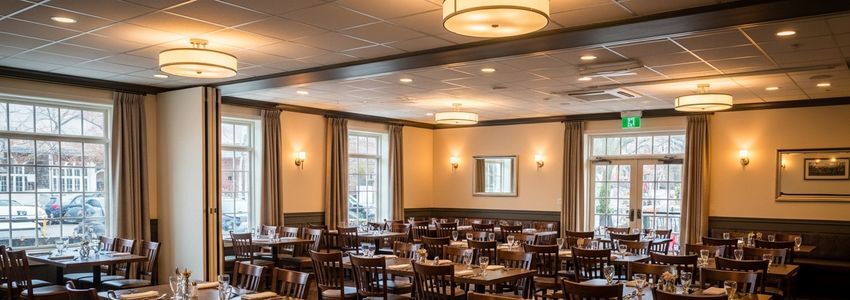
The restaurant that doubled event revenue. A family-owned Italian restaurant had a back room they had been using as supplemental storage - roughly 600 square feet, enough to seat 30 people comfortably for private events. The owners applied for a $45,000 business loan to renovate the space with acoustic panels, mood lighting, a private AV system, and custom furniture. Within 8 months of opening the private dining room to bookings, they had generated over $120,000 in private event revenue that would not have existed otherwise.
The auto shop that added a fast-service lane. A successful auto repair shop had an unused equipment bay at the far end of their building that had been converted to informal storage. The shop owner took out $55,000 in equipment financing to set up the bay with an oil change and tire rotation station. The quick-service lane processes an average of 12 additional vehicles per day, adding roughly $1,800 in daily revenue at about 40% margin. The equipment paid for itself within the first year.
The salon that built out a rental suite. A mid-size beauty salon owner recognized that a large styling area adjacent to her main floor was rarely used on weekday mornings. She invested $28,000 in a business line of credit to convert the area into two self-contained rental suites for independent stylists. Each suite now generates $900 per month in rental income. The investment paid for itself in under 18 months.
The e-commerce business that reclaimed its warehouse. An online retailer had been paying for 8,000 square feet of warehouse space but only actively using about 5,000 square feet efficiently. A $30,000 working capital loan funded a professional warehouse shelving and organization system. This allowed the business to eliminate a secondary storage unit they had been renting for $1,200 per month and improve order fulfillment speed by 30%.
The fitness studio that added a training bay. A boutique fitness studio had an underused multipurpose room that they were scheduling sporadically. The owner used $40,000 in equipment financing to build out the room as a dedicated personal training bay. The bay is now booked for personal training sessions 35+ hours per week at $80 to $120 per session, generating an additional $12,000 to $18,000 in monthly revenue.
The hotel that activated its conference space. A small independent hotel had a 2,000 square foot meeting room that they used for breakfast service in the mornings but left empty the rest of the day. A $75,000 commercial loan funded AV upgrades, flexible furniture, and marketing for the space as a corporate meeting venue. The conference room now generates $4,000 to $8,000 per month in standalone meeting room rentals.
Frequently Asked Questions
How to Get Started
Walk through your property and identify areas that could be more productive. Get cost estimates from contractors or equipment vendors so you know what you need to borrow.
Complete Crestmont Capital's streamlined application at offers.crestmontcapital.com/apply-now. Most applications take less than 10 minutes to complete.
A Crestmont Capital advisor will review your project and match you with the right loan type and terms for your situation.
Receive funds - often within 24 hours of approval - and put them to work activating your underused space into a revenue-generating asset.
Your Idle Space Is Costing You Money Every Day
Stop paying for square footage that is not working for you. Crestmont Capital can help you get the financing you need to turn idle areas into profitable business zones - fast.
Apply Now - No Obligation →Conclusion
Loans for underused space represent one of the most practical and high-ROI financing decisions a business owner can make. Rather than accepting idle square footage as an inevitable cost of commercial operations, smart business owners use financing to activate that space and generate meaningful revenue.
Whether you are looking at a $20,000 equipment installation or a $200,000 multi-phase renovation, the business case for space improvement financing is clear: the cost of the loan is almost always far outweighed by the revenue potential of the improved space, the savings versus relocating to larger premises, and the competitive advantage gained by expanding capacity without expanding your lease.
Crestmont Capital offers fast, flexible small business loans, equipment financing, and business lines of credit specifically designed to help growing businesses unlock their full potential. Apply today and find out how much you can access to put your idle space to work.
Disclaimer: The information provided in this article is for general educational purposes only and is not financial, legal, or tax advice. Funding terms, qualifications, and product availability may vary and are subject to change without notice. Crestmont Capital does not guarantee approval, rates, or specific outcomes. For personalized information about your business funding options, contact our team directly.








