
 (800) 949-0401
Emerging Markets in Equipment Leasing and Finance: The Complete Guide for Business Owners
Emerging markets in equipment leasing and finance are reshaping how businesses across the United States and the world access the capital equipment they need to grow. Rather than tying up cash in outright purchases, companies in sectors ranging from healthcare to construction are turning to leasing and specialized financing as a smarter, more flexible path forward. Understanding where these markets are expanding and how to take advantage of them can make a significant difference in your company's competitive position.
In This Article
- What Are Emerging Markets in Equipment Leasing?
- Key Drivers of Growth
- Top Emerging Sectors
- How Equipment Leasing Works in Emerging Markets
- Types of Equipment Financing Available
- By the Numbers
- Who Qualifies for Emerging Market Equipment Financing
- Leasing vs. Buying in Emerging Markets
- How Crestmont Capital Helps
- Real-World Scenarios
- How to Get Started
- Frequently Asked Questions
What Are Emerging Markets in Equipment Leasing?
Emerging markets in equipment leasing refer to sectors, industries, and geographic regions that are experiencing rapid growth in demand for leased or financed equipment. These are not traditional, long-established leasing categories - they represent new frontiers where capital equipment needs are expanding faster than businesses can fund purchases outright.
In the United States, these emerging segments include industries like clean energy, advanced manufacturing, autonomous vehicle fleets, digital health technology, and urban logistics. Globally, markets in Southeast Asia, Latin America, and Sub-Saharan Africa are adopting equipment leasing at accelerating rates as infrastructure development and business formalization continue.
For U.S. small and mid-sized businesses, the most relevant emerging markets are domestic industries undergoing rapid transformation - businesses that need sophisticated, expensive equipment but cannot or choose not to deplete cash reserves to acquire it outright.
Industry Insight: According to the Equipment Leasing and Finance Association (ELFA), the U.S. equipment finance industry provides approximately $1 trillion in financing annually - and new sectors are consistently being added to that total as industries modernize and grow.
Key Drivers of Growth in Equipment Leasing Markets
Understanding what is fueling the expansion of equipment leasing markets helps business owners recognize opportunities and make better financing decisions. Several converging forces are driving growth across sectors.
Technological Advancement: New categories of equipment - precision agriculture drones, AI-enabled diagnostic machines, commercial EV fleets - are coming to market faster than most businesses can absorb them through outright purchase. Leasing provides the flexibility to acquire cutting-edge tools without locking into yesterday's technology.
Cash Flow Preservation: Post-pandemic economic conditions have placed renewed emphasis on maintaining liquidity. Even profitable companies are choosing to finance equipment rather than deplete working capital, which allows them to pursue multiple growth initiatives simultaneously.
Infrastructure Investment: Federal infrastructure spending under recent legislative initiatives has created demand for construction, manufacturing, and utility equipment across the country. Companies need rapid access to equipment to capture contract opportunities - leasing provides that speed.
Sustainability Mandates: Clean energy and green technology are creating entirely new equipment categories. From commercial solar panel racking systems to EV charging station infrastructure, environmentally focused equipment leasing is one of the fastest-growing emerging segments in the country.
Supply Chain Reshoring: As manufacturers bring production back to the United States, they require significant new equipment investment. Equipment financing is the most common method used to fund this reshoring without overextending capital.
Ready to Finance Equipment for Your Growing Business?
Crestmont Capital offers fast, flexible equipment financing for businesses in every emerging market sector. Apply in minutes - no obligation.
Apply NowTop Emerging Sectors for Equipment Leasing and Finance
Certain industries are at the forefront of equipment leasing growth in the current business environment. Recognizing which sectors are expanding most rapidly helps business owners understand where leasing is becoming a standard practice rather than an exception.
Clean Energy and Renewable Technology
The solar, wind, and energy storage sectors are among the fastest-growing equipment leasing markets in the United States. Commercial solar installations, battery storage systems, EV charging infrastructure, and smart grid technology all represent significant equipment investments. Leasing allows businesses and property developers to deploy clean energy solutions without the burden of large upfront capital expenditures.
Advanced Healthcare Technology
Medical practices, hospitals, and specialty clinics are investing heavily in AI-powered diagnostic equipment, telemedicine platforms, robotic surgical systems, and advanced imaging technology. The cost of this equipment is substantial - and leasing allows healthcare providers to access the latest technology while managing cash flow carefully. Medical equipment financing has become a critical tool for practices that need to stay competitive.
Autonomous and Electric Vehicle Fleets
Logistics companies, delivery services, and transportation businesses are transitioning to electric and autonomous vehicle fleets. The capital cost of these vehicles is substantially higher than traditional diesel alternatives, making fleet financing and leasing essentially the only practical path for most operators. This is one of the single fastest-growing categories in the entire equipment finance industry.
Precision Agriculture and AgTech
The agriculture sector is undergoing a technology revolution. GPS-guided tractors, autonomous harvesters, precision irrigation systems, drone monitoring, and soil analysis equipment are transforming how farms operate. Agricultural equipment financing has evolved far beyond traditional farm machinery to encompass the full spectrum of precision agriculture technology.
Advanced Manufacturing and Automation
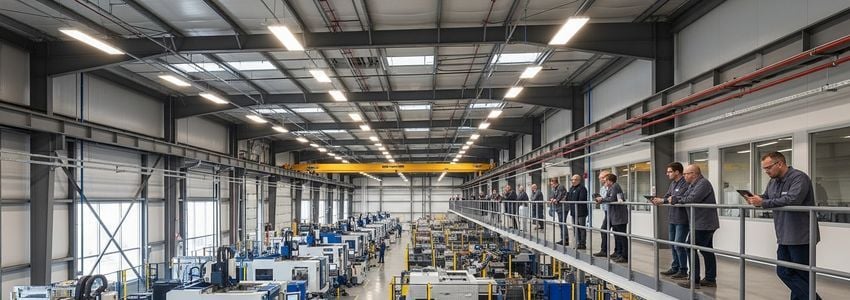
Reshoring initiatives and smart factory investments are driving demand for CNC machinery, industrial robots, 3D printing systems, and automated assembly equipment. Manufacturing equipment financing is a core tool for companies upgrading their production capabilities without straining working capital.
Digital and Cloud Infrastructure
Server infrastructure, networking equipment, cybersecurity hardware, and cloud computing appliances represent a growing category of financed assets. As businesses invest in digital transformation, IT equipment leasing has become an essential strategy for technology companies and businesses in every industry that depend on robust digital infrastructure.
How Equipment Leasing Works in Emerging Markets
Equipment leasing in emerging sectors functions similarly to traditional leasing, but with some nuances specific to high-growth industries. Understanding the process helps business owners navigate financing options effectively.
In a standard equipment lease, the leasing company (the lessor) purchases the equipment and rents it to the business (the lessee) for a fixed monthly payment over a set term. At the end of the term, the lessee may return the equipment, renew the lease, or purchase the asset at its residual value.
In equipment finance agreements - more common in emerging technology sectors - the business takes ownership of the equipment immediately while making installment payments. This structure works well for assets with strong long-term utility and predictable resale values.
Emerging market leasing often involves shorter terms than traditional equipment financing, reflecting the rapid pace of technology change. A medical practice leasing AI diagnostic equipment may prefer a 36-month term rather than 60 months to preserve the option to upgrade to next-generation technology when the lease ends.
Many lenders also offer step-up payment structures for emerging market financing - where payments start lower and increase as the business's revenue grows into its new capabilities. This is particularly common in clean energy, healthcare technology, and advanced manufacturing.
Types of Equipment Financing Available
Business owners in emerging market sectors have access to several financing structures, each with distinct advantages depending on the business's goals and financial profile.
| Financing Type | Best For | Ownership | Flexibility |
|---|---|---|---|
| Operating Lease | Fast-changing technology | Lessor retains | High - upgrade options |
| Finance/Capital Lease | Long-term use assets | Transfers to lessee | Moderate |
| Equipment Loan | Immediate ownership needed | Immediate to borrower | Low - fixed commitment |
| Sale-Leaseback | Unlocking equity in owned equipment | Lessor after sale | High cash benefit |
| Equipment Line of Credit | Multiple equipment purchases over time | Borrower | Very high - revolving |
By the Numbers: Emerging Markets in Equipment Leasing
By the Numbers
Emerging Markets in Equipment Leasing - Key Statistics
$1T+
Annual U.S. equipment finance volume
80%
Of U.S. businesses use equipment financing
35%
Growth in clean energy equipment leasing (2023-2025)
3-5 Days
Typical approval timeline for equipment financing
Who Qualifies for Emerging Market Equipment Financing
One of the most common misconceptions about equipment leasing in emerging sectors is that it is only accessible to large corporations. In reality, businesses of virtually every size can qualify - and the qualifying criteria are often more flexible than traditional bank loans.
Startups and Early-Stage Companies: Companies with as little as six months in operation may qualify for equipment financing, especially when the equipment itself serves as collateral. Startup equipment financing is specifically designed for newer businesses entering high-growth sectors.
Established Small and Mid-Size Businesses: Businesses with at least one year of operations and consistent revenue typically have the strongest approval profiles. Lenders look at time in business, annual revenue, credit history, and the type of equipment being financed.
Businesses with Imperfect Credit: Equipment financing can be accessible even for business owners with less-than-perfect credit, particularly when strong revenue or a significant down payment supports the application. Bad credit equipment financing options exist specifically for this profile.
Typical Qualification Criteria:
- Time in business: 6+ months (ideally 1+ year)
- Annual revenue: $100,000+ preferred
- Credit score: 600+ for most programs; lower scores considered with compensating factors
- Equipment type: Most commercial equipment qualifies; some specialized or high-risk categories may have restrictions
Pro Tip: The stronger your business's cash flow documentation, the more financing options open up - even for businesses in emerging sectors where lenders may have less historical data on the equipment category. Bank statements showing consistent revenue are often the most important document you can provide.
Leasing vs. Buying in Emerging Markets
When evaluating equipment acquisition in a high-growth sector, the choice between leasing and outright purchasing deserves careful analysis. In most emerging market scenarios, leasing offers compelling advantages.
Technology Obsolescence Risk: In fast-moving sectors like AI-powered equipment, electric vehicles, and clean energy, the risk that your equipment will become obsolete within a few years is real. Leasing transfers much of this obsolescence risk to the lessor. At the end of your lease term, you can upgrade to next-generation equipment rather than being locked into aging assets.
Capital Efficiency: In a growing business, every dollar of capital has multiple competing uses. Deploying $500,000 to purchase equipment outright eliminates your ability to use that capital for hiring, inventory, marketing, or other growth investments. Financing that same equipment at $12,000 per month preserves your capital for higher-return uses.
Balance Sheet Considerations: Operating leases are accounted for differently than owned assets, which can improve certain financial ratios that lenders and investors use to evaluate your business. This matters increasingly in emerging sectors where businesses are frequently seeking additional capital.
Speed to Market: Leasing can often be approved and funded within days, while large equipment purchases often require lengthy procurement processes. In competitive markets where speed of deployment matters, this is a significant operational advantage.
How Crestmont Capital Helps Businesses in Emerging Markets
Crestmont Capital has worked with businesses across every major emerging equipment leasing sector in the United States. As a top-rated business lender, we understand that businesses in high-growth industries have unique financing needs that standard bank products often cannot meet.
Our equipment financing programs are designed for flexibility - with terms ranging from 12 to 84 months, funding amounts from $10,000 to multi-million dollar transactions, and approval processes that move at the speed of business. We work with businesses in clean energy, healthcare technology, advanced manufacturing, precision agriculture, and dozens of other emerging sectors.
Beyond equipment financing, Crestmont Capital offers business lines of credit and working capital loans that complement equipment financing strategies. Many growing businesses benefit from combining a dedicated equipment loan with revolving access to working capital - allowing them to invest in assets and manage cash flow simultaneously.
Our team includes specialists familiar with the specific equipment categories, valuation methods, and business models common to emerging market sectors. This expertise translates into faster decisions, more competitive terms, and a financing partner who actually understands your industry.
Secure Equipment Financing for Your Growth Plans
From clean energy installations to advanced medical technology, Crestmont Capital finances equipment in every emerging sector. Competitive rates, fast approvals, flexible terms.
Start Your ApplicationReal-World Scenarios
Abstract concepts become clearer through specific examples. Here are several scenarios illustrating how businesses in emerging market sectors use equipment leasing effectively.
Scenario 1: Solar Installer Scaling Operations
A commercial solar installation company in Texas won a major contract to deploy rooftop solar systems across a portfolio of industrial properties. The contract required significantly more installation equipment - specialized lifts, mounting hardware installation tools, and monitoring system components - than the company currently owned. Rather than purchasing $350,000 in equipment outright, the company secured an equipment financing agreement at $6,800 per month over 60 months. The monthly payment was more than covered by the contract's revenue, the equipment served as collateral, and the company preserved its working capital for the next contract opportunity.
Scenario 2: Medical Practice Upgrading to AI Diagnostics
An orthopedic practice in Florida was evaluating a new AI-powered imaging system that promised significantly faster diagnostic turnaround and more accurate readings than their existing equipment. The system cost $420,000 - too large for the practice to absorb from cash flow. Through a 48-month equipment lease, they deployed the system for $9,200 per month. The improved diagnostic efficiency allowed them to see more patients per day, and the lease included an upgrade option at the 48-month mark - protecting them against the risk of being locked into outdated technology.
Scenario 3: Manufacturer Reshoring Production
A consumer goods brand that had previously relied on overseas manufacturing made a strategic decision to reshore production to Ohio. The new facility required $2.1 million in automated assembly equipment, CNC machines, and quality control systems. Working with Crestmont Capital, the company structured a combination of equipment loans and a working capital line that enabled them to deploy all necessary equipment across 90 days, with payments structured to align with their ramp-up production schedule.
Scenario 4: Precision Agriculture Operator
A mid-size farming operation in Iowa invested in a complete precision agriculture technology package - GPS-guided equipment, soil monitoring sensors, variable rate application systems, and a data analytics platform. Rather than purchasing outright during a cash-constrained period following a difficult season, the operator used agricultural equipment financing to spread the $180,000 investment over 60 months. The precision tools improved yield efficiency enough to cover the monthly payments within the first growing season.
Scenario 5: EV Fleet Transition
A regional delivery service in California was required under state regulations to begin transitioning its diesel fleet to electric vehicles. The cost differential per vehicle was substantial. Using commercial fleet financing, the company structured a multi-year EV transition plan that allowed them to replace vehicles incrementally as older diesel trucks aged out, managing the capital investment in a way that aligned with their cash flow cycle.
Scenario 6: Digital Health Startup
A digital health startup developing remote patient monitoring services needed clinical-grade hardware for their devices and a HIPAA-compliant server infrastructure. Startup equipment financing allowed them to deploy $280,000 in technology assets while preserving their venture funding for software development, clinical trials, and market launch activities - the higher-return uses of their capital.
How to Get Started
Complete our quick application at offers.crestmontcapital.com/apply-now - takes just a few minutes and covers all the basic equipment financing details.
A Crestmont Capital advisor will review your equipment type, the emerging sector you are in, and your business's financial profile to identify the right financing structure.
Once approved, funding typically arrives within days. You can deploy your equipment immediately and start generating the returns that justify the investment.
Frequently Asked Questions
Take Your Business Into an Emerging Market With the Right Equipment
Crestmont Capital is the #1 rated business lender in the country. Our equipment financing programs are built for businesses like yours. Apply in minutes.
Apply NowConclusion
Emerging markets in equipment leasing and finance represent some of the most significant growth opportunities in the U.S. business landscape. Whether you are in clean energy, advanced healthcare, precision agriculture, electric vehicle logistics, or cutting-edge manufacturing, the way you finance your equipment has a direct impact on your competitiveness, cash flow, and long-term growth trajectory.
The core insight is straightforward: in markets defined by rapid technology change, high capital costs, and fierce competition, emerging markets equipment leasing is not just a financing option - it is a strategic advantage. The businesses that understand how to deploy equipment financing effectively are the ones that can move faster, invest more broadly, and adapt more readily than competitors who are constrained by large capital commitments.
Crestmont Capital has helped thousands of businesses across every emerging sector access the equipment they need to grow. Our expertise, speed, and commitment to flexible financing make us the partner of choice for businesses entering and scaling in high-growth markets.
Disclaimer: The information provided in this article is for general educational purposes only and is not financial, legal, or tax advice. Funding terms, qualifications, and product availability may vary and are subject to change without notice. Crestmont Capital does not guarantee approval, rates, or specific outcomes. For personalized information about your business funding options, contact our team directly.








