
 (800) 949-0401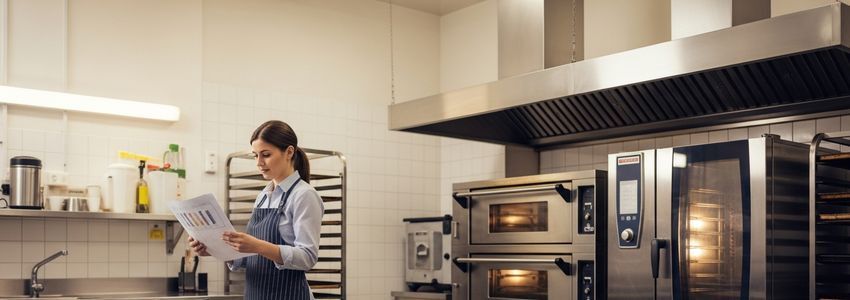
Case Study: How Leasing Equipment Transformed a Small Business
Equipment leasing is one of the most powerful yet underutilized financing tools available to small business owners. Many entrepreneurs assume they need to own every piece of equipment outright - or that large upfront purchases are simply the cost of doing business. But for thousands of growing companies across the United States, equipment leasing has proven to be a smarter path to expansion, cash flow stability, and competitive growth.
In this case study, we take a detailed look at how one small business owner used equipment leasing to overcome budget constraints, modernize operations, and successfully scale to a second location - all without draining cash reserves or taking on crippling debt. We also explore the key lessons that apply to virtually any industry, the financial mechanics behind why leasing works, and how business owners today can replicate these results.
In This Article
- The Challenge: What This Small Business Faced
- Why Equipment Leasing Made Sense
- How the Leasing Process Worked
- The Results: Before and After
- Key Lessons for Small Business Owners
- Equipment Leasing vs. Buying: A Comparison
- How Crestmont Capital Helps
- Real-World Scenarios Across Industries
- How to Get Started
- Frequently Asked Questions
The Challenge: What This Small Business Faced
Consider the story of a small bakery in the Midwest - let's call the owner Maria. Maria had operated her bakery for six years, building a loyal customer base and a reputation for quality. But by her seventh year, she had hit a ceiling. Her mixing equipment was outdated, her commercial ovens were prone to breakdowns, and the demand for her products had outpaced what her current setup could produce.
Maria faced a situation familiar to millions of small business owners: she needed to upgrade or expand, but she didn't have the capital to purchase new equipment outright. A full kitchen overhaul - including two new commercial ovens, an industrial mixer, and updated refrigeration - was priced at approximately $85,000. Her bank account held $40,000, which she relied on for operational expenses, payroll, and emergencies.
Purchasing the equipment outright would have wiped out her cash reserves entirely. A traditional bank loan carried high interest rates and required two years of business tax returns, collateral, and a personal guarantee that made Maria uncomfortable. She needed a third option.
Key Stat: According to the Equipment Leasing and Finance Association (ELFA), approximately 80% of U.S. companies lease some or all of their equipment - including more than 70% of small businesses with under 50 employees. The benefits of preserving cash flow while accessing modern equipment are simply too significant to ignore.
Maria's situation isn't unique. Whether you run a restaurant, a construction company, a medical practice, or a retail store, the need to access modern equipment without depleting capital is a near-universal challenge. Equipment leasing addresses this challenge directly - and in Maria's case, it changed the trajectory of her entire business.
Why Equipment Leasing Made Sense
Before Maria signed her lease agreement, she worked through a financial analysis with her advisor. The results were illuminating. Here is what the numbers showed:
If she purchased the $85,000 in equipment outright, she would have zero cash reserves and no financial cushion for the next 6-9 months while revenue from the upgraded equipment increased. A traditional bank loan at 8.5% APR over five years would cost her approximately $1,740 per month - a significant fixed expense during a period of transition.
An equipment lease, structured over 60 months with a $1 buyout option at the end, came in at $1,490 per month. More importantly, it required only a first-month deposit of $1,490 upfront - leaving her $38,510 in working capital intact. She could handle payroll, buy inventory, and manage seasonal dips without financial stress.
Equipment leasing made sense for three primary reasons:
Preserving cash flow. Monthly lease payments are predictable and typically lower than loan payments for the same equipment value. Maria kept her operating reserve fully intact, which proved critical when she needed to hire additional staff six months later to handle increased production volume.
Access to better equipment. Because leasing didn't require full ownership financing, Maria was able to include a higher-grade commercial oven model than she originally planned. The improved equipment allowed for faster baking cycles, reduced energy costs, and a 20% increase in daily output.
Tax efficiency. Lease payments are typically classified as business operating expenses, which can be deducted from taxable income. Maria's accountant confirmed that the lease payments provided meaningful deductions that a purchase would have handled differently under depreciation rules.
Explore Equipment Leasing for Your Business
Find out what monthly payments would look like for your equipment needs. Apply in minutes with no obligation.
Apply Now →How the Leasing Process Worked
Maria's leasing experience unfolded in four stages. Understanding this process helps any business owner know what to expect when pursuing equipment financing.
Quick Guide
The Equipment Leasing Process - At a Glance
Define exactly what equipment is needed, get vendor quotes, and calculate total cost. This gives the lender a clear scope of the financing request.
Applications typically require basic business financials, bank statements, and credit information. The process is far simpler than a traditional bank loan.
Once approved, the lender presents monthly payment options, term length, and end-of-lease buyout options. Payments begin after equipment delivery.
The lender pays the vendor directly. You take delivery of the equipment and begin using it immediately to generate revenue.
Maria's application was approved in under 48 hours. The lender reviewed three months of bank statements, her business credit profile, and the vendor invoice. There were no site visits, no appraisals, and no lengthy underwriting delays. Within two weeks of submitting her application, the new equipment had been delivered and installed.
The simplicity of the process was itself a revelation for Maria. "I'd always thought financing equipment was complicated," she later said. "The reality was that once I had the vendor quotes and my bank statements together, the whole thing moved faster than I expected."
The Results: Before and After
The impact of the equipment upgrade was measurable almost immediately. Within three months, Maria had seen quantifiable improvements across every key metric in her business.
By the Numbers
Maria's Bakery - 6 Months After Equipment Lease
+34%
Increase in daily production output
+$11K
Average monthly revenue increase
18%
Reduction in equipment downtime
12 Mo
Time to opening second location
The improved production capacity allowed Maria to fulfill wholesale orders she had previously turned down. A local grocery chain contract - worth approximately $4,200 per month - became achievable once she could consistently produce sufficient volume. Her net monthly revenue increased by an average of $11,000 within six months of the equipment going live.
Perhaps most significantly, Maria retained her cash reserves throughout this entire growth period. When she decided to open a second location fourteen months after her initial lease, she used those reserves as the down payment on her commercial lease, not as emergency backup funds she had been forced to spend.

Key Lessons for Small Business Owners
Maria's experience illustrates principles that apply broadly across industries. Whether you operate a restaurant, a trucking company, a medical practice, or a manufacturing facility, these lessons hold true.
Lesson 1: Cash flow preservation matters more than ownership. Owning equipment outright feels satisfying, but it's often financially counterproductive. If purchasing equipment depletes your operating reserves, you may own the asset but lack the capital to run the business effectively. Leasing keeps cash in your account where it can be deployed for payroll, inventory, marketing, and unexpected expenses.
Lesson 2: Equipment quality directly affects revenue potential. Many business owners try to extend the life of aging equipment to avoid financing costs. This strategy frequently backfires. Outdated equipment reduces output capacity, increases maintenance expenses, creates quality inconsistencies, and frustrates staff. The cost of delay is often higher than the cost of the lease payment.
Lesson 3: The leasing process is accessible to more businesses than most owners realize. Equipment lessors look at different factors than traditional banks. Many focus more heavily on time in business, monthly revenue, and equipment value than on credit scores alone. Business owners who have been turned down for bank loans frequently qualify for equipment leases through alternative lenders.
Lesson 4: Leasing can be a stepping stone, not a permanent arrangement. Maria's lease included a $1 buyout at term end - meaning she would own the equipment outright after 60 months of payments. For businesses that want eventual ownership, structured leases with buyout options provide the best of both worlds: manageable payments now, and ownership later.
Industry Insight: According to the Small Business Administration, access to capital is consistently cited as one of the top growth barriers for U.S. small businesses. Equipment leasing addresses this barrier directly by making high-value assets accessible without large capital outlays - effectively democratizing access to the tools businesses need to compete.
Equipment Leasing vs. Buying: A Comparison
To understand when leasing makes sense - and when it doesn't - it's helpful to compare both options side by side. The right choice depends on your cash position, the useful life of the equipment, your tax situation, and your growth plans.
| Factor | Equipment Leasing | Outright Purchase |
|---|---|---|
| Upfront Cost | Low (first month + deposit) | Full equipment price |
| Cash Flow Impact | Minimal - preserves reserves | Significant capital outflow |
| Ownership | Lessor (buyout option available) | Business owns asset outright |
| Technology Upgrades | Easy - upgrade at end of term | Must resell/dispose of old equipment |
| Tax Treatment | Lease payments often fully deductible | Depreciation deductions over time |
| Approval Speed | 24-72 hours typical | N/A (no approval needed) |
| Balance Sheet | Operating lease - off balance sheet | Asset recorded on balance sheet |
| Credit Requirements | Flexible - focuses on revenue and time in business | N/A for cash; credit needed for purchase loan |
Leasing tends to make the most sense when equipment has a relatively short useful life or when technology evolves rapidly - think commercial kitchen equipment, medical imaging devices, or IT hardware. Purchasing outright may be preferable for long-lived assets with stable value, like commercial real estate or certain heavy industrial machinery.
For most small businesses in growth mode, leasing provides the optimal combination of access, flexibility, and financial efficiency.
Compare Leasing vs. Financing Options
Crestmont Capital's specialists help you find the right structure for your equipment needs and growth goals. No commitment required.
Get Your Options →How Crestmont Capital Helps
Crestmont Capital is rated the #1 business lender in the United States, providing equipment leasing and financing solutions to small and mid-size businesses across every industry. Our approach is straightforward: we match businesses with the right financing structure based on their specific needs, not a one-size-fits-all product.
For equipment leasing and financing, Crestmont Capital offers several key advantages over traditional bank lenders. Our underwriting process focuses on monthly revenue and business health - not just credit scores. We work with businesses that have been operating for as little as six months, and our approval decisions are typically made within 24 to 48 hours of receiving a complete application.
We offer equipment leasing across virtually every equipment category - from commercial kitchen equipment and medical devices to construction machinery, manufacturing equipment, and transportation vehicles. Our equipment financing programs are equally flexible, with loan amounts ranging from $10,000 to $5 million and terms from 12 to 84 months.
Business owners looking for flexible capital solutions beyond equipment can also explore our business line of credit and unsecured working capital loans - both of which can complement an equipment lease strategy by providing operational liquidity alongside your financing.
Our clients consistently report that the process is faster and less burdensome than they expected. We handle the documentation, communicate directly with vendors, and ensure that equipment is funded and delivered as quickly as possible so your business can start generating returns on the investment without delay.
Real-World Scenarios Across Industries
Maria's bakery story resonates because it illustrates the core principle at work - but equipment leasing produces similar transformations across dozens of industries. Here are several real-world scenarios that reflect how businesses in different sectors have leveraged leasing to grow.
Auto repair shop. A regional auto repair shop needed to add three additional vehicle lifts and a new computerized diagnostic system. The combined equipment cost was $62,000. Rather than depleting cash reserves, the owner leased all equipment at $1,280 per month over 48 months. Within four months, the additional bays and diagnostic capability allowed the shop to service 40% more vehicles weekly, adding approximately $9,000 in monthly revenue against a $1,280 expense.
Physical therapy clinic. A physical therapy practice needed to replace aging treatment tables and add electrical stimulation equipment to compete with a new clinic that had opened nearby. A $44,000 equipment lease - approximately $920 per month - was structured with a fair market value purchase option. Patient satisfaction scores improved, referrals increased, and the practice added 18 new patients per month within two quarters.
Commercial landscaping company. A growing landscaping business needed a skid steer loader, a new commercial mower, and a dump trailer to handle larger commercial contracts. The $78,000 equipment package was financed over 60 months. The equipment enabled the company to bid on contracts that required heavy machinery, adding two commercial accounts worth $6,500 per month combined within the first year.
Hair salon expansion. A salon owner looking to open a second location used equipment leasing to finance styling chairs, shampoo bowls, processing stations, and point-of-sale technology - a $31,000 package. Instead of funding the second location from savings alone, the lease structure freed up $31,000 to cover buildout costs, staff training, and initial marketing. The second location became profitable within five months.
These scenarios illustrate a consistent pattern: equipment leasing allows businesses to access revenue-generating assets without sacrificing the liquidity needed to operate and grow in other areas simultaneously.
How to Get Started
Complete our quick application at offers.crestmontcapital.com/apply-now - the process takes just a few minutes and requires basic business information and recent bank statements.
A Crestmont Capital advisor will review your equipment needs, discuss the right lease structure, and walk you through your options with no pressure.
Once approved, we fund the vendor directly and coordinate delivery. Most clients have their new equipment in place within days of approval.
Frequently Asked Questions
Conclusion
Maria's bakery story is ultimately a story about making a smart financial decision at the right time. Equipment leasing gave her access to tools she needed to grow, without sacrificing the financial stability she needed to operate. The results - increased output, new contracts, expanded revenue, and a second location - followed naturally from that one well-structured financing decision.
The same opportunity exists for businesses in every industry. Whether you need commercial kitchen equipment, medical devices, construction machinery, or office technology, equipment leasing offers a practical, accessible path to the tools that drive growth. The key is understanding your options, working with a lender who understands your business, and structuring the lease to align with your cash flow and long-term goals.
Crestmont Capital specializes in helping business owners navigate these decisions - and in delivering fast, flexible equipment leasing and financing solutions that keep growing businesses equipped and competitive. If your business needs equipment to reach its next level, the process is simpler than you think.
Disclaimer: The information provided in this article is for general educational purposes only and is not financial, legal, or tax advice. Funding terms, qualifications, and product availability may vary and are subject to change without notice. Crestmont Capital does not guarantee approval, rates, or specific outcomes. For personalized information about your business funding options, contact our team directly.








