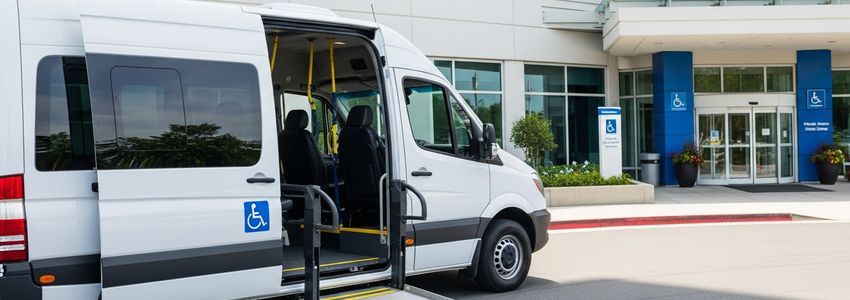
For businesses dedicated to providing mobility and care, a wheelchair accessible van is not just a vehicle, it is an essential asset for serving your community. Whether you operate a non-emergency medical transport service, an assisted living facility, or a community outreach program, acquiring these specialized vehicles represents a significant investment. This guide provides a comprehensive overview of wheelchair van financing, empowering you to make informed decisions that support your business growth and operational needs.
In This Article
- What Is Commercial Wheelchair Van Financing?
- Why Your Business Should Consider Financing an Accessible Van
- Who Needs Wheelchair Van Financing? Key Industries
- Understanding the Costs: New vs. Used Wheelchair Vans
- Types of Wheelchair Van Financing: Loans vs. Leases
- How to Qualify: A Lender's Checklist for Approval
- The Step-by-Step Application Process for Wheelchair Van Financing
- Navigating Wheelchair Van Financing with Bad Credit
- Government Grants, Programs, and SBA Loans for Accessible Vehicles
- How to Choose the Right Financing Partner for Your Business
What Is Commercial Wheelchair Van Financing?
Commercial wheelchair van financing is a specialized category of business lending designed to help companies acquire wheelchair accessible vehicles (WAVs) without paying the full cost upfront. It functions similarly to other types of equipment financing, where the vehicle itself serves as the primary collateral for the loan or lease. This type of financing is not just for the van itself, it typically covers the entire package: the vehicle chassis, the professional conversion, and all integrated accessibility equipment.
This is a crucial distinction because the cost of a WAV is composed of several parts. First, there is the base vehicle, often a minivan like a Chrysler Pacifica or Toyota Sienna, or a full-sized van such as a Ford Transit or Ram ProMaster. Second, and most significantly, is the conversion process. This can include major structural modifications like lowering the floor or raising the roof to provide adequate headroom for a person in a wheelchair. Finally, there is the specialized equipment: the ramp or lift system, securement systems like Q'Straint or EZ Lock docking stations, and any custom interior configurations needed for passengers or medical equipment.
Financing allows a business to bundle these costs into a single, predictable monthly payment. Instead of depleting cash reserves with a large capital expenditure, the business can spread the cost over a set term, typically ranging from 24 to 72 months. This approach makes acquiring essential transportation assets manageable and predictable, aligning the cost of the vehicle with the revenue it helps generate over its useful life. For businesses in the transportation and care industries, this financial tool is often the key to launching, scaling, and maintaining a modern, reliable, and compliant fleet.
Why Your Business Should Consider Financing an Accessible Van
The decision to finance rather than purchase a wheelchair van outright is a strategic one with significant benefits for business operations and financial health. While paying cash might seem appealing to avoid interest payments, financing offers compelling advantages that often outweigh the costs of borrowing, especially for small and medium-sized businesses.
Preserve Working Capital and Maintain Liquidity
Cash flow is the lifeblood of any business. A single new wheelchair accessible van can cost anywhere from $60,000 to over $100,000. Paying this amount in cash can severely restrict your company's liquidity, leaving you vulnerable to unexpected expenses or unable to seize new opportunities. By financing the vehicle, you keep that crucial capital in your bank account. This preserved cash can be used for other critical business needs, such as marketing to attract new clients, hiring additional drivers or caregivers, covering payroll, investing in new technology, or simply having a robust safety net for slower periods. Financing smooths out your expenditures, transforming a massive one-time cost into a manageable operational expense.
Potential Tax Advantages
Financing vehicles for your business can unlock significant tax benefits. One of the most powerful is Section 179 of the IRS tax code. This provision allows businesses to deduct the full purchase price of qualifying equipment and software financed or purchased during the tax year. For 2023, the deduction limit is over $1 million. This means you could potentially deduct the entire cost of one or more wheelchair vans from your gross income, substantially lowering your tax liability. Additionally, bonus depreciation may be available, allowing you to deduct a large percentage of the cost in the first year. These benefits can make the net cost of financing a vehicle far lower than its sticker price. It is essential to consult with a tax professional to understand how these deductions apply specifically to your business situation.
Scalability and Fleet Expansion
The demand for accessible transportation is growing, driven by an aging population and increased focus on community inclusion. To meet this demand and grow your business, you need the ability to scale your fleet quickly. Financing is the most effective way to do this. Instead of saving for years to buy one van, financing allows you to acquire multiple vehicles at once or add to your fleet as new contracts or opportunities arise. This agility enables you to bid on larger contracts, serve more clients, and expand your service area, giving you a significant competitive advantage over competitors who are constrained by their available cash.
Predictable Budgeting
A fixed monthly payment from a loan or lease simplifies budgeting and financial forecasting. You know exactly what your vehicle expense will be each month for the entire term of the agreement. This predictability is invaluable for managing your cash flow and ensuring long-term financial stability. There are no surprises, allowing you to plan your other expenses and investments with greater confidence. This contrasts sharply with the uncertainty that can come from a large, unplanned capital outlay.
Ready to Finance Your Wheelchair Van?
Crestmont Capital offers fast, flexible financing for accessible vehicles and medical transport fleets.
Apply Now - Get Funded FastWho Needs Wheelchair Van Financing? Key Industries
A wide range of businesses and organizations rely on wheelchair accessible vehicles to fulfill their core mission. For these entities, reliable and safe transportation is not a luxury, it is a fundamental requirement of their operations. Financing makes these essential assets accessible to a diverse group of service providers.
Non-Emergency Medical Transportation (NEMT)
The NEMT industry is perhaps the largest user of commercially financed wheelchair vans. These businesses provide crucial transportation for individuals who need to get to and from medical appointments, dialysis centers, physical therapy, and other healthcare services but do not require an ambulance. NEMT providers often work on contract with insurance companies, Medicaid, and healthcare networks. Maintaining a modern, reliable, and ADA-compliant fleet is essential for securing and retaining these contracts. Financing allows NEMT startups to enter the market and established providers to expand their fleets to meet the ever-growing demand for their services.
Assisted Living Facilities and Nursing Homes
Senior care communities use wheelchair vans daily to enhance the quality of life for their residents. These vehicles are used for a variety of purposes, including transporting residents to medical appointments, social outings, shopping trips, and community events. Offering reliable, accessible transportation is a major selling point for these facilities, demonstrating a commitment to resident mobility and well-being. Financing enables these homes to purchase safe, comfortable vehicles without diverting funds from other critical areas like staffing, resident care programs, or facility maintenance.
Hospitals and Healthcare Systems
Hospitals use wheelchair vans for patient discharge, ensuring a safe and comfortable transition home for individuals with mobility challenges. They are also used for inter-facility transfers, moving patients between a main hospital and a rehabilitation center, specialized clinic, or long-term care facility. A dedicated fleet of accessible vans improves patient satisfaction and logistical efficiency, reducing reliance on third-party transport services and ensuring timely transfers.
Non-Profit Organizations and Churches
Many non-profits, religious organizations, and community centers have missions that involve serving seniors or individuals with disabilities. Wheelchair vans enable these groups to provide transportation to services, community meals, social events, and other essential activities, combating isolation and improving access to resources. Since these organizations often operate on tight budgets and rely on donations, financing is a practical way to acquire a necessary vehicle without launching a massive, time-consuming capital campaign.
Schools and Universities
Educational institutions are required by law to provide accessible transportation for students with disabilities. School districts use wheelchair accessible buses and vans to transport students to and from school, as well as to extracurricular activities and field trips. Universities use them to ensure students with mobility impairments can navigate sprawling campuses and participate fully in academic and student life. Financing helps these institutions meet their legal obligations and foster an inclusive environment.
Taxi and Rideshare Services
As the transportation industry evolves, there is increasing pressure on taxi companies and rideshare platforms to offer accessible options. Forward-thinking business owners are adding wheelchair vans to their fleets to tap into this underserved market. This not only fulfills a community need but also opens up a new revenue stream. Financing provides a pathway for individual owner-operators and larger fleet managers to diversify their vehicle offerings and comply with local accessibility mandates.
Understanding the Costs: New vs. Used Wheelchair Vans
The cost of a wheelchair van is one of the most significant factors in the financing decision. Prices can vary dramatically based on whether the vehicle is new or used, the type of van, and the complexity of the conversion. Understanding these costs is the first step in creating a realistic budget and financing plan.
New Wheelchair Accessible Vans
A new wheelchair van offers the latest in vehicle technology, safety features, and reliability, backed by a full manufacturer's warranty for both the chassis and the conversion. This peace of mind is a major advantage for businesses where vehicle downtime can mean canceled appointments and lost revenue.
- Minivan Conversions (e.g., Chrysler Pacifica, Toyota Sienna): These are popular for NEMT providers, small group homes, and taxi services. A new converted minivan typically costs between $60,000 and $85,000.
- Full-Size Van Conversions (e.g., Ford Transit, Ram ProMaster): These offer more space for multiple wheelchair users or passengers with extensive medical equipment. Costs for new full-size converted vans generally range from $75,000 to over $100,000, depending on the roof height, lift type, and interior layout.
The primary benefit of buying new is reliability and lower initial maintenance costs. The downside is the higher initial purchase price and faster depreciation.
Used Wheelchair Accessible Vans
For businesses on a tighter budget, a pre-owned wheelchair van can be an excellent option. Used equipment financing is readily available and allows you to get a quality vehicle at a much lower entry price. The key is to purchase from a reputable dealer who specializes in accessible vehicles and can provide a detailed history and inspection report.
- Used Minivan Conversions: Depending on age, mileage, and condition, you can expect to pay between $30,000 and $60,000.
- Used Full-Size Van Conversions: Prices typically fall between $40,000 and $75,000.
The main advantage of buying used is the significant cost savings. However, you may face higher maintenance costs sooner, and the vehicle may not have the latest features or a comprehensive warranty. It is crucial to factor potential repair costs into your total cost of ownership calculation.
Conversion-Only Costs
In some cases, a business may already own a suitable van and only need to have it converted for wheelchair accessibility. Financing can also cover the cost of the conversion alone. Conversion costs vary widely:
- Ramp Systems: A simple manual ramp might cost a few thousand dollars, while a fully-powered, in-floor ramp system can cost $10,000 to $15,000.
- Lift Systems: Hydraulic platform lifts for full-size vans typically range from $5,000 to $12,000.
- Structural Modifications: Lowering the floor or raising the roof is a complex process that can cost $15,000 to $25,000 or more.
Financing the conversion allows you to upgrade an existing fleet vehicle without the expense of purchasing a brand new van.
Types of Wheelchair Van Financing: Loans vs. Leases
When you decide to finance a wheelchair van, you will generally choose between two primary options: an equipment loan or an equipment lease. Each has a distinct structure, benefits, and drawbacks. The best choice depends on your business's financial situation, long-term goals, and philosophy on equipment ownership.
Equipment Financing Agreement (Loan)
An equipment loan is the most straightforward financing method. A lender, like Crestmont Capital, provides you with the funds to purchase the wheelchair van. You then make regular monthly payments, which include principal and interest, over a predetermined term (e.g., 36, 48, 60, or 72 months).
With each payment, you build equity in the vehicle. At the end of the term, once the loan is fully paid off, you own the wheelchair van outright. You are free to keep using it, sell it, or trade it in.
Pros of a Loan:
- Ownership: The vehicle is a business asset on your balance sheet from day one.
- Tax Benefits: You may be able to take advantage of Section 179 and bonus depreciation to deduct a significant portion, or even all, of the vehicle's cost in the first year.
- No Restrictions: There are no mileage limits or restrictions on wear and tear, which is important for high-use commercial vehicles.
- Equity: You build equity with every payment, and the vehicle has resale value once the loan is paid off.
Cons of a Loan:
- Higher Monthly Payments: Because you are paying for the entire value of the vehicle, monthly payments are typically higher than a lease payment for the same van.
- Down Payment: A down payment may be required, especially for newer businesses or those with less-than-perfect credit.
- Obsolescence: You are responsible for an aging asset. As technology and regulations change, you may be left with an outdated vehicle.
An equipment loan is often the best choice for businesses that plan to keep their vehicles for a long time, put high mileage on them, and want to take full advantage of ownership-related tax deductions. This is a common path for those seeking commercial equipment financing.
Equipment Leasing
An equipment lease is essentially a long-term rental agreement. You pay a monthly fee to use the wheelchair van for a set period (the lease term). You are not building equity in the same way as a loan because you are only paying for the depreciation of the vehicle during the term, not its full value. At the end of the lease, you have several options depending on the lease structure.
Pros of a Lease:
- Lower Monthly Payments: Lease payments are often significantly lower than loan payments, freeing up more monthly cash flow.
- Lower Upfront Cost: Leases frequently require little to no down payment.
- Modern Fleet: Leasing makes it easy to upgrade to a new vehicle with the latest safety and accessibility features every few years, avoiding the costs and hassles of owning an aging fleet.
- Predictable Costs: Leases can sometimes be bundled with maintenance packages, making your total vehicle operating costs highly predictable.
Cons of a Lease:
- No Ownership: At the end of the term, you do not own the vehicle. You have to return it, purchase it, or start a new lease.
- Mileage and Use Restrictions: Most leases come with annual mileage caps and clauses about excess wear and tear. Exceeding these limits can result in costly penalties, a major concern for transportation businesses.
- More Complex: Lease agreements can be more complex than loan agreements, with various end-of-term options.
There are several common types of equipment leasing structures:
- Fair Market Value (FMV) Lease: This is a true lease. It offers the lowest monthly payments. At the end of the term, you can return the vehicle, renew the lease, or purchase the van for its current fair market value. This is ideal for businesses that want to maintain a new fleet and avoid obsolescence.
- $1 Buyout Lease: This is a lease-to-own structure. The monthly payments are higher than an FMV lease because you are financing the full value. At the end of the term, you can purchase the van for a nominal amount, typically $1. This option is treated like a loan for tax purposes, allowing you to use Section 179.
- TRAC Lease (Terminal Rental Adjustment Clause): This specialized lease is designed for commercial vehicles. It sets a pre-determined residual value for the van at the end of the term. If the van sells for more than the residual value, you get the surplus. If it sells for less, you are responsible for the difference. This offers more flexibility than a standard FMV lease.
Leasing is a great option for businesses that prioritize low monthly payments, want to regularly update their fleet, and do not put excessively high mileage on their vehicles.

The Accessible Transportation Market at a Glance
The demand for wheelchair accessible transportation is not just growing, it's accelerating. Key demographic and economic trends underscore the importance of this vital service.
$2.5 Billion
Projected U.S. NEMT Market Size by 2030, showing a significant growth trajectory. (Source: Bloomberg)
73 Million
Number of Americans who will be 65 or older by 2030, a key demographic for accessible transport services. (Source: U.S. Census Bureau)
1 in 4
Proportion of U.S. adults living with a disability, highlighting the widespread need for accessible solutions.
How to Qualify: A Lender's Checklist for Approval
Securing financing for a wheelchair van involves a lender assessing the risk associated with your business. While every lender has slightly different criteria, they all evaluate a core set of factors to determine your creditworthiness. Understanding these factors will help you prepare a strong application and increase your chances of approval for the best possible terms.
1. Personal and Business Credit Score
Your credit history is a primary indicator of your financial responsibility. Lenders will look at both your personal credit score (especially for sole proprietorships and new businesses) and your business credit score.
- Excellent Credit (750+): You will likely qualify for the lowest interest rates and most favorable terms from a wide range of lenders.
- Good Credit (680-749): You are still considered a strong candidate and will have access to competitive financing options.
- Fair Credit (620-679): You can still secure financing, particularly from alternative lenders like Crestmont Capital who specialize in working with a broader credit spectrum. Rates may be slightly higher.
- Poor Credit (Below 620): Getting approved can be more challenging, but it is not impossible. This is explored further in the "Financing with Bad Credit" section below.
2. Time in Business
Lenders prefer to see a track record of stability. The standard benchmark for many traditional banks is at least two years in business. However, this is a major area where alternative lenders offer more flexibility. Many, including Crestmont Capital, have programs for businesses that have been operating for as little as six months. Startups are not excluded, but they may need to provide a strong business plan, have excellent personal credit, or be prepared to make a larger down payment.
3. Annual and Monthly Revenue
Lenders need to see that your business generates enough consistent revenue to comfortably afford the monthly van payment. They will typically ask for your last 3-6 months of business bank statements to verify your cash flow. While there is no universal revenue minimum, many lenders look for businesses generating at least $10,000 - $20,000 in monthly revenue or $150,000+ annually. The key is demonstrating a stable or growing income stream that can support the new debt.
4. Down Payment
A down payment reduces the lender's risk, as it demonstrates your own financial commitment to the purchase. For established businesses with strong credit, 100% financing (zero down payment) is often possible. For newer businesses or those with weaker credit, a down payment of 10-20% may be required. Offering a down payment even when it is not required can sometimes help you secure a lower interest rate.
5. Collateral
One of the great advantages of wheelchair van financing is that the vehicle itself serves as the collateral for the loan. This is known as a self-collateralizing loan. It significantly reduces the risk for the lender because if you default on the payments, they can repossess the asset to recover their losses. This is why equipment financing is often more accessible than unsecured loans or a business line of credit.
6. Industry Experience
While not a formal requirement, having experience in the industry you are operating in (e.g., NEMT, senior care) can strengthen your application. It shows the lender that you understand the market, have a plan for acquiring clients, and are more likely to run a successful, sustainable business.
See What You Qualify For
Our simple application takes just 60 seconds and won't impact your credit score. Get your financing options today.
Get Pre-Qualified NowThe Step-by-Step Application Process for Wheelchair Van Financing
Applying for wheelchair van financing can seem daunting, but reputable lenders have streamlined the process to be as fast and efficient as possible. By understanding the steps involved, you can prepare effectively and move from application to funding with ease.
Step 1: Define Your Needs and Budget
Before you even talk to a lender, you need a clear idea of what you are looking for. Research different van models and conversion types. Decide whether a new or used vehicle is right for your business. Get a formal quote or invoice from a reputable accessible vehicle dealer. This document will be essential for your application. Knowing the exact cost allows you to determine how much financing you need and what a comfortable monthly payment would be for your budget.
Step 2: Gather Your Documentation
Being prepared with the right paperwork will dramatically speed up the process. While requirements vary by lender and loan size, it is wise to have the following ready:
- Simple Application: Most alternative lenders use a one-page online application.
- Vehicle Quote/Invoice: The official bill of sale from the dealership for the van you intend to purchase.
- Business Bank Statements: Typically the most recent 3-6 months.
- Financial Statements: For larger loan amounts, you may be asked for a profit and loss statement and a balance sheet.
- Business Registration/License: Proof that your business is legally established.
Step 3: Choose Your Lender and Submit Your Application
You have two main choices for lenders: traditional banks and alternative lenders.
- Traditional Banks: May offer lower rates but typically have a much slower, more paperwork-intensive process and stricter qualification criteria (e.g., 2+ years in business, excellent credit).
- Alternative Lenders (like Crestmont Capital): Specialize in business financing and offer a faster, more flexible process. They can often approve applications in hours, not weeks, and are more willing to work with newer businesses or those with imperfect credit.
Once you have chosen a lender, complete their application form accurately and submit it along with your supporting documents.
Step 4: Underwriting and Approval
This is where the lender's team reviews your application and documents. They will verify your information, analyze your cash flow from your bank statements, and check your credit. Because wheelchair vans are a standard and essential piece of equipment, the underwriting process is often very quick. An underwriter will assess the risk and determine the loan amount, interest rate, and term you qualify for.
Step 5: Review Offers and Sign Agreements
If approved, the lender will present you with one or more financing offers. Review the terms carefully. Pay close attention to:
- The total loan amount
- The interest rate (APR)
- The monthly payment
- The term length (number of months)
- Any fees or prepayment penalties
Once you have selected the offer that works best for you, you will sign the financing agreements, which can almost always be done electronically.
Step 6: Funding
This is the final step. The lender will transfer the funds directly to the vehicle dealership or seller on your behalf. Once the seller confirms they have received the payment, you can take possession of your new wheelchair accessible van and put it to work for your business.
Navigating Wheelchair Van Financing with Bad Credit
A poor credit score can feel like a major roadblock, but it does not necessarily prevent you from getting the financing you need for an essential wheelchair van. While traditional banks may quickly decline applications with credit scores below 650, many alternative lenders specialize in providing options for business owners with challenging credit histories.
The key is to understand how lenders view risk and to take steps to present your business in the strongest possible light. Lenders who work with bad credit look beyond the score to see the bigger picture of your business's health.
Why Bad Credit Financing is Possible
Financing for a wheelchair van is an asset-backed loan. The vehicle itself is a valuable, tangible asset that serves as collateral. This reduces the lender's risk compared to an unsecured loan. If the borrower defaults, the lender can recover the asset. This inherent security makes lenders more willing to work with business owners who have lower credit scores.
What to Expect with Bad Credit Financing
It is important to be realistic. Financing with bad credit will come with different terms than financing with excellent credit.
- Higher Interest Rates: The interest rate is the primary way lenders compensate for increased risk. You should expect to pay a higher rate, which will result in a higher monthly payment and total cost of borrowing.
- Shorter Terms: Lenders may offer shorter repayment terms (e.g., 24-36 months instead of 60-72) to reduce their long-term risk exposure.
- Down Payment Requirement: A down payment of 10% to 25% will likely be required. This reduces the amount you need to borrow and shows the lender you have "skin in the game."
Tips for Getting Approved with Bad Credit
You can significantly improve your chances of approval by being proactive and strategic.
- Show Strong, Consistent Cash Flow: This is the most important factor. If you can provide bank statements showing steady or increasing monthly revenue, it proves to the lender that despite your past credit issues, your business is currently healthy and capable of making the payments.
- Prepare a Larger Down Payment: The more you can put down, the better. A substantial down payment drastically reduces the lender's risk and demonstrates your financial stability.
- Have a Solid Business Plan: For newer businesses especially, a well-written business plan can make a huge difference. It should detail your market, your client acquisition strategy, and your financial projections. This shows you have a clear path to success.
- Provide Additional Collateral: If you have other unencumbered business assets, offering them as additional collateral can strengthen your application, though this is not always necessary for vehicle financing.
- Work with the Right Lender: Do not waste time with lenders who have strict credit score cutoffs. Partner with an alternative lender like Crestmont Capital that explicitly states they work with business owners across the credit spectrum. They have the experience and programs designed to find a solution for your situation.
Government Grants, Programs, and SBA Loans for Accessible Vehicles
In addition to private financing, there are government-backed programs and grants that can help businesses and non-profits acquire wheelchair accessible vehicles. These options can sometimes offer more favorable terms or reduce the overall cost, but they often involve a more lengthy and complex application process.
SBA Loans
The U.S. Small Business Administration (SBA) does not lend money directly, but it does guarantee a portion of loans made by approved lending partners. This government guarantee reduces the risk for lenders, making them more willing to offer long-term financing at competitive rates. SBA loans can absolutely be used to purchase vehicles and equipment for your business.
- SBA 7(a) Loan: This is the most common type of SBA loan. It is highly versatile and can be used for a wide range of business purposes, including purchasing equipment and vehicles. Loan amounts can go up to $5 million with repayment terms of up to 10 years for equipment.
- SBA 504 Loan: While typically used for real estate or major equipment purchases, this loan program could potentially be used for a large fleet acquisition. It offers long-term, fixed-rate financing.
The SBA loan process is notoriously slow and requires extensive documentation. However, for businesses that qualify, the favorable terms can be worth the wait. It is best to work with a lender who is an experienced SBA-approved partner.
Federal Transit Administration (FTA) Grants
For non-profit organizations and designated public bodies, the FTA's Section 5310 program, "Enhanced Mobility of Seniors and Individuals with Disabilities," is a vital resource. This program provides grant funding to states, which then distribute the funds to local organizations to help them purchase vehicles and support transportation services.
According to the official SBA funding programs website, their loans are designed to help businesses grow, and a wheelchair van is a perfect example of a growth-enabling asset. The Section 5310 grants are highly competitive and have a long application cycle. They are not a solution for immediate vehicle needs but can be an excellent long-term strategy for non-profits looking to expand their transportation services. You typically apply through your state's Department of Transportation.
State and Local Grants
Many states, counties, and even municipalities offer their own grants and low-interest loan programs aimed at improving accessibility and supporting small businesses. It is worthwhile to research the economic development agencies and disability services offices in your specific area to see if any local programs are available to help offset the cost of a wheelchair accessible van.
How to Choose the Right Financing Partner for Your Business
The lender you choose to work with can have as much impact on your experience as the vehicle you purchase. A great financing partner is more than just a source of money; they are a resource that understands your industry and is invested in your success. Here is what to look for when selecting a lender for your wheelchair van financing.
Industry Specialization
Does the lender have experience financing commercial vehicles, specifically for industries like NEMT or senior care? A specialized lender understands the unique challenges and opportunities of your business. They recognize the value of the asset and the revenue it can generate, which often leads to a smoother and faster approval process. They will not be confused by the high cost of a converted van because they know it is a piece of essential commercial equipment, not just a personal vehicle. This expertise is a key part of our equipment financing 101 philosophy.
Speed and Efficiency
In business, opportunities do not wait. When you find the right van at the right price, you need to be able to act quickly. A traditional bank's loan process can take weeks or even months. An alternative lender that leverages technology can often provide a credit decision in hours and funding in as little as a day. Ask potential lenders about their average time from application to funding. This speed can be the difference between securing the perfect vehicle and losing it to a competitor.
Transparency and Communication
A trustworthy lender is transparent about all aspects of the financing agreement. They should clearly explain the interest rate, APR, monthly payment, term, and any potential fees. There should be no hidden costs or surprises. You should also have a dedicated point of contact who is responsive and can answer your questions throughout the process. Good communication is a sign of a lender who values your business.
Flexibility and Options
Your business is unique, and your financing should be too. A good lender will not try to fit you into a one-size-fits-all box. They should offer a range of products, including different loan terms and lease options (like FMV and $1 Buyout leases). They should also be flexible enough to work with various credit profiles and business histories. The goal is to find a financial solution that truly aligns with your company's budget and long-term objectives, much like the options discussed in our guide to heavy equipment financing.
Partner with an Industry Expert
Crestmont Capital understands the needs of transportation and care businesses. Let us build a financing solution for you.
Start Your ApplicationFrequently Asked Questions (FAQ)
1. What is the minimum credit score needed for wheelchair van financing?
While traditional banks often require a credit score of 680 or higher, alternative lenders like Crestmont Capital can often work with scores as low as the high 500s. Lenders who specialize in bad credit financing look at the overall health of your business, especially your recent cash flow, not just the credit score. A lower score will likely result in a higher interest rate and may require a down payment.
2. Can I finance a used wheelchair van?
Yes, absolutely. Financing is available for both new and used wheelchair vans. Lenders understand that used vehicles offer a significant cost advantage for many businesses. The primary considerations for the lender will be the age, mileage, and condition of the used van. They may require an inspection or purchase from a reputable dealer to ensure the value of the collateral.
3. How long are the typical loan terms?
Loan and lease terms for wheelchair vans typically range from 24 to 72 months (2 to 6 years). Shorter terms result in higher monthly payments but lower total interest paid. Longer terms provide a more affordable monthly payment but increase the total cost of borrowing. The best term length depends on your budget and how long you plan to keep the vehicle.
4. Do I need a down payment?
It depends on your credit profile and time in business. Well-established businesses with strong credit can often qualify for 100% financing with no down payment. For startups, newer businesses, or those with fair or poor credit, a down payment of 10% to 20% is common. A down payment reduces the lender's risk and can help you secure better terms.
5. How quickly can I get funded?
This is a major difference between lenders. A traditional bank can take several weeks to approve and fund a loan. An efficient alternative lender like Crestmont Capital can often provide an approval within hours and funding in as little as 24 to 48 hours after you submit all necessary documentation.
6. Can I finance a van from a private seller?
Yes, financing a van from a private seller is possible, but it can be more complex than buying from a dealership. The lender will need to take extra steps to verify the vehicle's title, condition, and value. The process is generally smoother and faster when purchasing from an established commercial vehicle or accessible van dealer.
7. Can I finance the conversion separately from the van?
Yes. If you already own a van that is suitable for conversion, you can secure financing just for the cost of the conversion process and equipment. This is treated as a type of equipment financing, where the funds are used to upfit your existing asset.
8. Does the application process affect my credit score?
Many alternative lenders, including Crestmont Capital, use a "soft pull" for the initial application and pre-qualification process. A soft pull does not impact your credit score. A "hard pull," which can slightly lower your score, is typically only performed once you decide to move forward with a specific financing offer.
9. What are the typical interest rates for wheelchair van financing?
Interest rates vary widely based on your credit score, time in business, and the lender. Businesses with excellent credit and a long history might see rates in the single digits, similar to prime rates. Businesses with fair or poor credit will see higher rates, potentially in the teens or higher, to reflect the increased risk to the lender.
10. Can a non-profit organization get wheelchair van financing?
Yes, non-profit organizations can and frequently do finance essential vehicles. The underwriting process is similar, with lenders looking at the organization's financial statements, revenue from donations and grants, and history of operations to assess its ability to make payments.
11. Is it better to get a loan or a lease?
The "better" option depends on your business goals. Choose a loan if you want to own the asset long-term, build equity, and have no mileage restrictions. Choose a lease if you prioritize lower monthly payments, want to maintain a modern fleet by upgrading every few years, and can stay within mileage limits.
12. Can I finance more than one van at a time?
Yes. Lenders are happy to finance multiple vehicles or an entire fleet for a growing business. Your ability to do so will depend on your company's revenue and ability to service the debt for all the vehicles. Financing multiple vans at once can often be done through a single master loan or lease agreement.
13. What happens if I want to pay off my loan early?
This depends on the lender and the specific terms of your loan agreement. Some loans have prepayment penalties, while others do not. It is an important question to ask your lender before signing any documents. A reputable lender will be transparent about their prepayment policies.
14. Can a startup business get financing for a wheelchair van?
Yes, it is possible for startups to get financing, though it can be more challenging. Lenders will place a heavy emphasis on the owner's personal credit score, industry experience, a strong business plan, and a cash down payment. Working with a lender that has specific programs for new businesses is key.
15. Does the type of van (Ford, Chrysler, etc.) affect my financing?
Generally, no. As long as you are purchasing from a reputable manufacturer and the vehicle is in good condition, the specific brand does not significantly impact your ability to get financing. Lenders are more concerned with the overall value of the asset, its condition (if used), and your business's ability to make the payments.
Next Steps
Acquiring a wheelchair accessible van is a critical step in launching or expanding your service-oriented business. By leveraging the power of financing, you can obtain this essential asset while preserving your cash flow and positioning your company for sustainable growth. The key is to understand your options, prepare your documentation, and partner with a lender who understands your unique needs.
If you are ready to take the next step, the team at Crestmont Capital is here to help. We specialize in fast, flexible financing solutions for businesses just like yours. Our simple application process and dedicated experts can help you secure the funding you need to serve your community effectively.