Automated retail is one of the fastest-growing corners of small business today, and vending kiosk financing is how most operators actually get their machines, kiosks, and micro markets into the field. Whether you are placing your first smart vending kiosk in an apartment lobby or scaling a fleet of self-service units across office buildings, hospitals, and college campuses, the right funding structure determines how fast you can grow and how much of your own cash you have to tie up to do it.
This guide walks through exactly how vending kiosk financing works, what it costs, which structure fits which stage of growth, and how to avoid the mistakes that slow down otherwise solid automated retail operators. You will also find real-world scenarios, a full FAQ, and a breakdown of how Crestmont Capital structures funding for vending, micro market, and unattended retail businesses.
In This Article
What Is Vending Kiosk Financing?
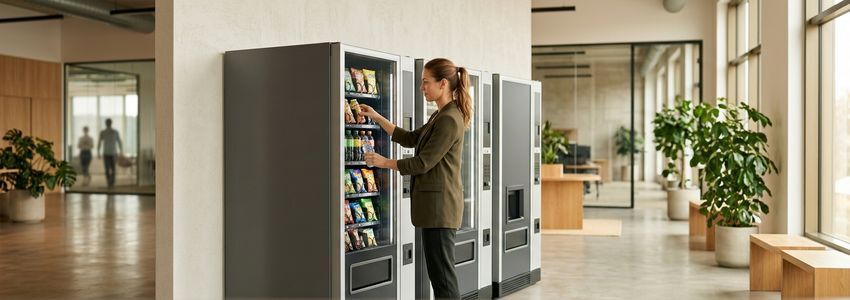
Vending kiosk financing is capital, structured as an equipment loan, equipment lease, or working capital facility, that covers the purchase, installation, and setup of vending machines, smart vending kiosks, and micro market units. Unlike a personal loan or a generic small business loan, this type of financing is built around the equipment itself: its cost, its useful life, and the revenue it is expected to generate once it is placed and stocked.
The category has expanded well beyond the classic snack-and-soda box. Today it covers cashless smart vending kiosks with touchscreens and inventory sensors, unmanned micro market setups with open shelving and self-checkout kiosks, specialty vending units for electronics, PPE, or fresh food, and the refrigeration, POS hardware, and remote monitoring technology that keeps a modern kiosk fleet running. Financing can be structured for a single unit or for a multi-unit fleet rollout, and terms are typically matched to the useful life of the hardware, often five to seven years for kiosks and vending equipment.
For operators, the appeal is straightforward: vending kiosk financing lets you deploy revenue-generating hardware now and pay for it out of the cash flow it produces, rather than draining working capital or waiting months to save up the full purchase price.
Automated retail has also moved firmly into the mainstream. As Forbes has reported, unattended retail formats, from smart lockers to fully automated micro-stores, are becoming a standard part of how retailers cut labor costs and meet consumer demand for fast, self-service purchases.
Key Benefits of Vending Kiosk Financing
- Preserve working capital. Instead of paying cash for a $6,000 to $20,000 smart vending kiosk (or considerably more for a full micro market setup), you spread the cost over a term that matches the equipment's earning life.
- Faster fleet expansion. Financing lets you place multiple units across several locations at once instead of saving up to buy machines one at a time.
- Predictable payments. Fixed monthly payments make it easy to model the breakeven point for each new location before you sign a placement agreement.
- Access to newer technology. Cashless payment readers, remote inventory sensors, and AI-driven restocking alerts all add cost, but they also drive higher per-machine revenue. Financing makes upgrading to smart kiosks realistic even for smaller operators.
- Potential tax advantages. Depending on how the equipment is financed and your tax situation, there may be depreciation or expense benefits available. Always confirm specifics with your accountant.
- Collateral-based approval. Because the equipment itself secures much of the financing, approval can be more accessible than unsecured options, even for newer vending or micro market operators.
Ready to Expand Your Vending or Micro Market Fleet?
Get fast, flexible financing from the #1 business lender in the U.S. No obligation, apply in minutes.
Apply Now →How Vending Kiosk Financing Works
The process is more straightforward than most new operators expect, especially compared to traditional bank underwriting. Here is the typical path from application to a live kiosk on location.
Quick Guide
How Vending Kiosk Financing Works, At a Glance
Vendor invoice or purchase quote for the kiosks, vending machines, or micro market fixtures you plan to buy.
Basic business information plus recent bank statements. Most lenders skip lengthy business plans for equipment financing.
Compare a loan versus a lease, review the rate, term length, and any down payment requirement.
Once approved, funds are released to the vendor or directly to you, and your kiosk or vending unit ships and is installed on location.
Approval timelines for vending kiosk financing are typically much faster than a traditional term loan. Many applicants receive a decision within 24 to 48 hours, and funding can happen within a few business days once paperwork is signed. This speed matters in automated retail, where a good location often needs a machine installed quickly before a landlord or property manager moves on to a competing vendor.
Key Stat: Combined vending machine and micro market sales in the United States reached $33.85 billion in 2024, a 30 percent increase from $26.04 billion the year before, driven largely by cashless payment adoption and smart kiosk technology.
Types of Vending Kiosk Financing
Not every vending or micro market operator needs the same financing structure. The right choice depends on how long you plan to keep the equipment, your credit profile, and whether you are financing one unit or building out a fleet.
Equipment Loans
An equipment loan finances the full purchase price of a vending machine, smart kiosk, or micro market setup, and you own the equipment once the loan is paid off. This structure works well for operators who plan to keep units in service for the long term and want to build equity in owned hardware that can later be used as collateral for expansion financing.
Some operators also explore government-backed options. The SBA 7(a) loan program can finance equipment as part of a broader business loan, while the SBA 504 loan program is geared toward larger, long-term fixed asset purchases. Both typically involve longer approval timelines than dedicated equipment financing, which is why many vending and kiosk operators prioritize speed over the SBA route when a good location needs equipment fast.
Equipment Leasing
Leasing spreads payments over a term without requiring the large upfront outlay of a purchase, and can include upgrade options at the end of the term. This is attractive for kiosk technology that evolves quickly, such as touchscreen interfaces and cashless payment modules, since leasing makes it easier to refresh hardware every few years instead of being stuck with aging equipment.
Working Capital Loans and Business Lines of Credit
Beyond the machines themselves, operators often need capital for initial product inventory, restocking cash flow, route driver wages, or unexpected repairs. A working capital loan or business line of credit covers these operating costs separately from the equipment itself, giving you a cushion while new locations ramp up to profitability.
Fleet Financing for Multi-Unit Rollouts
Operators placing five, ten, or more units at once, such as a micro market company signing several office contracts in the same quarter, often benefit from a single fleet financing agreement rather than financing each machine separately. This consolidates paperwork, simplifies the payment schedule, and can improve pricing compared to piecemeal financing.
Pro Tip: Before signing a placement agreement with a new location, confirm whether the property requires the operator to carry liability insurance and provide proof of financing or ownership for the equipment. Having your financing in place ahead of time speeds up the placement approval process.
Who Vending Kiosk Financing Is Best For
This type of financing tends to make the most sense for a fairly specific set of operators:
- New vending and micro market operators who have identified strong locations but do not want to tie up personal savings buying equipment outright.
- Established route operators ready to add locations faster than their cash flow alone allows.
- Micro market companies replacing older vending machines with open-shelf, self-checkout kiosk setups in office breakrooms.
- Specialty vending businesses in electronics, PPE, fresh food, or health-focused snacks, where kiosk hardware tends to cost more than a standard soda or snack machine.
- Facility owners and franchise groups adding self-service kiosks (laundry, entertainment, retail) as an ancillary revenue stream inside an existing location.
It is generally not the right fit for a hobbyist placing a single used machine in a friend's break room with no plan to scale. For that scenario, cash purchase of a used unit is usually simpler and cheaper.

What Vending Kiosks and Micro Markets Actually Cost
Pricing in automated retail varies more than most first-time operators expect, and understanding the range helps set realistic financing expectations. A basic mechanical snack or beverage vending machine can run as little as $2,000 to $4,000, while a modern smart vending kiosk with a touchscreen, cashless payment terminal, and remote inventory sensors typically lands between $6,000 and $12,000. Specialty kiosks built for electronics, PPE, or fresh food often push higher, sometimes $15,000 or more per unit, because of the additional security features, refrigeration, or dispensing mechanisms involved.
Micro market installations are a different category altogether. A full setup, open shelving, refrigerated coolers, security cameras, and a self-checkout kiosk, commonly runs $10,000 to $25,000 per location depending on square footage and the level of refrigeration required. Multiply that across five or ten office contracts signed in the same quarter, and it becomes clear why fleet financing exists: very few operators can self-fund $100,000-plus in simultaneous rollouts from cash flow alone.
Beyond the hardware itself, operators should budget for installation labor, initial product inventory (often 10 to 20 percent of the equipment cost for a first fill), and any networking or payment-processing setup fees. A financing conversation that only covers the machine price can leave an operator short on day one; the strongest financing plans account for these adjacent costs up front.
Comparing Vending Kiosk Financing to Other Funding Options
| Option | Best For | Typical Term | Ownership |
|---|---|---|---|
| Equipment Loan | Long-term fleet owners | 3-7 years | You own the equipment |
| Equipment Lease | Frequent tech upgrades | 2-5 years | Lessor owns, upgrade options |
| Business Line of Credit | Ongoing restocking, repairs | Revolving | N/A |
| Cash Purchase | Single used machine, low risk | N/A | Immediate ownership |
| Credit Card Financing | Small ancillary purchases only | Revolving | N/A, high rates |
Credit cards can technically fund a small vending purchase, but the interest rates are usually far higher than a structured equipment loan or lease, and carrying a large balance can hurt your personal credit utilization. For anything beyond a single low-cost unit, dedicated vending kiosk financing is almost always the more sustainable option.
How Crestmont Capital Helps Vending and Micro Market Operators
Crestmont Capital works with automated retail operators at every stage, from a first single-unit placement to established route operators managing dozens of kiosks. Our equipment financing programs are structured around the realities of the vending and micro market business: seasonal demand at certain locations, the need to move fast on a good site before a competitor does, and the mix of new and used equipment operators often run side by side.
For operators purchasing pre-owned kiosks or refurbished vending machines to control upfront costs, our used equipment financing options extend the same fast approval process to previously owned hardware, not just brand-new units. And because vending route operations often need capital beyond the machines themselves, whether for initial inventory, a driver's van, or point-of-sale hardware upgrades, a business line of credit rounds out a complete funding package.
We have also published detailed guides on related equipment categories that many vending and micro market operators end up needing, including our vending machine financing guide and our breakdown of equipment financing for self-service kiosk installations, both of which pair well with the fleet-level financing covered in this article.
Our application process is built for speed. Most applicants provide basic business information and recent bank statements rather than a lengthy business plan, and decisions are typically returned in 24 to 48 hours so you can move on a good location before it goes to someone else.
Let’s Get Your Next Kiosk Placed
Crestmont Capital funds vending, micro market, and automated retail equipment for operators at every stage. Apply in minutes, no obligation.
Apply Now →Real-World Scenarios
Scenario 1: The First-Time Operator
A first-time operator lands a placement agreement for a smart vending kiosk in a 200-unit apartment complex. Rather than spending $9,000 in cash for the machine, they finance it over 48 months, keeping enough cash on hand to stock the unit and cover the first two months of restocking runs while foot traffic builds.
Scenario 2: The Micro Market Rollout
A micro market operator signs contracts with three mid-size office buildings in the same month. Instead of financing each self-checkout kiosk and open shelving setup separately, they use a single fleet financing agreement covering all three locations, simplifying their payment schedule and getting all three markets live within three weeks.
Scenario 3: The Route Consolidation
An established vending route operator with 40 aging machines wants to replace their oldest units with cashless-enabled smart kiosks to capture the higher per-transaction spend that cashless customers typically generate. They use an equipment lease to upgrade 15 of their highest-traffic locations first, using the increased revenue from those machines to fund further upgrades over the following year.
Scenario 4: The Specialty Vendor
An operator placing electronics and accessory vending kiosks in airports needs higher-cost, more secure hardware than a standard snack machine. Financing the equipment lets them place three units across two terminals without depleting the working capital they need for inventory, which for electronics vending runs considerably higher per unit than food and beverage.
Scenario 5: The Facility Add-On
A gym owner wants to add a self-service smoothie and snack kiosk in the lobby as an ancillary revenue stream. Because the core business is already established, they qualify for financing based on the gym's existing bank statements and use a working capital loan alongside the equipment financing to cover initial product inventory.
Scenario 6: The Seasonal Operator
An operator running vending kiosks at outdoor event venues and fairgrounds faces sharply seasonal cash flow, busy in summer and nearly dormant in winter. Rather than a standard fixed monthly payment, they work with their lender to structure a seasonal payment schedule that scales down during the off months, keeping the business solvent year-round while still building toward full ownership of the equipment.
Common Mistakes Operators Make When Financing Kiosks
The single biggest mistake new operators make is financing only the machine cost and underestimating everything around it. Delivery, installation, initial signage, and the first product fill add up quickly, and running short on day one delays the point at which a new location starts generating positive cash flow.
A second common mistake is choosing a loan or lease term that does not match the equipment's realistic useful life. Committing to a seven-year loan on a kiosk model likely to be replaced by newer cashless technology within three years can leave an operator paying off equipment long after it has been swapped out. Matching the term to how long you actually expect to run that specific hardware keeps the math sound.
Finally, some operators wait until they have a signed placement agreement in hand before starting the financing conversation, only to discover approval takes longer than expected and the property manager has moved on to another vendor. Getting pre-qualified before actively pursuing new locations, so financing is ready the moment a good site becomes available, is one of the simplest ways to stay competitive in this business.
Frequently Asked Questions
What is vending kiosk financing?
Vending kiosk financing is a loan or lease structured specifically to fund the purchase, installation, and setup of vending machines, smart kiosks, and micro market equipment. It allows operators to acquire hardware without paying the full cost upfront.
How much does it cost to finance a vending kiosk?
Costs vary based on equipment type. A standard smart vending machine can range from roughly $3,000 to $9,000, while a full micro market setup with refrigeration, shelving, and self-checkout kiosks can run considerably higher. Financing payments are structured around the total equipment cost, term length, and your approved rate.
What credit score do I need to qualify for vending kiosk financing?
Requirements vary by lender, but many equipment financing programs consider factors beyond a single credit score, including business bank statements, time in business, and the equipment being financed. Newer operators with limited credit history may still qualify based on overall business financials.
Can I finance used or refurbished vending machines and kiosks?
Yes. Many operators finance previously owned equipment to control upfront costs, and used equipment financing programs are structured to extend the same approval speed to refurbished hardware as new equipment.
How long does approval take?
Many applicants receive a decision within 24 to 48 hours, with funding following within a few business days once documentation is signed. This is considerably faster than traditional bank term loans.
Is leasing or a loan better for vending kiosk equipment?
It depends on your plans. A loan makes sense if you intend to keep the equipment long-term and want to build ownership equity. A lease makes sense if the technology is likely to be upgraded within a few years, such as touchscreen or cashless payment modules.
Can I finance a whole fleet of vending machines or kiosks at once?
Yes. Fleet financing agreements let operators cover multiple units across multiple locations under a single agreement, which simplifies payments and paperwork compared to financing each machine individually.
Do I need a down payment to finance vending equipment?
Some financing structures require a down payment while others do not, depending on the lender, the equipment cost, and your business profile. Ask about down payment requirements before comparing offers so you can accurately compare the total cost of each option.
What can vending kiosk financing be used for besides the machines themselves?
Beyond the core equipment, financing (typically through a separate working capital loan or line of credit) can also cover initial product inventory, point-of-sale and payment hardware, delivery vehicles for route operators, and unexpected repair costs.
How is vending kiosk financing different from a regular small business loan?
A regular small business loan is typically unsecured and evaluated primarily on overall business financials. Equipment financing is tied directly to the asset being purchased, which often makes it more accessible and can offer terms matched to the equipment's useful life.
What happens if a vending machine or kiosk is damaged or malfunctions during the financing term?
Financing agreements typically require the equipment to remain insured throughout the term. In the event of damage, the insurance claim process runs separately from the loan or lease obligation, which continues per the original agreement terms.
Can new businesses with no vending history qualify for financing?
Yes, though requirements vary by lender. New operators are generally evaluated on personal credit, available collateral, and the strength of their placement agreements, since there is limited business history to review.
Are micro market kiosks financed differently than traditional vending machines?
The underlying financing structure is similar, but micro market setups often include additional components (refrigeration units, shelving, self-checkout kiosks, security cameras) that can be bundled into a single financing agreement rather than financed piecemeal.
How do I know if I should buy or lease my vending equipment?
Consider how long you expect to use the specific equipment, how quickly the technology in that category evolves, and whether ownership equity is a priority. Operators planning multi-year deployments in stable categories like snack and beverage vending often prefer a loan, while those in fast-evolving categories like smart kiosks may prefer leasing.
How do I get started with vending kiosk financing?
Start by getting a quote for the specific equipment you plan to purchase, then submit a short application with recent business bank statements. Most operators can compare loan and lease terms and receive a funding decision within a couple of business days.
Don’t Let a Good Location Slip Away
Fast approvals mean you can install your next kiosk before someone else does. See what you qualify for today.
Apply Now →Next Steps
Get pricing from your kiosk or vending manufacturer, including any add-ons like cashless readers or refrigeration.
Most equipment financing applications rely on a few months of business bank statements rather than a full business plan.
Submit your application and compare loan versus lease terms before committing to a structure.
Once funded, your equipment ships or is delivered and installed on location, ready to generate revenue.
Conclusion
Vending kiosk financing gives automated retail operators a practical way to grow without exhausting cash reserves every time a new location becomes available. Whether you are financing a single smart vending kiosk, upgrading an aging fleet to cashless-enabled units, or rolling out a multi-location micro market program, matching the right financing structure to your growth plans makes the difference between opportunistic, one-off placements and a scalable, profitable operation.
If you are evaluating vending kiosk financing options for your next placement or fleet expansion, Crestmont Capital can walk you through loan versus lease structures, fleet financing, and working capital add-ons tailored to the automated retail industry.
Disclaimer: The information provided in this article is for general educational purposes only and is not financial, legal, or tax advice. Funding terms, qualifications, and product availability may vary and are subject to change without notice. Crestmont Capital does not guarantee approval, rates, or specific outcomes. For personalized information about your business funding options, contact our team directly.