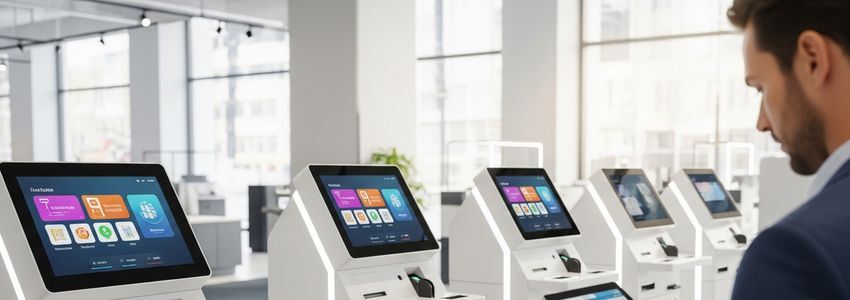
The modern consumer expects speed, convenience, and control. In industries from retail and hospitality to healthcare and logistics, self-service kiosks are no longer a novelty but a strategic necessity for meeting these expectations. They streamline operations, reduce labor costs, enhance customer experience, and open new revenue streams. However, the initial capital outlay for purchasing and installing this technology can be a significant barrier for many businesses. This is where a specialized financial tool, equipment financing for self-service kiosks, becomes essential for growth and competitiveness.
This type of financing allows businesses to acquire the kiosk hardware, software, and installation services they need without depleting their cash reserves. Instead of a large upfront payment, companies can spread the cost over a predictable term with fixed monthly payments. This approach aligns the expense of the equipment with the revenue it generates, making it a financially sustainable way to invest in technology that drives efficiency and customer satisfaction. By leveraging financing, businesses of all sizes can implement cutting-edge kiosk solutions, scale their operations, and gain a critical advantage in a rapidly evolving marketplace.
This comprehensive guide will walk you through every aspect of financing self-service kiosk installations. We will explore the types of kiosks you can finance, the significant benefits of this funding strategy, how the process works, and what your options are. Whether you are a small business looking to install your first payment kiosk or a large enterprise planning a multi-location rollout of interactive systems, understanding your financing choices is the first step toward transforming your business operations.
In This Article
- What Is Self-Service Kiosk Equipment Financing?
- Types of Kiosks You Can Finance
- Key Benefits of Financing Your Kiosk Installation
- How Kiosk Equipment Financing Works
- Your Financing Options for Kiosk Installations
- What Does It Cost to Finance a Self-Service Kiosk?
- Who Qualifies for Kiosk Equipment Financing?
- How Crestmont Capital Helps Kiosk Businesses
- Real-World Scenarios: Businesses Using Kiosk Financing
- How to Get Started
- Frequently Asked Questions
What Is Self-Service Kiosk Equipment Financing?
Self-service kiosk equipment financing is a specific type of business funding designed to help companies acquire interactive kiosk systems. It functions as a loan or lease where the funds are used exclusively for the purchase of the kiosk hardware, the necessary operating software, and often includes associated costs like shipping, installation, and initial training. This specialized financial product is a cornerstone of modern business investment, allowing companies to obtain mission-critical assets without a prohibitive upfront cash expenditure.
At its core, this financing structure is a form of secured lending. The kiosk equipment itself serves as the collateral for the loan. This is a significant advantage for many businesses, as it reduces the need for other forms of collateral, such as real estate or personal assets. If the business were to default on the payments, the lender’s primary recourse would be to repossess the financed equipment. This self-collateralizing nature makes equipment financing more accessible than many traditional bank loans, especially for businesses with limited credit history or those looking to preserve their existing lines of credit for other operational needs.
Unlike general-purpose small business loans that provide a lump sum of cash for various business needs, equipment financing is tied directly to the asset being acquired. The process typically involves the business selecting a kiosk vendor and getting a quote for the total project cost. The business then applies for financing with a lender like Crestmont Capital. Upon approval, the lender pays the vendor directly. The business then receives the equipment and begins making regular, fixed payments to the lender over an agreed-upon term, which can range from 24 to 84 months. This structure provides clarity and simplicity, as the funding is earmarked for a specific, revenue-generating asset, making it a straightforward and powerful tool for strategic growth.
Types of Kiosks You Can Finance
The versatility of self-service kiosks has led to their adoption across a vast array of industries. Consequently, equipment financing is available for nearly any type of commercial-grade kiosk, from simple payment terminals to complex, custom-built interactive systems. The technology is adaptable, and so are the financing solutions designed to help businesses acquire it. Understanding the different types of kiosks can help you identify the right solution for your business and confirm that it is eligible for financing.
Here are some of the most common categories of self-service kiosks that businesses regularly finance:
- Retail Kiosks: This is one of the largest and most diverse categories. It includes self-checkout systems that are now standard in grocery stores and big-box retailers, "endless aisle" kiosks that allow customers to order out-of-stock items, price-checking stations, and loyalty program sign-up terminals. These systems improve checkout speed, increase average order value, and free up staff to focus on higher-value customer interactions. Financing for these is a key component of modern retail business financing strategies.
- Hospitality Kiosks: Hotels, resorts, and quick-service restaurants (QSRs) are major adopters of this technology. Hotel kiosks facilitate self-check-in and check-out, key card dispensing, and concierge services, reducing front desk congestion. In restaurants, ordering and payment kiosks streamline the customer journey, improve order accuracy, and enable easy upselling of menu items.
- Healthcare Kiosks: In hospitals, clinics, and private practices, kiosks are used for patient check-in, co-pay collection, appointment scheduling, and updating patient information. This technology reduces administrative workload, minimizes patient wait times, and ensures greater accuracy in data collection, all while maintaining patient privacy.
- Financial Services Kiosks: Beyond standard ATMs, financial kiosks in bank branches or retail locations can handle a variety of tasks, including bill payments, account inquiries, and opening new accounts. These secure terminals provide customers with convenient access to banking services outside of traditional teller hours.
- Ticketing Kiosks: Cinemas, theme parks, stadiums, airports, and public transit stations rely heavily on ticketing kiosks. They allow customers to purchase and print tickets, select seats, and check in for flights or events, dramatically reducing queues and operational overhead.
- Informational and Wayfinding Kiosks: Often found in large venues like malls, university campuses, museums, and corporate buildings, these kiosks provide maps, directories, event schedules, and other critical information. They enhance the visitor experience by making navigation simple and intuitive.
- Government and Public Sector Kiosks: Government agencies use kiosks to offer services more efficiently. Common applications include DMV services for license renewal, court fee payments, and information access at public libraries or city halls.
Industry Insight: The global self-service kiosk market was valued at over $26 billion in 2023 and is projected to exceed $43 billion by 2028, according to industry analysts - making kiosk investments increasingly critical for competitive businesses.
Financing can cover not only the physical kiosk hardware but also the entire solution package. This includes the touchscreen display, computer, payment processing hardware (card readers, NFC pads), printers, scanners, and the custom software that runs the application. Additionally, costs for installation, shipping, and service contracts can often be bundled into the same financing agreement, providing a single, manageable payment for the entire project.
Key Benefits of Financing Your Kiosk Installation
Opting to finance your self-service kiosk installation instead of paying cash upfront offers a multitude of strategic financial and operational advantages. These benefits empower businesses to grow faster, manage resources more effectively, and stay ahead of the technological curve. For many companies, financing is not just an alternative to a cash purchase; it is a superior strategy for long-term success.
1. Preservation of Working Capital
This is arguably the most significant benefit. Self-service kiosks, especially for a multi-location deployment, represent a substantial capital investment. Paying cash can drain your liquidity, leaving you with less capital for other critical business needs like marketing, inventory, payroll, or unexpected opportunities. Financing allows you to keep your cash on hand, preserving your working capital and maintaining financial flexibility. This cash can then be used to fuel other growth initiatives that cannot be financed, such as a new marketing campaign or hiring key personnel.
2. Improved Cash Flow Management
Equipment financing converts a large, one-time capital expenditure into a series of smaller, predictable monthly payments. This makes budgeting and financial forecasting much simpler and more accurate. You know exactly what your payment will be each month for the entire term of the agreement. This stability allows you to manage your cash flow more effectively, aligning the cost of the kiosk with the revenue it helps generate over time. The kiosk begins paying for itself from day one, while the cost is spread out over its useful economic life.
3. Accelerated Return on Investment (ROI)
Without financing, a business might have to wait months or even years to save enough capital to purchase kiosks. This delay means missing out on the immediate benefits the technology provides, such as increased sales, reduced labor costs, and improved efficiency. Financing allows you to acquire and deploy the equipment immediately. You start reaping the rewards and generating a return on your investment right away, long before the equipment is fully paid for. This acceleration of ROI can be a powerful competitive advantage.
4. 100% Financing and Bundled Costs
Many equipment financing agreements can cover up to 100% of the kiosk project cost. This is not limited to just the hardware. The "soft costs" associated with the installation, such as software licensing, shipping, on-site installation, and employee training, can often be bundled into the same financing package. This comprehensive funding approach eliminates the need to pay for these significant expenses out-of-pocket and simplifies the entire acquisition process into one manageable payment.
5. Staying Technologically Current
Technology evolves at a blistering pace. A kiosk that is state-of-the-art today may be outdated in a few years. Financing, particularly lease options, provides a clear path for upgrading your technology. At the end of a lease term, you can choose to return the old equipment and finance a new, updated system. This prevents you from being locked into obsolete technology and ensures your business can always offer the best possible customer experience. As noted in a Forbes article on retail automation, staying current is key to meeting consumer expectations.
6. Flexible and Customizable Terms
Lenders like Crestmont Capital understand that every business is unique. They offer a variety of financing structures and repayment terms to match your specific cash flow patterns and business cycle. Whether you need a shorter term to pay off the equipment quickly or a longer term to keep monthly payments as low as possible, there is likely a financing solution that can be tailored to your needs. This flexibility is rarely available with other forms of funding.
Ready to Finance Your Kiosk Installation?
Get fast, flexible equipment financing from the #1 business lender in the U.S. No obligation - apply in minutes.
Apply Now ->How Kiosk Equipment Financing Works
The process of securing equipment financing for self-service kiosks is designed to be efficient and straightforward, allowing you to get your new technology up and running as quickly as possible. While the specific steps may vary slightly between lenders, the general workflow is consistent and focuses on speed and simplicity. Understanding this process can help you prepare and ensure a smooth experience from application to installation.
Here is a step-by-step breakdown of how kiosk financing typically works:
- Select Your Kiosk and Vendor: The first step is to do your research and decide on the specific type of kiosk and the vendor that best meets your business needs. Obtain a formal quote or invoice from the vendor that details the total cost, including the hardware, software, shipping, and any installation or training fees. This document is crucial for the financing application.
- Submit a Financing Application: The next step is to apply for financing. With modern lenders like Crestmont Capital, this is often a simple online application that can be completed in minutes. You will need to provide basic information about your business, such as its legal name, address, time in business, and estimated annual revenue. You will also submit the vendor's quote for the kiosk equipment.
- Underwriting and Approval: Once your application is submitted, the lender's underwriting team will review your business's financial profile. This typically includes a review of your business credit history, cash flow, and other factors. Because the kiosk itself acts as collateral, the approval criteria are often more flexible than those for unsecured loans. Many lenders can provide a credit decision within hours, making this one of the most accessible fast business loans available.
- Review and Sign Financing Documents: Upon approval, the lender will present you with a financing agreement. This document will outline all the key terms: the total amount financed, the interest rate or factor rate, the length of the term, and the fixed monthly payment amount. It is important to review these documents carefully. Once you are satisfied with the terms, you will sign the agreement electronically.
- Funding and Equipment Delivery: After the signed documents are received, the financing process is finalized. The lender will coordinate directly with your chosen kiosk vendor to issue payment. They will either pay the vendor the full amount upfront or follow the vendor's required payment schedule. Once the vendor is paid, they will ship and/or install your self-service kiosks. You do not have to handle the payment logistics; the lender takes care of it.
- Begin Your Repayment Schedule: Your first payment to the lender is typically due 30 days after the financing is finalized and the equipment is delivered. You will then continue to make your fixed monthly payments for the duration of the agreed-upon term. Meanwhile, your new kiosks are already in operation, improving your business and generating revenue.
For a deeper dive into the mechanics of this process, exploring the fundamentals of equipment financing basics can provide additional context and clarity.
Quick Guide
How Kiosk Equipment Financing Works - At a Glance
Submit your application with basic business details - takes just minutes.
Receive financing terms tailored to your kiosk project scope and budget.
Work directly with your kiosk vendor once approved - Crestmont handles the rest.
Start generating revenue from your kiosk from day one of operation.
Your Financing Options for Kiosk Installations
When it comes to financing self-service kiosks, businesses have several different types of agreements to choose from. Each option has a different structure, particularly concerning ownership of the equipment at the end of the term. The right choice depends on your business's long-term goals, accounting preferences, and plans for future technology upgrades. Understanding these distinctions is key to selecting the most advantageous financing solution.
1. Equipment Finance Agreement (EFA)
An EFA is a straightforward financing option that functions very much like a traditional loan. You borrow a set amount of money to purchase the kiosks, and you make fixed monthly payments of principal and interest over a predetermined term. From the beginning, you are considered the owner of the equipment for accounting purposes. Once you make the final payment, you own the kiosks free and clear. This is an excellent option for businesses that intend to use the kiosks for their entire functional lifespan and want to build equity in their assets.
2. Capital Lease ($1 Buyout Lease)
A capital lease is structurally very similar to an EFA and is often used interchangeably. It is treated as a purchase on your balance sheet. You make regular lease payments over the term, and at the end of the term, you have the option to purchase the equipment for a nominal amount, typically just $1. Because the buyout is virtually guaranteed, this option is for businesses that are certain they want to own the equipment at the end. It combines the payment structure of a lease with the end result of a loan.
3. Operating Lease (Fair Market Value Lease)
An operating lease functions more like a long-term rental. You make lower monthly payments over the term, but you do not build equity in the equipment. At the end of the lease term, you have several options: you can return the kiosks to the lender, you can renew the lease, or you can purchase the equipment for its Fair Market Value (FMV) at that time. An operating lease is an ideal choice for businesses that want to keep their technology constantly updated. It provides a simple path to acquiring the latest kiosk models every few years without the hassle of selling old equipment. The lower payments also help to improve short-term cash flow.
4. Other Business Funding Options
While specialized equipment financing is often the most efficient method, other funding tools can also be used to acquire kiosks:
- Term Loans: Traditional SBA loans or bank term loans can provide capital, but the application and funding process is typically much longer and more document-intensive. They may also require more substantial collateral beyond the equipment itself.
- Business Line of Credit: A business line of credit offers flexibility, allowing you to draw funds as needed up to a certain limit. However, interest rates are often variable and may be higher than those for a dedicated equipment loan. This option is better suited for short-term or unpredictable expenses rather than a large, planned asset purchase.
For most businesses, a dedicated equipment finance agreement or lease provides the best combination of speed, simplicity, and favorable terms specifically tailored to the acquisition of assets like self-service kiosks.
What Does It Cost to Finance a Self-Service Kiosk?
Understanding the costs associated with financing is essential for making an informed decision about your kiosk installation. The total cost of financing is determined by several key factors, including the price of the equipment, the financing term, your business's credit profile, and the type of financing product you choose. While exact figures can only be determined after an application, we can break down the primary components of the cost.
Cost Range: Self-service kiosks typically range from $1,500 for basic units to $15,000+ for full-featured interactive installations. Equipment financing lets you deploy now and pay over time from kiosk-generated revenue.
The main factors that influence the cost are:
- Interest Rates or Factor Rates: For an EFA or traditional loan, the cost is expressed as an annual interest rate. For other financing products, a factor rate might be used. A factor rate is a decimal figure (e.g., 1.15) that is multiplied by the loan amount to determine the total repayment amount. Rates are influenced by your credit score, time in business, and overall financial health. Businesses with strong credit and a long history can expect more competitive rates.
- Financing Term: The term is the length of time you have to repay the loan, typically ranging from 24 to 84 months. A longer term will result in lower monthly payments, but you will likely pay more in total interest over the life of the loan. A shorter term means higher monthly payments but a lower overall financing cost. The right term balances affordability with total cost.
- Down Payment: One of the major advantages of equipment financing is that a down payment is often not required. Many lenders offer 100% financing. However, choosing to make a down payment can reduce the total amount you need to finance, which in turn can lower your monthly payments and potentially help you secure a better interest rate.
- Fees: Some financing agreements may include one-time fees, such as an origination fee or a documentation fee. These are typically administrative charges for processing the loan. It is important to ask your lender about any potential fees so you can understand the full cost of the financing. Reputable lenders like Crestmont Capital are transparent about all costs upfront.
Hypothetical Example:
Let's illustrate with a simple example. Suppose a business wants to finance a kiosk installation totaling $25,000.
- Total Amount Financed: $25,000
- Financing Term: 60 months (5 years)
- Assumed Interest Rate: 8% per year
In this scenario, the estimated monthly payment would be approximately $507. Over the 60-month term, the total amount repaid would be around $30,420. The total cost of financing in this case would be $5,420. By paying this amount, the business was able to acquire a $25,000 revenue-generating asset immediately, without depleting its cash reserves, and spread the cost over five years with a predictable payment.
Who Qualifies for Kiosk Equipment Financing?
Kiosk equipment financing is designed to be one of the most accessible forms of business funding. Because the equipment itself serves as collateral, lenders can be more flexible in their approval criteria compared to unsecured loans. This opens the door for a wide range of businesses, from established enterprises to newer companies, to access the capital they need for technology investments. While specific requirements vary by lender, most will evaluate a few key areas of your business profile.
Here are the primary factors lenders consider during the qualification process:
- Business Credit Score: Lenders will review your business's credit history to assess its track record of managing debt. However, the minimum required score for equipment financing is often lower than for other types of loans. Many lenders work with businesses across the credit spectrum.
- Personal Credit Score: For newer businesses or sole proprietorships, the personal credit score of the business owner(s) is often a significant factor. A strong personal credit history can help a business qualify, especially if the business itself has a limited credit file.
- Time in Business: Most lenders prefer to work with businesses that have been in operation for at least one to two years. An established operational history demonstrates stability and reduces the lender's risk. However, specialized programs are often available for startups and businesses with less than two years of history, particularly if the owners have strong industry experience and good personal credit.
- Annual Revenue: Lenders want to see that your business generates sufficient revenue to comfortably handle the new monthly payment. They will look at your bank statements or financial statements to verify your cash flow. There is not always a strict minimum revenue requirement; rather, the focus is on the ratio of your existing debt obligations to your income.
- Industry: The type of industry you operate in can also play a role. Lenders are very familiar with financing kiosks for mainstream industries like retail, hospitality, and healthcare. Businesses in these sectors often find the application process to be particularly smooth.
Good News: Even businesses with less-than-perfect credit may qualify for kiosk equipment financing. Lenders like Crestmont Capital evaluate your overall business health, not just your credit score.
The accessibility of equipment financing is one of its greatest strengths. The self-collateralizing nature of the loan means that the asset you are acquiring is the primary security for the lender. This structure allows lenders to approve a higher percentage of applicants, empowering more businesses to invest in the technology they need to grow. If your business has a clear plan for how the kiosks will improve operations or generate revenue, your application will be viewed even more favorably.

How Crestmont Capital Helps Kiosk Businesses
Navigating the world of business financing can be complex, but partnering with a specialized lender can make all the difference. Crestmont Capital is a leader in equipment financing, with a deep understanding of the technology sector and the specific needs of businesses investing in self-service kiosks. Our entire process is built around speed, flexibility, and a commitment to helping our clients succeed.
Here is how Crestmont Capital provides a superior financing experience for your kiosk installation:
- Expertise in Technology Financing: We are not generalist lenders. We specialize in financing equipment, which means we understand the value of assets like self-service kiosks and the ROI they can deliver. Our team is experienced in structuring deals for technology acquisitions, ensuring you get the right terms for your specific project.
- Streamlined Application and Fast Funding: We know that in business, speed matters. Our online application takes only minutes to complete, and we often provide credit decisions within hours. Once approved, we can fund your kiosk vendor in as little as 24 hours. This efficiency means you can get your kiosks ordered and installed without unnecessary delays.
- High Approval Rates: Our focus on collateral-backed financing allows us to approve a high percentage of the applications we receive. We look at the complete picture of your business's health, not just a single credit score. We work with established companies, startups, and businesses with less-than-perfect credit to find workable financing solutions.
- Flexible and Customized Solutions: There is no one-size-fits-all solution in business. Our financing experts work with you to understand your goals and cash flow, then tailor a financing agreement to match. Whether you need a long term for low payments or a short term to build equity quickly, we structure the financing to work for you.
- Vendor-Agnostic Approach: Crestmont Capital works with any kiosk vendor you choose. We are not tied to any specific manufacturer, which gives you the freedom to select the best possible equipment for your needs. Once you have a quote from your preferred vendor, we handle the payment directly, simplifying the process for you.
Our mission is to be more than just a lender; we aim to be a long-term growth partner for your business. We provide the capital and the expertise to help you leverage technology like self-service kiosks to improve your operations, enhance your customer experience, and boost your bottom line.
Work with the #1 Business Lender in the U.S.
Crestmont Capital specializes in equipment financing for growing businesses. Get your kiosk funded fast.
Apply Now ->Real-World Scenarios: Businesses Using Kiosk Financing
To better understand the practical impact of kiosk equipment financing, it is helpful to look at how different types of businesses apply this strategy to achieve their goals. The following scenarios illustrate the versatility and power of financing as a tool for growth and modernization.
Scenario 1: The Expanding Quick-Service Restaurant (QSR) Chain
A regional QSR chain with 15 locations is facing increased competition and rising labor costs. To improve efficiency and enhance the customer experience, the leadership team decides to install two self-ordering kiosks in each location. The total project cost for 30 kiosks, including software, installation, and training, is $180,000. Paying this amount in cash would significantly impact their capital reserves, which are earmarked for a potential new location.
- Solution: The QSR chain partners with Crestmont Capital to secure an equipment finance agreement for the full $180,000. They choose a 60-month term.
- Outcome: The business avoids a large cash outlay, preserving its expansion capital. The monthly payment is easily covered by the increased revenue from improved order accuracy and upselling, plus the savings from reallocating labor. The kiosks are deployed across all locations in under two months, creating a consistent, modern experience for their customers and providing a significant competitive edge. The trend of automation in this sector, as highlighted by CNBC reports on fast-food AI, shows this is a forward-thinking move.
Scenario 2: The Independent Boutique Hotel
A 50-room boutique hotel wants to modernize its check-in process to reduce wait times during peak hours and offer guests more convenience. They decide to install a self-check-in/check-out kiosk in their lobby. The cost for a single, high-end kiosk with key card encoding capabilities is $12,000. While the hotel could pay cash, the owner prefers to keep cash on hand for seasonal marketing efforts and unexpected maintenance.
- Solution: The hotel owner applies for equipment financing and is approved for the full $12,000 with a 36-month term. The application process takes less than a day.
- Outcome: The hotel gets the new technology immediately. The monthly payment is a small, manageable operational expense. The kiosk frees up the front desk staff to provide more personalized concierge services to guests, improving overall satisfaction scores. The hotel maintains its cash reserves for other priorities while still upgrading its facilities.
Scenario 3: The Multi-Practice Medical Clinic
A growing medical clinic with three locations needs to streamline its patient intake process. The administrative staff is overwhelmed with paperwork, leading to long wait times and data entry errors. They identify a patient check-in kiosk solution that integrates with their existing Electronic Health Record (EHR) system. The project to install two kiosks per location (six total) costs $45,000.
- Solution: The clinic's practice manager secures an operating lease for the $45,000 project. They choose a 48-month lease because they know medical technology evolves quickly and they want the option to upgrade to newer models at the end of the term.
- Outcome: Patient wait times are reduced by an average of 15 minutes, and data accuracy improves significantly. The administrative staff can now focus on more complex patient needs and billing issues. The lower monthly payment of the operating lease has a minimal impact on the clinic's budget. The practice is now positioned to easily upgrade its technology in four years to stay compliant and efficient.
How to Get Started with Kiosk Equipment Financing
Complete our quick application at offers.crestmontcapital.com/apply-now - takes just a few minutes.
A Crestmont Capital advisor will review your kiosk project and match you with the right financing option.
Receive your funds and deploy your kiosks - often within days of approval.
Frequently Asked Questions
What is equipment financing for self-service kiosks?
It is a specialized loan or lease used to acquire self-service kiosk hardware, software, and related installation costs. The kiosk equipment itself serves as the collateral for the financing. This allows businesses to obtain necessary technology with predictable monthly payments instead of a large upfront cash purchase.
What types of kiosks can I finance?
You can finance virtually any type of commercial-grade kiosk. This includes self-checkout systems for retail, ordering kiosks for restaurants, patient check-in kiosks for healthcare, ticketing kiosks for entertainment venues, and informational kiosks for various industries. Both standard and custom-built solutions are eligible.
How much can I borrow to finance kiosk installations?
Financing amounts can range from as little as $5,000 for a single kiosk to several million dollars for large-scale, enterprise-level deployments. The amount you can borrow depends on the cost of the equipment and your business's financial profile. Many lenders can finance up to 100% of the project cost.
What interest rates can I expect?
Interest rates for kiosk equipment financing are competitive and vary based on your business's credit history, time in business, and the financing term. Businesses with strong credit and established history can expect to receive the most favorable rates. The best way to determine your specific rate is to submit a no-obligation application.
Do I need a down payment?
Often, no down payment is required. Many lenders, including Crestmont Capital, offer 100% financing that covers the entire cost of the kiosk project, including soft costs like installation and software. Providing a down payment is an option that can lower your monthly payments but it is typically not a requirement for approval.
What credit score do I need to qualify?
While a higher credit score will result in better terms, there is no strict minimum score for equipment financing. Lenders evaluate your entire business profile, including revenue, cash flow, and time in business. Many lenders have programs for businesses with fair or challenged credit, making it a very accessible option.
How quickly can I get funded?
The equipment financing process is exceptionally fast. After submitting a simple online application, you can often receive a credit decision within a few hours. Once you sign the financing documents, funding can be issued to your kiosk vendor in as little as 24 to 48 hours, allowing your project to move forward without delay.
What documents do I need to apply?
For most financing amounts under $250,000, the process is application-only. This means you typically only need to complete a simple one-page application and provide a quote from your kiosk vendor. For larger transactions, the lender may request additional documents such as business bank statements or financial statements.
What is the difference between equipment financing and leasing for kiosks?
The primary difference lies in ownership at the end of the term. With an equipment finance agreement or a $1 buyout lease, you own the kiosk after the final payment. With an operating lease, you have the option to return the equipment, renew the lease, or purchase it at its fair market value, making it ideal for technology that needs frequent updating.
Can startups qualify for kiosk equipment financing?
Yes, startups and businesses with less than two years of operational history can often qualify for kiosk financing. Lenders will typically place more emphasis on the personal credit scores of the business owners and may require a business plan. The fact that the loan is secured by the kiosk itself makes it less risky for lenders.
What if I have bad credit - can I still finance a kiosk?
It is still possible to secure financing with bad credit. Lenders who specialize in equipment financing are often able to provide solutions for businesses with challenged credit. They will look at other factors like your recent payment history and business cash flow to make a decision. The rates may be higher, but financing is often still within reach.
How do I choose the right financing option for my kiosk project?
The best option depends on your goals. If you plan to use the kiosks for many years and want to build equity, an equipment finance agreement (EFA) or capital lease is ideal. If you prioritize lower monthly payments and want to upgrade your technology every few years, an operating lease is likely the better choice. A financing specialist can help you decide.
Can I finance multiple kiosk installations at once?
Absolutely. Equipment financing is perfectly suited for funding both single-unit purchases and large, multi-location rollouts. You can bundle the entire project, including all hardware, software, and installation for multiple sites, into a single financing agreement with one convenient monthly payment.
What costs does kiosk equipment financing cover?
Financing can cover the total cost of the project. This includes the kiosk hardware (screens, computers, payment terminals), the operating software, and associated "soft costs" such as shipping, professional installation, on-site training for your staff, and initial service agreements.
How does financing compare to paying cash for kiosk equipment?
Financing allows you to acquire revenue-generating equipment immediately while preserving your cash for other business needs like marketing, inventory, or payroll. It converts a large capital expense into a manageable operating expense, improving cash flow. While paying cash avoids interest costs, financing provides superior financial flexibility and can accelerate your return on investment.
Ready to Deploy Your Self-Service Kiosks?
Don't let capital constraints slow your expansion. Get competitive kiosk equipment financing today.
Apply Now ->Conclusion
In today's competitive business landscape, the adoption of self-service technology is no longer a question of if, but when. Kiosks offer a powerful solution to enhance customer experience, streamline operations, and drive revenue. However, the initial investment required can seem daunting. As we have explored, equipment financing for self-service kiosks provides a strategic and accessible pathway for businesses to acquire this critical technology without compromising their financial stability.
By converting a large capital expenditure into predictable monthly payments, you can preserve your working capital for other growth initiatives, manage your cash flow effectively, and accelerate your return on investment. The process is fast, the terms are flexible, and the benefits are immediate. Whether you are a restaurant, retailer, healthcare provider, or hotel operator, financing empowers you to deploy the solutions you need to thrive now, not years down the road when you have saved the necessary capital.
The opportunity to modernize your business is here. Don't let the upfront cost of technology be the barrier that holds you back. With a trusted financing partner like Crestmont Capital, you can secure the funding you need quickly and efficiently. Take the next step toward a more efficient, profitable, and customer-centric future for your business.
Disclaimer: The information provided in this article is for general educational purposes only and is not financial, legal, or tax advice. Funding terms, qualifications, and product availability may vary and are subject to change without notice. Crestmont Capital does not guarantee approval, rates, or specific outcomes. For personalized information about your business funding options, contact our team directly.