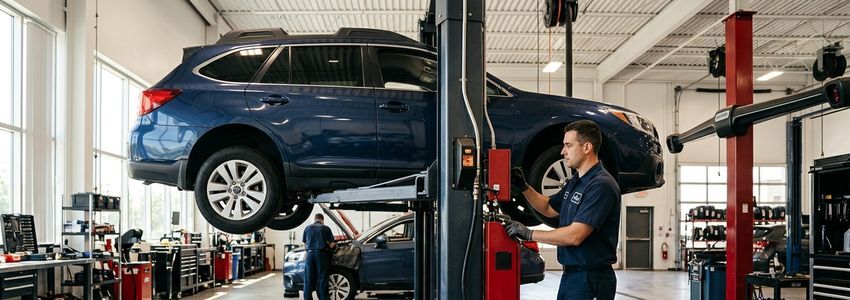
A dependable vehicle lift is the backbone of any auto repair shop, fleet maintenance facility, or tire and service center. Without one, technicians are stuck crawling under vehicles on creepers, jobs take longer, and throughput drops. Yet a single commercial-grade lift can run anywhere from $3,000 for a basic two-post model to well over $40,000 for a heavy-duty, in-ground lift built for medium and heavy trucks.
Commercial vehicle lift financing lets shop owners and fleet operators acquire this essential equipment without draining cash reserves on a single purchase. Instead of paying the full invoice upfront, financing spreads the cost into predictable monthly payments while the lift itself goes to work generating revenue from day one. This guide walks through exactly how commercial vehicle lift financing works, what it costs, how to qualify, and how to choose the right lift and lender for your shop.
In This Article
- What Is Commercial Vehicle Lift Financing?
- Benefits of Financing a Vehicle Lift
- How Commercial Vehicle Lift Financing Works
- Types of Vehicle Lifts You Can Finance
- Who Needs a Commercial Vehicle Lift?
- How Much Does a Commercial Vehicle Lift Cost?
- Financing vs. Leasing a Vehicle Lift
- How Crestmont Capital Helps
- Real-World Scenarios
- Qualifying for Vehicle Lift Financing
- Installation Costs and Considerations
- FAQ
- Your Next Steps
What Is Commercial Vehicle Lift Financing?
Commercial vehicle lift financing is a form of equipment financing designed specifically to help businesses purchase two-post lifts, four-post lifts, scissor lifts, in-ground lifts, and heavy-duty truck lifts without paying the full cost out of pocket. A lender pays the equipment vendor directly on your behalf, and you repay the balance over a fixed term through regular monthly installments.
Because the lift itself typically serves as collateral for the loan, this type of financing tends to be more accessible than an unsecured business loan. Lenders are financing a durable, income-generating asset that holds resale value, which reduces their risk and often translates into faster approvals and more flexible underwriting for the borrower.
This financing structure is used across a wide range of businesses that rely on lifting vehicles as part of daily operations, including:
- Independent auto repair shops
- Tire and alignment centers
- Quick-lube and preventive maintenance chains
- Fleet maintenance garages
- Heavy-duty truck and trailer repair facilities
- Municipal and government vehicle service bays
- Auto body and collision repair shops
- Dealership service departments
Whether you need a single two-post lift for a small independent shop or a full bay of heavy-duty in-ground lifts for a fleet maintenance facility, vehicle lift financing makes the equipment accessible without a large upfront cash outlay.
Benefits of Financing a Vehicle Lift
Paying cash for a lift might feel simpler, but for most shop owners it is not the most strategic move. Financing offers several advantages that protect your cash position while still getting the equipment installed and generating revenue.
1. Preserve Working Capital
A heavy-duty lift can easily cost $15,000 to $40,000 installed. Paying that in cash ties up money that could otherwise cover payroll, parts inventory, rent, or an unexpected repair bill. Financing keeps that capital available for the day-to-day realities of running a shop.
2. Match Payments to Revenue
A financed lift starts generating billable labor hours immediately. Structuring the purchase as a monthly payment means the equipment can effectively pay for itself through the additional throughput and revenue it creates, rather than requiring a large lump sum before a single vehicle goes up on the rack.
3. Access Higher-Quality Equipment
Financing often allows shops to afford a more capable lift than they could pay for in cash, such as a heavier-duty model rated for larger trucks or an in-ground lift that frees up floor space. Better equipment can mean faster jobs, fewer service interruptions, and the ability to take on vehicle types you previously had to turn away.
4. Potential Tax Benefits
Financed equipment that is placed into service during the tax year may qualify for accelerated depreciation treatment, and loan interest is generally treated as a deductible business expense. A tax professional can confirm exactly how this applies to your specific situation.
5. Build Business Credit
Making consistent, on-time payments on an equipment loan helps establish and strengthen your business credit profile, which can make it easier to qualify for future financing such as a business line of credit or additional equipment purchases down the road.
6. Fast, Streamlined Process
Unlike a traditional bank loan, equipment financing applications are typically simple and can be approved in hours rather than weeks, with funding often available within a few business days.
Key Stat: According to the U.S. Small Business Administration, small businesses make up the vast majority of vehicle repair and maintenance establishments nationwide, and access to affordable equipment financing is consistently cited as a top factor in whether independent shops can compete with larger chains.
Ready to Add a New Lift to Your Bay?
Get fast, flexible equipment financing from the #1 business lender in the U.S. No obligation, apply in minutes.
Apply Now →How Commercial Vehicle Lift Financing Works
The process of financing a vehicle lift is designed to be quick and straightforward. While every lender's process varies slightly, the core steps are consistent across the industry.
Step 1: Choose Your Lift and Get a Quote
Decide on the lift type, weight capacity, and configuration your shop needs, then get a formal quote from a reputable equipment vendor. This quote, which should include the equipment cost plus any freight or installation charges, is the foundation of your financing application.
Step 2: Submit a Simple Application
Most lenders, including Crestmont Capital, offer a short online application that takes just a few minutes. You will provide basic business details such as legal name, time in business, and estimated annual revenue, along with personal information for the primary owner.
Step 3: Underwriting Review
The lender's underwriting team reviews your business's financial profile and the equipment being financed. Because the lift acts as collateral, approval criteria are often more flexible than for unsecured financing, and many applicants receive a decision within hours.
Step 4: Review and Sign the Agreement
Once approved, you will receive a financing agreement outlining the loan amount, interest rate, term length, monthly payment, and any fees. Review these terms carefully before signing.
Step 5: Funding and Installation
After signing, the lender pays the equipment vendor directly. The vendor then coordinates delivery and installation of your new lift, which for most commercial lifts requires a certified installer to anchor the unit and, for in-ground models, prepare the pit.
Step 6: Begin Repayment
Your lift is now installed and generating revenue. Monthly payments typically begin around 30 days after funding and continue on a fixed schedule until the loan is paid in full, at which point you own the equipment outright.
Types of Vehicle Lifts You Can Finance
The right lift depends heavily on the type of vehicles you service and the space available in your shop. Commercial lift financing can be used to acquire any of the following common configurations.
- Two-Post Lifts: The most common lift in independent repair shops, ideal for passenger vehicles and light trucks. They are relatively affordable and take up a modest footprint.
- Four-Post Lifts: Offer a drive-on platform that is well suited for alignments, storage, and heavier vehicles. Four-post lifts are popular in tire shops and dealerships.
- Scissor Lifts: Compact, low-profile lifts often used for quick-service work like oil changes, brake jobs, and tire rotations where full lift height is not required.
- In-Ground Lifts: Installed below the shop floor, these free up overhead space and are common in high-volume shops and dealership service bays.
- Heavy-Duty Truck and Bus Lifts: Rated for medium and heavy-duty commercial vehicles, these lifts are essential for fleet maintenance garages, municipal service yards, and truck repair facilities.
- Mobile Column Lifts: A set of wireless, synchronized columns that can lift heavy trucks, buses, or specialty vehicles without a fixed installation, offering flexibility for facilities that service varied vehicle sizes.
- Motorcycle and Specialty Lifts: Smaller lifts designed for motorcycles, ATVs, and other specialty vehicles serviced by powersports and small-engine repair shops.
Whichever configuration your business needs, commercial vehicle lift financing can be structured around new or used equipment, single-lift purchases, or multi-bay installations.
Who Needs a Commercial Vehicle Lift?
Vehicle lifts are foundational equipment for any business where technicians work underneath or around vehicles on a regular basis. The following business types are the most common candidates for lift financing.
- Independent auto repair shops expanding capacity or replacing an aging lift that no longer passes safety inspection.
- Tire and alignment centers that need alignment-capable four-post lifts to serve a growing customer base.
- Fleet maintenance operations servicing company-owned vehicles, delivery vans, or municipal fleets that require heavy-duty capacity.
- Trucking and logistics companies bringing preventive maintenance in-house instead of outsourcing to third-party shops.
- New shop owners outfitting a facility for the first time and needing to equip multiple bays at once.
- Dealership service departments adding capacity to reduce customer wait times and increase service revenue.
By the Numbers
Commercial Vehicle Lift Financing: Key Numbers
$3K–$45K
Typical cost range for commercial vehicle lifts, from basic two-post units to heavy-duty in-ground models
80%
Approximate share of U.S. businesses that use some form of financing to acquire equipment (Equipment Leasing and Finance Association)
24–72 Mo
Typical financing term range for commercial equipment loans
24–48 Hrs
Common funding timeline once a financing agreement is signed
How Much Does a Commercial Vehicle Lift Cost?
Lift pricing varies significantly based on lift type, weight capacity, and brand. Here is a general breakdown of what shop owners can expect to pay for the equipment itself, before installation.
- Two-post lift (light duty): $2,500 to $6,000
- Four-post lift: $4,000 to $10,000
- Scissor lift: $2,000 to $5,000
- In-ground lift: $8,000 to $20,000, plus pit construction
- Heavy-duty truck lift (mobile column or in-ground): $15,000 to $45,000 depending on capacity and configuration
On top of the equipment cost, shops should budget for delivery, certified installation, electrical work if required, and any concrete or pit work for in-ground models. A financing package can typically roll these "soft costs" into the total loan amount, so the full project is covered by a single monthly payment rather than a separate cash outlay for installation.

Pro Tip: Always confirm your intended lift's weight rating against the heaviest vehicle you plan to service, including full load weight for trucks and vans. Undersizing a lift is one of the most common and costly mistakes shop owners make.
Financing vs. Leasing a Vehicle Lift
Shop owners generally have two paths to acquiring a lift without paying cash upfront: financing to own, or leasing. Both are valid strategies, but they serve different goals.
| Feature | Financing (Loan) | Leasing |
|---|---|---|
| Ownership | You own the lift outright at the end of the term. | Return, renew, or buy out the lift at term end. |
| Monthly Payment | Typically higher since you are paying toward full ownership. | Often lower, reflecting only the depreciation over the lease term. |
| Best For | Shops planning to use the lift for its full working life (10+ years). | Shops that prefer to upgrade equipment periodically or minimize upfront commitment. |
| Long-Term Cost | Generally lower over time if the lift is kept long-term. | Can cost more over the long run if buying out equipment at lease end. |
Because commercial lifts are durable equipment that can last 15 to 20 years or more with proper maintenance, most shop owners lean toward financing to own rather than leasing. Crestmont Capital offers both equipment financing and equipment leasing so you can choose the structure that fits your long-term plans.
How Crestmont Capital Helps
Crestmont Capital specializes in equipment financing for auto repair, fleet maintenance, and service center businesses across the country. Rather than navigating a slow, paperwork-heavy bank process, our clients get a simple online application, fast underwriting decisions, and funding that can arrive within days.
We work with businesses across the full spectrum of credit profiles and time in business, and we structure financing around the equipment itself rather than requiring extensive collateral outside of the lift being purchased. Our commercial equipment financing and leasing programs are designed specifically for scenarios like a new lift purchase, and our team can also help structure financing for related needs such as working capital to cover installation, electrical upgrades, or hiring an additional technician to keep the new bay running at full capacity.
For shops that also service other lift-dependent equipment, our guides to car lift financing, lift rack financing, and scissor lift financing break down financing specifics for those particular configurations. If your shop qualifies for government-backed lending, our SBA loan programs may also be a fit for larger, multi-bay buildouts.
Get Your Shop Running at Full Capacity
See your custom financing options for a new commercial vehicle lift in minutes. Applying will not impact your credit score.
Get a Free Quote →Real-World Scenarios
Scenario 1: The Independent Shop Adding a Second Bay
A two-bay independent repair shop is turning away work because both of its two-post lifts are constantly booked. The owner finances a third two-post lift for $5,500 with a 48-month term. The additional bay allows the shop to take on roughly four extra vehicles per day, generating enough incremental labor revenue to cover the new monthly payment within the first few weeks of operation.
Scenario 2: The Fleet Operator Bringing Maintenance In-House
A regional delivery company has been outsourcing preventive maintenance on its 20-vehicle fleet to a third-party shop, paying a premium for labor and losing vehicles to downtime during transport. The company finances a heavy-duty mobile column lift system for $32,000, allowing its own mechanics to service the fleet on-site. Within a year, the reduction in outsourced labor costs and downtime more than offsets the financing payments.
Scenario 3: The Tire Shop Upgrading for Alignments
A tire and alignment center has been referring alignment work to a competitor because its existing lifts cannot accommodate alignment equipment. The owner finances a four-post alignment-ready lift for $9,200, immediately capturing alignment revenue that was previously walking out the door to a nearby shop.
Scenario 4: The New Shop Opening With Multiple Bays
An entrepreneur opening a new four-bay repair shop needs to equip every bay at once. Rather than depleting the startup's cash reserves, the owner finances a package of four lifts, bundling the equipment cost, delivery, and certified installation into a single 60-month loan with one predictable monthly payment.
Scenario 5: The Municipality Replacing an Aging Lift
A city public works department has a 22-year-old in-ground lift that recently failed a safety inspection. Rather than waiting on a lengthy municipal procurement and budget cycle, the fleet manager arranges equipment financing to replace the lift immediately, keeping city vehicles serviced on schedule while the replacement is worked into the following year's capital budget.
Qualifying for Vehicle Lift Financing
Because the lift itself typically secures the loan, qualification requirements for commercial vehicle lift financing tend to be more accessible than unsecured business loans. Lenders generally evaluate the following factors.
1. Credit Score
Both personal and business credit history are reviewed. A stronger credit profile generally leads to better rates, but many lenders, including Crestmont Capital, offer programs for a range of credit backgrounds.
2. Time in Business
Most lenders prefer at least one to two years of operating history, though financing options exist for newer businesses, particularly when the owner has strong personal credit or relevant industry experience.
3. Annual Revenue
Lenders want to see revenue sufficient to comfortably support the new monthly payment. Recent bank statements or tax returns are typically used to verify this.
4. Equipment Value and Type
Since the lift serves as collateral, lenders also consider the resale value and durability of the specific equipment being financed. Established brands with strong resale markets are viewed favorably.
5. Existing Debt Load
Lenders assess your current obligations to confirm your business can absorb an additional monthly payment without financial strain.
Important Note: Crestmont Capital is not a tax advisor. Always consult a qualified accountant or tax professional to determine how equipment financing and depreciation rules apply to your specific business.
Installation Costs and Considerations
Rising materials and labor costs have made installation budgeting more important than ever. Reuters has reported extensively on how commercial construction and skilled labor costs have climbed in recent years, a trend that affects everything from concrete pit work to certified lift installation labor. Beyond the lift itself, installation is a major factor in total project cost, particularly for in-ground models that require pit excavation and concrete work.
Above-ground two-post and four-post lifts are generally less complex to install, often requiring only anchoring to an existing concrete floor and, in some cases, an electrical hookup for hydraulic power units.
Key installation considerations include:
- Floor thickness and condition: Most lift manufacturers require a minimum concrete thickness and cure time before installation, especially for heavier-duty models.
- Ceiling height: Ensure adequate clearance for the vehicle types you plan to service once fully raised.
- Electrical requirements: Hydraulic lifts typically require a dedicated circuit; confirm your shop's electrical capacity before ordering.
- Certified installation: Many manufacturers require installation by a certified technician to maintain warranty coverage and meet safety standards.
- Permits and inspections: Local jurisdictions may require permits or inspections, particularly for in-ground installations.
A well-structured financing package can bundle the equipment cost with delivery, installation labor, and any necessary electrical or concrete work into a single loan, simplifying budgeting for the entire project. Publications like Forbes have highlighted how equipment financing has become an increasingly popular tool for small business owners looking to preserve cash while still investing in growth-critical assets.
Frequently Asked Questions
What is commercial vehicle lift financing?
Commercial vehicle lift financing is a form of equipment financing that allows businesses to purchase a two-post, four-post, in-ground, or heavy-duty vehicle lift and repay the cost over time through fixed monthly payments rather than paying the full price upfront.
How much does a commercial vehicle lift cost?
Costs vary by type and capacity. Basic two-post lifts start around $2,500, while heavy-duty in-ground or truck-rated lifts can run $20,000 to $45,000 or more, not including installation.
Can I finance used vehicle lifts?
Yes. Both new and used commercial vehicle lifts can typically be financed, provided the used equipment is in good working condition and has a reasonable remaining useful life. Financing used equipment can lower your total project cost.
What credit score do I need to finance a vehicle lift?
While a credit score above 650 typically secures the best rates, many equipment lenders, including Crestmont Capital, offer programs for a range of credit profiles depending on other factors like time in business and revenue.
How long does it take to get approved and funded?
Many applicants receive a decision within a few hours, with funding to the equipment vendor available in as little as 24 to 48 hours after signing the financing agreement.
Do I need a down payment to finance a vehicle lift?
Not necessarily. Many qualified businesses can secure 100% financing with no down payment required, although providing one can lower monthly payments and may help secure more favorable terms.
What is the difference between financing and leasing a lift?
Financing builds toward full ownership of the lift at the end of the term. Leasing typically offers lower monthly payments but does not result in automatic ownership; at lease end you can return, renew, or buy out the equipment.
Can startups or new shops get vehicle lift financing?
Yes, financing is available for new shops, though lenders will place additional weight on the owner's personal credit history and industry experience. Terms may differ slightly from those offered to established businesses.
Can installation costs be included in the financing?
In most cases, yes. Delivery, certified installation, and related electrical or concrete work can typically be rolled into the total loan amount, simplifying the project into one monthly payment.
What loan terms are typically available?
Terms generally range from 24 to 72 months. Shorter terms carry higher monthly payments but lower total interest cost, while longer terms lower the monthly payment but increase total interest paid over the life of the loan.
Does applying for financing hurt my credit score?
Most initial applications use a soft credit pull that does not affect your score. A hard credit pull typically only occurs once you decide to move forward with a specific financing offer.
What size lift do I need for heavy trucks?
Heavy-duty vehicles typically require lifts rated for 30,000 pounds or more, often in the form of mobile column lift sets or heavy-duty in-ground systems. Always confirm the rated capacity against your heaviest fully loaded vehicle.
Can I finance multiple lifts at once for a new shop?
Yes. Many shop owners bundle multiple lifts into a single financing agreement when outfitting a new facility or expanding an existing one, combining equipment, delivery, and installation into one loan.
Are there prepayment penalties on equipment financing?
This varies by lender and agreement. Some loans carry prepayment penalties while others do not, so it is important to confirm this detail with your financing specialist before signing.
What types of businesses commonly finance vehicle lifts?
Independent auto repair shops, tire and alignment centers, fleet maintenance garages, trucking companies, dealership service departments, and municipal service yards are among the most common businesses financing vehicle lifts.
Stop Turning Away Work
Get the lift your shop needs today with financing built around your business, not a bank's paperwork pile.
Apply Now →Your Next Steps
- Assess Your Needs: Determine the lift type and weight capacity required for the vehicles you service.
- Get a Formal Quote: Contact a reputable equipment vendor for a detailed invoice including delivery and installation.
- Review Your Finances: Have recent bank statements and a general sense of your business credit standing ready.
- Complete a Quick Application: Submit a no-obligation online application to see your customized financing options.
- Consult a Financing Specialist: Speak with a Crestmont Capital team member to finalize the terms that work best for your shop.
Conclusion
A new or upgraded vehicle lift can be the difference between turning away business and running a shop at full capacity. Commercial vehicle lift financing makes it possible to acquire the right equipment for your bay today, without draining the cash reserves your business needs for everyday operations. With a straightforward application process, fast approvals, and terms built around the equipment itself, financing is often the smartest path to getting a new lift installed and generating revenue in a matter of days, not months.
Disclaimer: The information provided in this article is for general educational purposes only and is not financial, legal, or tax advice. Funding terms, qualifications, and product availability may vary and are subject to change without notice. Crestmont Capital does not guarantee approval, rates, or specific outcomes. For personalized information about your business funding options, contact our team directly.