Hops farm financing gives commercial hop growers access to the capital they need to build trellis systems, purchase harvesting equipment, install irrigation, buy land, and cover seasonal operating costs. Whether you are establishing your first hop yard or expanding a multi-generational operation, the right financing structure lets you align repayment with the slow, steady revenue cycle of a perennial crop.
Hop farming is capital intensive in a way most crops are not. A single acre of commercial hops can cost $12,000 or more to establish before the first cone is ever picked, and new plantings typically need two to three seasons to reach full production. That gap between upfront investment and meaningful revenue is exactly where specialized agricultural financing earns its keep.
This guide covers every major financing option available to hops growers in 2026, from equipment loans and working capital to land financing, SBA programs, and business lines of credit. You will learn what each option costs, who qualifies, what lenders look for, and how to structure funding so your hop farm can scale without draining cash reserves.
In This Article
- What Is Hops Farm Financing?
- Why Hops Farming Requires Specialized Financing
- Key Benefits of Hops Farm Financing
- How Hops Farm Financing Works
- Types of Hops Farm Financing
- What Hops Farm Financing Can Cover
- Costs and Rates
- Who Qualifies
- How Crestmont Capital Helps
- Real-World Scenarios
- How to Apply
- FAQ
What Is Hops Farm Financing?
Hops farm financing is any form of business funding designed to support the establishment, operation, or expansion of a commercial hop yard. It spans several loan products, including equipment financing, working capital loans, agricultural real estate loans, SBA-backed loans, and revolving lines of credit, each structured to match a specific cost on the farm.
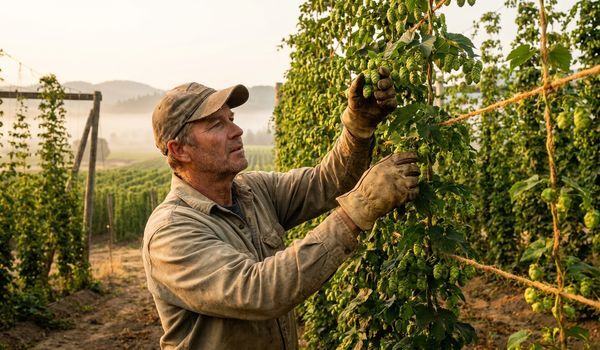
What makes financing a hop farm different from financing a typical small business is the biology of the crop itself. Hops are a perennial climbing plant, technically a bine rather than a vine, grown on tall trellis systems that can reach 16 to 20 feet. The plants produce harvestable cones each year, but a new hop yard does not reach commercial yield until its second or third season. Lenders who understand agriculture structure repayment around that reality, while lenders who do not will often misprice the risk.
For growers, hops farm financing solves a simple problem: the costs of a hop farm arrive years before the revenue does. Rhizomes, poles, cable, hardware, irrigation, and labor must all be paid for in year one, while the first meaningful hop contracts typically cannot be fulfilled until year three. Financing bridges that gap so the farm can build to full capacity without exhausting the owner's personal capital.
Why Hops Farming Requires Specialized Financing
The economics of hops farming look nothing like the economics of annual row crops, and that difference drives the entire financing conversation. Understanding why lenders treat hop yards as a specialty category will help you approach the right funding sources with the right expectations.
Establishment costs are front-loaded and substantial. Industry estimates consistently place the cost of establishing a commercial hop yard at $10,000 to $15,000 or more per acre once you account for trellis poles, aircraft cable, hardware, drip irrigation, rhizome stock, planting labor, and land preparation. A modest 20-acre yard can easily require $250,000 or more before a single pound of hops is sold.
Revenue is delayed by design. First-year plantings typically produce 20 to 40 percent of a mature yield, and some growers choose not to harvest commercially at all in year one to let the root system develop. That means a new hop farm carries real debt service for 12 to 24 months before it generates reliable income, which is why terms, deferrals, and seasonal payment structures matter so much.
The harvest window is brutally short. Hops across the Northern Hemisphere come down in a window of roughly six to eight weeks, usually mid-August through September. Picking, stripping, drying, and conditioning equipment must work flawlessly during that window, and seasonal labor costs spike all at once. Financing that aligns with this seasonality, such as annual lines of credit for harvest labor, keeps the crop from being stranded on the bine.
The market rewards scale and quality simultaneously. While the Pacific Northwest still dominates U.S. production, with Washington State alone accounting for roughly 70 percent or more of the national crop, craft breweries in every region have created demand for local and estate-grown hops. Capturing that demand requires processing infrastructure: kilns for drying, conditioning rooms, pellet mills, and cold storage. Each of those assets is financeable, and each one moves the farm further up the value chain.
Key Benefits of Hops Farm Financing
Used strategically, financing does far more than plug a cash hole. For hops growers it is a growth tool that changes what the farm can produce, when, and for whom. The core benefits include:
- Preserve working capital. Financing fixed assets like trellis systems and harvesters keeps cash free for payroll, nutrients, pest management, and the hundred small expenses that arrive every season.
- Match payments to harvest revenue. Agricultural lenders and specialty finance companies can structure annual or seasonal payments that land after your crop is sold, rather than monthly obligations that pile up in the off-season.
- Reach full production faster. Borrowing to plant more acreage now, rather than self-funding a few acres per year, lets the farm reach commercial scale while hop contracts and brewery relationships are available to win.
- Capture more value per pound. Financing drying, pelletizing, and cold storage equipment lets you sell processed, brewer-ready hops at a premium instead of selling wet hops at commodity prices.
- Build business credit. Successfully managing farm financing builds the credit profile that makes future expansions cheaper and faster to fund.
- Protect against weather and market swings. A line of credit in place before the season starts is a safety net when mildew pressure, hail, or a soft spot market squeezes margins.
Key Stat: Washington's Yakima Valley and the broader Pacific Northwest produce the overwhelming majority of America's hops, with Washington State alone accounting for roughly 70 percent of U.S. production. Regional growers elsewhere increasingly compete on freshness, local contracts, and estate varieties, all of which require upfront investment in infrastructure that financing can cover.
How Hops Farm Financing Works
While every lender has its own process, hops farm financing generally follows the same arc from application to funding. Knowing the sequence in advance lets you prepare documents and set realistic timelines.
Step 1: Define the funding need. Start with a specific, costed purpose: 30 acres of new trellis, a used hop harvester, a drying kiln, or $80,000 in seasonal working capital. Lenders fund defined projects far more readily than vague growth plans, and the purpose determines which loan product fits.
Step 2: Gather your financials. Expect to provide two to three years of business tax returns if available, recent bank statements, a current balance sheet, and any hop contracts or letters of intent from breweries or merchants. New operations substitute a detailed business plan with realistic yield and price assumptions.
Step 3: Apply with a lender that understands agriculture. Farm credit institutions, agricultural banks, SBA lenders, and specialty business lenders like Crestmont Capital all serve growers. The right choice depends on speed, the asset being financed, and how established your operation is.
Step 4: Underwriting and approval. The lender evaluates credit history, cash flow, collateral, and the viability of the operation. Equipment loans are secured by the equipment itself, which often makes them the fastest approval. Working capital and land loans involve deeper review.
Step 5: Funding and deployment. Equipment financing can fund in days once approved. SBA loans take longer, often 30 to 90 days, but reward patience with longer terms and lower rates. A line of credit, once established, is drawn and repaid as the season demands.
Step 6: Repayment aligned with the crop. Many agricultural financing structures allow annual or semi-annual payments timed to post-harvest cash flow. Confirm the payment calendar before signing, and make sure it lands after your buyers pay, not before.
Ready to Grow Your Hop Yard?
Get fast, flexible financing from the #1 business lender in the U.S. No obligation - apply in minutes.
Apply Now →Types of Hops Farm Financing
No single loan product covers everything a hop farm needs. Most successful growers combine two or three of the following structures, matched to specific assets and timelines.
Equipment Financing
Equipment financing is the workhorse of hops farm funding. Hop harvesters, picking machines, stripper-sorting lines, balers, kilns, pellet mills, tractors, sprayers, and cold storage units all qualify. The equipment itself serves as collateral, which keeps approval fast and rates competitive. Terms typically run three to seven years, matching the useful life of the machinery. Our farm equipment financing programs are built for exactly this kind of agricultural machinery.
Working Capital Loans
Working capital loans fund the operating rhythm of the farm: seasonal labor during harvest, rhizomes and planting stock, nutrients, pest and mildew management, packaging, and freight. These are shorter-term products, often six to 24 months, designed to be repaid from the current or upcoming crop.
Business Lines of Credit
A business line of credit is the most flexible tool a hop grower can hold. Draw what you need for harvest labor in August, repay after your buyers pay in October, and the line stands ready for spring inputs. You pay interest only on what you draw, making it the cheapest form of standby capital for a seasonal business.
SBA Loans
SBA-backed loans, particularly the SBA 7(a) loan program, offer hop farms long terms up to 10 years for working capital and equipment, and up to 25 years for real estate, at some of the lowest rates available to small businesses. The trade-off is paperwork and timeline: expect 30 to 90 days from application to funding. For established farms making a major land or facility purchase, the wait is usually worth it. Our guide to agricultural business loans and farm financing covers these programs in more depth.
Agricultural Real Estate and Land Loans
Buying farmland is a different conversation from buying equipment. Agricultural real estate loans carry terms of 10 to 30 years and are sized against the land's appraised value and the operation's projected income. For hop growers, land loans often fund the initial farm purchase or the acquisition of adjacent acreage for expansion.
Contract and Purchase Order Financing
Hop farming runs on forward contracts. When a brewery or hop merchant commits to buying your crop one to three years out, that contract is an asset. Some lenders will advance against signed purchase contracts, letting you fund the inputs needed to fulfill them. This structure is especially useful for newer farms whose balance sheets are thin but whose order book is strong.
| Financing Type | Typical Term | Best For | Funding Speed |
|---|---|---|---|
| Equipment financing | 3-7 years | Harvesters, kilns, tractors, cold storage | Days |
| Working capital loan | 6-24 months | Seasonal labor, inputs, freight | Days |
| Business line of credit | Revolving | Ongoing seasonal cash flow | Days to 2 weeks |
| SBA 7(a) loan | Up to 10 years (25 for real estate) | Major expansion, land, facilities | 30-90 days |
| Agricultural real estate loan | 10-30 years | Land purchase and farm acquisition | 30-60 days |
What Hops Farm Financing Can Cover
Every hop yard is different, but the capital needs of the operation cluster into a predictable set of categories. Nearly all of them are financeable.
Trellis systems and yard establishment. The trellis is the single largest establishment cost on a hop farm. Poles, earth anchors, aircraft cable, coir or wire strings, hardware, and the specialized labor to raise an 18-foot structure across dozens of acres add up fast. Financing lets you establish the full yard in one season rather than phasing it over years.
Irrigation infrastructure. Hops are thirsty plants, and consistent moisture drives both yield and alpha acid development. Drip systems, pumps, mainlines, filtration, and water storage all qualify under irrigation equipment financing, often packaged with the broader yard build-out.
Harvest equipment. Mechanical harvesters and picking machines are the heart of a commercial hop operation. Small-scale pull-type harvesters start in the tens of thousands of dollars, while stationary picking lines with stripping, sorting, and cleaning capacity can run into the hundreds of thousands. This is the most common single equipment loan a hop farm takes on.
Drying, conditioning, and processing. Wet hops begin degrading within hours of picking. Kilns and oast houses for drying, conditioning rooms for moisture stabilization, pellet mills, hammer mills, nitrogen-flush packaging lines, and lab equipment for alpha acid testing all move your product from field to brewer-ready form.
Cold storage. Hops hold their quality only when kept cold. On-farm cold rooms and freezer warehouses protect the crop's alpha acids and oils through the selling season, and they are straightforward assets to finance.
Land and facilities. Farmland purchase, expansion acreage, barns, processing buildings, and farm shop space are typically financed through real estate products or SBA 504-style structures with long amortization.
Seasonal operating capital. Harvest labor, rhizomes, coir string, nutrients, scouting and pest management, packaging materials, and freight to merchants or breweries. Short-term working capital and lines of credit keep these covered between crop payments.
Brewery-side partnerships. A growing number of hop farms co-invest with their anchor customers. As craft breweries expand production capacity, sometimes through options like brewing equipment financing, they lock in multi-year hop contracts, and those contracts in turn support the grower's financing application. The two sides of the supply chain fund their growth together.
By the Numbers
Hops Farming in the U.S. - Key Statistics
~70%
Share of U.S. hop production grown in Washington State
2-3 Yrs
For a new hop yard to reach full commercial production
$12K+
Typical establishment cost per acre for a commercial hop yard
1,800 lbs
Approximate average dried hop yield per acre at maturity
Hops Farm Financing Costs and Rates
What you pay for hops farm financing depends on the product, your credit profile, time in business, and the collateral involved. Rather than chase a single advertised rate, smart growers compare the total cost of capital against the return the financed asset will produce.
Equipment financing for established farms with good credit typically lands in the mid-single digits to low double digits, with the machinery securing the loan. Working capital and short-term products price higher because they are repaid from one or two crop cycles. SBA loans sit at the low end of the market but demand the strongest documentation. Lines of credit price on what you actually draw, which makes them inexpensive to hold and slightly more expensive to use.
Two factors move your rate more than any others. The first is credit: a farm run by an owner with a 700-plus personal credit score and clean business history will always price better than a thin-file operation. The second is collateral: a hop harvester with strong resale value supports better terms than an unsecured working capital advance.
It also pays to think in seasons, not months. A loan with a slightly higher rate but an annual payment timed to December, after your buyers have paid, will serve a hop farm better than a cheaper loan with monthly payments that strain spring cash flow. Structure is a form of cost, and growers should negotiate both.
For planning purposes, the SBA publishes guidance on calculating your startup costs that translates well to hop yard establishment budgeting, and the Census Bureau's Statistics of U.S. Businesses program offers useful benchmarks on how agricultural businesses of different sizes spend and borrow.
Who Qualifies for Hops Farm Financing?
Qualification standards vary by product, but most lenders evaluate hop farm applications against the same core criteria:
- Personal credit. A score of 650 or higher opens most equipment financing programs. SBA loans generally want 680 or above. Scores below that do not end the conversation, but they narrow the options and raise the cost.
- Time in business. Two or more years of operating history unlocks the best terms. Newer farms lean harder on the strength of their business plan, hop contracts, and the owner's agricultural experience.
- Revenue and cash flow. Lenders want to see that the operation can service debt from crop sales. For expanding farms, multi-year hop purchase contracts with breweries or merchants are powerful evidence of future revenue.
- Collateral. Equipment, land, and in some structures the crop itself secure the financing and improve both approval odds and pricing.
- Agricultural experience. An owner with farming or hop production background de-risks the application. First-generation growers strengthen their file with agronomy support, mentorships, or an experienced farm manager.
New hop operations sometimes assume financing is out of reach until they have three years of tax returns. That is not accurate. Equipment loans secured by machinery, and contract financing secured by signed hop purchase agreements, are both accessible to well-prepared first-time growers. The application simply carries more weight on the plan and the contracts than on history.
How Crestmont Capital Helps Hops Growers
Crestmont Capital has spent a decade financing the equipment and working capital needs of American small businesses, including farms and agricultural operations across the country. As the #1 rated business lender in the U.S., our role is to make the funding side of hop farming fast, straightforward, and matched to the seasonality of your crop.
For machinery, our equipment financing programs cover new and used harvesters, kilns, pellet mills, tractors, sprayers, and cold storage, with terms matched to the asset's working life. Approvals are fast because the equipment secures the loan, and we work with both established yards and first-time growers.
For the operating rhythm of the farm, we structure working capital and revolving credit around your harvest calendar. That means funding land preparation in spring, carrying you through the labor spike in late summer, and repaying when your buyers pay in the fall. We also fund the processing side of the operation: drying, conditioning, pelletizing, and packaging equipment that lets you sell a finished, brewer-ready product.
Growers who follow our work on specialty crop financing will recognize the same pattern we described in our lavender farm financing guide: a perennial crop with delayed revenue, a short harvest window, and a premium processing opportunity. Hops fit that model closely, and our team structures funding accordingly.
The process starts with a short application. A funding specialist reviews your operation, your contracts, and the specific asset or working capital need, then matches you with the structure that fits. Many approvals complete within days, which matters when a used harvester hits the market in June and you need to move before another grower does.
Get the Equipment Your Hop Farm Needs
From harvesters to kilns to cold storage, finance it with terms built around your harvest calendar.
Apply Now →Real-World Hops Farm Financing Scenarios
Abstract loan terms only go so far. These five scenarios, drawn from the most common situations we see across the hop industry, show how financing structures map to real farm decisions.
Scenario 1: The Yakima Valley Expansion
A fourth-generation Washington grower runs 80 acres of mature aroma hops and has a three-year contract offer from a regional craft brewery for 60,000 pounds a year. Fulfilling it means planting 25 new acres: roughly $300,000 in trellis, drip irrigation, rhizomes, and planting labor, plus another $175,000 for a second harvester to handle the added volume in the pick window. A combination of equipment financing on the harvester and an agricultural term loan on the yard build-out covers the full project, with payments structured annually after the brewery's November settlement. The contract revenue services the debt with room to spare by the second harvest.
Scenario 2: The First-Generation Michigan Hop Yard
A career-changer with fifteen years of homebrewing and two seasons apprenticing on an Oregon hop farm buys 40 acres of suitable Michigan farmland. The plan: 12 acres of hops in year one, scaling to 30 by year three. An SBA 7(a) loan funds the land and initial establishment, sized to the business plan's conservative yield assumptions. Equipment financing follows in year two for a pull-type harvester and a small drying kiln. The owner's lack of operating history is offset by the apprenticeship, a signed letter of intent from two local breweries, and a realistic, agronomist-reviewed crop plan.
Scenario 3: The Processing Upgrade in Oregon
A 150-acre Willamette Valley operation has been selling dried whole-leaf hops at commodity prices for years. The owners want to capture pellet margins instead: a pellet mill, hammer mill, nitrogen-flush packaging line, and a 5,000-square-foot cold room, a package totaling just over $800,000. Equipment financing covers the machinery over seven years, and a real estate loan covers the cold storage building. The per-pound price improvement pays the debt service, and the farm's contract negotiations improve because brewers strongly prefer the stability and handling of properly stored pellets.
Scenario 4: The Seasonal Crunch in Idaho
An established Idaho grower faces a common squeeze: a hail-damaged crop last year drained reserves, and this season's harvest labor bill is coming due with buyers paying 60 days after delivery. Rather than cut picking crews and risk the crop, the farm draws $120,000 on an existing business line of credit in late August, covers payroll and freight, and repays the line in full when the merchant checks arrive in November. Total interest cost: a few thousand dollars to protect a seven-figure crop.
Scenario 5: The Estate Hop and Agritourism Play
A New York couple runs a small brewery on their farm and wants to plant eight acres of estate hops, both to supply their own kettle and to sell fresh-hop ales as a harvest-season draw. The project blends uses: trellis and irrigation for the yard, a small harvester shared with a neighboring farm, and cold storage sized for their own brewing schedule. A single equipment and working capital package funds the build, sized to the brewery's existing revenue rather than the new hop sales, which keeps approval simple.
Pro Tip: Apply for harvest-season working capital in spring, not in August. Lenders can move fast, but the cleanest approvals and best pricing go to farms that apply while their books are quiet, their bank statements are healthy, and there is no deadline pressure. A line of credit approved in April sits ready all season and costs nothing until you draw it.
How to Apply for Hops Farm Financing
The farms that get funded fastest treat the application as a project of its own. Here is the practical sequence, and what lenders are actually looking for at each step.
1. Build the numbers first. Before any application, assemble a one-page funding request: what you are buying, what it costs, what it will produce, and when the revenue arrives. For a yard expansion, that means per-acre establishment costs, projected yields by year, and the contract or market you will sell into. For equipment, the make, model, price, and the capacity it adds.
2. Assemble the standard document set. Most lenders ask for the same core file: two to three years of business and personal tax returns where available, three to six months of business bank statements, a current balance sheet, a debt schedule, and any hop contracts or letters of intent. New operations add a business plan with realistic financial projections.
3. Know your credit position. Pull your personal and business credit before applying. Errors are common, and a surprise 40-point hit is far easier to fix before an underwriter sees it than after. If your score is below the mid-600s, ask upfront which products remain open rather than applying blind.
4. Match the product to the purpose. Equipment loans for machinery. Lines of credit for seasonal flow. Term loans or SBA products for land and buildings. Applications that mix purposes into one oversized request stall; applications that match structure to need move.
5. Apply with a lender who knows agriculture. A lender who understands what a hop harvester is, why your revenue arrives in one quarter, and what a forward contract is worth will underwrite your farm on its real strengths. That expertise is the difference between an approval structured around your crop and a decline from someone reading a generic scorecard.
6. Close, deploy, and communicate. Once funded, keep your lender informed, especially in the first year. Farms that report progress build the relationship that makes the next round of financing faster and cheaper.
Frequently Asked Questions
What is hops farm financing? +
Hops farm financing is any business funding used to establish, operate, or expand a commercial hop yard. It includes equipment loans for harvesters and processing machinery, working capital for seasonal costs, lines of credit for cash flow, SBA loans for major expansion, and agricultural real estate loans for land purchases. Each product is structured to match a specific cost on the farm.
How much does it cost to start a hops farm? +
Establishing a commercial hop yard typically costs $10,000 to $15,000 or more per acre, covering trellis systems, irrigation, rhizome stock, and planting labor. A 20-acre yard can require $250,000 or more in establishment capital before equipment, and harvesters, kilns, and cold storage add significantly to that total. Most growers finance these costs rather than paying cash.
Can I get a loan to buy hop harvesting equipment? +
Yes. Hop harvesters, picking machines, stripping and sorting lines, balers, kilns, pellet mills, tractors, and cold storage units are all standard equipment financing collateral. The machinery itself secures the loan, which keeps approvals fast and terms competitive, typically over three to seven years. Both new and used equipment qualify.
What credit score do I need for hops farm financing? +
Most equipment financing programs look for a personal credit score of 650 or higher, while SBA loans generally prefer 680 or above. Lower scores do not automatically disqualify you, particularly when strong collateral, signed hop contracts, or solid farm revenue support the application, but options narrow and pricing rises.
Do hops farms qualify for SBA loans? +
Yes. Hop farms are eligible small businesses under SBA rules. The SBA 7(a) program funds working capital, equipment, and real estate with terms up to 10 years for equipment and 25 years for real estate, and the SBA 504 program covers major fixed assets like processing facilities and cold storage buildings. Expect a 30 to 90 day timeline and thorough documentation.
How long does it take for a hop yard to become profitable? +
Most hop yards reach full commercial production in their second or third season. First-year plantings typically yield 20 to 40 percent of mature volume. Profitability usually follows in year three or four, once yields stabilize and establishment debt is being serviced from contracted sales. Financing structures that defer or seasonally align payments help bridge the early years.
Can I finance the purchase of farmland for hops? +
Yes. Agricultural real estate loans and SBA 504 structures both fund farmland purchases, with terms of 10 to 30 years. Lenders size the loan against the appraised land value and the projected income of the operation. Established farms expanding into adjacent acreage are typically the strongest candidates, though well-prepared new growers also qualify.
What can hops farm financing be used for? +
Nearly every farm cost is financeable: trellis systems, drip irrigation, rhizomes and planting stock, harvest equipment, drying kilns, conditioning rooms, pellet mills, packaging lines, cold storage, land, buildings, seasonal labor, nutrients, pest management, and freight. The key is matching each cost to the right product, since equipment, real estate, and operating expenses each have purpose-built financing structures.
How do hop growers finance seasonal labor costs? +
Most growers cover harvest-season labor with a business line of credit or a short-term working capital loan. The line is drawn in August and September to pay picking crews, then repaid when breweries and merchants settle in the fall. Because interest accrues only on the drawn balance, this is the most cost-effective way to handle a concentrated seasonal expense.
What are typical interest rates for farm equipment financing? +
Rates vary with credit, time in business, and collateral, but established farms with good credit typically see equipment financing in the mid-single digits to low double digits. SBA-backed loans price at the low end of the market, while unsecured working capital prices higher. Structure matters as much as rate: payments timed to post-harvest cash flow are worth negotiating even at a slightly higher price.
Can first-generation hop growers with no farming history qualify? +
Yes, though the application leans on different strengths. Without operating history, lenders weight the business plan, realistic yield projections, the owner's agricultural training or mentorship, signed hop purchase contracts, and collateral. Equipment loans and contract-based financing are the most accessible entry points for well-prepared new growers.
How much can I borrow for a hops farm? +
Loan sizes range from $25,000 working capital lines to multi-million dollar packages for land, yard establishment, and processing infrastructure. Equipment financing typically covers 80 to 100 percent of the machinery cost. The ceiling on any application is set by the operation's ability to service the debt from projected revenue, so strong contracts and realistic yield models directly raise your borrowing power.
Is financing available for hop processing equipment like kilns and pellet mills? +
Absolutely. Drying kilns, conditioning rooms, pellet mills, hammer mills, nitrogen-flush packaging lines, and lab testing equipment all qualify as standard equipment financing. Processing assets are among the best investments a hop farm can finance because they convert a commodity crop into a premium, brewer-ready product with meaningfully higher per-pound prices.
What documents do I need to apply for hops farm financing? +
The standard set includes two to three years of business and personal tax returns where available, three to six months of business bank statements, a current balance sheet, a schedule of existing debts, and any hop contracts or letters of intent from buyers. New operations add a business plan with financial projections. Equipment purchases also need a quote or invoice for the machinery.
How fast can a hop farm get funded? +
Equipment financing and working capital can fund within days of approval, and some approvals complete in 24 to 48 hours for well-documented applicants. Lines of credit typically take one to two weeks to establish. SBA loans are the slow lane at 30 to 90 days but deliver the longest terms and lowest rates. Apply well before the season you need the capital, especially for harvest-season needs.
How to Get Started
Complete our quick application at offers.crestmontcapital.com/apply-now - takes just a few minutes.
A Crestmont Capital advisor will review your operation, your contracts, and your funding needs, then match you with the right financing structure.
Receive your funds and put them to work on the farm, often within days of approval.
Ready to Finance Your Hops Farm?
Join the growers who fund their trellises, harvesters, and harvest crews with Crestmont Capital.
Apply Now →The Bottom Line on Hops Farm Financing
Hops farming rewards patience, but it punishes undercapitalization. The growers who thrive are the ones who build their yards to full size, buy the right harvest and processing equipment, and keep working capital ready for the six-week sprint that decides the whole year. Hops farm financing exists to make all three possible without draining the reserves that keep a farm resilient.
The right structure depends on where your operation stands: equipment loans for machinery, lines of credit for the season, term loans and SBA programs for land and facilities, and contract financing for growers whose order books outrun their balance sheets. Match each cost to its purpose-built product, apply before the season forces your hand, and work with a lender who understands agriculture.
Crestmont Capital finances hop farms and agricultural businesses across the country, from first-time growers planting their initial yard to established operations scaling into processing. If you are ready to fund the next stage of your hops farm, apply today and talk with a specialist who knows the crop.
Disclaimer: The information provided in this article is for general educational purposes only and is not financial, legal, or tax advice. Funding terms, qualifications, and product availability may vary and are subject to change without notice. Crestmont Capital does not guarantee approval, rates, or specific outcomes. For personalized information about your business funding options, contact our team directly.

Allan Garfinkle
Allan Garfinkle is the Chief Revenue Officer at Crestmont Capital, where he has spent more than a decade leading revenue strategy, business development, and operational growth. With 28 years of experience building and advising startups and small businesses, Allan has helped more than 10,000 business owners navigate financing decisions, growth opportunities, and changing economic conditions. He earned a Bachelor of Science in Economics and an MBA with a concentration in Finance from Northeastern University, as well as a Juris Doctor from New England Law, where his studies focused on contracts and business law. His writing draws on extensive practical experience in small-business lending, equipment financing, business credit, and commercial finance.