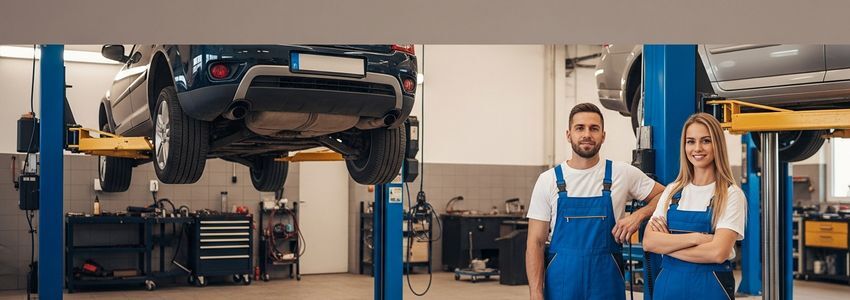
For any auto repair shop, the vehicle lift is the centerpiece of the operation. It is the single most important piece of equipment that dictates your shop's efficiency, service capabilities, and ultimately, your profitability. Upgrading to a new lift or adding more lifts to expand your capacity is a critical step for growth, but the significant upfront cost can be a major hurdle. This is where car lift financing becomes an indispensable tool for savvy shop owners. By financing this essential equipment, you can acquire the assets you need to grow your business now, preserving your cash for other operational needs. This comprehensive guide will walk you through every aspect of auto lift financing, from understanding the benefits and types of lifts to navigating the application process and choosing the right financial partner.
In This Article
- What Is Car Lift Financing?
- Benefits of Financing a Car Lift
- Types of Car Lifts You Can Finance
- How Car Lift Financing Works
- Who Qualifies for Car Lift Financing?
- Financing vs. Leasing vs. Buying Outright
- How Crestmont Capital Helps Auto Repair Shops
- Real-World Scenarios
- How to Apply for Financing
- Frequently Asked Questions
- Conclusion
What Is Car Lift Financing?
Car lift financing is a specific category of equipment financing that allows auto repair shop owners to acquire one or more vehicle lifts without paying the full purchase price upfront. Instead of depleting your working capital, you make regular monthly payments over a predetermined term. At the end of the term, you typically own the equipment outright. This financial product is designed to help businesses manage cash flow while investing in assets that generate revenue.
This type of financing is not a traditional bank loan. It is a specialized agreement tailored to the lifecycle and value of the equipment being purchased. Lenders who specialize in auto shop equipment financing, like Crestmont Capital, understand the value these lifts bring to your business. The lift itself serves as the collateral for the loan, which often simplifies the application process and can lead to higher approval rates compared to unsecured loans.
There are several structures for auto lift financing, the most common being an Equipment Finance Agreement (EFA). An EFA is a straightforward loan where you are the owner of the equipment from day one, and you make payments to the lender. Another popular option is a $1 Buyout Lease, which functions very similarly to a loan. You make lease payments for the term, and at the end, you can purchase the lift for a nominal fee of $1. Both options are designed to result in your ownership of the asset, allowing you to build equity in your shop's equipment.
Whether you are looking for two post lift financing for a new bay or a comprehensive package for a full shop build-out, these financing solutions are flexible. They can cover not only the cost of the lift itself but also associated expenses like delivery, installation, and even initial training, bundling everything into one manageable monthly payment.
Benefits of Financing a Car Lift
Choosing to finance a vehicle lift for your auto repair shop offers a multitude of strategic advantages that go far beyond simply avoiding a large one-time expense. It is a business growth strategy that empowers you to improve operations, increase revenue, and maintain financial stability. Here are the key benefits:
- Preserve Your Cash Flow: Cash is the lifeblood of any small business. Tying up thousands of dollars in a single equipment purchase can leave you vulnerable to unexpected expenses or unable to seize other opportunities. Financing allows you to keep your cash on hand for payroll, marketing, inventory, or emergencies. This financial flexibility is crucial for both stability and growth.
- Immediate Return on Investment (ROI): A new car lift starts generating revenue from the moment it is installed. By financing, your new equipment can pay for itself through the increased business it brings in. The additional jobs you can complete each month can easily exceed your monthly financing payment, resulting in a positive cash flow from the investment immediately.
- Gain a Competitive Edge: Modern, efficient, and specialized lifts allow you to service a wider range of vehicles and perform jobs faster. Having a heavy-duty four-post lift lets you work on commercial fleet vehicles, while a new, faster two-post lift increases your daily car count. This expanded capability and efficiency puts you ahead of competitors who are working with outdated or limited equipment.
- Significant Tax Advantages: In the United States, Section 179 of the IRS tax code allows businesses to deduct the full purchase price of qualifying equipment purchased or financed during the tax year. This means you could potentially deduct the entire cost of your new car lift on your taxes, providing a substantial financial incentive. Always consult with a tax professional to understand how this applies to your specific business situation.
- Predictable, Fixed Monthly Payments: Auto lift financing typically comes with a fixed interest rate and a fixed term, meaning your monthly payment never changes. This makes budgeting and financial forecasting simple and predictable. You can plan your expenses with confidence, knowing exactly what your equipment costs will be each month.
- Build Business Credit: Making consistent, on-time payments on an equipment financing agreement helps build a positive credit history for your business. A strong business credit profile makes it easier and more affordable to secure other types of small business financing in the future, such as a business line of credit or working capital loans.
- 100% Financing Options: Many financing programs cover the total cost of the equipment, including soft costs like taxes, shipping, and installation. This means you can often acquire the lift with little to no money down, further preserving your capital and making essential upgrades more accessible than ever.
Types of Car Lifts You Can Finance
The world of automotive lifts is diverse, with different designs engineered for specific tasks, vehicle types, and shop layouts. Fortunately, auto shop equipment financing is available for virtually every type of new or used lift on the market. Understanding the options helps you choose the right equipment to finance for your shop's unique needs.
Two-Post Lifts: The most common type of lift found in auto repair shops, two-post lifts offer excellent access to the vehicle's wheels, brakes, and undercarriage. They are versatile and space-efficient. They come in two main configurations: symmetric, where the posts are directly opposite each other, and asymmetric, where the posts are rotated and the arms are different lengths to allow for better door-opening clearance.
Four-Post Lifts: These lifts support the vehicle by its tires on two runways, making them extremely stable and ideal for wheel alignments, general service on heavier vehicles, and long-term vehicle storage. They are simple to use as you just drive the vehicle onto the runways. Alignment lifts are equipped with turn plates and slip plates to allow for precise suspension adjustments.
Scissor Lifts: Known for their compact footprint, scissor lifts are perfect for shops with limited space or low ceilings. They come in various forms, including mid-rise lifts for tire, brake, and body work, and full-rise lifts that can raise a vehicle high enough for undercarriage work. Some models are designed for wheel alignment as well.
In-Ground Lifts: Offering the cleanest and most unobstructed floor space, in-ground lifts are recessed into the shop floor when not in use. They provide excellent access to all parts of the vehicle and a highly professional look. While the installation is more complex and costly, their operational efficiency and space-saving design are significant advantages.
Mobile Column Lifts: These consist of individual lifting columns (typically in sets of two, four, or six) that can be moved around the shop and positioned at each wheel of a large vehicle. They are the preferred solution for lifting heavy-duty vehicles like buses, RVs, and commercial trucks, offering flexibility and massive lifting capacity.
Parking & Storage Lifts: These are typically four-post lifts designed to maximize parking space by lifting one vehicle up to allow another to be parked underneath. They are a great solution for shops that offer vehicle storage services or need to manage space in a crowded lot.
| Lift Type | Best For | Typical Capacity Range | Average Cost Range (New) |
|---|---|---|---|
| Two-Post Lift | General repair, brake/wheel work, undercarriage access | 9,000 - 18,000 lbs | $4,000 - $10,000 |
| Four-Post Lift | Wheel alignments, heavy vehicles, vehicle storage | 12,000 - 40,000+ lbs | $6,000 - $25,000 |
| Scissor Lift | Tire shops, detailers, quick service, limited space | 6,000 - 12,000 lbs | $3,000 - $15,000 |
| In-Ground Lift | High-volume shops, professional appearance, clear floor space | 10,000 - 75,000+ lbs | $12,000 - $30,000+ |
| Mobile Column Lift | Heavy-duty trucks, buses, RVs, fleet maintenance | 36,000 - 144,000+ lbs (per set) | $25,000 - $80,000+ |
How Car Lift Financing Works
The process of securing car lift financing is designed to be much faster and more straightforward than a traditional bank loan. Lenders specializing in equipment financing prioritize speed and simplicity to help you get your revenue-generating equipment as quickly as possible. While specifics can vary by lender, the general process follows four key steps:
- Step 1: Select Your Equipment. First, you need to identify the exact make and model of the car lift(s) you want to purchase. Work with an equipment vendor to get a formal quote or invoice. This document will include the price of the lift, as well as any costs for shipping, installation, and taxes. Having this quote ready is essential for the application.
- Step 2: Complete a Simple Application. The next step is to fill out a financing application. Most modern lenders, like Crestmont Capital, offer a simple one-page online application that can be completed in minutes. You will provide basic information about your business, such as its legal name, address, time in business, and estimated annual revenue, along with your personal information as the owner.
- Step 3: Review Your Financing Offers. Once your application is submitted, the lender's underwriting team will review your business's financial health and credit profile. For amounts under $250,000, this is often an automated or expedited process, and you can receive a decision within hours. The lender will present you with one or more financing offers, detailing the approved amount, term length (e.g., 24, 36, 48, or 60 months), and the fixed monthly payment.
- Step 4: Sign Documents and Receive Funding. After you select the offer that works best for your budget, you will receive the final financing documents for review and signature. These are typically sent electronically for convenience. Once you sign the agreement, the lender will work directly with your chosen equipment vendor to coordinate payment. The vendor is funded, your lift is shipped and installed, and you begin making your simple monthly payments to the lender.
Auto Repair Industry: By the Numbers
$81+ Billion
Annual revenue of the U.S. Auto Repair & Maintenance industry. (Forbes)
240,000+
Number of automotive repair and maintenance businesses operating in the United States. (U.S. Census Bureau)
3.2% CAGR
Projected compound annual growth rate for the global automotive lift market through 2030.
Who Qualifies for Car Lift Financing?
One of the most significant advantages of working with a specialized equipment financing company is the flexible qualification criteria. Unlike traditional banks that often have rigid requirements, alternative lenders look at a more holistic picture of your business's health. This makes auto lift financing accessible to a wide range of auto repair shops, from brand-new startups to established multi-location operations.
Here are the primary factors that lenders consider:
Credit Score: While a strong personal and business credit score will always help you secure the best rates and terms, it is not the only factor. Many lenders offer programs for various credit profiles. At Crestmont Capital, we have options for business owners with excellent credit, as well as those with past challenges. If you have a lower credit score, you may be asked to provide additional documentation or a slightly higher down payment, but financing is often still achievable. We offer specific solutions for equipment financing with bad credit.
Time in Business: Most lenders prefer to work with businesses that have been operating for at least two years, as this demonstrates a track record of stability. However, many lenders, including Crestmont Capital, have dedicated programs for startup businesses. If your shop has been open for less than two years, you may need to provide a detailed business plan, and the owner's personal credit history will play a more significant role in the decision.
Annual Revenue: Lenders want to see that your business generates enough revenue to comfortably afford the new monthly payment. There is not always a strict minimum revenue requirement, but a healthy and consistent cash flow is a strong positive indicator. Bank statements are often used to verify revenue and assess the financial health of the business.
Industry Experience: For new auto shops, the owner's personal experience in the auto repair industry is a crucial factor. If you are a seasoned mechanic with years of experience opening your first shop, lenders view this as a significant strength, as it indicates you have the expertise to run the business successfully.
Equipment Type and Cost: The value and type of the lift being financed also play a role. Because the equipment itself serves as collateral, financing a standard, high-quality lift from a reputable brand can sometimes be easier than financing highly specialized or custom equipment. The total amount being financed will also influence the underwriting requirements.
Ready to Upgrade Your Shop?
Get the car lifts you need to boost productivity and profits. Our simple application takes just minutes.
Apply Now →Car Lift Financing vs. Leasing vs. Buying Outright
When it comes to acquiring a new car lift, you have three primary options: financing it, leasing it, or buying it outright with cash. Each method has distinct advantages and disadvantages, and the best choice depends on your shop's financial situation, long-term goals, and philosophy on equipment ownership.
Key Consideration: The primary difference between financing and a true lease lies in ownership. Financing is a path to ownership, while a true lease is essentially a long-term rental.
Buying Outright (Cash Purchase)
Paying cash is the most straightforward option. You own the equipment from day one with no debt or monthly payments. While this sounds ideal, it requires a significant capital outlay that can strain your business's finances. This cash might be better used for marketing, hiring technicians, or covering unexpected operational costs. While you avoid interest payments, you lose the opportunity to invest that cash elsewhere for a potentially higher return.
Financing
As discussed throughout this guide, financing allows you to acquire the lift with minimal upfront cost and pay for it over time. You build equity with each payment and own the asset at the end of the term. This preserves your cash flow and allows the equipment to generate revenue that covers its own cost. You can also take advantage of tax deductions like Section 179. The primary downside is the total cost will be higher than a cash purchase due to interest.
Leasing (True Lease / Fair Market Value Lease)
A true lease, often called a Fair Market Value (FMV) lease, is different from a $1 buyout lease. With an FMV lease, you are essentially renting the equipment for a set term. The monthly payments are typically lower than financing payments because you are only paying for the depreciation of the lift during the lease term, not its full value. At the end of the term, you have several options: you can return the equipment, renew the lease, or purchase the lift at its then-current fair market value, which could be a substantial amount. This option is best for businesses that want to constantly have the latest technology and prefer lower monthly payments without the commitment of ownership.
| Factor | Car Lift Financing (EFA) | True Lease (FMV) | Buying Outright (Cash) |
|---|---|---|---|
| Ownership | You own the equipment at the end of the term (or from day one). | Lender retains ownership. You have the option to buy at term end. | You own the equipment immediately. |
| Upfront Cost | Low to none. Typically first and last month's payment. | Low to none. First payment often required. | 100% of the total cost. |
| Monthly Payment | Higher than a true lease, as it covers the full equipment cost. | Lowest monthly payment. | None. |
| Tax Benefits | Can take advantage of Section 179 deduction for full purchase price. | Lease payments are typically treated as an operating expense and are fully deductible. | Can take advantage of Section 179 deduction. |
| End of Term | You own the lift free and clear. | Return, renew, or purchase at Fair Market Value. | You continue to own the asset. |
| Best For | Shops that want to own their assets for the long term. | Shops wanting the lowest payment and the ability to upgrade frequently. | Shops with very strong cash reserves that want to avoid debt. |
How Crestmont Capital Helps Auto Repair Shops Get Financed
Choosing the right financing partner is just as important as choosing the right car lift. You need a lender that understands the unique challenges and opportunities of the auto repair industry. Crestmont Capital specializes in providing fast, flexible, and reliable auto shop equipment financing for businesses of all sizes across the nation.
Our approach is built on a foundation of speed and service. We know that when you need a new lift, you need it now-not in a few weeks or months. Our streamlined online application and rapid underwriting process mean you can get a credit decision in hours and funding in as little as 24 hours. This allows you to secure your equipment from the vendor and get it installed in your shop without delay.
We pride ourselves on our flexible financing solutions. We offer a variety of terms, from 24 to 72 months, allowing you to choose a payment plan that fits your shop's budget. We finance both new and used equipment from any vendor, dealer, or private seller, giving you the freedom to choose the exact lift that is right for your business. Furthermore, our programs are designed to accommodate a wide spectrum of credit profiles, from pristine credit to those who have faced financial hurdles in the past.
At Crestmont Capital, you are not just a number. You will be assigned a dedicated financing specialist who will guide you through the entire process, answer your questions, and work to find the best possible financing structure for your specific situation. We understand that a new vehicle lift is an investment in your shop's future, and we are committed to providing the financial tools you need to make that investment a success.
Real-World Scenarios: How Financing Works for Shops Like Yours
To better understand the practical impact of car lift financing, let's explore three common scenarios that auto repair shop owners face.
Scenario 1: The Startup - "Mike's First Garage"
Mike has been a successful mobile mechanic for five years and is finally ready to open his first brick-and-mortar two-bay shop. He has secured a lease and has enough capital for his first and last month's rent, business licenses, and some initial marketing. However, buying two brand new two-post lifts for $12,000 cash would wipe out his reserves. Instead, Mike applies for startup equipment financing. Despite having a new business, his strong personal credit and years of industry experience make him a good candidate. He is approved for 100% financing on a 60-month term. His monthly payment is approximately $290. This allows him to keep his cash for operating expenses. The two lifts enable him to service more cars per day than he ever could as a mobile mechanic, and the additional revenue easily covers the financing payment, helping his new business become profitable from the start.
Scenario 2: The Expansion - "Chloe's Growing Business"
Chloe owns a thriving three-bay shop that is constantly booked. She has the opportunity to take over the adjacent unit in her building, allowing her to expand to six bays. To equip the new space, she needs two additional two-post lifts and one heavy-duty four-post alignment rack, with a total equipment cost of $28,000. Paying cash would halt her ability to hire the two new technicians she needs. Chloe works with Crestmont Capital and secures an equipment finance agreement. Because her business has been established for six years with strong, verifiable revenue, she gets a very competitive rate on a 48-month term. The financing covers the lifts, the alignment machine, and the installation costs. The expansion doubles her shop's capacity, significantly increasing her revenue and market share.
Scenario 3: The Upgrade - "Dave's Modernization Project"
Dave's Auto Repair has been a community staple for 25 years. His lifts, however, are almost as old as the business. They are slow, leak hydraulic fluid, and lack modern safety features, which worries his technicians and slows down their work. Dave decides it is time to upgrade all four of his lifts to new, high-speed, ALI-certified models, costing $35,000. He uses financing to acquire all four at once. His monthly payment is manageable, and the investment pays off immediately. His technicians are safer, happier, and more efficient, increasing the shop's daily car count by 25%. Furthermore, he is able to use the Section 179 deduction to write off the full $35,000 expense on his taxes for that year, providing a significant financial benefit. The modern, clean look of the new lifts also improves customer confidence in his shop.
See Your Financing Options Today
Don't let upfront costs hold your business back. Discover how affordable a new vehicle lift can be.
Get a Free Quote →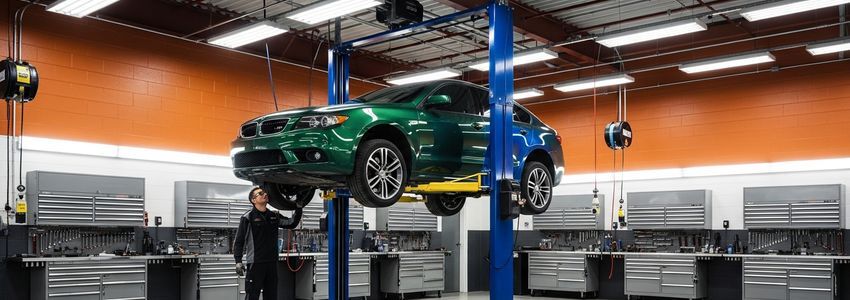
How to Apply for Car Lift Financing
Applying for financing for your auto shop's new lift is a quick and efficient process. By following these steps, you can move from selection to installation in a surprisingly short amount of time.
Gather Your Information
Before you start, have some basic information handy. This includes your business's legal name, address, tax ID (EIN), and the owner's personal contact information. It is also helpful to have the quote or invoice from your chosen equipment vendor, as you will need the exact cost of the lift you want to finance.
Complete the Online Application
Navigate to the lender's website and fill out their secure online application. Crestmont Capital's application is a single page and takes only a few minutes to complete. This is a "soft pull" inquiry, which means it will not affect your credit score. Be sure to provide accurate information to ensure a smooth underwriting process.
Speak with a Financing Specialist
Shortly after you submit your application, a dedicated financing specialist will contact you. They will confirm the details, discuss your business needs, and present you with the financing options you have been approved for. This is your opportunity to ask questions about term lengths, monthly payments, and the final agreement.
Finalize and Get Funded
Once you have chosen your preferred financing term, you will receive the final documents for e-signature. After the documents are signed, the lender will pay your equipment vendor directly. The vendor will then schedule the delivery and installation of your new car lift, and you are ready to start increasing your shop's productivity and revenue.
Frequently Asked Questions About Car Lift Financing
1. What exactly is car lift financing?
Car lift financing is a type of business loan or lease specifically used to purchase automotive lifts for a commercial repair shop. Instead of paying the full price in cash, you make fixed monthly payments over a set term. The lift itself serves as collateral, and at the end of the financing term, you typically own the equipment.
2. What types of car lifts can I finance?
You can finance virtually any type of new or used car lift, including two-post lifts, four-post lifts, scissor lifts, alignment racks, in-ground lifts, and heavy-duty mobile column lifts. Reputable lenders can finance equipment from any manufacturer or dealer of your choice.
3. Is a down payment required for auto lift financing?
In many cases, no significant down payment is required. Financing programs often require only the first and last month's payment upfront. Some programs may offer 100% financing with zero money down for well-qualified businesses. A down payment might be requested for startups or businesses with challenged credit.
4. What credit score do I need to qualify?
While a higher credit score (650+) will result in better rates, financing is available for a wide range of credit profiles. Many lenders, including Crestmont Capital, have programs for business owners with credit scores in the 500s. Factors like time in business, revenue, and industry experience are also heavily considered.
5. How fast can I get approved and funded?
The process is very fast. With a simple online application, you can often receive a credit decision within a few hours. Once you sign the financing documents, funding can happen in as little as 24 hours. The entire process from application to the vendor getting paid can take just 1-2 business days.
6. Can I finance a used car lift?
Yes, most equipment financing companies will finance the purchase of used car lifts. This can be a great way to save money on your initial investment. The lender may want to verify the condition and fair market value of the used equipment, but the process is very similar to financing new equipment.
7. Can I finance multiple lifts at once?
Absolutely. You can bundle multiple pieces of equipment into a single financing agreement. This is ideal for shops that are expanding, opening a new location, or performing a major equipment upgrade. It simplifies the process and gives you one convenient monthly payment.
8. What documents are needed to apply?
For financing under $250,000, the process is often application-only, meaning you only need to fill out the one-page application. For larger amounts, or for newer businesses, you may be asked to provide the last 3-6 months of business bank statements and the invoice for the equipment you are purchasing.
9. Can a startup auto repair shop get financing?
Yes, startup programs are available. Lenders will place more emphasis on the owner's personal credit score and industry experience. A well-written business plan and some form of down payment or collateral can also strengthen a startup's application.
10. What's the difference between a hydraulic car lift lease and financing?
The main difference is ownership. A financing agreement (like an EFA or $1 Buyout Lease) is structured for you to own the lift at the end of the term. A true lease (or FMV lease) is a rental agreement where you have the option to buy the lift at its fair market value at the end. Leases often have lower payments but do not build equity.
11. What are typical interest rates for car lift financing?
Interest rates vary widely based on your credit score, time in business, and the financing term length. Rates can be as low as 6-8% for top-tier applicants and higher for those with more risk factors. Your financing specialist will provide a clear monthly payment quote rather than just an interest rate.
12. How long are the typical financing terms?
Terms typically range from 24 to 60 months (2 to 5 years). Some lenders may offer longer terms, such as 72 months, for larger financing amounts. A shorter term will have a higher monthly payment but lower total interest paid, while a longer term offers a more affordable payment.
13. What happens if my business closes before the term is over?
If your business closes, you are still responsible for the remaining payments on the financing agreement, as it is a binding contract. The lender may have the right to repossess the equipment to cover the outstanding debt. It is important to choose a payment you can comfortably afford to minimize this risk.
14. Can I refinance my existing car lift loan?
In some cases, it may be possible to refinance an existing equipment loan, especially if your business's credit and financial standing have significantly improved since you took out the original loan. This could potentially lower your monthly payment. You can also consolidate multiple equipment loans into a single new loan using a working capital loan.
15. Why choose Crestmont Capital over a bank or another lender?
Crestmont Capital specializes in equipment financing for industries like auto repair. This means we offer a faster, more flexible process with higher approval rates than traditional banks. We understand the value of your equipment and work quickly to get you the funding you need with personalized service and competitive terms.
Your Next Steps to a Better-Equipped Shop
Apply Online in Minutes
Complete our secure, no-obligation application. It's fast, easy, and won't impact your credit score.
Speak with a Specialist
Review your custom financing options with a dedicated expert who understands the auto repair industry.
Get Funded and Grow
Sign your documents electronically and we'll pay your equipment vendor. It's that simple.
Your Next Lift is Just a Click Away
Join hundreds of auto shop owners who have grown their business with Crestmont Capital.
Apply Now →Conclusion: A Smart Investment in Your Shop's Future
Investing in the right equipment is fundamental to the success and growth of any auto repair shop. A high-quality vehicle lift for auto repair is not a luxury-it is a necessity that directly impacts your efficiency, service offerings, and bottom line. While the initial cost can seem daunting, car lift financing provides a powerful and accessible solution. It allows you to acquire the exact equipment you need to stay competitive and grow your business, all while preserving your precious cash flow for the day-to-day demands of running your shop.
By transforming a large capital expenditure into a predictable and affordable monthly payment, you can let your new equipment pay for itself through increased productivity and revenue. Whether you are a startup opening your first bay, an established shop expanding your footprint, or a veteran owner upgrading outdated tools, a strategic financing plan is your key to unlocking the next level of success. At Crestmont Capital, we are dedicated to helping you make that happen with financial solutions tailored to the real-world needs of auto repair shop owners.
Disclaimer: The information provided in this article is for general educational purposes only and is not financial, legal, or tax advice. Funding terms, qualifications, and product availability may vary and are subject to change without notice. Crestmont Capital does not guarantee approval, rates, or specific outcomes. For personalized information about your business funding options, contact our team directly.