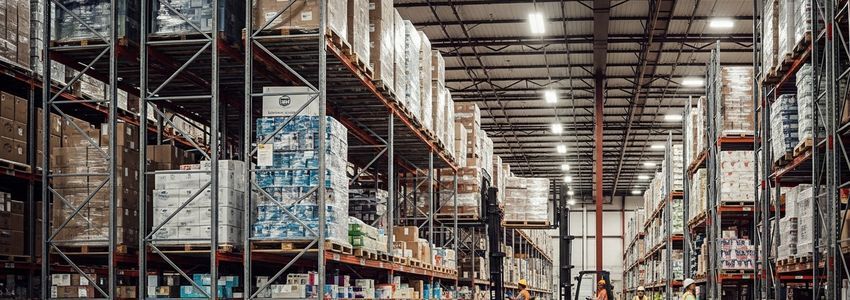
Efficient warehouse storage is the backbone of any successful logistics, manufacturing, or retail operation. As your business grows, the need for optimized space becomes critical, and pallet racking systems are the key to unlocking that potential. However, the significant upfront cost of a new or expanded pallet rack system can strain capital reserves, which is where pallet rack financing offers a strategic solution to acquire necessary assets without depleting cash flow.
In This Article
- What Is Pallet Rack Financing?
- Key Benefits of Financing Pallet Racks
- How Pallet Rack Financing Works
- Types of Pallet Rack Financing Options
- Who Qualifies for Pallet Rack Financing?
- Costs and Rates
- How Crestmont Capital Can Help
- Real-World Scenarios
- How to Get Started
- Frequently Asked Questions
- Conclusion
What Is Pallet Rack Financing?
Pallet rack financing is a specific type of business funding designed to help companies acquire warehouse storage systems through loans or leases. Instead of paying the full cost upfront, businesses can make predictable monthly payments over a set term. This financial tool covers the cost of the racking itself, as well as associated expenses like design, engineering, delivery, and installation.
This form of funding falls under the broader category of equipment financing, where the pallet racking system serves as the collateral for the loan. This secured nature often makes it easier to qualify for than traditional unsecured loans. It allows businesses of all sizes, from startups setting up their first warehouse to large corporations expanding their distribution centers, to access the essential infrastructure they need to operate efficiently and scale effectively.
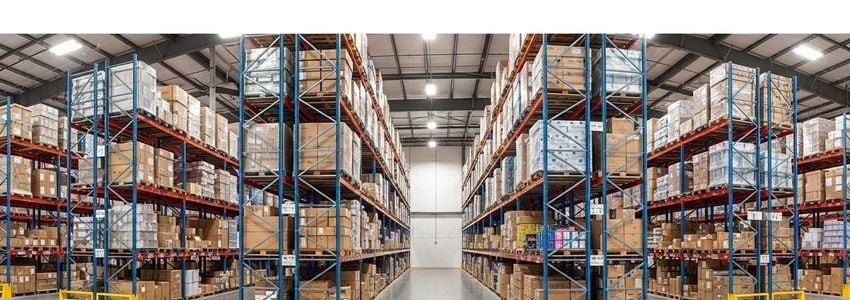
The scope of pallet rack financing is comprehensive. It is not limited to just one type of racking. Businesses can finance a wide array of storage solutions, including selective pallet racks, drive-in or drive-through racks, push-back racks, pallet flow systems, and cantilever racks. This flexibility ensures that you can acquire the specific system that best suits your inventory type, throughput requirements, and warehouse layout, all while preserving your working capital for other critical business needs.
Key Benefits of Financing Pallet Racks
Opting for pallet rack financing over an outright cash purchase provides numerous strategic advantages that can significantly impact your business's financial health and operational agility. These benefits extend far beyond simple cost deferral, offering a pathway to smarter growth and improved resource management. By leveraging financing, you can equip your facility with the best possible storage solution without compromising your financial stability.
Preserve Cash Flow and Working Capital
The most immediate and compelling benefit of financing is the preservation of liquid capital. A large-scale pallet rack installation can represent a substantial capital expenditure, potentially tying up tens or even hundreds of thousands of dollars. By financing this cost, you keep that cash available for other core business activities like inventory acquisition, marketing campaigns, hiring new staff, or covering unexpected operational expenses.
This improved liquidity provides a crucial buffer, enhancing your company's financial resilience. Instead of a single, massive cash outlay, you have a predictable, manageable monthly payment that can be easily integrated into your operational budget. This allows for better financial planning and reduces the risk associated with large, one-time investments.
Significant Tax Advantages
Financing equipment like pallet racking can offer powerful tax incentives. Under Section 179 of the IRS tax code, businesses may be able to deduct the full purchase price of qualifying equipment and software financed or purchased during the tax year. This means you could potentially deduct the entire cost of your pallet rack system from your gross income, significantly lowering your tax liability for the year.
Additionally, the interest paid on the loan or lease payments is typically tax-deductible as a business operating expense. These combined tax benefits can substantially reduce the net cost of acquiring the equipment. It is always advisable to consult with a tax professional to understand how these deductions apply to your specific financial situation and to maximize your savings.
Key Insight: Section 179 allows for a potential deduction of up to $1,160,000 for the 2023 tax year, making financing an even more attractive option for large equipment purchases.
Scalability and Business Growth
Pallet rack financing empowers businesses to scale their operations in line with demand, rather than being constrained by immediate capital availability. Whether you are moving into a larger facility, launching a new product line, or experiencing a surge in orders, financing allows you to acquire the necessary storage infrastructure right when you need it. This agility prevents operational bottlenecks and ensures you can seize growth opportunities without delay.
Furthermore, financing allows you to get the right system for your long-term needs, not just the cheapest system you can afford today. You can invest in a more efficient, higher-density storage solution like a push-back or pallet flow system that will support your growth for years to come. This forward-thinking approach avoids the need for a costly and disruptive replacement in the near future.
Fast and Simple Approval Process
Compared to traditional bank loans, which can involve a lengthy and paperwork-intensive process, pallet rack financing is typically much faster and more streamlined. Many lenders, like Crestmont Capital, offer simple online applications that can be completed in minutes. Because the racking itself secures the loan, the underwriting criteria are often more flexible, focusing on the asset's value and the business's overall health.
This speed is a significant competitive advantage. Approvals can often be granted within hours, and funding can be available in as little as 24-48 hours. This allows you to place your order with the pallet rack vendor quickly, minimizing lead times and getting your new system installed and operational sooner.
Ready to Upgrade Your Warehouse?
Get the storage you need now with fast, flexible pallet rack financing. See your options in minutes.
Apply Now →How Pallet Rack Financing Works
Understanding the process of securing pallet rack financing demystifies the experience and helps you prepare for a smooth and efficient transaction. While specific steps can vary slightly between lenders, the general framework remains consistent. The process is designed to be straightforward, moving you from initial inquiry to a fully installed racking system with minimal friction.
The core principle is simple: a lender provides the funds to pay your chosen pallet rack vendor directly, and you repay the lender over time. This structure is central to most forms of how equipment financing works. Let's break down the typical stages involved in the journey.
Step 1: Application and Consultation
The process begins when you submit a financing application. Most modern lenders offer a simple online application that requires basic information about your business, such as its legal name, time in business, annual revenue, and the estimated cost of the pallet rack project. This initial step is often a "soft pull" on your credit, meaning it will not impact your credit score.
After submitting the application, a financing specialist will typically contact you. This consultation is a crucial step where you can discuss your specific needs, the scope of your project, and your business's financial situation. The specialist will explain the different financing options available, answer your questions, and help you determine the best path forward.
Step 2: Documentation and Underwriting
Once you decide to proceed, you will need to provide some documentation. For smaller financing amounts (e.g., under $250,000), the requirements are often minimal, sometimes only requiring the application itself. For larger, more complex projects, the lender may request additional documents such as recent bank statements, financial statements, or tax returns.
This information, along with your credit profile, is then submitted to the underwriting team. The underwriters assess the risk of the loan by evaluating your business's creditworthiness, cash flow, and overall financial health. Because the pallet rack system serves as collateral, the underwriting process is often more flexible and faster than for an unsecured loan.
Step 3: Approval and Term Agreement
Following a successful underwriting review, you will receive a financing approval. This approval will outline the specific terms of the offer, including the total amount financed, the interest rate, the monthly payment, and the length of the term (e.g., 24, 36, 48, or 60 months). It is essential to review these terms carefully to ensure they align with your budget and financial goals.
Once you accept the terms, you will sign the financing agreement documents. Thanks to digital technology, this is almost always handled electronically, making the process quick and convenient. This legally binding contract formalizes the arrangement between your business and the lender.
Step 4: Funding and Vendor Payment
With the signed agreement in place, the final step is funding. The lender will coordinate directly with your chosen pallet rack vendor. Typically, the lender pays the vendor the full invoice amount for the equipment, installation, and any other bundled costs. This direct payment system simplifies the process for you, as you do not have to handle the large transaction yourself.
Once the vendor confirms payment, they will proceed with delivering and installing your new pallet rack system. Your first monthly payment to the lender will then be due according to the schedule outlined in your agreement. You can now enjoy the operational benefits of your new storage system while making affordable, predictable payments.
Types of Pallet Rack Financing Options
When exploring pallet rack financing, you will encounter several different financial products. Each is structured differently and offers unique benefits regarding ownership, monthly payments, and end-of-term options. Understanding these distinctions is key to selecting the financing structure that best aligns with your business's long-term strategy and accounting preferences.
The primary choice is often between a loan and a lease. While both achieve the goal of acquiring equipment with periodic payments, their implications for ownership and balance sheets differ significantly. Let's examine the most common types of financing available for warehouse racking systems.
Equipment Finance Agreement (EFA)
An Equipment Finance Agreement, or EFA, is a straightforward loan. With an EFA, you are the owner of the pallet rack system from day one. The lender provides the funds to purchase the equipment, and they place a lien on it as collateral until the loan is fully repaid.
This option is ideal for businesses that want to own their assets outright and plan to use the racking for its entire useful life. Because you are the owner, you can take full advantage of tax deductions like Section 179 and bonus depreciation in the year of purchase. The monthly payments consist of both principal and interest, and once the final payment is made, the lien is released, and you own the equipment free and clear.
$1 Buyout Lease (Capital Lease)
A $1 Buyout Lease, also known as a capital lease, functions very similarly to an EFA. You make regular monthly payments over the lease term, and at the end of the term, you have the option to purchase the pallet racking for a nominal amount, typically just $1. For all practical and tax purposes, this is treated as a purchase.
Like an EFA, this structure is designed for businesses that intend to keep the equipment permanently. It allows you to claim ownership from the start for tax purposes, enabling you to benefit from depreciation and Section 179 deductions. The main difference from an EFA is purely in the legal titling and structure of the agreement, but the financial outcome is nearly identical.
Fair Market Value (FMV) Lease (Operating Lease)
A Fair Market Value (FMV) lease, or operating lease, is a true rental agreement. With an FMV lease, you are paying to use the pallet racking for a specific period, but the lender retains ownership. This structure typically results in lower monthly payments compared to an EFA or $1 Buyout lease because you are only financing the depreciation of the asset over the lease term, not its full value.
At the end of an FMV lease term, you have several options: you can return the equipment to the lender, you can renew the lease, or you can purchase the equipment for its then-current Fair Market Value. This option is excellent for businesses that want to keep their equipment up-to-date or are unsure of their long-term needs. The lease payments are generally treated as a direct operating expense, which can be beneficial for accounting purposes.
| Feature | Equipment Finance Agreement (EFA) / $1 Buyout Lease | Fair Market Value (FMV) Lease |
|---|---|---|
| Ownership | You own the equipment (or effectively own it from the start). | The lender owns the equipment. You are renting it. |
| Monthly Payments | Generally higher, as you are paying off the full asset value. | Generally lower, as you only pay for the depreciation during the term. |
| End of Term | You own the equipment free and clear after the final payment (or $1 buyout). | Options to return, renew the lease, or purchase at Fair Market Value. |
| Tax Treatment | Eligible for Section 179 and depreciation deductions. | Lease payments are typically treated as a deductible operating expense. |
| Best For | Businesses that want to build equity and keep equipment long-term. | Businesses wanting lower payments and the flexibility to upgrade equipment. |
Who Qualifies for Pallet Rack Financing?
One of the most appealing aspects of pallet rack financing is its accessibility. A wide range of businesses, from fledgling startups to established enterprises, can qualify. Lenders who specialize in equipment financing understand the unique needs and challenges of different industries and business stages, and their qualification criteria are often more flexible than those of traditional banks.
While specific requirements vary by lender and the size of the financing request, several key factors are consistently evaluated during the underwriting process. Understanding these criteria can help you prepare your application and increase your chances of a swift and favorable approval. The focus is on your business's ability to manage the monthly payments and its overall financial stability.
Credit Score
A business owner's personal credit score (and the business's credit profile, if established) is a primary factor. However, the requirements are often less stringent than for other types of loans. While a strong credit score (typically 650 or higher) will secure the best rates and terms, many lenders offer programs for businesses with fair or even challenged credit. Lenders in the equipment financing space may have options for credit scores as low as 600, and sometimes lower, depending on other compensating factors.
Time in Business
The length of time your business has been operational is another important consideration. Most lenders prefer to work with businesses that have been established for at least two years, as this demonstrates a track record of stability and revenue generation. However, many specialized lenders, including Crestmont Capital, have dedicated programs for startups and businesses with less than two years of history. These programs may require a slightly higher credit score or additional documentation but make it possible for new companies to get the equipment they need to launch and grow.
Annual Revenue
Your company's annual revenue is a key indicator of its ability to handle new debt. Lenders want to see a consistent stream of income that can comfortably cover existing expenses plus the new monthly payment for the pallet racking. There is no universal minimum revenue requirement, as it is evaluated in proportion to the amount of financing requested. A business seeking $25,000 in financing will have a different revenue expectation than one seeking $250,000.
Industry and Equipment Type
The industry you operate in can also play a role. Industries with a strong history of growth and stability, such as logistics, e-commerce, manufacturing, and distribution, are often viewed favorably. Furthermore, pallet racking is considered a highly desirable asset to finance. It is essential, has a long useful life, and retains its value reasonably well, making it excellent collateral. This reduces the lender's risk and often leads to higher approval rates and better terms for pallet rack financing compared to other types of equipment.
By the Numbers
Warehouse & Equipment Financing Insights
80%
Of U.S. companies finance their equipment acquisitions to conserve capital and manage cash flow effectively. (Source: Equipment Leasing and Finance Association)
$50.4 Billion
The projected value of the global pallet racking market by 2028, driven by the rapid expansion of e-commerce and logistics. (Source: Mordor Intelligence)
+18.3%
The growth in total U.S. warehousing and storage revenue from 2017 to 2021, highlighting the increasing demand for efficient storage. (Source: U.S. Census Bureau)
24 Hours
The typical funding time for streamlined equipment financing applications, allowing businesses to acquire assets without delay.
Costs and Rates
A clear understanding of the costs associated with pallet rack financing is essential for making an informed financial decision. While the exact rates and fees can vary based on several factors, the pricing structure is generally transparent. The primary cost is the interest rate, which determines your monthly payment and the total cost of financing over the life of the loan or lease.
Several key variables influence the rates you will be offered. These include your personal and business credit history, the length of time your business has been operating, your annual revenues, the total amount being financed, and the length of the financing term you choose. A stronger financial profile will typically result in a lower interest rate.
Interest Rates and APR
Interest rates for pallet rack financing can range widely, typically from 6% for the most qualified applicants (strong credit, established business) to 25% or higher for businesses with significant credit challenges or very short operating histories. It is important to distinguish between a simple interest rate and an Annual Percentage Rate (APR), which includes any additional fees associated with the loan, giving a more complete picture of the total cost.
When evaluating offers, always ask for the APR to make an accurate comparison between different lenders. A reputable lender will be transparent about all costs involved. The rate you receive is a direct reflection of the lender's perceived risk in providing the financing.
Financing Terms
The financing term is the length of time you have to repay the loan or lease. Standard terms for pallet rack financing typically range from 24 to 60 months (2 to 5 years), with some lenders offering terms as long as 72 or 84 months for very large projects. The term you choose will impact your monthly payment and the total interest paid.
A shorter term (e.g., 24 months) will result in a higher monthly payment but less total interest paid over the life of the loan. Conversely, a longer term (e.g., 60 months) will have a lower, more manageable monthly payment, but you will pay more in total interest. The best choice depends on your cash flow and financial priorities; you can either prioritize a low monthly payment or a lower total cost of borrowing.
Down Payments and Other Fees
One of the major advantages of pallet rack financing is that it often requires little to no money down. Many financing programs allow for 100% financing of the project cost, including soft costs like installation and shipping. This is a significant benefit for preserving cash flow.
In some cases, particularly for startups or businesses with weaker credit, a lender may ask for a small down payment or a security deposit, often equivalent to one or two monthly payments. Additionally, be aware of any potential administrative or documentation fees. At Crestmont Capital, we pride ourselves on transparency and will clearly outline any and all costs before you sign an agreement.
Curious About Your Rate?
Complete our no-obligation application in 60 seconds to see the financing terms you qualify for.
See My Terms →How Crestmont Capital Can Help
Navigating the world of pallet rack financing can seem complex, but choosing the right financial partner makes all the difference. Crestmont Capital specializes in providing fast, flexible, and transparent equipment financing solutions tailored to the unique needs of businesses across the country. Our goal is to empower your growth by making the acquisition of essential assets like pallet racking as simple and efficient as possible.
We understand that every business is different, which is why we move beyond one-size-fits-all solutions. Our team of experienced financing specialists takes the time to understand your specific project, your operational goals, and your financial situation. This consultative approach ensures you receive a financing package that not only gets your project funded but also aligns perfectly with your long-term business strategy.
Streamlined Application and Fast Funding
We know that in business, time is money. Our process is built for speed and convenience. Our secure online application takes just minutes to complete, and in most cases, we can provide a credit decision within a few hours. Once approved, funding can be arranged in as little as 24 hours, allowing you to move forward with your vendor and get your pallet rack system installed without costly delays.
Flexible Programs for All Business Types
Crestmont Capital offers a wide array of financing programs to accommodate businesses of all shapes and sizes. Whether you are a brand-new startup with no operating history, a growing business with imperfect credit, or a large, established corporation, we have a solution for you. We offer financing from $5,000 to over $1,000,000, ensuring we can support projects of any scale. Our expertise extends beyond standard pallet racking to more complex automated storage and retrieval systems (AS/RS) as well.
Dedicated Support and Expertise
When you work with Crestmont Capital, you are not just a number. You will be assigned a dedicated account executive who will be your single point of contact throughout the entire process. They will guide you from application to funding, answer all your questions, and work with your pallet rack vendor to ensure a smooth transaction. This personalized service is a cornerstone of our commitment to our clients' success.
Expert Tip: When choosing a lender, look for a partner who understands your industry. An experienced lender can offer more flexible terms and a faster process because they recognize the value and necessity of the equipment you are financing.
Real-World Scenarios
To better illustrate the practical application and benefits of pallet rack financing, let's explore a few real-world scenarios. These examples showcase how different types of businesses can leverage financing to solve specific operational challenges and achieve their growth objectives. Each case highlights the flexibility and strategic value of using financing as a tool for business development.
Scenario 1: The E-commerce Startup
The Business: "SwiftShip," a new e-commerce company specializing in consumer electronics, is moving into its first dedicated 10,000-square-foot warehouse. They have strong initial sales but need to preserve their startup capital for inventory and marketing.
The Challenge: Outfitting the warehouse with selective pallet racking, workbenches, and conveyor systems has a total cost of $75,000. Paying this in cash would critically deplete their operating funds and limit their ability to purchase enough inventory for the upcoming holiday season.
The Solution: SwiftShip applies for pallet rack financing through Crestmont Capital. Despite being in business for less than a year, their strong personal credit and solid business plan allow them to get approved for 100% financing. They choose a 60-month term with a $1 Buyout lease, resulting in a manageable monthly payment of approximately $1,600. This allows them to fully equip their warehouse while keeping over $70,000 in cash to invest in growth, leading to a highly successful first holiday season.
Scenario 2: The Expanding 3PL Provider
The Business: "LogiCore," a third-party logistics (3PL) provider, has been in business for eight years and is landing a major new client. To service this new contract, they need to add a high-density drive-in racking system to an existing section of their 100,000-square-foot distribution center.
The Challenge: The specialized drive-in racking project, including engineering and installation, costs $220,000. While LogiCore is profitable, a large capital expenditure would negatively impact their quarterly financials and reduce their capacity to invest in new warehouse management software they also need.
The Solution: LogiCore uses its established business credit to secure pallet rack financing. Due to their strong financial history, they qualify for a highly competitive interest rate on a 48-month Equipment Finance Agreement (EFA). They also leverage the Section 179 deduction to write off the entire $220,000 cost on their taxes for the year, providing a significant tax saving. Financing allows them to acquire the new racking and the new software simultaneously, increasing operational efficiency on all fronts.
Scenario 3: The Manufacturing Plant Upgrade
The Business: "Precision Parts Inc.," a 20-year-old manufacturing company, needs to upgrade its raw materials storage area. Their current shelving is inefficient and poses safety concerns.
The Challenge: The required solution is a heavy-duty cantilever and pallet rack system costing $150,000. The company is hesitant about the long-term commitment to a specific layout, as their product lines may change in the next few years.
The Solution: Precision Parts opts for a 36-month Fair Market Value (FMV) lease. This provides the lowest possible monthly payment, treating the cost as a simple operating expense on their books. At the end of the three years, they will have the flexibility to either purchase the racking if it still suits their needs, return it and install a new system, or extend the lease. This approach mitigates risk and aligns with their need for operational agility.
How to Get Started
Taking the next step toward securing pallet rack financing for your business is a simple, three-part process designed for your convenience. At Crestmont Capital, we have refined our approach to ensure you can move from application to funding with clarity and speed. Here is how you can begin transforming your warehouse operations today.
Apply Online in 60 Seconds
Fill out our secure, one-page online application. It requires only basic business information and does not impact your credit score. This is the fastest way to get the process started.
Speak with a Specialist
A dedicated financing specialist will contact you to review your application, discuss your project goals, and present the best financing options and terms available for your business.
Review, Sign, and Get Funded
Once you select your preferred terms, you will receive digital documents to sign. After they are completed, we coordinate directly with your pallet rack vendor to issue payment, often within 24 hours.
Don't Let Capital Hold You Back
Your business growth is too important to wait. Start your application now and get your project funded this week.
Start My Application →Frequently Asked Questions
1. What is the minimum amount I can finance for pallet racks?
Most lenders have a minimum financing amount, which is typically around $5,000. This ensures that even smaller projects, like outfitting a stockroom or a small warehouse section, can be financed. Crestmont Capital works with projects of all sizes to find a suitable funding solution.
2. Can I finance used pallet racking?
Yes, many lenders, including Crestmont Capital, offer financing for both new and used pallet racking. Financing used equipment can be a cost-effective way to get the storage you need. The terms may sometimes be slightly shorter for used equipment depending on its age and condition.
3. Are installation, shipping, and engineering costs included in the financing?
Absolutely. This is a major benefit of pallet rack financing. You can bundle all "soft costs" associated with the project, such as design, engineering, shipping, and professional installation, into one single financing agreement. This gives you one simple monthly payment for the entire project.
4. How long does the financing process take from application to funding?
The process is very fast. After submitting a simple online application, you can often receive an approval within a few hours. Once you sign the financing documents, funding can be issued to your vendor in as little as 24 to 48 hours.
5. Do I need good credit to qualify for pallet rack financing?
While good credit (650+) will get you the best rates, it is not always a requirement. Many lenders have programs for a wide range of credit profiles, including "fair" credit or for businesses that are still building their credit history. The strength of your business's cash flow and time in business are also important factors.
6. Can a startup business get financing for pallet racks?
Yes. Specialized lenders often have startup programs for businesses with less than two years of operational history. These programs typically rely more heavily on the owner's personal credit score and may sometimes require a slightly larger first payment or security deposit, but they make it possible for new businesses to get essential equipment.
7. What is the difference between a loan and a lease for pallet racking?
A loan (like an EFA) means you own the equipment from the start and are paying it off over time. A lease is a rental agreement where the lender owns the equipment. Leases often have lower monthly payments and flexible end-of-term options, while loans are for businesses that want to build equity in their assets.
8. Can I choose my own pallet rack vendor?
Yes, you have the freedom to choose any reputable vendor for your pallet racking system. Once you are approved for financing, we will work directly with your selected supplier to coordinate payment and documentation, making the process seamless for you.
9. What happens at the end of a financing term?
This depends on your financing agreement. For an Equipment Finance Agreement or a $1 Buyout Lease, you will own the pallet racking outright after your final payment. For a Fair Market Value (FMV) lease, you can choose to return the equipment, renew the lease, or purchase it for its current market value.
10. Will financing pallet racks affect my ability to get other business loans?
Equipment financing is a secured loan, with the racking itself as collateral. It generally has less impact on your ability to secure other forms of credit, like a business line of credit or working capital loans, compared to a large, unsecured loan. Making timely payments can also help build your business's credit profile.
11. What types of pallet racking can be financed?
You can finance virtually any type of new or used warehouse storage system. This includes selective, drive-in, push-back, pallet flow, cantilever, and carton flow racks, as well as mezzanines, industrial shelving, and related material handling equipment.
12. Is a down payment required for pallet rack financing?
For many well-qualified businesses, no down payment is required, allowing for 100% financing of the project cost. In some cases, such as for startups or businesses with challenged credit, a lender may ask for one or two payments upfront or a small security deposit.
13. How are my monthly payments calculated?
Your monthly payment is determined by three main factors: the total amount financed, the interest rate (or factor rate) you qualify for, and the length of the financing term you choose. A longer term will result in a lower monthly payment, while a shorter term will result in a higher one.
14. What is Section 179 and how does it apply to pallet rack financing?
Section 179 of the IRS tax code is a powerful tax deduction that allows businesses to write off the full purchase price of qualifying equipment in the year it is put into service. Even if you finance the equipment, you can still take the full deduction, which can significantly lower your taxable income. You should always consult with a tax advisor, like those recommended by the SBA, for details specific to your business.
15. Can I finance other equipment along with my pallet racks?
Yes. It is common to bundle multiple types of warehouse equipment into a single financing package. For example, you can include forklifts, conveyor systems, and other material handling equipment in the same agreement as your pallet racks. This is similar to how businesses approach heavy equipment financing, creating a comprehensive funding solution. As Forbes notes, this simplifies payments and streamlines the acquisition process.
Conclusion
In today's competitive business landscape, operational efficiency is not a luxury-it is a necessity. An optimized warehouse with a well-designed pallet rack system is fundamental to achieving that efficiency, enabling faster order fulfillment, better inventory management, and a safer work environment. However, the barrier of a large upfront investment can prevent many businesses from making this critical upgrade.
Pallet rack financing decisively removes this barrier. It provides a strategic, accessible, and financially sound pathway to acquiring the storage infrastructure your business needs to thrive and grow. By preserving your cash flow, offering significant tax advantages, and enabling rapid scalability, financing transforms a major capital expenditure into a manageable operating expense.
Whether you are a startup building your first fulfillment center or an established enterprise expanding your footprint, the right financing partner can accelerate your success. The flexibility of options, from ownership-focused EFAs to low-payment FMV leases, ensures that there is a solution perfectly tailored to your financial goals. By leveraging pallet rack financing, you are not just buying steel-you are investing in your company's future, one well-organized pallet at a time.
Disclaimer: The information provided in this article is for general educational purposes only and is not financial, legal, or tax advice. Funding terms, qualifications, and product availability may vary and are subject to change without notice. Crestmont Capital does not guarantee approval, rates, or specific outcomes. For personalized information about your business funding options, contact our team directly.