
 (800) 949-0401
Using Equipment Financing to Move Into New Regions
Expanding your business into a new region is one of the most exciting growth moves you can make - and one of the most capital-intensive. New markets demand new equipment. A contractor moving into a neighboring state needs vehicles and heavy tools on the ground from day one. A restaurant group opening in a second city needs kitchen equipment that is functional and ready before the first customer walks in. A medical practice expanding to a new location needs exam rooms fully outfitted before it can see a single patient. Equipment financing for business expansion gives you the ability to move fast without draining your operating cash or waiting months to save up enough capital to equip a second location.
This guide covers everything you need to know about using equipment financing as your primary tool for geographic expansion - how it works, what qualifies, how to structure your deal, and real-world scenarios where businesses like yours have made it work.
In This Article
- Why Equipment Financing Is Ideal for Regional Expansion
- How Equipment Financing Works
- Types of Equipment You Can Finance for a New Region
- Structuring the Financing for a New Location
- Equipment Financing at a Glance
- Who Qualifies for Equipment Financing
- Real-World Expansion Scenarios
- Equipment Financing vs. Other Expansion Funding Options
- How Crestmont Capital Helps
- FAQ
- How to Get Started
Why Equipment Financing Is Ideal for Regional Expansion
Most business owners think of expansion financing as a single large loan that covers everything - real estate, staffing, inventory, marketing, and equipment all bundled together. In reality, the most efficient expansion strategies separate their financing by purpose. Equipment financing for a new region is one of the smartest tools available because the equipment itself secures the loan.
When your equipment serves as collateral, lenders are more willing to extend favorable terms - longer repayment windows, lower rates, and less reliance on your credit score than with unsecured funding. That means you can acquire $150,000 to $500,000 in equipment for a new location while keeping your working capital line free for the operational costs that come with market entry: staffing up, building local relationships, marketing to a new audience, and managing the inevitable early-stage cash flow gaps.
According to the U.S. Small Business Administration, access to capital is consistently cited as the number one barrier to small business growth and geographic expansion. Equipment financing directly attacks that barrier by unlocking asset-backed funding that traditional business loans often don't match.
Ready to Expand Into a New Region?
Get fast, flexible equipment financing from the #1 business lender in the U.S. No obligation - apply in minutes.
Apply Now →How Equipment Financing Works
Equipment financing is a loan or lease structure where the lender provides capital to purchase specific equipment, and that equipment serves as collateral for the loan. If you default, the lender can repossess the equipment - which is why terms on equipment deals tend to be more borrower-friendly than unsecured loans. The lender's risk is partially mitigated by the asset itself.
Here is the basic structure of most equipment financing deals:
- Loan Amount: Typically 80-100% of the equipment purchase price. Some lenders offer no-money-down options for qualified borrowers.
- Term Length: Usually 24 to 84 months, depending on the equipment's useful life and your preference.
- Interest Rates: Can range from 5% to 25% APR depending on credit profile, time in business, and lender type.
- Ownership: With a loan, you own the equipment outright once the loan is paid off. With a lease, you may have a buyout option at the end.
- Speed: Many equipment financing deals can close in 2-5 business days, making it ideal for expansion timelines where you can't afford delays.
The key distinction when expanding into a new region is that you can use equipment financing to fund the physical operational backbone of your new location - the machinery, vehicles, technology, and specialized tools - while using other capital sources for tenant improvements, hiring, and marketing. This clean separation keeps your financing organized and your balance sheet manageable.
For a deeper dive on the fundamentals, our guide to Equipment Financing 101 walks through the basics of how the structure works across different business types.
Types of Equipment You Can Finance for a New Region
Almost any equipment that has identifiable resale value can be financed. When you're opening a second or third location in a new geographic market, the types of equipment that most commonly require financing include:
Transportation and Fleet Vehicles
If your business delivers services - HVAC, pest control, cleaning, landscaping, construction, delivery logistics - you need vehicles in the new region from day one. Trucks, vans, trailers, and specialized service vehicles can all be financed, often with terms that mirror the vehicle's expected lifespan. Commercial fleet financing is one of the most commonly used tools for multi-region service businesses.
Restaurant and Food Service Equipment
Opening a second restaurant location means equipping a full kitchen from scratch. Commercial ovens, refrigeration, prep stations, dishwashers, and POS systems can easily run $75,000 to $250,000 or more depending on the concept. Equipment financing lets you open that kitchen without liquidating your first location's profits.
Medical and Healthcare Equipment
Healthcare practices expanding to new service areas face some of the highest equipment costs of any industry. MRI machines, X-ray systems, exam chairs, surgical equipment, and diagnostic tools often cost hundreds of thousands of dollars per unit. Equipment financing specifically designed for medical practices makes regional growth possible without requiring the practice to carry the full capital outlay up front.
Construction and Heavy Equipment
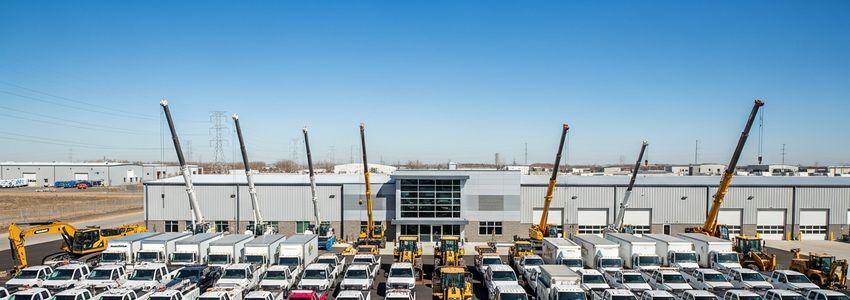
A construction company moving into a new market typically needs excavators, skid steers, dump trucks, cranes, or specialized rigging equipment on-site before the first job begins. Financing heavy equipment for a new region is not just common practice - it's often the only financially viable approach given the per-unit costs involved.
Manufacturing and Industrial Equipment
If you're opening a production facility in a new region to serve that market more efficiently, you'll need CNC machines, conveyor systems, fabrication equipment, or industrial generators. Equipment financing supports production expansion without requiring you to draw down your existing manufacturing capital.
Technology and Office Systems
Even service businesses and professional firms opening regional offices need computers, servers, phone systems, copiers, and security equipment. These lower-cost items can often be bundled into a single equipment financing package, simplifying the procurement process significantly.
Industry Insight: According to Forbes Advisor, equipment financing accounts for nearly $1 trillion in annual lending activity in the United States, making it one of the largest and most accessible segments of small business credit.
Structuring the Financing for a New Location
When you're expanding into a new region, you want to structure your equipment financing to match the specific timeline and economics of your expansion. A few key considerations:
Bundle vs. Separate Equipment Financing
You have two main options. You can finance each piece of equipment individually through separate loans with potentially different terms. Or you can work with a lender like Crestmont Capital to bundle multiple equipment purchases into a single master loan or lease, simplifying your payment structure and often reducing paperwork and closing costs.
Bundling is typically the smarter choice for regional expansion, where you're purchasing multiple categories of equipment at once. A single monthly payment is easier to plan around than five separate payment obligations spread across different due dates.
Loan vs. Lease for Expansion Equipment
For equipment you expect to use long-term in your new market, ownership through a loan typically makes more financial sense. For equipment that is likely to need upgrading within three to five years - technology, certain medical equipment, production machinery - a lease allows you to return the equipment and upgrade without taking a depreciation hit.
Our detailed guide on equipment leasing breaks down when each structure works best for different business scenarios.
Match Term Length to Revenue Ramp-Up
New regional locations rarely hit full revenue capacity on day one. When structuring your equipment financing term, select a repayment period that gives your new location time to ramp up revenue before the full debt service burden hits. A 60-month or 84-month term may cost slightly more in total interest than a 36-month term, but the lower monthly payment protects your cash flow during the critical early months of your expansion.
Equipment Financing for Regional Expansion: Key Data
By the Numbers
Equipment Financing and Business Expansion in 2026
$900B+
Annual U.S. equipment financing volume
80%
Of U.S. businesses use some form of equipment financing or leasing
2-5 Days
Typical closing timeline for equipment financing deals
100%
Financing available for qualified borrowers - no down payment required
Who Qualifies for Equipment Financing
Equipment financing has more flexible qualification standards than most other forms of business financing. Because the equipment serves as collateral, lenders are willing to work with borrowers who may not meet the strict requirements of traditional SBA loans or conventional bank financing. Here's what most lenders look for:
Time in Business
Most equipment financing programs require a minimum of 2 years in business, though some lenders will work with businesses as young as 12 months for smaller equipment purchases. The more established your business, the better your terms will be.
Credit Score
Equipment financing is available to borrowers with credit scores as low as 600 in many cases, though scores above 650-680 will unlock significantly better rates. For larger regional expansion deals involving expensive equipment, lenders will typically want to see a score of 680 or higher for their most competitive programs. If your credit needs work, our guide to equipment financing with bad credit covers your options.
Annual Revenue
Lenders want to see that your existing operations generate enough revenue to support the new debt service. Most equipment financing programs require minimum annual revenues of $100,000 to $250,000, though some startup-focused programs have lower thresholds.
Equipment Type and Age
The equipment itself matters. Newer equipment with strong resale value is easiest to finance. Lenders typically will finance equipment up to 10-12 years old for most categories, though this varies. Highly specialized equipment with limited resale markets may require a larger down payment or carry higher rates.
Pro Tip: If you're expanding into a new state or region for the first time, some lenders may require additional documentation showing your plan to generate revenue in the new market. Having a simple one-page expansion plan with projected revenue can significantly speed up your approval and improve your terms.
Real-World Expansion Scenarios
Understanding how equipment financing works in the abstract is useful. Seeing it applied to real business expansion decisions is more useful still. Here are six scenarios that illustrate how different business types use equipment financing to move into new geographic markets.
Scenario 1: HVAC Company Enters a New State
A Texas-based HVAC contractor with 12 years in business and $3.2 million in annual revenue decides to open a second office in Oklahoma to serve the growing construction market there. The expansion requires five new service vans, specialized diagnostic tools, and portable HVAC testing equipment totaling $310,000. Rather than pulling capital from the Texas operation, the owner secures an equipment financing package at 7.4% APR over 60 months. Monthly payments are $6,200 - well within the projected revenue from the new market by month four.
Scenario 2: Restaurant Group Opens Second Location
A restaurant group with a popular concept in Chicago looks to open a second location in Nashville. The kitchen equipment package alone runs $185,000. The owner uses restaurant equipment financing to cover the full purchase price, preserving working capital for lease deposits, staffing, and marketing. The Nashville location opens fully equipped and generates enough revenue by month six to comfortably cover the equipment payment and contribute to overhead.
Scenario 3: Medical Practice Opens Regional Satellite
A family medicine practice in suburban Atlanta wants to open a satellite location in Savannah to serve patients in that market. The new location requires $425,000 in exam room equipment, diagnostic tools, and medical office technology. Healthcare equipment financing covers 90% of the purchase price, and the practice uses its existing receivables-based credit line to cover the balance. The satellite location is seeing patients within 90 days of the decision to expand.
Scenario 4: Landscaping Company Expands Service Area
A regional landscaping company in the Carolinas wants to add a second service hub in coastal Virginia. The new hub needs three zero-turn commercial mowers, a truck-mounted sprayer system, two trailers, and irrigation installation equipment - $78,000 total. An equipment loan at 8.9% over 48 months costs $1,920 per month. The new Virginia contracts, secured before the equipment even arrives, generate enough to cover the payment with margin to spare.
Scenario 5: Manufacturing Company Opens Production Facility
A plastics manufacturer serving the Southeast wants to open a Midwest production facility to reduce shipping costs to clients in Ohio, Michigan, and Indiana. The core production equipment - injection molding machines, conveyors, and quality control systems - costs $1.1 million. A commercial equipment financing package through a specialty lender covers $950,000 of the purchase, with a 72-month term that keeps monthly debt service manageable relative to projected production volume.
Scenario 6: Cleaning Company Builds Regional Fleet
A commercial cleaning company based in Phoenix wants to enter the Dallas market. Building a Dallas-based fleet from scratch requires eight commercial cleaning vans, industrial floor scrubbers, and high-pressure washing equipment totaling $240,000. Rather than a single large purchase, the owner uses an equipment line of credit that allows draws as equipment is purchased, keeping interest costs lower during the ramp-up phase. Check out Crestmont's equipment lines of credit for flexible alternatives to traditional equipment loans.
Ready to Fund Your Next Location?
Crestmont Capital finances equipment for businesses expanding across the U.S. Fast approvals, flexible terms, no obligation.
Apply Now →Equipment Financing vs. Other Expansion Funding Options
Equipment financing is a powerful tool, but it works best as part of a broader expansion capital strategy. Here's how it compares to the other common options for funding a geographic expansion:
| Financing Type | Best For | Speed | Collateral Required |
|---|---|---|---|
| Equipment Financing | Specific equipment purchases | 2-5 days | Equipment itself |
| SBA 7(a) Loan | Large expansion projects including real estate | 30-90 days | Business assets / personal guarantee |
| Business Line of Credit | Ongoing working capital needs during expansion | 3-10 days | Often unsecured for strong borrowers |
| Working Capital Loan | Short-term operational costs | 1-3 days | Revenue-based, typically unsecured |
| Commercial Real Estate Loan | Purchasing a building in the new region | 45-90 days | Property being purchased |
The most successful expansions typically combine equipment financing for the hardware of the new operation with a working capital line or unsecured business loan for the soft costs - hiring, training, local marketing, and the cash flow gap that almost every new location experiences before it reaches break-even.
For a comprehensive overview of your expansion financing options, our business expansion loans guide covers how to think about the full capital stack for a regional growth initiative.
According to CNBC's small business coverage, businesses that separate their expansion capital by purpose - using asset-backed financing for equipment and working capital loans for operations - report better cash flow outcomes and higher expansion success rates than those that use a single large, all-purpose loan.
How Crestmont Capital Helps Businesses Expand
Crestmont Capital is rated the #1 business lender in the United States for a reason: we understand that every business expansion is different, and we structure financing around your actual growth plan rather than pushing you into a one-size-fits-all product.
For regional expansions, our equipment financing programs offer:
- Financing up to $5 million for large equipment packages across multiple categories
- Terms from 12 to 84 months to match your expected revenue ramp-up in the new market
- Approval decisions in 24-48 hours so your expansion timeline doesn't slip
- Financing for new and used equipment - useful when you need to deploy quickly and used equipment is available at a discount
- Bundled financing packages that cover multiple equipment categories in a single deal
- Soft cost inclusion in some programs that covers installation, shipping, and training as part of the financed amount
We work with businesses across every industry - from construction equipment financing to medical practice expansion. Our advisors specialize in structuring deals that protect your existing operation's cash flow while giving your new market presence everything it needs to succeed.
The U.S. Census Bureau reports that geographic diversification is one of the most effective risk management strategies for small and mid-size businesses - spreading revenue across multiple markets reduces dependence on any single local economy. Equipment financing makes that diversification achievable without requiring you to wait years to accumulate enough cash.
A Bloomberg analysis of small business expansion financing found that asset-backed loans - including equipment financing - consistently outperformed unsecured alternatives in enabling sustainable growth, particularly for businesses with annual revenues between $500,000 and $5 million.
Important: One of the most common mistakes businesses make when expanding to a new region is underestimating equipment lead times. Custom-built or specialty equipment can take 8-14 weeks to deliver. Starting your financing process early - even before you've signed a lease on your new location - ensures that equipment arrives on schedule and your opening isn't delayed by capital or procurement bottlenecks.
Equipment Financing for Your New Region
Talk to a Crestmont Capital advisor today. We'll help you structure the right equipment financing deal for your expansion goals.
Apply Now →How to Get Started
Make a comprehensive list of every piece of equipment your new regional location will need at launch, including quantities, specifications, and estimated costs. Don't forget installation, delivery, and training - some lenders will finance these soft costs as part of the total package.
Complete our quick application at offers.crestmontcapital.com/apply-now - takes just a few minutes. Have your business financials, equipment list, and expansion plan ready to share.
A Crestmont Capital equipment financing advisor will review your expansion goals and structure a financing package that matches your timeline, budget, and cash flow requirements.
Receive your equipment financing and place your orders. With 2-5 day closing timelines, you can often have financing in place before your vendor even processes the purchase order.
Frequently Asked Questions
Conclusion: Equipment financing is one of the most powerful tools available to businesses looking to expand into new regions. It preserves working capital, moves fast, and directly funds the physical operational infrastructure your new location needs on day one. Whether you're opening a second restaurant, launching a new production facility, or deploying a regional fleet, the right equipment financing structure can make the difference between a smooth expansion and a cash-strapped one. Crestmont Capital has helped thousands of businesses structure equipment financing deals that power regional growth - and we're ready to help yours.
Disclaimer: The information provided in this article is for general educational purposes only and is not financial, legal, or tax advice. Funding terms, qualifications, and product availability may vary and are subject to change without notice. Crestmont Capital does not guarantee approval, rates, or specific outcomes. For personalized information about your business funding options, contact our team directly.








