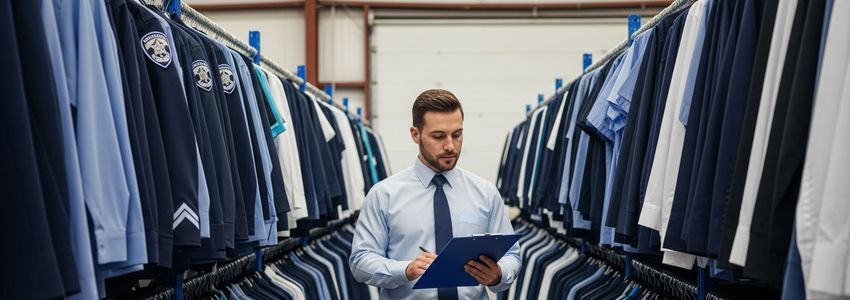
The uniform supply industry is a vital, yet often overlooked, sector that keeps healthcare, hospitality, industrial, and corporate professionals looking sharp and safe. From crisp medical scrubs to durable workwear, your business provides essential garments that define brands and protect workers. However, running a successful uniform supply company comes with unique financial challenges, from managing vast inventories to investing in specialized equipment. Securing the right uniform supply business loans is not just an option; it is a strategic necessity for growth, stability, and staying ahead of the competition.
Whether you are looking to purchase new embroidery machines, stock up on inventory for a large contract, expand your delivery fleet, or simply manage day-to-day cash flow, the right financing can make all the difference. Traditional banks may not always understand the specific capital cycles and operational needs of a uniform supplier, leading to frustrating denials or inflexible loan terms. This is where specialized financing solutions from lenders like Crestmont Capital become crucial.
This comprehensive guide will walk you through every aspect of financing for your uniform supply company. We will explore why you need funding, the different types of loans available, qualification requirements, and how to navigate the application process. Our goal is to empower you with the knowledge to make informed financial decisions that will drive your business forward.
In This Article
- What Is a Uniform Supply Business?
- Why Uniform Supply Companies Need Financing
- Types of Business Loans for Uniform Supply Companies
- How to Qualify for Uniform Supply Business Loans
- How Much Funding Can Uniform Supply Companies Get?
- How Crestmont Capital Helps Uniform Supply Businesses
- Real-World Scenarios: Putting Financing to Work
- Frequently Asked Questions
- How to Get Started
What Is a Uniform Supply Business?
A uniform supply business is a specialized B2B (business-to-business) enterprise that provides work apparel and related services to other companies. Unlike a standard retail clothing store, these businesses cater to the specific needs of various industries, offering garments designed for functionality, safety, and brand identity. The business model can vary significantly, creating different operational and financial needs.
The core functions of a uniform supply company often include:
- Direct Sales: Selling uniforms in bulk directly to businesses. This could involve outfitting an entire hospital staff, a restaurant chain, or a construction crew.
- Rental Services: A popular model where companies rent uniforms for their employees. The uniform supplier is responsible for providing the garments, regular professional laundering, repairs, and replacements. This model generates recurring revenue but requires a significant upfront investment in inventory and industrial laundry equipment.
- Customization: Offering services like embroidery, screen printing, and heat transfers to add company logos, names, and other branding elements to the apparel. This value-add service requires specialized machinery.
- Managed Programs: A comprehensive service that handles every aspect of a company's uniform needs, from initial fitting and ordering to inventory management, cleaning, and employee turnover.
Key industries served by uniform supply companies include:
- Healthcare: Hospitals, clinics, dental offices, and veterinary practices (scrubs, lab coats).
- Hospitality: Hotels, restaurants, and casinos (chef coats, aprons, front desk attire, housekeeping uniforms).
- Industrial & Manufacturing: Factories, construction sites, and automotive shops (flame-resistant wear, high-visibility jackets, durable work pants).
- Corporate: Businesses seeking branded apparel for office staff, sales teams, or event personnel (polo shirts, button-downs, blazers).
- Public Safety & Security: Police departments, fire departments, and private security firms (tactical gear, formal dress uniforms).
The complexity of this business model, with its B2B focus, long sales cycles, and capital-intensive operations, makes access to flexible financing solutions a critical component of success. Understanding these nuances is the first step toward securing the right funding partner.
Ready to Fund Your Uniform Supply Business?
Don't let capital constraints hold you back. Get the funding you need to grow your inventory, upgrade equipment, and expand your operations.
Apply Now →Why Uniform Supply Companies Need Financing
The capital requirements of a uniform supply business are substantial and cyclical. Unlike many service-based businesses, you must invest heavily in physical assets and inventory long before you see a return. This creates a constant need for working capital and strategic long-term funding. Here are the most common reasons uniform supply companies seek business loans.
According to U.S. Census Bureau data, there are thousands of uniform supply businesses across the United States, serving industries including healthcare, hospitality, manufacturing, and public safety - demonstrating the consistent, recession-resistant demand that makes this sector attractive to lenders.
1. Bulk Inventory Purchases
Inventory is the lifeblood of your business, but it is also one of your biggest expenses. When you land a large contract with a new hospital or a regional restaurant chain, you need to purchase hundreds or thousands of garments upfront. This requires a significant cash outlay. Financing allows you to seize these large opportunities without draining your working capital. It also enables you to take advantage of bulk discounts from manufacturers, improving your profit margins.
2. Equipment Acquisition and Upgrades
The services you offer depend on specialized equipment. This can include:
- Industrial Laundry Systems: For rental programs, commercial-grade washers, dryers, and pressers are essential. These machines are expensive to purchase and maintain.
- Customization Machinery: Multi-head embroidery machines, screen printing presses, and heat transfer equipment are necessary to offer branding services.
- Delivery Vehicles: A fleet of vans or trucks is required to manage pickup and delivery routes for rental clients.
- Technology: Barcode scanners, inventory management software, and route optimization systems improve efficiency and accuracy.
Equipment financing is a specific type of loan designed for these purchases, allowing you to acquire necessary assets without a massive upfront cost.
3. Managing Cash Flow Gaps
As a B2B business, you likely operate on net 30, net 60, or even net 90 payment terms with your corporate clients. This means you have delivered the goods and incurred all the costs, but you may not receive payment for one to three months. During this gap, you still have to pay your suppliers, meet payroll, and cover overhead. A business line of credit is an excellent tool for managing these fluctuations, providing access to cash exactly when you need it.
4. Business Expansion
Growth opportunities require capital. You might want to:
- Open a new facility in a different city or state to expand your service area.
- Acquire a smaller competitor to increase your market share and client base.
- Launch an e-commerce platform to serve smaller businesses or individual buyers directly.
- Hire additional staff, such as sales representatives or production workers, to handle increased demand.
Larger-scale funding, such as term loans or SBA loans, can provide the significant capital needed for these strategic growth initiatives.
5. Marketing and Sales Efforts
Attracting new corporate clients requires a dedicated sales and marketing strategy. You may need funding to hire a sales team, attend industry trade shows, launch digital marketing campaigns, or develop a professional B2B website. Investing in marketing is crucial for building a strong sales pipeline and securing long-term contracts.
Key Stat: According to a report by Grand View Research, the global workwear market size was valued at USD 16.9 billion in 2021 and is expected to expand at a compound annual growth rate (CAGR) of 6.8% from 2022 to 2030. This growth indicates a strong and expanding market for uniform suppliers, making strategic financing essential for capturing new opportunities.
Types of Business Loans for Uniform Supply Companies
There is no one-size-fits-all loan for a uniform supply business. The best option depends on your specific need, financial health, and long-term goals. Understanding the different types of financing available is key to choosing the right one. Here is a breakdown of the most common and effective uniform supply business loans.
1. Term Loans
A traditional term loan provides a lump sum of capital that you repay over a set period (the "term") with fixed, regular payments. These loans are ideal for large, planned investments with a clear return, such as acquiring a competitor or funding a major facility expansion.
- Best for: Major expansions, business acquisition, large-scale equipment purchases.
- Pros: Predictable payments, often lower interest rates for qualified borrowers.
- Cons: Can have stricter qualification requirements, may require collateral.
2. SBA Loans
Backed by the U.S. Small Business Administration, SBA loans are offered by partner lenders like banks and credit unions. Because the government guarantees a portion of the loan, lenders are more willing to offer favorable terms, such as lower interest rates and longer repayment periods. The SBA 7(a) loan is particularly versatile and can be used for working capital, equipment, real estate, and more.
- Best for: A wide range of purposes, including real estate purchase, debt refinancing, and significant working capital needs.
- Pros: Excellent terms, high borrowing limits, long repayment periods.
- Cons: The application process can be lengthy and document-intensive.
3. Business Line of Credit
A business line of credit provides access to a specific amount of capital that you can draw from as needed. You only pay interest on the funds you use. Once you repay the drawn amount, your credit line is replenished. This flexibility makes it perfect for managing cash flow, handling unexpected expenses, or seizing opportunities without needing to apply for a new loan each time.
- Best for: Managing cash flow gaps, unexpected repairs, small inventory purchases.
- Pros: Highly flexible, pay interest only on what you use, readily available funds.
- Cons: Interest rates can be variable and sometimes higher than term loans.
4. Equipment Financing
This is a specialized loan used to purchase specific machinery or vehicles. The equipment itself typically serves as the collateral for the loan. This is an ideal solution for buying embroidery machines, industrial washers, or delivery vans, as it preserves your working capital for other needs.
- Best for: Purchasing new or used laundry systems, customization machines, and delivery vehicles.
- Pros: The equipment is the collateral, often easier to qualify for than other loans, can offer tax advantages (consult your accountant).
- Cons: Funds can only be used for the specified equipment purchase.
5. Invoice Financing (Accounts Receivable Financing)
Invoice financing allows you to get an advance on your outstanding invoices. A lender provides you with a percentage of the invoice value (typically 80-90%) upfront. When your client pays the invoice, you receive the remaining amount minus the lender's fees. This is an excellent way to bridge the cash flow gap caused by long payment terms with corporate clients.
- Best for: Businesses with reliable B2B clients but slow payment cycles.
- Pros: Unlocks cash tied up in receivables, funding is based on your clients' creditworthiness, not just your own.
- Cons: Can be more expensive than traditional loans, fees are a percentage of the invoice value.
6. Merchant Cash Advance (MCA)
A merchant cash advance is not a loan but an advance on your future sales. A funder provides you with a lump sum of cash in exchange for a percentage of your future credit and debit card sales. Repayments are made automatically as a small percentage of each day's sales. This can be a good option for businesses that need fast business loans and may not qualify for traditional financing, perhaps due to a lower credit score.
- Best for: Quick access to capital, businesses with high credit card sales volume.
- Pros: Very fast funding, approval is not heavily reliant on credit score.
- Cons: Can be a very expensive form of financing; it is crucial to understand the total cost.
Loan Comparison Table for Uniform Supply Businesses
| Loan Type | Best Use Case | Typical Amount | Repayment Term | Key Benefit |
|---|---|---|---|---|
| Term Loan | Major expansion, business acquisition | $25k - $5M+ | 1 - 10 years | Predictable payments |
| SBA Loan | Real estate, working capital, debt refinance | Up to $5M | 7 - 25 years | Excellent rates and terms |
| Business Line of Credit | Cash flow management, inventory | $10k - $500k | Revolving | Maximum flexibility |
| Equipment Financing | Embroidery machines, laundry systems | Up to 100% of equipment cost | 2 - 7 years | Preserves working capital |
| Invoice Financing | Bridging gaps from slow-paying clients | Up to 90% of invoice value | Tied to invoice due date | Improves cash flow quickly |
| Merchant Cash Advance | Emergency funding, short-term needs | $5k - $250k | 3 - 18 months | Very fast funding |
How to Qualify for Uniform Supply Business Loans
Qualifying for a business loan requires lenders to assess the risk associated with lending to your company. While requirements vary between lenders and loan products, they generally evaluate a few key areas. Preparing your documentation and understanding these factors will significantly improve your chances of approval.
The U.S. Small Business Administration (SBA) offers specialized loan programs that can provide uniform supply companies with favorable rates and extended repayment terms. SBA 7(a) loans can go up to $5 million, making them ideal for larger equipment purchases or business acquisitions.
Key Qualification Factors
- Credit Score: Both your personal and business credit scores are important. A higher score indicates financial responsibility and a lower risk to lenders. While traditional banks often require scores of 700+, alternative lenders like Crestmont Capital can work with a wider range. We even offer specific bad credit business loans for those who have faced financial hurdles.
- Time in Business: Most lenders want to see a track record of stability. A minimum of one to two years in operation is a common requirement for many loan types. Newer businesses may have options, but they are often more limited.
- Annual Revenue: Lenders need to see that your business generates enough income to comfortably handle loan repayments. They will look at your annual gross revenue, and many have a minimum threshold, such as $100,000 or more per year. Consistent and growing revenue is a strong positive signal.
- Cash Flow and Profitability: Beyond top-line revenue, lenders will analyze your bank statements to understand your cash flow. They want to see positive cash flow, meaning more money is coming into the business than going out. Profitability, as shown on your profit and loss statements, is also a critical factor.
- Collateral: Some loans, particularly larger term loans or SBA loans, may require collateral. This is an asset (such as real estate, equipment, or inventory) that you pledge to the lender to secure the loan. If you default, the lender can seize the collateral to recoup their losses. Equipment financing is a unique case where the purchased equipment itself serves as collateral.

Essential Documents to Prepare
Getting your paperwork in order before you apply can speed up the process significantly. While the exact list varies, be prepared to provide the following:
- Business Bank Statements: Typically the last 3-6 months.
- Tax Returns: Both personal and business returns for the last 1-3 years.
- Financial Statements: Profit and Loss (P&L) Statement and Balance Sheet.
- Business Plan: For newer businesses or large loan requests, a detailed business plan outlining your strategy, market analysis, and financial projections is often required.
- List of Outstanding Debts: A schedule of your current business debts.
- Business Legal Documents: Articles of incorporation, business licenses, and ownership agreements.
- Invoices and Accounts Receivable Aging Report: Specifically for invoice financing applications.
Working with a financing partner like Crestmont Capital can simplify this process. Our advisors can help you understand which documents are needed for your specific request and guide you through the preparation phase.
How Much Funding Can Uniform Supply Companies Get?
The amount of funding a uniform supply company can secure depends on a combination of its financial profile and the type of loan it is seeking. Lenders do not pick a number at random; they use specific metrics to determine a loan amount that your business can realistically support.
Here are the primary factors that influence your borrowing capacity:
- Annual Revenue: This is often the most significant factor, especially for unsecured loans. Lenders typically offer a loan amount that is a percentage of your annual or monthly revenue. For example, a short-term loan might be capped at 10-15% of your annual revenue.
- Creditworthiness: A strong credit history demonstrates your ability to manage debt and reduces the lender's risk, often leading to higher loan offers and better terms.
- Cash Flow: Lenders will analyze your average daily bank balance and the consistency of your deposits. A healthy, positive cash flow shows you have the liquidity to make regular loan payments, which can increase the amount you are offered.
- Loan Purpose and Collateral: The use of funds plays a major role. For equipment financing, you can often borrow up to 100% of the equipment's value because the asset itself secures the loan. Similarly, for real estate loans, the property value is a key determinant.
- Existing Debt: Your current debt-to-income ratio will be assessed. If your business is already heavily leveraged with other loans, lenders may be hesitant to extend further credit or may offer a smaller amount.
Generally, uniform supply businesses can qualify for a wide range of funding, from a $10,000 line of credit to manage daily cash flow to a multi-million dollar SBA loan for a major acquisition. The key is to align your funding request with your business's financial capacity. It is better to apply for a realistic amount that your financials can support rather than an inflated number that is likely to be rejected. For help determining what you might qualify for, check out our recent blog post on what to do if you've been denied by a bank for a business loan, which offers insights into alternative options.
Industry Insight: According to the U.S. Census Bureau, there are over 1,500 uniform and work clothing manufacturing establishments in the United States. This competitive landscape means that having access to capital for technology, efficiency, and expansion is a key differentiator for success.
How Crestmont Capital Helps Uniform Supply Businesses
Navigating the world of business financing can be complex and time-consuming, especially when you are busy running your uniform supply company. Crestmont Capital acts as your dedicated financing partner, simplifying the process and connecting you with the best funding solutions for your unique needs. We understand the specific challenges of your industry, from the need for heavy equipment investment to the management of B2B payment cycles.
Here is how we provide value to uniform supply business owners:
- Wide Range of Loan Products: We are not a single bank with a limited menu of options. We offer a comprehensive suite of small business loans, including term loans, SBA loans, equipment financing, lines of credit, and more. This allows us to tailor a financing solution that perfectly matches your specific goal.
- Expert Guidance: Our financing advisors have deep industry knowledge. They will take the time to understand your business, your goals, and your financial situation. They can guide you toward the loan product with the best terms and highest likelihood of approval, saving you from the guesswork.
- Streamlined Application Process: We know your time is valuable. Our online application is simple and can be completed in minutes. We have minimized the paperwork and bureaucracy often associated with traditional lending, allowing for much faster decisions.
- Fast Funding: While a traditional bank loan can take weeks or months, many of our financing solutions can be approved and funded in as little as 24 to 48 hours. When a time-sensitive opportunity arises, this speed can be a significant competitive advantage.
- Support for All Credit Profiles: We believe a past financial challenge should not prevent a viable business from accessing capital. We work with business owners across the credit spectrum and have specialized programs for those who may not qualify for a traditional bank loan.
At Crestmont Capital, we do more than just provide capital. We build long-term relationships, offering a reliable source of funding as your uniform supply business grows and evolves. Whether you're in a major metropolitan area or a smaller city like Mobile, Alabama, our nationwide reach ensures we can help. For more local insights, you can read about small business loans in Mobile, Alabama on our blog.
Partner with the Experts
Let Crestmont Capital find the perfect financing solution for your uniform supply company. Our streamlined process and expert advisors make funding simple.
Get Started Today →Real-World Scenarios: Putting Financing to Work
To better understand how these different loan types apply in practice, let's look at a few hypothetical scenarios for a uniform supply company.
Scenario 1: Upgrading Customization Capabilities
- The Business: "ProStitch Uniforms," a 5-year-old company specializing in corporate and hospitality apparel.
- The Opportunity: ProStitch wants to bid on a large contract with a hotel chain that requires intricate, multi-color logos on all garments. Their current embroidery machines are old and slow, unable to handle the complexity or volume.
- The Need: They need to purchase two new 12-head embroidery machines, costing a total of $75,000.
- The Solution: Equipment Financing. ProStitch applies for and is approved for $75,000 in equipment financing. The new machines serve as the collateral for the loan. This allows them to acquire the necessary assets without touching their working capital, which they need for inventory. They win the hotel contract, and the profits from that single contract more than cover the monthly loan payments.
Scenario 2: Managing a Cash Flow Crunch
- The Business: "MedWear Solutions," a supplier focused on the healthcare industry, primarily with a rental model.
- The Challenge: MedWear has just outfitted a new regional hospital, a massive undertaking. They have incurred all the costs for the uniforms and the initial setup. However, the hospital's payment terms are net 90. For the next three months, MedWear has a significant cash flow gap while still needing to cover payroll, rent, and supplier payments for their other clients.
- The Need: Flexible, accessible working capital to cover operating expenses.
- The Solution: Business Line of Credit. MedWear uses its pre-approved $100,000 business line of credit. They draw $60,000 over the first two months to ensure payroll is met and their own suppliers are paid on time. As soon as the hospital's large payment arrives, they pay back the $60,000 plus interest. The line of credit is now fully available again for the next time a similar situation arises.
Scenario 3: Expanding to a New Territory
- The Business: "Industrial Garb Inc.," an established and highly profitable supplier of durable and safety workwear.
- The Goal: The owners see a major opportunity in a neighboring state with a booming manufacturing sector. They want to purchase a small warehouse and distribution center to establish a physical presence and better serve clients in that region.
- The Need: $500,000 for the commercial real estate purchase and initial operational costs.
- The Solution: SBA 7(a) Loan. Due to their strong financials and years in business, Industrial Garb is an excellent candidate for an SBA loan. They work with an SBA-preferred lender to secure a $500,000 loan with a 25-year term for the real estate portion. The long repayment period and low interest rate result in an affordable monthly payment, allowing them to expand aggressively while maintaining healthy cash flow.
By the Numbers
Uniform Supply Business Financing - Key Statistics
$2.3B
The market size of the Industrial & Protective Clothing Manufacturing industry in the US in 2023, according to IBISWorld.
82%
Percentage of small business loan applicants who seek funds to expand their business or for new inventory/equipment. (Source: CNBC)
$5k - $25k
The average cost of a single-head commercial embroidery machine, with multi-head machines costing significantly more.
24-72 Hrs
The typical funding time for alternative financing options like those from Crestmont Capital, compared to weeks or months at a bank.
Frequently Asked Questions
1. What is the easiest type of loan to get for a uniform supply business?
Generally, equipment financing and merchant cash advances (MCAs) have less stringent qualification requirements than traditional term loans or SBA loans. Equipment financing is often easier because the equipment itself secures the loan, reducing the lender's risk. MCAs are based on future sales rather than credit history, making them accessible but often more expensive.
2. Can I get a loan if my uniform business is new?
Yes, but options may be more limited. Many lenders require at least one year in business. However, some financing options, like equipment loans or lines of credit secured by assets, may be available to newer businesses, especially if the owner has a strong personal credit score and a solid business plan. Startups may also explore SBA microloans.
3. How much working capital should my uniform supply business have?
A general rule of thumb is to have enough working capital to cover 3-6 months of operating expenses. For a uniform supply business with long B2B payment cycles and high inventory costs, aiming for the higher end of this range is prudent. A business line of credit can serve as a safety net to supplement your working capital.
4. Do I need collateral to get a uniform supply business loan?
Not always. Many financing options, such as unsecured term loans, lines of credit, and merchant cash advances, do not require specific collateral. However, secured loans, like SBA loans or larger term loans, often do require collateral, which can lead to better rates and terms. Equipment financing is a special case where the asset being purchased is the collateral.
5. What credit score is needed for a uniform supply business loan?
This varies widely. For an SBA loan or a bank loan, you will likely need a personal credit score of 680 or higher. Alternative lenders like Crestmont Capital are more flexible, with some programs accepting scores as low as 550. A higher credit score will almost always result in more options and better interest rates.
6. How quickly can I get funded?
Funding speed depends on the loan type. SBA loans and traditional bank loans can take several weeks to months. Alternative financing through Crestmont Capital is much faster. Options like a business line of credit or a merchant cash advance can be funded in as little as 24-48 hours after approval.
7. Can I use a business loan to buy out a competitor?
Absolutely. This is a common and strategic use of business financing. A term loan or an SBA 7(a) loan are excellent financial tools for business acquisitions. They provide the large, lump-sum capital needed for the purchase, with structured repayment terms that allow you to integrate the new business.
8. What is the difference between invoice financing and invoice factoring?
In invoice financing, you borrow against your outstanding invoices but maintain control over collections from your clients. In invoice factoring, you sell your invoices to a factoring company at a discount. The factoring company then owns the invoices and collects payment directly from your clients. Factoring can be simpler but may impact your client relationships.
9. Will applying for a loan hurt my credit score?
Many alternative lenders, including Crestmont Capital, use a "soft pull" for the initial application, which does not affect your credit score. A "hard pull," which can cause a small, temporary dip in your score, is typically only performed once you decide to move forward with a specific loan offer. This allows you to explore your options without penalty.
10. Can I get a loan if my business is seasonal?
Yes. Lenders who understand your industry know that revenue can fluctuate. They will look at your overall annual revenue rather than just a few slow months. A business line of credit is an especially useful tool for seasonal businesses to manage cash flow during off-peak times.
11. What are the typical interest rates for these loans?
Interest rates vary based on the loan type, your creditworthiness, time in business, and overall market conditions. SBA loans and bank loans typically have the lowest rates (often in the single digits). Alternative loans and MCAs will have higher rates or factor rates to compensate for increased risk and speed. We provide a clear breakdown of all costs before you commit.
12. Can I repay my loan early?
This depends on the loan agreement. Some loans, particularly term loans, may have prepayment penalties. Others, like lines of credit, are designed to be paid and redrawn flexibly. It is important to ask about prepayment policies before signing any loan agreement.
13. Is it better to finance or lease equipment?
Financing means you are borrowing money to buy the equipment, and you will own it outright at the end of the loan term. Leasing is essentially a long-term rental; you make payments to use the equipment but do not own it. Financing is better for equipment with a long useful life, while leasing can be better for technology that quickly becomes outdated. Consult with a financial advisor to see which makes more sense for your tax situation.
14. What documents do I need if I'm a sole proprietor?
As a sole proprietor, your business and personal finances are closely linked. You will typically need to provide personal and business bank statements, personal tax returns (including Schedule C), and any relevant business licenses or "Doing Business As" (DBA) registrations.
15. How does a personal guarantee work?
A personal guarantee is a common requirement for small business loans. It is a legal promise from the business owner to repay the debt personally if the business defaults on the loan. This means your personal assets could be at risk. It is a standard practice that provides lenders with an extra layer of security, especially for unsecured loans.
Have More Questions?
Our financing experts are ready to help. Apply in minutes to see your options with no obligation.
See Your Options →How to Get Started
Securing the capital you need for your uniform supply business is a straightforward process with Crestmont Capital. We have designed our system to be fast, transparent, and user-friendly, so you can get back to what you do best: running your business. Follow these simple steps to begin.
Apply Online in Minutes
Fill out our simple, secure online application. It takes just a few minutes and requires only basic information about you and your business. This initial step involves a soft credit pull, which will not impact your credit score.
Review Your Offers
A dedicated funding advisor will contact you to discuss your needs and present you with the best financing options you qualify for. We will provide a clear breakdown of the terms, rates, and payment structures so you can make an informed decision with no hidden surprises.
Receive Your Funds
Once you select an offer and complete the final documentation, the funds will be deposited directly into your business bank account. For many of our loan products, you can receive your capital in as little as 24 hours.
Conclusion: Equipping Your Business for Success
Running a uniform supply company is a capital-intensive endeavor that requires strategic financial management. From purchasing inventory and equipment to expanding your operations, having access to the right financing is not just a benefit, it is essential for survival and growth. The diverse landscape of uniform supply business loans means there is a solution for nearly every challenge and opportunity you may face.
Whether you need the flexibility of a business line of credit, the targeted power of equipment financing, or the substantial capital of an SBA loan, understanding your options is the first step toward making a powerful strategic decision. By preparing your financial documents and partnering with an experienced lender like Crestmont Capital, you can streamline the process and secure the funding you need quickly and efficiently.
Do not let a lack of capital be the bottleneck that restricts your company's potential. Invest in your future, seize new contracts, and build a more resilient and profitable uniform supply business today.
Disclaimer: The information provided in this article is for general educational purposes only and is not financial, legal, or tax advice. Funding terms, qualifications, and product availability may vary and are subject to change without notice. Crestmont Capital does not guarantee approval, rates, or specific outcomes. For personalized information about your business funding options, contact our team directly.