The specialty coffee movement has transformed the way Americans drink coffee, and at the heart of that transformation is the independent coffee roastery. Whether you are launching a craft roasting operation, scaling production to meet wholesale demand, or expanding into a retail tasting room, coffee roastery business loans provide the capital you need to build the roasting business you have been working toward.
Running a coffee roastery is capital-intensive from day one. Commercial drum roasters cost $15,000 to $150,000. Green coffee sourcing requires substantial upfront inventory investment. Build-outs for roasting facilities require HVAC upgrades, fire suppression systems, and specialized ventilation. And as demand grows, so does the pressure to scale equipment, staffing, and distribution capacity ahead of revenue. This guide covers every financing option available to coffee roasters in 2026, what you need to qualify, and how to get funded quickly.
In This Article
- What Is a Coffee Roastery Business Loan?
- Why Coffee Roasteries Need Financing
- Types of Loans for Coffee Roasteries
- Coffee Roastery Financing - By the Numbers
- How to Qualify
- How Crestmont Capital Helps
- Real-World Financing Scenarios
- Loans vs. Other Funding Options
- Frequently Asked Questions
- How to Get Started
What Is a Coffee Roastery Business Loan?
A coffee roastery business loan is any form of commercial financing used to support the operation, launch, or expansion of a coffee roasting business. Unlike a general small business loan with no designated purpose, roastery financing is typically structured around the specific capital needs of the roasting industry: high-cost equipment, green coffee procurement, packaging and branding, facility improvements, and distribution infrastructure.
Coffee roasteries occupy a unique position in the food and beverage industry. They are simultaneously manufacturers (transforming raw green coffee into a finished product), distributors (wholesale accounts with cafes, restaurants, and offices), and often retailers (direct-to-consumer online sales and physical tasting rooms). This multi-channel business model means capital needs are diverse and recurring - and a single loan product rarely covers all of them.
Coffee roastery business loans encompass a range of products: equipment financing for roasting machines and ancillary equipment, working capital loans for green coffee inventory and payroll, business lines of credit for seasonal demand management, and SBA loans for major facility or expansion investments. Understanding which product matches which need is the foundation of a sound financing strategy for your roastery.
Industry Context: According to the SBA, the specialty food and beverage sector is one of the fastest-growing segments of U.S. small business formation. The U.S. Census Bureau reports that food manufacturing businesses - including coffee roasters - consistently rank among the top industries seeking equipment and working capital financing.
Why Coffee Roasteries Need Financing
Coffee roasting is a craft business built on capital-intensive infrastructure. The economics of the industry create specific funding pressure points that most roastery owners encounter at every stage of growth.
Commercial Roasting Equipment Is Expensive
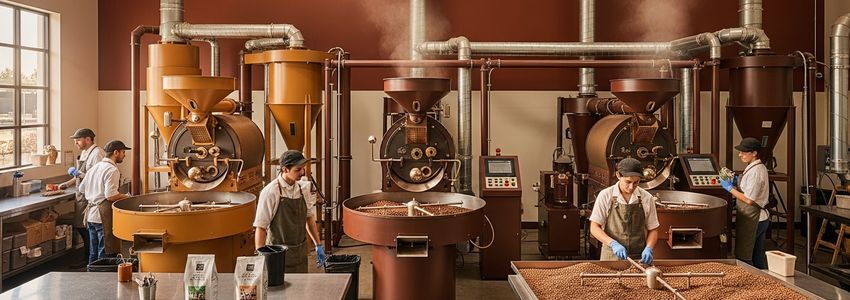
A commercial drum roaster is the centerpiece of any roastery, and these machines are not cheap. Entry-level commercial roasters capable of producing 5 to 12 kilograms per batch start at approximately $15,000 for used equipment and can reach $40,000 to $80,000 for new mid-range models from reputable manufacturers. High-capacity production roasters capable of 30 to 120 kilograms per batch can cost $80,000 to $200,000 or more. Beyond the roaster itself, a complete roasting setup requires a destoner, a cooling tray, chaff collection and fire suppression systems, a packaging machine, and precision roasting software - easily adding another $20,000 to $50,000 to the total equipment investment.
Green Coffee Sourcing Requires Large Inventory Investment
Unlike most food businesses that order inventory weekly, coffee roasters typically purchase green coffee in burlap sacks of 60 to 70 kilograms. To qualify for competitive pricing from importers, roasters generally need to purchase at least 5 to 10 bags at a time, with premium direct-trade lots often requiring commitment to full containers of 275 to 320 bags. A 10-bag purchase of specialty green coffee at $5 to $8 per pound represents $13,000 to $22,000 in inventory investment before a single bag is roasted or sold. As a roastery scales, managing this green coffee pipeline while waiting 30 to 90 days for accounts receivable from wholesale customers creates a persistent cash flow gap that working capital financing is specifically designed to bridge.
Facility Requirements Are Specialized and Costly
Roasting coffee in a commercial facility requires significant build-out investment. Gas lines must be professionally installed or upgraded to handle the BTU demands of commercial roasters. Exhaust and ventilation systems must meet fire code and air quality regulations - in many jurisdictions, catalytic afterburners are required to reduce smoke emissions, adding $10,000 to $30,000 to the facility cost. Three-phase electrical service may need to be installed. Loading dock access, pallet storage for green coffee, packaging area, and wholesale fulfillment infrastructure all add up. Few commercial spaces are move-in ready for roasting operations, and build-out costs of $50,000 to $200,000 are common before equipment is even installed.
Wholesale Expansion Requires Working Capital Before Revenue Arrives
Landing a new wholesale account with a cafe chain, hotel group, or office coffee service is a significant business milestone - but it creates an immediate working capital challenge. You must produce the roasted coffee, package it, and deliver it before the client pays. Net-30 payment terms are standard in wholesale, meaning you may wait 30 to 60 days after delivery to receive payment. Scaling up production to serve a large new account requires capital - for green coffee, packaging materials, and sometimes additional staffing - before any revenue from that account arrives.
Seasonal Demand Creates Cash Flow Volatility
Consumer coffee purchasing skews heavily toward colder months. Retail and subscription-based roasteries often see 40 to 60 percent higher revenue in October through March compared to summer months. Preparing for peak season means pre-purchasing green coffee, investing in marketing, and staffing up months before the revenue arrives - a capital demand that seasonal businesses across industries manage with lines of credit and short-term working capital financing.
Ready to Finance Your Coffee Roastery?
Get fast, flexible financing from $10K to $5M. Apply in minutes - no obligation required.
Apply Now →Types of Business Loans for Coffee Roasteries
Coffee roastery owners have access to a range of financing products, each suited to different capital needs and business stages. Understanding the differences between these products helps you choose the right funding solution at the right time.
Equipment Financing
Equipment financing is the most common starting point for roastery owners because it directly addresses the largest capital barrier to entry: the cost of a commercial roasting machine. With equipment financing, the roaster, packaging machine, destoner, and other capital equipment serve as collateral for the loan - which makes approval more accessible even for newer businesses without extensive credit history. Equipment loans typically cover 80 to 100 percent of the equipment cost, with repayment terms of 24 to 72 months matched to the useful life of the asset. Interest rates are generally lower than unsecured working capital loans because the equipment provides security for the lender. For roasteries purchasing a production roaster in the $40,000 to $120,000 range, equipment financing often results in monthly payments of $800 to $2,500 - a manageable cost that can be covered by a relatively modest wholesale account.
Working Capital Loans
Working capital loans provide fast, flexible capital for the day-to-day operational needs of a roasting business - green coffee inventory, packaging materials, payroll for roasters and customer service staff, marketing campaigns, and the cash flow bridge between production and payment. These loans are typically unsecured, meaning no specific collateral is required, and can be approved in 24 to 48 hours for amounts from $10,000 to $500,000. Working capital loans are best suited for covering immediate operational needs or capitalizing on short-term opportunities - like buying a large lot of exceptional single-origin coffee before it sells out - rather than funding long-term capital investments.
Business Line of Credit
A business line of credit is one of the most valuable tools for a roastery with consistent but variable capital needs. You are approved for a revolving credit facility up to a set limit. You draw what you need when you need it, pay interest only on the outstanding balance, repay, and draw again. For a roastery managing the cyclical demands of green coffee purchasing, seasonal inventory builds, and fluctuating wholesale account cash flow, a line of credit provides on-demand access to capital without the cost of a fully drawn term loan. Lines of credit from $25,000 to $250,000 are well-suited to mid-stage roasteries with established revenue history.
SBA Loans
SBA 7(a) loans offer the best rates and longest repayment terms available to small roastery businesses, with loan amounts up to $5 million and terms extending to 25 years for real estate purchases. SBA loans are appropriate for major investments: purchasing the building that houses your roastery, funding a significant facility expansion, or acquiring an existing roasting business. The trade-off is a longer application and approval process - typically 30 to 90 days - and more extensive documentation requirements. Well-established roasteries with two or more years of operating history, strong financials, and a major capital need should explore SBA financing as a cost-effective long-term option.
Short-Term Business Loans
Short-term business loans provide fast capital - often within 24 to 48 hours - for time-sensitive needs. For a roastery, these might include an opportunity to purchase a discounted lot of exceptional green coffee before a competitor does, bridging a cash flow gap between wholesale invoices, or covering an unexpected equipment repair. Short-term loans are typically repaid within 3 to 18 months and carry higher interest rates than longer-term options, so they are best used selectively for high-return opportunities rather than routine operational funding.
Specialty Equipment Leasing
Some roastery operators prefer to lease their production equipment rather than purchase it outright. Equipment leasing offers lower monthly payments than a purchase loan and preserves capital for other business needs. Leasing also provides flexibility to upgrade equipment as your production volume grows, without being locked into a specific machine for the duration of a multi-year loan. For roasteries in early stages that expect to scale rapidly, leasing the initial roaster while investing capital in green coffee sourcing and customer acquisition can be a strategic choice.
Coffee Roastery Financing - By the Numbers
By the Numbers
Coffee Roastery Business Financing - Key Statistics
$80B+
U.S. coffee industry annual revenue (IBIS World)
$150K+
Typical startup cost for a commercial roastery
24-48 Hrs
Typical funding time with alternative lenders
33M+
Small businesses in the U.S. competing for specialty market share (SBA)
7%+
Annual growth rate of specialty coffee segment
60 Days
Typical wholesale payment gap driving working capital needs
How to Qualify for a Coffee Roastery Business Loan
Qualification requirements vary significantly by lender type and loan product. Here is a practical breakdown of what you need to qualify at each level.
Alternative Lenders (Fastest Path to Capital)
Alternative lenders like Crestmont Capital have streamlined underwriting processes that look primarily at your business's cash flow history rather than requiring years of audited financials or significant collateral. For most working capital and equipment loan products, the minimum requirements are:
- Time in business: 6 months minimum (12 months preferred for larger loan amounts)
- Monthly revenue: $10,000 to $15,000 minimum depending on loan size
- Credit score: 550+ for most products; 600+ preferred for better terms
- Documentation: 3 to 6 months of business bank statements; government-issued ID
- Business structure: LLC or corporation with a dedicated business checking account
Traditional Banks
Traditional bank loans offer competitive rates but significantly stricter eligibility standards. Requirements typically include a personal credit score of 680 or higher, two or more years in business, annual revenues of $250,000 or more, detailed financial statements, and often collateral. Approval timelines run two to four weeks. For roasteries that meet these thresholds, bank loans can offer attractive long-term rates for facility investments or large equipment purchases.
SBA Lenders
SBA loan eligibility is determined on a case-by-case basis by SBA-approved lenders, but general requirements include a personal credit score of 640 or higher, demonstrated ability to repay from business cash flow, at least two years of operating history, no outstanding federal debt defaults or recent bankruptcies, and extensive documentation including tax returns, financial statements, and often a business plan. For roasteries making major capital investments, the lower SBA rates and longer terms justify the more rigorous application process.
What Lenders Look At When Evaluating Roastery Loans
Across all lender types, the factors that most influence loan decisions for coffee roastery businesses include monthly and annual revenue trends, cash flow consistency and average daily bank balance, existing debt obligations relative to revenue (debt service coverage ratio), the quality and recurrence of your wholesale account base, your green coffee sourcing relationships, and the purpose of the requested funds. Roasteries with multiple stable wholesale accounts and consistent monthly revenue are viewed as significantly lower risk than those dependent on a single account or high retail foot traffic variability.
Pro Tip: If your roastery has direct trade relationships with coffee farmers and documented multi-year supply agreements, include this information in your loan application. Lenders value supply chain stability, and direct trade relationships signal operational sophistication that goes beyond what most food manufacturing businesses can demonstrate.
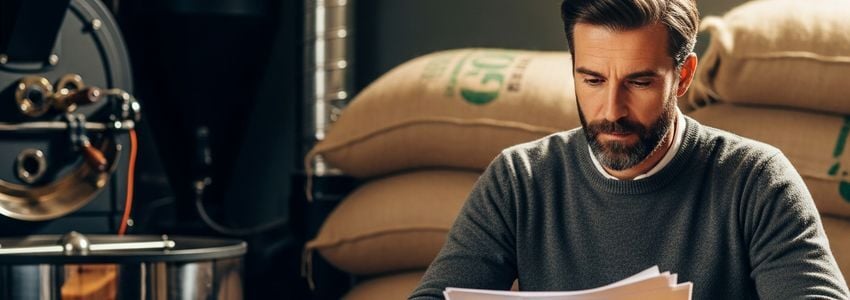
How Crestmont Capital Helps Coffee Roasteries
Crestmont Capital is the #1 rated business lender in the United States, and we bring specialized expertise in food and beverage manufacturing financing to coffee roastery owners across the country. We understand that roastery businesses have capital needs that are different from a restaurant or a retail shop - and we evaluate applications accordingly.
Whether you are purchasing your first commercial drum roaster, scaling production to fulfill a major wholesale contract, investing in a roasting facility renovation, or bridging a cash flow gap between green coffee purchases and wholesale payments, Crestmont Capital has the product and the expertise to deliver funding fast.
Our financing solutions for coffee roasteries include:
- Small business loans from $10,000 to $5 million with flexible repayment terms
- Equipment financing for commercial roasters, packaging machines, and ancillary equipment
- Business lines of credit for ongoing green coffee procurement and seasonal cash flow management
- Working capital loans for payroll, marketing, and operational gaps
- SBA-backed programs for major facility and expansion investments
- Bad credit business loans for roastery owners working to rebuild their credit profile
Unlike traditional banks that apply generic underwriting to every application, Crestmont Capital looks at your roastery as what it actually is - a specialty food manufacturer with recurring wholesale revenue, significant equipment assets, and a clear growth trajectory. Our advisors are available to discuss your specific needs and match you with the right financing structure.
If you are also operating a cafe alongside your roastery, our restaurant business loans can address the additional capital needs of your retail operation. And if you are looking at brewery-style taproom expansion - a growing trend in the specialty coffee world - explore how similar businesses have financed their growth through our brewery financing guide.
Scale Your Roastery with Crestmont Capital
Fast approvals, flexible structures, and a team that understands specialty food and beverage businesses. Apply today.
Apply Now →Real-World Scenarios: Coffee Roasteries Using Financing
To make the financing landscape more concrete, here are six realistic scenarios that illustrate how roastery owners use business loans to manage challenges and capitalize on opportunities.
Scenario 1: Purchasing the First Production Roaster
A home roaster with five years of experience and a loyal direct-to-consumer following wants to go commercial. She has secured a shared commercial kitchen space and built a customer base of 200 regular subscribers. Her subscription revenue averages $7,500 per month, but she needs a 12-kilogram commercial roaster priced at $58,000 to serve her growing customer base and land the cafe accounts she has been building relationships with. An equipment loan covers 90 percent of the roaster cost, with a 48-month repayment term resulting in monthly payments of approximately $1,280. Within three months of installing the roaster, she lands two cafe wholesale accounts generating an additional $4,200 per month in revenue - far exceeding her loan payment and establishing the roastery as a viable commercial operation.
Scenario 2: Green Coffee Inventory for Harvest Season
An established roastery with three years of operation and $28,000 in average monthly revenue needs to pre-purchase its annual allocation from three farms in Ethiopia and Colombia. The total commitment is $85,000 in green coffee, due within 30 days to secure the best lots from the current harvest. The roastery's existing cash covers only $30,000 of the purchase. A working capital loan of $60,000 provides the remaining capital, and the roastery repays the loan over the following seven months as wholesale orders and retail subscriptions convert the green inventory into revenue. The harvest lots purchased prove exceptional, attracting five new wholesale accounts that increase monthly revenue by 40 percent within the repayment period.
Scenario 3: Roastery Build-Out in a New Location
A roastery operating out of a cramped 800-square-foot industrial bay has outgrown its space. A 3,200-square-foot former warehouse becomes available in the same industrial park, with infrastructure upgrades needed to accommodate commercial roasting: gas line upgrade ($12,000), three-phase electrical service ($8,500), exhaust ventilation and afterburner installation ($22,000), interior build-out for roasting floor, packaging area, and retail/tasting counter ($65,000), and new signage ($8,000). Total build-out cost: $115,500. An SBA 7(a) loan provides $115,000 over 84 months at a competitive rate. The larger space enables the roastery to triple production capacity within 18 months of opening, justifying the investment and the long-term SBA commitment.
Scenario 4: Bridging Wholesale Account Cash Flow
A roastery that has grown primarily through wholesale accounts serving 22 cafes and two hotel groups generates $42,000 per month in revenue. However, all wholesale accounts pay net-30, meaning at any given time the roastery has $40,000 to $50,000 in outstanding invoices. When a new hotel group contract comes in requiring $28,000 of product to be delivered before the first invoice is issued, the roastery's working capital is fully deployed. A short-term business loan of $35,000 covers the production cost and carries the roastery through the 45-day period before the hotel group's first payment arrives. The loan is fully repaid within 60 days at minimal total cost compared to the revenue generated by the new account.
Scenario 5: Adding a Subscription-Focused Retail Tasting Room
A wholesale-focused roastery wants to add a direct-to-consumer revenue stream through an on-site tasting room and subscription sign-up center. The buildout requires $45,000 for interior design, espresso equipment, and point-of-sale technology. A business line of credit of $60,000 provides the capital to complete the buildout and fund the marketing launch campaign. The tasting room opens, and within six months it is generating $11,000 per month in direct-to-consumer revenue at margins significantly higher than wholesale - justifying the investment and paying down the line of credit ahead of schedule.
Scenario 6: Equipment Upgrade to Increase Production Efficiency
A roastery processing 800 pounds per week on a 15-kilogram batch roaster has landed a regional grocery chain contract requiring 2,500 pounds per week of consistent roasted product. To fulfill the contract, the owner needs to upgrade to a 30-kilogram production roaster ($120,000) and add a second destoner and automated packaging line ($35,000). Equipment financing covers both purchases over a 60-month term. The grocery chain contract alone generates $14,000 per month in new revenue, creating a strongly positive return on the equipment investment from day one.
Coffee Roastery Loans vs. Other Funding Options
Roastery owners often consider several funding approaches before settling on a business loan. Here is a clear-eyed comparison of the most common options.
| Option | Speed | Cost | Best For | Key Downside |
|---|---|---|---|---|
| Equipment Loan | 3-7 days | Low-Medium | Roaster, packaging machines | Equipment-specific use only |
| Working Capital Loan | 24-48 hrs | Medium | Green coffee, payroll, ops | Fixed repayment schedule |
| Business Line of Credit | 3-7 days | Low | Seasonal and recurring needs | Requires disciplined draw management |
| SBA Loan | 30-90 days | Very Low | Facility purchase, major expansion | Slow, documentation-intensive |
| Personal Savings | Immediate | Zero | Very small, early needs | Depletes personal financial cushion |
| Equity Investment | Months | Ownership dilution | High-growth scale-up strategy | Gives up control of the business |
| Crowdfunding | Weeks-months | Platform fees | Community-driven brands | Uncertain outcome, time-intensive |
Strategy Note: The most effective roastery financing strategies layer multiple products. A long-term equipment loan for the roaster, a revolving line of credit for green coffee and seasonal working capital, and periodic working capital loans for specific growth investments create a capital structure that matches the diverse and evolving needs of a growing roasting business. As Forbes notes, combining loan products strategically reduces overall cost of capital compared to relying on a single high-rate product for all needs.
Frequently Asked Questions
What can I use a coffee roastery business loan for?
Coffee roastery business loans can be used for purchasing commercial roasting equipment, buying green coffee inventory, funding facility build-outs or renovations, covering payroll and operational expenses, launching marketing campaigns, expanding into new distribution channels, acquiring an existing roastery, or adding a retail tasting room. The appropriate loan product depends on the specific use case and timeframe.
How much does it cost to start a coffee roastery?
Startup costs for a commercial coffee roastery typically range from $75,000 to $350,000 or more depending on scale and location. A minimal commercial setup - used roaster, basic ventilation, and shared commercial kitchen - can be launched for $75,000 to $125,000. A standalone production facility with a new mid-range roaster, proper ventilation infrastructure, and initial green coffee inventory typically requires $150,000 to $250,000. A flagship roastery with a retail tasting room and production capacity for significant wholesale accounts can require $250,000 to $500,000 in total startup investment.
Can a new coffee roastery get business financing?
Startups with no operating history have limited but real options. Equipment financing is accessible for new roasteries because the equipment itself serves as collateral, reducing lender risk. SBA microloans provide up to $50,000 for very early-stage businesses. Once you have six months of operating history and consistent revenue - even at a modest level - working capital loans and lines of credit become available. Many successful roastery owners begin with personal savings or equipment financing for the initial roaster, then build enough revenue history to qualify for larger working capital facilities within the first year.
How do I finance a commercial coffee roaster?
Equipment financing is the most common and cost-effective way to finance a commercial coffee roaster. The roasting machine serves as collateral for the loan, which typically covers 80 to 100 percent of the purchase price. Repayment terms of 24 to 72 months keep monthly payments manageable. For a $60,000 roaster financed over 48 months, monthly payments typically run $1,300 to $1,600 depending on your credit profile and prevailing rates. You can apply for equipment financing through Crestmont Capital and receive a decision within 24 to 48 hours.
What credit score do I need for a roastery business loan?
Alternative lenders like Crestmont Capital can work with personal credit scores as low as 550, particularly for equipment financing where the equipment mitigates risk. Working capital loans and lines of credit are generally more accessible at 600 or above. Traditional bank loans require 680 or higher for competitive rates. Strong monthly revenue and consistent bank deposits can offset a lower credit score with most alternative lenders - the business's cash flow performance often matters more than the credit score alone.
How fast can I get funding for my coffee roastery?
Through alternative lenders like Crestmont Capital, most applicants receive an approval decision within 24 to 48 hours and have funds deposited within 2 to 5 business days. Equipment financing for larger roasters may take 3 to 7 days to finalize. Traditional bank loans take two to four weeks. SBA loans take 30 to 90 days. For time-sensitive needs like a green coffee purchasing opportunity, the 24 to 48 hour turnaround from alternative lenders is the appropriate choice.
Is a business line of credit good for a coffee roastery?
Yes, a business line of credit is one of the most valuable financing tools for an established roastery. It provides revolving access to capital that you can draw when you need it - for a green coffee purchase, a seasonal inventory build, a short-term cash flow gap between wholesale invoices - and repay as revenue arrives. Because you only pay interest on what you draw, a line of credit is more cost-effective than a term loan for recurring, variable capital needs. Roasteries with six or more months of operating history and consistent monthly revenue of $15,000 or more should strongly consider establishing a line of credit before they need it.
Do I need collateral for a roastery business loan?
It depends on the loan type. Equipment loans are self-collateralized - the roasting equipment you are purchasing serves as the collateral. Working capital loans and lines of credit from alternative lenders are typically unsecured, requiring no specific collateral (though a personal guarantee from the business owner is standard). SBA loans and traditional bank loans for larger amounts may require collateral in the form of business assets, equipment, or real estate. Unsecured loan products generally carry higher interest rates to compensate for the absence of collateral.
What documents do I need to apply?
For alternative lenders and equipment financing, you typically need three to six months of business bank statements, a government-issued ID, and basic business information including your EIN, business structure, time in business, and monthly revenue. For equipment loans, an equipment quote or invoice is also required. For SBA loans and traditional bank financing, you will need two years of business and personal tax returns, profit and loss statements, a balance sheet, and often a business plan. Crestmont Capital's online application is designed to collect this information efficiently in under five minutes.
Can I get a loan to buy an existing coffee roastery?
Yes. Business acquisition loans and SBA 7(a) loans are both commonly used to acquire existing roasteries. Buying an established roastery with existing wholesale accounts, equipment, brand recognition, and revenue history is often a more financially efficient path than starting from scratch, and lenders view existing cash flow as significantly lower risk. An acquisition loan can fund the purchase price, plus working capital for the transition period and any immediate equipment upgrades needed after taking over the business.
How does wholesale cash flow affect my loan eligibility?
Wholesale accounts with net-30 or net-60 payment terms create a persistent lag between production costs and revenue receipt. Lenders understand this dynamic in manufacturing and food production businesses. What they look for is the pattern: consistent invoicing, reliable payment receipt within the stated terms, and a growing account base. A roastery with 15 to 20 wholesale accounts paying consistently on net-30 terms demonstrates lower risk than a roastery dependent on a single large account. Documenting your wholesale account roster and payment history strengthens your loan application significantly.
What interest rates should I expect on a roastery business loan?
Interest rates vary significantly by loan type and risk profile. SBA loans typically carry rates of prime plus 2.25 to 4.75 percent. Traditional bank equipment loans typically fall in the 6 to 12 percent APR range. Alternative lenders charge higher rates - often 15 to 40 percent APR for working capital loans - to compensate for faster funding and more flexible qualification standards. Equipment loans through alternative lenders often carry rates in the 10 to 25 percent range. Always compare offers using APR rather than the stated factor rate or interest rate alone to understand the true cost of capital.
Can a roastery with bad credit get financing?
Yes. A lower credit score limits your options but does not close all doors. Alternative lenders evaluate the full business picture - revenue trends, cash flow consistency, account base quality, and time in business - rather than relying primarily on credit score. Equipment financing is particularly accessible with lower credit scores because the equipment provides collateral security. Strong monthly revenue and consistent bank deposits can offset credit challenges significantly. Crestmont Capital works with roastery owners across a range of credit profiles.
How much can a coffee roastery borrow?
Loan amounts depend on your monthly revenue, time in business, and the loan product. Working capital loans through alternative lenders typically range from $10,000 to $500,000. Equipment loans are sized to the equipment being purchased - there is no cap beyond the equipment cost and your ability to repay. SBA loans can exceed $5 million for major facility or acquisition investments. Most working capital lenders approve loans of one to two times average monthly revenue for qualified applicants. A roastery generating $30,000 per month might qualify for $30,000 to $75,000 in initial working capital, scaling as revenue grows.
What is the best loan for buying green coffee inventory?
A business line of credit is the ideal product for recurring green coffee inventory purchases because it provides revolving access to capital that can be drawn when needed and repaid as inventory converts to revenue. For a specific large purchase - a seasonal harvest allocation or a full-container direct trade commitment - a working capital loan or inventory financing product provides a lump sum upfront with a clear repayment schedule. The key is not to use long-term term loans for short-cycle inventory investments, as the cost of capital over a multi-year term significantly exceeds the benefit compared to a revolving credit facility.
How to Get Started
Complete our quick application at offers.crestmontcapital.com/apply-now - no obligation required to see your options.
A Crestmont Capital advisor will review your roastery's specific needs and match you with the right financing product and structure.
Receive your funds - often within 24 to 48 hours - and deploy capital toward the equipment, inventory, or growth investment your roastery needs.
Your Roastery Deserves Better Financing
Join thousands of food and beverage business owners who trust Crestmont Capital - the #1 rated business lender in the U.S. Apply today and get funded fast.
Apply Now →Conclusion
Coffee roastery business loans are not a luxury - they are a strategic necessity for any roaster serious about building a sustainable, scalable business in the specialty coffee industry. The capital demands of commercial roasting are significant and recurring: equipment, green coffee inventory, facility infrastructure, staffing, and distribution development all require investment before revenue is fully realized.
The good news is that financing options for coffee roasteries have never been more accessible. From equipment loans that put a production-grade roaster within reach for a first-year business to SBA programs that fund the flagship facility you have been dreaming about, the right financing product exists for every stage of your roastery's growth. The key is matching the product to the need and choosing a lender who understands the specialty food and beverage industry well enough to evaluate your business on its actual merits.
Crestmont Capital has the expertise, the product suite, and the speed to serve coffee roastery owners at every stage. Whether you need $25,000 to cover a green coffee harvest commitment or $500,000 to build a flagship roastery and tasting room, apply today and discover why thousands of food and beverage business owners have named us the #1 business lender in the United States.
Disclaimer: The information provided in this article is for general educational purposes only and is not financial, legal, or tax advice. Funding terms, qualifications, and product availability may vary and are subject to change without notice. Crestmont Capital does not guarantee approval, rates, or specific outcomes. For personalized information about your business funding options, contact our team directly.