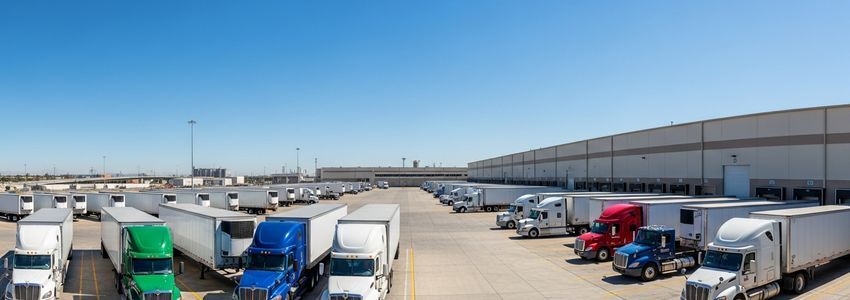
Effective cash flow management is the fuel that powers every successful trucking business, but waiting 30, 60, or even 90 days for shipper payments can bring operations to a halt. This is where trucking factoring provides a powerful solution, converting your outstanding invoices into immediate working capital. By selling your accounts receivable to a third-party company at a discount, you gain instant access to funds needed for fuel, payroll, maintenance, and growth, without taking on new debt. This guide explores every aspect of trucking invoice factoring to help you decide if it's the right financial tool for your company.
In This Article
- What Is Trucking Factoring?
- How Trucking Factoring Works
- Types of Trucking Factoring
- Key Benefits of Trucking Factoring
- Trucking Factoring Rates and Fees
- Who Qualifies for Trucking Factoring?
- How to Choose a Trucking Factoring Company
- Trucking Factoring vs. Other Financing Options
- How Crestmont Capital Can Help
- Real-World Scenarios
- How to Get Started
- Frequently Asked Questions
What Is Trucking Factoring?
Trucking factoring, also known as freight factoring or trucking invoice factoring, is a financial service where a trucking company sells its unpaid invoices (accounts receivable) to a specialized finance company called a factor. In return, the factoring company provides an immediate cash advance, typically between 80% and 98% of the invoice's total value. The factor then takes over the collection process from the trucking company's customer (the shipper or broker).
Once the customer pays the invoice in full, the factoring company releases the remaining balance to the trucking company, minus a small service fee. This process is not a loan; it is the sale of a business asset. Because it isn't debt, it doesn't appear as a liability on your balance sheet, making it a powerful tool for improving financial health without borrowing money.
The core purpose of factoring is to bridge the cash flow gap created by long payment terms. The U.S. trucking industry, which moved over 11.4 billion tons of freight in 2022 according to a report by the American Trucking Associations, relies on consistent cash flow to operate. Factoring provides owner-operators and fleet managers with the immediate liquidity needed to cover daily expenses like fuel, driver salaries, insurance premiums, and truck maintenance.
This financial tool is especially beneficial for new or growing companies that may not qualify for traditional bank loans due to a limited credit history. Factoring approval is based primarily on the creditworthiness of your customers, not your own business credit score. If you work with reliable shippers and brokers who have a strong history of paying their bills, you are an excellent candidate for accounts receivable financing.
How Trucking Factoring Works
The trucking factoring process is designed to be fast and straightforward, providing you with capital in as little as 24 hours. While specific steps can vary slightly between factoring companies for truckers, the core workflow remains consistent. Understanding this process helps demystify how you can turn your invoices into immediate cash.
Here is a step-by-step breakdown of how a typical trucking factoring arrangement works:
-
Deliver the Load and Generate an Invoice: You complete a haul for your customer as usual. After the load is successfully delivered, you generate an invoice for the agreed-upon amount and obtain a signed Bill of Lading (BOL) or proof of delivery.
-
Submit Documents to the Factoring Company: Instead of sending the invoice to your customer, you submit it along with the supporting documents (like the BOL and rate confirmation) to your chosen factoring company. This is typically done through an online portal, email, or a mobile app for maximum convenience.
-
Receive an Immediate Cash Advance: The factoring company verifies the documents and the creditworthiness of your customer. Once approved, they advance you a large percentage of the invoice value, usually between 80% and 98%, directly into your business bank account. This transfer often happens within 24 hours of submission.
-
The Factoring Company Collects Payment: The factor now owns the invoice and takes on the responsibility of collecting the full payment from your customer according to the original payment terms (e.g., net 30, net 60). Their professional collections team handles all communication, freeing up your time.
-
Receive the Remaining Balance (The Reserve): Once your customer pays the invoice in full to the factoring company, the factor releases the remaining portion of the invoice value to you. This is known as the reserve. The factoring company deducts their pre-agreed service fee from this reserve amount before sending you the final payment.
For example, if you submit a $2,000 invoice with a 95% advance rate and a 3% factoring fee, the process would look like this: you receive a $1,900 advance upfront. Once the customer pays the factor, you receive the remaining $100 minus the $60 fee (3% of $2,000), resulting in a final reserve payment of $40.
By the Numbers
Trucking Factoring -- Key Statistics
$940B+
Annual revenue of the U.S. trucking industry, highlighting its massive scale and capital needs.
30-90 Days
The typical time it takes for shippers and brokers to pay invoices, creating significant cash flow gaps for carriers.
82%
Percentage of small business failures caused by poor cash flow management, according to a U.S. Bank study.
$186.7B
The projected size of the global factoring services market by 2030, showing its increasing adoption.
Turn Your Invoices into Instant Cash
Stop waiting 30-90 days for payment. Fund your trucking business in as little as 24 hours with Crestmont Capital's flexible factoring solutions.
Apply Now →Types of Trucking Factoring
Not all trucking factoring services are the same. Factoring companies offer different types of arrangements to suit the varying needs of trucking businesses, from single owner-operators to large fleets. Understanding these options is critical to choosing the right partner and program for your specific operational and financial goals. The main distinctions revolve around who assumes the risk of non-payment and how many invoices you choose to factor.
Here are the most common types of factoring for trucking companies:
Recourse Factoring
Recourse factoring is the most common and affordable type of factoring. Under a recourse agreement, your trucking company is ultimately responsible if your customer fails to pay an invoice. If the factor is unable to collect payment after a certain period (usually 90-120 days), you will be required to buy back the invoice or replace it with a new one of equal value.
Because the trucking company retains the credit risk, factoring companies can offer lower fees and higher advance rates. This option is ideal for established carriers who work with a portfolio of creditworthy customers and are confident in their ability to pay.
Non-Recourse Factoring
Non-recourse factoring offers protection against non-payment due to a customer's declared bankruptcy or insolvency. In this arrangement, the factoring company assumes the credit risk. If your customer fails to pay an invoice for a credit-related reason, the factor absorbs the loss, and you are not required to buy back the invoice.
This added security comes at a higher cost, with slightly higher factoring fees compared to recourse agreements. It's important to read the fine print, as non-recourse protection typically does not cover payment disputes related to damaged goods, late delivery, or other service issues. This is a great option for companies that want to mitigate risk when working with new or less-established customers.
Spot Factoring
Spot factoring, or single-invoice factoring, gives you the flexibility to factor just one invoice at a time on an as-needed basis. There are no long-term contracts or monthly minimum volume requirements. This is an excellent solution for trucking companies that have generally stable cash flow but occasionally need a quick capital injection to cover a large, unexpected expense or take on a new, bigger load.
While spot factoring offers maximum flexibility, the fees per invoice are typically higher than those in a long-term contract factoring relationship. It's a perfect fit for owner-operators or small fleets who don't want to commit to factoring all their invoices.
Full-Service Factoring
Full-service factoring, also known as contract or whole-ledger factoring, involves an ongoing relationship where you agree to factor all of your invoices from one or more of your customers. This arrangement provides the most predictable cash flow and typically comes with the lowest rates due to the consistent volume of business you provide to the factor.
In addition to funding, full-service programs often include valuable back-office support services. These can include credit checks on potential customers, invoice processing, collections management, and detailed reporting. This administrative support frees you from time-consuming tasks, allowing you to focus on booking loads and growing your business.
Key Insight: The choice between recourse and non-recourse factoring is a balance of risk and cost. Non-recourse offers peace of mind but at a higher price, while recourse provides lower rates if you are confident in your customers' ability to pay.

Key Benefits of Trucking Factoring
Trucking invoice factoring offers a range of strategic advantages that go far beyond a simple cash advance. For both owner-operators and growing fleets, it serves as a comprehensive financial tool that stabilizes cash flow, reduces administrative burdens, and fuels growth. These benefits address some of the most persistent challenges in the trucking industry.
1. Immediate and Consistent Cash Flow: The primary benefit is the conversion of unpaid invoices into cash within 24 hours. This eliminates the uncertainty of waiting for customer payments, providing you with the consistent working capital needed to pay for fuel, cover payroll, handle repairs, and seize new opportunities without delay.
2. Debt-Free Financing: Unlike a traditional loan or line of credit, factoring is not debt. You are selling an asset (your invoices), not borrowing money. This means you don't add liabilities to your balance sheet, which can improve your company's financial standing and make it easier to qualify for other types of financing, like commercial truck financing, in the future.
3. Back-Office and Collections Support: Many factoring companies provide full back-office support. They handle invoice processing, mailing, and, most importantly, collections. Their professional teams are dedicated to following up on payments, which saves you significant administrative time and the stress of chasing down slow-paying customers.
4. Free Credit Checks on Customers: Factoring companies have extensive databases and tools to assess the creditworthiness of shippers and brokers. Before you accept a load from a new customer, your factoring partner can run a credit check for free. This helps you avoid working with companies that have a poor payment history, reducing your risk of bad debt.
5. Scalability for Growth: Factoring is a flexible financing solution that grows with your business. As your sales and invoice volume increase, the amount of capital available to you automatically increases. There is no need to re-apply for a larger loan; your funding line expands in direct proportion to your success.
6. High Approval Rates: Approval for trucking factoring is based on the financial strength of your customers, not your personal or business credit score. This makes it an accessible option for new trucking companies, owner-operators with limited credit history, or businesses that have been turned down for traditional bank loans.
7. Fuel Advances and Fuel Cards: Many trucking factoring companies offer integrated fuel advance programs and fuel cards. You can often receive an advance of up to 50% of a load's value as soon as it's picked up, providing immediate cash for fuel. Fuel cards also offer significant discounts at the pump, helping to lower one of your biggest operating costs.
Trucking Factoring Rates and Fees
Understanding the costs associated with trucking factoring is essential for evaluating its profitability for your business. While factoring is a powerful tool, its fees must be weighed against the benefits of immediate cash flow. The two primary components of factoring cost are the advance rate and the factoring rate, but other smaller fees can also apply.
Advance Rate: This is the percentage of the invoice's face value that the factoring company pays you upfront. Advance rates in the trucking industry are typically very high, ranging from 80% to 98%. The remaining portion, known as the reserve, is held by the factor until your customer pays the invoice in full.
Factoring Rate (or Discount Rate): This is the fee the factoring company charges for its service. It is calculated as a percentage of the invoice's total value and can range from 1% to 5%. The rate you are offered depends on several factors:
- Your monthly factoring volume: Higher volumes typically lead to lower rates.
- The credit quality of your customers: More creditworthy customers mean less risk and lower fees.
- The average payment cycle of your customers: Invoices that are paid faster often incur lower fees.
- The type of factoring: Recourse factoring has lower rates than non-recourse factoring.
Factoring rates can be structured in two main ways:
- Flat Rate: You are charged a single, fixed percentage of the invoice value, regardless of how long it takes your customer to pay. This offers simplicity and predictability in your cost calculations.
- Variable (Tiered) Rate: The fee is based on how long the invoice remains outstanding. For example, the rate might be 1.5% for the first 30 days, then an additional 0.5% for every subsequent 10-15 days until it is paid.
Other Potential Fees: While reputable companies are transparent about their costs, it's crucial to ask about other potential fees, which can include:
- Application or Setup Fees: A one-time fee for opening your account.
- ACH/Wire Transfer Fees: A small fee for transferring funds to your bank account.
- Monthly Minimums: Some contracts require you to factor a minimum dollar amount each month or pay a penalty.
- Termination Fees: A fee for ending your contract before its term expires.
Here is a simple comparison to illustrate how different rates can impact your net proceeds on a $5,000 invoice:
| Scenario | Invoice Value | Advance Rate | Upfront Advance | Factoring Rate | Total Fee | Net Proceeds |
|---|---|---|---|---|---|---|
| Company A (Low Volume) | $5,000 | 95% | $4,750 | 4.0% Flat | $200 | $4,800 |
| Company B (High Volume) | $5,000 | 97% | $4,850 | 2.5% Flat | $125 | $4,875 |
| Company C (Non-Recourse) | $5,000 | 92% | $4,600 | 5.0% Flat | $250 | $4,750 |
Get a Transparent Factoring Rate Quote
No hidden fees. No surprises. Find out exactly how much you can get and what it will cost. Our team provides clear, upfront pricing tailored to your business.
Get My Free Quote →Who Qualifies for Trucking Factoring?
One of the most significant advantages of trucking factoring is its accessibility. Unlike traditional bank loans that involve rigorous underwriting and focus heavily on the applicant's credit history and time in business, factoring takes a different approach. The primary qualification criterion is the creditworthiness of your customers, not your own company.
This makes factoring an ideal financing solution for a wide range of trucking businesses, including:
- New Owner-Operators and Startups: Companies that are just starting out often lack the two-plus years of financial history required by banks. Factoring allows them to secure funding from day one, as long as they are hauling for reputable customers.
- Companies with Poor or Limited Credit: If your business or personal credit score is less than perfect, you can still qualify for factoring. The factor is more concerned with the broker's or shipper's ability to pay the invoice than your past financial challenges.
- Rapidly Growing Fleets: A fast-growing business often has working capital needs that outpace its profits. Factoring provides a scalable funding solution that grows with your sales, ensuring you always have the cash to take on more loads.
- Businesses Turned Down by Banks: Many viable trucking companies are denied bank loans for various reasons. Factoring provides a reliable alternative to keep operations running smoothly.
While specific requirements vary between factoring companies, here are the typical documents and qualifications needed to get started:
- A Legally Registered Business: You must have a registered business entity (e.g., LLC, S-Corp, or Sole Proprietorship).
- Active MC/DOT Number: You need to have your own motor carrier authority.
- Creditworthy Customers: Your invoices must be from shippers and brokers with a solid credit history. The factor will verify this.
- Unencumbered Invoices: The invoices you wish to factor must be free of any liens or claims from other creditors.
- Basic Documentation: You will typically need to provide a completed application, a copy of your Articles of Incorporation or DBA filing, your W-9 form, and a certificate of insurance.
How to Choose a Trucking Factoring Company
Selecting the right factoring partner is a critical decision that can significantly impact your business's financial health and operational efficiency. With hundreds of trucking factoring companies to choose from, it's important to look beyond the headline rate and evaluate several key factors. A great partner acts as a true extension of your team, providing reliable service and transparent terms.
Here are the most important criteria to consider when choosing a factoring company:
-
Transparency in Rates and Fees: A reputable factor will be upfront about all costs. Ask for a detailed fee schedule and ensure there are no hidden charges like "invoice processing fees," "administration fees," or other unexpected costs. The best companies offer simple, easy-to-understand pricing.
-
Contract Terms and Flexibility: Carefully review the contract length, termination clauses, and any monthly volume requirements. Avoid companies that lock you into long, inescapable contracts with high penalty fees. Look for partners that offer flexible agreements, such as short-term contracts or the ability to switch between recourse and non-recourse.
-
Recourse vs. Non-Recourse Options: Determine which risk model suits your business best. Does the company offer both recourse and non-recourse factoring? Understanding the specifics of their non-recourse protection is vital-ensure you know exactly what situations are covered.
-
Industry Specialization: Choose a company that specializes in the trucking industry. They will understand the unique challenges you face, be familiar with the major shippers and brokers, and offer services tailored to your needs, such as fuel advances, TMS integrations, and expertise in handling Bills of Lading and rate confirmations.
-
Customer Service and Support: You will be interacting with your factoring company regularly, so excellent customer service is non-negotiable. Do you get a dedicated account manager? Are they easy to reach by phone or email? Read reviews and ask for references to gauge their reputation for responsiveness and support.
-
Technology and Ease of Use: The best factoring companies for truckers have modern, user-friendly technology. Look for a company with a simple online portal or mobile app for submitting invoices, checking the status of payments, and running credit reports on new customers. A streamlined process saves you valuable time.
-
Additional Services and Perks: Consider what else the company brings to the table. Do they offer fuel cards with significant discounts? Fuel advances? Free credit checks? Access to load boards? These value-added services can make a significant difference to your bottom line. Our detailed freight factoring guide covers more on these perks.
Key Insight: The lowest factoring rate isn't always the best deal. A slightly higher rate from a company with transparent terms, excellent service, and valuable perks like fuel cards can provide a much better overall value for your business.
Trucking Factoring vs. Other Financing Options
Trucking factoring is just one of several ways to finance your operations. Understanding how it compares to other common options like traditional bank loans, merchant cash advances (MCAs), and business lines of credit can help you make the most informed decision for your company's needs. Each solution has its own set of pros and cons regarding speed, cost, and qualification requirements.
As highlighted by the U.S. Small Business Administration, managing cash flow is a critical challenge for small businesses. The right financing can make all the difference.
| Feature | Trucking Factoring | Traditional Bank Loan | Business Line of Credit | Merchant Cash Advance (MCA) |
|---|---|---|---|---|
| Funding Speed | Very Fast (1-2 days) | Slow (Weeks to months) | Moderate (1-2 weeks) | Very Fast (1-3 days) |
| Credit Requirement | Based on customer's credit (low requirement for you) | Excellent personal and business credit required | Good to excellent credit required | Low credit requirement; based on revenue |
| Impact on Debt | Does not add debt to balance sheet | Adds long-term debt to balance sheet | Adds revolving debt when used | Not a loan, but repayment can be aggressive |
| Cost Structure | Factoring fee (1-5% of invoice) | Annual interest rate (APR) | Annual interest rate on drawn amount | Factor rate (can be very high) |
| Best For | Solving ongoing cash flow gaps from slow-paying customers | Large, one-time investments (e.g., buying property) | Managing short-term cash flow fluctuations | Emergency funding when other options fail |
While factoring is ideal for managing cash flow from receivables, other funding like trucking company business loans may be better suited for long-term capital investments. The best strategy often involves using a mix of financial tools tailored to specific business needs.
How Crestmont Capital Can Help
At Crestmont Capital, we specialize in providing fast, flexible, and transparent financial solutions for the trucking industry. We understand that cash flow is the lifeblood of your business, and our trucking factoring programs are designed to put you in control of your finances. We go beyond being just a funding source to become a dedicated partner invested in your success.
Our approach is built on a foundation of industry expertise and a commitment to exceptional service. We know the difference between a Bill of Lading and a rate confirmation, and we understand the pressures you face every day. This expertise allows us to provide a seamless and efficient funding experience, so you can focus on what you do best: moving freight.
Here’s what sets Crestmont Capital apart:
- Competitive and Transparent Rates: We offer some of the most competitive trucking factoring rates in the industry. Our fee structures are simple and transparent, with no hidden costs or confusing terms. We believe in building trust through honesty and clarity.
- High Advance Rates: Get up to 98% of your invoice value funded within 24 hours. We help you maximize your immediate cash flow so you can cover expenses and invest in growth without hesitation.
- Flexible Contract Options: We offer both recourse and non-recourse factoring to match your risk tolerance. Our agreements are designed with your needs in mind, providing the flexibility you need to adapt to changing market conditions.
- Dedicated Account Managers: When you partner with us, you get a dedicated account manager who understands your business. You’ll have a single point of contact who is always ready to answer your questions and provide support.
- Advanced Technology: Our easy-to-use online portal and mobile app make it simple to submit invoices, monitor your account, and run free credit checks on your customers 24/7.
- Value-Added Services: We offer more than just funding. Take advantage of our fuel card programs for significant savings at the pump and fuel advances to get you on the road faster. Our traditional factoring services also include comprehensive back-office support.
We are proud to support the trucking companies that form the backbone of the American economy. Whether you are a single owner-operator or manage a growing fleet, Crestmont Capital has a factoring solution to help you achieve your goals.
Real-World Scenarios
To better understand the practical application of trucking factoring, let's explore a few common scenarios where it provides a critical solution. These examples illustrate how different types of trucking businesses leverage factoring to overcome specific financial challenges and achieve their goals.
Scenario 1: The New Owner-Operator
- The Challenge: Maria just launched her own trucking business with a single truck. She has her MC authority and has started booking loads, but her initial capital is low. She can't afford to wait 45 days for her first big payment, as she needs cash immediately for fuel, insurance, and living expenses.
- The Solution: Maria partners with a factoring company. After delivering her first $3,000 load, she submits the invoice and BOL. Within 24 hours, she receives a 95% advance of $2,850. This immediate cash infusion allows her to refuel, pay her insurance premium, and confidently book her next load without any cash flow stress.
Scenario 2: The Expanding Small Fleet
- The Challenge: David's fleet has grown to five trucks, and business is booming. He has an opportunity to take on a lucrative new lane but needs to hire two more drivers and purchase another truck. A bank loan is taking too long, and the inconsistent payment cycles from his current customers make it difficult to manage payroll and save for a down payment.
- The Solution: David signs up for a full-service factoring program. By factoring his entire monthly receivables of $100,000, he establishes a predictable and steady stream of income. This allows him to meet his bi-weekly payroll without issue, cover maintenance on his existing fleet, and accumulate the capital needed for a down payment on a new truck.
Scenario 3: The Established Carrier with a Slow-Paying Client
- The Challenge: ABC Trucking, a 20-truck fleet, has a long-standing relationship with a major national retailer. This client represents 30% of their business but consistently pays on net-90 terms. This ties up a significant amount of capital and strains their ability to pay their drivers and vendors on time.
- The Solution: Instead of factoring all their invoices, ABC Trucking uses spot factoring specifically for the invoices from this one slow-paying client. This unlocks hundreds of thousands of dollars in working capital immediately, improving their cash position without altering their relationship with other, faster-paying customers.
Scenario 4: The Carrier with Bruised Credit
- The Challenge: After a tough year, the owner of a three-truck operation has a low personal credit score, making it impossible to secure a traditional line of credit. However, his company exclusively hauls for large, well-known brokers with excellent credit ratings.
- The Solution: He applies for owner operator factoring. The factoring company's approval is based on the high credit quality of his customers, not his personal score. He is quickly approved and begins factoring his invoices, allowing him to stabilize his finances and rebuild his business without his credit history being an obstacle. The factoring industry as a whole is seeing significant growth, as noted by market analysis from outlets like Reuters, because it serves this exact need.
How to Get Started
Fill out our secure online application in just a few minutes. Provide some basic information about your trucking business and your funding needs.
A dedicated account manager will contact you to request a few standard documents, such as your MC authority, certificate of insurance, and W-9.
Once your information is verified, we will provide a clear, easy-to-understand factoring agreement with your approved rates and terms. Approval can happen in as little as a few hours.
As soon as you sign the agreement, you can begin submitting invoices and receiving cash advances, often on the very same day.
Ready to Fuel Your Business Growth?
The application is free, fast, and won't impact your credit score. See how much working capital you can unlock today.
Apply Now →Frequently Asked Questions
1. Is trucking factoring a loan?
No, trucking factoring is not a loan. It is a financial transaction where you sell your accounts receivable (unpaid invoices) at a discount to a factoring company. Because it is the sale of an asset, it does not create debt on your balance sheet or require monthly payments like a loan.
2. What is the difference between recourse and non-recourse factoring?
In recourse factoring, you (the trucking company) are responsible for buying back any invoice that your customer fails to pay. In non-recourse factoring, the factoring company assumes the credit risk of non-payment if your customer declares bankruptcy. Recourse factoring is more common and has lower fees, while non-recourse offers more protection at a higher cost.
3. How quickly can I get funded?
Once your account is set up, you can typically receive funding within 24 hours of submitting a valid invoice and supporting documents. The initial account setup process itself can often be completed in just 1-3 business days.
4. Can I qualify for factoring if I have bad credit?
Yes, you can. Factoring decisions are based primarily on the creditworthiness of your customers (the shippers and brokers you haul for), not your personal or business credit score. As long as you are working with reliable customers who have a history of paying their bills, you are a strong candidate for factoring.
5. What documents are needed to apply?
Typically, you will need to provide a completed application, a copy of your MC authority, a certificate of insurance, your business formation documents (like Articles of Incorporation), and a W-9 form. The process is designed to be much simpler and require less paperwork than a bank loan application.
6. Do I have to factor all of my invoices?
Not necessarily. Some factoring companies offer "spot factoring," which allows you to factor a single invoice at a time. Other agreements may require you to factor all invoices from a specific customer. It's important to discuss this with your factoring company to find a program that fits your needs.
7. Will my customers know I am using a factoring company?
Yes, they will. This is called "notification" factoring and is standard in the trucking industry. The factoring company will send a Notice of Assignment (NOA) to your customer, instructing them to remit payment for your invoices directly to the factor. Most large shippers and brokers are very familiar with this process and work with factored carriers every day.
8. What is a fuel advance?
A fuel advance is an advance on your freight bill that you can receive as soon as you've picked up a load, before it's even delivered. Factoring companies can advance you up to 50% of the load's value, which is often loaded onto a fuel card, to help you cover the cost of fuel for that specific haul.
9. Are there long-term contracts?
Contract lengths vary by company. Some may require a one-year commitment, while others offer shorter terms or even month-to-month agreements. It is crucial to review the contract term and any early termination fees before signing with a factoring company.
10. How much does trucking factoring cost?
The cost, or factoring rate, typically ranges from 1% to 5% of the invoice's face value. The exact rate depends on your monthly factoring volume, your customers' credit quality, how long it takes them to pay, and whether you choose a recourse or non-recourse program.
11. Can I use factoring for a fleet of trucks?
Absolutely. Fleet factoring is a common and highly effective way for companies with multiple trucks to manage their complex cash flow needs. Factoring provides the scalable funding required to cover larger payrolls, fleet-wide maintenance, and other significant operational expenses. Higher volumes from a fleet can also lead to lower factoring rates.
12. What happens if my customer disputes an invoice?
Non-recourse protection does not cover invoice disputes related to service quality, such as damaged goods or late delivery. In these cases, you are responsible for resolving the dispute with your customer. Once the dispute is settled, the customer can pay the invoice, or you may need to buy back the invoice from the factor.
13. Can I get a factoring line if I already have an SBA loan or other financing?
It is possible, but it depends on the terms of your existing financing. If your current lender has a lien on all of your business assets, including your accounts receivable (a UCC-1 filing), you will need their permission. The factoring company will often work with your lender to establish a subordination agreement that allows you to factor your invoices.
14. What is the reserve and when do I get it back?
The reserve is the portion of the invoice value that the factoring company holds back after paying the initial advance (e.g., if the advance rate is 95%, the reserve is 5%). You receive the reserve amount, minus the factoring fee, as soon as your customer pays the invoice in full to the factoring company.
15. How do I choose the best trucking factoring company?
Look for a company with transparent rates, flexible contract terms, and a specialization in the trucking industry. Prioritize excellent customer service, a dedicated account manager, and modern technology for easy invoice submission. Also, consider value-added services like fuel cards and free credit checks to get the most value from the partnership.
In the competitive and capital-intensive trucking industry, maintaining consistent cash flow is not just an advantage-it's a necessity for survival and growth. By eliminating the long wait for customer payments, trucking factoring provides the immediate financial stability required to manage daily operations, handle unexpected costs, and scale your business effectively. Whether you're a new owner-operator or an established fleet, factoring can be the strategic tool that keeps your wheels turning and your business moving forward.
Disclaimer: The information provided in this article is for general educational purposes only and is not financial, legal, or tax advice. Funding terms, qualifications, and product availability may vary and are subject to change without notice. Crestmont Capital does not guarantee approval, rates, or specific outcomes. For personalized information about your business funding options, contact our team directly.