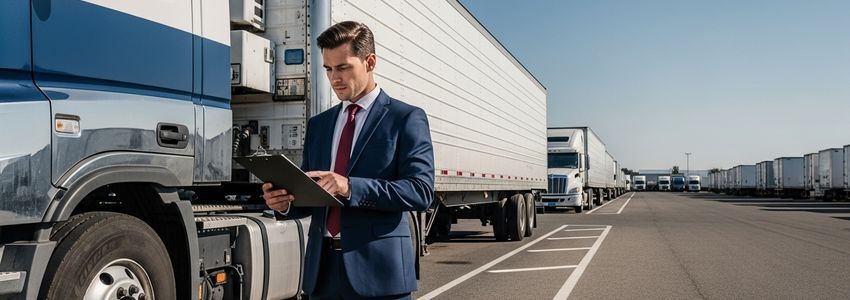
For any business that relies on transportation, logistics, or heavy-duty hauling, commercial trailers are not just assets; they are the engines of revenue. From construction and agriculture to freight and delivery services, the right trailer can unlock new contracts, improve efficiency, and drive significant growth. However, the substantial upfront cost of purchasing a new or used trailer can be a major barrier. This is where strategic trailer financing becomes an indispensable tool for business owners. It provides the capital needed to acquire essential equipment without depleting cash reserves, allowing companies to scale operations, meet demand, and stay competitive. This comprehensive guide will walk you through every aspect of financing a commercial trailer, from understanding the basics to navigating the application process and securing the best possible terms for your business.
In This Article
- What Is Trailer Financing?
- Types of Trailers You Can Finance
- How Trailer Financing Works
- Key Benefits of Trailer Financing
- Who Qualifies for Trailer Financing?
- Trailer Financing vs. Leasing
- Trailer Financing for Bad Credit
- How Crestmont Capital Helps
- Real-World Scenarios
- How to Apply
- Frequently Asked Questions
- How to Get Started
- Conclusion
What Is Trailer Financing?
Trailer financing is a specialized type of business funding designed specifically for the acquisition of commercial trailers. It functions as a secured loan, meaning the trailer itself serves as the collateral for the funds provided. A business owner receives capital from a lender to purchase a trailer and then repays that amount, plus interest and any applicable fees, in fixed monthly installments over a predetermined period, known as the loan term. Once the loan is fully repaid, the business owns the trailer outright.
This financing model is a cornerstone of the equipment finance industry because it directly ties the loan to a tangible, revenue-generating asset. Unlike an unsecured business loan, which is granted based primarily on the company's overall creditworthiness and cash flow, a trailer loan is secured by the intrinsic value of the equipment. This collateral-based structure significantly reduces the lender's risk, which often translates into more accessible approvals, higher funding amounts, and more competitive interest rates compared to other forms of business credit.
Businesses of all sizes and across numerous sectors leverage commercial trailer financing. Independent owner-operators use it to purchase their first semi-trailer and launch their careers. Large logistics fleets rely on it to expand their capacity and upgrade to newer, more efficient models. Construction companies, landscaping firms, agricultural operations, and event management businesses all use various forms of trailer financing to acquire the specific equipment they need to operate effectively. By providing a direct path to equipment ownership without a crippling upfront cash expenditure, trailer financing empowers businesses to invest in their growth, enhance their service offerings, and build long-term equity in their assets.
Types of Trailers You Can Finance
The world of commercial trailers is vast and varied, with specialized designs built for nearly every imaginable cargo and industry. Lenders like Crestmont Capital understand this diversity and offer financing for a wide spectrum of new and used trailers. Understanding the different types can help you identify the exact asset your business needs to finance.
Semi-Trailer Financing This is a broad category that encompasses the trailers pulled by Class 8 tractor trucks. Financing is available for virtually all types of semi-trailers, including:
- Dry Van Trailers: These are the most common type of trailer seen on the road. They are fully enclosed rectangular boxes, typically 53 feet long, used to haul a wide range of non-perishable goods, from electronics and apparel to palletized consumer products. Their versatility makes them a staple for general freight and logistics companies.
- Refrigerated Trailers (Reefers): Essentially insulated dry vans equipped with a climate-control unit, reefers are essential for transporting temperature-sensitive goods. This includes fresh produce, frozen foods, pharmaceuticals, and flowers. Reefer financing is critical for businesses in the cold chain logistics sector.
- Flatbed Trailers: These open-deck trailers have no sides or roof, making them ideal for hauling oversized, bulky, or irregularly shaped cargo that is difficult to load into an enclosed van. Common loads include construction materials like steel beams and lumber, heavy machinery, and large industrial components.
- Step-Deck (Drop-Deck) Trailers: A variation of the flatbed, a step-deck trailer has two deck levels-an upper deck over the fifth wheel and a longer, lower main deck. This design allows for the transportation of taller cargo that would exceed height limits on a standard flatbed.
- Lowboy Trailers: These are specialized trailers with a deck that sits extremely close to the ground. They are used for hauling the heaviest and tallest equipment, such as excavators, bulldozers, and large agricultural machinery, that cannot be transported on other trailer types.
Vocational and Specialized Trailer Financing Beyond standard semi-trailers, financing is readily available for a host of vocational and specialized trailers designed for specific industries.
- Dump Trailers: Essential for the construction, demolition, and landscaping industries, these trailers have a hydraulic lift system to dump loose materials like gravel, sand, dirt, and debris. They come in various sizes, from smaller models pulled by pickup trucks to large semi-trailer versions.
- Tanker Trailers: Designed to transport liquids and gases, tankers are used in numerous industries. This includes food-grade tankers for milk and juice, chemical tankers for hazardous materials, and petroleum tankers for gasoline and oil.
- Car Haulers / Auto Transport Trailers: These multi-level trailers are specifically designed to transport multiple vehicles at once. They are the backbone of the automotive logistics industry, used by manufacturers, dealerships, and auto auction houses.
- Livestock Trailers: Used in the agricultural sector, these trailers are designed for the safe and humane transportation of cattle, hogs, and other livestock. They feature proper ventilation and specialized flooring to ensure animal welfare during transit.
- Cargo Trailer Financing: This category often refers to smaller, enclosed trailers that are typically pulled by light-duty or medium-duty trucks. They are popular with contractors, mobile service businesses, and event companies for securely transporting tools, equipment, and supplies.
- Utility Trailer Financing: This is a general term for open-deck trailers that are smaller than flatbeds. Landscaping companies use them to haul mowers and equipment, while contractors might use them for tools and materials. Their versatility makes them a popular choice for a wide range of small and medium-sized businesses.
No matter the specific type, if a trailer is used for commercial purposes and generates revenue for your business, it can likely be financed. Lenders evaluate the asset's value, lifespan, and resale market to structure a loan that makes sense for both the borrower and the lender.
How Trailer Financing Works
The process of securing a trailer loan can seem complex, but reputable lenders have streamlined it to be fast and straightforward. While the specific details may vary slightly between financial institutions, the core journey from application to acquisition generally follows four key stages. Understanding this workflow helps business owners prepare for the process and know what to expect at each step.
First, the business identifies the specific new or used trailer it wishes to purchase. This includes getting a detailed quote or bill of sale from the seller, whether it is a dealership or a private party. This document is crucial as it provides the lender with the exact cost of the asset they will be financing.
Next, the business submits a financing application. With modern lenders like Crestmont Capital, this is often a simple online form that can be completed in minutes. The application gathers basic information about the business, its owners, and the trailer being purchased.
The lender then moves to the underwriting and review stage. This is where they assess the risk of the loan by evaluating the applicant's credit profile, time in business, and financial stability. For asset-backed financing, the value and condition of the trailer are also significant factors. The lender's goal is to confirm that the business has the capacity to make the required monthly payments.
Finally, upon approval, the lender presents a formal offer. This document outlines the loan amount, interest rate, term length, and monthly payment. If the business owner accepts the terms, they sign the financing agreements. The lender then funds the transaction directly, paying the seller for the trailer. The business takes possession of its new asset and begins making its scheduled payments to the lender.
Quick Guide
How Trailer Financing Works - At a Glance
Submit a simple online application with basic information about your business and the trailer you want to purchase.
Our team reviews your application and documents. We look for the best financing solution for your specific needs, often providing a decision in hours.
We present you with clear, transparent financing terms, including your rate, term length, and monthly payment, with no hidden fees.
Once you accept the terms, we fund the seller directly. You take possession of your trailer and put it to work for your business immediately.
Key Benefits of Trailer Financing
Opting to finance a commercial trailer rather than purchasing it with cash is a strategic financial decision that offers numerous advantages for a growing business. These benefits extend far beyond simply acquiring an asset, impacting cash flow, operational capacity, and long-term financial health.
1. Conservation of Working Capital This is arguably the most significant benefit. A commercial trailer can cost anywhere from $20,000 to over $100,000. Paying this amount in cash can severely deplete a company's working capital, leaving little room for other critical business expenses like payroll, fuel, marketing, or unexpected repairs. Financing allows you to spread this large cost over several years, preserving your cash for day-to-day operations and strategic investments.
2. Immediate Return on Investment (ROI) With a trailer loan, you can acquire and deploy a revenue-generating asset immediately. The trailer starts earning money from the first day it is put into service. In many cases, the monthly income generated by the trailer can exceed the monthly financing payment, resulting in a positive cash flow from the investment right away. This allows the asset to essentially pay for itself over time.
3. Predictable and Manageable Budgeting Trailer financing typically comes with a fixed interest rate and a fixed monthly payment. This predictability is invaluable for business budgeting and financial forecasting. You know exactly what your equipment costs will be each month for the entire term of the loan, eliminating guesswork and protecting your business from fluctuating interest rates or market volatility.
4. Building Business Credit Successfully managing a trailer loan and making consistent, on-time payments is an excellent way to build a strong credit history for your business. A positive payment history on a significant asset-backed loan demonstrates financial responsibility to credit bureaus and future lenders. This can make it easier and more affordable to secure financing for additional equipment or other business needs in the future.
5. Potential Tax Advantages Financing a trailer can offer significant tax benefits. Under Section 179 of the IRS tax code, businesses may be able to deduct the full purchase price of qualifying equipment in the year it is placed into service. Additionally, bonus depreciation rules may allow for further accelerated depreciation. These deductions can substantially lower a company's taxable income. It is crucial to consult with a tax professional to understand how these benefits apply to your specific financial situation.
6. Scalability and Fleet Expansion Financing removes the financial bottleneck that often prevents businesses from growing. It enables companies to add trailers to their fleet as new opportunities arise, rather than waiting to accumulate enough cash. This agility allows businesses to bid on larger contracts, serve more clients, and scale their operations in direct response to market demand.
7. Flexible and Customized Terms Unlike a one-size-fits-all bank loan, specialized equipment lenders often provide flexible financing structures. This can include varying term lengths (e.g., 24 to 72 months) to achieve a desired monthly payment, seasonal payment plans for businesses with fluctuating revenue, or options for little to no down payment for well-qualified buyers. This customization ensures the financing plan aligns with the business's unique cash flow cycle.
Ready to Finance Your Trailer?
Get fast, flexible trailer financing from the #1 business lender in the U.S. No obligation - apply in minutes.
Apply NowWho Qualifies for Trailer Financing?
One of the most common questions business owners ask is, "Will I qualify for a trailer loan?" While every lender has its own specific underwriting criteria, the qualifications for asset-backed financing are often more flexible than for other types of business loans. Lenders evaluate a combination of factors to assess an applicant's ability to repay the loan.
Credit Score: A strong personal and business credit score is always beneficial and will help secure the best possible trailer financing rates and terms. Lenders typically like to see FICO scores of 650 or higher. However, because the trailer itself acts as collateral, many lenders are willing to work with business owners who have less-than-perfect credit. Specialized programs exist for those with scores in the low 600s or even lower, though these may require a larger down payment or come with higher interest rates.
Time in Business: Lenders prefer to see a track record of stability. The standard benchmark is often two years in business. Companies that have been operating for two or more years have demonstrated their ability to manage finances and generate consistent revenue. That said, startup businesses and owner-operators with less than two years of history are not automatically disqualified. They can often secure financing by demonstrating strong industry experience, presenting a solid business plan, providing a larger down payment, or having a strong personal credit profile.
Annual Revenue and Cash Flow: Lenders need to be confident that your business generates enough income to comfortably cover the monthly loan payment in addition to its other operating expenses. They will typically review the last 3 to 6 months of your business bank statements to analyze your cash flow patterns. There isn't always a strict minimum annual revenue requirement; instead, the focus is on the debt-to-income ratio and the consistency of your deposits.
Down Payment: While many lenders offer 100% financing (zero down payment) for highly qualified applicants, providing a down payment can significantly improve your chances of approval and lead to better terms. A typical down payment ranges from 10% to 20% of the trailer's purchase price. A larger down payment reduces the lender's risk, lowers your loan-to-value ratio, and results in a smaller monthly payment for your business. For businesses with challenged credit or limited time in business, a down payment is often a key factor in securing an approval.
Trailer Age and Condition: The asset you are financing plays a role in the qualification process. Lenders have different guidelines for new versus used trailers. For used equipment, there may be age restrictions (e.g., no older than 10-15 years) or mileage limits. The lender needs to ensure the trailer has enough useful life remaining to outlast the loan term and retains sufficient resale value to serve as effective collateral.
By evaluating these factors holistically, lenders can build a complete picture of an applicant's financial situation and create a financing structure that works for their specific circumstances.
Trailer Financing vs. Trailer Leasing
When acquiring a new trailer, businesses face a critical decision: should they finance to own or lease the equipment? Both options provide access to the necessary asset, but they function very differently and offer distinct advantages depending on the company's financial goals, operational needs, and long-term strategy. Understanding the fundamental differences is key to making the right choice.
A trailer loan, or an Equipment Finance Agreement (EFA), is a path to ownership. You borrow money to purchase the trailer, make regular payments, and at the end of the term, you own the asset free and clear. You build equity with every payment and can use, modify, or sell the trailer as you see fit.
A trailer lease, on the other hand, is essentially a long-term rental agreement. You pay a monthly fee to use the trailer for a specified period. At the end of the lease term, you typically have several options: return the trailer, renew the lease, or purchase the trailer at its fair market value or a predetermined price (depending on the lease structure).
Here is a breakdown of the key differences:
| Feature | Trailer Financing (Loan) | Trailer Leasing |
|---|---|---|
| Ownership | You own the trailer at the end of the term. | The leasing company owns the trailer. You have the option to buy it at the end of the term. |
| Monthly Payments | Typically higher, as you are paying off the full value of the asset to build equity. | Typically lower, as you are only paying for the trailer's depreciation during the lease term. |
| Upfront Costs | Often requires a down payment (10-20%), though 100% financing is available for some. | Usually requires the first and last month's payment, plus a security deposit. |
| Customization & Use | No restrictions. You can customize, modify, and use the trailer as much as you want. | Restrictions on modifications and mileage often apply to protect the asset's value. |
| Maintenance | You are fully responsible for all maintenance, repairs, and upkeep. | Responsibility varies by lease agreement. Some full-service leases may include maintenance. |
| Tax Implications | You may be able to deduct interest payments and depreciate the asset (e.g., Section 179). | Lease payments are typically treated as an operating expense and can be fully deducted. |
When to Choose Financing: Financing is the ideal choice for businesses that plan to use the trailer for the long term. If the trailer is core to your operations and you anticipate using it for many years beyond the loan term, ownership makes the most financial sense. It allows you to build equity in a valuable asset that you can eventually sell or use as collateral for future financing.
When to Choose Leasing: Leasing is often preferred by businesses that want to maintain a modern fleet and regularly upgrade their equipment every few years. The lower monthly payments can also be attractive for preserving cash flow. It is a good option if you want to avoid the responsibilities of long-term ownership, such as eventual disposal of an aging asset, or if you need a specialized trailer for a specific, time-limited project.
Trailer Financing Options for Bad Credit
A common misconception among business owners is that a poor credit score is an insurmountable obstacle to securing equipment financing. While a low score can make the process more challenging, obtaining trailer financing with bad credit is not only possible but also quite common. Specialized lenders and finance companies understand that a credit score does not tell the whole story of a business, especially in industries like trucking and construction where financial histories can be complex.
The key reason bad credit financing is accessible is the nature of the loan itself. Because the trailer serves as collateral, the lender's risk is substantially mitigated. If the borrower defaults on the loan, the lender can repossess and sell the trailer to recoup their investment. This asset-backed security gives lenders more confidence and flexibility when working with applicants who have FICO scores below the traditional "good" threshold (typically under 620).
However, businesses applying with challenged credit should be prepared for different terms compared to those offered to applicants with strong credit profiles. Lenders implement specific measures to further reduce their risk.
- Higher Interest Rates: The interest rate is the primary tool lenders use to compensate for increased risk. Applicants with bad credit can expect to receive higher
trailer financing rates. While the rate will be higher, it's important to evaluate the loan based on the return on investment the trailer will generate. If the equipment's earnings far exceed the financing cost, the loan can still be a highly profitable decision. - Larger Down Payment: A significant down payment is often required for bad credit trailer financing. Asking for 20%, 30%, or even more of the purchase price upfront reduces the total amount financed (the loan-to-value ratio) and demonstrates the borrower's commitment. This "skin in the game" shows the lender that the business owner is invested in the success of the purchase.
- Shorter Loan Terms: Lenders may offer shorter repayment periods, such as 24 or 36 months instead of 60 or 72. While this results in a higher monthly payment, it allows the borrower to pay off the loan faster and reduces the lender's long-term exposure to risk.
- Additional Collateral or Guarantees: In some cases, a lender might ask for additional collateral beyond the trailer itself, or a stronger personal guarantee from the business owner.
For business owners with bad credit, the best strategy is to work with a lender that specializes in second-chance financing. These lenders have experience evaluating applications based on factors beyond just the credit score, such as industry experience, recent payment history, and the strength of their business cash flow. Being prepared with a solid down payment and a clear plan for how the trailer will generate revenue can make all the difference in securing an approval.
Key Stat: According to the American Trucking Associations, trucks (including tractor-trailers) moved approximately 11.84 billion tons of freight in 2020, representing over 72% of total domestic tonnage shipped in the U.S. This highlights the immense and constant demand for commercial trailers.
How Crestmont Capital Helps
Navigating the world of commercial trailer financing can be overwhelming, but partnering with the right lender can transform a complex process into a seamless experience. At Crestmont Capital, we are more than just a source of funds; we are a strategic partner dedicated to helping your business grow. Our deep expertise in the transportation, construction, and logistics industries allows us to provide financing solutions that are not just fast, but also intelligently structured to meet your specific needs.
We specialize in a broad range of funding options, from standard Equipment Financing to highly specialized programs. Whether you are an owner-operator seeking Semi Truck Financing for a new rig and trailer package, or a large fleet in need of a master lease line for multiple units, we have the resources and flexibility to deliver. Our understanding of asset values means we can finance a wide array of new and used trailers, from dry vans and reefers to dump trailers and lowboys.
What truly sets Crestmont Capital apart is our streamlined process and commitment to our clients. Our simple online application takes only minutes to complete, and our dedicated financing specialists work quickly to find the best possible terms for your situation. We understand that in your business, time is money. That is why we often provide credit decisions within hours and can fund transactions in as little as 24-48 hours. This speed allows you to seize opportunities, replace broken-down equipment without delay, and keep your operations running smoothly.
For businesses exploring all their options, we also offer comprehensive Equipment Leasing programs. Our team will take the time to explain the differences between financing and leasing, helping you make an informed decision that aligns with your financial goals. We believe in transparency and education, as detailed in resources like our Equipment Financing 101 blog post. By taking a consultative approach, we build long-term relationships and empower our clients to leverage Commercial Vehicle Financing as a powerful tool for sustainable growth.
Finance Your Next Trailer with Confidence
Partner with an industry leader. Get a fast, no-obligation quote from Crestmont Capital today.
Get Your Free QuoteReal-World Scenarios: How Businesses Use Trailer Financing
To truly understand the impact of trailer financing, it is helpful to look at practical, real-world examples. These scenarios illustrate how different types of businesses leverage financing to overcome challenges and achieve their growth objectives.
Scenario 1: The Startup Owner-Operator
- The Business: Maria, a truck driver with 10 years of experience, decides to start her own independent trucking business. She has secured a promising contract with a local distributor but needs her own 53-foot dry van trailer to service the account.
- The Challenge: As a new business entity with limited financial history, traditional banks are hesitant to lend to her. Maria has saved enough for a down payment on a truck but does not have the additional $45,000 in cash to purchase a quality used trailer outright.
- The Solution: Maria partners with a specialized equipment lender like Crestmont Capital. The lender looks beyond her new business status and considers her extensive industry experience and the secured contract. They approve her for a trailer loan with a 20% down payment.
- The Outcome: Maria acquires the trailer and begins servicing her contract immediately. The monthly revenue from the contract easily covers her truck and trailer payments, fuel, and other expenses, leaving her with a healthy profit. The financing allowed her to launch her business and start building equity in her own equipment, something that would have been impossible with cash alone.
Scenario 2: The Expanding Construction Company
- The Business: A mid-sized construction company, "Bedrock Builders," wins a large municipal contract to handle debris removal and material hauling for a major infrastructure project. Their current fleet of two dump trailers is insufficient to meet the project's demanding schedule.
- The Challenge: The company needs to acquire two additional heavy-duty dump trailers quickly to avoid project delays. The total cost is over $120,000, and the company's leadership wants to preserve their cash reserves for payroll and materials.
- The Solution: Bedrock Builders applies for trailer financing. Because they have been in business for over five years with strong revenues and good credit, they are approved for 100% financing with competitive terms within 24 hours.
- The Outcome: The two new dump trailers are delivered to the job site within the week. The company is able to increase its hauling capacity, meet the project deadlines, and avoid costly penalties. By financing the equipment, they maintained a strong cash position, allowing them to manage the project's cash flow effectively without financial strain.
Scenario 3: The Agricultural Business with Seasonal Needs
- The Business: A family-owned cattle ranch in the Midwest needs to replace its aging livestock trailer before the peak season when they transport cattle to different pastures and markets.
- The Challenge: The ranch's income is highly seasonal, with the majority of revenue coming in during the second half of the year. A standard loan with fixed monthly payments would be difficult to manage during their leaner months. The cost of a new, larger trailer is $70,000.
- The Solution: The ranch works with a lender that offers flexible payment structures. They secure a trailer loan with a "seasonal payment" plan. This plan requires lower payments during their off-season (January-June) and higher, more manageable payments during their peak revenue months (July-December).
- The Outcome: The ranch acquires the modern, reliable livestock trailer they need to operate safely and efficiently. The customized payment plan aligns perfectly with their cash flow cycle, eliminating financial stress during the slow season and allowing them to comfortably make payments when their income is highest.
Scenario 4: The Logistics Fleet Facing an Emergency
- The Business: "Cold-Chain Carriers," a logistics company specializing in refrigerated transport, has a critical failure in one of its reefer trailers. The trailer is beyond economical repair, and the company has a long-term, high-value contract to transport pharmaceuticals that is now at risk.
- The Challenge: They need to find and fund a replacement reefer trailer-a $95,000 asset-immediately. Tying up nearly $100,000 in cash on an unplanned purchase would jeopardize their ability to cover other operational costs.
- The Solution: The fleet manager contacts Crestmont Capital and explains the emergency situation. They complete a quick online application and provide the invoice for a suitable replacement trailer they have located at a nearby dealership.
- The Outcome: Recognizing the urgency, the lending team expedites the underwriting process. The company is approved, signs the digital documents, and the dealership is funded the same day. Cold-Chain Carriers picks up the new reefer trailer the next morning, ensuring no disruption to their critical pharmaceutical contract and preserving their relationship with a key client. This demonstrates how fast financing can be a crucial tool for risk management.
How to Apply for Trailer Financing
With modern lenders, the application process for a trailer loan is designed to be as efficient and user-friendly as possible. By preparing in advance, you can make the experience even smoother. Here is a step-by-step guide to applying for financing with a lender like Crestmont Capital.
Before you begin, have your basic business information ready. This includes your business name, address, tax ID (EIN), and time in business. You should also have the details of the trailer you wish to purchase, including the year, make, model, price, and the seller's contact information. Having a formal quote or invoice from the seller is ideal.
Navigate to the lender's secure online application portal. The form is typically short and asks for the information you gathered in step one. The process is designed to be completed in just a few minutes from any computer or mobile device. This initial step provides the lender with the core details needed to begin the review process.
Shortly after you submit your application, a dedicated financing specialist will contact you. They will review your application, discuss your business needs, and request any necessary supporting documents, such as bank statements or the trailer invoice. This is your opportunity to ask questions and ensure the financing structure is tailored to your goals.
Once approved, you will receive a clear, easy-to-understand financing agreement outlining all terms. After you review and electronically sign the documents, the lender will coordinate directly with the seller to release the funds. You will then be notified that the transaction is complete and you can take possession of your trailer.
Documents to Prepare: While not always required for smaller amounts, having these documents ready can speed up the process: a completed application, a copy of your driver's license, the invoice or bill of sale for the trailer, and the last 3-6 months of your business bank statements.
Start Your Application in 2 Minutes
Ready to get started? Our secure online application is fast, easy, and carries no obligation.
Apply NowFrequently Asked Questions
What is the minimum credit score for trailer financing?
While a score of 650+ will secure the best rates, many lenders, including Crestmont Capital, have programs for business owners with credit scores in the low 600s or even below. Because the trailer acts as collateral, we can be more flexible than traditional banks and focus on other factors like cash flow and industry experience.
Can I finance a used trailer?
Absolutely. We finance both new and used trailers. For used equipment, lenders typically have age guidelines (e.g., under 10-15 years old) to ensure the asset retains sufficient value throughout the loan term. Financing a well-maintained used trailer can be a very cost-effective strategy.
How long are the typical loan terms for trailer financing?
Loan terms are flexible and can be structured to meet your budget. Typical terms range from 24 months (2 years) to 72 months (6 years). Longer terms result in a lower monthly payment, while shorter terms allow you to pay off the loan and build equity faster.
Is a down payment always required for a trailer loan?
Not always. For well-qualified businesses with strong credit and financials, 100% financing (zero down payment) is often available. However, for startups or businesses with challenged credit, a down payment of 10-20% or more is typically required and can help secure an approval with better terms.
Can I finance a trailer from a private seller?
Yes, many lenders, including Crestmont Capital, facilitate financing for trailers purchased from private sellers. The process is similar to a dealership purchase. We will verify the seller's ownership of the trailer and handle the payment directly to them to ensure a secure transaction for all parties.
How quickly can I get approved and funded?
The process is very fast. After submitting a simple online application, you can often receive a credit decision within a few hours. Once you approve the terms and sign the documents, funding can occur in as little as 24 hours. Speed is a key advantage of working with a specialized lender.
What are typical trailer financing rates?
Trailer financing rates vary widely based on your credit score, time in business, the loan amount, and the age of the trailer. Businesses with excellent credit and a long history can see rates in the single digits, while businesses with challenged credit may see rates in the teens or higher. The best way to know your rate is to get a no-obligation quote.
Can a new business or startup get trailer financing?
Yes, startups can qualify for trailer financing. Lenders will place more emphasis on the owner's personal credit score, industry experience, and the size of the down payment. While terms might be stricter than for an established business, financing is a very common way for new owner-operators and companies to get started.
Does trailer financing show up on my personal credit report?
It depends. If your business is a sole proprietorship, the loan will likely report to your personal credit. For corporations and LLCs, the loan is in the business's name and reports to the business credit bureaus. However, most lenders require a personal guarantee from the owner, which creates a link to your personal credit in case of default.
What is the difference between an equipment finance agreement (EFA) and a loan?
Functionally, they are very similar. An EFA is a common financing contract where the borrower owns the equipment from day one, and the lender places a lien on it. A traditional loan might have slightly different legal language, but both achieve the same goal: you make payments and own the asset at the end. EFAs are very common in equipment financing.
Are there any prepayment penalties?
This varies by lender and loan agreement. Some loans have prepayment penalties, while others do not. It is an important question to ask your financing specialist. If you anticipate being able to pay off the loan early, you should look for a financing product that allows for penalty-free prepayment.
Can I finance more than one trailer at a time?
Yes. Businesses looking to expand their fleet can absolutely finance multiple trailers at once. The lender will evaluate your company's overall financial capacity to ensure it can support the total debt service for all the new equipment. This is a common practice for growing logistics and construction companies.
What happens at the end of the financing term?
Once you make your final payment, the loan is satisfied. The lender will release their lien on the trailer's title. At that point, you own the trailer outright, free and clear. You can continue to use it, sell it, or use it as collateral for a future loan.
Can I include the cost of taxes and title in the financing?
In many cases, yes. Lenders often allow you to roll "soft costs" like taxes, title fees, and delivery charges into the total financed amount. This helps you avoid additional out-of-pocket expenses and simplifies the purchase process by consolidating everything into one monthly payment.
Why should I choose a specialized lender like Crestmont Capital over a bank?
Specialized lenders offer several advantages: faster approvals and funding, a deeper understanding of trailer values and the transportation industry, more flexible credit requirements, and a higher approval rate for equipment loans. Banks often have a slower, more rigid process and may not fully appreciate the value of the collateral.
How to Get Started
Taking the next step toward acquiring the trailer your business needs is simple. Follow this clear path to secure fast, flexible financing with Crestmont Capital.
Complete our quick application at offers.crestmontcapital.com/apply-now. It takes just a few minutes and there is no cost or obligation.
A dedicated financing expert will reach out to discuss your goals, answer your questions, and finalize the details of your application.
Review and sign your financing documents electronically. We will handle the payment to the seller, and you can get your trailer on the road.
Conclusion
In today's competitive business landscape, having the right equipment is not a luxury-it is a necessity. Commercial trailers are fundamental assets that directly enable businesses to deliver goods, perform services, and generate revenue. However, the high cost of acquisition should not be a roadblock to your company's growth. As this guide has shown, trailer financing is a powerful and accessible financial tool that bridges the gap between need and capital.
By allowing you to acquire essential equipment while preserving precious working capital, financing empowers you to scale your operations intelligently. It provides predictable payments for easy budgeting, offers significant tax advantages, and helps you build a strong credit foundation for your business's future. Whether you are a startup owner-operator, an established fleet, or a specialized contractor, there is a financing solution designed to fit your unique circumstances-even if you have less-than-perfect credit.
The key to success is partnering with a lender that understands your industry and is committed to your growth. At Crestmont Capital, we combine deep expertise with a streamlined, client-focused process to deliver the funding you need, when you need it. If you are ready to expand your capacity, upgrade your fleet, or acquire your very first trailer, we are here to help you get on the road to success.
Disclaimer: The information provided in this article is for general educational purposes only and is not financial, legal, or tax advice. Funding terms, qualifications, and product availability may vary and are subject to change without notice. Crestmont Capital does not guarantee approval, rates, or specific outcomes. For personalized information about your business funding options, contact our team directly.