Whether you're hauling goods across state lines, moving heavy equipment to a job site, or delivering local products, the right trailer is a non-negotiable asset for your business. But purchasing a new or used commercial trailer outright requires significant capital that could be better used elsewhere. This is where trailer financing becomes a powerful tool, enabling you to acquire the essential assets you need to grow your business without draining your cash reserves.
In This Article
- What Is Trailer Financing?
- Types of Trailers You Can Finance
- How Trailer Financing Works
- Trailer Financing Rates and Terms
- How to Qualify for Trailer Financing
- Trailer Financing with Bad Credit
- Trailer Lease vs. Loan: Which Is Better?
- How Crestmont Capital Helps
- The Application Process
- Tips to Get the Best Trailer Financing Deal
- Next Steps
- Frequently Asked Questions About Trailer Financing
What Is Trailer Financing?
Trailer financing is a type of business funding used specifically to purchase a new or used commercial trailer. It functions similarly to an auto loan, but it's designed for commercial assets. Instead of paying the full price upfront, a business can secure a loan or lease from a lender like Crestmont Capital and make regular monthly payments over a set period.
At its core, trailer financing is a form of equipment financing. The trailer itself serves as the collateral for the loan. This is a significant advantage for many businesses because it reduces the risk for the lender, often making it easier to get approved compared to unsecured business loans. If the borrower defaults on the payments, the lender can repossess the trailer to recover their losses. This secured nature allows lenders to offer financing to a wider range of businesses, including startups and those with less-than-perfect credit.
This type of financing covers a wide spectrum of assets, from a single utility trailer for a landscaping business to an entire fleet of semi-trailers for a logistics company. The goal is to make essential equipment accessible and affordable, allowing businesses to generate revenue with the asset while they pay for it over time.
Types of Trailers You Can Finance
The term "trailer" covers a vast array of equipment designed for different industries and purposes. A key advantage of working with a specialized lender is the ability to finance virtually any type of commercial trailer your business needs. Here are some of the most common types we help businesses acquire:
Dry Van Trailers
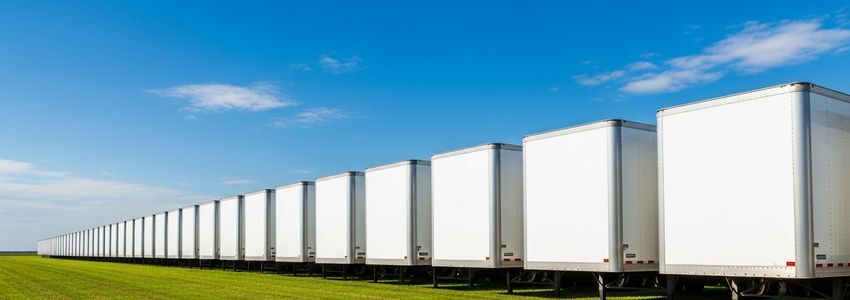
These are the most common type of semi-trailer you see on the highway. They are fully enclosed boxes, typically 53 feet long, designed to protect cargo from the elements. Dry vans are the workhorses of the freight industry, used to transport non-perishable goods, electronics, clothing, and general consumer products. Semi trailer financing for dry vans is one of the most requested funding types in the logistics sector.
Refrigerated Trailers (Reefers)
Reefers are essentially mobile refrigerators. They are insulated dry vans equipped with a cooling unit to transport temperature-sensitive goods like produce, meat, dairy, and pharmaceuticals. Financing a reefer is often more expensive due to the complex machinery involved, but it opens up lucrative opportunities in the cold chain logistics market.
Flatbed Trailers
As the name suggests, flatbed trailers have a flat, open deck with no sides or roof. This makes them ideal for hauling oversized, heavy, or irregularly shaped cargo that won't fit in an enclosed trailer, such as construction materials, machinery, and large pipes. Flatbed trailer financing is essential for businesses in construction, manufacturing, and industrial supply.
Step-Deck (Drop-Deck) Trailers
A variation of the flatbed, a step-deck trailer has two deck levels: an upper deck over the fifth wheel and a lower, longer deck. This design allows for the transport of taller cargo that would exceed height limits on a standard flatbed, making them versatile for hauling equipment like tractors and industrial machinery.
Lowboy Trailers
Lowboy trailers have a deck that is extremely low to the ground, often sitting just above the road surface between the front and rear axles. They are specifically designed for hauling exceptionally tall and heavy equipment, such as excavators, bulldozers, and other large construction vehicles. Financing for these specialized trailers is critical for heavy-hauling and construction companies. For more on this, see our guide on excavator financing.
Dump Trailers
Dump trailers are equipped with a hydraulic lift system that tilts the trailer bed to dump loose materials like gravel, sand, dirt, and construction debris. They are indispensable for construction, demolition, landscaping, and agriculture businesses. Both gooseneck and bumper-pull dump trailers can be financed.
Tanker Trailers
These trailers are designed to transport liquids and gasses, including gasoline, milk, chemicals, and dry bulk products like cement or plastic pellets. Tankers are highly specialized and subject to strict regulations, making their financing a niche area where an experienced lender is invaluable.
Cargo and Utility Trailers
On a smaller scale, cargo trailer financing and utility trailer financing serve a huge number of businesses. Enclosed cargo trailers are perfect for contractors, mobile service providers, and event companies, while open utility trailers are used by landscapers, junk removal services, and municipalities. These are often more affordable but just as crucial for daily operations.
Trailer Financing by the Numbers
Source: Equipment Leasing and Finance Association, industry analysis.
Ready to Finance Your Trailer?
Crestmont Capital offers fast, flexible trailer financing with approvals in as little as 24 hours. No lengthy bank processes.
How Trailer Financing Works
Understanding the process of how to finance a trailer can demystify the experience and help you prepare. While specifics can vary by lender, the general workflow is consistent. With a modern lender like Crestmont Capital, the process is streamlined for speed and convenience.
- Application: The process begins with a simple application. Unlike traditional banks that require mountains of paperwork, we use a one-page online application. You'll provide basic information about your business, such as its legal name, address, time in business, and annual revenue, along with details about the trailer you want to purchase.
- Documentation Review: After you apply, a financing specialist will contact you. For smaller loan amounts (typically under $250,000), the application itself may be all that's needed. For larger or more complex deals, you might be asked for a few additional documents, such as recent bank statements, a bill of sale for the trailer, and a copy of your driver's license.
- Underwriting and Approval: This is where the lender evaluates the risk. Our underwriting team reviews your business's financial health, your credit history, and the value of the trailer. Because the trailer acts as collateral, our approval criteria are often more flexible than a bank's. We focus on your business's cash flow and ability to make payments. This stage is fast, with approvals often granted within 24 hours.
- Contract and Funding: Once approved, you'll receive a clear, straightforward financing agreement outlining the terms, interest rate, and monthly payment. After you review and sign the documents electronically, the lender funds the deal. We pay the seller (dealership or private party) directly, and you take possession of your new trailer. The entire process, from application to funding, can be completed in just a few days.
This efficient process is a stark contrast to traditional bank loans, which can take weeks or even months and involve far more stringent requirements. Our focus on transportation and logistics loans means we understand the urgency and specific needs of your industry.
Trailer Financing Rates and Terms
One of the most common questions business owners ask is, "What will my trailer loan cost?" The rates and terms you're offered depend on several key factors. Understanding these variables will help you set realistic expectations.
Key Factors Influencing Your Rate
- Credit Score: This is the most significant factor. A strong personal and business credit history (typically 700+) will qualify you for the lowest interest rates and most favorable terms. A lower score indicates higher risk to the lender, resulting in a higher rate.
- Time in Business: Established businesses (2+ years) with a proven track record of revenue and payments are seen as less risky than startups. Many lenders have a minimum time-in-business requirement, often around six months.
- Trailer Age and Condition: Financing a new trailer is generally easier and comes with better rates than financing an older, used one. A new trailer has a higher, more predictable resale value, which makes it stronger collateral. However, financing used trailers is very common and a great way to save on costs.
- Loan Amount and Down Payment: The total amount you need to finance matters. A larger down payment reduces the lender's risk, which can result in a lower interest rate. While 100% financing is available for well-qualified buyers, putting 10-20% down is common and can improve your terms.
- Lender Type: Banks typically offer the lowest rates but have the strictest requirements. Alternative lenders like Crestmont Capital offer competitive rates with much more flexible criteria and faster funding, providing a balance of cost and accessibility.
Pro Tip: Your interest rate for a trailer loan can range anywhere from 6% for top-tier borrowers to 30% or more for businesses with significant credit challenges. The "average" rate often falls in the 8-18% range for established businesses with fair to good credit.
Typical Loan Terms
Loan terms for trailer financing usually range from 24 to 84 months (2 to 7 years). Shorter terms mean higher monthly payments but less total interest paid over the life of the loan. Longer terms result in lower, more manageable monthly payments but a higher total interest cost. The best term for your business depends on your cash flow and long-term financial strategy. Our specialists can help you model different scenarios to find the right fit.
How to Qualify for Trailer Financing
Qualifying for a commercial trailer loan is often more straightforward than you might think, especially when working with a lender that specializes in equipment. Here are the general criteria we look for:
- Minimum Credit Score: While excellent credit (700+) gets the best terms, we have programs for a wide range of credit profiles. Many businesses with scores in the low 600s can still secure financing. For those with more significant challenges, we offer specialized options for trailer financing with bad credit.
- Time in Business: Most lenders prefer to see at least two years of business history. However, Crestmont Capital has programs designed for newer businesses, with some options available for companies with as little as six months of operating history.
- Annual Revenue: Lenders need to see that your business generates enough income to comfortably handle the new monthly payment. There isn't always a hard minimum, but consistent cash flow demonstrated through bank statements is key. A general guideline is often $100,000 or more in annual revenue.
- Industry Experience: For those in the trucking industry, especially owner-operators, lenders may look for experience in the field. A valid Commercial Driver's License (CDL) is often required if you are financing a semi-trailer.
- Down Payment: As mentioned, a down payment is not always required for strong applicants. However, being prepared to put 10-20% down can significantly strengthen your application, especially if you have a lower credit score or are a newer business.
The most important thing to remember is that these are not rigid, inflexible rules. We evaluate each application holistically, looking at the complete picture of your business's health and potential.
Trailer Financing with Bad Credit
A common misconception is that a poor credit score automatically disqualifies you from getting a trailer loan. This is not true. While a FICO score below 620 can present challenges, securing trailer financing with bad credit is absolutely possible.
Here’s why: trailer financing is asset-based. The trailer you are purchasing serves as the collateral, which mitigates a significant portion of the lender's risk. If you stop making payments, the lender can repossess and sell the asset to recoup its investment. This security makes lenders more willing to work with business owners who have past credit issues.
However, you should be prepared for some trade-offs:
- Higher Interest Rates: To compensate for the increased risk, lenders will charge a higher interest rate. This is the primary way they balance the risk-reward equation.
- Larger Down Payment: You will likely be required to make a more substantial down payment, perhaps 20-30% or more. This reduces the loan-to-value ratio and gives the lender a protective cushion from day one.
- Shorter Loan Terms: Lenders may offer a shorter repayment period, such as 24 or 36 months, to reduce their long-term exposure to risk.
- Additional Collateral: In some cases, a lender might ask for additional collateral or a personal guarantee to further secure the loan.
At Crestmont Capital, we believe a past mistake shouldn't prevent your business from growing. We have dedicated programs specifically for businesses with challenging credit, focusing more on your recent business performance and cash flow rather than just a historical credit score.
Key to Approval with Bad Credit: A strong, consistent cash flow is your best asset. If you can show through recent bank statements that your business is healthy and can afford the payment, lenders are far more likely to approve your application, regardless of your FICO score.
Trailer Lease vs. Loan: Which Is Better?
When you seek financing, you'll generally encounter two main structures: a loan (often called an Equipment Finance Agreement or EFA) and a lease. The best choice depends on your business's financial goals, tax situation, and plans for the equipment.
Trailer Loan (Equipment Finance Agreement - EFA)
An EFA is a straightforward loan. You borrow money to buy the trailer, and you are the owner from the start. You make regular payments of principal and interest until the loan is paid off, at which point you own the trailer free and clear.
- Ownership: You own the asset from day one.
- Tax Benefits: You can typically depreciate the full cost of the trailer on your taxes and deduct the interest portion of your payments. Section 179 of the IRS tax code may allow you to deduct the entire purchase price in the first year (consult a tax advisor).
- Monthly Payments: Payments may be slightly higher than a lease because you are paying off the entire value of the asset.
- Best For: Businesses that plan to keep the trailer for its entire useful life and want to build equity in their assets.
Trailer Lease
With a lease, the lender purchases the trailer and rents it to you for a specific term. At the end of the term, you have several options depending on the lease structure, such as purchasing it, returning it, or renewing the lease.
- Ownership: The lender (lessor) owns the asset during the lease term.
- Tax Benefits: Lease payments are often treated as a direct operating expense and can be fully deducted from your taxable income. This can sometimes offer a greater tax advantage than depreciation.
- Monthly Payments: Payments are typically lower than a loan because you are only paying for the trailer's depreciation during the lease term, not its full value.
- End-of-Term Options:
- $1 Buyout Lease: A lease disguised as a purchase. You make payments and then buy the trailer for $1 at the end. It's very similar to an EFA.
- Fair Market Value (FMV) Lease: At the end of the term, you can buy the trailer for its fair market value, return it, or lease new equipment. This is great for businesses that want to regularly upgrade to newer models.
- Best For: Businesses that want lower monthly payments, prefer to upgrade their equipment every few years, or can benefit from deducting the full lease payment as an operating expense. Learn more about your equipment leasing options.
How Crestmont Capital Helps
Navigating the world of commercial trailer financing can be complex, but you don't have to do it alone. Since 2015, Crestmont Capital has been dedicated to helping businesses across the U.S. access the capital they need to grow. We're not a bank; we're a direct lender with a focus on speed, flexibility, and common-sense underwriting.
Here’s how we make a difference:
- Speed and Efficiency: We know that in business, time is money. Our streamlined online application takes minutes to complete, and we often provide approvals in as little as 24 hours. You can get the trailer you need and put it to work for your business in days, not weeks.
- Flexible Credit Requirements: We look beyond just the credit score. We assess your business's overall health and cash flow, allowing us to approve many applicants that traditional banks turn away. We have robust programs for startups and businesses with bad credit.
- Industry Expertise: We specialize in commercial truck financing and trailer financing. Our team understands the unique challenges and opportunities in the transportation, construction, and logistics industries. We speak your language and can tailor a financing solution that fits your specific business model.
- Wide Range of Options: Whether you need a simple trailer loan, a flexible FMV lease for a fleet, or financing for a private party sale, we have a solution. We finance both new and used trailers from dealerships and private sellers nationwide.
- Personalized Service: When you work with Crestmont, you get a dedicated financing specialist who will guide you through the entire process. We take the time to understand your goals and find the best possible terms for your situation.
Your Business Partner in Growth
Don't let a lack of capital hold you back. Crestmont Capital provides the funding you need to acquire revenue-generating assets quickly and easily.
The Application Process
We've designed our application process to be as simple and hassle-free as possible. Here’s a step-by-step look at what to expect when you apply for trailer financing with Crestmont Capital:
- Submit Your Application: Start by filling out our secure, one-page online application. It only takes a few minutes and asks for basic information about you and your business.
- Connect with a Specialist: A dedicated financing expert will reach out to you shortly after you apply. They'll introduce themselves, discuss your needs, and let you know if any additional information is required, such as a few months of bank statements or a quote for the trailer.
- Receive Your Approval: Our underwriting team works fast. In most cases, you'll receive a decision and a formal offer within one business day. Your specialist will walk you through the terms, including the monthly payment, interest rate, and term length, ensuring everything is clear and transparent.
- Sign and Fund: Once you're happy with the offer, you'll sign the financing documents electronically. We then work directly with the seller (whether it's a dealership or a private individual) to coordinate payment. We handle the paperwork so you can focus on getting your trailer on the road.
That's it. A simple, four-step process to get the equipment that will drive your business forward.
Tips to Get the Best Trailer Financing Deal
Securing financing is one thing; securing the best financing is another. Here are a few expert tips to help you get the most favorable terms possible for your trailer loan.
- Know Your Credit Score: Before you apply, check your personal and business credit reports. Knowing where you stand allows you to set realistic expectations and address any errors or issues beforehand. According to the SBA, a strong credit history is vital for securing favorable loan terms.
- Prepare Your Documents: Have your key documents ready to go. This typically includes the last 3-6 months of business bank statements, your driver's license, and an invoice or bill of sale for the trailer. Being prepared can dramatically speed up the approval process.
- Strengthen Your Down Payment: If you can afford it, offer a larger down payment. Putting 20% or more down significantly reduces the lender's risk and demonstrates your financial stability, which can lead to a lower interest rate and a higher chance of approval.
- Work with a Reputable Lender: Partner with a lender that specializes in your industry and has a strong track record. Check online reviews and make sure they are transparent about their rates and fees. A specialist lender understands the value of the asset and is more likely to offer competitive terms.
- Understand the Total Cost: Don't just focus on the monthly payment. Look at the Annual Percentage Rate (APR), the total amount of interest you'll pay over the life of the loan, and any origination or documentation fees. This gives you a true picture of the total cost of financing.
Next Steps: Your Path to a New Trailer
Ready to move forward? Taking the next steps is easy. Follow this simple plan to get the trailer your business needs to thrive.
Get Started on Your Trailer Financing Today
Your next revenue-generating asset is just a few clicks away. Get a free, no-obligation quote from Crestmont Capital and see how affordable your new trailer can be.
Frequently Asked Questions About Trailer Financing
1. What is the minimum credit score for trailer financing?
While a higher score (680+) will secure the best rates, many lenders, including Crestmont Capital, offer programs for business owners with credit scores as low as the high 500s. We focus on your overall business health, not just the FICO score.
2. Can I finance a used trailer?
Absolutely. Financing used trailers is very common and a great way to reduce costs. Lenders will consider the age, condition, and value of the used trailer when underwriting the loan. There may be age restrictions (e.g., under 10-15 years old), but policies are flexible.
3. Can I finance a trailer from a private seller?
Yes. Unlike many banks, specialized lenders like Crestmont Capital are experts in facilitating private party sales. We will verify the seller, check for liens on the trailer's title, and handle the payment directly to the seller to ensure a secure transaction.
4. How long does the trailer financing process take?
With Crestmont Capital, the process is incredibly fast. You can get an approval within hours of submitting your application and funding can happen in as little as 24-48 hours. This is much faster than traditional bank loans which can take weeks.
5. Do I need a down payment for a trailer loan?
Not always. For well-qualified borrowers with strong credit and business history, 100% financing (no money down) is often available. For startups or those with challenged credit, a down payment of 10-25% is typically required.
6. What kind of trailer financing rates can I expect?
Rates vary widely based on your credit profile, time in business, and the trailer itself. They can range from 6% for top-tier applicants to over 25% for high-risk borrowers. A specialist at Crestmont can give you a precise quote based on your qualifications.
7. Can a new business or startup get trailer financing?
Yes. While traditional banks often require 2+ years in business, we have specific programs designed for startups. Businesses with as little as 6 months of operating history can qualify for financing.
8. What is the difference between a trailer loan and a lease?
A loan (or EFA) means you are buying the trailer and building equity, making you the owner from day one. A lease is like renting the trailer for a set term with lower payments, and at the end, you can buy it, return it, or upgrade. The best option depends on your tax and equipment usage strategy.
9. Does applying for trailer financing affect my credit score?
Most initial applications with lenders like Crestmont Capital use a "soft" credit pull, which does not impact your credit score. A "hard" credit pull, which may have a small, temporary impact, is only performed once you decide to move forward with a specific offer.
10. What documents are needed to apply for a trailer loan?
For most applications under $250,000, all you'll need is our simple one-page application. For larger amounts or more complex situations, you may be asked for the last 3-6 months of business bank statements and an invoice for the trailer.
11. Can I finance more than one trailer at a time?
Yes. We offer commercial fleet financing that allows you to acquire multiple trailers under a single financing agreement or line of credit. This is ideal for businesses looking to expand their operations.
12. Can I pay off my trailer loan early?
This depends on the specific loan agreement. Some loans have prepayment penalties, while others do not. Be sure to ask your financing specialist about the prepayment terms before signing the contract. Crestmont Capital offers many options with no prepayment penalties.
13. Does the type of trailer affect financing?
Yes, to some extent. A standard dry van or flatbed is easier to value and resell, making it very straightforward to finance. Highly specialized or custom-built trailers may require more detailed underwriting but are still eligible for financing with an experienced lender.
14. What if I'm an owner-operator? Can I still get financing?
Definitely. We work with owner-operators every day. Whether you're just starting out or looking to upgrade your rig, we have financing solutions tailored for your needs, including semi truck and trailer financing packages.
15. How do I know if I'm getting a good deal on my trailer financing?
A good deal combines a competitive interest rate, a manageable monthly payment, and a term length that fits your business plan. The best way to know is to work with a transparent lender who explains all costs and helps you understand the total cost of the loan, not just the payment.
Disclaimer: This content is provided for general educational purposes only and does not constitute financial, legal, or tax advice. Crestmont Capital is not a financial advisor. Please consult a qualified professional before making financing decisions.